
You're standing in a Phoenix home with a closed-off room, a strong odor, and no clear idea what to touch first. Maybe a family member found an unattended death, a tenant left behind bloodstained carpet, or sewage entered the property after a storm. You want the danger gone, but you also don't want to spread contamination, damage evidence, or expose someone else in the household.
That's where professional biohazard cleanup in Phoenix becomes different from ordinary cleaning. The work involves inspection, controlled removal, decontamination, regulated waste handling, and documentation. The visible stain is only one part of the problem.
The Moment Most People Realize They Need Biohazard Cleanup
A homeowner in Maryvale may open the garage expecting to find stored tools and instead find a scene they weren't prepared for. There may be blood on the floor, personal belongings scattered nearby, and an odor that makes the first instinct obvious: close the door and step away.
A property manager in Tempe may face a different version of the same moment. The keys are returned after a tenant leaves, but the carpet has dark staining and a faint odor that ordinary carpet cleaning won't remove. The manager starts thinking about the next tenant, the owner's insurance claim, and whether anyone could become sick from entering the unit.
Choosing whether to act can cause hesitation. You may wonder whether gloves, household bleach, and a rented extractor will solve the problem. You may also worry that calling a cleanup company will make the situation feel more serious. Those reactions are normal, but scrubbing can spread biological material into nearby surfaces, clothing, tools, or ventilation pathways.
Why a normal cleaning approach falls short
Regular cleaning focuses on dirt, stains, and odor. Biohazard remediation focuses on exposure control. A trained crew evaluates what material is present, where it traveled, which surfaces can be decontaminated, and which porous items must be removed.
The person who calls also varies by situation:
- Families often call after an unattended death or traumatic event.
- Property managers and landlords call when a rental unit needs controlled restoration before occupancy.
- Business owners may need help after an accident, sewage intrusion, or hazardous discovery.
- Law enforcement or other authorities may coordinate access after a crime scene is released.
Practical rule: Don't touch, mop, vacuum, or move items until you understand the contamination boundary and the disposal requirements.
The right service isn't someone who makes a room look clean. It's a controlled response that protects occupants, limits cross-contamination, and creates a record of what was inspected, removed, treated, and transported.
What Biohazard Cleanup Actually Means
Biohazard cleanup is the controlled removal, decontamination, and lawful disposal of biological or chemical materials that may endanger people. Depending on the property, that can include blood and bodily fluids, human or animal waste, sewage, severe hoarding conditions, and chemical or drug residues.
A regular janitorial crew may disinfect a bathroom or remove a visible stain. A biohazard remediation crew works with PPE, containment methods, exposure controls, specialized disinfectants, and regulated waste procedures. PPE means personal protective equipment, such as gloves, protective clothing, eye protection, and respiratory protection selected for the hazard.
You'll also see several terms used during the process:
- Biohazard: Biological material that may carry an infectious risk.
- Remediation: The broader process of removing contamination and returning the affected area to a safe condition.
- Regulated waste: Waste that requires controlled containment, transport, treatment, or disposal.
- OSHA Bloodborne Pathogens Standard: The federal workplace-safety framework for exposure to blood and other potentially infectious materials.
- Decontamination: Cleaning and disinfecting surfaces, tools, and affected areas using procedures suited to the material.
Phoenix properties can add practical complications. Heat may dry blood and bodily fluids onto flooring or equipment, while indoor, air-conditioned spaces can preserve contamination longer than an exposed outdoor surface. Carpet, padding, mattresses, unfinished wood, and drywall can absorb fluids, so wiping the visible surface may not be enough.
The three parts of a compliant response
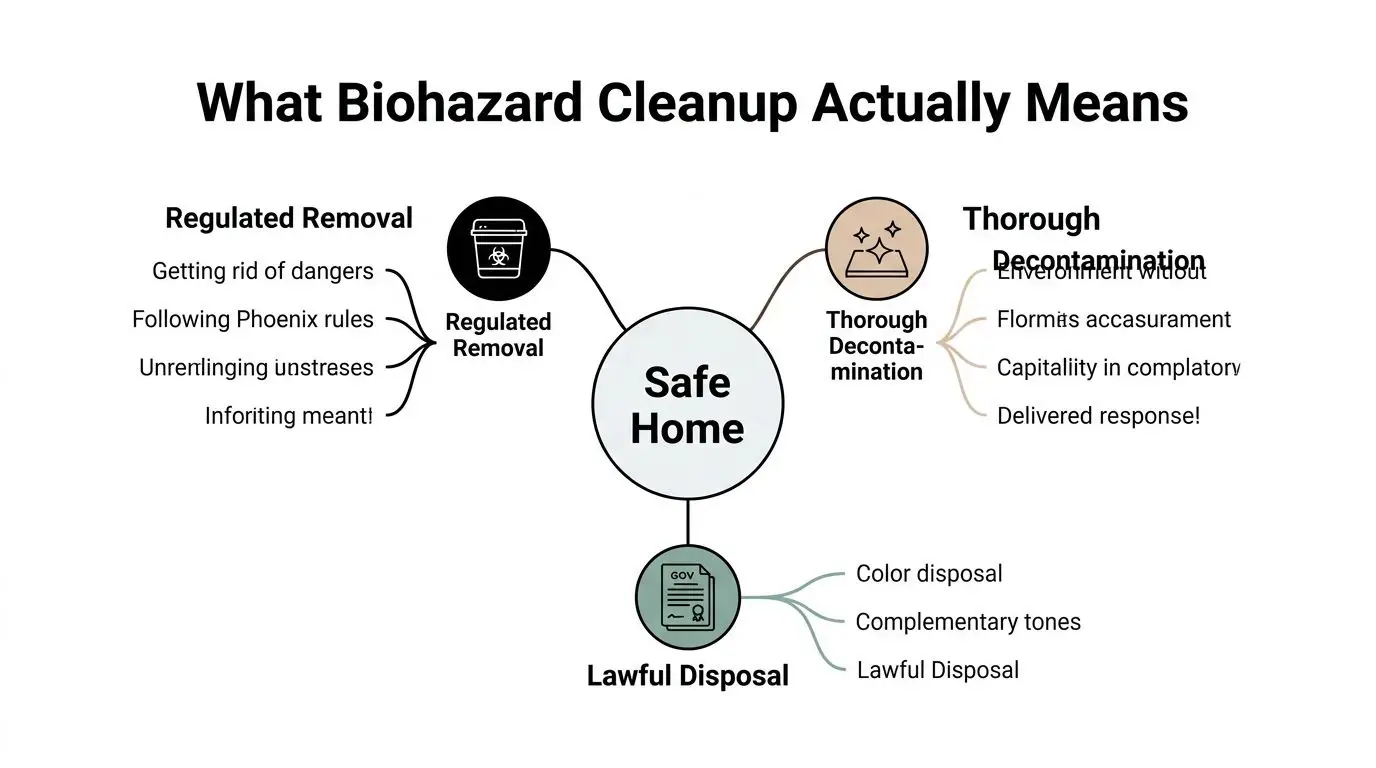
A safe result depends on three connected actions:
- Regulated removal: Crews separate affected materials and place them in suitable containers.
- Thorough decontamination: Workers remove organic matter, apply an appropriate disinfectant, and treat the affected surfaces.
- Lawful disposal: Waste travels through an approved handling and disposal pathway rather than a regular household trash route.
For readers who need to understand how controlled environments are designed, Material Handling USA's guide to an MDI isolation room offers useful background on isolation principles and contamination control. For local service details, you can also review biological cleanup services and compare the process with the needs of your property.
The Rules That Govern Biohazard Cleanup in Phoenix
Biohazard cleanup is governed by overlapping federal, state, and local requirements. The central federal standard is OSHA's Bloodborne Pathogens Standard, finalized in 1991 and codified at 29 CFR 1910.1030. The OSHA bloodborne pathogens standard requires an employer exposure control plan, engineering and work-practice controls, PPE, hepatitis B vaccination availability, post-exposure evaluation, training, and recordkeeping.
OSHA also requires the exposure control plan to be reviewed and updated at least annually. That makes compliance an ongoing operating duty, not a certificate someone earns once and forgets.
Three regulatory layers
| Level | Agency or Standard | What It Controls |
|---|---|---|
| Federal | OSHA Bloodborne Pathogens Standard | Worker exposure prevention, PPE, training, exposure plans, and records |
| Federal and state | Waste and transportation requirements | Containment, labeling, transport, treatment, and disposal |
| Arizona and Phoenix | State medical-waste rules and Phoenix City Code | Waste definitions, storage, approval, treatment, and facility acceptance |
Arizona defines biohazardous medical waste to include cultures and stocks, human blood and blood products with free-flowing blood, human pathologic waste such as organs and body parts removed during surgery, and medical sharps used in patient care, medical research, or clinical laboratories. The state definitions appear in Arizona's biohazardous medical waste regulation.
Phoenix City Code states that untreated biohazardous waste can't be accepted at solid waste disposal facilities. Treated waste may be accepted only with prior approval and compliance with Arizona treatment standards, as described in the Phoenix City Code requirements for biohazardous waste.
Arizona DEQ guidance adds a concrete handling requirement. Approved transporters must deliver collected waste to an approved storage, transfer, treatment, or disposal facility within 72 hours, or refrigerate it for no more than 90 days at 40°F or less until delivery. Those limits appear in Arizona DEQ solid waste compliance guidance.
This chain explains why legitimate crews use labeled or color-coded containers, leak-resistant packaging, documented transport, and disposal records. OSHA requires regulated waste containers to be closable, able to contain their contents without fluid leakage, and labeled or color-coded before removal. The OSHA interpretation on regulated waste containers and disinfectants also addresses appropriate EPA-registered disinfectants for contaminated surfaces.
For an owner or adjuster, documentation may include the inspection scope, photographs, itemized work, waste records, and completion paperwork. The chain of custody matters because it shows where regulated material went after it left the property.
Common Cleanup Scenarios Across the Phoenix Metro
Phoenix-area cleanup calls can look similar at first, but each hazard changes the response. A blood spill after an accident isn't handled exactly like sewage in an HVAC system or chemical residue in a former drug lab.
| Scenario | Who Typically Calls | Primary Hazard | Removed vs. Restored |
|---|---|---|---|
| Unattended death | Family, landlord, or property manager | Blood, bodily fluids, odor, and possible decomposition residue | Porous materials may be removed, while suitable structural surfaces are cleaned and disinfected |
| Suicide or homicide scene | Family, owner, or authorized manager after release | Bloodborne-pathogen exposure and scene contamination | Affected carpet, drywall, furnishings, and personal items may require removal |
| Severe hoarding | Family, landlord, or public agency | Waste, sharps, pests, structural contamination, and unsafe access | Waste and heavily affected contents are removed; sound areas may be cleaned |
| Sewage backup | Homeowner, facility manager, or insurer | Pathogens, contaminated water, and absorbed moisture | Porous materials exposed to sewage often require removal; structure may be dried and treated |
| Former drug or meth lab | Owner, manager, or buyer | Chemical residue on surfaces and contents | Affected materials may require specialized assessment, cleaning, or disposal |
Why Phoenix conditions change the job
High attic temperatures can accelerate decomposition when a body or biological material remains in an enclosed area. Crews may need to assess not only the room where the event occurred, but also adjacent spaces, flooring layers, wall cavities, and odor pathways.
Monsoon-related sewage intrusions create another complication. Water may enter through floors, plumbing, or damaged building components, carrying contamination into carpet padding, baseboards, and lower drywall. If sewage reaches air-handling components, the response may involve a separate evaluation rather than ordinary surface cleaning.
Former drug labs require a chemical-contamination approach. A property manager shouldn't assume that removing visible containers solves the problem, particularly where residues may remain on surfaces or materials. HUD-related remediation standards can also affect properties connected to housing programs, occupancy decisions, and clearance documentation.
Occupied homes need careful separation between the work zone and living areas. Rental units require communication with owners, tenants, and adjusters. Commercial spaces may need controlled scheduling, access planning, and documentation that supports a safe return to operations. If the incident involves trauma or a sensitive death, trauma cleanup solutions can help property stakeholders identify the appropriate response category.
How a Professional Cleanup Job Actually Works
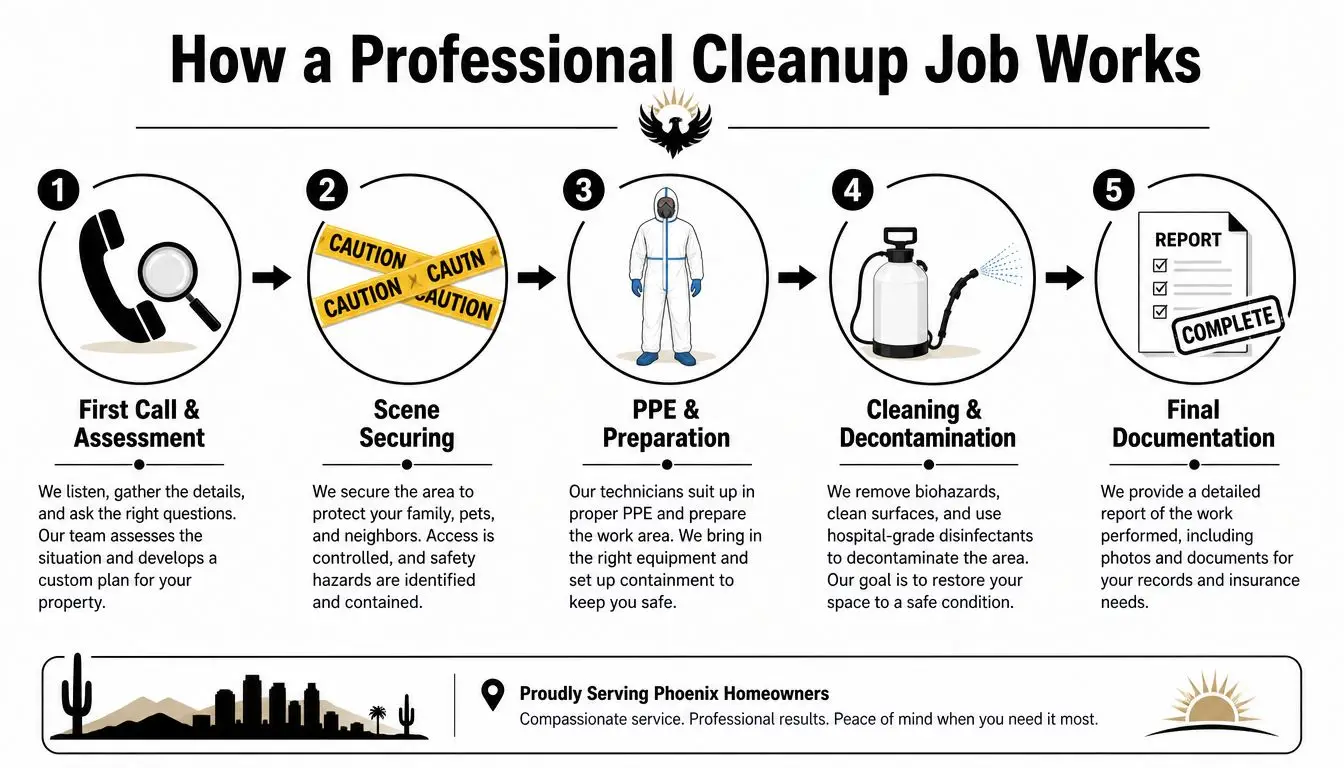
A compliant job begins before anyone opens a container of disinfectant. The crew first gathers information about the incident, affected areas, access restrictions, occupants, pets, and any law-enforcement or medical-examiner requirements.
From intake to controlled removal
The first call is usually a confidential intake. The provider needs enough information to identify immediate safety concerns without asking you to disturb the scene. On site, technicians inspect the property, identify the contamination boundary, and prepare a written scope that separates cleaning, removal, repair, odor control, and documentation.
If containment is needed, the crew isolates the affected area with barriers and controlled entry. Negative air pressure may be used when the work could move particles or odor into unaffected spaces. Technicians wear PPE selected for the hazard and establish a route for removing materials without dragging contamination through the home.
Carpet, padding, mattresses, drywall, and other porous materials may be placed into regulated-waste containers when fluids have penetrated them. Tools and surfaces are decontaminated promptly. For large blood or potentially infectious-material spills, CDC guidance says visible organic matter should be removed before disinfectant is applied, because blood can inactivate hypochlorites and other germicides. The CDC cleaning and disinfection procedures also state that an EPA-registered disinfectant or a 1:10 bleach solution may be used for large spills, with the surface kept wet for the full label contact time, often 10 minutes.
Decontamination, verification, and closeout
For a small nonporous spill, CDC guidance notes that a 1:100 dilution of 5.25% to 6.15% sodium hypochlorite produces about 525 to 615 ppm available chlorine for decontamination, as discussed in OSHA's cleanup interpretation. Product labels still control contact time and usage.
After cleaning, the crew may use visual inspection, ATP testing, or another documented verification method appropriate to the scope. Odor treatment can involve hydroxyl or ozone equipment, but deodorization comes after source removal and decontamination. It can't substitute for either one.
Regulated waste is sealed, labeled or color-coded, transported through an approved channel, and documented with manifests or related records. The final walkthrough should explain what was removed, what remains, what repairs are still needed, and which records you receive. A certificate of completion and photographs can help establish the work performed for insurance and property records.
For a closer look at the service sequence, see this decontamination process guide.
Costs, Insurance, Timelines, and What Gets Replaced
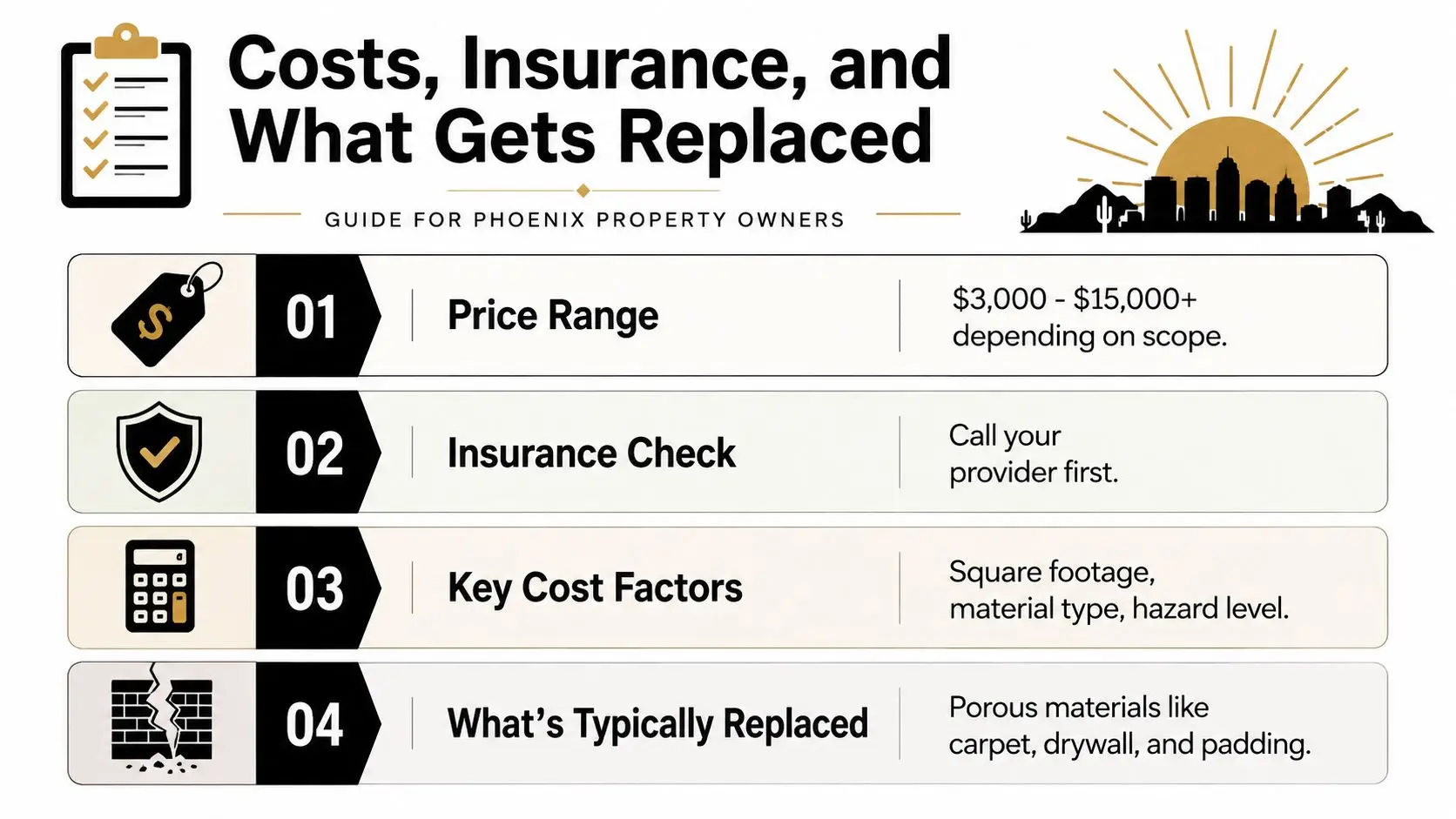
No honest provider can quote a reliable biohazard cleanup price from a short description alone. The final cost depends on the affected square footage, contamination depth, material type, hazard level, access, waste volume, structural removal, and the documentation required.
A room with surface contamination on sealed flooring may have a very different scope from a scene involving carpet padding, subfloor, drywall, furnishings, and odor migration. Disposal and transport also matter because regulated waste follows a different pathway from ordinary debris.
Insurance questions come early
Some homeowners and commercial policies may respond to covered trauma, crime, or accidental contamination events, but coverage depends on the policy, exclusions, deductible, cause of loss, and documentation. Call the carrier or agent promptly, ask how the claim should be opened, and avoid discarding affected property before the adjuster or restoration professional records it, unless an immediate safety risk requires removal.
Useful records include:
- Scene photographs: Take pictures from a safe location without touching or rearranging anything.
- Incident information: Keep police, fire, medical, landlord, or property-management records available.
- Written scope: Ask for separate line items for cleaning, demolition, disposal, odor treatment, and repairs.
- Personal property notes: Identify items that may be unsalvageable and preserve ownership information.
- Waste documentation: Request records showing regulated materials were handled through the proper channel.
Porous items impacted by blood generally aren't returned to service. Carpet, upholstery, mattresses, padding, unfinished wood, and affected drywall may need removal when contamination penetrates below the surface. Hard, nonporous materials are more likely to be cleaned and disinfected if they remain intact and can be fully treated.
Timelines vary as well. A contained surface cleanup may move faster than a job involving demolition, lab testing, insurance approval, structural drying, or regulated disposal coordination. For additional context on how scope affects the financial side, review this crime-scene cleanup cost guide.
What to Do Next and Questions to Ask
Keep the immediate response simple:
- Protect people and pets: Keep everyone away from the affected area.
- Leave the scene alone: Don't touch, scrub, vacuum, or move contaminated belongings.
- Document safely: Photograph conditions only from a safe position for insurance or property records.
- Request an assessment: Contact a licensed Phoenix biohazard cleanup company for an on-site inspection.
Before signing, ask the provider:
- Are your technicians trained for OSHA bloodborne-pathogen work and compliant with applicable EPA requirements?
- Will you handle regulated-waste manifests, transport, and disposal?
- Do you work directly with my homeowners or commercial insurance carrier?
- Will I receive itemized documentation and photographs?
- What containment and verification methods will you use?
- Can you provide a written timeline and cost estimate based on the inspection?
Restore Heroes offers Phoenix metro inspections and emergency response for trauma and biohazard conditions, including accidents, unattended deaths, crime scenes, sewage backups, and related hazards. Visit Restore Heroes to request an assessment and discuss the cleanup, documentation, and regulated disposal needs of your property.