
When a traumatic event happens in a home, people usually remember two things at once. First, the shock. Second, the confusion about what to do next.
You may be standing outside a bedroom, waiting in another room for law enforcement to finish, or staring at a hallway and thinking, “I can’t deal with this myself.” That reaction is normal. Trauma cleanup solutions exist for exactly this moment. They are meant to take a dangerous, emotionally loaded environment and make it safe to enter again through a careful, regulated process.
Facing the Unthinkable What Happens Next
A Phoenix homeowner might call after an unattended death in a guest room. A landlord might discover that a tenant has been gone for days. A family member might return home after an ambulance and police have already left. In each situation, the person on the phone usually sounds the same. Numb, overwhelmed, and unsure whether they should touch anything at all.
The first practical truth is simple. This is not a normal cleaning job. Blood, body fluids, and decomposition can affect flooring, drywall, furniture, and air quality in ways that aren't obvious at first glance. What looks like one stained area can involve contamination below the surface.
That’s one reason demand for specialized cleanup has grown. The biohazard cleanup market was valued at approximately $1.8 billion in 2025 and is projected to grow at a 7% CAGR, reflecting rising need for professional handling of traumatic events (biohazard cleanup market projection).
What most homeowners need first
In the first hours after a scene is released, those affected don’t need technical language. They need a calm sequence:
- Don’t disturb the area unless emergency personnel tell you otherwise.
- Keep others out, especially children, pets, tenants, or staff.
- Avoid trying to “tidy up” visible material with household cleaners or paper towels.
- Write down what you know about the location, affected rooms, and any items you’re worried about.
- Contact a professional biohazard team for biological cleanup support.
The safest next step is often the simplest one. Stop, secure the area, and let trained technicians assess what can be cleaned, what must be removed, and what documentation will be needed.
For many families, the hardest part is accepting that cleaning it yourself can make the situation worse. It can spread contamination, expose you to pathogens, and tie the memory of the event to your own hands-on effort. Professional trauma cleanup solutions aren't just about sanitation. They create distance between the event and the people trying to recover from it.
Understanding Trauma and Biohazard Cleanup
People often hear “crime scene cleanup” and think only of police investigations. In reality, trauma and biohazard cleanup covers a wider range of situations. It can include unattended deaths, suicides, serious accidents, industrial injuries, medical emergencies, and scenes with blood or bodily fluids that require specialized handling.
A biohazard is any biological material that can present a health risk. In plain language, that means material that may carry harmful pathogens or contaminate surfaces in ways ordinary cleaning doesn’t address.
Why regular cleaning isn't enough
House cleaning removes dust, spills, and everyday messes. Trauma cleanup is closer to environmental remediation. The job isn't just to make the room look clean. The job is to identify where contamination traveled, remove affected materials, disinfect remaining surfaces, and prevent exposure for anyone who enters later.
That difference matters most with porous materials. Carpet padding, subflooring, drywall, mattresses, upholstered furniture, and baseboards can absorb fluids below the visible stain line. A homeowner may wipe the top surface and still leave contamination underneath.
Here’s a simple comparison:
| Situation | General cleaning | Trauma cleanup solutions |
|---|---|---|
| Visible stain on hard floor | Wipe and sanitize surface | Assess spread, clean, disinfect, verify, inspect nearby seams and edges |
| Blood on carpet | Spot-clean top fibers | Determine depth of penetration, remove affected sections if needed |
| Odor after decomposition | Use air freshener | Remove source material, clean, disinfect, and apply odor treatment |
| Personal safety | Gloves may be enough | PPE, containment, waste handling, and regulated disposal are required |
The hidden risks people underestimate
The danger isn't always what you can see. It’s what remains after a rushed cleanup. That can include microscopic residue, contaminated dust, and materials that continue to hold odor and biological matter.
Professionals also treat the space differently because they understand cross-contamination. If someone walks through the area, uses the same mop in multiple rooms, or carries contaminated items to the trash, they can spread the problem into hallways, bathrooms, vehicles, or dumpsters.
A qualified team for homicide cleanup services approaches the scene with the assumption that contamination may extend past the obvious point of impact.
What homeowners often ask
Some of the most common questions are practical:
- “Can I just bleach it?” Bleach has limits and doesn't solve absorbed contamination inside porous materials.
- “If the stain is gone, is it safe?” Not necessarily. Appearance and safety are not the same thing.
- “Can my cleaner or handyman handle it?” General service providers usually aren’t equipped for biohazard containment, documentation, and disposal.
- “Why does odor remain after cleaning?” Odor usually means source material is still present, trapped below a surface, or circulating through nearby materials.
Practical rule: If the event involved blood, body fluids, tissue, decomposition, or a scene tied to injury or death, treat it as a biohazard issue first and a cleaning issue second.
That shift in thinking helps homeowners make better decisions early, when mistakes are hardest to undo.
The Science of Safety and Regulatory Compliance
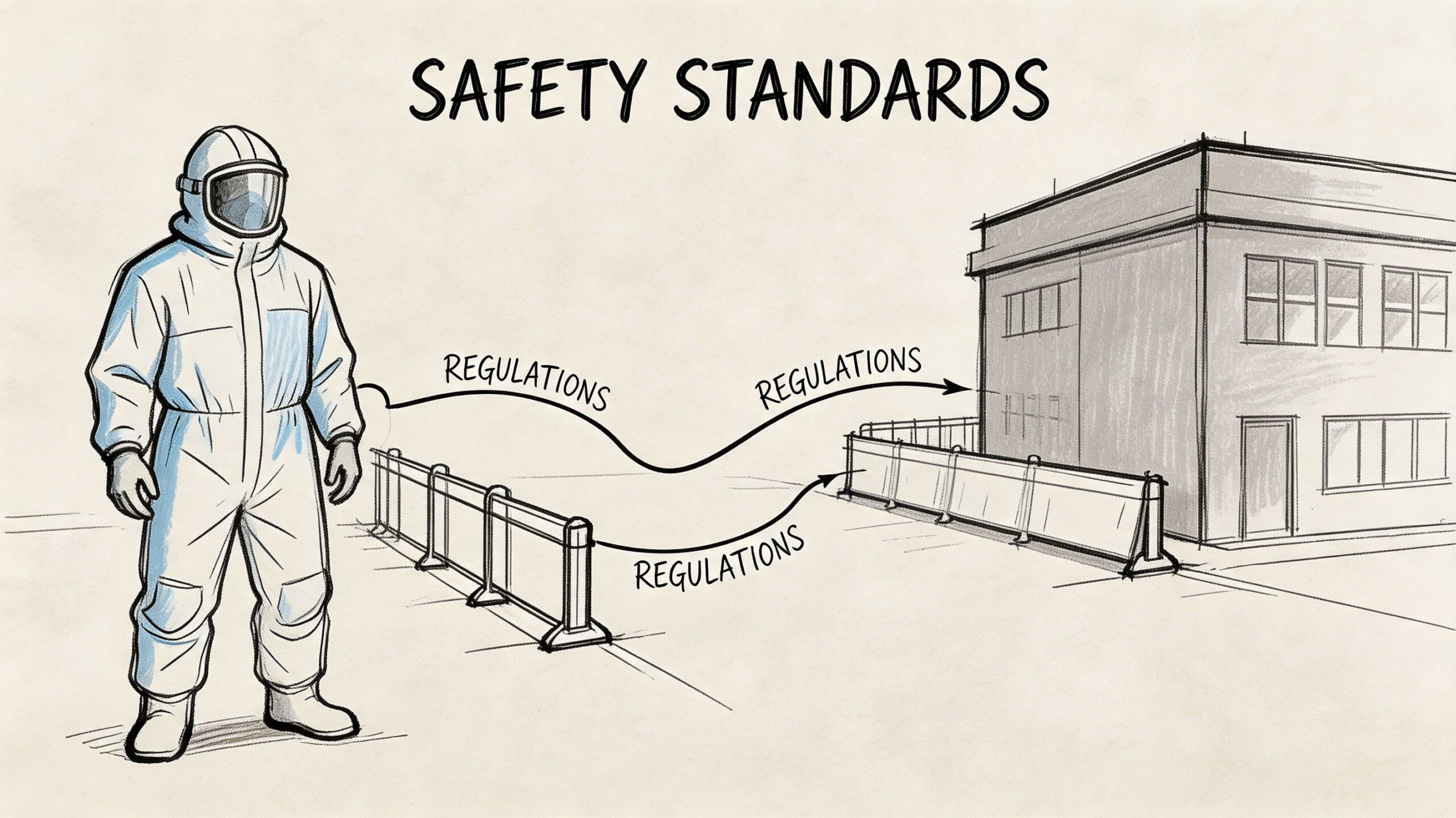
A trauma scene can look quiet and still be unsafe. What protects your household is not stronger cleaner or extra scrubbing. It is a controlled process that treats the area the way a hospital would treat exposure risk, with rules for entry, protective equipment, testing, and disposal.
For Arizona homeowners, that matters for two reasons. First, the cleanup has to protect anyone who returns to the property. Second, the documentation behind that cleanup can affect insurance reimbursement, landlord records, and questions that come up later during repairs. In Phoenix, where heat can intensify odor and speed the breakdown of biological material, delays and shortcuts can create bigger restoration issues.
What “compliance” means inside a home
Compliance sounds like paperwork, but inside a house it shows up in very practical ways. It determines who can enter the room, what technicians wear, how work zones are separated, which disinfectants are used, how waste is packaged, and what proof exists that the area was cleaned to an accepted standard.
A useful comparison is food safety in a restaurant kitchen. A clean-looking counter is not enough if raw meat juice reached the cutting board seam or the sanitizer was mixed incorrectly. Trauma cleanup works the same way. The visible mess is only part of the problem. The key question is whether contamination was contained, removed, and verified.
One standard often referenced in this field is the ANSI/IICRC S540. Homeowners do not need to memorize the document. What matters is what it requires a crew to do. Use appropriate protective measures. Evaluate which materials can be saved and which cannot. Apply EPA-registered disinfectants according to label instructions. Document the work instead of relying on appearance alone.
Why PPE and containment are more than “extra caution”
Personal protective equipment, or PPE, is the barrier between the technician and the hazard. Depending on the scene, that can include gloves, protective suits, respirators, and face protection. Containment works like a quarantine line inside the structure. It limits traffic, isolates the work area, and reduces the chance that contaminated dust or debris reaches hallways, HVAC pathways, or unaffected rooms.
That point often clears up a common misunderstanding. Homeowners sometimes assume the team is dressed for the worst-case scenario every time. In reality, trained crews match the level of protection to the conditions they find. The goal is controlled exposure prevention, not appearance.
Waste handling follows the same logic. Materials removed from a trauma scene do not go out with household garbage. Rules for managing hazardous waste safely help explain why packaging, transport, and final disposal have to follow a documented chain.
Verification matters because eyes and noses can miss risk
A room can smell better and still have residue in seams, subfloor joints, or porous surfaces. A stain can disappear while contamination remains below the surface. That is why trained crews use verification methods rather than stopping at deodorizing.
Here is the practical difference:
| What a homeowner may notice | What a trained crew needs to confirm |
|---|---|
| The visible stain is gone | The affected surface is cleanable or has been removed |
| The odor is lower | The source material has been located and addressed |
| The room looks usable | Nearby materials and hidden edges have been checked |
| Debris has been bagged | Waste has been packaged and documented correctly |
For Phoenix property owners, this verification step also supports the financial side of the job. If an insurer asks why carpet pad, drywall, or baseboards had to be removed, clear notes and testing records help explain that decision. That does not guarantee coverage, but it does reduce the chance that the claim looks like ordinary housekeeping or elective demolition.
Later in the process, visual instruction can help homeowners understand what a compliant response looks like.
What this means for your home
Hiring a qualified biohazard remediation company means paying for risk control, selective removal, regulated disposal, and documented verification. Those steps are what make the space safer for the people who live there, manage it, or enter it later for repairs.
A safe result comes from following the process carefully, not from assuming the room is fine because it looks normal again.
The Trauma Cleanup Process Step by Step
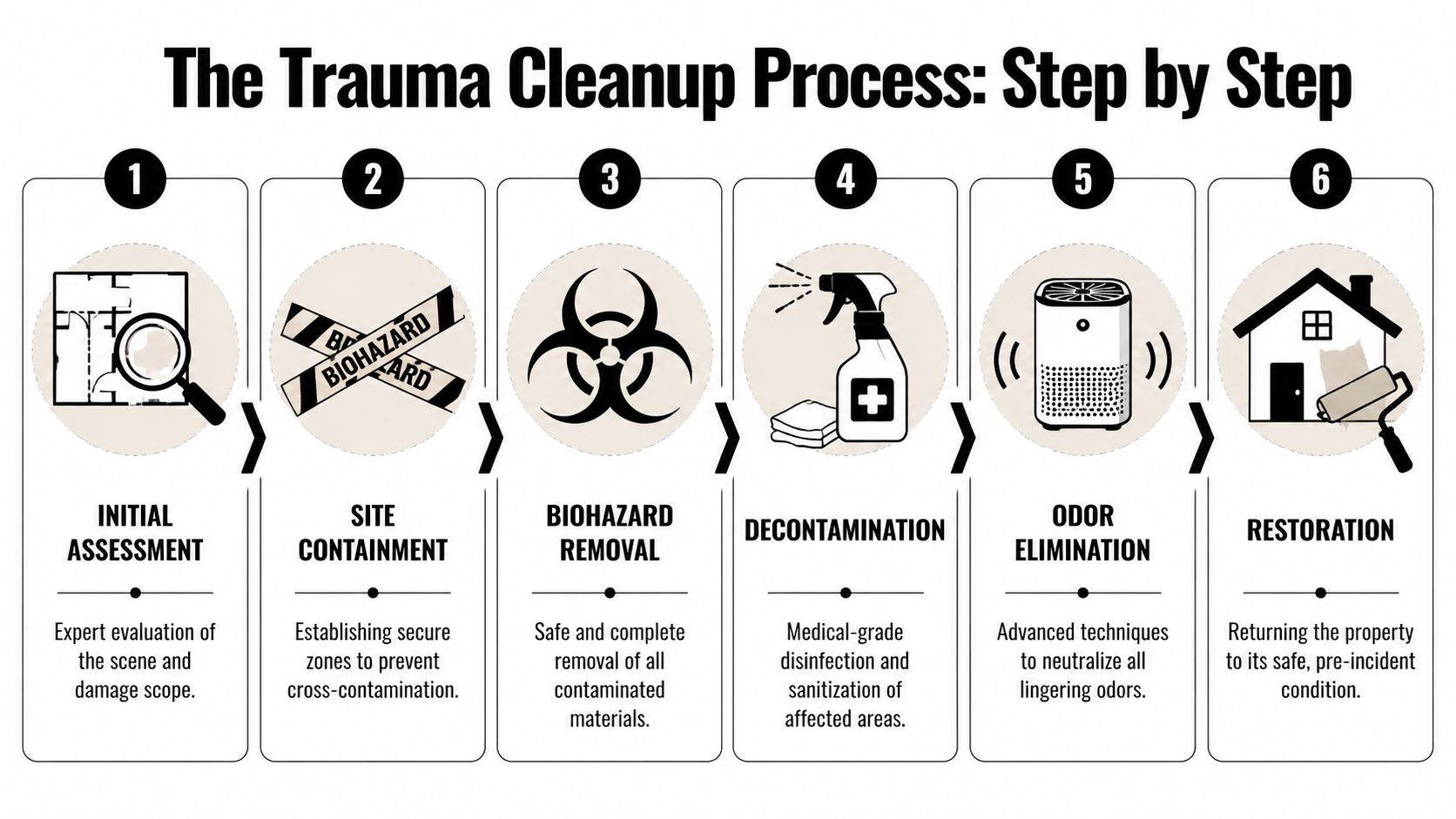
Once a scene is released for cleanup, the work follows a sequence. Homeowners usually feel better when they know what that sequence looks like because the unknown is often worse than the process itself.
Step 1 and Step 2 assessment and containment
The first step is assessment. Technicians inspect the affected room, surrounding rooms, flooring transitions, furniture, and any areas where fluid may have traveled. They identify what can be cleaned, what likely needs removal, and what documentation should begin immediately.
Next comes containment. The crew secures the work area so people and pets don't enter by mistake. They also control movement in and out of the space to keep contamination from spreading to clean zones.
Step 3 removal of affected materials
Some materials can be disinfected. Others can't. If fluids have penetrated carpet padding, drywall, baseboards, insulation, mattresses, or upholstered furniture, those items may need to be removed.
This is one of the hardest parts for homeowners because it feels destructive. In reality, selective demolition is often what prevents long-term odor, microbial issues, and repeated remediation later.
If a material has absorbed contamination below the cleanable surface, saving it may not be the safest choice.
Step 4 cleaning and decontamination
After gross contamination is removed, the remaining structure is cleaned in stages. Professional chemistry comes into play.
Effective remediation uses a two-step process. Enzymatic cleaners break down proteins and lipids in organic matter first, and then an EPA-registered disinfectant follows. That disinfectant can achieve a 99.999% kill rate on pathogens, making the process far stronger than a one-step wipe down (two-step remediation protocol).
Here’s how that usually works in plain terms:
- Organic matter is loosened and broken down with an enzyme-based product.
- Physical cleaning removes residue from surfaces and cracks.
- Disinfectant is applied according to proper dwell time.
- Technicians re-clean as needed until the surface is ready for verification.
Step 5 odor treatment and air work
Odor control comes after source removal and disinfection. Depending on the scene, technicians may use HEPA filtration, air scrubbing, or odor-neutralizing equipment. In Arizona homes, heat can intensify odors, especially where decomposition affected enclosed rooms, closets, or HVAC-adjacent areas.
This phase often helps families emotionally because the home starts to feel less like the scene they encountered and more like a space that can eventually be used again.
Step 6 verification and restoration
The final technical step is verification. Technicians inspect the work, document what was removed, and confirm the cleaned areas meet the intended standard for reoccupation.
After that, the property may need light repairs or broader restoration. That can mean replacing drywall sections, reinstalling flooring, repainting, or coordinating follow-up construction. Homeowners who want to understand how cleanup fits into larger repairs can review what a restoration company does after structural and environmental damage.
What the handoff usually includes
A careful handoff may involve:
- Scope notes that identify affected rooms and removed materials
- Photo documentation for the owner or insurer
- Waste handling records where applicable
- Recommendations for repairs, contents evaluation, or further inspection
- Clear reentry guidance based on the condition of the cleaned area
Every scene is different, but the core principle stays the same. Professional trauma cleanup solutions move in a deliberate order so safety isn't left to guesswork.
Navigating Costs and Insurance Claims in Arizona
After the immediate shock eases, most homeowners ask the same question. “How am I going to pay for this?”
That concern is understandable. Trauma cleanup can involve labor, PPE, containment, removal of porous materials, disinfection, odor treatment, disposal, documentation, and sometimes follow-up restoration. The final cost depends on the size of the affected area, the materials involved, how long the scene was undiscovered, and whether contamination spread beyond the obvious room.
Why documentation can make or break a claim
Many homeowners assume insurance will reimburse the work if the situation is serious enough. Sometimes coverage is available, but the path is not always simple. The biggest obstacle is often paperwork.
A 2025 industry report indicates that up to 40% of trauma cleanup insurance claims are initially denied due to improper or incomplete documentation (insurance claim documentation issue). For Arizona property owners, that means the quality of the cleanup file can matter almost as much as the cleanup itself.
If a claim is going to be reviewed, insurers commonly want a clear record of what happened and what work was necessary. That may include:
- Scene photos that show the affected area before work begins
- Written scope notes describing what materials were impacted
- Itemized invoices tied to actual remediation steps
- Disposal records when regulated waste is involved
- Communication logs with the adjuster or carrier representative
A practical Arizona approach
Homeowners in Phoenix often feel pressure to make fast decisions because the property may be unlivable, emotionally difficult to enter, or tied up in family logistics. Fast action is important, but organized action is better.
A useful sequence looks like this:
- Notify your insurer early and ask for the claim number.
- Ask what documentation they want before and after mitigation.
- Keep a single folder for photos, emails, invoices, and adjuster names.
- Don’t throw away records even if the item itself must be removed.
- Ask the remediation company how they document biohazard work.
For homeowners who want broader claim strategy, these expert tips for securing a fair settlement offer a good outside perspective on staying organized and communicating clearly with carriers.
What to ask before work begins
This isn't the moment for vague estimates or casual verbal promises. Ask direct questions.
| Question | Why it matters |
|---|---|
| Will you document the scene before removal starts? | Photos and scope notes can support the claim |
| Can you separate remediation from rebuild items? | Insurers often review categories differently |
| Who communicates with the adjuster? | Delays often happen when no one owns that task |
| How are removed materials described on the invoice? | Clear language reduces confusion later |
A homeowner can also review local pricing factors and typical line items through this guide to the cost of crime scene cleanup.
Keep every invoice, every email, and every approval note. In trauma-related property claims, missing paperwork often causes more delay than the actual cleanup work.
What not to rely on
Avoid assuming that a homeowners policy always covers every part of the loss. Avoid assuming that verbal statements from a call center settle the matter. And avoid hiring a company that says “insurance will handle it” without explaining how they document their work.
Strong trauma cleanup solutions include strong records. In Arizona, that often makes the difference between a claim that moves forward and one that stalls.
How to Choose a Certified Trauma Cleanup Provider in Phoenix
You call one company and hear, “We can disinfect that today.” You call another and hear questions about affected materials, access, containment, documentation, and disposal. That difference matters.
In Phoenix, many businesses advertise emergency cleanup. A homeowner under stress can easily miss the signals that separate a trained trauma cleanup provider from a general cleaning crew. The safest choice usually comes from verified training, clear procedures, and calm, specific answers.
What makes a provider qualified
Trauma cleanup works like medical triage for a building. The goal is not to make the room look better first. The goal is to identify where contamination may have reached, control exposure, remove what cannot be safely restored, and document the work correctly.
No single federal license covers every trauma cleanup job in the United States. Companies are typically judged by a combination of OSHA practices, state requirements, insurance readiness, and third-party training such as IICRC-related restoration education. That means you need to ask what the company can show you, not just what it says on an ad.
Here’s a practical comparison:
| What to look for | Certified trauma cleanup provider | General cleaner or untrained crew |
|---|---|---|
| Biohazard training | Yes, part of their core work | Often no |
| Containment procedures | Part of the written process | May be improvised or absent |
| PPE and disinfectant selection | Chosen for the hazard involved | Often limited to household products |
| Material removal decisions | Based on what can actually be decontaminated | Often based on appearance alone |
| Waste disposal knowledge | Trained to handle regulated waste properly | May not understand legal handling requirements |
| Insurance paperwork | Usually itemized and claim-friendly | Often vague or incomplete |
A room can look clean and still be unsafe. That is why qualifications matter.
What to verify before you hire
Start with the basics, then get more specific. A good company should answer these questions without sounding irritated, evasive, or rehearsed.
Look for:
- IICRC-related restoration training or biohazard-specific credentials
- Proper licensing, bonding, and insurance for the services they perform
- A real Phoenix-area presence, so they understand local response conditions and can arrive without a long travel delay
- Direct experience with trauma and biohazard scenes, not only carpet cleaning, janitorial work, or standard deep cleaning
- Clear documentation practices, including photos, scope notes, and final records when appropriate
- A respectful, discreet communication style with families, tenants, property managers, and adjusters
Phoenix homeowners should also ask whether the company understands Arizona claim handling and documentation expectations. The cleanup itself is only part of the job. If the paperwork is sloppy, insurance review can become harder than it needs to be.
Questions that reveal a lot on the first call
A short phone call can tell you more than a polished website.
Ask questions like these:
- If contamination reached drywall, baseboards, or subflooring, how do you evaluate that?
- How do you decide what can be cleaned and what needs removal?
- What records will I receive after the work is complete?
- How do you handle items with sentimental value that may be in the affected area?
- Who should avoid the work area while cleanup is underway?
- Have you worked with Arizona insurance carriers on this type of loss before?
The best answers are plain and specific. “We inspect, test our assumptions against the materials involved, isolate the area, remove affected porous items if needed, and document every step” is a useful answer. “We sanitize everything and make it like new” is not.
Warning signs to take seriously
Small comments often reveal big gaps.
Be cautious if a company talks mainly about odor and barely mentions contamination. Be cautious if it compares trauma cleanup to housekeeping or deep cleaning. Be cautious if it cannot explain disposal procedures, post-cleaning verification, or how invoices are written for an insurance file.
Price can mislead people here. A very low estimate sometimes means the company is pricing for surface cleaning while missing the harder part of the job, which is identifying hidden impact inside absorbent materials and hard-to-reach areas. In a Phoenix home, heat can intensify odors and speed up how quickly people want the problem gone, but urgency should not push you into hiring the first crew that answers the phone.
The human side matters too
Technical skill and respectful conduct belong together. A crew may be entering a home on one of the hardest days a family has faced. You should expect discretion, patience, and clear explanations.
Some households also need emotional support while decisions are being made. Resources such as Interactive Counselling Grande Prairie show the kind of counseling support families sometimes seek after a traumatic event, even though cleanup and counseling serve different roles.
A good provider helps you understand the next step, the safety concerns, and the paperwork you may need. If the first conversation leaves you more confused than informed, keep calling.
Restoring Your Property and Peace of Mind
A trauma scene affects more than surfaces. It changes how a room feels, how safe the home seems, and how easily people can return to ordinary routines.
That’s why complete trauma cleanup solutions matter. The work removes contamination, but it also removes reminders that can keep a family stuck. Recent studies show 25% of trauma-affected individuals experience prolonged PTSD symptoms linked to their environment, which makes thorough cleanup part of recovery, not just sanitation (environmental triggers and PTSD after trauma).
Some families also need emotional support alongside the physical restoration. If that’s part of your situation, resources such as Interactive Counselling Grande Prairie show the kind of counseling support people often seek after a traumatic event.
A property can be cleaned methodically. People recover in their own time. Both truths can exist together.
Frequently Asked Questions About Trauma Cleanup
Do police or first responders clean the property
No. Their role is emergency response, scene security, and investigation. Once the scene is released, cleanup is typically the responsibility of the property owner, family, landlord, or managing party.
Can personal belongings be saved
Sometimes yes, sometimes no. Hard, non-porous items may be cleanable depending on their location and condition. Porous belongings exposed to biohazard material may need disposal. A good crew documents what is affected and explains those decisions clearly.
Will the service be discreet
Many trauma cleanup companies understand the need for privacy and use professional, low-profile communication and job handling. If discretion matters to you, ask directly how they manage arrivals, uniforms, and on-site conduct.
When is it safe to go back inside
That depends on the condition of the affected area and whether cleanup is complete. Reentry decisions should follow professional assessment, cleaning, disinfection, and verification rather than guesswork.
Should I try to clean a small area myself
If the scene involves blood, body fluids, decomposition, or any uncertainty about contamination, it’s safer to leave it alone until a professional can assess it. Small visible areas can still involve deeper spread.
What should I do before the crew arrives
A short checklist helps:
- Keep people out of the affected room or unit
- Secure pets away from entry paths
- Avoid moving contents unless directed by authorities
- Gather policy information if insurance may be involved
- Write down questions because it’s easy to forget details under stress
If you need help after a traumatic event in the Phoenix area, Restore Heroes provides IICRC-certified trauma and biohazard cleanup with a calm, professional approach. Their team can help assess the scene, explain the cleanup process, and support you through the documentation and insurance side without making an already difficult moment harder.