
When a tragedy strikes, the last thing anyone should have to think about is the cleanup. That's where professional homicide cleanup services come in. This isn't janitorial work; it's a highly specialized service focused on safely and compassionately restoring a home or property after a violent event. The goal is to meticulously remove all biohazards, completely disinfect the space, and handle an incredibly sensitive situation with the utmost care, making the area safe to occupy once more.
Understanding Why Homicide Cleanup Is a Necessary Service
After police and investigators have finished their work, the responsibility for cleaning up often falls on the property owner. This is a staggering burden to place on a family or individual, both emotionally and in terms of physical safety. Calling in a professional isn't a luxury—it's a critical step in protecting everyone's well-being.
Think of it like this: a regular cleaning service is like having a basic first-aid kit. It’s great for scrapes and minor issues. But a trauma scene is more like a serious internal injury; you need a surgeon with specialized tools, deep knowledge, and a precise hand to deal with the dangers you can't even see.
The Unseen Health Risks
The biggest reason to bring in experts is the presence of biohazards. Blood and other bodily fluids can harbor dangerous bloodborne pathogens, such as HIV, Hepatitis B, and Hepatitis C. What many people don't realize is that these pathogens can survive on surfaces for days or even weeks after the incident, posing a serious health risk.
Trying to handle this without the right training and personal protective equipment (PPE) is incredibly dangerous. Our professional technicians are trained to follow strict, non-negotiable safety protocols. We:
- Contain the entire affected area to stop any cross-contamination.
- Disinfect with EPA-registered, hospital-grade chemicals that are proven to kill pathogens.
- Dispose of all biohazardous waste safely and legally, following all federal and Arizona regulations.
Alleviating the Emotional Burden
Beyond the very real physical dangers, the emotional weight of cleaning a trauma scene is just crushing. Asking a grieving family member to face that task can cause deep, lasting psychological trauma, making an already impossible time even harder.
Handing this work over to a professional team takes an immense weight off a family's shoulders. It frees them to focus on grieving and supporting each other, without being re-traumatized by the physical reminders of their loss. A clean, safe space is the first step toward healing.
The aftermath of a tragedy involves many difficult steps, including the special death care that's given to homicide victims, and professional cleanup is an indispensable part of that process.
Professional homicide cleanup services don't just bring technical skill; we bring compassion and discretion to every job. To learn more about the full scope of this work, you can explore our complete guide on trauma and biohazard remediation. Restoring the space is the first step toward restoring a sense of peace.
The Homicide Cleanup Process: A Step-by-Step Guide
After law enforcement releases a scene, the heavy work of putting things back together can start. But this isn't about simple cleaning. It's a precise, multi-stage process designed to make a space completely safe and livable again. A professional homicide cleanup service follows an ironclad protocol to tackle every potential hazard, protecting everyone from dangers they can't even see.
We treat every single scene as if it's teeming with infectious materials. There's no room for assumptions when you're dealing with bloodborne pathogens. From the moment our team arrives, every move is deliberate and controlled, following a clear roadmap from initial assessment all the way to the final all-clear.
Initial Assessment and Containment
First things first, we do a thorough assessment. Our certified technicians show up in unmarked vehicles and, wearing full personal protective equipment (PPE), get a clear picture of the situation. This isn't just a quick look-around; they're trained to identify every contaminated surface, from the obvious to the hidden traces that might have soaked into flooring or drywall.
Once we know the scope, we immediately set up a containment zone. This is a non-negotiable step to stop cross-contamination in its tracks. Think of it like a surgeon creating a sterile field in an operating room—we use heavy-duty plastic sheeting and specialized negative air pressure machines to completely isolate the area. This ensures that nothing hazardous can drift into other parts of the home.
Meticulous Removal and Deep Cleaning
With the scene properly contained, the real work begins: removal. This is often the most physically demanding part of the job. Our technicians methodically remove all biohazardous materials—blood, bodily fluids, and any items too saturated to be saved, like carpeting, furniture, or sections of drywall. Everything is carefully sealed in specially marked biohazard containers for disposal according to strict state and federal laws.
Only after all contaminated materials are gone does the deep cleaning start. This is where we bring out the heavy-duty tools and chemicals. We use EPA-registered, hospital-grade disinfectants formulated to kill viruses, bacteria, and other pathogens. Every single surface inside the containment zone gets this treatment—floors, walls, ceilings, and even light fixtures. For a closer look at the science behind this, you can explore this definitive methodology for professional site decontamination.
This flowchart breaks down why this kind of professional, detailed approach is so crucial for any family or property owner facing this situation.
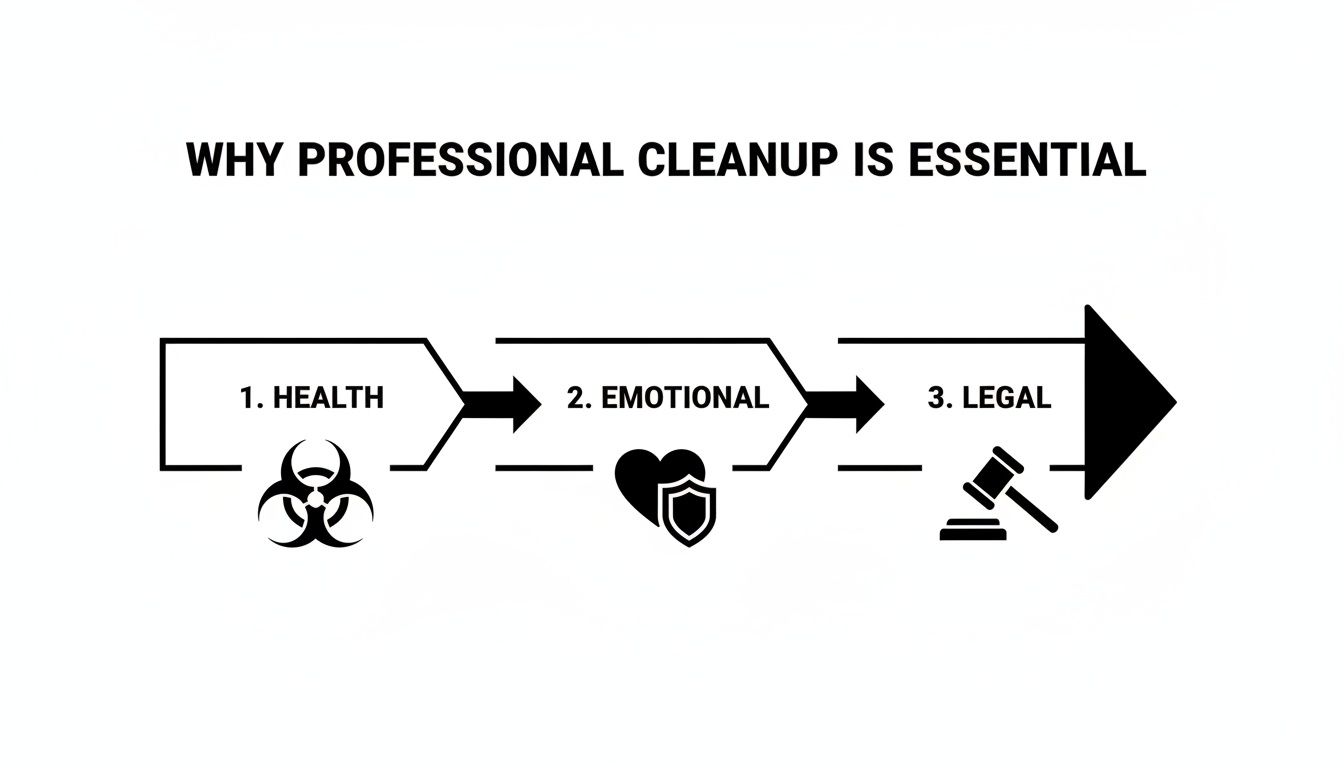
As you can see, it's a chain reaction: ensuring health and safety leads to emotional relief and legal peace of mind, providing a complete and lasting solution.
The cleanup process isn't just a single action but a series of carefully executed steps. We've broken down the four main phases to give you a clearer picture of what to expect.
The Four Stages of Homicide Scene Remediation
| Phase | Key Actions | Primary Goal |
|---|---|---|
| 1. Site Assessment | Evaluate the scope of contamination, identify all affected materials, and create a remediation plan. | To understand the full extent of the work and ensure safety from the start. |
| 2. Contamination Control | Set up a containment zone using plastic sheeting and negative air pressure to prevent spread. | To isolate the affected area and protect the rest of the property. |
| 3. Biohazard Removal & Cleaning | Remove all contaminated items, clean surfaces with professional-grade detergents, and then disinfect. | To physically remove all sources of biohazards and pathogens. |
| 4. Deodorization & Verification | Use specialized equipment to eliminate odors and perform final tests (like ATP testing) to confirm cleanliness. | To return the space to a safe, neutral, and livable condition. |
Each phase builds on the last, ensuring that by the end, the property is not just visually clean but biologically safe.
Odor Neutralization and Final Check
Lingering smells can be a powerful and painful reminder of what happened, and regular air fresheners just cover them up temporarily. Our crews use high-tech equipment like ozone machines and hydroxyl generators that don't mask odors—they attack and destroy the molecules causing them, permanently cleaning the air.
The very last step is verification. Before we ever call a job done, we conduct a final, meticulous inspection. Some jobs require scientific confirmation using ATP (adenosine triphosphate) testing, which can detect any remaining microscopic organic material. Only after the area passes this final check with flying colors is our work officially complete.
As a leading biohazard remediation company in Arizona, we understand that these detailed procedures are non-negotiable. The goal is always to restore not just a physical space, but a sense of safety, allowing families to move forward without the fear of hidden threats.
Why Certification and Compliance Are Non-Negotiable
When you're looking for a homicide cleanup service, you'll see a lot of technical terms thrown around. Words like "certified," "bonded," and "insured" might just sound like industry buzzwords, but they are actually your most important safeguards. These aren’t just badges a company collects for its website; they are concrete promises of professionalism, safety, and accountability.
Choosing a company without these credentials is a lot like hiring an unlicensed surgeon. They might talk a good game, but they simply don't have the verified training, legal standing, or safety protocols to protect you from some really catastrophic risks. A true professional proves their expertise through official channels, so you know every step they take is backed by recognized standards.
Decoding the Credentials That Matter
Getting a handle on what these qualifications actually mean will empower you to choose the right team for the job. Each one serves a specific purpose, working together to create a solid shield of protection for you and your property.
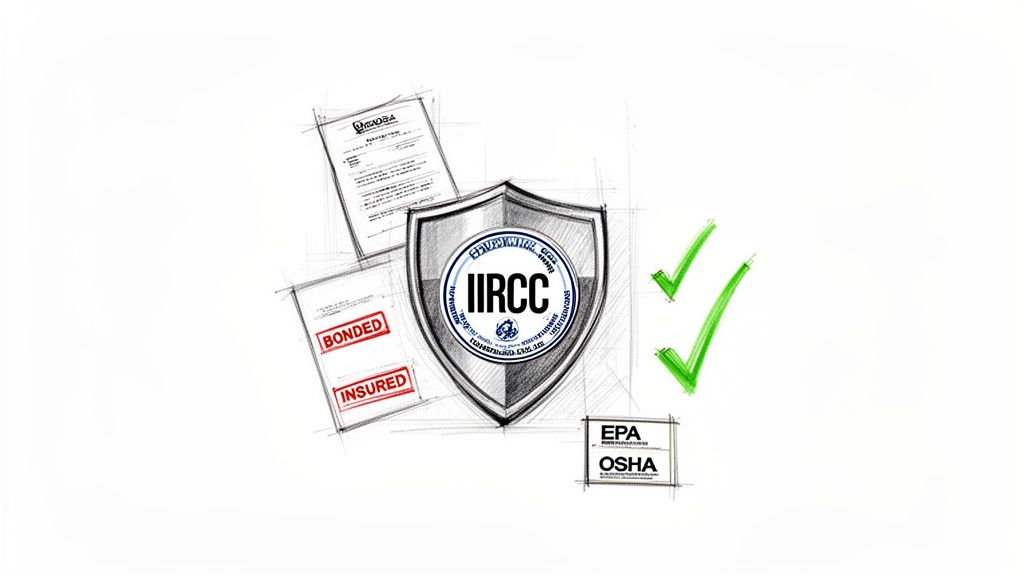
- IICRC-Certified: The Institute of Inspection, Cleaning and Restoration Certification (IICRC) is the gold standard in this field. An IICRC-certified technician has gone through intensive training and passed tough exams on the correct procedures for biohazard remediation. This is your proof that the team knows exactly how to handle dangerous materials safely and effectively.
- Bonded: Think of a bond as a financial safety net for you. It's a type of insurance that protects you if a company fails to finish the job as promised or does something unethical. It ensures you aren't left holding the bag with an unfinished, unsafe project.
- Insured: This one is absolutely essential. Proper insurance, especially general liability and workers' compensation, protects you from being held financially responsible if a technician gets hurt on your property or if something is accidentally damaged during the cleanup.
Without this trio of credentials, you’re left completely exposed. You can dive deeper into why these standards are so critical in our articles about being an IICRC-certified company.
The Federal and State Rules Protecting You
The world of biohazard cleanup is heavily regulated for a very good reason—public health is on the line. Several government agencies lay down the law to ensure safety for everyone, from the technicians on-site to the community at large. A compliant company is one that knows these rules inside and out and follows them to the letter.
The two big players you need to know about are:
- OSHA (Occupational Safety and Health Administration): OSHA sets the safety standards for anyone working with biohazardous materials. This covers everything from the right personal protective equipment (PPE) and bloodborne pathogen training to proper decontamination steps. A company that follows OSHA rules isn't just protecting its crew; it's ensuring a safer, more professional job for you.
- EPA (Environmental Protection Agency): The EPA controls how biohazardous waste is disposed of. You can't just toss contaminated materials into a regular dumpster. They're classified as "regulated medical waste" and must be transported by licensed carriers to specific disposal facilities. An unqualified provider who dumps this waste improperly can create a serious public health hazard and even leave you legally liable.
Choosing a certified and compliant company is the best way to ensure that the job is done right—legally, safely, and completely. It removes any guesswork and protects you from the severe consequences of hiring someone who cuts corners.
The Dangers of Hiring an Unqualified Provider
The risks of hiring an unqualified or non-compliant company are serious and can have lasting effects. It’s a decision that often leads to lingering health hazards, legal trouble, and a great deal of emotional distress. Trust me, the money you might save upfront with a cheaper, unqualified service is never worth the long-term cost.
Here’s what can go wrong:
- Incomplete Decontamination: Without the right training, a provider can easily miss microscopic pathogens that have soaked into porous materials like wood, drywall, or even grout. This leaves your family exposed to infectious diseases long after the visible evidence is gone.
- Legal Liability: If a company disposes of biohazardous waste illegally, you, as the property owner, could be the one facing fines and legal action. You are ultimately responsible for what happens on your property.
- Emotional Trauma: A poorly handled cleanup can serve as a constant, painful reminder of the tragedy. A professional, compassionate team knows how to work discreetly and restore the space in a way that helps you heal, not makes things harder.
Navigating Cleanup Costs and Insurance
After a tragedy, the last thing you want to worry about is money. But facing the financial side of a cleanup is a real and often overwhelming part of the process.
When you call a homicide cleanup service, one of the first questions is usually about cost. There’s no simple, one-size-fits-all price because every situation is so different. It’s less like buying something off a shelf and more like commissioning a custom restoration project. The final cost really depends on what we find when we arrive on-site.
Key Factors That Influence Cleanup Costs
To give you an idea of what to expect, the final price is shaped by a few key variables. During our initial assessment, we’re looking at several things that define the complexity and scope of the job.
- Size of the Affected Area: A small, contained incident in a single room is very different from a situation that has spread across multiple rooms or even different floors of a home.
- Types of Materials Involved: The surfaces we’re dealing with matter a lot. Porous materials like carpet, drywall, and untreated wood can absorb biohazards deep inside, which often means they have to be completely removed. On the other hand, non-porous surfaces like tile or sealed concrete can often be cleaned and disinfected.
- Duration and Severity of the Incident: How long it's been since the event occurred can change everything. The longer biohazards sit, the deeper they can seep into the structure of the building, making the cleanup and restoration work far more involved.
- Required Labor and Equipment: The number of certified technicians needed to do the job right—and safely—is a major factor. So is the specialized equipment we have to bring in, like HEPA air scrubbers for air quality or ozone generators to permanently eliminate odors.
The Role of Property Insurance
For most families, the big question is, "Will insurance cover this?" The good news is that in many cases, yes. Homeowner's, commercial, or other property insurance policies often cover trauma and crime scene cleanup. They tend to view it as a necessary step in restoring the property from damage, just like they would for a fire or a flood.
But it’s important to remember that every policy is different, and coverage is never guaranteed. This is where an experienced cleanup company becomes more than just a cleaning crew.
An experienced biohazard remediation company can act as your advocate. We know what insurance adjusters need to see, and we provide the detailed documentation and precise estimates they require. We can often work directly with your insurance provider, which helps move the claims process along and takes a huge weight off your shoulders.
Dealing with an insurance claim is complicated enough without the emotional toll you're already carrying. If you want to get a better sense of the process, our guide on navigating water damage insurance claims covers many of the same principles.
A Growing Need for Professional Services
Sadly, the need for these specialized services is growing. The global crime scene cleanup market, which was valued at around $799.2 million in 2024, is expected to nearly double to $1,500 million by 2035. This trend is partly tied to a rise in violent crime incidents around the world, which underscores just how critical professional, compassionate remediation has become. You can read more about the crime scene cleanup market on wiseguyreports.com.
Getting through the aftermath of a violent crime is an incredibly difficult road. By understanding what goes into the cost of a cleanup and how insurance can help, you can take this necessary step with a bit more clarity, freeing you to focus on what truly matters—healing.
How to Choose the Right Homicide Cleanup Company
When you're faced with the unimaginable task of hiring a homicide cleanup service, trying to make a good decision can feel completely overwhelming. In a moment of crisis, you need a team that is not only technically skilled but also genuinely compassionate and professional. Knowing what to look for—and what questions to ask—is the best way to protect yourself from hiring an unqualified company that could make a heartbreaking situation even worse.
Think of it like choosing a surgeon for a critical operation. You wouldn't just pick the first name you see. You'd dig into their credentials, their track record, and how they treat their patients. That same level of care is vital here, because the health of your home and the well-being of your family are at stake.
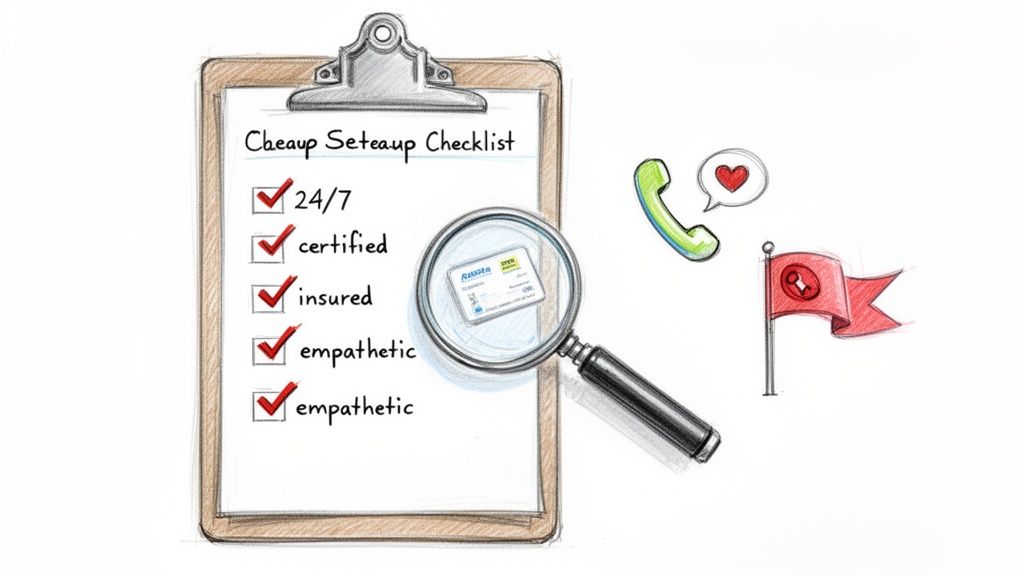
Your Essential Vetting Checklist
To make sure you find a trustworthy and capable team, use this checklist as your guide. Any reputable company will be open and honest, ready to answer every single one of these questions without a hint of hesitation.
Verify Their Credentials: Ask to see proof of their IICRC certification, liability insurance, and bonding. These are absolute must-haves. They protect you from shoddy work, financial loss, and any potential liability. A legitimate company will have this paperwork ready to go.
Confirm 24/7 Availability: Tragedies don't stick to a 9-to-5 schedule. A true professional service knows this and should be available 24/7 for immediate dispatch. That speed is crucial for preventing contamination from spreading and causing more damage.
Inquire About Specific Experience: Don't hesitate to ask direct questions. "How many homicide scenes have you actually remediated?" General biohazard cleanup is one thing, but direct, hands-on experience with the unique challenges of a homicide scene is what really counts.
Evaluate Their Communication Style: When you call, pay close attention to how they talk to you. Are they patient, empathetic, and respectful of what you're going through? Or do they sound rushed, detached, and impersonal? Compassion is a critical, though unwritten, part of this job.
When you're making that first call, trust your gut. A company that leads with clear, compassionate communication is far more likely to handle your situation with the dignity and respect it deserves from start to finish.
Red Flags to Watch Out For
Knowing what to look for is only half the battle; knowing what to avoid is just as important. Some behaviors are immediate red flags, signaling that a company might be unprofessional, unqualified, or worse, looking to take advantage of you in a vulnerable moment.
Be on the lookout for these warning signs:
- Quotes Over the Phone: No legitimate company can give you an accurate price without assessing the scene first. An instant quote suggests they're either guessing low to get in the door or using a bait-and-switch tactic.
- Unmarked Vehicles or Lack of Uniforms: Professionalism is a big deal. If a team shows up in personal cars with no company markings and isn't wearing proper uniforms or PPE, it shows a lack of the professional standards this work demands.
- Pressure Tactics: Any company that pushes you to sign a contract or make a decision before you're ready should be avoided. A compassionate provider will give you the time and space you need to think.
- Vague or Evasive Answers: If they can't clearly explain their cleanup process, safety protocols, or how they dispose of biohazardous waste, it's a huge sign they don't have the right training or knowledge of regulations.
Making a smart choice takes a little diligence, even when you're under immense stress. It helps to understand the principles of vetting qualified professionals for any kind of property emergency. For another perspective, you can see our guide on finding a qualified water damage restoration contractor, which touches on similar ideas of checking credentials and experience.
Ultimately, choosing the right homicide cleanup company comes down to finding a team that balances proven technical skill with genuine human decency. By asking the right questions and watching for red flags, you can find a partner who will help you navigate this painful step safely and compassionately, so you can focus on healing.
Common Questions We Hear About Homicide Cleanup
When you're dealing with the aftermath of a violent crime, everything feels overwhelming and confusing. It's completely normal to have a flood of practical questions, even if they feel difficult to ask. Getting clear, straightforward answers is a crucial first step toward moving forward.
This section tackles the most common concerns we hear from families about homicide cleanup. Our goal is to cut through the confusion and give you the information you need to make the best decisions for your family and property. Think of this as a practical guide to help reduce some of the uncertainty you're facing.
"Can I Just Clean It Myself? Or Call My Usual Cleaning Service?"
This is a question that comes from a good place—wanting to take action and restore order. But we have to be direct: please, do not attempt to clean a homicide scene yourself. The health risks are just too severe. These scenes are contaminated with biohazardous materials, including bloodborne pathogens that can cause serious, life-altering illnesses. The cleaning products you buy at the store simply aren't designed to eliminate these microscopic dangers.
What about a standard janitorial or maid service? They aren’t the right call either. They lack the specific training, equipment, and legal authority for this kind of work.
A professional biohazard remediation team brings three critical things to the table:
- Specialized Training: Our technicians live and breathe OSHA safety protocols. They're experts in containing and neutralizing bloodborne pathogens.
- The Right Gear: We don't use mops and sponges. We use full-body personal protective equipment (PPE), and our disinfectants are EPA-approved, hospital-grade chemicals proven to kill dangerous pathogens.
- Legal Disposal: You can't just throw contaminated materials in a dumpster. We are licensed to properly handle, transport, and dispose of all biohazardous waste according to strict federal and Arizona state laws.
Hiring an unqualified service or trying to do it yourself can lead to incomplete decontamination. This leaves behind a hidden health hazard for anyone who steps foot on the property in the future.
"How Long is This Going to Take?"
There’s no one-size-fits-all answer here, and any company that gives you a specific timeline over the phone isn't being straight with you. The duration of a cleanup depends entirely on the unique circumstances of the situation. A trustworthy crew will always start with a detailed, on-site assessment before giving you an estimated timeframe.
Several things can affect how long the process takes:
- The scope of the scene: An incident contained to a small area on a tile floor is very different from one that has impacted multiple rooms, including carpeting and drywall.
- The materials involved: It’s much faster to clean and disinfect non-porous surfaces like sealed tile or glass. Porous materials—think carpet, wood, drywall, and concrete—often absorb bio-fluids, meaning they usually have to be professionally cut out and removed.
- How much time has passed: A scene that has been sitting for a while is often a more complex and time-consuming remediation job.
While we always work efficiently, our number one priority is never speed. It's thoroughness. We leave when the job is done right and the area is confirmed to be safe.
"Will My Homeowner's Insurance Cover This?"
This is probably the most pressing question on everyone's mind, and for good reason. The good news is that in many cases, the answer is yes. Most homeowner's, commercial, or property insurance policies do provide coverage for professional trauma and homicide cleanup services. It's typically viewed as a form of property damage restoration, much like recovering from a fire or a flood.
But here’s the important part: coverage always comes down to the fine print in your specific policy. The best first step is to pull out your policy documents or call your insurance agent to confirm what’s covered.
An experienced, professional cleanup company becomes your ally here. We know exactly what insurance carriers need. We provide the detailed documentation, photos, and line-item estimates required to get a claim processed smoothly. This support can lift a huge administrative weight off your shoulders at a time when you need it most.
"What Happens to Personal Belongings That Are Contaminated?"
Navigating personal items is easily the most delicate part of our work. We understand that these aren't just "things"—they're memories. Our technicians are trained to handle every single item with compassion and respect.
We follow a careful, transparent process. First, we identify and document every item that has been affected. Whether something can be saved depends entirely on what it's made of:
- Non-porous items like jewelry, ceramics, glass, and some sealed wood can almost always be recovered. We have specialized methods to clean, disinfect, and return them safely.
- Porous items are another story. Things like mattresses, sofas, rugs, untreated wood, and clothing that have been heavily saturated with biological fluids are unlikely to be considered safe after cleaning. For the health of everyone involved, these items must be disposed of as regulated biohazardous waste.
Before anything is thrown away, we talk to you. We'll create a detailed inventory of items that can't be salvaged—which is often needed for your insurance claim—and we won't proceed without your approval. Every decision is made with total transparency, ensuring the space is made safe while honoring your family's property and memories.
When you need a team that combines certified expertise with compassionate care, Restore Heroes is here to help. We offer professional and discreet homicide cleanup services across the Phoenix metro area. If you are facing this difficult situation, contact us for an immediate and respectful response. Learn more at https://www.restoreheroesaz.com.