
When you’re facing a crisis, the term ‘biohazard remediation company’ might sound cold and clinical. But what it really means is a team of highly trained specialists who step in to handle dangerous situations that standard cleaning services simply aren't equipped for.
Think of them as the first responders for your property. They're the professionals who arrive after a traumatic event—like an accident, crime scene, or unattended death—to safely and thoroughly remove hazardous biological materials and restore the space.
Defining the Role of a Biohazard Remediation Company
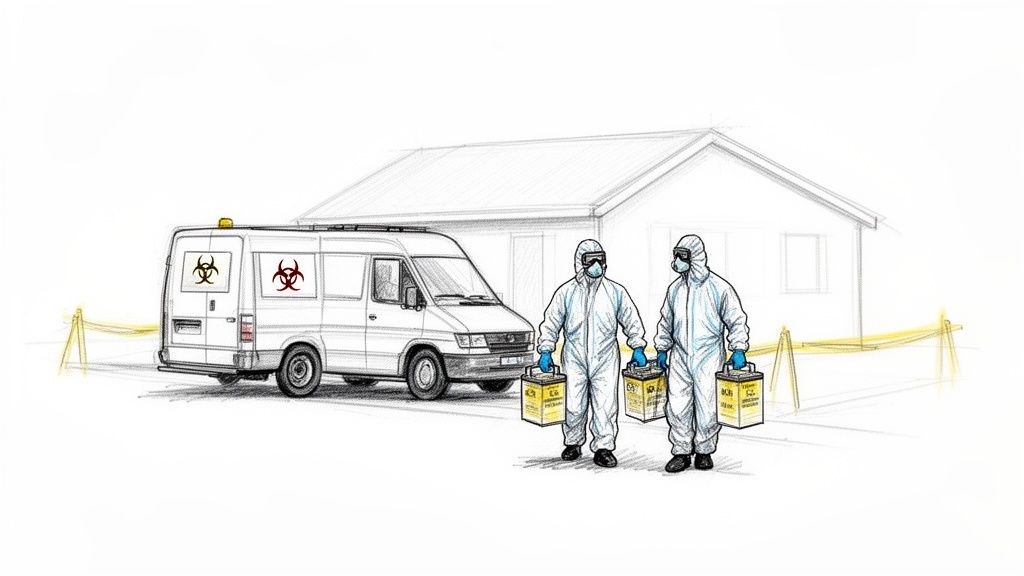
Unlike a janitorial service, a biohazard remediation company operates under incredibly strict safety protocols and government regulations. Their job is to tackle sites contaminated with potentially infectious materials, with the goal of returning the area to a safe, livable condition. This work is absolutely critical because invisible dangers, such as bloodborne pathogens, can linger long after the visible evidence is gone.
These specialists use personal protective equipment (PPE), specialized tools, and hospital-grade disinfectants to manage these high-risk scenarios. Their work aims to protect everyone—from the property owner to future occupants—from serious health risks. A truly professional company brings expertise, discretion, and genuine compassion to every job, because they understand the emotional toll these situations take.
You can learn more about this sensitive process in our guide to trauma and biohazard cleanup: https://restoreheroesaz.com/trauma-biohazard-cleanup/
What Qualifies as a Biohazard?
So, what exactly is a "biohazard"? The term covers any biological substance that poses a threat to the health of living things, especially people. A professional remediation team is trained to handle all of them.
Common examples include:
- Blood and Bodily Fluids: These can carry dangerous pathogens like HIV, Hepatitis B, and Hepatitis C.
- Human Tissue and Remains: Often present after a traumatic event or unattended death.
- Animal Waste and Carcasses: These can harbor harmful bacteria, viruses, and parasites.
- Microbiological Wastes: Materials from laboratories that might contain infectious agents.
Essentially, these companies are equipped to handle anything considered clinical waste, bio-medical waste, or regulated medical waste, striving to perform the cleanup safely and by the book.
A biohazard remediation professional doesn’t just clean what you can see; they eliminate the microscopic threats you can't, transforming a dangerous environment back into a safe space.
The need for these specialized services is on the rise. With a greater awareness of biohazard risks, the market has grown significantly and is projected to reach $1.8 billion by 2025. The industry is expected to keep expanding at a compound annual growth rate of 7% through 2033, which just goes to show how vital these companies are to public health and safety.
What a Bio-Hazard Remediation Company Actually Does
When people hear “biohazard cleanup,” their minds often jump to crime scenes they’ve seen on TV. While that’s part of it, the reality is much broader and more technical. A professional biohazard remediation company steps in for situations that are far too dangerous or emotionally overwhelming for a standard cleaning service.
Their work is a unique blend of scientific precision and genuine compassion. It’s not about just making a place look clean; it's about making it scientifically safe. Think of it this way: you might wipe down your kitchen counter, but a surgeon sterilizes their tools. We’re the surgeons of the restoration world, working to eliminate microscopic threats you can't see.
Trauma and Crime Scene Cleanup
This is probably the most well-known service we provide. After an accident, violent crime, or any other traumatic event, the scene is often contaminated with blood and bodily fluids. These aren't just stains; they are considered biohazards because they can carry dangerous bloodborne pathogens like HIV and Hepatitis B and C.
Our certified technicians follow a strict, methodical protocol to handle these scenes safely:
- Containment: The first thing we do is work to isolate the affected area. This is critical to prevent any cross-contamination to the rest of the property.
- Removal: Wearing full personal protective equipment (PPE), our team meticulously removes every trace of biological material. This isn't just surface cleaning—it can mean safely removing and disposing of contaminated items like carpet, furniture, or even drywall.
- Disinfection: After the visible contaminants are gone, we use hospital-grade disinfectants and specialized equipment to sanitize every surface. Our job isn't done until we've applied treatments designed to eliminate pathogens.
This disciplined process is absolutely essential for restoring a safe environment and giving those affected a little bit of peace of mind during a difficult time.
Unattended Death Remediation
This is one of the most sensitive and specialized services we offer. When a person passes away and isn't found for a period of time, the natural decomposition process creates an extremely hazardous environment. Bodily fluids are released, and powerful, persistent odors can seep into the very structure of a home.
Handling this requires not only technical expertise but a great deal of empathy. Our technicians work discreetly and respectfully to restore the home, removing a heavy and traumatic burden from grieving families who should never have to face this task on their own.
The work of a biohazard remediation company is foundational to public health. We are the experts who strive to ensure that dangerous biological contaminants are handled with the highest level of safety, preventing the spread of disease and protecting communities.
The need for these specialized skills is a major reason our industry exists. In fact, biohazard remediation is the leading segment within the crime scene cleanup market, which was valued at $123.17 million in 2025. With growing awareness and tighter safety regulations around blood spills and pathogens, this sector is expected to climb to $176.41 million by 2032.
Advanced Disinfection and Deodorization
Our expertise extends beyond trauma scenes. We're also called in to handle viral and bacterial outbreaks, providing deep cleaning and disinfection for properties contaminated with pathogens like C. difficile (C. diff), MRSA, or Norovirus. These situations demand a level of sanitation that regular cleaning simply can't deliver.
At the heart of our work is a range of specialized services designed to make a space safe and livable again. Here’s a quick look at what that involves.
Biohazard Remediation Services Overview
| Service | What It Involves | Common Scenarios |
|---|---|---|
| Trauma & Crime Scene Cleanup | Safely removing blood, bodily fluids, and other biological materials. Disinfecting the entire area. | Homicides, suicides, accidents, violent assaults. |
| Unattended Death Cleanup | Remediation of decomposition fluids and tissues, coupled with intensive odor removal. | When a person passes away alone and is not discovered for days or weeks. |
| Advanced Disinfection | Using hospital-grade chemicals and protocols to eliminate dangerous viruses and bacteria. | C. diff outbreaks, MRSA contamination, post-illness sanitation in homes or businesses. |
| Odor Removal | Neutralizing and eliminating deeply embedded odors from biological sources, smoke, or pests. | Decomposition, animal infestations, heavy smoke damage, sewage backups. |
| Hoarding Cleanup | Sorting and disposing of massive amounts of clutter, which often hides biohazards like waste, mold, and pests. | Compulsive hoarding situations, squalor conditions. |
Each service requires its own unique approach, but the goal is always the same: to restore safety, order, and peace of mind.
Odor removal is another massive part of what we do. Lingering smells from decomposition, animal waste, or smoke aren't just unpleasant—they're caused by microscopic particles that have absorbed into porous materials like wood and drywall. Our technicians use advanced technology to attack odors at their source.
This can include powerful tools and methods like:
- Ozone treatments
- Thermal fogging
- Hydroxyl generation
These techniques don't just cover up the smell. They create a chemical reaction that actually breaks down and destroys the odor-causing molecules, with the goal of making sure the scent is gone for good. This is especially vital when dealing with persistent biological sources or fungal growth. For issues like that, you might want to read our guide on professional mold removal. By tackling threats both seen and unseen, we can offer a truly complete restoration.
What to Expect: A Look Inside the Biohazard Remediation Process
Walking through the steps of a professional biohazard cleanup can help demystify the process and bring a little clarity during a chaotic time. This isn't just about cleaning; it’s a highly controlled, scientific procedure designed to make a space completely safe again. Knowing what’s coming can make the entire situation feel much more manageable.
It all starts with your first phone call. A compassionate, professional team will listen to understand the situation, gathering the key details needed to dispatch the right crew with the right equipment.
Step 1: Site Assessment and Containment
The team's absolute first priority upon arrival is safety. Dressed in full personal protective equipment (PPE), our technicians conduct a painstaking assessment of the scene. This is more than a quick glance; they’re trained to identify the full extent of the contamination, including dangers that aren’t visible to the naked eye.
Once they understand the scope, they immediately establish a containment zone. Using heavy-duty plastic sheeting and negative air pressure machines, they work to seal off the affected area from the rest of the home or building. This crucial step helps prevent airborne pathogens from spreading, keeping the problem contained.
Step 2: Removing Contaminated Materials
With the area secured, the heavy lifting begins. This is the most labor-intensive part of the job, where our technicians carefully and methodically remove all sources of biohazardous material, like blood and other bodily fluids.
This goes far deeper than a surface-level wipe-down. Any porous materials that have absorbed biohazards—think carpet, drywall, upholstery, and some furniture—often can't be saved. Our biohazard remediation company technicians will carefully cut out and remove these compromised items. Everything is then sealed in specially marked, leak-proof containers, following federal and state regulations for handling regulated medical waste.
The goal of biohazard remediation isn't just to clean what you can see. It's to completely eliminate the source of the contamination, so no hidden threats are left behind in the structure of the property.
This flow chart simplifies the core stages, showing how a professional team moves from initial assessment to final, safe disposal.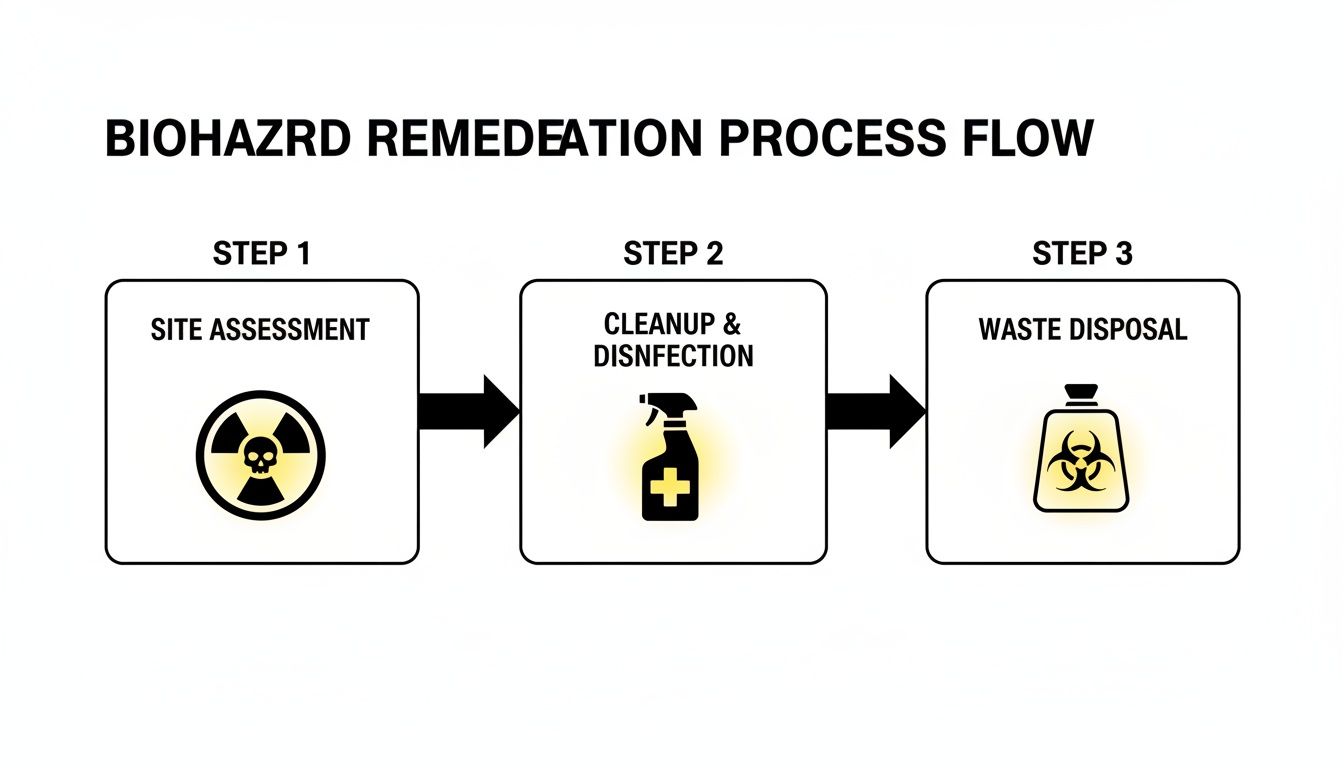
As you can see, it’s a systematic approach that prioritizes safety at every turn.
Step 3: Cleaning, Disinfecting, and Deodorizing
After all contaminated materials are gone, the team shifts to a multi-stage deep cleaning and disinfection process. They begin by meticulously cleaning every surface in the contained area to remove any residual biological matter.
Next comes the application of EPA-registered, hospital-grade disinfectants. These aren’t your average household cleaners; they are formulated to eliminate dangerous bloodborne pathogens, viruses, and bacteria. The technicians ensure the disinfectant has proper "dwell time"—the specific amount of time it needs to sit on a surface to do its job effectively.
Finally, we tackle any lingering odors. Biological events can leave behind powerful, deeply-set smells. Instead of just covering them up, we use specialized equipment like hydroxyl generators or thermal foggers to destroy odor-causing molecules at their source. In situations where odors are tied to fungal growth, many companies also offer professional mold remediation services to address both the smell and the underlying health risk.
Step 4: Verification and Restoration
The work isn't over just because the area looks clean. A truly professional company may conduct a final inspection, sometimes using special tests to confirm that the space is sanitized and pathogen-free. Only when the lead technician signs off is the containment barrier taken down.
Once the area is officially declared safe, the property is ready for re-entry. The team can then walk you through any necessary repairs, like replacing the drywall or flooring that had to be removed. To see how we put this all into practice, you can find more details on our process. This commitment to a transparent, thorough method helps ensure every job is done right.
The Importance of Professional Certifications and Safety
When you call a biohazard remediation company, you’re putting the health of your family, employees, or tenants in their hands. This is worlds away from a job for a standard cleaning service or a handyman. The entire field is built on a foundation of strict safety standards designed to protect everyone from dangerous pathogens.
Hiring a company without the right credentials is like asking an unlicensed plumber to install a new gas line—the risks are just too high. An improper cleanup can leave behind invisible threats, leading to long-term health problems and even legal trouble for you as the property owner. That's why professional certifications aren't just a nice-to-have; they're an absolute must.
The Gold Standard: IICRC Certification
In the world of restoration and remediation, one name sets the bar for everyone else: the IICRC (Institute of Inspection, Cleaning and Restoration Certification). Think of the IICRC as the main governing body that establishes the professional standard for skill, ethics, and technical know-how. It's a non-profit that works to ensure technicians are properly equipped to handle difficult and dangerous situations.
Becoming an IICRC-certified firm isn't easy. A company has to show proof of insurance, have a formal customer complaint policy, and commit to ongoing education for its technicians. This isn't a one-and-done test. It’s a continuous promise to stay up-to-date with the latest science and safety protocols.
When you hire an IICRC-certified biohazard remediation company, you’re getting a team trained in the essentials:
- Containment Strategies: Knowing how to properly seal off the affected area to stop contamination from spreading.
- Pathogen Safety: Understanding the dangers of bloodborne pathogens and the right techniques to eliminate them.
- Proper Disposal Methods: Following all local and federal laws for safely disposing of biohazardous waste.
This training means every step is handled with scientific precision, not guesswork. If you'd like to dive deeper, we have more information about what it means to be an IICRC-certified contractor.
Navigating OSHA and EPA Regulations
On top of industry certifications, any reputable company must follow strict government regulations. Two agencies are central to biohazard safety: the Occupational Safety and Health Administration (OSHA) and the Environmental Protection Agency (EPA).
OSHA’s Bloodborne Pathogens Standard (29 CFR 1910.1030) is the big one. This federal law spells out exactly how workers must be protected from blood and other infectious materials. It covers everything from using Personal Protective Equipment (PPE) to having a written exposure control plan and specific protocols for handling contaminated items.
A company’s dedication to OSHA and EPA rules is a direct measure of its commitment to safety. It protects their team, but it also protects you and anyone else who sets foot on the property afterward.
The EPA steps in to regulate the disposal of hazardous waste and the types of disinfectants that can be used. A legitimate remediation company will use EPA-approved, hospital-grade chemicals proven to kill viruses and bacteria. They also maintain a strict chain of custody for all contaminated materials, aiming to ensure they are disposed of at licensed facilities. Taking shortcuts here could put you at significant legal and financial risk.
The growing focus on these regulations is helping professionalize the industry. The global crime scene cleanup market was valued at $62.9 million in 2024 and is expected to grow as safety awareness increases. The much broader environmental remediation field is projected to hit $142.17 billion by 2025, showing just how critical certified, compliant experts have become. At the end of the day, these certifications and regulations are your best indication that the job will be done safely, legally, and correctly.
How Costs and Insurance Claims Typically Work
After going through a traumatic event, the last thing you should have to deal with is a mountain of paperwork and confusing costs. It's completely normal to worry about the financial side of a biohazard cleanup, and any good company will walk you through it with total transparency.
Honestly, the process is often more straightforward than most people think, especially when you have an experienced team on your side.
What Goes Into the Cost of a Cleanup?
There’s no "one-size-fits-all" price tag for this kind of work, because every situation is different. A professional biohazard remediation company will typically start with an on-site assessment to understand exactly what needs to be done before giving you an estimate.
Here’s what typically influences the final cost:
- Size of the Affected Area: A small, contained space is, of course, going to be less involved than a scene that spreads across multiple rooms.
- Type of Contamination: The specific biohazard we're dealing with matters a lot. A scene with bloodborne pathogens demands a much higher level of protocol and disinfection than some other situations.
- Damage to the Property: When porous materials like drywall, carpet, or the subfloor are affected, they often have to be physically removed and disposed of. The amount of structural work needed is a major factor in the project's complexity and cost.
- Labor and Equipment: The final price will account for the number of certified technicians needed to do the job safely and the specialized gear we have to bring in, like commercial-grade air scrubbers or foggers.
Working Through the Insurance Claim
Here’s the good news: most homeowner and commercial property insurance policies do cover biohazard remediation. This is especially true for events like accidents, unattended deaths, or crime scenes, since these are considered sudden and unforeseen damages. Your policy may pay for the cleanup, disposal of contaminated materials, and even the necessary repairs.
A professional biohazard remediation company should be more than just a cleanup crew; they should be your advocate, helping to make the insurance process as painless as possible.
This partnership can be a game-changer. An experienced team knows what insurance companies often need to see to approve a claim quickly. We provide them with detailed reports, photos, and itemized invoices that spell out every step taken. This careful documentation can help avoid frustrating delays and helps your claim cover the full extent of the damage. For more on this, our guide on essential tips for handling a water damage insurance claim has some great advice that also applies here.
Most reputable companies, including ours, are used to working directly with insurance providers. We can talk to your adjuster, handle the technical questions, and manage the billing. This frees you up to focus on what’s truly important: taking care of yourself and your family.
Choosing a Reputable Biohazard Cleanup Partner
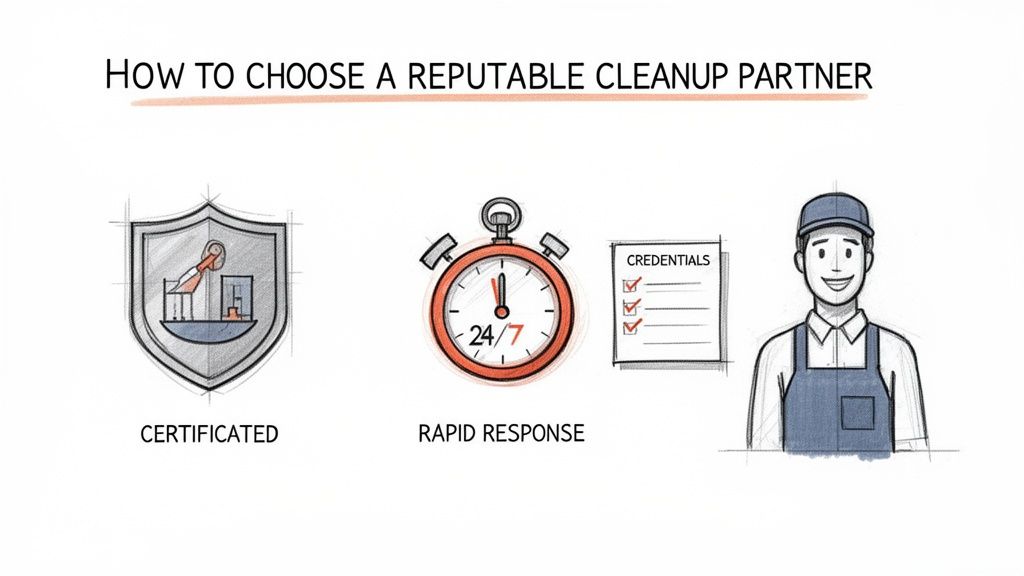
When you're facing an emergency, time is critical. The last thing you should be worrying about is whether the cleanup crew you hired is credible. Choosing the right biohazard remediation company isn't just about cleaning up a mess—it’s about your safety, your property, and your peace of mind.
A trustworthy company knows that traumatic events don't stick to a 9-to-5 schedule. That’s why 24/7 availability is non-negotiable. The quicker a professional team can get on-site to contain the area, the lower the risk of pathogens spreading and causing even more damage.
Credentials and Compassion
Speed is one thing, but genuine expertise is what sets a true professional apart from a standard cleaning service. Any company you consider should be fully licensed, bonded, and insured. This is your shield, protecting you from liability and holding them accountable for the quality and safety of their work.
But just as important is the human element. The technicians coming into your home or business are walking into a deeply personal and often traumatic situation. They need to handle it with discretion and genuine compassion.
A reputable biohazard cleanup partner doesn't just restore a physical space; they provide support and guidance during a crisis, managing the technical details so you can focus on healing.
This blend of technical skill and empathy is the true mark of a company that puts you first.
Key Qualities of a Trusted Partner
From the moment you pick up the phone, you should get a sense of these core values. A good partner will be transparent, patient, and ready to answer all your questions without making you feel rushed.
When vetting a company, make sure they check these boxes:
- 24/7 Availability: Emergencies can't wait. You need a team that can respond immediately.
- Certified and Insured: This shows they have the proper training and that you're protected.
- Local Expertise: A Phoenix-based team will understand local regulations and be able to navigate the process without a hitch.
- Compassionate Service: Look for professionals who approach sensitive situations with the care and discretion they deserve.
Finding the right company means you can confidently hand over the keys, knowing every single detail will be managed with expertise and respect.
Got Questions? Here Are Some Straightforward Answers
When you're dealing with a biohazard situation, your mind is probably racing with urgent questions. It's a stressful and confusing time, and getting clear, honest answers can make all the difference. Let's walk through some of the most common concerns we hear from property owners.
Every job is different, of course, but the fundamental principles of safety, meticulous cleaning, and following the rules are always the same. Our goal here is to give you a better understanding of what’s involved.
Is It Safe to Stay in My Home During the Cleanup?
For your own well-being, we strongly advise against it. It's best for you and your family to find another place to stay while the cleanup is in progress. Our technicians work with powerful chemicals and specialized equipment inside a sealed containment zone to stop any contaminants from spreading.
A professional biohazard remediation company will rope off the affected area to create a secure work zone. We'll keep you in the loop the entire time and will give you the official all-clear when the space is decontaminated, sanitized, and determined to be safe for your return.
Can't I Just Clean It Up Myself?
I understand the impulse to want to handle things yourself, but please don't. Trying to clean up a biohazard scene is incredibly dangerous. Biological materials, especially blood, can carry invisible pathogens like HIV and Hepatitis that pose serious health risks.
Your everyday household cleaners simply aren't equipped to kill these microscopic threats. In fact, you could unknowingly spread the contamination and make the situation far worse. Our professionals are required to wear full personal protective equipment (PPE), use hospital-grade disinfectants, and adhere to strict procedures to eliminate the danger and legally dispose of the waste.
A professional cleanup isn't just about what you can see. It’s about scientifically neutralizing invisible dangers to protect the long-term health of everyone who enters the space.
How Long Does a Biohazard Cleanup Take?
That’s a tough one to answer without seeing the scene. The timeline can vary quite a bit because it really depends on the specifics of the situation.
A few key things will determine the duration:
- The size of the area we're working on.
- The type of biohazard we're dealing with.
- What materials are affected – for example, cleaning a simple tile floor is much faster than having to remove contaminated drywall and subflooring.
A smaller, more contained job might be wrapped up in a few hours. A more complex scene with widespread contamination could easily take several days. Any reputable company will start with an on-site assessment to give you a realistic timeline.
What Happens to All the Contaminated Stuff?
Anything that has come into contact with biological fluids is treated as regulated medical waste. This isn't just about structural materials like carpet or drywall; it can also include personal items that are too contaminated to be saved.
A professional biohazard company is legally bound to follow strict local, state, and federal laws for handling this type of waste. We carefully package everything in specially marked biohazard containers, transport it securely, and ensure it is disposed of at a licensed medical waste facility. This approach is designed to remove it from your property and the environment safely and permanently.
When facing a biohazard emergency, you need a team you can trust. Restore Heroes is a licensed, bonded, insured, and IICRC-certified company providing 24/7 rapid response across the Phoenix metro area. Get Help Now from Restore Heroes