
That gut-wrenching moment you find water pooling where it shouldn't be is something no homeowner wants to experience. Whether it's a slow leak that's finally made itself known or a sudden burst pipe, the initial shock can be overwhelming. But what you do in those first few minutes is critical.
Taking the right steps, right away, can save you thousands of dollars and may prevent a small problem from turning into a catastrophic one.
Your First Moves After Discovering Water Damage
Panic is a natural reaction, but a clear head and a quick plan can make a significant difference. Think of this as your emergency action plan to regain control before professionals arrive.
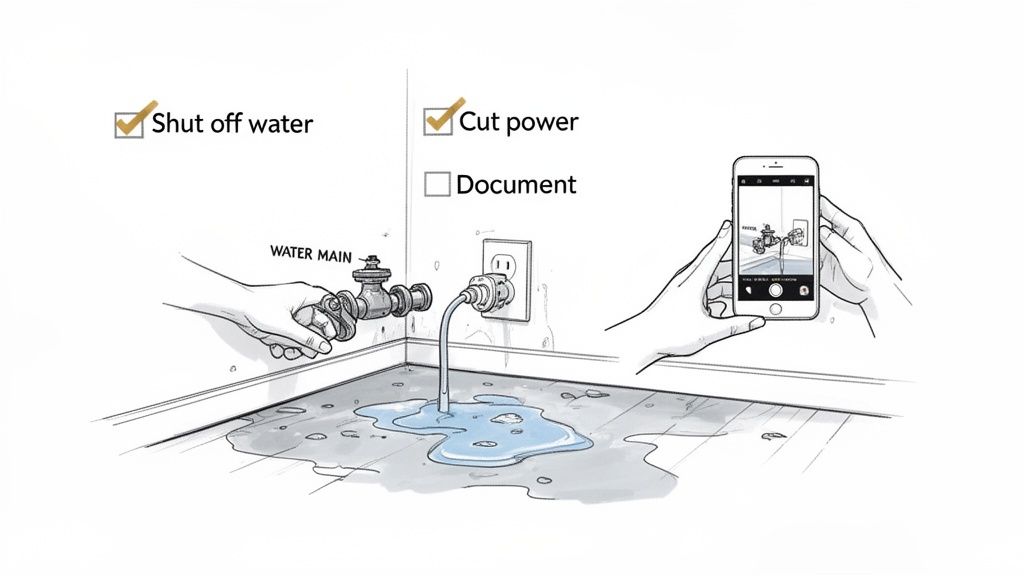
Prioritize Safety Above All
Before you think about saving your stuff, you have to think about your safety. Water and electricity are a lethal combination. If you see standing water near electrical outlets, appliances, or your breaker panel, stay out.
Your first two moves are non-negotiable:
- Cut the Power: Head straight for your breaker box and shut off the circuits to the flooded areas. If you’re not sure which breaker is which, play it safe and kill the main power to the whole house.
- Stop the Water Source: Find your home's main water shut-off valve and turn it off. These are usually in the basement, a crawl space, or a utility closet near the water heater. For a specific appliance leak, you can often find a smaller shut-off valve right behind the toilet or under the sink.
Only when the immediate electrical and water-flow threats are neutralized should you move on to the next steps.
From my experience, the biggest mistake people make is wading into standing water while the power is still on. Nothing you own is worth risking your life. Safety first, always.
Document and Call for Help
Now that the area is safe to enter, grab your phone. Before you move a single thing, document everything for your future insurance claim. Take videos and plenty of photos showing the source of the leak, the extent of the water, and every single item that has been damaged. Get close-ups and wide shots.
Once you have your evidence, it's time to make the call. Your first call should be to a certified water damage restoration contractor. They need to get there fast to start the drying process and help prevent mold, which can begin to grow in as little as 24-48 hours.
You can get a deeper dive into what happens next in our guide to emergency flood cleanup. And if carpet is involved, time is of the essence; understanding how to dry wet carpet fast and prevent mould is a key piece of the puzzle.
How to Properly Vet Restoration Contractors
Choosing the right water damage restoration contractor is probably the most critical decision you'll make when your property is underwater. It's a stressful time, and the quality of their work will directly impact not just your home's safety but your financial well-being, too. A few minutes of careful vetting now can save you from a world of headaches down the road.
Your goal here is to find a team that's more than just fast. You need someone qualified, fully insured, and transparent. This means looking past a flashy website and digging into their actual credentials. Any legitimate pro will have zero problem showing you their qualifications.
Look for Non-Negotiable Credentials
Before you get into the nitty-gritty of your specific damage, there are a few must-haves. Think of these as the absolute minimum entry requirements for any company you're considering.
- Proper Licensing and Bonding: First, make sure they're licensed to work in Arizona. Bonding is also important—it's a financial safety net if the contractor fails to complete the job or meet other obligations.
- Solid Insurance Coverage: The company should carry both general liability and worker's compensation insurance. This protects you from being on the hook for any accidents or injuries that happen on your property.
- IICRC Certification: This is the gold standard. The IICRC (Institute of Inspection, Cleaning and Restoration Certification) sets the professional bar for proper restoration. A certified firm means their technicians are trained in the latest, most effective ways to get your property dry and safe.
The restoration industry is booming, with over 60,020 businesses out there. But here's the kicker: only about 20% of them actually specialize in water damage. That IICRC seal is a powerful signal that you're dealing with a true expert, not a generalist trying to cash in.
Ask the Right Questions on Your First Call
Once you've confirmed they have the basics covered, that first phone call is your interview. A true professional will welcome your questions and give you clear, confident answers.
Here’s what you should be asking:
- "How quickly can you have a team here?" With water damage, every minute counts. A good company should be able to dispatch a team within hours, not days.
- "Are the technicians who will be in my home IICRC-certified?" Don't just ask if the company is certified. You want to know that the actual people doing the hands-on work are properly trained.
- "Can you work directly with my insurance company?" This is a huge one. Experienced contractors know how to document everything and speak the same language as insurance adjusters, which can make the whole claims process infinitely smoother for you.
- "What's your experience with a situation like mine?" Whether you've got a burst pipe in a high-rise or a nasty sewage backup, you want someone who has seen it all before. This is especially true for businesses, where downtime is a massive concern addressed by specialized commercial water damage restoration services.
Trust your gut. If a contractor gets defensive, rushes you off the phone, or can't give you a straight answer, that's a massive red flag. Thank them for their time and move on to the next name on your list.
To make it even easier, I've put together a quick checklist you can use when you're making those calls.
Contractor Vetting Checklist
Use this table as a scorecard when you're speaking with potential restoration companies. A confident "yes" to all of these is a great sign.
| Verification Point | What to Look For | Why It Matters |
|---|---|---|
| Licensing | A valid Arizona Registrar of Contractors (ROC) number. | Confirms they are legally allowed to perform the work in the state. |
| Insurance | Proof of General Liability and Worker's Comp. | Protects you from financial liability for on-site accidents or property damage. |
| IICRC Certification | A company certification number you can verify on the IICRC site. | Indicates they follow industry-best practices for effective and safe restoration. |
| Emergency Response | A stated goal for a 60-90 minute response time. | Speed is critical to minimizing secondary damage like mold growth. |
| Insurance Experience | Direct experience billing and documenting for major insurance carriers. | May simplify your claims process and reduce out-of-pocket stress. |
| Local Reviews | A strong portfolio of recent, positive reviews from local customers. | Provides social proof of their quality of work and customer service. |
Taking a few moments to run through these points separates the pros from the pretenders and puts you in control of the situation.
What to Expect When the Restoration Crew Arrives
When the restoration team pulls up to your house, it can feel a little overwhelming. Suddenly, your quiet home is a hub of activity with people and heavy equipment. But knowing what they're doing—and why—can bring a lot of peace of mind.
This isn't a random cleanup effort. The pros follow a very specific, science-based process to get your home back to its pre-loss condition. The industry term for this is achieving the "drying standard," which basically means getting your property properly and thoroughly dry, not just on the surface but deep down where hidden moisture can cause rot and mold.
The First Look: Assessment and Game Plan
Before a single fan is placed, the project manager or lead technician will walk through your property with a fine-toothed comb. They’ll use tools like moisture meters and thermal imaging cameras to see exactly where the water went. You'd be surprised how far water can travel behind walls and under floors, well beyond the initial puddle you saw.
From this detailed inspection, they'll create a scope of work. Think of this as the official game plan. It outlines every single task, from ripping out wet carpet to the final coat of paint, and it’s the document your insurance adjuster will use to understand the project.
This is why vetting your contractor beforehand is so crucial. You want to be sure the person creating this critical roadmap is qualified.
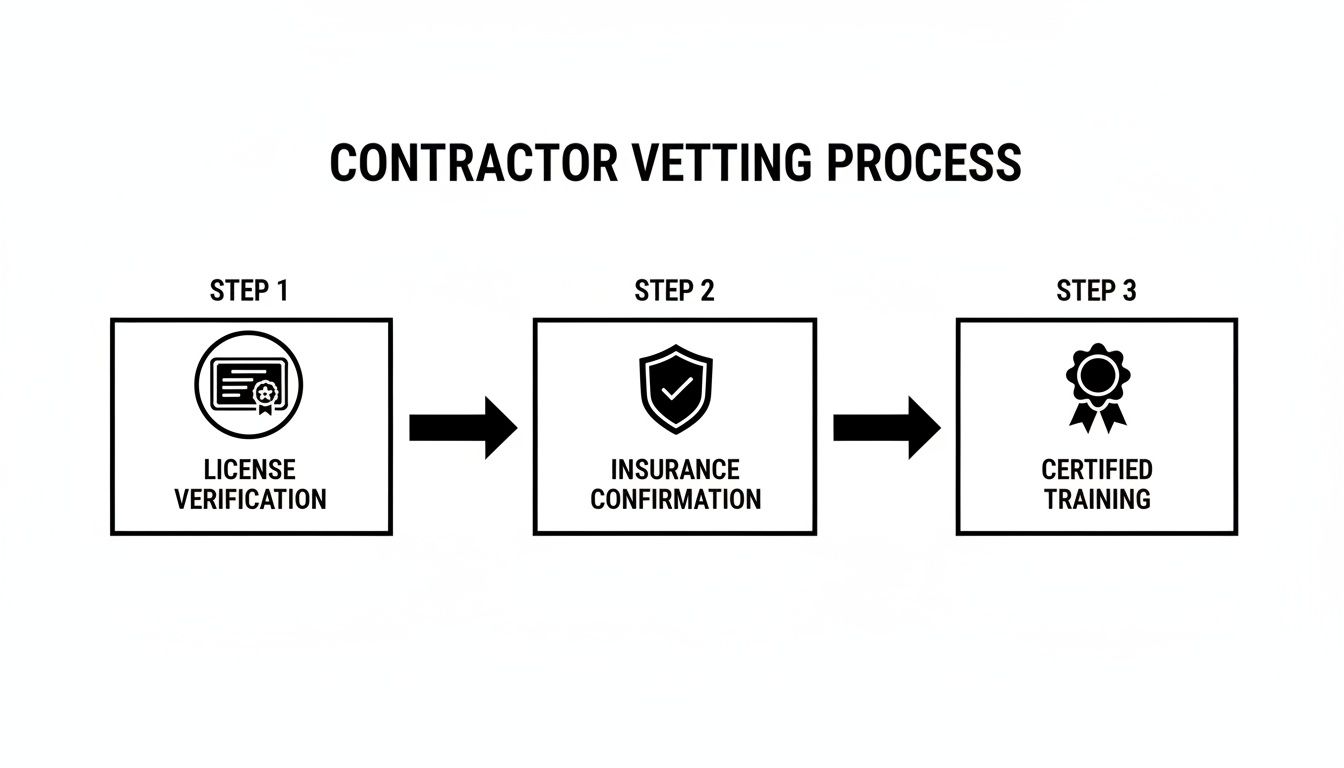
Confirming licenses, insurance, and proper certifications ensures the team showing up knows exactly how to tackle the job from the get-go.
Getting the Water Out and Drying Everything Down
Once the plan is set, the real work begins. The first priority is to get rid of all the standing water. The crew will use powerful truck-mounted vacuums or portable extractors to suck up the bulk of the moisture fast.
Then comes the drying phase. This is where you’ll see the heavy-duty equipment come out. It’s a strategic setup, not just a bunch of fans aimed at a wet spot.
- Air Movers: These are high-velocity fans placed at specific angles to create a vortex of airflow across wet surfaces. This constant, directed air dramatically speeds up evaporation.
- Dehumidifiers: As the air movers pull moisture out of the materials, industrial-grade dehumidifiers grab that moisture from the air. This prevents it from settling back into your walls and creating a secondary problem.
This drying process isn't a one-and-done deal; it often takes several days. Technicians will return to take moisture readings and adjust the equipment until everything is back to its normal, dry state. For a deeper dive, we have an article that explains exactly how long water damage restoration can take.
The Finishing Touches: Cleaning, Sanitizing, and Rebuilding
After your home is verifiably dry, the crew shifts to cleaning and sanitizing all affected surfaces. This step is non-negotiable for preventing mold and bacteria from taking hold. If there's any concern about microbial growth, you might want to look at this ultimate guide to mold testing to understand if further steps are needed.
The final stretch is putting everything back together. This might involve replacing drywall, laying new carpet, or repainting. The goal is simple: to make it look like the water damage never happened.
It's a huge undertaking, but a necessary one. With around 14,000 water damage emergencies hitting U.S. homes and businesses every day, the need for a professional, proven process is crystal clear. This demand has fueled a restoration market projected to hit $7.1 billion by 2025, underscoring just how critical this work is for property owners.
Navigating Your Insurance Claim Like a Pro
Dealing with a water-logged home is stressful enough. Throwing an insurance claim into the mix can feel like a full-time job you never signed up for. But here's the good news: the right water damage restoration contractor can be your biggest ally, making the entire process more manageable.
Think of your contractor as your boots-on-the-ground advocate. They speak the language of insurance adjusters and know what documentation is often needed to build a solid claim. While you focus on your family, they get to work building the case for a proper, complete restoration.
The Power of Professional Documentation
An insurance adjuster’s job is to verify the loss. A great restoration contractor’s job is to provide undeniable proof of it. This isn't just about snapping a few photos of the standing water; it's a detailed, scientific process.
A professional restoration team will build a comprehensive file for your claim, including things like:
- Detailed Photo Logs: They’ll capture everything—the source of the leak, all affected materials, and even the hidden moisture lurking behind walls and under floors.
- Moisture Readings: Using specialized meters, they document moisture levels in drywall, wood framing, and flooring. This creates a "drying record" that shows the starting point and proves when the structure is truly dry.
- A Meticulous Scope of Work: This document outlines every single step needed to bring your property back to its pre-loss condition, justifying each action and cost.
This level of detail is what separates a smooth claim from a frustrating one. It turns a vague "my basement flooded" statement into a scientifically backed report that shows precisely what work is necessary and why. Without it, you’re leaving the door open for your insurance company to question or deny parts of your claim.
Understanding Direct Billing and Estimates
One of the biggest reliefs a seasoned contractor can offer is direct billing. This means they may be able to invoice your insurance company directly for covered work, which can drastically reduce your immediate out-of-pocket financial burden. The work can start right away without you having to front the money.
It’s completely normal, however, for there to be a gap between the contractor’s final invoice and the insurance adjuster’s initial estimate. Don't panic when this happens. Adjusters often write their estimates using standardized pricing software, sometimes without even seeing the full extent of the damage in person.
Your contractor’s invoice is based on the actual, on-site conditions and the specific work required to dry your home according to IICRC standards. The initial insurance estimate is just a starting point.
When a difference in cost arises, your contractor will submit a "supplement" to the insurance company. This supplement includes all the detailed documentation—the photos, moisture logs, and revised scope—to justify the additional costs. An experienced contractor is a pro at this negotiation and can often get these differences approved without you having to get in the middle of it.
The claims process can feel complicated, but you don't have to go it alone. For more expert advice, check out our guide on water damage insurance claim tips. With a knowledgeable professional on your side, you can handle the paperwork with confidence and focus on what truly matters—getting your home back.
Red Flags to Spot When Hiring a Contractor
When your home is flooding, the first instinct is to hire the first person who picks up the phone. It’s a panic-driven decision, and unfortunately, that’s exactly what some less-than-reputable operators are counting on.
Knowing what to look for can save you from a world of hurt—think shoddy work, surprise bills, and even bigger problems down the road like hidden mold. This isn't just a list; it's your defense against getting taken for a ride.
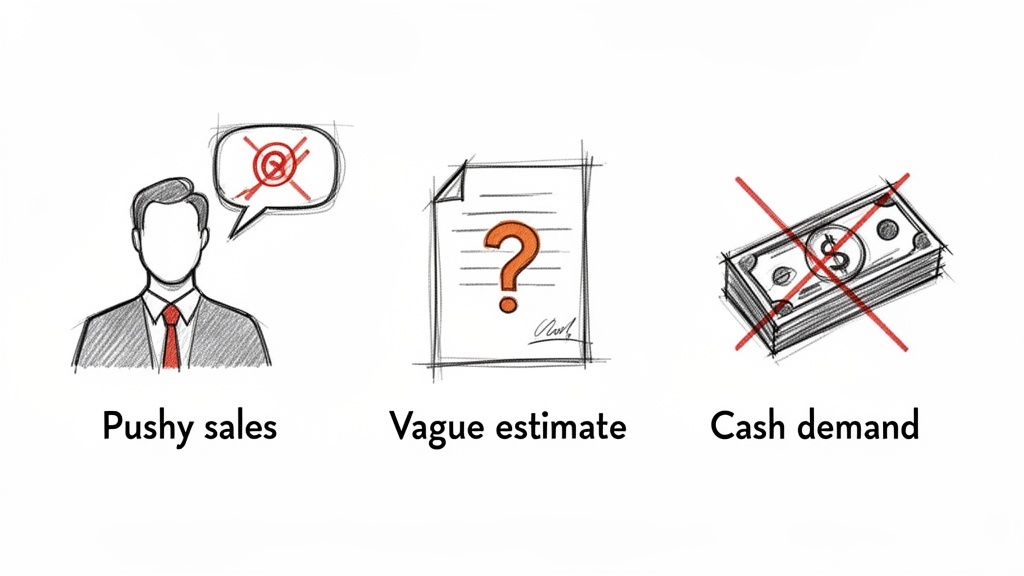
Think of this as your guide to spotting the con artists so you can partner with a real pro who will solve your problem, not create a new one.
Questionable Communication and Pressure Tactics
A true professional brings a sense of calm and clarity to a chaotic situation, not more anxiety. If a contractor is using high-pressure tactics—telling you to sign a contract right now to lock in a price or avoid some made-up impending doom—that’s a massive red flag. A reputable company will give you a clear, honest assessment without trying to rush you into a bad decision.
Vague and evasive answers are just as bad. Ask for their license number, IICRC certification, or proof of insurance. If they hesitate, dance around the question, or just can't produce it, that’s your cue to end the conversation. Honesty and transparency are everything in this business.
Vague Estimates and Unclear Billing
A real estimate is detailed. It breaks down the scope of work, the services included, and how the costs are calculated. Be on high alert for these classic warning signs:
- A "too-good-to-be-true" quote: This is a classic bait-and-switch. They lure you in with a low price, then hit you with a mountain of "unexpected" charges later.
- A price given over the phone: No credible contractor can give you an accurate price without seeing the damage in person. It’s just not possible.
- Demands for large cash payments upfront: A reasonable deposit is one thing, but if they want a huge chunk of the total job cost in cash before they even start, that’s highly suspicious.
A professional's estimate is a roadmap for the project. If you're handed a one-line quote with a total price and no details, it’s not a real estimate—it’s a blank check you shouldn't sign.
With the rise in extreme weather, the restoration industry is busier than ever. In 2024 alone, the U.S. has been hit with 27 separate billion-dollar disasters, creating huge backlogs and, sadly, attracting some shady players. Storm damage now costs the U.S. economy over $100 billion a year, making clear, itemized billing an absolute must for these complex jobs. You can learn more about how these events shape the restoration market and why choosing a reputable company is so critical.
Your Top Water Damage Questions, Answered
When you're dealing with a flood in your home, your mind is racing with questions. The unknown is often the most stressful part. Let's tackle some of the most common concerns we hear from Phoenix homeowners every day, so you can feel more in control of the situation.
Getting clear, honest answers helps you make smart decisions and understand what the path to recovery looks like.
How Long Does This Whole Process Take?
There's no single answer here—it all comes down to the scale of the damage. For a small, contained issue like a leaking dishwasher that was caught quickly, you might be looking at 3-5 days for drying and minor repairs.
But if we're talking about a major flood that soaked multiple rooms and got into the structure of your home, it could easily take several weeks. A reputable water damage restoration contractor will give you a ballpark timeline after their initial inspection. Just be aware that this can change, especially if they uncover hidden pockets of moisture behind walls or under floors.
Can I Stay in My House While You Work?
This is a big one, and it's handled on a case-by-case basis. If the damage is isolated to a single bathroom, for instance, it's often possible to stay. A professional crew will set up containment barriers to seal off the work area from the rest of your home.
However, if the damage is widespread, involves contaminated "black water" from a sewage backup, or requires loud, heavy-duty equipment running around the clock, your contractor might recommend you relocate temporarily. This is for your safety, your health, and your sanity. They should give you a clear assessment of whether the home is habitable.
A true professional's first priority is always your safety. If they advise you to find another place to stay, it's not a suggestion they make lightly. It's based on established IICRC safety protocols and genuine concern for your family's well-being.
Will My Homeowners Insurance Cover This?
This is the million-dollar question. Insurance coverage really depends on your specific policy and what caused the water damage in the first place.
- Typically Covered: Sudden and accidental events, like a burst pipe under the sink or a washing machine hose that gives out.
- Often Not Covered: Damage from long-term, neglected maintenance (like a slow drip you ignored for months) or widespread natural flooding (which usually requires a separate flood insurance policy).
This is where an experienced restoration company becomes your best ally. They know how to document the damage and present the evidence in a way that aligns with what insurance carriers often need to see. They can be a huge help in validating your claim.
Always pull out your policy and talk to your agent to be sure about what's covered. For a deeper dive into the numbers, check out our guide on the typical water damage repair cost and the factors that drive it.
When your home is on the line, you need a team that shows up fast with the right skills and a compassionate approach. Restore Heroes is on call for Phoenix-area homeowners 24/7. Get a free, no-obligation inspection by visiting https://www.restoreheroesaz.com.