
That feeling of dread when you spot water creeping across your floor is something no homeowner wants to experience. But here in Phoenix, whether it's a busted pipe, a leaky AC unit, or the aftermath of a monsoon storm, it happens. The key is not to panic. What you do in the first hour is critical.
Taking a few smart, immediate steps can dramatically reduce the overall damage, prevent bigger problems like mold, and make the whole recovery process smoother. Your goal isn't to be the hero and fix it all yourself—it's to safely contain the situation until the professionals can take over.
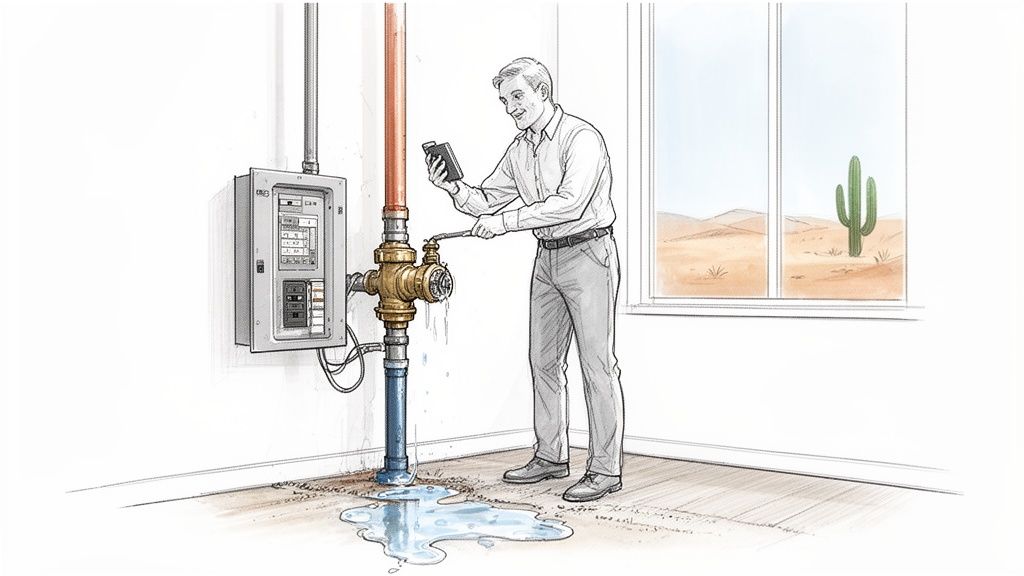
Safety First, Always
Before you even think about grabbing a towel, you need to make the area safe. Water and electricity are a dangerous mix.
- Kill the Power: Head straight for your breaker box and shut off the power to every affected room. If you see water anywhere near the panel or you’re just not sure which breakers control what, play it safe and flip the main breaker to cut power to the entire house. It's not worth the risk.
- Stop the Source: If the problem is obvious, like a burst supply line under the sink, turn the small valve on that pipe to shut it off. If you can't find the source or it’s a major leak, don't hesitate—shut off your home's main water valve right away. This stops the flow completely.
A Quick Word of Warning: Never try to use a regular household vacuum or even a standard shop vac to suck up standing water. If the motor gets wet, you're looking at a serious electrocution hazard. Restoration professionals use specialized, heavy-duty extractors that are grounded and built specifically for these situations.
Grab Your Phone and Document Everything
Once the immediate danger is handled, your next job is to be an investigator. Before you touch or move a single thing, start taking photos and videos. This evidence is helpful for your insurance claim.
Get detailed shots of everything. Document the source of the leak, the standing water, and all the items that got wet—from furniture and rugs to baseboards and drywall. Sometimes the initial puddle is just a symptom of a bigger problem, like when you discover a water leak from a ceiling light that points to a hidden issue in the attic.
This initial documentation gives your insurance adjuster a clearer picture of the damage from the very beginning.
The First Hour: Your Immediate Action Plan
In the chaos of a water emergency, it helps to have a clear checklist. We put this together based on years of helping Phoenix homeowners through these exact moments.
Phoenix Water Damage First Response Checklist
| Immediate Action | Why It's Important | Expert Tip |
|---|---|---|
| Turn Off Power | Helps prevent electrocution, a significant risk. | If water is near the breaker box, call an electrician and your restoration company immediately. Do not touch it. |
| Shut Off Water Main | Stops more water from entering and causing further damage. | Know where your main water shut-off is before an emergency. It's often in the garage or on an exterior wall. |
| Call a Certified Pro | Professionals have the right gear to extract water and dry structures properly. | Look for an IICRC-certified company. This certification means they're trained to industry standards. |
| Document Damage | Creates useful evidence for your insurance claim. | Narrate a video as you walk through, explaining what you see. Note the time and date. |
| Elevate Belongings | Gets items off wet floors to prevent absorption and staining. | Use wood blocks or aluminum foil under furniture legs to prevent rust or dye from bleeding into the carpet. |
Following these steps methodically can help you stay in control and set the stage for a much faster and more effective restoration.
What Not to Do: Common Mistakes to Avoid
In the heat of the moment, it's easy to accidentally make things worse. Knowing what to avoid is just as crucial as knowing what to do.
- Don't Use Fans on "Black Water": If the water is from a sewage line or an overflowing toilet, do not turn on ceiling fans or place box fans. You could aerosolize dangerous bacteria and spread contaminants throughout your home.
- Don't Place Items on Wet Carpet: Moving boxes, books, or dyed fabrics onto a wet carpet is a recipe for permanent stains. The colors can bleed and become difficult to remove.
- Don't Assume It's Dry: Just because you've mopped up the puddle doesn't mean the problem is solved. Water wicks deep into drywall, subflooring, and insulation. Ignoring this hidden moisture is a leading cause of mold growth after a leak.
Why Phoenix Water Damage Hits Different
Living in the Valley of the Sun means we have a whole different set of worries when it comes to water damage. Sure, a pipe can burst anywhere, but here in Phoenix, our problems often start with the very things that define our climate: the desert heat, the powerful monsoons, and our notoriously hard water.
If you’re not prepared for these local quirks, a small issue can escalate into a full-blown disaster incredibly fast. Understanding what we're up against is the first step in keeping your property safe.
Monsoon Mayhem
Anyone who has lived through a Phoenix summer knows the monsoon season is no joke. From June through September, these storms can roll in and unleash an unbelievable amount of rain in a matter of minutes.
Our city just wasn't built for that kind of sudden downpour. The ground is baked so hard that it can't absorb the water fast enough, so all that rain becomes instant runoff. Storm drains get overwhelmed, and suddenly, your street looks more like a river. This isn't just a hassle; it's a serious threat to your home.
We all remember the storm on September 8, 2014. Fueled by moisture from a hurricane, it dropped a record-breaking 3.30 inches of rain at the airport in only seven hours. The city completely shut down. I-10 became a canal, and homes that had never seen a drop of floodwater were suddenly inundated. It was a wake-up call for many of us. You can read the official weather service recap to see just how intense it was.
Flash floods are exactly why water damage in Phoenix, AZ, often comes from the outside in. The water doesn't need to find a broken pipe; it can find its way under your door, through your foundation, and into window wells when the street outside is underwater.
The Silent Damage of Hard Water
Even the water coming out of our taps is working against us. Arizona water is loaded with minerals like calcium and magnesium, making it some of the "hardest" in the country. Over time, these minerals can build up inside your pipes as a crusty, rock-like scale.
This isn't just an ugly stain in your sink. This limescale can silently corrode your plumbing from the inside out. This hidden damage is a ticking time bomb, leading to things like:
- Sudden Pipe Bursts: A pipe can look perfectly fine on the outside but be so corroded on the inside that it fails without any warning.
- Appliance Breakdowns: Your water heater, dishwasher, and washing machine are especially at risk. Mineral buildup can destroy their internal parts, causing them to fail years before they should.
- Low Water Pressure: If you notice your water flow slowing down, it’s a big red flag that your pipes are clogged and under serious strain.
Because this damage happens slowly and out of sight, you often don't realize there's a problem until you walk into a flooded kitchen.
Your AC: An Unlikely Culprit
Here in Phoenix, our AC units are the MVPs of our homes, running nonstop for a good chunk of the year. All that hard work creates a lot of condensation, which is supposed to flow away harmlessly through a small drain line.
But those little drain lines are a huge source of water damage. They get clogged with dust, algae, and gunk, causing water to back up and spill out. Since the air handler is usually tucked away in an attic or a closet, a slow leak can continue for weeks before anyone notices.
And that isn't clean water. It’s stagnant, warm water that’s been sitting in a dark drip pan—the perfect place for mold to start growing. Once it overflows and soaks into your drywall and insulation, our desert heat acts like an incubator. You can get significant mold growth in as little as 24 to 48 hours, turning a simple AC leak into a major headache that threatens your home's structure and air quality.
What to Expect When the Restoration Pros Arrive
When you call a professional restoration company for water damage in your Phoenix home, a whole system clicks into gear the second they walk through your door. It’s a lot more than just setting up some fans and calling it a day. This is a scientific process, honed by years of experience, designed to protect your home from long-term issues like mold and rot. Knowing what’s coming can take a lot of the stress out of the situation.
The very first thing a certified technician will do isn't sucking up water—it's figuring out exactly where all of it went. They become water detectives, using specialized gear to trace the moisture you can't see.
Finding Every Last Drop of Water
Professionals don't guess. They use advanced tools to map out the water's path, because what you see on the surface is often just the tip of the iceberg.
- Moisture Meters: These are essential. Technicians use them to probe into materials like drywall, baseboards, and flooring to get an exact moisture reading. This tells them precisely what’s saturated, even if it feels dry to the touch.
- Thermal Imaging Cameras: This is where the real "detective" work comes in. These cameras show temperature differences, and since wet spots are cooler, they create a visual map of where water has wicked up behind a wall or crept under your tile.
This initial assessment is everything. It forms the blueprint for the entire drying strategy, helping to ensure no hidden pockets of moisture are left behind to cause bigger headaches down the road.
I can't tell you how many times I've seen homeowners think they've got it handled because the carpet feels dry. But water is sneaky. It can easily seep into the subfloor or travel along wall studs, causing damage silently. Professional gear takes the guesswork out of it.
The infographic below shows the top culprits we see here in the Valley. It’s a unique mix of our crazy weather and how our homes are built.
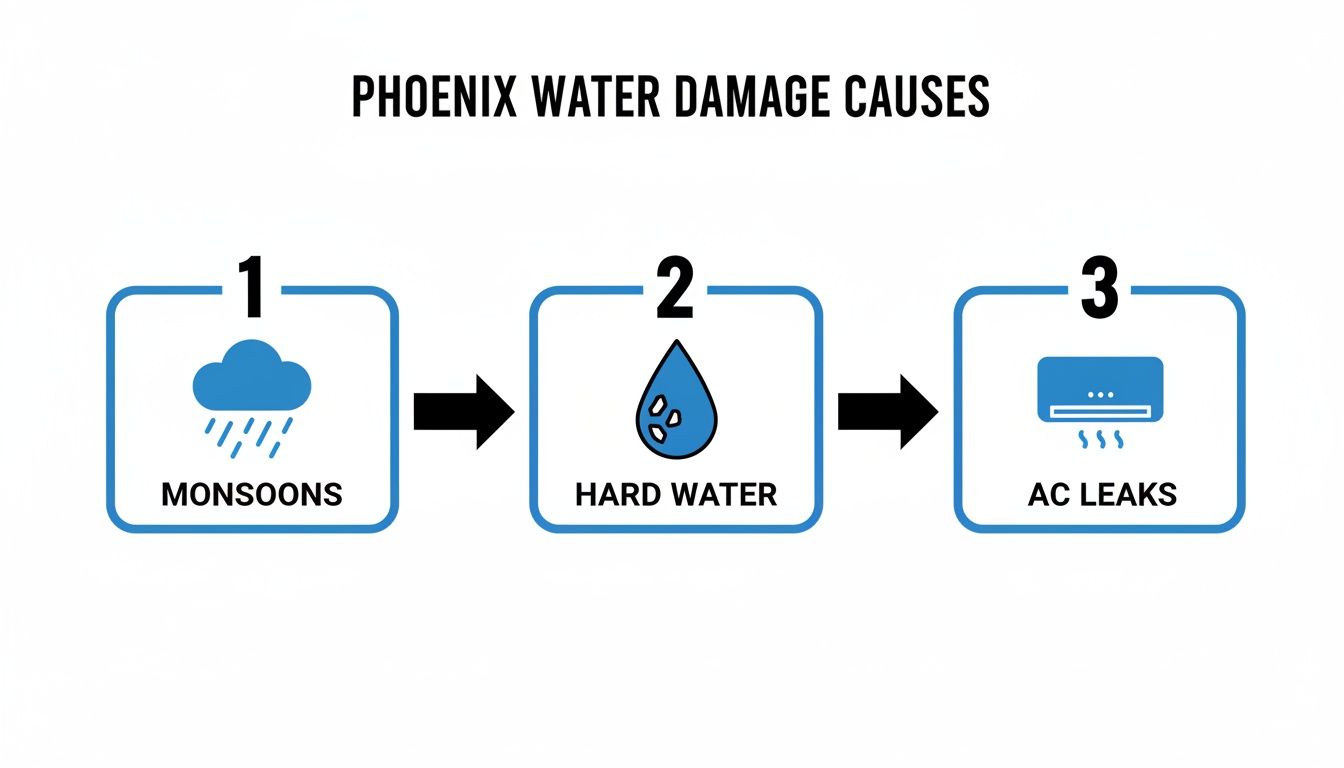
As you can see, our intense monsoons, mineral-heavy hard water, and A/C units working overtime create a perfect storm for water problems.
Kicking Off the Mitigation and Drying Process
Once the team knows the full scope of the damage, the real work begins. This is the mitigation phase, and it’s all about getting the water out and controlling the environment to dry everything out as fast as possible.
First things first, they’ll bring in powerful, truck-mounted extractors to pull up all the standing water. This is a huge first step—the more water they can remove right away, the less time everything else takes to dry.
After the standing water is gone, the focus shifts to drying the air and the materials themselves. This requires a strategic combination of professional-grade equipment.
- Industrial Air Movers: Forget your little box fan. These are high-velocity blowers placed at precise angles to sweep air across wet surfaces, dramatically speeding up evaporation.
- Commercial Dehumidifiers: As the air movers pull moisture out of the walls and floors, it has to go somewhere. Giant dehumidifiers work 24/7 to suck all that humidity out of the air, preventing it from settling back into other dry materials.
- Antimicrobial Treatments: In many situations, the crew may apply an antimicrobial solution. This is a crucial step to inhibit mold, mildew, and bacteria from growing in the damp environment, which is good for your property and your health.
This isn’t a "set it and forget it" job. The technicians will be back daily to monitor the process, take new moisture readings, and adjust the equipment as needed. It's a hands-on approach to make sure your home is drying out properly. If you want a closer look at the timeline, our guide on how long water damage restoration takes breaks it down further. The ultimate goal is to get every affected material back to its normal, pre-damage moisture level. That’s how you know the job is truly done.
Working with Your Homeowners Insurance in Arizona
Let's be honest: filing an insurance claim can feel like a bigger headache than the water damage itself. Suddenly you're swimming in paperwork, trying to decipher policy jargon, and coordinating with adjusters. It can be overwhelming, but a calm, methodical approach can see you through.
After you've made sure everyone is safe and called in a professional restoration crew, your most critical task is to document everything. Those initial photos and videos you snapped are just the beginning.
What Your Policy May Cover (and What It May Not)
Most Arizona homeowners policies make a crucial distinction when it comes to water damage, and knowing the difference is half the battle. Insurance is often designed to cover damage that is "sudden and accidental."
Think of a water heater that ruptures without warning, flooding your garage. Or a washing machine hose that bursts and soaks the laundry room. These are the exact kinds of unexpected disasters your policy may be built for.
On the other hand, damage from long-term neglect or poor maintenance is often excluded. That slow, ignored drip under the kitchen sink that eventually rots out the cabinet floor? Your insurer will likely view that as a maintenance issue you were responsible for, not a covered accident.
A general rule is that insurance may cover unforeseen events, but not the results of putting off necessary repairs. This is exactly why acting fast at the first sign of water damage in Phoenix, AZ is so critical.
The Adjuster's Visit: What to Expect
When your insurance adjuster shows up, their mission is to figure out the extent of the damage and see how it lines up with your policy. This is where your detailed documentation can be very helpful.
Have this information ready for them:
- The Source: Pinpoint exactly where the water came from.
- The Scope: Walk them through every single area and item that got wet.
- The Timeline: Clearly explain when you found the water and what you did immediately after.
This is another area where having a professional restoration company on your side can be a huge advantage. They often use the same estimating software as many insurance carriers, creating detailed, line-by-line reports that justify the actions they take. They literally speak their language.
This alignment may streamline the approval process and cut down on the back-and-forth that can slow everything down. For monsoon-related issues, remember that standard policies don't cover flooding; that requires a separate flood policy. This guide on how to file a flood insurance claim can be a big help.
Be Your Own Best Advocate
While your restoration team manages the technical details, never forget that you are the most important person on your team. Keep a running log of every phone call, email, and conversation with your insurance company. Note the date, time, and who you spoke with.
Never hesitate to ask questions. If you're confused by your policy language or the adjuster's assessment, ask for clarification until you understand. Getting a handle on the fine print can make a huge difference in your final settlement. For more insights, check out our in-depth article on water damage insurance claim tips.
The ultimate goal is a partnership between you, your insurer, and your restoration crew to get your home back to normal as quickly and smoothly as possible.
Smart Prevention for Your Desert Home
The best way to deal with water damage in Phoenix, AZ, is to stop it from ever starting. You don't need massive, expensive projects. It really comes down to small, consistent habits that are specifically for our unique desert climate. A few minutes of simple maintenance each season can save you from a catastrophic leak down the road.
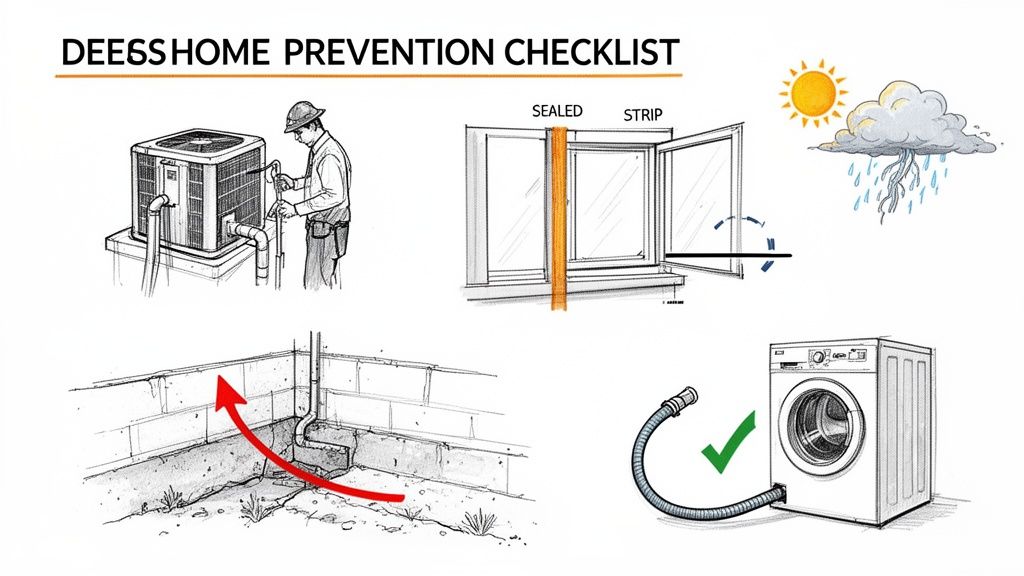
These aren’t complicated jobs. They’re straightforward checks that hit the biggest water damage culprits here in the Valley, from our overworked AC units to the intense monsoon storms that put our homes to the test.
Pre-Summer AC and Appliance Checkup
Before the triple-digit heat settles in, your focus should be on the systems that are about to work overtime. Your air conditioner and major appliances are prime suspects for failure when they're under that kind of stress.
A clogged AC condensate line is one of the most common reasons we get called out for slow, hidden leaks. Before you start running that system 24/7, find the drain line outside your home (it's usually a small PVC pipe near your condenser unit). Make sure it’s clear of dirt and debris. A quick flush can prevent a backup that would otherwise send water spilling into your attic or a closet.
While you're at it, take a look at the hoses connected to your washing machine and dishwasher. The combination of our notoriously hard water and high heat can make rubber hoses brittle, and they’ll eventually crack. If you see any bulging, cracking, or mineral buildup around the connections, it’s time to replace them. Spending a few bucks on new hoses every few years is a tiny price to pay to avoid a massive flood.
Monsoon Season Readiness
When the monsoons roll in, they bring a deluge that can overwhelm a house that isn't prepared. These storms are more than just an inconvenience; they can be incredibly destructive. From 1980 to now, Arizona has been hit by 34 billion-dollar weather disasters, many involving severe flooding right here in the Phoenix area. The infamous floods of October 1983, for instance, caused rivers to overflow and destroyed over 700 homes in one town alone. You can find more insights on Arizona's history with severe weather on ncei.noaa.gov.
To protect your home, the goal is simple: keep the water out.
- Check Your Yard's Grading: Look at the ground around your foundation. It needs to slope away from the house. If it's flat or, even worse, slopes inward, rainwater can pool against your foundation and may seep into your crawlspace or basement.
- Inspect Windows and Doors: Give the seals and caulking around all your exterior windows and doors a once-over. The intense Arizona sun bakes these seals, causing them to degrade and create gaps where wind-driven rain can get in.
- Maintain Your Gutters: Keeping your home safe from water damage means doing regular maintenance, and that includes cleaning your gutters. When they're clogged with leaves and debris, water has nowhere to go but over the sides, dumping it right next to your foundation.
A small, persistent leak from a bad window seal might not seem like a big deal, but over time it can saturate the drywall and studs inside your wall. This hidden moisture is the perfect breeding ground for mold—a problem you definitely want to avoid.
Year-Round Plumbing Vigilance
Our hard water is tough on plumbing. It can constantly cause mineral buildup that corrodes pipes from the inside out. You can’t see it happening, but you can definitely watch for the warning signs.
Keep an eye out for sudden drops in water pressure or listen for any weird gurgling sounds from your drains. It's also a good habit to periodically check under sinks for any dampness or mineral deposits on the pipes. These are often the very first clues that a pipe is under strain or a connection is about to fail.
A little awareness can help you catch a problem before a pipe bursts. Preventing hidden moisture is also a critical part of preventing mold growth. You can learn more about how to avoid mold in basements in our other guide. By making these simple checks part of your regular home maintenance, you build a strong defense against the most common water threats we face here in Phoenix.
Common Questions About Phoenix Water Damage
When you're standing in a puddle in your living room, your mind is racing with questions. We get it. Here are some of the most common things we hear from Phoenix homeowners, with straight answers to help you navigate the chaos.
How Long Does Professional Water Mitigation Take?
This is usually the first question people ask, and the honest answer is: it depends. For a typical home, you can usually expect the drying process to take anywhere from 3 to 5 days.
Of course, that timeline can change based on how much water you're dealing with, what got wet (carpet and drywall take longer than tile), and whether it was clean or contaminated water. Even with our dry Arizona air, you need professional-grade equipment to pull moisture out of hidden spaces. Once a certified technician gets on-site and sees the situation firsthand, they can give you a much more accurate timeline.
Can I Handle Small Water Cleanups Myself?
If you spill a glass of water on your tile floor, by all means, grab a towel. But if water has soaked into carpet, seeped under baseboards, or touched drywall, you're looking at a different beast entirely.
The real danger is the water you can't see. Mold can start growing in as little as 24 hours, and without the right moisture meters and drying equipment, you're just guessing if the area is truly dry. Calling in a pro for anything more than a small surface spill is the safest way to avoid bigger problems like structural rot and mold down the road.
One of the biggest mistakes we see is when a homeowner thinks everything is fine because a surface feels dry to the touch. To see just how tricky this can be, it helps to understand what happens when drywall gets wet and why it’s nearly impossible to dry properly without specialized tools.
Is Monsoon Flood Damage Covered by My Insurance?
This is a huge point of confusion here in Phoenix. Your standard homeowner's insurance policy is designed to cover "sudden and accidental" water damage from inside your house—think a burst washing machine hose or a leaking pipe.
However, damage from natural flooding, like when monsoon rains overwhelm your yard and seep into your home, is often excluded. For that kind of event, you typically need a separate flood insurance policy, which many people get through the National Flood Insurance Program (NFIP). It’s crucial to check your specific policy to know exactly what you’re covered for.
What Are the Signs of a Hidden Water Leak?
Not all water damage starts with a bang. Slow, hidden leaks can cause massive destruction before you even know they're there. Keep an eye out for these subtle red flags:
- That musty, damp smell that you just can't seem to locate.
- Paint that's starting to bubble or peel on a wall or ceiling.
- Yellowish or brownish stains appearing on your ceiling.
- Baseboards or wood flooring that looks warped or swollen.
- A surprise spike in your monthly water bill.
Finding these clues early, especially in places like your kitchen, bathrooms, or laundry room, can be the difference between a minor repair and a full-blown restoration project. These signs often point to a leak that's been quietly doing damage for weeks, creating the perfect conditions for mold and rot to take hold.
If you're facing a water emergency, don't wait. The experts at Restore Heroes are available 24/7 to help you protect your property and begin the recovery process. Contact us for an immediate response: https://www.restoreheroesaz.com.