
Yes, drywall can absolutely get wet, and when it does, the clock starts ticking almost immediately. It’s best to think of drywall like a very dense, very brittle sponge. It's made of a soft gypsum core sandwiched between two sheets of paper, and that core loves to soak up water.
Once wet, the real trouble can kick off within the first 24 to 48 hours. The moisture doesn't just sit there; it actively weakens the gypsum and creates the perfect damp, dark environment for mold to take hold.
The Critical First 48 Hours for Wet Drywall
When water hits your drywall, it can set off a chain reaction of damage. This isn’t a simple "let it air dry" situation. The gypsum core is incredibly porous, and once the outer paper layer gets wet, it wicks moisture deep inside.
As the core absorbs water, it starts to swell and lose its strength. The paper facing essentially traps the moisture against the gypsum, preventing it from drying out and speeding up the decay. This is how a small leak can quickly turn into a mushy, compromised wall.
Why Time Is Not on Your Side
The longer your drywall stays wet, the worse the damage can get. It's often best not to wait and see what happens. In less than a day, the material starts to weaken, but an even bigger threat—mold—may already be getting ready to move in.
The paper facing on drywall is organic, which is basically a food source for mold. Once you add water to the equation, you've created an ideal habitat. In as little as 24 to 48 hours, mold spores can activate and start colonizing the area. Astonishingly, it may only take a moisture content of around 5 percent for the gypsum core to lose its integrity and start to crumble.
A common mistake I see all the time is homeowners underestimating how fast a small leak can escalate. The soggy spot you see on the paint is often just the tip of the iceberg; the real damage is happening out of sight, behind the wall.
A Timeline of Drywall Damage
To really grasp the urgency, it helps to see just how quickly things can go from bad to worse. What might look like a minor wet patch today can become a serious structural and health hazard in a matter of days.
This timeline shows just how rapidly water can destroy drywall, from the moment it gets wet to the point where mold takes over and the wall itself starts to fail.
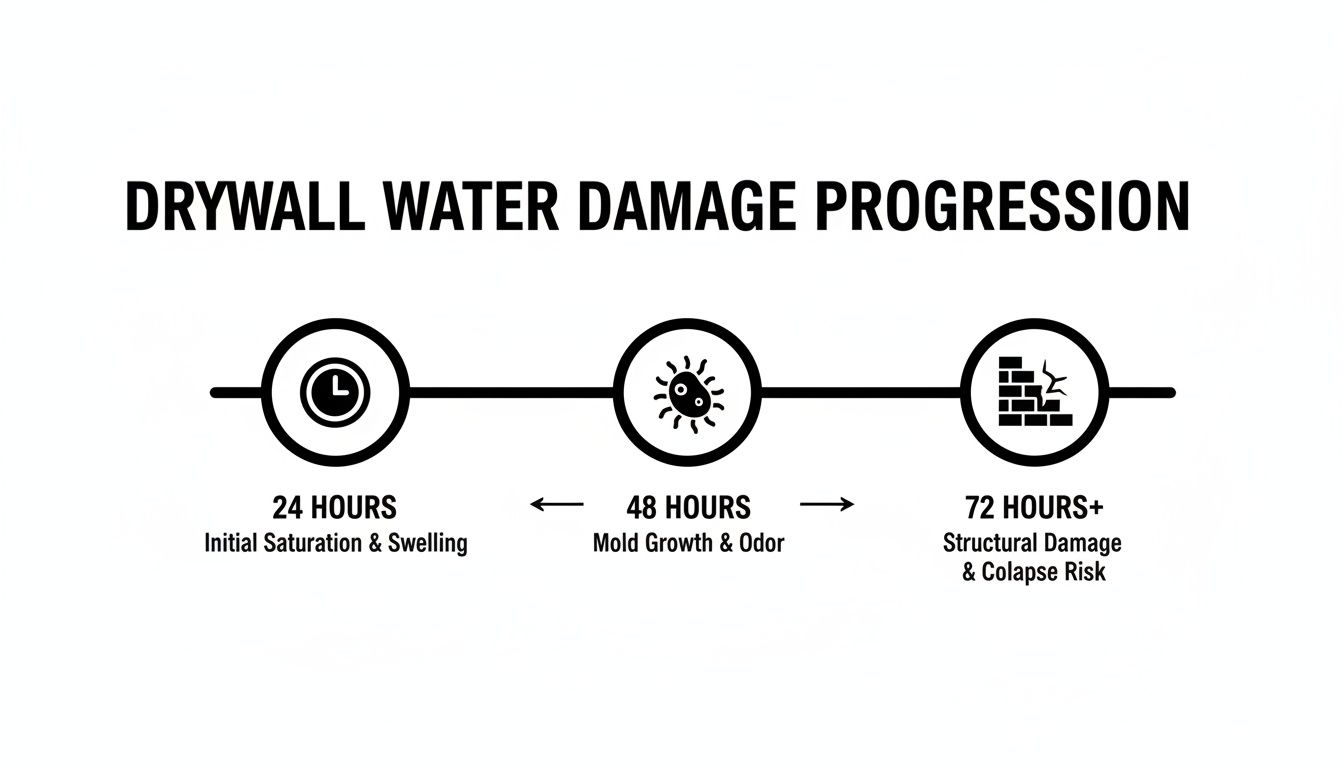
The key takeaway here is that your window of opportunity to simply dry out the wall is incredibly small. Acting fast is one of the best ways to prevent costly, irreversible damage.
To help you understand the urgency, here is a quick look at how fast the damage can progress.
Drywall Water Damage Timeline At A Glance
| Timeframe | What's Happening to the Drywall | Potential Risks |
|---|---|---|
| Minutes to 24 Hours | The drywall acts like a sponge, absorbing water. The paper facing swells and darkens, and the gypsum core begins to soften. | Initial discoloration and swelling. Paint may start to bubble. |
| 24 to 48 Hours | The material feels soft and spongy. Mold spores, already present in the air, can begin to grow and colonize the damp paper. | Mold growth begins. The wall's structural integrity is compromised. |
| 48 Hours to 1 Week | Visible mold may appear as black, green, or white spots. The drywall starts to sag, bow, or even crumble under its own weight. | Significant mold contamination. The wall is now a structural hazard and must be replaced. |
This timeline makes it clear: procrastination is not an option.
Here’s a more detailed breakdown of what’s happening behind the scenes in those first crucial days:
- Within Minutes to Hours: Water soaks in, causing the paper to look dark and puffy. The gypsum core immediately starts losing its rigid structure as it gets saturated.
- After 24 Hours: The wall will probably feel soft or even squishy if you press on it. You might see paint bubbling or peeling as the water tries to escape. This is a prime time for dormant mold spores to activate.
- At 48 Hours and Beyond: You may start to see visible mold colonies. The drywall itself will often begin to bulge, sag, or disintegrate. At this point, drying it out is no longer an option—it has to be replaced.
Understanding this rapid decline is the first step toward protecting your home. If you're dealing with wet drywall, learning about professional water damage restoration services can give you a clear idea of what it takes to fix the problem correctly.
How to Spot the Signs of Water-Damaged Drywall
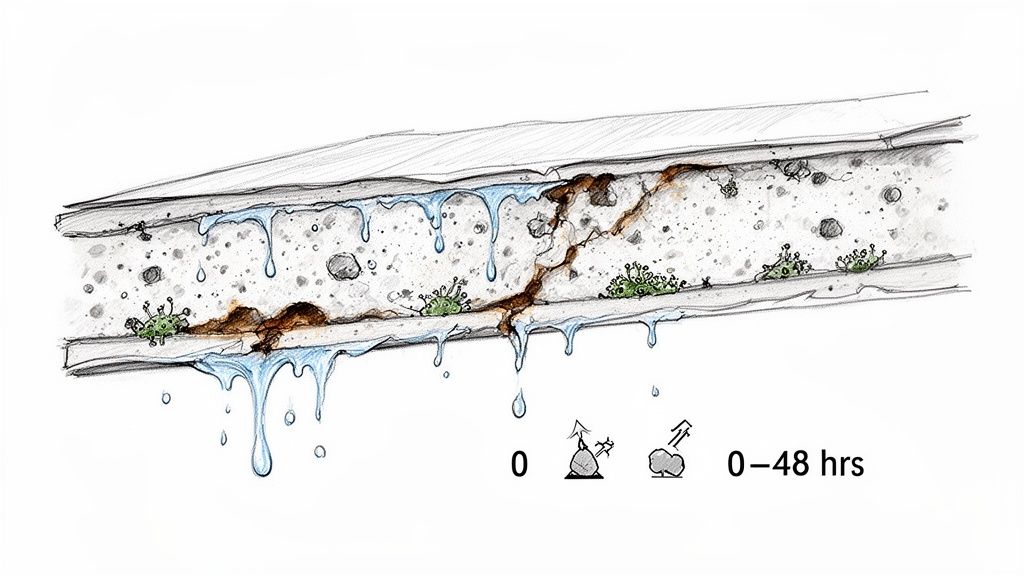
So, can drywall get wet? Absolutely. But the real problem is that the evidence isn't always a dramatic gush of water. More often than not, the signs are subtle, creeping in long after a hidden leak has started doing its damage. Learning to be a water damage detective in your own home means knowing what to look for—and what to listen, smell, and feel for, too.
Your eyes are often your first line of defense. Spotting the visual clues early can be the difference between a simple repair and a major renovation.
Look for Obvious Visual Cues
As water seeps through drywall, it often carries minerals and even rust from pipes along for the ride. This leaves behind unmistakable discoloration. Be on the lookout for yellow or brownish patches that look a lot like faint tea stains. These can pop up on walls or ceilings, and they're a dead giveaway that moisture is lurking behind the surface.
Another crystal-clear warning sign is what’s happening to your paint or wallpaper. Water trapped behind the finish will literally push it away, causing paint to bubble up, crack, or peel. This happens because the moisture destroys the adhesive bond between the paint and the drywall paper.
One of the most serious signs is when the wall itself starts to change shape. If you notice any sagging, bowing, or warping—especially on ceilings—it means gravity is pulling down a gypsum core that’s completely waterlogged. This isn't just a stain; the structural integrity of the drywall is already compromised.
Ceilings are especially prone to this kind of damage. To get a better handle on what to watch for up above, you can find more detail on the specific signs of water damage on a ceiling and what to do about them. Catching these problems fast is everything.
Trust Your Sense of Touch and Smell
Beyond what you can see, your other senses can sound the alarm. Sometimes a wall might look perfectly normal, but a quick touch will tell you a completely different story.
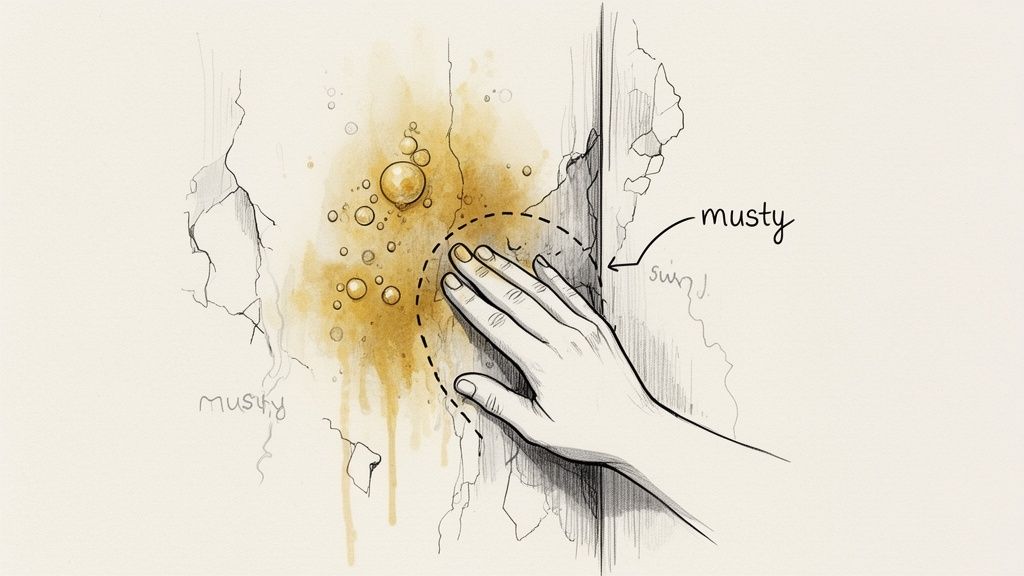
Gently press on an area where you suspect a problem. If the drywall feels soft, spongy, or even just cooler than the areas around it, that’s a huge clue that the gypsum core has soaked up water. Healthy drywall is solid and rigid; any "give" or mushiness is a major red flag.
And never, ever ignore your nose. A persistent musty, damp, or earthy smell is often the very first—and sometimes only—clue that you have a hidden leak or mold problem. That distinct odor is caused by gases released by active mold. If you smell something funky that just won't go away, you can bet there’s a moisture issue hiding in your walls, floors, or ceiling.
The Most Common Signs of Wet Drywall
To keep it simple, here’s a quick checklist of the most common signs that your drywall has taken on water:
- Discoloration: Yellow, brown, or rust-colored stains, often with a clear "water line" or defined edge.
- Texture Changes: Paint that is bubbling, peeling, or cracking. You might also see wallpaper starting to come loose from the wall.
- Shape Alterations: Any sagging, bulging, or warping. The drywall can look swollen or uneven.
- Physical Feel: The wall feels soft, spongy, or damp when you touch it, signaling a saturated core.
- Musty Odor: A lingering earthy or mildew-like smell is a very strong indicator of hidden moisture and potential mold.
Recognizing these signs quickly is your best defense. The sooner you spot wet drywall, the faster you can take action to stop the damage in its tracks.
Your First Steps After Discovering Wet Drywall
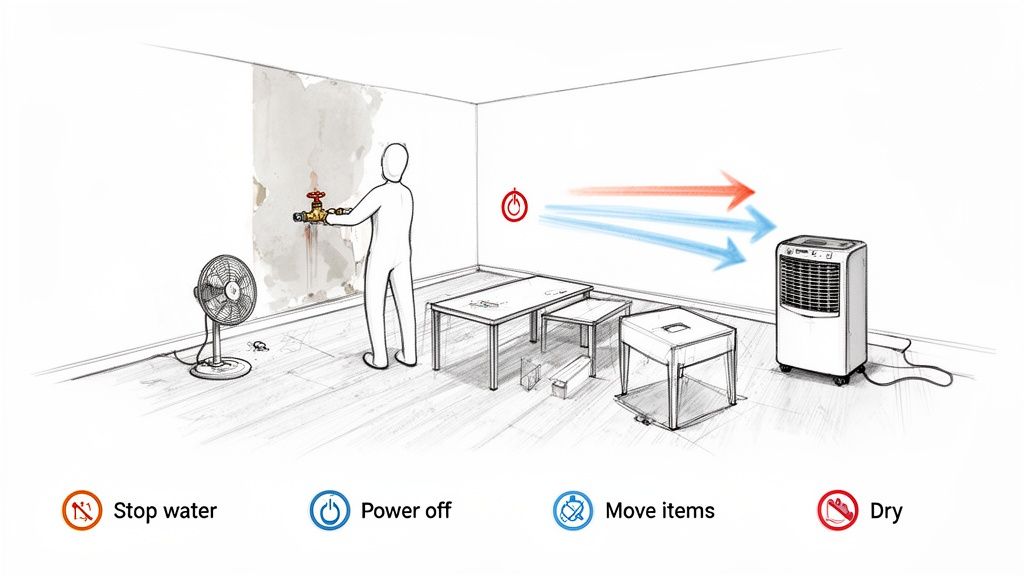
That sinking feeling when you find a wet spot on your wall is something no homeowner wants. It can feel a little overwhelming, but what you do in the first few hours is absolutely critical. A calm, methodical response can make a massive difference in minimizing the mess and cost. Think of it as first aid for your house.
The first, non-negotiable step? Find the source and shut the water off. Nothing else matters until the flow of water has stopped. It could be a leaky pipe, a faulty appliance, or a problem with the roof. If you can't find a local shutoff valve for a sink or toilet, don't hesitate—go straight for the main water valve and shut it down for the entire house.
Prioritize Safety Above All Else
With the water stopped, your next thought must be electrical safety. Water and electricity are a lethal mix. Get to your breaker box and kill the power to the affected rooms right away. This is not the time to be a hero; never touch or try to unplug any electronics while you're standing in or near water.
Once the immediate hazards are handled, it’s time to rescue your belongings. Get furniture, rugs, electronics, and any personal items out of the wet zone and move them to a dry, safe spot. This isn't just about saving your stuff—it also clears the way for a proper damage assessment and drying effort. The quicker you get things out, the better their chance of survival.
It's easy to underestimate the scale of water damage. In 2022 alone, storms and floods caused over $175 billion in property damage worldwide. Even just one inch of water inside a home can rack up $25,000 in damages, hitting everything from drywall and flooring to furniture and appliances.
Initial Drying and Damage Control
So, what can you do right now? If the damage is truly minor—say, a small spill you caught immediately—you can start the drying process yourself. The name of the game is airflow. You need to get air moving to pull moisture out of the drywall and the surrounding environment.
Here’s your immediate action plan for a small-scale issue:
- Get Air Moving: Throw open the windows and doors. Set up every fan you own and point them directly at the wet wall and floor. Box fans, oscillating fans, whatever you've got—use them.
- Run a Dehumidifier: If you have one, place it in the middle of the room and let it run full-blast. It will work tirelessly to pull moisture out of the air, which is a huge step in preventing mold from getting a foothold.
- Remove Baseboards and Trim: Water loves to hide. It often seeps behind baseboards and gets trapped, creating a perfect little swamp against the bottom of your drywall. Carefully pry them off to let that hidden area breathe and dry out.
These first steps can really help mitigate the damage. But for bigger problems, like a whole room flooding, you may need a much more aggressive strategy. Our guide on how to properly dry out a flooded basement provides the in-depth steps required for larger-scale water intrusions.
Knowing your limits is key. If the water damage is widespread, has been sitting for more than 24 hours, or involves "black water" from a sewage backup, it may be time to put down the tools and pick up the phone. A certified restoration company has the industrial-grade equipment and safety training to handle the job correctly and prevent long-term structural issues or mold infestations. Your quick, smart actions set the stage, but the pros know how to finish the job safely.
Should You Dry or Replace Your Damaged Drywall?
Okay, you’ve managed to stop the water source and get the area secured. Now you’re staring at a damp, ugly patch of wall and facing the big question: can I save this drywall?
This isn’t just about saving a few bucks on repairs. Making the right call here is crucial for protecting your home’s structure and keeping your family healthy. The decision really boils down to three things: the type of water, how bad the damage is, and how long the drywall has been wet.
Get this wrong, and you could be dealing with much bigger headaches later, like hidden wood rot or a serious mold problem. So, let's break down when you can get away with drying it out versus when you absolutely need to tear it out and start fresh.
When Drying Your Drywall Is an Option
In a few specific situations, you might be able to salvage your drywall. Think of it as a best-case scenario. For drying to even be a possibility, the water must be from a clean water source, like a leaky faucet or a busted supply line—not contaminated floodwater or a sewage backup.
Speed is everything. If you can get high-powered fans and dehumidifiers on the spot and start the drying process within 24 hours, you have a fighting chance. The drywall also can't be completely waterlogged. If it feels mushy, soft, or is already starting to sag, its structural integrity is shot.
Here are the rare times drying might work:
- Minor Leaks: You caught a small leak right away and it only dampened a small, contained section of the wall.
- Minimal Saturation: The wall feels damp to the touch, but it's not soaked all the way through to the core.
- Immediate Action: You jumped on it instantly, with aggressive drying efforts underway almost as soon as the water was stopped.
When Replacement Is Non-Negotiable
More often than not, tearing out the damaged section is the safest and most reliable solution. If the drywall has been wet for more than 48 hours, you may have lost the battle. By that point, the gypsum core may have turned to mush, and the clock is ticking for mold growth.
Any sign of mold is an automatic red flag. Once mold gets its hooks into the porous paper and gypsum, you can't just wipe it off. It’s a deep-rooted problem. To get a better sense of what's involved, you can learn more about professional mold damage remediation and why complete removal is so vital for your health.
If your drywall has started to crumble, bow, or sag, it’s no longer a wall—it's a hazard. There's no way to repair that kind of damage. Once the gypsum core is compromised, it has to be cut out and replaced, period.
The source of the water is another dealbreaker. If the damage was caused by "gray water" (from an appliance like a dishwasher) or "black water" (sewage or floodwater), that drywall is contaminated with nasty bacteria and pathogens. For your family's safety, it must be removed immediately.
Should You Dry or Replace Your Wet Drywall?
To make things easier, we've put together a quick cheat sheet. This table breaks down the key factors to help you decide whether to attempt drying your wet drywall or just move straight to replacing it.
| Condition | Recommended Action: Dry It | Recommended Action: Replace It |
|---|---|---|
| Time Since Damage | Less than 24 hours. | More than 48 hours. |
| Water Source | Clean water (e.g., supply line). | Contaminated water (sewage, flood). |
| Structural Integrity | The wall is still hard and flat. | The wall is soft, sagging, or crumbling. |
| Presence of Mold | No visible signs or musty smell. | Any visible mold or persistent odor. |
| Saturation Level | The surface is damp but not soaked. | The drywall is thoroughly saturated. |
At the end of the day, while drying might seem like the cheaper and easier option, replacement offers something valuable: peace of mind. It’s the only way to be certain that you’ve removed all the compromised material and eliminated any risk of hidden mold, helping to ensure your home is safe and sound for the long haul.
When you find a soggy patch of drywall, the first thought is often "How much is this going to cost?" It's a stressful situation, and the financial worry on top of it all can feel overwhelming. Let's break down what you can expect in terms of costs and how your insurance might play a role.
The final bill really hinges on a few key things: how much drywall is wet, what kind of water caused it (a clean pipe leak versus a sewage backup), and whether mold has started to grow. A small, clean water leak caught early is one thing. But if water has been sitting for days, soaking into insulation and framing, you're looking at a much bigger, more complex job.
Breaking Down Potential Restoration Costs
It helps to have a rough idea of the numbers. Water damage is incredibly common—in fact, about 14,000 people in the U.S. deal with it every single day.
A simple drywall patch-up might run you between $300 and $800. But the total cost for a water damage incident can often be much higher. The average insurance claim for water damage hovers around $11,605, with most professional restoration projects landing somewhere between $1,322 and $5,954, depending on how bad things are.
These numbers show why acting fast is so crucial. A quick response can keep you on the lower end of that cost spectrum, while waiting allows damage—and the price tag—to climb. For a more detailed look at what goes into these figures, check out our guide on water damage repair costs.
Navigating insurance can feel like a maze, but the key is understanding your policy before you need it. The cause of the water damage is the single most important factor in determining coverage.
How Homeowners Insurance Typically Works
Think of your homeowners insurance as a safety net, but one with specific rules. Most policies are built to cover damage from events that are "sudden and accidental." So, if a pipe suddenly bursts or your washing machine hose lets go, the water damage to your drywall and floors is often covered.
Where you might run into trouble is with damage that happens slowly over time. Insurance companies generally won't cover issues that could have been prevented. Common exclusions include:
- Gradual Leaks: That slow, unnoticed drip behind the bathroom wall that’s been happening for months.
- Poor Maintenance: Damage from a leaky roof you knew about but never got around to fixing.
- Flooding: This is a big one. Water from overflowing rivers or groundwater seeping in typically requires a separate flood insurance policy; it's almost never covered by a standard homeowner's policy.
If you find water damage, your first move is to stop the water source. Then, call your insurance agent right away. Before you clean up anything, pull out your phone and take tons of photos and videos. This documentation is your best friend when it comes to filing a claim and proving the extent of the initial damage.
When Should You Call a Professional Restoration Company?
Knowing that drywall can get wet is one thing, but knowing your own limits is another. The DIY spirit is great for a lot of home projects, but water damage restoration usually isn't one of them.
Trying to tackle a serious water issue on your own can easily backfire, leading to much bigger headaches like hidden mold or even structural damage. Recognizing when it's time to call in certified pros is the smartest move you can make for your home and your health.
A tiny, contained spill you wipe up instantly? You can probably handle that. But for anything more serious, the risks of going it alone may not be worth it.
Red Flags That Mean You Need an Expert
Some situations are just too complex or downright hazardous to manage without professional training and gear. If you see any of these signs, it may be time to pick up the phone.
- The Damage is Widespread: Has water spread to more than one room? Or is a large section of a single room soaked (think anything over 10 square feet)? This is too big for a few household fans. Professionals bring in industrial-grade air movers and dehumidifiers to create a powerful drying vortex that helps prevent moisture from spreading further.
- The Water is Contaminated: Any water from a sewer backup, overflowing toilet, or floodwater is what we call "black water." It's a nasty soup of bacteria and pathogens. Handling this safely requires full personal protective equipment (PPE) and specific disinfection techniques to avoid getting your family sick.
- You See or Smell Mold: If you can already see fuzzy spots or smell that unmistakable musty, earthy odor, the problem is more advanced than it looks. Proper mold remediation isn't just about scrubbing what you can see. It involves setting up containment zones to stop spores from spreading, using HEPA air scrubbers, and safely removing contaminated materials—all things you can't do without professional equipment.
- The Drywall Has Been Wet for a While: If the water has been sitting for more than 24-48 hours, the drywall's core has likely turned to mush, and mold has probably already started to grow. At this stage, just drying the surface won't cut it. You may need an expert to figure out what’s happening behind the wall.
The real game-changer pros bring is their diagnostic equipment. With tools like thermal imaging cameras and moisture meters, they can literally "see" through your walls to find every hidden pocket of moisture. This ensures the problem is solved completely, not just covered up.
The Professional Advantage
Calling a certified restoration company like Restore Heroes isn't just about getting the job done faster—it's about getting it done right. We show up with an arsenal of tools and a depth of experience built for one purpose: helping your home get back to its safe, pre-damage condition.
From advanced drying systems to precise moisture detection, a professional team has what it takes to handle severe water damage correctly and safely, helping to ensure no corner is left untreated.
Wet Drywall FAQs
Even after you've jumped into action, you probably still have a lot of questions about your soggy drywall. It's a stressful situation. Let's walk through some of the most common things homeowners worry about.
Getting clear, straightforward answers will help you make smarter decisions and know what to expect during the cleanup and repair process. Every water damage scenario is a little different, but the fundamentals of drying things out properly and staying safe don't change.
How Long Does It Take for Drywall to Dry Completely?
Here’s the thing you have to remember: even with high-powered fans and commercial dehumidifiers running 24/7, you're looking at a minimum of 72 hours for drywall to dry out. And that’s under perfect conditions.
The key word is completely. The surface might feel dry to the touch in a day or so, but don't be fooled. Moisture loves to hide deep inside the gypsum core and in the wooden studs behind the wall.
Several things can slow the process down even more:
- High Humidity: If the air in your home is already muggy, water just won't evaporate as quickly.
- Poor Airflow: You need air constantly moving to whisk moisture away. Stale, stagnant air is your enemy.
- Insulation: This is a big one. Insulation acts like a giant sponge, trapping water against the backside of the drywall and making it nearly impossible to dry.
This is exactly why professionals don't guess. We use special moisture meters that can read the moisture levels inside the wall. It's the only way to know for sure when the structure is genuinely dry and the threat of mold is gone.
Can I Just Paint Over a Water Stain on My Drywall?
In a word: no. Painting over a water stain is probably the worst thing you can do. Sure, a heavy-duty, stain-blocking primer can hide that ugly yellow or brown spot, but it doesn't solve a single thing.
Think of it like putting a band-aid on a deep wound that needs stitches. You've only hidden the problem, not fixed it.
Underneath that fresh coat of paint, the trapped moisture will keep eating away at the drywall's integrity. Worse, you’ve just created a dark, damp, perfect little incubator for mold to grow completely undetected.
The only right way to handle it is to find and fix the source of the leak, make sure the area is 100% dry, and cut out and replace any drywall that got wet. Only then should you even think about painting.
Does Homeowners Insurance Cover Wet Drywall Damage?
Whether your insurance will cover wet drywall almost always comes down to why it got wet in the first place. A standard homeowner's policy is designed to cover damage from events that are "sudden and accidental."
You're generally in good shape for things like:
- A pipe that suddenly bursts behind a wall.
- A washing machine hose that lets go and floods the laundry room.
- A toilet that overflows and soaks the bathroom floor.
What they typically won't cover is damage from slow, gradual problems. Think of a tiny leak under a sink that you didn't notice for months, damage from a roof you knew was bad but didn't fix, or water seeping into your basement from the ground. Flood damage from rising water outside your home is also excluded—that requires a separate flood insurance policy.
Your best bet? As soon as it happens, take a ton of pictures and call your insurance agent right away to understand what your specific policy covers.
When you're dealing with water damage, you need a team that gets there fast and knows exactly what to do. Restore Heroes provides 24/7 emergency services to stop the damage, protect your property, and give you back your peace of mind. For a free onsite inspection and advice from certified experts, visit us at https://www.restoreheroesaz.com.