
When water gets into your home, the situation can range from a minor nuisance to a full-blown crisis. Category 3 water damage, what we in the industry call black water, is firmly on the crisis end of the spectrum. This isn't just water; it's a serious biohazard.
What Exactly Is Category 3 Black Water?
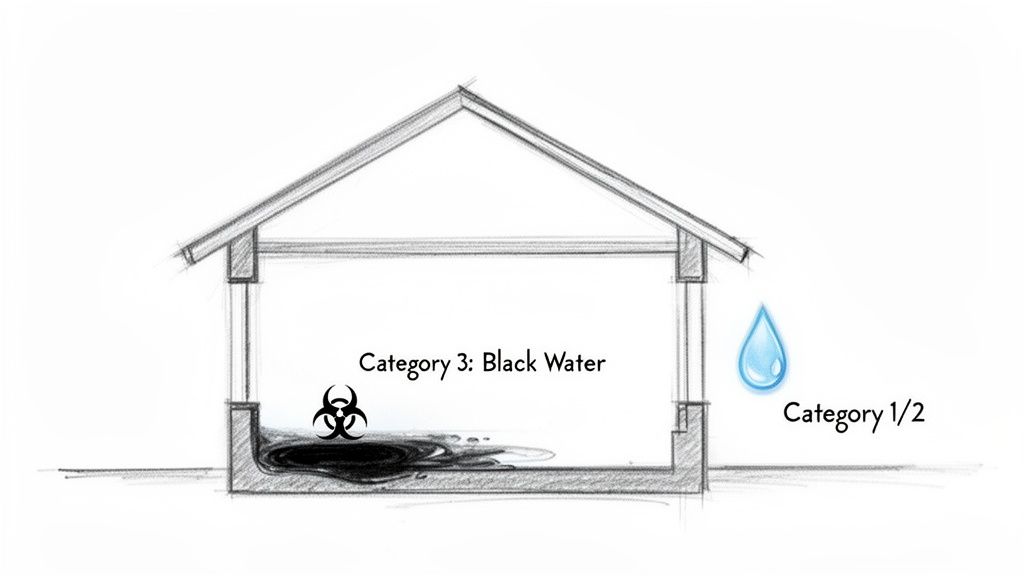
The best way to think about Category 3 water is to stop thinking of it as water at all. Instead, picture a toxic brew. The Institute of Inspection, Cleaning and Restoration Certification (IICRC), the organization that sets our industry standards, classifies water this way when it's grossly contaminated with things that can make you incredibly sick.
What makes it so dangerous is where it comes from. We're talking about sewage, floodwaters from overflowing rivers, or any water that has touched the ground outside before entering your home. These sources are teeming with bacteria, viruses, chemicals, and other nasty pathogens. It's a completely different beast compared to a clean pipe leak.
To put it in perspective, let's look at how the IICRC classifies water damage.
The 3 Categories of Water Damage at a Glance
This table gives you a quick rundown of the three water damage categories, making it easy to see why Category 3 demands such a different response.
| Category | Common Name | Source Examples | Health Risk Level |
|---|---|---|---|
| Category 1 | Clean Water | Broken water supply lines, overflowing sinks (with no soap), appliance malfunctions. | Low. Poses little to no immediate health threat. |
| Category 2 | Gray Water | Overflowing dishwashers or washing machines, broken aquariums, sump pump failures. | Medium. Contains some contamination and can cause illness if ingested. |
| Category 3 | Black Water | Sewer backups, toilet overflows (with feces), all natural floodwater. | High. Grossly contaminated and can cause severe illness or death. |
As you can see, the jump from Category 2 to Category 3 is massive. The health risks are severe, and the required cleanup process is far more intensive.
Common Causes and Unseen Dangers
Black water doesn't just appear out of nowhere. It's the result of specific, high-risk events. The source is everything because it determines what’s lurking in the water.
Some of the most common culprits include:
- Sewer Backups: This is a nightmare scenario for any homeowner. A blockage in the municipal line or your own septic system forces raw sewage back up through your drains and into your home.
- Overland Flooding: When a river swells its banks or a major storm hits, the resulting floodwater is a moving toxic soup. It picks up everything in its path—fertilizers, animal waste, oil, and raw sewage from overwhelmed systems.
- Toilet Overflows with Feces: A simple toilet overflow with just water is one thing. But the moment solid waste is involved, it’s an immediate jump to Category 3.
The real danger is what you can't see. Black water is a cocktail of invisible threats—bacteria like E. coli, parasites, viruses, and fungi—that can cause serious infections and long-term health problems if you're exposed.
Why This Is Never a DIY Job
I've seen homeowners try to tackle this themselves, and it never ends well. You can't just mop up black water and spray some bleach. It's not like cleaning up a leaky sink (Category 1) or even a dishwasher overflow (Category 2).
The contamination soaks deep into porous materials like drywall, carpet, insulation, and wood framing. Household cleaners won't even scratch the surface of the problem. Trying to handle it yourself not only exposes you and your family to serious health risks but also increases the likelihood of missing hidden moisture and bacteria. That's a recipe for chronic mold problems and structural rot down the road.
This is exactly why you call a professional. Certified technicians have the specialized training, personal protective equipment (PPE), and industrial-strength antimicrobial agents to do the job safely and completely. They know how to find, contain, and eliminate the threat, working to make your home truly clean and safe again.
Recognizing the Common Causes of Black Water
Knowing what category 3 water is on paper is one thing, but spotting it in the real world is what truly matters. Black water doesn't just appear out of nowhere; it’s the end result of very specific, high-risk plumbing failures or natural disasters.
When you can pinpoint the source, you’ll know immediately when you’re dealing with a serious problem that requires a professional response.
When Your Home's Systems Fail
Some of the most serious black water incidents start right inside your own walls or from the city pipes connected to your property.
-
Sewer Main Backups: If the municipal sewer line gets clogged or overwhelmed by heavy rain, raw sewage can be forced backward, right up into your home. It’s a nightmare scenario, with foul water erupting from toilets, showers, and floor drains, contaminating everything it touches.
-
Toilet Overflows with Solid Waste: A simple clog spilling clean water is an annoyance. But when a toilet overflows with feces, it instantly becomes a Category 3 biohazard. This is probably one of the most common ways black water contaminates a home, releasing bacteria and viruses into your living space.
It's crucial to understand that any water that has come into contact with raw sewage must be treated as a severe biohazard. The real danger isn't just the water itself, but the invisible pathogens swimming in it.
The Threat from Mother Nature
Beyond your home's plumbing, the great outdoors can be a major source of black water damage. When nature decides to come inside, it brings a whole world of contamination along with it.
Overland flooding is a prime example. Picture a massive storm dumping rain faster than the rivers and storm drains can handle it. That rising water isn't clean rainwater. It's a toxic soup, collecting pesticides from fields, oil from streets, animal feces, and all the runoff from overwhelmed septic systems.
Once that water finds its way into your home, it’s automatically classified as Category 3. For a closer look at handling these situations, especially in lower levels of a house, check out our guide on how to dry out a flooded basement.
As weather patterns become more extreme, flooding is a growing risk. Globally, an estimated 1.47 billion people are now directly exposed to significant flood dangers. This staggering number, highlighted in flood risk findings from the World Bank, underscores just how essential professional restoration is. The sheer volume and variety of contaminants in natural floodwater make it one of the most destructive types of category 3 water damage you can face.
Understanding the Health and Structural Risks
When it comes to category 3 water damage, the real danger isn't just the water you see. It's the invisible world of contaminants hitching a ride. This isn't just dirty water; it's a hazardous material loaded with pathogens that can create serious health problems.
Think of it as a biological soup. Black water is often a nasty mix of bacteria, viruses, parasites, and even dangerous chemicals. All it takes is brief contact for these microorganisms to enter your body through your skin, the air you breathe, or accidental ingestion.
The Invisible Health Threats
The list of potential pathogens lurking in black water is genuinely alarming. We're not talking about germs that might give you a simple cold. We're talking about organisms notorious for causing severe, debilitating illnesses like gastrointestinal infections, skin infections, and respiratory distress.
Some of the most common pathogens found include:
- Bacteria: Nasty bugs like E. coli, Salmonella, and Legionella, which can cause everything from severe food poisoning symptoms to pneumonia.
- Viruses: This includes Rotavirus and Hepatitis A, leading to severe stomach illnesses and serious liver infections.
- Parasites: Organisms like Giardia and Cryptosporidium are known to cause long-term intestinal diseases.
This is precisely why you should never try to handle a sewage backup or major flood cleanup yourself. The risk of getting sick is just too high without professional-grade protective gear and proven sanitization methods.
How Contamination Spreads Through Your Home
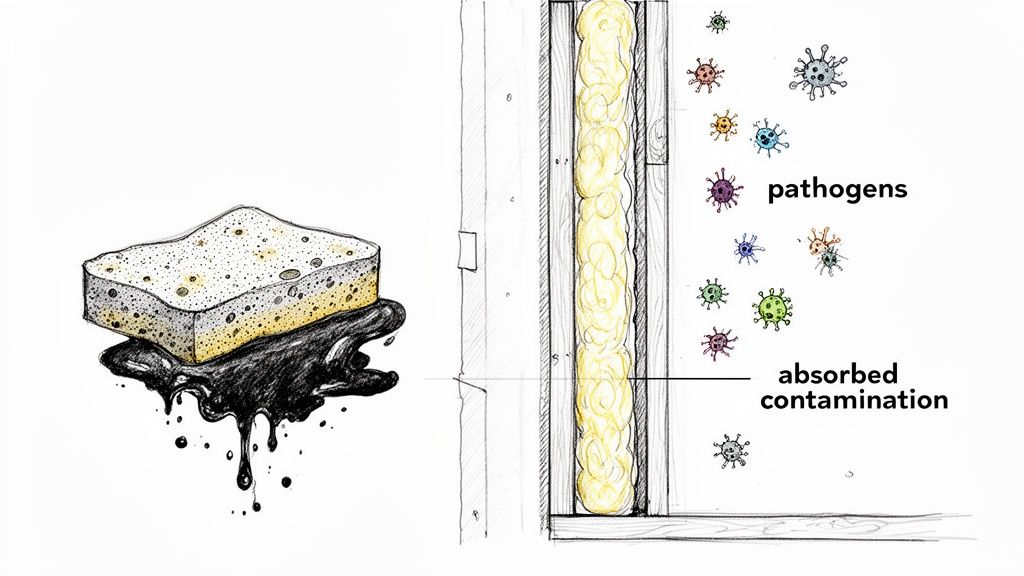
The threat of category 3 water damage digs much deeper than what you can see. The very materials that make up your home—drywall, insulation, wood—act like a giant sponge, wicking up contaminated water and trapping it inside your walls, floors, and ceilings.
Picture what happens when you pour dirty water onto a dry sponge. It doesn't just sit there; it soaks in instantly, filling every nook and cranny. The same process happens with porous building materials:
- Drywall
- Insulation
- Wood studs
- Carpeting and padding
- Subflooring
These materials don't just absorb the water; they absorb all the bacteria and pathogens with it. As they stay damp, they create the perfect environment for these contaminants to multiply. This hidden saturation turns into a long-term hazard that no amount of surface cleaning can fix.
In as little as 24 to 48 hours, this trapped moisture can spark aggressive mold growth. Suddenly, what started as a water problem has morphed into a dangerous mold infestation, putting your home's air quality and structural safety at risk.
This is why professional remediation is so essential. True experts don’t just extract the standing water. They use specialized tools to detect and dry out hidden moisture, then thoroughly sanitize the structure itself. For a deeper dive, you can learn more about the complexities of professional mold damage remediation. Tackling the full extent of the contamination is the primary goal in making your home safe again.
Immediate Steps to Take for Your Safety
The moment you suspect you have category 3 water damage, your first thought needs to be safety, not saving your stuff. The actions you take in these initial moments are absolutely critical for protecting everyone in your home from the serious health threats lurking in black water.
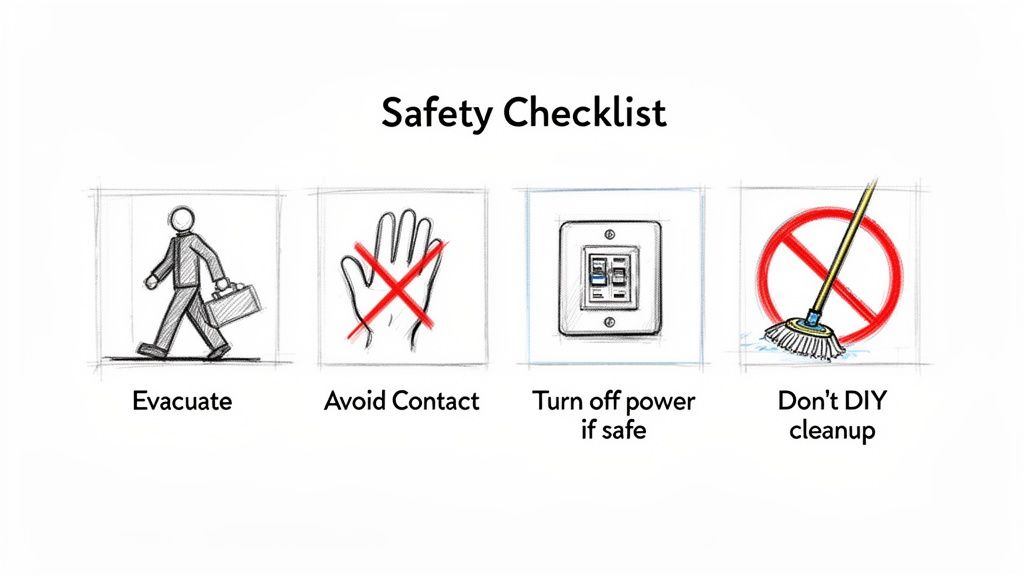
Your number one priority is simple: get people away from the contamination. Evacuate everyone, including your pets, from the affected area immediately. Whatever you do, don't walk through the water or try to grab any belongings.
Critical Safety Checklist
Once everyone is clear of the contaminated zone, it's time to take a few more essential steps. Always remember that your well-being comes first. These actions are designed to minimize risks while you wait for the pros to arrive.
-
Avoid All Contact: Treat the water like the biohazard it is. Keep it off your skin, and try not to breathe the air in the immediate area. Harmful pathogens can easily become airborne.
-
Shut Off Electricity (If Safe): If you can get to your circuit breaker panel without stepping in any water, turn off the power to the flooded rooms. Electricity and water are a lethal mix, and this simple flip of a switch can prevent a tragic accident.
-
Stop the Water Source (If Possible): If you’re dealing with a plumbing problem like a busted sewer line, find your home’s main water shutoff valve and turn it off—but only if you can do so safely. This can keep a bad situation from getting much, much worse.
A word of caution: Never, ever use a shop vac or household fans to deal with black water. Not only will you ruin your equipment, but you'll also blast dangerous bacteria and viruses into the air, spreading them throughout your home.
What Not to Do in a Black Water Emergency
Knowing what not to do is just as important as knowing what to do. Trying to be a hero and tackling a black water mess on your own can lead to serious illness or spread the contamination even further.
- Don't Try to Salvage Porous Items: Anything soft that has soaked up black water—carpets, furniture, mattresses, drywall, books—is almost always a lost cause. Attempting to save these items just exposes you to nasty pathogens.
- Don't Use Household Cleaners: Your bottle of bleach isn't going to cut it here. Standard cleaning products are simply not powerful enough to properly disinfect an area contaminated by category 3 water.
- Don't Wait to Call for Help: Time is your enemy. The longer contaminated water sits, the deeper it seeps into your home's structure, creating a perfect breeding ground for mold and bacteria.
The single most important step you can take is to call a certified professional. For more details on what to do in these situations, you can find helpful tips in our articles on emergency water removal. Trained experts have the specialized gear and safety protocols to handle the job correctly and safely.
The Professional Remediation and Restoration Process
When certified professionals show up to tackle category 3 water damage, they’re not just there to mop up a mess. They bring a systematic, science-based game plan to safely get rid of contaminants, thoroughly dry your home’s structure, and bring it back to its pre-damage condition. Knowing what to expect can make a stressful situation feel a lot more manageable.
It all kicks off with a detailed inspection. You'll see technicians in full personal protective equipment (PPE) using tools like thermal imaging cameras and moisture meters. Their job is to map out exactly how far the water has traveled, because the real damage often hides behind walls and under floors, well beyond what you can see.
Extraction and Removal of Contaminated Materials
Once the full scope of the problem is clear, the real work begins. First up is removing all the standing black water with powerful, truck-mounted extraction equipment. This is a whole different league from a shop vac and is the first critical step to stop the damage from spreading.
Next comes the tough part. Because category 3 water soaks into porous materials and contaminates them beyond saving, those items have to go. This almost always means saying goodbye to:
- Carpeting and the padding underneath
- Drywall and insulation
- Upholstered furniture and mattresses
- Composite wood items like particleboard cabinets
This isn't a recommendation; it's a non-negotiable safety step. These materials act like sponges for bacteria and pathogens, and there's just no way to reliably clean them. Tearing them out is a critical step in removing the source of the contamination for good.
A crucial part of this process is setting up containment. Pros use heavy plastic sheeting and negative air pressure machines (think of a powerful, filtered exhaust fan) to seal off the affected area. This creates a barrier that stops airborne contaminants from spreading to clean parts of your home while they work.
Structural Drying and Dehumidification
With the contaminated materials gone and the area cleared, the focus shifts to drying the bones of your house. This is far more sophisticated than just aiming a few fans at the wet spots. Professionals create a carefully controlled drying environment using specialized gear.
The drying arsenal includes a tag team of equipment:
- Industrial-Grade Air Movers: These aren't your average fans. They're strategically placed to create a powerful vortex of airflow across wet surfaces like wood studs and subflooring, dramatically speeding up evaporation.
- LGR Dehumidifiers: As the air movers pull moisture out of the structure, these Low-Grain Refrigerant dehumidifiers pull that moisture out of the air. They are workhorses, converting immense amounts of water vapor back into liquid water that gets pumped right out of your home.
This scientific one-two punch is the heart of structural drying. It removes the deep, hidden moisture you can't see, preventing serious secondary damage like wood rot and mold. The time this takes can vary, and you can get a better idea of what to expect by reading our guide on how long water damage restoration takes.
Cleaning, Sanitizing, and Final Checks
Once the structure hits its target drying goals, the final cleanup phase kicks in. Every remaining salvageable surface, from the wood framing to the concrete slab, is meticulously cleaned with powerful antimicrobial agents. This kills off any lingering bacteria and helps keep future mold from getting a foothold.
Technicians often use air scrubbers as well, which act like giant air purifiers to filter out any remaining nasty particles from the air. After everything is sanitized, they perform a final inspection to confirm the area is officially clean, dry, and safe for the rebuilding process to begin.
Navigating Insurance and Restoration Costs
When you're dealing with category 3 water damage, the last thing you want to worry about is the money. But let's be realistic—it's a huge concern. There’s no simple price tag for this kind of cleanup; the final bill really hinges on the unique details of your situation.
We have to look at how large the affected area is, what kinds of materials got soaked (drywall is a lot different to handle than concrete, for instance), and how long the contaminated water has been sitting there causing more damage.
Once you know everyone is safe, your very next call should be to your insurance agent to get the claims process started. A legitimate, IICRC-certified restoration crew is your best ally here. They can document everything meticulously—taking photos, getting precise moisture readings, and creating a detailed scope of work—which is exactly what your insurance company needs to see.
Understanding Your Insurance Policy
This is the part where the fine print really matters. Most standard homeowner's insurance policies have some tricky exclusions. For example, damage caused by a sewer backup or widespread flooding often isn't covered unless you have a specific add-on (a rider) or a separate flood insurance policy. It's a good idea to pull out your policy and get familiar with what it does and doesn't cover.
A professional restoration team can take a lot of this pressure off your shoulders by communicating directly with your insurance adjuster. They speak the same language and can provide all the technical details needed to move your claim along smoothly and help ensure nothing gets missed. If you want to dive deeper into what goes into the pricing, our guide breaks down the key factors that influence water damage repair cost.
Make no mistake, the financial impact of these events can be staggering. In recent years, the U.S. has experienced numerous climate and weather disasters where the damages for each event soared past $1 billion. The average insurance claim for water damage is a reflection of these high costs, which is why having a certified, quick-response team on your side is so important.
This is the professional, industry-standard process for tackling a Category 3 water damage situation.
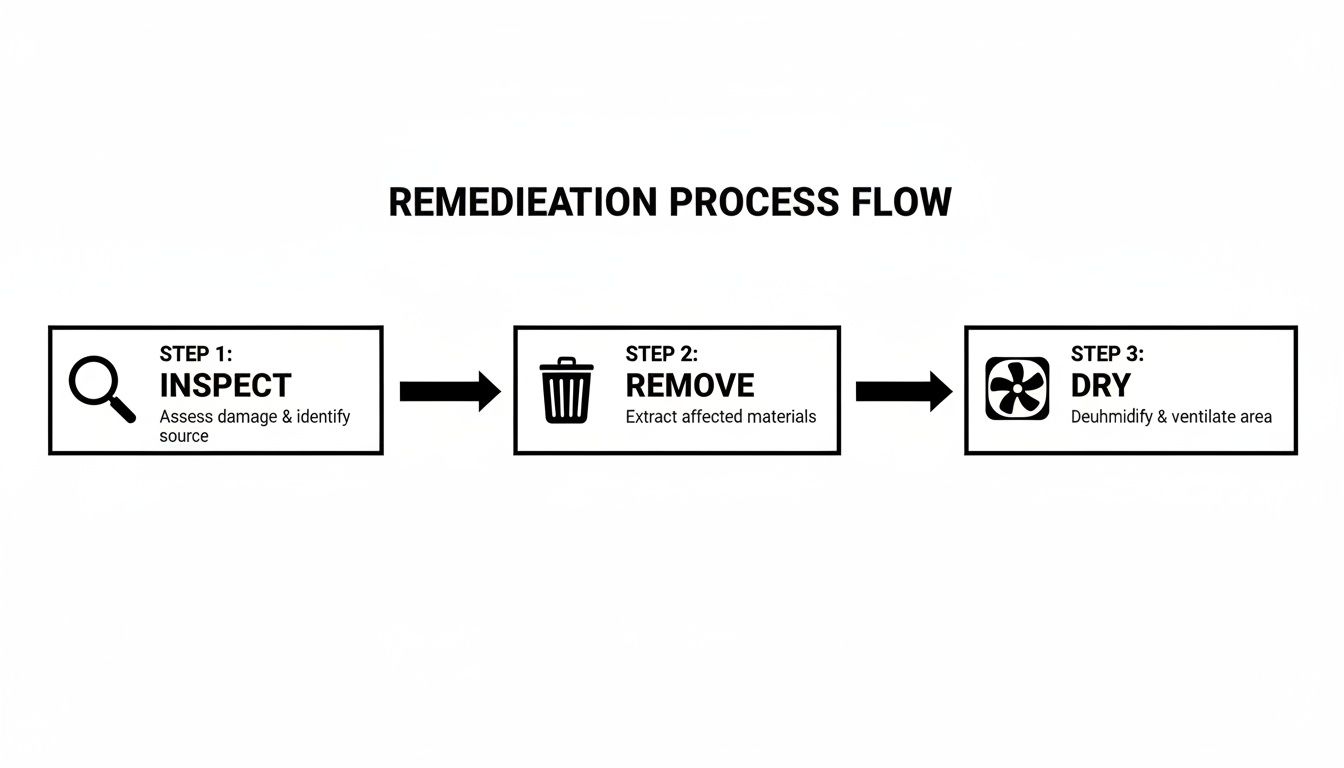
This step-by-step flow from inspection to removal and drying shows just how methodical you have to be to make a property safe again.
Got Questions About Black Water? We've Got Answers.
Dealing with a category 3 water damage situation is stressful and confusing. It's completely normal to have a lot of questions. Getting clear, simple answers is the first step toward making smart decisions to protect your family and your home. Here are a few of the most common things people ask when faced with black water.
Can I Just Clean Up a Small Sewage Leak Myself?
In a word? No. We strongly advise against it. Even a leak that looks small is teeming with dangerous pathogens that can make you seriously ill. Your everyday household cleaners are no match for the level of contamination in category 3 water.
The bigger issue is what you can't see. Contaminants soak deep into porous materials like drywall, carpet padding, and subfloors almost instantly. For your own safety, it's always best to call a certified professional for any sewage cleanup, no matter the size.
How Can I Tell if It's Actually Category 3 Water?
Look at the source—that's your biggest clue. If the water backed up from a sewer line, overflowed from a toilet with feces, or came from outside during a flood, you have to treat it as Category 3.
Here's a solid rule of thumb: When in doubt, treat it like a biohazard. It's also worth knowing that even "clean" water can turn into Category 3 if it sits for more than 48 hours, giving bacteria and mold a chance to explode.
What Happens to My Stuff After It's Been Touched by Black Water?
This is a tough one. For safety, most porous items that have absorbed black water simply can't be saved. These materials trap bacteria, viruses, and other contaminants deep inside, making it impossible to sanitize them completely.
- What usually has to be thrown out? Think of things like carpets, mattresses, upholstered furniture, and soggy drywall.
- What can sometimes be saved? Hard, non-porous items have a much better chance. Things made of metal, glass, or solid plastics can often be professionally cleaned and restored.
A certified restoration specialist can walk you through the process, helping you determine what can be safely salvaged and what, unfortunately, needs to go.
If you're facing a water emergency, don't wait. Restore Heroes provides 24/7 certified water damage restoration services to get your property clean, dry, and safe. Contact us for an immediate response: https://www.restoreheroesaz.com