
If you want to keep mold out of your basement, you need to get one thing straight: control the moisture, and you control the mold. It’s really that simple.
The key is to manage water on the outside of your home, keep the humidity in check on the inside, and do regular inspections to catch problems early. Your goal should be to keep the indoor humidity level between 30% and 50%. Get that right, and you’re creating a space where mold just can't get a foothold.
Why Basements Are a Magnet for Mold
Let's face it, basements are practically designed to be damp. They're underground, which makes them cooler, darker, and more prone to moisture than any other area in your house. It’s a perfect storm. The soil against your foundation is damp, those cool concrete walls create condensation, and there’s usually very little air circulation to dry things out.
This guide is your roadmap to keeping that space dry and healthy. We'll walk through practical, proactive strategies you can actually use to protect your home.
The Real Culprit: Moisture
Mold needs a few things to survive: a food source (like wood, drywall, or even dust), the right temperature, and moisture. You can’t get rid of the first two, so your entire battle plan has to focus on controlling moisture.
So where is all this water coming from? Usually, it's one of these common offenders:
- Water from the Outside: Rain and melting snow can easily seep through tiny foundation cracks or poorly sealed basement windows, especially if the ground is already saturated.
- Leaks from the Inside: A dripping pipe, a leaky water heater, or a washing machine hose that’s seen better days are all classic sources. Even a slow, tiny leak can cause a massive mold problem over time.
- Humidity and Condensation: When warm, humid air from your main living area drifts downstairs and hits those cool basement walls and pipes, it creates condensation. It’s the same reason a glass of ice water “sweats” in the summer.
That musty, earthy smell in a basement is your first and most reliable warning sign. If you smell it, you have a moisture problem—even if you can't see a single spot of mold. It's growing somewhere.
What's at Stake: Health and Home
A damp basement is a lot more than just an inconvenience. For starters, mold exposure can set off nasty allergic reactions, trigger asthma attacks, and cause other serious respiratory problems.
But it’s not just about your health. Unchecked moisture will rot wood, ruin drywall, and can even compromise the structural integrity of your home. And remember, water problems don't stay put. For example, understanding the signs of water damage on a ceiling can help you trace a problem that might have started in the basement and worked its way up.
Being proactive isn't just about cleaning; it’s about protecting your biggest investment and the well-being of your family.
Your First Line of Defense: Exterior Water Management
To stop mold from ever starting in your basement, you have to think like a raindrop. Your one and only goal is to make sure every drop of water that hits your property keeps moving away from your foundation. You can't give it a single chance to hang around and seep inside. This "outside-in" strategy is, without a doubt, the most powerful way to keep your basement dry.
Water damage is the number one cause of basement mold—it’s not even a close contest. Just to give you an idea of how common this is, studies show that a shocking 85% of U.S. office buildings have dealt with water damage in the past, and 45% have active leaks right now. That same problem plays out in homes across the country every single day. The key is to manage water on the outside before it becomes a nightmare on the inside.
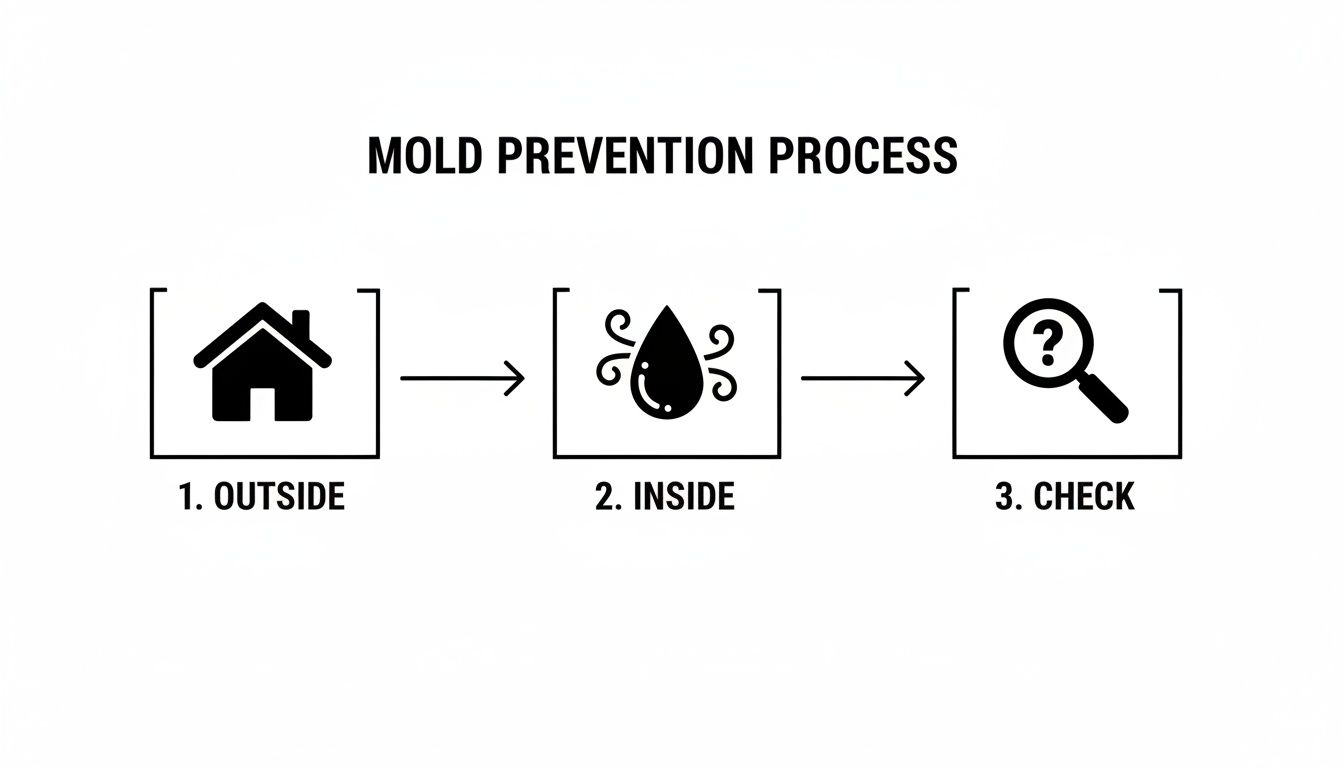
As you can see, everything starts with controlling the environment right outside your home. Get that right, and you're already halfway to a mold-free basement.
Mastering Your Property's Grade
The ground right up against your house is your most important tool. We call the slope of this land the "grading," and it basically tells rainwater where to go. If it slopes toward your foundation, you're practically inviting water into your basement.
The rule here is simple but absolutely critical: the ground should slope down at least 6 inches over the first 10 feet away from your foundation. It might not look like much, but that gentle slope uses gravity to pull water safely away from your walls instead of letting it pool up against them. Think of your house as an island—you want to build up the land immediately around it so all the water just naturally flows away.
The Unsung Heroes: Gutters and Downspouts
Your gutters and downspouts do a ton of heavy lifting. Their job is to catch all the water hitting your roof (which can be thousands of gallons in a storm) and channel it far away from your foundation. When they fail, all that water gets dumped exactly where you don’t want it.
Clogged gutters are a classic recipe for a wet basement. Once they're full of leaves and debris, rainwater has nowhere to go but over the edge, cascading down your siding and soaking the ground right next to your foundation.
Pro Tip: A simple downspout extender is one of the cheapest and most effective fixes you can make. Just adding a piece that carries water another 5 to 10 feet away from the house solves a surprising number of those "mystery" damp basement issues.
Keeping your gutter system in top shape is pretty straightforward, but you have to be consistent.
- Clean them out. At a minimum, do it in the late fall after the leaves have fallen and again in the spring to clear out winter debris.
- Check the pitch. Make sure the gutters are angled slightly toward the downspouts so water doesn't sit there.
- Inspect for damage. Look for leaks, sagging sections, or loose connections that could be letting water escape.
If you're already dealing with a major water event, knowing how to dry out a flooded basement quickly is the most important step to prevent mold from taking hold.
Exterior Water Control Checklist
To keep things simple, here’s a quick-glance table of the essential outdoor tasks. Following this routine can be your best bet for keeping water where it belongs—away from your house.
| Task | Recommended Frequency | Impact on Mold Prevention |
|---|---|---|
| Gutter Cleaning | Twice a year (Spring & Fall) | High: Prevents overflows that saturate soil near the foundation. |
| Check Grading | Annually | High: Ensures water flows away from the house, not toward it. |
| Downspout Extension Check | Seasonally | High: Confirms water is discharging at least 5-10 feet from the foundation. |
| Inspect for Foundation Cracks | Annually | Medium: Allows for sealing entry points before they become major leaks. |
| French Drain Inspection | Annually (if applicable) | High: Ensures your advanced drainage system is clear and functioning. |
This checklist isn't just about maintenance; it's about actively defending your home's foundation from the constant threat of water intrusion.
Advanced Drainage for Stubborn Water Problems
Sometimes, good grading and clean gutters just aren't enough. This is especially true for homes built on a natural slope, in areas with a high water table, or on properties with dense, clay-like soil that doesn't drain well. If that sounds like your situation, you might need a more heavy-duty solution like a French drain.
A French drain is basically a hidden trench filled with gravel that contains a perforated pipe. It works by intercepting both surface and groundwater before it reaches your foundation and channeling it away to a safer location, like a dry well or a lower part of your yard.
While installing one is a bigger job, it can be a permanent solution for those nagging, persistent water issues. It's the ultimate defense, creating a dry zone around your foundation that keeps the soil from getting saturated, even during the heaviest storms.
Mastering Your Basement's Interior Climate
Even after you've locked down the outside of your home against water, the fight to keep your basement mold-free moves indoors. Everyday life—from laundry to temperature swings—can create enough moisture inside your basement to give mold a foothold. The goal now is to take direct control of that interior climate.
You need to create an environment where mold spores just can't get the moisture they need to come to life. This boils down to managing humidity, keeping the air moving, and stopping condensation before it starts.
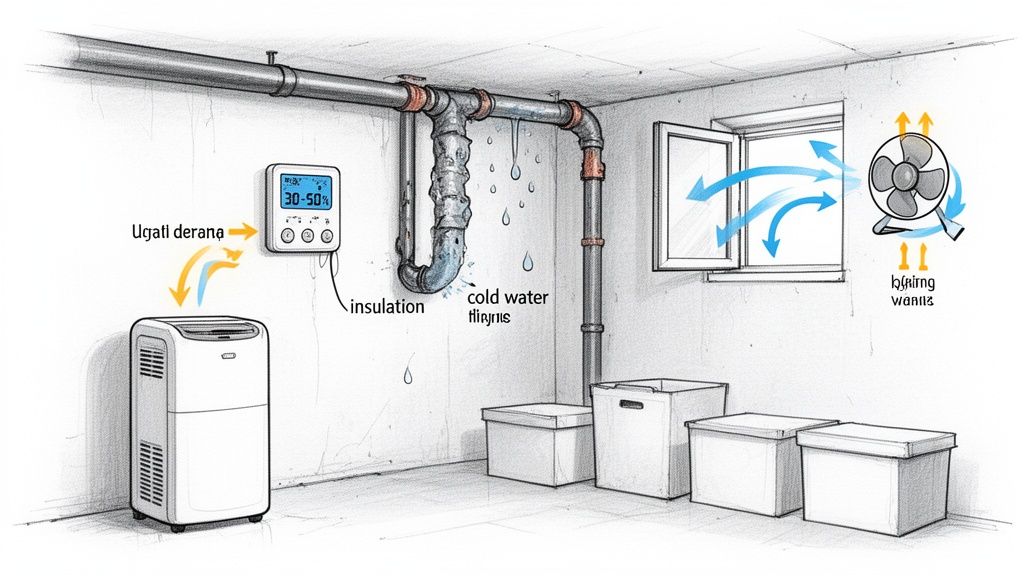
Hitting the Humidity Sweet Spot
Humidity is the invisible moisture hanging in the air, and in a basement, it’s public enemy number one. Mold doesn’t need a puddle to grow; high humidity is all it takes to get an infestation started.
Your target is a relative humidity level between 30% and 50%. Think of this as the "safe zone," a recommendation backed by the Environmental Protection Agency (EPA). Once the air gets damper than 60%, mold spores can begin to thrive. You can easily track this with a hygrometer, an inexpensive little gadget that tells you exactly where you stand.
Because they’re below ground, basements are notorious mold hotspots. It's no surprise that some U.S. studies estimate a staggering 47% of homes have issues with dampness or mold. Getting a handle on humidity is your most powerful move. A properly sized dehumidifier can slash your mold risk by as much as 75%, since spores need that sustained moisture above 60% to really take hold. You can explore the research on indoor environmental quality to see just how critical this is.
Choosing and Using a Dehumidifier
A good dehumidifier isn't just a nice-to-have; it's the single most important appliance for maintaining a healthy basement. It actively pulls moisture out of the air, keeping your humidity levels right in that ideal 30-50% range.
When you're picking one out, here's what to keep in mind:
- Sizing is crucial. An undersized unit will run constantly and still not get the job done. Check the square footage rating—for a typical basement, you'll want something rated for 1,000-2,500 square feet.
- Look for a continuous drain option. Trust me, nobody wants to empty a dehumidifier bucket every day. Most modern units let you attach a simple hose to a floor drain or sump pump. It’s a true "set it and forget it" feature.
- Placement matters. For the best results, put your dehumidifier in a central spot, away from walls. This lets air circulate around the unit so it can work most efficiently.
A dehumidifier isn't just for hot, sticky summers. Your basement's humidity can spike during wet spring and fall weather, or even in winter as snow melts. I usually recommend letting it run on its automatic setting year-round to keep things stable.
Improving Air Circulation and Ventilation
Stagnant, musty air is another one of mold's best friends. It allows pockets of humidity to build up in corners, behind storage boxes, and inside closets. The solution is simple: get the air moving.
Even one or two small fans can make a world of difference. By circulating the air, you help your dehumidifier’s dry air reach every nook and cranny, preventing moisture from settling on cool surfaces.
On dry, low-humidity days, opening a few basement windows for a couple of hours is a great, no-cost way to air out the space. Just be sure to close them if it starts to rain or if the outdoor humidity is higher than what you're aiming for inside.
Stopping Condensation in Its Tracks
Have you ever seen your pipes or walls "sweating"? That's condensation, and it’s a major source of sneaky moisture. It happens when warm, humid air hits a cold surface, like your water pipes or uninsulated foundation walls.
A simple and incredibly effective fix is to insulate your cold water pipes. You can grab pre-slit foam pipe insulation at any hardware store. It's cheap, takes minutes to install, and immediately stops those drips from forming. This little weekend project eliminates a common, and often overlooked, source of water, seriously beefing up your defenses against mold.
Finding and Sealing Hidden Water Entry Points
Even when you've done everything right with exterior drainage and indoor air quality, water can be a sneaky adversary. It often exploits tiny, almost invisible cracks and gaps in your foundation, turning a small imperfection into a significant moisture issue. Now it's time to play detective and hunt down these entry points before they become a welcome mat for mold.
A thorough, hands-on inspection is your best bet. You really need to get up close and personal with your basement walls and floor, looking for the tell-tale signs that water has been there. This isn’t just about spotting puddles; it's about finding the source of the problem.
Ignoring these small leaks is a costly mistake. It’s what fuels a mold remediation industry that’s expected to hit $1,751.9 million globally by 2032. In North America, basements with drywall are the most common battleground, making up 35.7% of cases, since porous materials can grow mold in as little as 24 hours. Proactive sealing is a small job now that prevents a massive headache later. You can discover more insights about the rising costs of water damage and see why getting ahead of it is so important.
Investigating Foundation Cracks and Gaps
Your first mission is to scan every inch of your foundation walls and the floor. Arm yourself with a powerful flashlight and look for more than just obvious cracks.
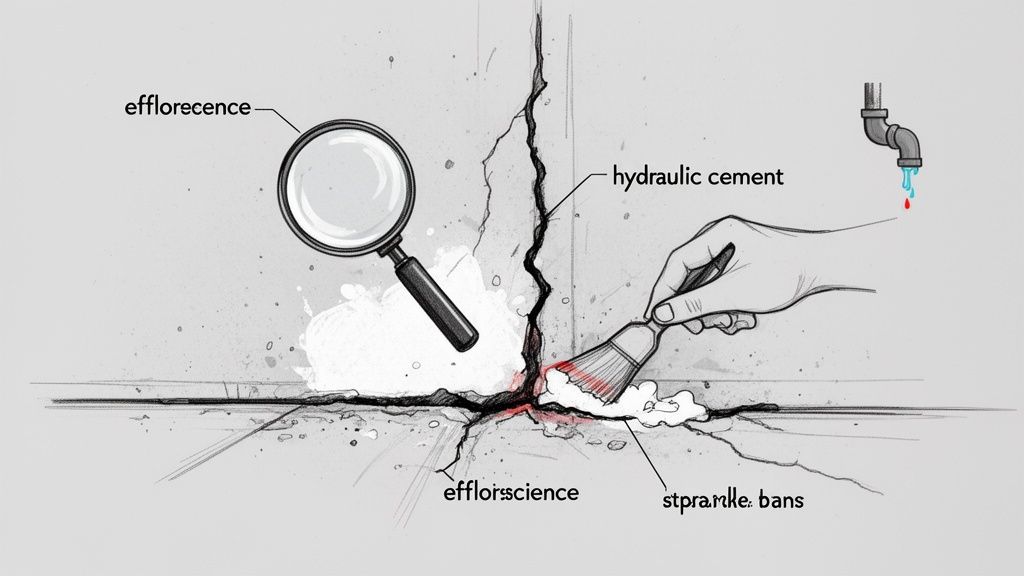
- Hairline Cracks: These super-thin fissures in the concrete might look harmless, but they're notorious for wicking moisture straight from the damp soil outside.
- Efflorescence: This is the smoking gun. If you see a white, chalky, or crystalline powder on your walls, that's a dead giveaway that water has seeped through the concrete, evaporated, and left mineral deposits behind.
- Gaps Around Pipes: Pay close attention to where any pipes, electrical conduits, or HVAC lines enter through the foundation. The seals around these entry points can degrade over time, creating a direct path for water.
Sealing Vulnerabilities the Right Way
Once you’ve found a crack or gap, sealing it correctly is everything. For small to medium-sized cracks in concrete or masonry, don't just grab any old caulk—it won't last. You need something much tougher.
Hydraulic cement is my go-to for this kind of repair. It’s a special type of cement that actually expands as it cures, forcing its way into the crack to create a powerful, watertight seal. The best part? It can even set and harden while actively wet, so you can literally plug a leak as it's happening. Just make sure to follow the manufacturer's instructions to the letter. For gaps around pipes, a high-quality polyurethane caulk is usually a better fit, as its flexibility allows for the slight movement of the pipes.
Sealing foundation cracks isn't just a repair; it's a fundamental part of learning how to avoid mold in your basement. Every sealed entry point is one less invitation for moisture and mold to move in.
Hunting for Plumbing Leaks
Seepage through the foundation isn't the only hidden culprit. Your home’s plumbing system snakes through the basement, and even a slow, persistent drip can create the chronic dampness that mold thrives on.
Make it a habit to check all your visible plumbing for signs of trouble. This includes the pipes running along the ceiling, the connections to your water heater, and the hoses on your washing machine. Look for green staining on copper pipes (a sign of corrosion), active drips, or dark water spots on the floor and subflooring directly below.
Sometimes a leak is so slow you'll never see it drip. Here’s a simple trick I use: wipe a section of pipe completely dry with a paper towel, then wrap a fresh, dry one around it. Come back in an hour or so. If that towel is even slightly damp, you’ve found a hidden leak that needs to be fixed. Catching these tiny problems early is a huge win in the ongoing battle to keep your basement dry and mold-free.
Building Your Routine Maintenance Habit
Let's be honest: effective mold prevention is a marathon, not a sprint. The real secret to a consistently dry, healthy basement isn't some massive, one-time project. It's all about building a simple, repeatable routine.
When you turn these checks into a habit, the work feels less like a chore and more like second nature. It’s about creating a smart, seasonal rhythm for inspecting your home's defenses. Spending a few minutes each season can save you from the major headache—and expense—of a full-blown mold problem.
If you’ve ever had to look into water damage repair costs, you know exactly why this small, proactive effort is worth its weight in gold.
Your Seasonal Maintenance Checklist
Thinking about basement upkeep in seasonal blocks makes it far less daunting. Each season throws different weather challenges at your home, so your focus should shift to match.
The goal here isn't to add a dozen new things to your to-do list. It's to be strategic. Here’s a simple plan I've seen work for countless homeowners.
Seasonal Basement Maintenance Plan
A structured, seasonal approach can help you stay one step ahead of potential moisture problems. This table breaks down what to focus on as the weather changes.
| Season | Key Tasks | Primary Goal |
|---|---|---|
| Spring | Test sump pump. Check gutters for winter damage. Seal new foundation cracks. | Prepare for heavy spring rains and snowmelt. |
| Summer | Clean dehumidifier filter. Look for condensation on pipes/walls. Clear window wells. | Combat high humidity and sudden thunderstorms. |
| Fall | Clean all leaves from gutters. Check exterior grading and add soil where needed. | Prevent winter ice dams and prepare for spring drainage. |
| Winter | Keep vents clear of snow. Monitor roof for ice dams. Check for interior leaks. | Protect against snowmelt and ice-related water intrusion. |
Following this simple schedule turns a big job into small, manageable steps, giving you peace of mind all year long.
H3: A Closer Look at Each Season
Spring (March – May)
This is all about waking your home up from winter and preparing for rain.
- Test Your Sump Pump: Don't just assume it works. Pour a bucket of water into the sump pit to make sure the pump actually kicks on, runs smoothly, and shuts off. Spring deluges are coming, and this is your last line of defense.
- Inspect Gutters and Downspouts: Winter ice can do a number on your gutters. Look for cracks, sagging, and loose connections. Make sure downspouts are still clear and channeling water at least five feet away from your foundation.
- Check for Foundation Cracks: Freeze-thaw cycles are notorious for creating new cracks. Do a slow walk-around and seal any you find before the heavy rains turn them into active leaks.
Summer (June – August)
Humidity is the enemy in summer.
- Check Dehumidifier Performance: That little appliance is working overtime. Clean the filter and check that the drain hose isn't clogged. A dirty filter can slash its efficiency by 15-25%, leaving more moisture in the air.
- Look for Condensation: On those really hot, sticky days, look for "sweating" on cold water pipes, ductwork, and concrete walls. This is a classic sign your dehumidifier can't keep up or you need better air circulation.
- Inspect Window Wells: Clear out any leaves and dirt that have piled up. A clogged window well can turn a heavy summer thunderstorm into a miniature swimming pool right against your basement window.
My Pro Tip: Set a simple recurring reminder on your phone for the first Saturday of each new season. Label it "Basement Check." It’s an easy way to lock in this habit without even thinking about it.
Fall (September – November)
This season is all about preparing for the harsh weather to come.
- Clean Gutters Thoroughly: If you only do this once a year, do it now. Clogged gutters are the #1 cause of ice dams in the winter, which can lead to serious water damage.
- Check Exterior Grading: Walk around your foundation after a rainstorm. Do you see puddles forming? That means the soil has settled and is now sloping toward your house. Add more soil to build it back up so water flows away.
Winter (December – February)
Your focus in winter is on managing snow and ice.
- Keep Vents and Meters Clear: After a heavy snowfall, make sure snow isn't piled up against your foundation. It's especially important to clear it away from dryer vents and furnace intake/exhaust pipes.
- Monitor for Ice Dams: Keep an eye on your roofline for those thick ridges of ice. They can force melting snow to back up under your shingles and run down inside your walls, often showing up as a mysterious puddle in the basement.
Knowing When to Call for Professional Help
While a little elbow grease can handle minor mold spots, it's crucial to know your limits. Some situations are just too big, too hidden, or too dangerous for a DIY approach.
Recognizing when to pass the torch to a pro isn't admitting defeat—it's the smartest move you can make to protect your home and your family's health. The last thing you want is to accidentally turn a contained problem into a whole-house contamination disaster.
Red Flags That Mean You Need an Expert
If you run into any of these situations, it’s time to put down the spray bottle and pick up the phone to call a certified mold remediation specialist. These are clear signs that the problem may require professional-grade equipment, containment, and expertise.
-
The Mold Patch is Large: The EPA offers a good rule of thumb: if the mold covers more than 10 square feet (think a 3-foot by 3-foot square), it’s beyond a simple DIY fix. This is a job for the pros.
-
That Musty Smell Just Won't Quit: You’ve cleaned the visible spots, aired the place out, and have the dehumidifier running on full blast, but that damp, earthy odor is still there. This is a classic sign that mold is thriving somewhere you can't see, like behind drywall, under the carpet, or even deep inside your HVAC system.
-
The Source Was Contaminated Water: If the mold appeared after a sewage backup or a major flood, do not try to clean it yourself. This isn't just a mold problem anymore; it's a biohazard. This "black water" is teeming with bacteria and other nasty contaminants that pose a serious health risk.
Trying to rip out a large mold infestation without proper containment is a recipe for disaster. You can easily send millions of spores airborne, spreading them through your vents and into every room of your house.
Dealing with a small patch of surface mildew is one thing, and knowing how to treat mold on basement walls is a great skill for minor upkeep. But a true professional has the tools and training to find the hidden moisture source, completely contain the work area, and safely remove the mold for good, helping ensure the air you breathe is clean.
Answering Your Basement Mold Questions
When it comes to basement mold, a lot of the same questions pop up. Let's walk through some of the most common things homeowners ask me and get you some clear, practical answers.
How Can I Tell If I Have Mold If I Can't See It?
This is a great question. The first thing I always tell people is to trust your nose. If you walk into your basement and get hit with a persistent musty, earthy smell, that's your #1 clue that mold is growing somewhere, even if you can't see it. Don't just dismiss it as "that basement smell."
Beyond the smell, look for signs that moisture is hiding. Keep an eye out for things like:
- Paint that’s starting to peel, bubble, or blister on the walls.
- Wood trim or baseboards that feel a little soft or look warped.
- Allergy symptoms—like sneezing, coughing, or itchy eyes—that flare up only when you're in the basement.
These are all red flags that water is getting trapped behind a wall or under the floor, creating the perfect hidden spot for mold to take hold.
Are Some Basements More Likely to Get Mold?
Absolutely. Not all basements are created equal when it comes to mold risk.
Older homes, for example, often have porous foundations made from fieldstone or cinder blocks, which can act like a sponge, slowly seeping moisture from the surrounding soil.
Finished basements can also be a bit of a trap. When you put drywall right up against a cool foundation wall, you can inadvertently create a space where condensation gets trapped, feeding mold growth you'll never see. And if your home is just naturally in an area with a high water table, you’re already starting on hard mode and need to be extra proactive.
Mold vs. Mildew: What's the Real Difference?
People use these terms interchangeably, but it really comes down to depth. Mildew is a surface fungus—think of the powdery gray or white stuff in your shower. Mold, on the other hand, grows roots that dig deep into materials like wood and drywall, causing much more serious damage.
What Is the Difference Between Mold and Mildew?
While mildew is technically a type of mold, it's helpful to think of it as mold's less-destructive cousin. It's that flat, powdery growth you might see on a damp surface, usually gray or white. You can typically clean it off non-porous surfaces without too much trouble.
Mold is the real problem. It can be fuzzy or slimy and comes in all sorts of colors—black, green, yellow, you name it. The key difference is that mold sends roots (called hyphae) deep into porous materials, rotting them from the inside out. Finding mold on drywall is a classic example, and knowing how to properly remove black mold from drywall is critical to stop it from coming right back.
At the end of the day, both thrive on moisture, so the prevention strategy is identical: keep things dry.
If you're dealing with a moisture problem or have found mold that feels like too much to handle on your own, Restore Heroes is here to help. Our IICRC-certified team provides professional mold remediation services in the Phoenix metro area. For a no-obligation onsite inspection, visit us at https://www.restoreheroesaz.com.