
Standard homeowners insurance usually does not cover sewage backup, but a separate water backup or sewer backup endorsement can often fill that gap for about $50 to $250 per year. If wastewater is coming up through a drain or toilet, that's usually a backup claim, not the same thing as a covered burst-pipe loss.
That's the part most homeowners don't find out until the floor is wet, the smell is in the house, and the insurance adjuster starts asking what occurred. When you're standing in a damaged room trying to figure out whether the mess is covered, the difference between water damage, backup damage, and pipe repair matters a lot.
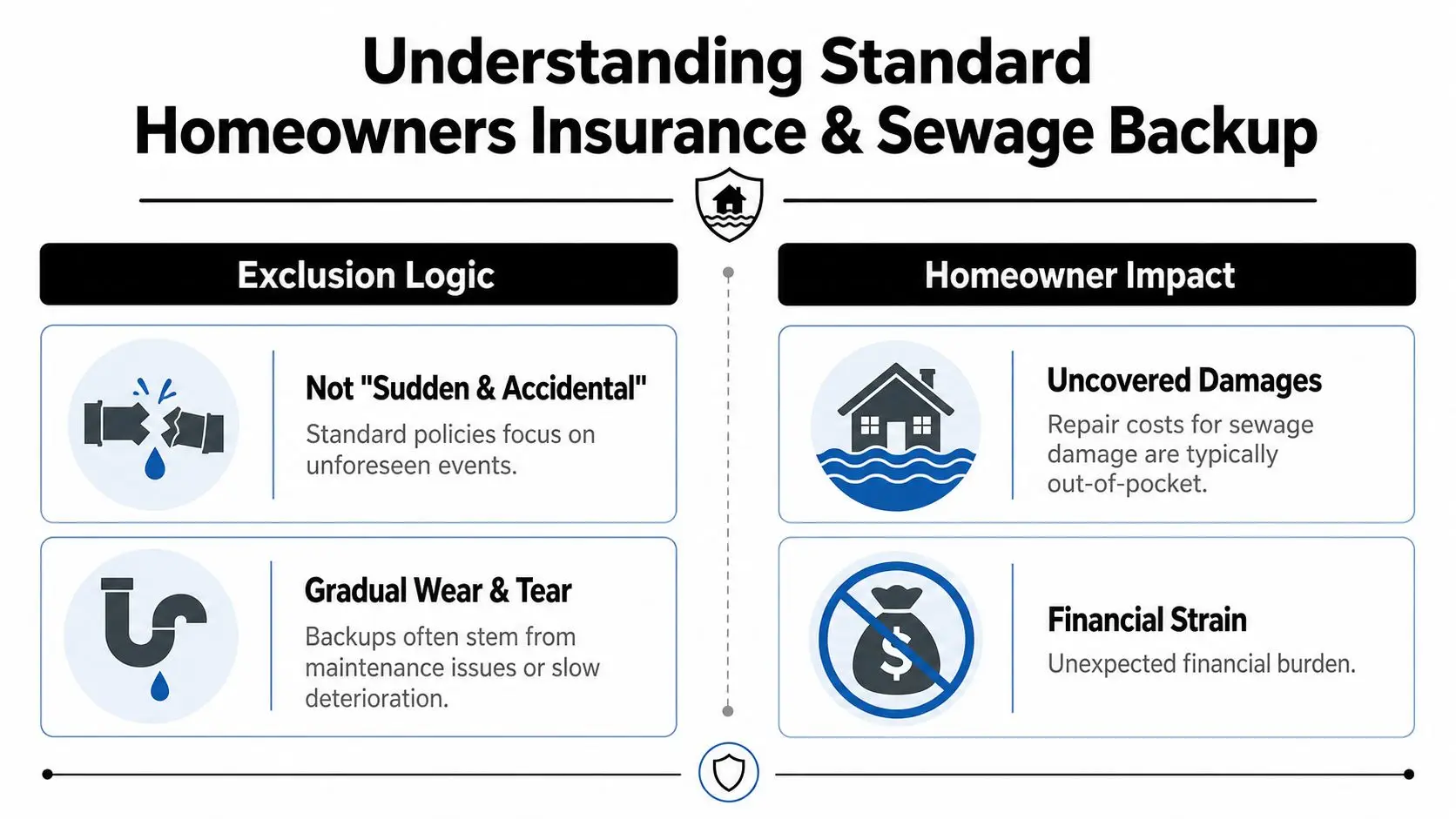
Why Standard Homeowners Insurance Excludes Sewage Backup
The easiest way to think about it is the direction of flow. A burst pipe inside a wall sends water outward into the home, so insurers usually treat that as a sudden internal loss. Wastewater backing up through a drain, toilet, or sump system moves the wrong way into the house, and that usually falls under an exclusion unless you added the right endorsement.
That distinction sounds technical, but it's the core of the answer to does homeowners insurance cover sewage backup. A standard policy is built around sudden and accidental damage from inside the home, not water that returns through the plumbing system from below or outside. Farmers explains that the triggering event is the direction of flow, which is why a backup is handled differently from a burst pipe loss. Read the policy-language breakdown on homeowners water backup coverage and how to read a homeowners insurance policy.
Why the wording matters in plain English
Insurance policies often separate covered water damage from excluded backup damage. That matters because a homeowner may assume, fairly, that “water is water,” but the claim decision often depends on where the water came from and how it entered the home.
Practical rule: If the water came into the house by backing up through plumbing, ask whether a water backup endorsement is on the policy before you assume the loss is covered.
This is also why the same home can have very different claim outcomes depending on the cause. A pipe bursts, the policy may respond. A clogged drain forces sewage back into the living space, the base policy often doesn't. That's frustrating when you're staring at ruined flooring, but it's how the coverage form is usually written.
The cleanest way to protect yourself is to know what your policy excludes before a loss happens. If you've never checked the backup section of your policy, that's the first place to look.
The Solution Sewer Backup Coverage Endorsements
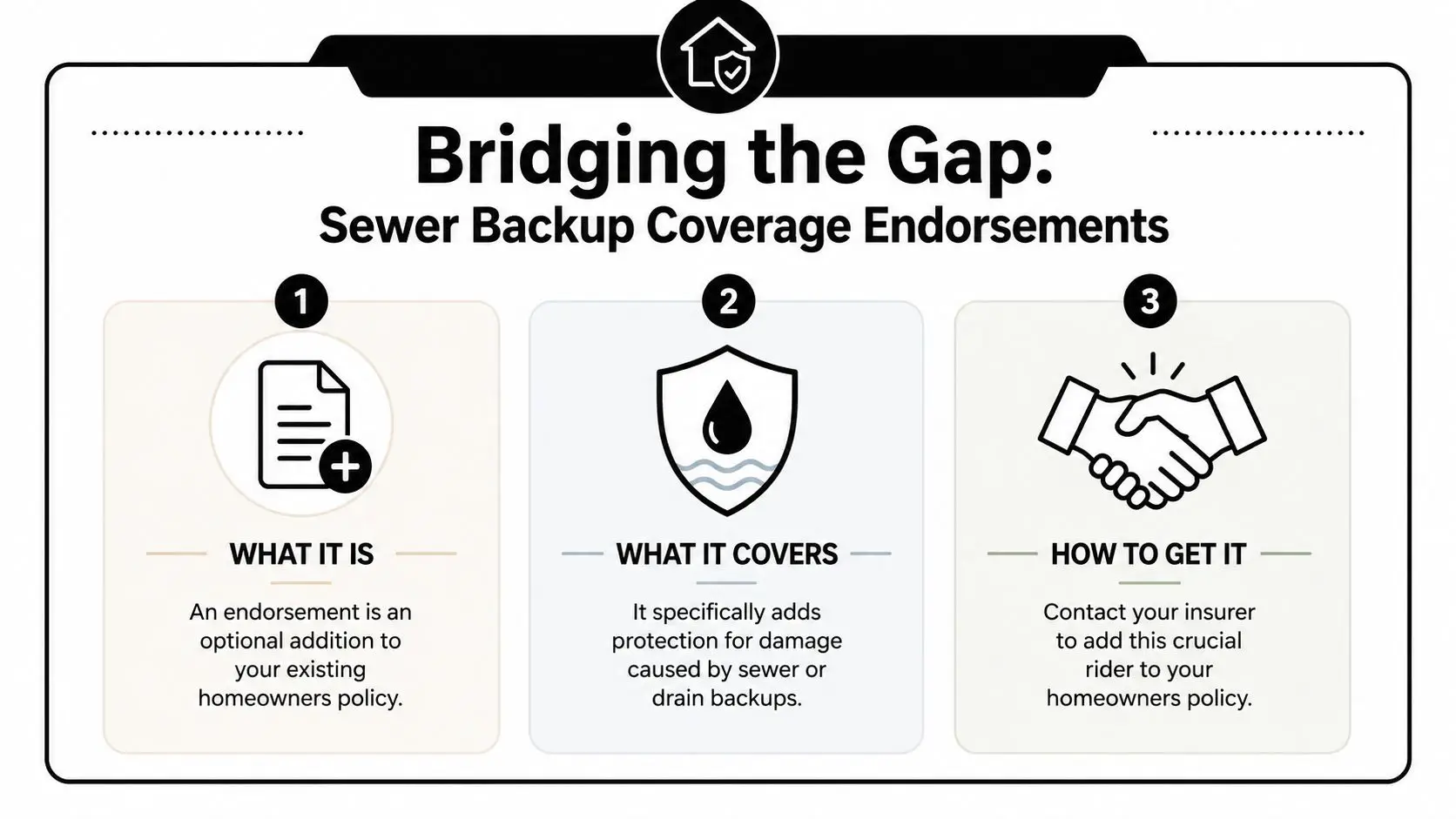
The fix is usually a water backup endorsement or sewer backup endorsement added to your existing homeowners policy. It's not a separate policy, and that's part of why people miss it. You're buying a specific add-on that changes a common exclusion into a covered event, subject to the endorsement's limits and deductible.
That add-on is often affordable compared with the damage it's meant to address. The added coverage is often priced at about $50 to $250 per year, while average water-damage claims are cited around $12,514 to $15,400, and sewer-backup cleanup and repairs are often described as costing $10,000 to $50,000 or more depending on how far the contamination spreads. See the cost comparison and coverage context and compare it with a homeowners water-damage claim overview.
What to ask for by name
When you speak with your agent, use specific terms. Ask about water backup and sump pump overflow coverage, sewer backup endorsement, and whether the endorsement can be added to your current homeowners policy. If you only ask whether “water damage” is covered, you may get a broad answer that doesn't address backup losses at all.
Coverage limits matter too. Many endorsements are modest compared with the cost of a full sewage remediation job, and that's why the number on the declarations page deserves your attention. AAA notes that this add-on commonly begins around $5,000 and can be increased from there, while other industry sources cite common limits of $5,000 to $25,000. AAA's overview of sewer backup coverage and coverage limit examples from industry guidance.
A small annual premium can be easier to absorb than a surprise cleanup bill, especially when the damage affects flooring, drywall, cabinets, and contents all at once.
The right question isn't whether the add-on exists. It's whether your policy currently includes it and whether the limit is enough for the parts of your home that would take the hit first.
What Your Endorsement Actually Covers and What It Does Not
The biggest mistake homeowners make is assuming a sewer backup endorsement pays for everything involved in the loss. It usually doesn't. The endorsement is designed to help with the damage caused by the backup, not automatically the broken pipe, the clogged lateral, or the slow-developing problem that led to the event.
That split matters because the cleanup and the repair are not the same claim. If sewage comes up through a toilet and soaks drywall, baseboards, and flooring, the endorsement may help with the resulting damage. But if the actual issue is a line damaged by gradual wear, root intrusion, or poor maintenance, the pipe repair itself may still be excluded. GEICO's homeowners guidance makes that distinction explicit. Read more about sewer line replacement and related exclusions and see a homeowner-friendly explanation of category 3 water damage.
Cleanup is one issue, pipe repair is another
Think in two buckets. The first bucket is the contaminated mess inside the house, including removal of damaged porous materials and sanitation. The second bucket is the cause of the backup, which might be a collapsed pipe, tree roots, or a blocked line under the yard.
That second bucket often catches people off guard. The backup may be covered by an endorsement, but the repair of the broken sewer lateral still may not be. If the line failed because of age or maintenance issues, homeowners can end up paying for the source problem separately even when part of the indoor damage is covered.
A practical way to talk with your agent is to ask three questions:
- Is the backup itself covered? Confirm that the policy responds to sewage entering through drains, toilets, or the sump system.
- Are structure and contents both included? Ask whether drywall, flooring, cabinets, and personal property fall within the endorsement.
- Is the sewer line repair excluded? Get a clear answer on the pipe, especially if the damage came from wear, roots, or corrosion.
The claim often turns on the cause of the loss, not just the fact that water got into the house.
That's why a good reading of the endorsement matters more than the label on the policy. Two policies can both say “water backup,” but still treat the repair allocation very differently. If you know that going in, you can ask better questions before the next storm, clog, or overflow creates a bigger problem.
Your Step-by-Step Guide During a Sewage Backup
The first priority is safety. Sewage water can carry contamination, and the electrical system can make a wet room dangerous fast, so don't walk into standing water blindly or start moving items before you know the area is safe. If the backup is active, stop using water in the house until the source is addressed.
Once the area is safe, document everything before cleanup starts. Photos and video help show the condition of the room, the line of intrusion, and the damaged materials before anything gets removed.
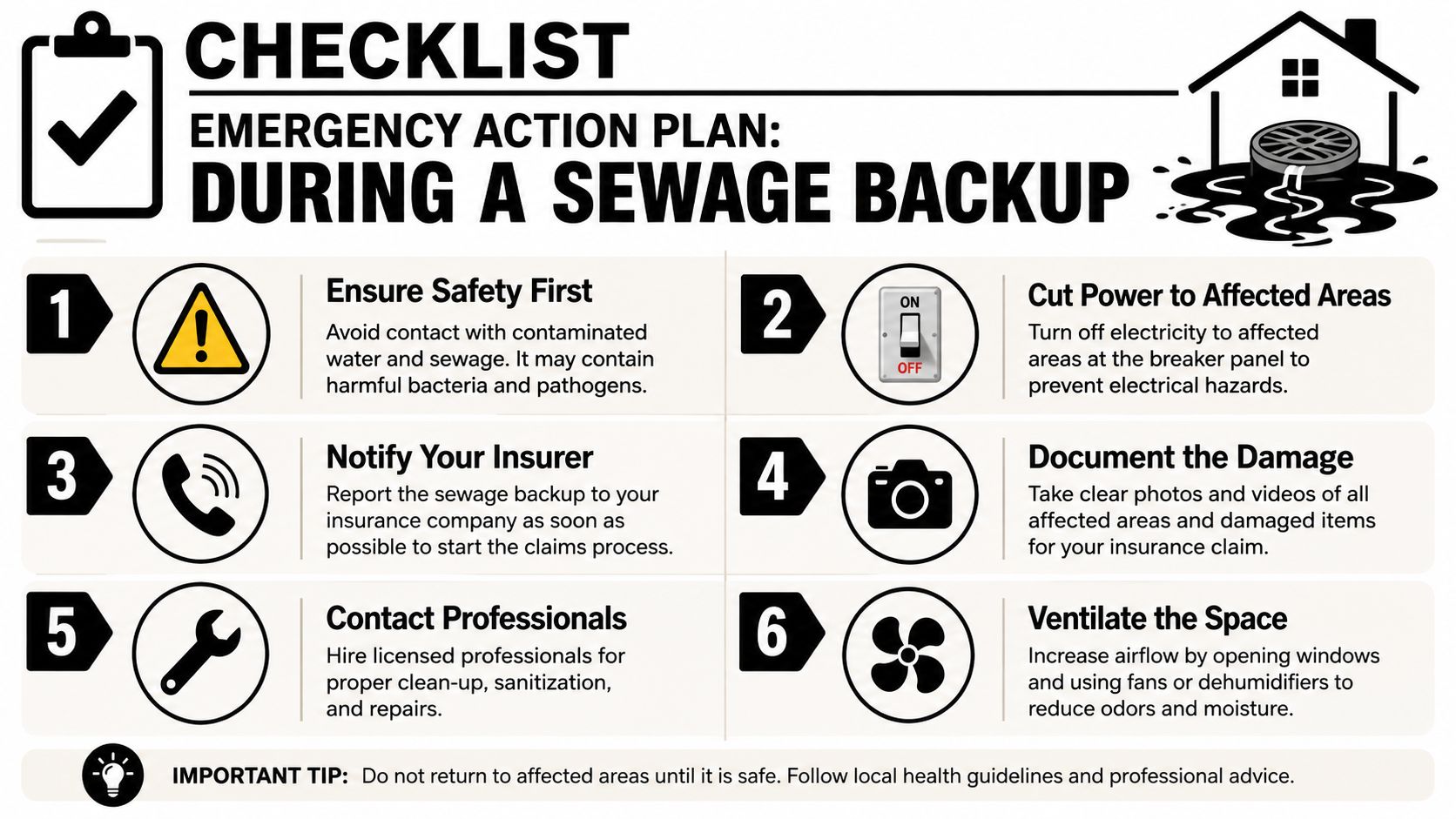
The order matters when the clock is running
- Ensure Safety First. Stay out of contaminated water and keep children and pets away.
- Cut Power to Affected Areas. If water has reached outlets, appliances, or the electrical panel area, treat the space as unsafe.
- Document the Damage. Take wide shots and close-ups before anything is moved.
- Notify Your Insurer. Report the loss as soon as you can and use the policy terms they give you.
- Contact Professionals. Sewage cleanup is not the same as ordinary mopping or towel drying.
- Ventilate the Space. Air movement helps reduce odor and moisture while the drying plan gets underway.
A restoration professional can also help you assess flooring damage and moisture spread before materials are torn out. If you need a reference point for what to look at first, assess water damage to floors with a focus on what can't be salvaged safely.
The same principle applies to the toilet itself. If a toilet overflowed, the cleanup needs to be handled as a contamination issue, not just a mess. This cleanup guide for an overflowed toilet can help you understand the basic priorities while you wait for help.
Proactive Steps to Prevent Sewer Backups
Prevention starts with what goes down the drain. Grease, coffee grounds, and “flushable” wipes all create avoidable problems, and they can contribute to clogs that push wastewater back into the home. If you want a deeper look at the wipe issue, read WipesBlog's comprehensive guide before assuming a product label means it's safe for plumbing.
Phoenix homeowners also need to think about the underground line from the house to the street. That sewer lateral is the homeowner's responsibility in many situations, so a clog or damage there can become your problem quickly even if the issue shows up inside the home. Tree roots are another concern in desert landscaping, especially where thirsty roots look for water near pipes.
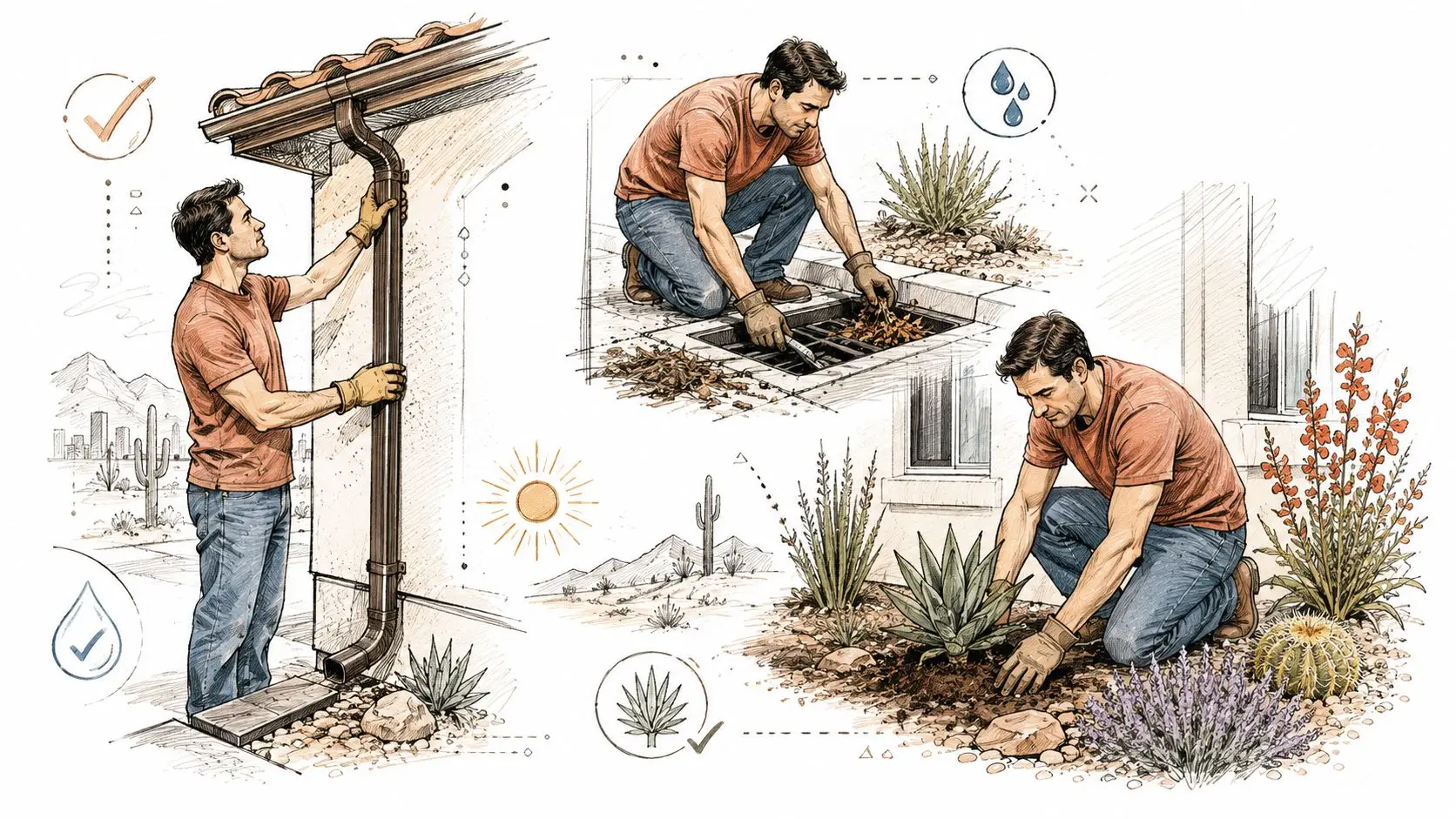
Practical habits that reduce risk
- Watch What Goes Down the Drain. Keep grease, fibrous scraps, and coffee grounds out of sinks and disposals.
- Treat Wipes as Trash. Even products marketed as flushable can create blockages in real-world plumbing.
- Inspect Outdoor Plumbing. Check for slow drains, recurring backups, or soft spots near the lateral line.
- Mind Root-Prone Landscaping. Palo verde and mesquite roots can seek water near buried lines.
- Stay Alert During Heavy Rain. Sudden surges can overwhelm older systems or low spots around the property.
Small maintenance habits won't eliminate every risk, but they do reduce the odds of a preventable backup turning into a major cleanup.
The goal is simple, keep wastewater moving away from the house instead of inviting it back in. If you already have a history of slow drains or repeated clogs, it's smarter to investigate early than to wait for the next overflow to force the issue.
Getting Professional Help in the Phoenix Area
Sewage backup cleanup isn't a normal cleaning job. Contaminated water can carry bacteria and viruses, which is why a professional restoration crew treats it as a black water event and not a surface-level mess. The right team uses extraction, controlled demolition where needed, sanitation, and structural drying so the home can move back toward safe condition.
That's where a certified restoration company matters. Restore Heroes is a licensed, bonded, insured, and IICRC-certified disaster restoration company serving the Phoenix metro area, and it handles sewage backup cleanup through a full mitigation process. Its published sewage backup cleanup service page outlines that work in more detail. See the sewer backup cleanup services page.
What Phoenix homeowners should expect from a qualified crew
A serious sewage job usually starts with inspection and containment. After that, technicians remove contaminated water, isolate unsalvageable materials, dry the structure, and sanitize affected surfaces so the home can be assessed for the next repair step.
For a stressed homeowner, coordination matters too. Restore Heroes says it offers 24/7 Immediate Response Guarantee, free onsite inspections, no upfront payment, and all insurance accepted, which can make the early part of the process easier to manage when the house is already disrupted. Those details matter most when time, health, and documentation are all working against you.
Phoenix-specific conditions can add pressure. Heat speeds up odor and moisture problems, and backup damage often moves quickly into adjacent rooms if cleanup is delayed. A local team that can respond fast and work directly with insurers is often the most practical option when the goal is to stop further damage and get the property stabilized.
If you're choosing between doing it yourself and calling a pro, sewage is the line where caution should win. The contamination risk, hidden moisture, and material replacement issues are usually too much for a basic cleanup approach.
If you're dealing with sewage backup right now, contact Restore Heroes for a fast assessment, cleanup, and drying plan that fits the loss. Visit Restore Heroes to request help, and get the next steps moving before the damage spreads further.