
Water on the bathroom floor gets your attention fast. If it’s coming from a toilet, the stress goes up even more because this isn’t just a mess. It can be a contamination problem, a hidden moisture problem, and in many Phoenix homes, a flooring and subfloor problem that gets worse if you treat it like a simple mop-up job.
If you searched for toilet overflowed how to clean up, you probably need a clear answer right now. Start with safety, stop the flow, and decide early whether this is a cleanup you can handle or one that needs a trained restoration crew.
First Actions Immediate Safety and Damage Control
A toilet can flood a bathroom in less time than it takes to find a mop. In those first minutes, the goal is simple. Stop the flow, protect people from exposure, and make a fast call on whether this is a safe cleanup or a contaminated loss.
Stop the water at the source
Go straight to the shutoff valve behind the toilet and turn it clockwise until it stops. If the toilet keeps filling, lift the tank lid and raise the float or close the flapper only if you can reach it without kneeling in contaminated water.
If you need a quick visual refresher, this guide on how to stop toilet overflow fast shows the basic shutoff points clearly.
Once the water stops, keep everyone out of the room. Kids, pets, bare feet, and wet socks all spread contamination farther than homeowners expect.
Deal with electrical risk before you touch the water
Bathrooms pack a lot into a small space. Outlets, vanity lights, hair tools, bidet seats, and extension cords turn a plumbing problem into an electrical one fast.
If water is near an outlet, powered vanity, appliance cord, or anything plugged in at floor level, shut off power to that area before cleanup. Do not reach through standing water to unplug anything. If you cannot do that safely, stop there and call for help.
Treat bowl water like contaminated water
This is the decision that changes the job.
Tank water from a clean supply line is one thing. Water that overflowed from the bowl is another. In restoration work, toilet bowl overflow often falls into Category 2, and it becomes Category 3 blackwater if sewage is involved, if waste is visible, if there is a drain-line backup, or if the water has moved through dirty materials and sat long enough to worsen.
Here is the practical breakdown:
| Category | Water Source | Risk Level | Recommended Action |
|---|---|---|---|
| Category 1 | Clean water from a supply line or tank-only leak | Lower | Dry and clean quickly if it stayed on non-porous surfaces |
| Category 2 | Toilet bowl overflow with likely contaminants | Serious | Use protective gear, limit contact, disinfect carefully |
| Category 3 | Sewage, visible waste, drain backup, or heavy contamination | Severe | Isolate the area and call a professional |
If the water came out of the bowl, assume it is contaminated. If it smells like sewage, contains solids, backed up from the base or tub, or soaked into grout lines, baseboards, cabinets, drywall, or anything porous, Phoenix homeowners should stop the DIY cleanup there. That is the point where we treat the loss as blackwater exposure, not a housekeeping job.
Keep the contamination from spreading
Close the bathroom door if you have one. If not, block the threshold with old towels to slow the water and keep shoes out of the area. Pick up bath mats, rugs, clothing, and paper goods right away so they do not wick contamination deeper into the room.
Tile and concrete are common in Phoenix homes, and people often assume that means the floor is safe once the surface water is gone. It is not that simple. Water can track through grout joints, under baseboards, into vanity toe-kicks, and across slab edges where moisture is harder to remove. If water has moved beyond the bathroom or under finishes, you are no longer handling a simple wipe-up. You are dealing with contamination and moisture intrusion that may require professional water damage mitigation.
Know when to stop and call for professional help
Call a restoration crew now if any of these are true:
- The overflow includes sewage, visible waste, or a strong sewer odor
- Water spread into hallways, bedrooms, closets, or HVAC areas
- Drywall, cabinets, insulation, or other porous materials got wet
- The bathroom has elderly occupants, children, or anyone with a weakened immune system
- You cannot shut the water off safely
- You are dealing with repeated backups, not a one-time clog
Those are hard stop conditions. In blackwater losses, speed matters, but so does judgment. A fast call can prevent a small bathroom overflow from turning into a larger contamination problem.
Essential Cleanup Tools and Protective Gear
If you’re going to touch overflow water at all, gear up first. Homeowners often grab paper towels and a mop, then realize halfway through that they’re spreading contaminated water, soaking their shoes, and splashing dirty water into places that were dry a minute earlier.
Wear protection before you start
For any toilet overflow that involves bowl water, the bare minimum is protective gear you can disinfect or throw away.
Use this checklist:
- Gloves: Heavy rubber or nitrile gloves that cover the wrist.
- Boots or waterproof shoes: You don’t want contaminated water soaking through socks.
- Eye protection: Safety glasses help if you’re scrubbing or using disinfectant.
- Face covering: Helpful if there’s splashing, aerosolized droplets, or strong sewage odor.
- Old clothes or disposable coveralls: Anything you wear should go straight to laundering or disposal afterward.
For sewage or suspected blackwater, household PPE is not a substitute for proper biohazard handling. If the incident clearly falls into that category, this moves closer to the kind of work involved in biological clean up, where containment and decontamination matter as much as visible cleanup.
Gather the right DIY tools
You can handle a very small, limited overflow better if you have actual extraction tools, not just absorbent cloths.
Useful items include:
- Wet/dry shop vacuum: For water only, never with a standard household vacuum.
- Buckets: Good for wringing mops and moving wastewater.
- Mop and disposable mop heads: Better than spreading water with a bath towel.
- Old towels: Use them as barriers, not as your main cleanup method.
- Trash bags: For contaminated paper goods, rugs, and disposable items.
- Cleaning solution and disinfectant: You need both, not just one.
Know where DIY hits a wall
There’s a big difference between consumer tools and restoration equipment. A shop vac can help with visible water on tile. It doesn’t replace commercial extraction units, air movers, dehumidifiers, moisture meters, or thermal imaging.
Household cleanup gear can remove the obvious mess. It usually doesn’t tell you what’s still trapped in drywall, under baseboards, or beneath tile transitions.
That limitation matters a lot in Phoenix homes. Tile and concrete often make the floor look fine sooner than it is, while moisture lingers in wall cavities, under cabinets, and along tack strips or transitions into carpeted rooms.
Containing and Removing the Water
The goal here is simple. Keep the overflow from spreading, remove standing water fast, and separate wet materials before contamination and moisture travel farther.
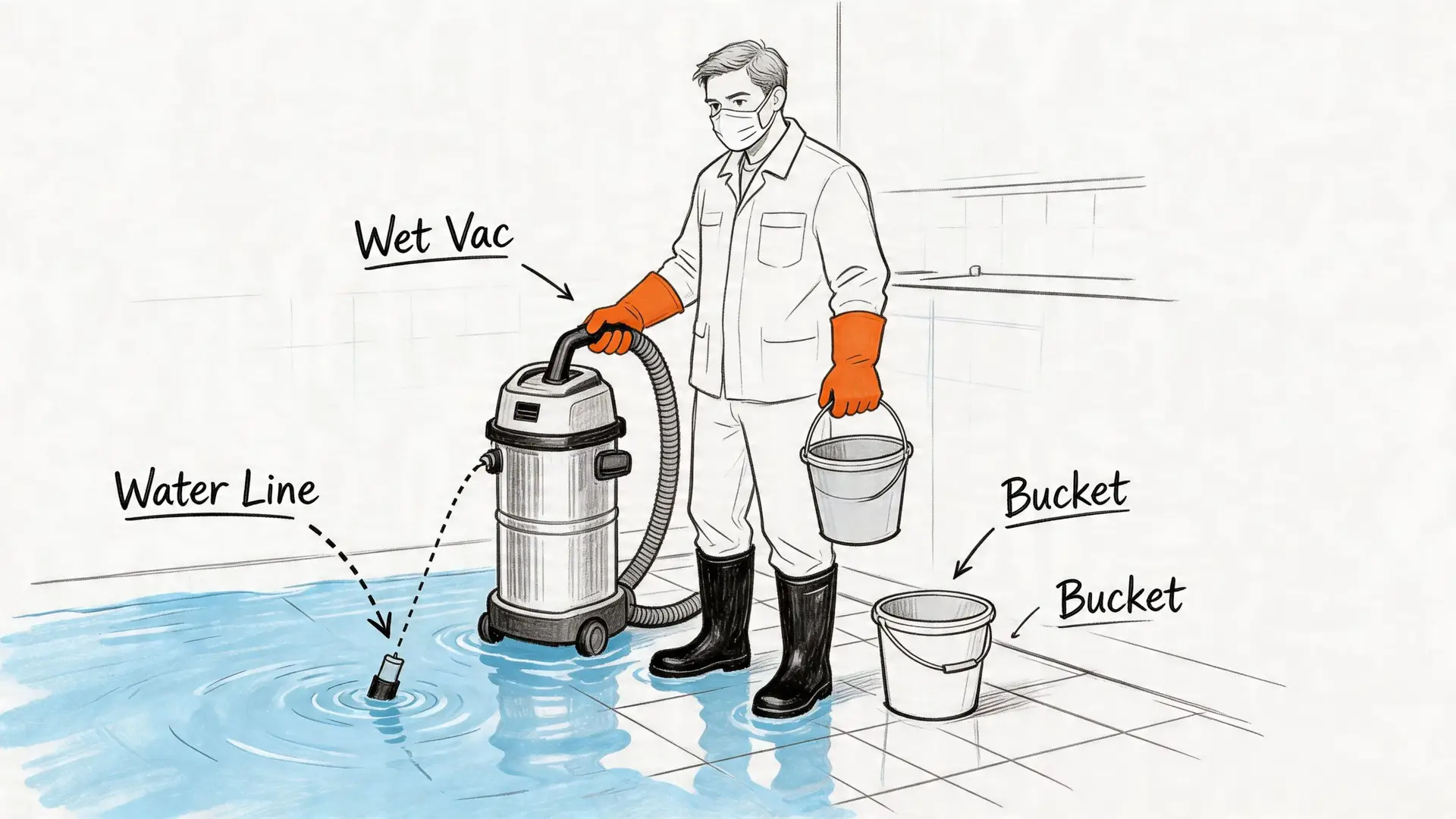
Build a small containment line
Start at the outer edge of the wet area, not at the toilet. Roll towels and press them against thresholds, hall openings, and the transition from hard flooring to carpet. If you have cardboard boxes, baskets, or fabric items on the floor nearby, move them out immediately.
Don’t drag wet items across dry flooring. Lift them and place them in a staging area like a garage, patio, or shower that can be cleaned afterward.
Extract water in passes
A wet/dry vacuum is the best homeowner tool for standing water, but technique matters.
Use it in this order:
- Pull standing water first: Work from the outside inward so you don’t spread the mess.
- Hit grout lines and corners: Water hides around toilet bolts, trim edges, and floor joints.
- Repeat the pass: The first pass gets the obvious water. The second often gets what the floor is still releasing.
- Switch to towels or mop only for residue: Don’t start with them. They saturate quickly and spread contamination.
If the overflow reached carpet at the bathroom edge or hallway, act fast. Wet carpet can hold more contamination than many homeowners realize, and drying it correctly is a separate process. If that’s your situation, this guide on how to dry wet carpet fast helps with the immediate triage.
Remove saturated contents early
What you leave in place keeps releasing moisture into the room. Pull out the wet items you already know won’t dry safely where they sit.
Focus on these first:
- Bath mats and rugs: These wick water fast and trap contamination.
- Toilet paper, tissues, and paper goods: Throw them out. Don’t try to save them.
- Laundry baskets and soft goods: Move for separate washing or disposal.
- Small wood items or storage bins: Get them off the floor before swelling starts.
- Cabinet contents under the sink: If water reached toe-kicks or under-cabinet space, empty it so you can inspect.
A quick visual can help if you’re dealing with active extraction and trying to avoid common mistakes:
Know when removal isn’t enough
Many DIY jobs falter at this stage. Homeowners remove visible water and think the emergency is over. It isn’t, especially if water reached baseboards, vanity sides, drywall bottoms, or the room outside the bathroom.
If you can feel dampness beyond the obvious wet spot, the water likely moved farther than you can see.
That’s especially true with tile over concrete in Phoenix homes. The surface may clear quickly, while moisture remains at edges, beneath trim, or in adjacent porous materials. Visible dryness is not the same as a dry structure.
How to Properly Sanitize and Disinfect the Area
A toilet overflow that includes bowl water should be treated as blackwater contamination. That means sewage-related bacteria, viruses, and organic waste may be on the floor, the toilet base, the vanity, and anything splashed nearby. For Phoenix homeowners, tile and concrete can make the mess look contained when it is not. The surface may wipe clean while contamination remains in grout lines, under baseboards, or at the edge where flooring meets drywall.
Start with cleaning. Disinfectant only works well on a surface that is already free of visible soil and residue. Wash hard surfaces with detergent and water first, using enough friction to lift anything stuck on. Then apply your disinfectant according to the label, including the required contact time. If the label says keep the surface wet for several minutes, do that. Wiping it dry too soon cuts the kill step short.
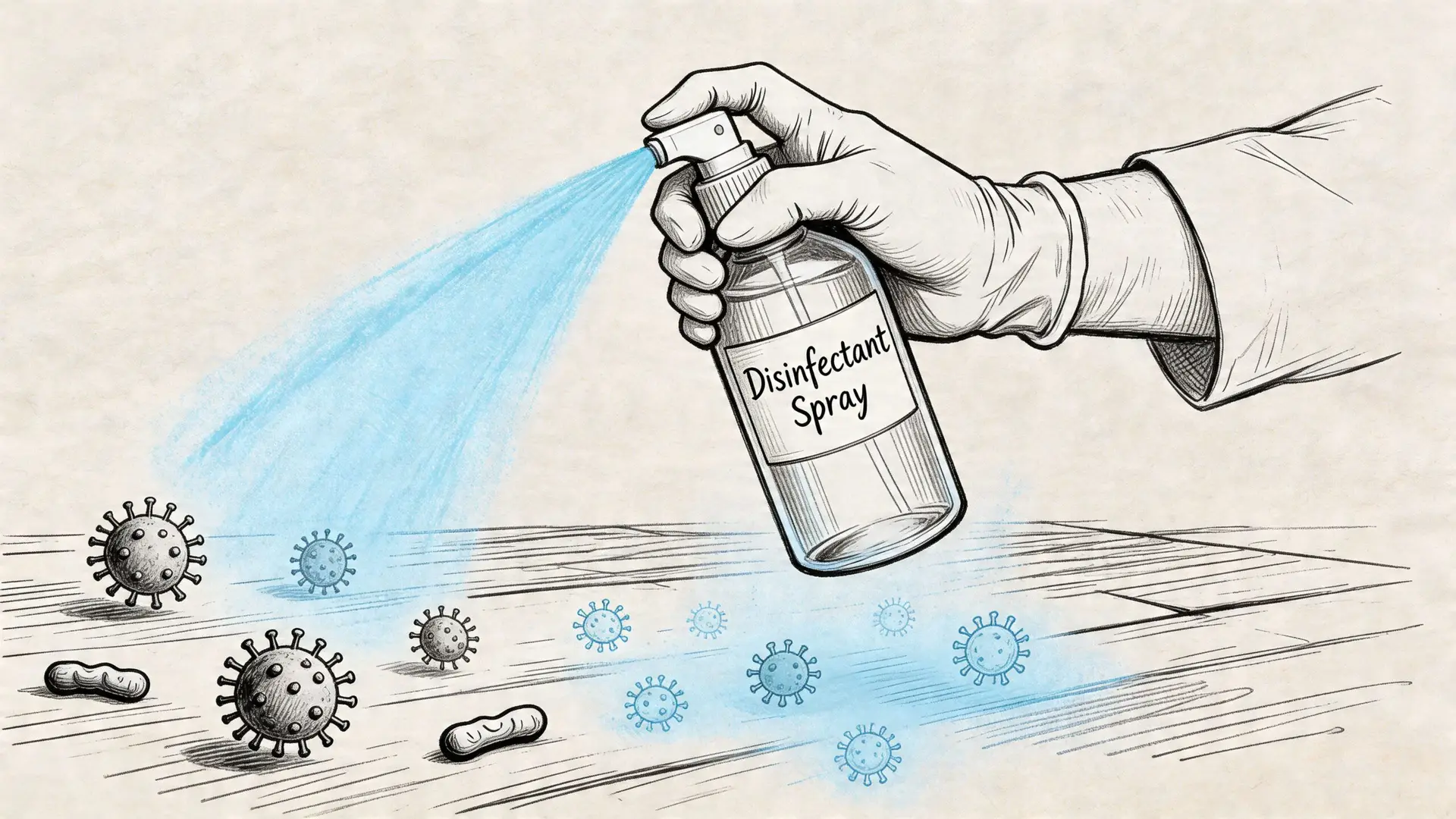
Hard, washable surfaces usually respond best:
- Sealed tile
- Vinyl flooring
- Toilet exterior
- Metal fixtures
- Painted baseboards with intact finish
- Vanity faces or trim with a sealed, washable surface
Use fresh towels, wipes, or mop heads as they get dirty. A contaminated rag in clean solution spreads waste around the room instead of removing it. Good restroom sanitation habits also matter at home after an overflow, especially around touch points like flush handles, faucet handles, and door knobs. This article on cleaning public restrooms covers cross-contamination habits that apply here too.
Some materials are a poor fit for DIY sanitizing, even if they do not look badly damaged. Unsealed grout, caulk joints, unfinished wood trim, particleboard vanity toe-kicks, drywall edges, and laminate seams can trap contamination below the surface. Concrete slabs are common in Phoenix homes, and they add a real trade-off. Concrete does not rot like wood subfloor, but it can hold moisture and odor in pores and at tack-strip holes, fastener penetrations, and perimeter cracks. If sewage water reached those areas, surface disinfection may improve conditions without fully removing the source.
Pay attention to the smell after cleaning. A bathroom that still has a sour or sewage odor usually has contamination left in a hidden area, often under the toilet, behind trim, or inside materials that wicked water. If you need help tracing that down, this guide on how to get rid of sewage smell covers the usual hiding spots.
Call a professional if blackwater got under tile, into grout lines over a wide area, beneath cabinets, into drywall, or beyond the bathroom. We also recommend bringing in a restoration company if anyone in the home is immunocompromised, the overflow sat for hours before cleanup, or you cannot keep the room isolated during drying. Those are the cases where household cleaning stops being reliable and proper extraction, demolition, and antimicrobial treatment may be the safer path.
Avoid a few common mistakes:
- Do not mix bleach with ammonia, vinegar, or other cleaners
- Do not spray disinfectant into outlets, light switches, or wall cavities
- Do not judge success by fragrance
- Do not reuse contaminated cloths from one surface to the next
- Do not keep trying to sanitize materials that are still wet inside
Deciding What to Keep and What to Throw Away
After a sewage overflow, the safest choice is often to remove more than you hoped to. Blackwater is Category 3 contamination. Once it soaks into absorbent material, surface cleaning does not make that material reliably safe again.
In Phoenix bathrooms, that decision often turns on the material itself. Glazed tile can usually be cleaned if contamination stayed on the surface. Grout, unsealed trim, MDF vanity parts, drywall paper, carpet backing, and fabric items are different. They pull contamination inward, and Arizona heat can bake in odor while hidden moisture stays trapped against concrete or behind baseboards.
The usual discard pile
These materials are poor candidates for salvage after a toilet overflow involving sewage:
- Carpet padding
- Wet rugs and fabric bath mats
- Paper goods and cardboard
- Insulation
- Drywall that wicked water
- Particleboard or MDF cabinets with swelling
- Soft storage bins, baskets, and fabric organizers
- Unsealed wood trim that absorbed water
Drywall deserves a hard look. If the lower edge swelled, softened, stained, or stayed wet long enough to wick contamination upward, replacement is usually the better call. The same goes for vanity toe-kicks and side panels made from particleboard or MDF. Once they puff up, the material structure is already failing.
What you can often keep
Some items are usually worth cleaning and drying if contamination was brief and stayed on the surface:
| Usually Keep | Usually Discard |
|---|---|
| Sealed tile | Carpet padding |
| Metal fixtures | Paper goods |
| Glass containers | Cardboard storage |
| Hard plastic items | Saturated bath mats |
| Fully glazed porcelain | Wet insulation |
The standard is simple. If you cannot clean it all the way through, do not keep it.
That matters with tile-over-concrete floors common in Phoenix homes. Homeowners see the tile surface clean up well and assume the whole assembly is fine. Sometimes it is. Sometimes sewage has worked into grout joints, perimeter gaps, toilet flange penetrations, or vanity edges and left contamination where you cannot reach it with household products. If you need a second opinion on whether materials can be saved or need removal, a water damage restoration contractor can check the affected bathroom before odor and hidden damage get worse.
A quick way to make the call
Keep an item only if all three are true:
- It is non-porous or reliably washable
- It has no swelling, delamination, staining, or persistent odor
- You can confirm contamination did not get inside or underneath it
If one of those fails, disposal is usually the safer choice.
Appearance fools people all the time. A rug can feel dry and still hold contamination in the backing. Drywall can seem fine at eye level while the bottom edge and wall cavity stayed wet. Cabinets often trap sewage under the toe-kick long after the floor looks clean. In restoration work, the inexpensive item people try to save is often the one that keeps the room smelling bad weeks later.
When a DIY Cleanup Is Not Enough Call a Pro
Some overflows are manageable. Many aren’t. Knowing the cutoff point protects your health and often limits the amount of demolition later.
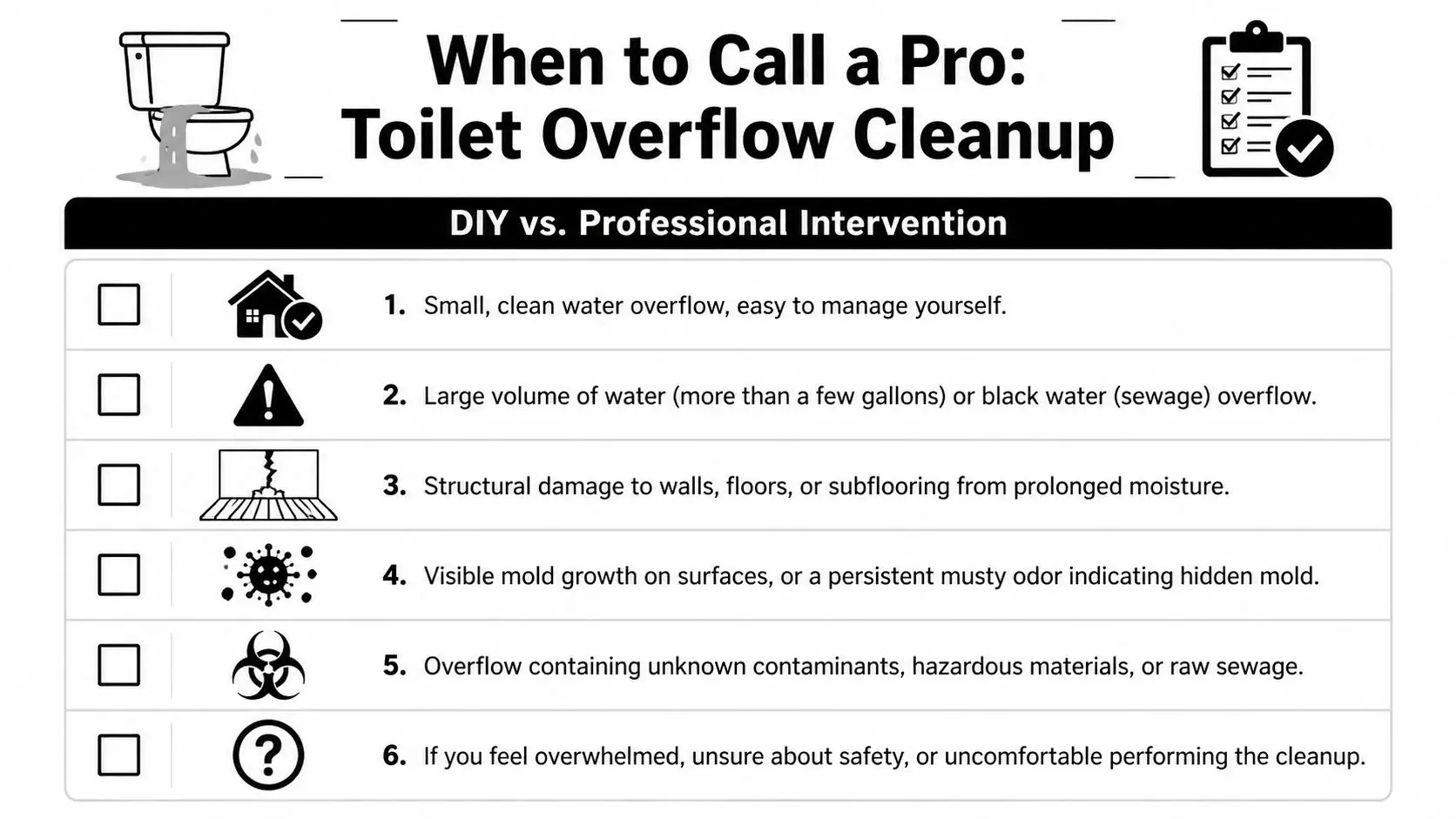
The non-negotiable call-now situations
Call a professional if any of these are true:
- The overflow involved sewage or visible waste: Toilet overflows often involve Category 3 blackwater, which carries severe health risk.
- The water spread outside the bathroom: Hallways, adjacent rooms, closets, and vanity cavities change the scope.
- Water entered drywall, subfloor, or wall cavities: You can’t verify drying by sight alone.
- The incident sat too long: Delay makes damage and contamination harder to control.
- Anyone in the home has increased health risk: Extra caution is justified.
- You smell sewage after cleanup: Odor usually means residue or trapped contamination remains.
The strongest reason to stop DIY is blackwater risk. PDQ’s toilet overflow cleanup guidance notes that toilet overflows often involve Category 3 blackwater, that the CDC attributes approximately 7.1 million illnesses annually to waterborne pathogens, that Arizona water damage claims rose 15%, and that delays can amplify structural damage costs by 300%, all of which underscores why high-risk losses are commonly routed to trained restoration contractors in their article on safe practices and when to call professionals.
Why Phoenix homes need a careful inspection
Phoenix bathrooms often have tile, concrete slabs, and transitions into drywall-heavy surrounding spaces. That combination can be misleading. The tile surface may seem easy to clean, but moisture can track under baseboards, through cabinet toe-kicks, and into adjoining materials where you won’t spot it quickly.
A professional inspection matters when the overflow got beyond the toilet footprint. Moisture meters and thermal cameras help identify what your mop and fan can’t. If you need that level of evaluation, an IICRC-certified water damage restoration contractor is the right type of service to look for.
Insurance is part of the decision
This isn’t about making a claim every time. It’s about documenting a loss correctly when the event is more than minor surface water. Insurers often look closely at whether the drying and sanitation response matched the risk level of the water involved.
One practical option in Phoenix is Restore Heroes, which handles sewage and blackwater cleanup as part of restoration work and coordinates documentation homeowners may need during the process.
Frequently Asked Questions About Toilet Overflows
Can I use a regular household vacuum to suck up toilet water
No. Use a wet/dry shop vacuum only if the overflow is small enough for DIY handling and you’re wearing proper protective gear. A standard household vacuum isn’t designed for water and creates safety risk.
What if the toilet overflow happened upstairs and water is leaking through the ceiling
Stop the water source first, then stay out of the area below if the ceiling is sagging or dripping near light fixtures. Ceiling leakage means the problem is no longer limited to bathroom flooring. At that point, hidden moisture and electrical safety become major concerns.
Why does it still smell bad after I cleaned everything
Odor usually means one of three things. Contamination is still present, porous material stayed wet, or moisture is trapped where you can’t see it. Common hiding places include under the toilet base, inside vanity materials, behind baseboards, and in the lower edge of drywall.
Can I just unclog the toilet and move on
Sometimes the plumbing fix is only half the job. If you still need to address the cause of the blockage after cleanup, this guide on 8 proven tricks to unclog a toilet fast is a useful next step. Just remember that clearing the clog doesn’t sanitize the room or dry hidden moisture.
Is tank water safer than bowl water
Usually, yes. Tank water starts closer to a clean-water event. Bowl water is a different matter because it’s typically treated as contaminated. If you’re not completely sure where the water came from, assume the more cautious category.
If you’re dealing with a toilet overflow in Phoenix and you’re not sure whether it’s still a cleanup job or already a restoration job, Restore Heroes is one local option for assessing contaminated water, drying hidden moisture, and helping you understand the next safe step without guessing.