
That rotten-egg, swampy, or straight sewer smell usually hits at the worst time. You walk into a guest bath in Scottsdale that hasn’t been used in weeks, open a laundry room in Mesa after a storm, or catch a foul odor near the kitchen sink and can’t tell if it’s the disposal or something worse.
In Phoenix homes, sewage odor is often tied to local conditions that generic advice misses. Dry air speeds up evaporation in unused traps. Hard water leaves behind scale that helps grime stick inside drains. Seasonal shifts can also expose weak points in older plumbing. If you want to know how to get rid of sewage smell, the key is to find the source first, deal with safety second, and only use DIY methods when the problem is clearly minor.
Pinpointing the Source of the Sewage Smell
Start with the pattern, not the product shelf. In Phoenix homes, the source usually leaves a trail if you check the right fixtures in the right order.
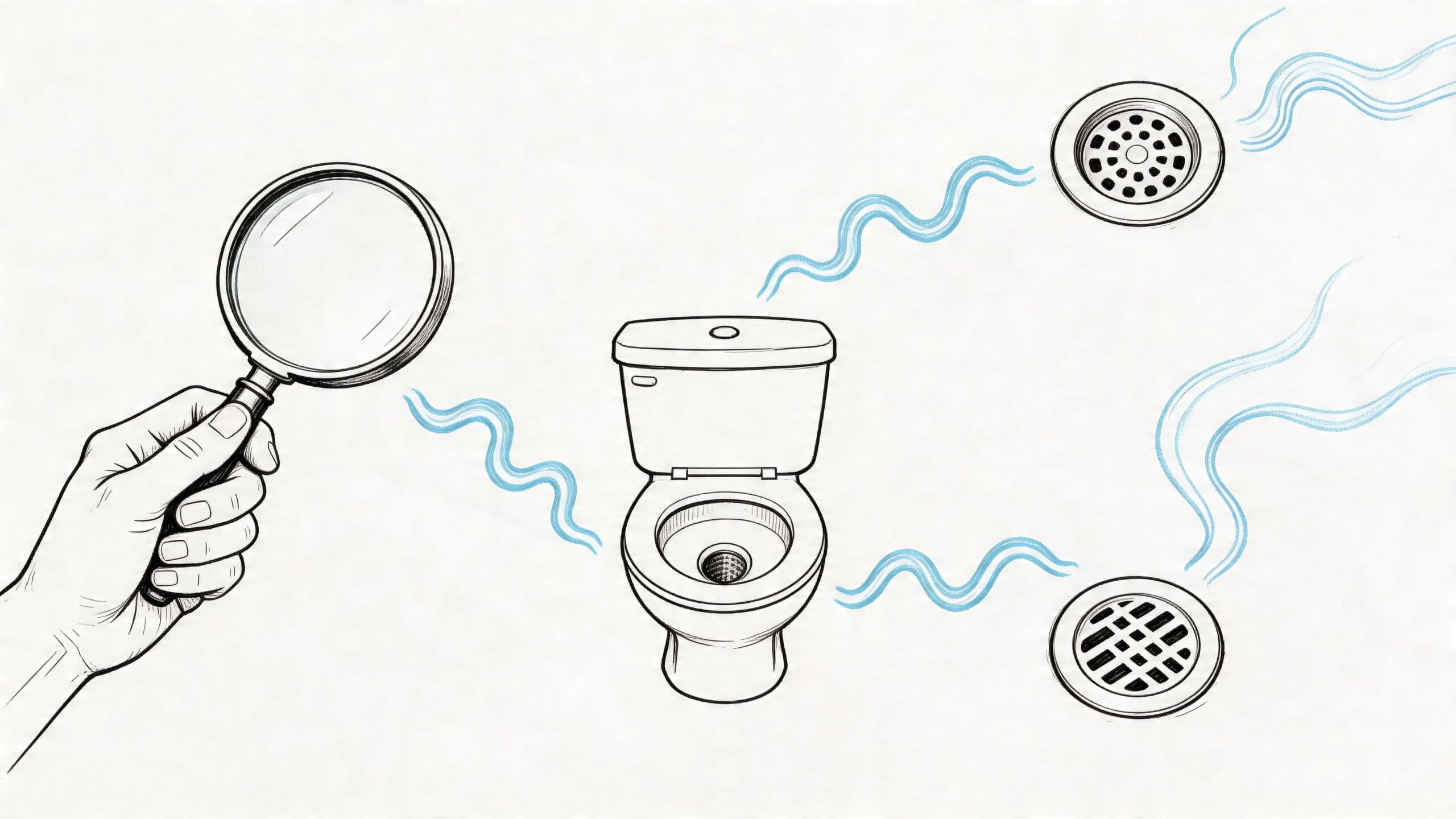
Walk the house and note where the odor is strongest, weakest, and whether it changes during the day. A smell locked to one sink, shower, floor drain, or toilet usually points to a fixture-level problem. An odor that drifts through several rooms, shows up when the AC kicks on, or gets worse after rain in Mesa often points to a venting issue, a partial blockage, or moisture carrying the odor from a hidden leak.
Check the fixtures that sit unused
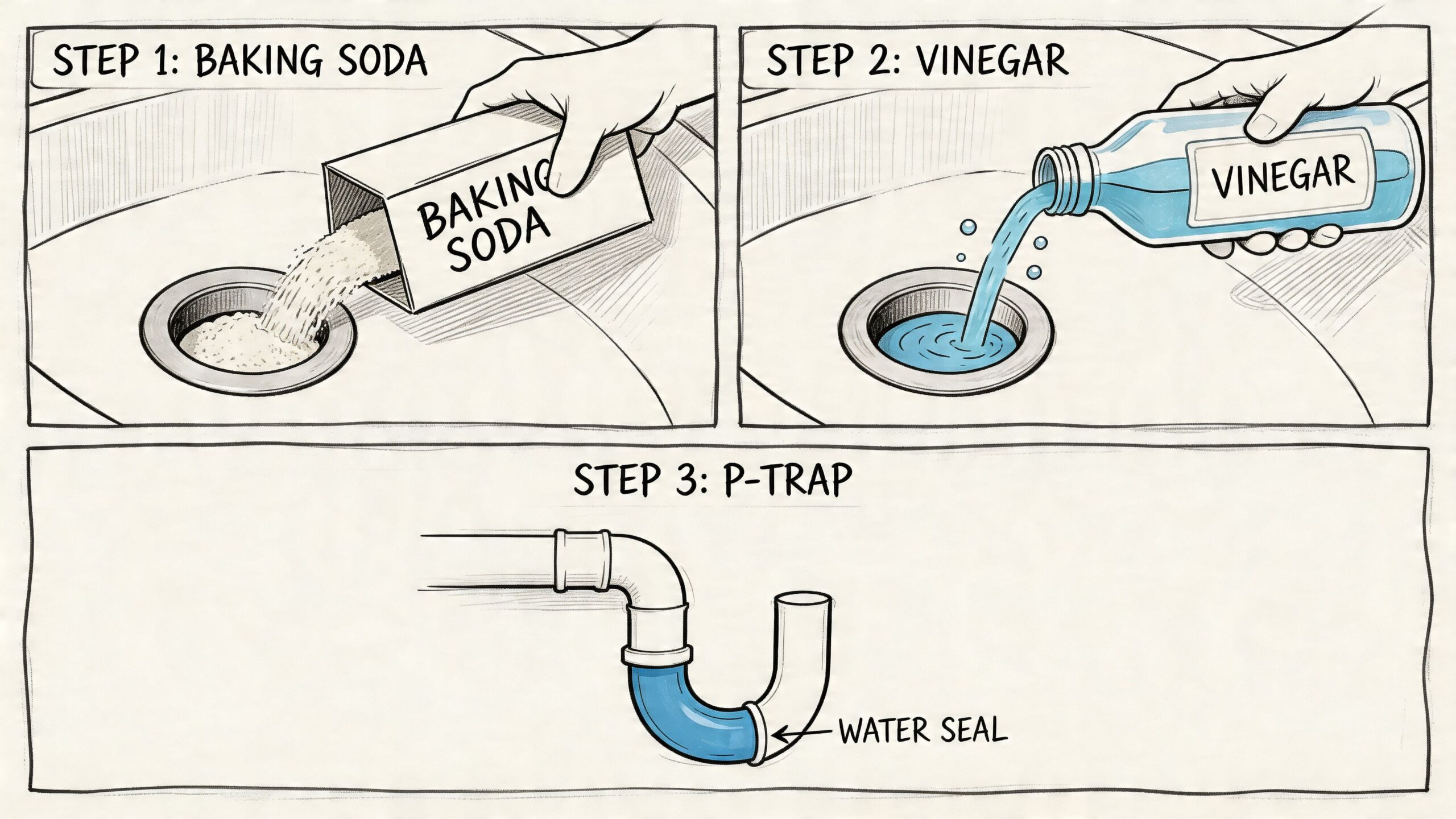
Around Phoenix, dry P-traps are one of the first things I check, especially in Scottsdale snowbird homes, guest baths, and laundry rooms that do not see regular use. The P-trap is the curved section of pipe designed to hold water and block sewer gas. Our dry climate works against it. If that water seal evaporates, sewer gas has a direct path into the room.
The field test is simple. Run water at the suspect fixture long enough to refill the trap. Then leave and come back later. If the smell fades, you likely found the source. If it returns again after days or weeks of non-use, the fix may be as simple as regular trap maintenance. If it keeps returning quickly, the fixture may have a trap issue, a venting problem, or another drain defect that needs a closer look.
Check for drain buildup, not just an empty trap
If the trap has water and the smell stays put, inspect the drain opening, stopper, and overflow channel. Bathroom sinks are common offenders because toothpaste, soap, skin oils, and hard-water scale collect inside the drain body. Kitchen drains add grease and food residue to the mix.
In Phoenix, hard water makes this worse. The City of Phoenix reports water hardness in the range that commonly leaves mineral scale in plumbing fixtures and appliances, which gives grime more surface to cling to over time. See the city's water quality information here: Phoenix Water Services Department water quality and hardness details.
That buildup often smells sour, swampy, or sewer-like even when the main sewer line is fine. It also tends to hang on after you run water, which helps separate it from a simple dry-trap issue.
Check the toilet base before you blame the sewer line
A toilet can flush normally and still leak odor at the base. I see this after minor movement in the floor, an older wax ring drying out, or a toilet that rocks just enough to break the seal.
Look for a smell concentrated near the base, slight movement when you press on the bowl, staining at the floor, or odor that gets stronger after flushing. If the bathroom also has soft flooring, swollen trim, or cabinet damage nearby, do not write it off as just a smell. Hidden leakage may already be affecting surrounding materials. If you need help reading those signs, this guide on how to tell if water damage is new or old can help.
Pay attention to multi-fixture clues
One bad-smelling drain is usually a local problem. Several fixtures gurgling, draining slowly, or burping air at the same time points in a different direction. That often means a vent restriction, a developing sewer line blockage, or backup pressure somewhere in the system.
Monsoon season can expose weak spots fast. Heavy rain can overload older lines, highlight poor drainage around cleanouts, and bring odors into homes that seemed fine the week before. At that point, diagnosis matters more than guesswork.
Use this quick checklist as you narrow it down:
- Unused guest bath, shower, or floor drain: Refill the trap and monitor whether the odor stays gone.
- Bathroom sink or tub drain with visible slime or crusting: Suspect buildup inside the drain body or overflow passage.
- Odor strongest at the toilet base: Check for rocking, floor staining, or a failed wax ring.
- Several fixtures smell or gurgle at once: Suspect a venting problem, partial blockage, or sewer line issue.
- Odor paired with damp materials or staining: Look for hidden leakage, not just sewer gas.
If the smell seems more septic than sharp sewer gas, this overview of septic smell in house: Causes and Quick Fixes is a useful comparison for separating fixture problems from wider system issues.
Health and Safety First What You Need to Know About Sewer Gas
A homeowner gets back to a Scottsdale house that has been closed up for weeks, opens the guest bath, and gets hit with a sewer odor. In Phoenix, that can be more than an annoyance. Our dry climate pulls water out of traps faster than many people expect, and once that water seal is gone, sewer gas has a direct path into the room.
Why the smell deserves respect
Sewer gas is a mix of gases from the drain and waste system. The part I treat with real caution is hydrogen sulfide, which gives off that rotten-egg smell. According to Smelscer Plumbing’s safety guidance, hydrogen sulfide can cause eye irritation at 5-10 ppm and coughing or nausea at 50-100 ppm.
Those numbers matter because odor strength is not a reliable safety test. Some people notice sewer gas quickly. Others get used to it after a few minutes, even while the source is still active.
Covering the smell with candles, spray, or a diffuser does nothing to remove the gas or correct the plumbing problem that is letting it into the house.
What to do before you inspect anything
Start with air flow. Open windows and exterior doors if you can do it safely, especially in a small bathroom, laundry room, or enclosed hallway where gas can build up.
Then limit exposure. Do not crouch over a drain, toilet base, or cleanout trying to confirm the smell. Keep children and pets out of the area, since they stay closer to floor level where odors often collect more heavily.
For a close look, use basic protection:
- Rubber gloves
- Eye protection
- A mask at minimum if the area may be contaminated
- Shoes you can clean and disinfect
If anyone in the home feels dizzy, nauseated, gets a headache, or notices throat or breathing irritation, leave the area and treat it as a safety issue, not a simple maintenance task.
Situations that call for immediate professional help
Some odor calls are still minor. Others are not. In Mesa during monsoon season, for example, I have seen a “bad drain smell” turn out to be backup pressure in the line with contaminated water starting to surface at a shower or toilet.
Stop DIY work and call for help if you find:
- Raw sewage or black water
- Standing contaminated water
- Odor affecting multiple rooms
- Sewage smell with visible overflow or backup
- Symptoms in people or pets
- The smell returning fast after ventilation
At that point, the job is no longer just finding an odor source. It becomes a contamination problem that may require containment, sanitation, and drying of affected materials. That is why sewage losses are often handled with the same exposure-control mindset used in biological clean up services.
A mild odor from one drain may be manageable. A strong, persistent sewer smell, especially one tied to sickness, backups, or visible contamination, needs professional attention right away.
Effective DIY Solutions for Minor Sewage Odors
A mild sewage smell from one fixture usually comes down to a few repeat offenders in Phoenix homes. A trap dried out during a stretch of disuse. Hard water left scale inside the drain, and that rough surface held onto soap, hair, and slime. In older neighborhoods, a disposal or overflow channel got dirty enough to smell like a sewer problem.
Refill dry traps first
Start with the fastest fix. In Scottsdale and other snowbird-heavy areas, I regularly find odor complaints tied to guest baths or laundry rooms that sat unused long enough for the P-trap water seal to evaporate.
Run water for 30 to 60 seconds in the fixture that smells. Check sinks, showers, tubs, floor drains, and any drain in a room that stays closed off. If you have a rarely used bathroom, run each fixture, not just one. A single dry trap is enough to let sewer gas into the room.
If the smell drops off after that, add trap refilling to your return-home routine and your monthly home checklist.
Clean light drain buildup the safe way
If the trap has water and the smell is still local to one drain, clean the drain walls next. For light organic buildup, a simple home mix can help: 1/4 cup salt, 1/2 cup baking soda, and 1 cup heated vinegar. Good Housekeeping outlined that formula in its 2019 drain-cleaning test.
Use it in this order:
- Add the salt and baking soda first.
- Pour in the heated vinegar slowly.
- Let it sit for about 15 minutes.
- Flush with hot tap water.
That method is reasonable for odor from soap film, grease, or light slime in a sink or tub drain. It does not fix a blocked line, a venting problem, or a failed toilet seal.
If the odor improves for a day and comes back, treat that as a symptom. The buildup may be deeper in the branch line, or the smell may not be coming from that drain at all.
Scrub the places that hold odor
Many homeowners clean the opening they can see, but overlook the true source of the odor.
Bathroom sinks often stink from the overflow channel. Kitchen sinks often smell from the underside of the disposal splash guard. Floor drains can hold a ring of grime just below the grate, especially in garages and laundry rooms where dust mixes with moisture.
Clean these areas by hand:
- Bathroom sink overflow: Use a narrow brush and hot soapy water.
- Drain flange and stopper area: Remove hair, soap residue, and black film.
- Garbage disposal splash guard: Lift the flaps and scrub underneath.
- Floor drain rim and grate: Remove the grate and clean the residue around the throat of the drain.
This step matters in Phoenix because hard water scale gives biofilm more surface to stick to. A drain can look clean at the top and still smell once warm air moves through it.
Use enzyme cleaners for recurring organic odors
For drains that keep getting musty or sewage-like from organic residue, enzyme cleaners are usually a better choice than harsh chemical openers. They work slowly, but they target the material feeding the odor.
They are useful in shower drains, bathroom sinks, utility sinks, and other fixtures with repeated buildup from soap scum, hair, or residue. Follow the label directions and give the product time to work overnight if that is what the manufacturer calls for. Do not mix enzymes with bleach, acid, or any other drain cleaner.
The same odor rule applies elsewhere in the house. If moisture and organic residue have soaked into surrounding materials, surface deodorizer will not solve it. This guide on how to eliminate wet carpet smell explains the same principle in flooring and other porous materials.
Here’s a visual walkthrough many homeowners find helpful before they start:
What not to do
A few DIY habits create more trouble than the original odor:
- Don’t pour boiling water into drains if you have older or plastic piping. Very hot water can stress some components.
- Don’t stack drain chemicals. Mixed products can create fumes and make the drain harder to assess.
- Don’t assume fragrance means success. Air freshener covers odor. It does not remove the source.
- Don’t keep forcing a “minor drain fix” if more than one fixture starts acting up. That points to a bigger plumbing issue.
If the smell is tied to an active backup, a clogged main, or wastewater coming into the room, skip home remedies and get a licensed plumber involved. In urgent situations, homeowners often end up needing emergency service plumbing before any cleanup work can even begin.
For a true minor odor, though, these steps are usually the right first pass: refill the trap, clean the hidden surfaces, and use a targeted treatment for buildup. If the smell keeps returning after that, the problem is no longer minor.
When to Stop and Call a Certified Restoration Company
A Phoenix homeowner will often get one clean shot at a simple fix. If the smell comes right back after you refill a trap or clean a drain, the problem has usually moved past basic maintenance. In vacant Scottsdale homes, I see this after months of evaporation. During monsoon season in Mesa, I see the opposite. A line backs up under load, and the odor is the first warning before wastewater shows up.
That is the point to stop treating it like a nuisance smell and start treating it like a contamination issue.
The red flags that mean stop
Home remedies should end if any of these show up:
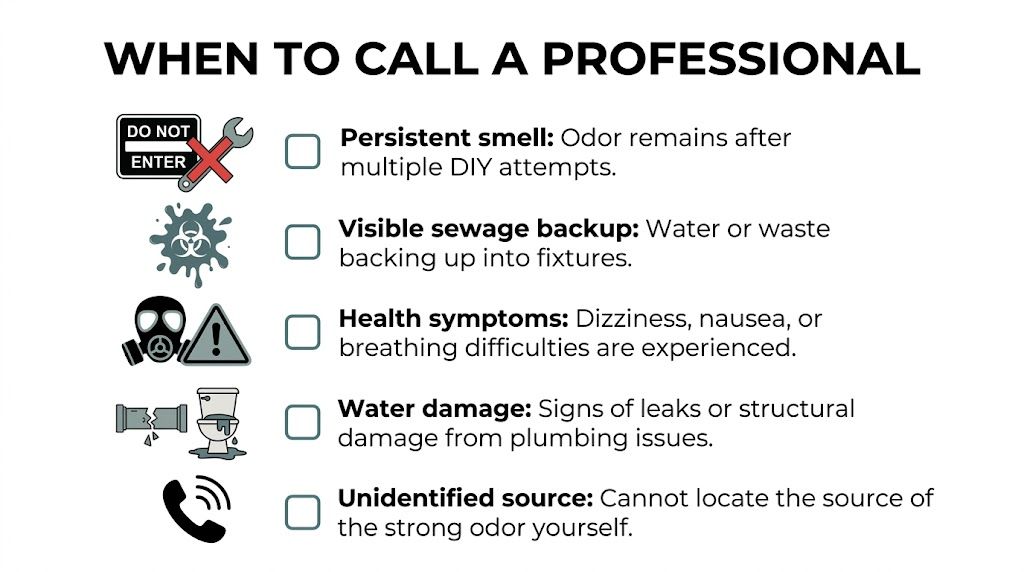
- The odor returns within a day or two: A trap refill or surface cleaning helped briefly, but the source is still active.
- More than one fixture is involved: Two or more drains smell, gurgle, bubble, or drain slowly at the same time.
- You have backup or overflow: Sewage or gray water is coming up into a tub, shower, toilet, or floor drain.
- People feel symptoms near the area: Headache, nausea, throat irritation, coughing, or eye irritation changes the risk level.
- The source is hidden: The smell is strong, but no single drain or toilet explains it.
- Materials around the plumbing are getting wet: Baseboards, vanity toe-kicks, drywall, or cabinet bottoms show staining, swelling, or softness.
- The toilet moves at the base: That often points to a failed wax ring or contaminated subfloor, not a room-air odor problem.
DIY versus professional remediation
Here is the practical cutoff I use in the field.
| Situation | DIY may be reasonable | Professional help makes sense |
|---|---|---|
| One unused guest bath drain smells | Yes | If odor returns quickly |
| Kitchen disposal smells from residue | Yes | If backing up or leaking |
| Toilet base smells but toilet rocks | No | Yes |
| Several drains gurgle at once | No | Yes |
| Raw sewage entered the room | No | Yes |
| Odor caused health symptoms | No | Yes |
Phoenix conditions make that cutoff narrower than many national articles suggest. Dry air can empty traps fast, but hard water and heat also help biofilm and residue hold odor in overflows, branch lines, and disposal components. Once sewage touches drywall, cabinets, underlayment, or insulation, the job is no longer about smell alone. It is about contamination, drying, and material removal.
What certified remediation actually involves
Proper sewage cleanup follows a defined restoration process. As noted in R&R Magazine’s guidance on professional sewage odor removal, IICRC-certified crews extract contaminated water, clean and disinfect affected surfaces, and use specialized air treatment long enough to address odor compounds that have soaked into surrounding materials.
That process usually includes:
Assessment and source control
The crew determines whether the problem is a dry trap, a failed seal, a drain line issue, or an active backup with hidden spread.Extraction and removal
Standing sewage is removed first. Porous materials that cannot be cleaned safely may need to be cut out and discarded.Cleaning and disinfection
Technicians clean visible residue, then apply EPA-registered products appropriate for sewage contamination.Drying and air treatment
Commercial air movers, dehumidifiers, and odor-control equipment are used to dry the structure and reduce lingering airborne compounds.Odor neutralization
The goal is to remove or treat the source inside cavities, flooring edges, and absorbent materials. Covering the smell is not restoration.
The smell in the room is often only the exposed part of the problem.
If you want a clearer picture of scope, disposal, drying time, and why one small bathroom backup can turn into a larger project, this guide to sewage backup cleanup cost in Phoenix homes explains what drives the work.
For after-hours failures, homeowners also benefit from understanding what plumbers treat as an urgent system problem. This overview of emergency service plumbing is a useful outside reference.
In the Phoenix area, Restore Heroes handles sewage cleanup and odor removal as part of restoration work. The company name matters less than the qualifications. The team you hire should be trained in contaminated water loss, structural drying, and odor control, not just drain clearing.
Preventing Future Sewage Smells in Your Phoenix Home
A lot of Phoenix odor calls start the same way. The house sat empty through part of the year, the AC kept running, the air stayed dry, and a guest bath or laundry drain lost its water seal. By the time the owner gets back to Scottsdale or Cave Creek, the smell has already spread beyond the room where it started.
Prevention works best when it matches local conditions. In the Valley, dry air speeds up P-trap evaporation, hard water leaves scale inside drain lines, and monsoon season can expose weak spots in older sewer systems.
Build a monthly routine that fits Phoenix homes
Start with the fixtures that get ignored. Run water in every sink, shower, tub, and floor drain that does not see regular use. In snowbird homes, I tell owners to put this on a calendar, because an unused guest bath can dry out faster than people expect.
While the water is running, look for early warning signs. Check under sinks for staining, slow drips, or warped cabinet bottoms. Smell around toilet bases and around shower drains. A faint odor caught early is usually much easier to fix than one that has had weeks to build.
A practical monthly checklist includes:
- Refill every infrequently used trap: Guest baths, laundry rooms, garage drains, and secondary showers are common problem spots.
- Clean drain covers and openings: Remove hair, soap film, and debris before they hold odor.
- Scrub sink overflows and disposal splash guards: These areas collect slime fast, especially with hard water mineral buildup.
- Watch how drains behave: Slow movement, gurgling, or bubbling usually shows up before a strong sewer smell does.
If you leave the home vacant for part of the year, have someone run water through all fixtures on a schedule. That simple step prevents many of the dried-trap odor calls I see in the Phoenix area.
Be careful about what enters your plumbing system
Recurring sewer odor often starts with everyday habits. Grease sticks to pipe walls. Coffee grounds settle. Wipes catch on rough spots and start building a blockage. In Arizona homes with hard water, that buildup has an easier surface to cling to, so small disposal mistakes turn into repeat drain problems faster.
If one line clogs repeatedly, stop treating it like bad luck. Repeated snaking may poke a temporary opening through buildup without removing the material on the pipe walls. At that point, a plumber may recommend a more thorough cleaning method based on the pipe type, age, and condition.
Use strainers in showers and bathroom sinks. Keep grease and food sludge out of kitchen drains. Do not flush wipes, paper towels, feminine products, or anything labeled "flushable" unless your plumber has a very different opinion than every drain line I have seen opened up after a backup.
Plan around seasonal risks
Phoenix homes have predictable patterns. A Scottsdale property that sits quiet through part of the year needs a pre-arrival plumbing check. A Mesa home after heavy monsoon rain needs extra attention if toilets started bubbling, drains slowed down, or outdoor cleanouts showed signs of overflow.
Older homes deserve a closer look once a year. Toilet wax rings fail. Venting problems show up. Scale and sludge collect gradually, then start producing odor before a full backup happens. Preventive maintenance costs less than contaminated cleanup.
If you are deciding whether a recurring odor issue is still a plumbing nuisance or has crossed into a restoration problem, it helps to know what restoration companies actually handle during sewage odor and contamination work.
Keep insurance expectations realistic
Coverage is case-specific. Some policies may help with certain sudden and accidental water losses. Long-term neglect, deferred maintenance, or excluded sewer events may not be covered.
Read the policy language. Check endorsements. Ask your carrier direct questions before there is a claim, especially if your home is older, seasonally vacant, or has a history of drain or sewer line issues.
Restoring Your Home and Peace of Mind
Sewage odor is one of those problems that feels overwhelming until you break it down. Start by locating the source. In Phoenix homes, that often means checking unused drains, buildup in hard-water plumbing, toilet seals, and any signs that the problem is bigger than one fixture.
Keep safety first. If the smell is strong, widespread, or making anyone feel sick, stop treating it like a nuisance and treat it like a hazard. Minor odor issues can often be handled with trap refilling, careful drain cleaning, and routine maintenance. Persistent smells, backups, and contamination need trained help.
If you’re not sure where your issue falls, it helps to understand what does a restoration company do before the situation gets worse. The right response is the one that solves the source, protects your health, and keeps the damage from spreading.
If the sewage smell in your home isn’t going away, or you’re dealing with backup, contamination, or water damage around the affected area, Restore Heroes is one local option for Phoenix-area property owners who need professional restoration support.