
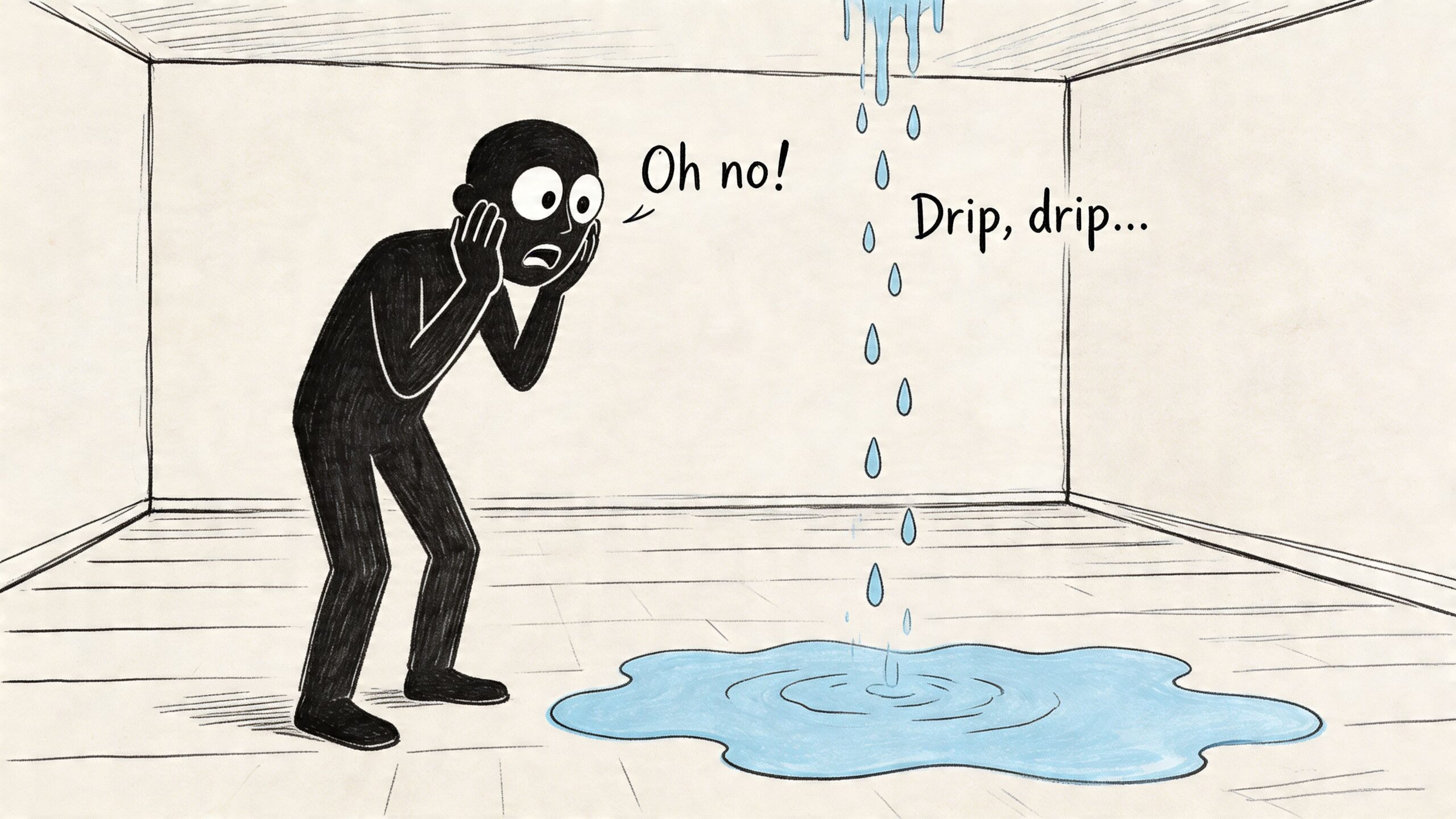
A water loss usually starts small in your mind. A drip under the sink. A dark ring on the ceiling. A dishwasher that “just overflowed a little.” Then you step into the room and hear the squish under your shoe, or see water moving under baseboards, and your stomach drops.
That reaction is normal. The next decisions matter more than panic does.
When homeowners search for water extraction companies, they’re often standing in the problem while they search. In Phoenix, that problem can come from a burst supply line, a failed water heater, a monsoon intrusion, or a slow hard-water leak that finally showed itself. The job in front of you is simple in principle. Stay safe, stop the source if you can, document what happened, and get qualified help moving fast enough to protect both the structure and the insurance claim.
Water in Your Home? Your First 60 Minutes
The first hour is about control. Not cleanup. Not tearing out drywall. Not guessing whether a fan and some towels will handle it.
Start with safety
If water is near outlets, cords, appliances, or your breaker panel, treat the area as an electrical hazard. If you can shut off power to the affected area safely, do that. If you can’t reach the panel without stepping into water or touching wet surfaces around electrical equipment, stay out and call for help.
Then stop the water source if it’s coming from plumbing inside the house. That might mean shutting off the fixture valve behind a toilet or sink, or using the main shutoff if the source isn’t obvious.
Watch your footing. Wet tile, laminate, and polished concrete get slick fast. Keep kids and pets out of the area.
Do these four things next
Take photos and video right away.
Capture the source if visible, the standing water, wet materials, damaged contents, and any staining on walls or ceilings.Move what you can without making it worse.
Pick up rugs, books, electronics, and lightweight furniture if it’s safe. Don’t drag soaked items across flooring and don’t pull up materials just to “see underneath.”Call your insurance carrier.
Open the claim early. Ask what they need from you now, and write down the claim number.Call a restoration company that handles emergency mitigation.
If you need a practical overview of what emergency mitigation includes, this page on water damage mitigation is a useful reference.
Practical rule: The faster you create a record of the loss, the easier it is to show what happened before conditions change.
What not to do in the first hour
A lot of expensive mistakes happen because homeowners try to be proactive in the wrong way.
- Don’t wait for visible drying. Phoenix air can fool people. A dry surface doesn’t mean dry materials below.
- Don’t use household fans as your whole plan. They can move air, but they don’t replace extraction, dehumidification, or moisture mapping.
- Don’t throw damaged items away yet unless they create a safety issue. Contents can be part of the claim record.
- Don’t assume clean-looking water is harmless. Water migrates into cavities and under flooring quickly.
Think like an adjuster for a minute
An insurer will want to see that you responded reasonably and promptly. Your first hour should show three things. You protected people, you tried to stop further damage, and you documented conditions before they changed.
That mindset helps you make better decisions under stress. It also helps the professionals you hire step in cleanly and build the file from there.
How to Choose the Right Water Extraction Company
At this stage, the wrong hire costs you twice. First in preventable damage, then in claim friction.
A good water extraction company does more than pull water off the floor. The crew needs to document the loss in a way an adjuster can follow, dry the structure based on measurements, and explain what is and is not salvageable. In Phoenix, that matters even more. Monsoon-driven intrusions can spread fast through stucco assemblies and garage transitions, and hard water can leave staining and mineral residue that complicate both cleaning and claim documentation.
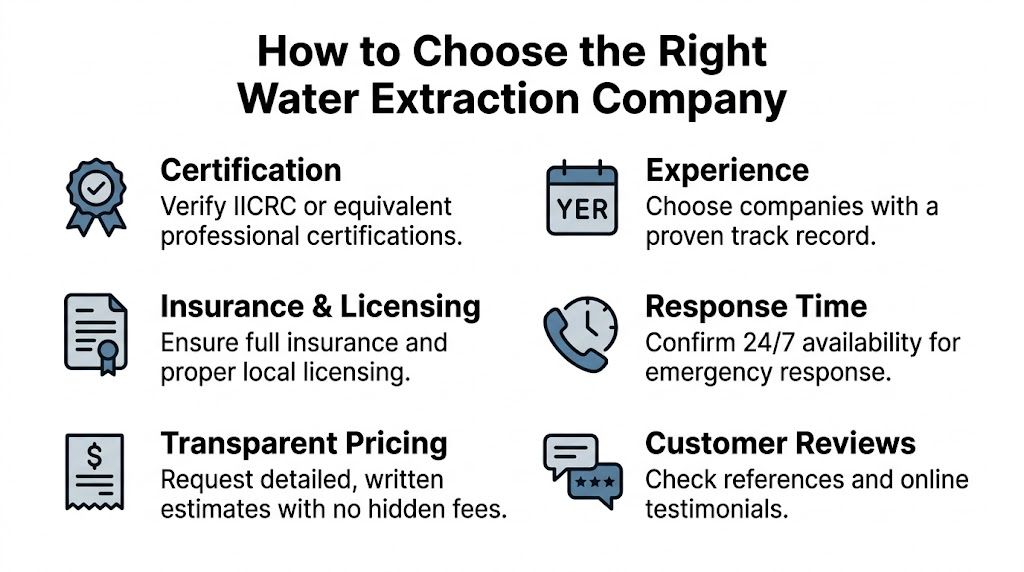
Start with five checks before you discuss price:
- IICRC-based training: Ask whether the technicians and project lead follow current IICRC standards for water mitigation and structural drying.
- Real emergency response: Ask who answers after hours and how quickly a crew can be dispatched.
- Insurance and worker coverage: Verify liability insurance and workers' compensation, plus licensing where applicable.
- Job documentation: Confirm they create moisture maps, photo logs, psychrometric readings, and daily drying notes.
- Proper equipment: They should have extraction units, air movers, dehumidifiers, moisture meters, and infrared tools sized for the loss.
If rebuilding may follow mitigation, a separate contractor screening resource like 8 Key Factors on What to Look for in a General Contractor helps with that later phase.
Ask how they protect the claim file
The most useful early question is simple: How do you document response time, mitigation work, and drying progress for insurance?
That question changes the conversation fast. Organized companies answer with a process. Weak ones answer with reassurance.
Listen for specifics like these:
| What to ask | What a solid answer sounds like |
|---|---|
| When does documentation start? | At first contact or first site visit, with timestamps |
| How are conditions recorded? | Photos, moisture readings, room-by-room notes, and a written scope |
| How is drying progress shown? | Daily monitoring, updated readings, and equipment logs |
| Who communicates with the adjuster? | A coordinator, estimator, or project manager who can send records promptly |
According to Americon Restoration, poor documentation and delayed extraction can contribute to denied or reduced water damage claims. The exact percentage will vary by carrier and policy. The practical takeaway is consistent. If the company cannot show what was wet, what they did, and how conditions changed each day, you have less support when coverage questions start.
Warning signs on the first call
Loose answers are a problem.
If someone says they can handle it with "some fans" before asking what materials are wet, how long the water sat, or whether the source was clean or contaminated, that is guesswork. The same goes for companies that avoid written scopes, skip moisture readings, or cannot explain who checks the job after equipment is set.
Low pricing can hide bigger costs later. I have seen cheap mitigation turn into flooring replacement, cabinet loss, and mold concerns because the company set too little equipment, failed to monitor the dry-out, or never documented hidden moisture under tile transitions and toe-kicks. Saving a few hundred dollars up front is not a win if it weakens the claim and expands the repair.
Phoenix experience matters
Local experience should show up in the questions they ask.
In Phoenix, crews need to understand monsoon roof and window intrusions, slab-on-grade moisture spread, and the way hard water leaves visible lines and deposits that can support your timeline of loss. They should also know how water behaves in stucco homes, tile-heavy interiors, and garages that pitch toward the house. Those details affect scope, drying setup, and how the file is presented to insurance.
If you want a practical benchmark for comparing providers, review what a qualified water damage restoration contractor should cover in inspection, drying, and communication.
Restore Heroes is one Phoenix-area example of a company that provides emergency extraction, structural drying, and insurance coordination. That does not make it the only choice. It does show the level of process your shortlist should meet.
A short phone script that gets useful answers
Use this when you call:
- State the source clearly: burst pipe, appliance leak, roof leak, or storm intrusion
- List affected materials: drywall, wood floor, cabinets, carpet, ceiling, garage, baseboards
- Ask what tools they will bring: extraction units, moisture meters, infrared camera, dehumidifiers
- Ask how they document the job: photos, moisture mapping, daily readings, insurer communication
- Ask who runs the project: who supervises, who monitors, and who sends updates
The right company makes the situation calmer by making the plan clear.
Understanding the Water Damage Restoration Process
Water that looks contained rarely stays contained. By the time a crew arrives, it has often moved under baseboards, into wall cavities, beneath tile transitions, or across a slab where the surface still looks fine. In Phoenix homes, hard water can leave mineral lines that help establish how far the loss traveled and how long materials stayed wet. That matters for drying decisions and for the claim file.
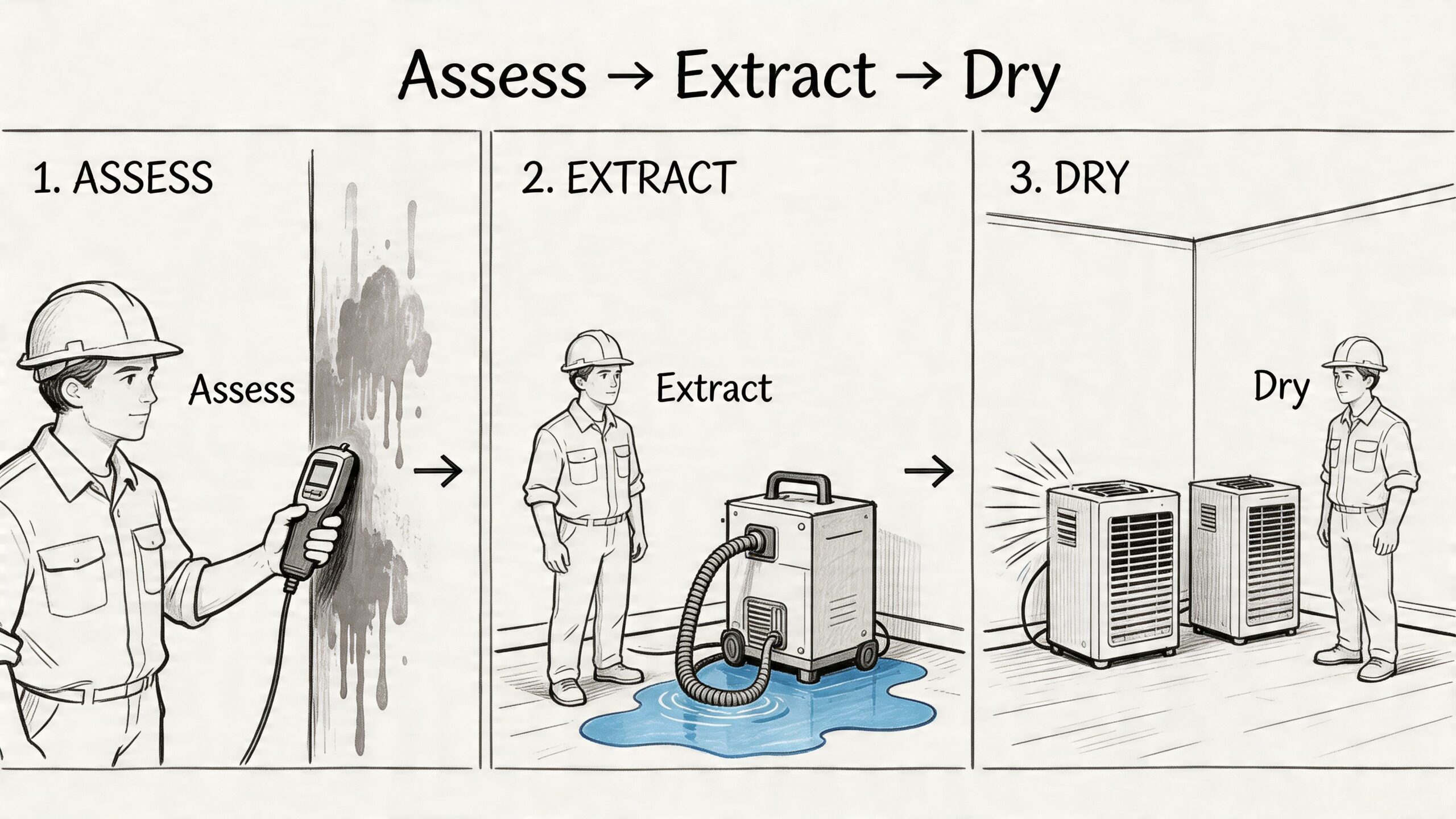
First visit and moisture mapping
The first visit should feel methodical.
A trained technician starts by identifying the source, checking whether the water is still active, and separating obviously wet materials from materials that only appear dry. Moisture meters, thermal imaging, and direct inspection help build a room-by-room map of what was affected. Good crews also document visible clues such as staining, swelling, separation at baseboards, and hard-water residue around fixtures or along floor edges.
That map does two jobs. It guides the drying plan, and it creates a record the insurer can follow later.
If the company cannot explain what is wet, what is likely salvageable, and what needs to be opened for access, the job is already off track.
Bulk water removal
After inspection, the crew removes as much liquid water as possible, as quickly as possible.
This step has a direct effect on cost. The more water removed during extraction, the less moisture is left to evaporate into the structure, and the less likely secondary damage becomes. Carpet cushion, cabinet voids, low spots in concrete, and the space under floating floors all hold water longer than homeowners expect.
In Phoenix, that distinction matters. Monsoon intrusions often spread wide and shallow, while supply-line breaks can drive water into wall cavities and under finished flooring with more force. Fast extraction limits swelling, adhesive failure, and staining that can later complicate coverage discussions.
Drying is the longest phase
Drying usually takes longer than extraction, even when the house looks much better after the first day.
Air movers are set to move damp boundary-layer air off wet materials. Dehumidifiers pull that moisture out of the indoor air so evaporation can continue. In some homes, crews also use containment, injectidry systems, or controlled demolition to reach trapped moisture behind cabinets, inside vanity chases, or under toe-kicks.
Appearance is not the standard. Readings are.
A wall can feel dry to the touch and still hold enough moisture to damage paint, soften drywall, or feed microbial growth later. That is why the crew should compare affected materials to dry reference areas and track the trend, not just take one reading and guess.
Here’s a useful visual overview of how that process works in the field:
Why daily monitoring matters
Daily monitoring is where disciplined restoration separates itself from equipment rental.
The technician should check moisture readings, temperature, relative humidity, and how the materials are responding. If progress stalls, the setup changes. That may mean adding dehumidification, opening a wall cavity, changing airflow, or removing a material that is blocking drying.
Those updates should also be documented with photos and notes. Insurance adjusters usually were not standing in your laundry room on day two when the base of the wall tested wet or when trapped moisture was found behind a cabinet panel. The file has to show why the work changed and why it was reasonable.
If you want a clearer sense of timing, this guide on how long does water damage restoration take gives homeowners a practical baseline.
What happens when steps get skipped
Poor process shows up later.
Floors cup after the fans are gone. Paint blisters. Cabinet sides stay swollen. Odors return because moisture stayed in a closed cavity. The homeowner hears, “It looked dry at the time,” which is not the same as proving dry conditions with documented readings.
I tell homeowners the same thing after almost every serious loss. Drying a structure is a documentation job as much as an equipment job. If the company cannot show where the water went, what they removed, what they saved, and when the structure met dry standard, they make the insurance side harder than it needs to be.
Cleaning, sanitation, and clearance
Drying is only part of restoration. The finish of the mitigation phase has to match the type of water involved.
A clean supply-line loss may call for debris removal, detailed cleaning, and odor control. A contaminated loss calls for more aggressive removal, cleaning, and safety controls. Homeowners often mix up water damage with flood coverage, so it helps to review understanding flood insurance if the source of loss involved rising water rather than a plumbing or interior building failure.
Before equipment leaves, the contractor should be able to explain what was dried in place, what was removed, what still needs reconstruction, and what records are going into the claim file. That clarity protects the property and puts the homeowner in a stronger position if questions come up later.
Navigating Estimates and Insurance Claims
The drying equipment gets most of the attention, but paperwork drives a large part of the outcome.
Insurance carriers don’t just pay for “water damage” as a broad idea. They review cause, scope, mitigation, documentation, and policy terms. Homeowners who understand that usually make better choices from the first phone call.
What a usable estimate looks like
A professional estimate should read like a job record, not a one-line promise.
Look for line items that describe what the crew is doing and where. You want room-by-room detail, material categories, demolition where needed, drying equipment charges, monitoring visits, cleaning steps, and notes that tie back to site conditions.
Many restoration estimators use industry software such as Xactimate to organize scope and pricing consistently. That doesn’t mean every line will be accepted exactly as written, but it gives the adjuster a standardized starting point.
If the estimate is vague, the claim often becomes vague too.
Why the cheapest bid can cost more
A low number feels comforting when your kitchen is torn apart. It can also be the most expensive decision in the file.
Industry audits show 80% of project failures stem from poor job scoping and documentation, and mitigation-only companies carry overhead at 30% to 40% of revenue because certified staff, trucks, equipment, and monitoring systems cost real money. When a job fails, the cost escalation can rise 3 to 5 times compared with doing it correctly the first time (Reets Drying Academy).
That doesn’t mean high price equals quality. It means suspiciously low bids deserve hard questions.
Ask for these documents
Use this checklist before work gets too far along:
- Initial scope sheet: What rooms, materials, and contents are affected?
- Photo documentation: Before, during, and after mitigation.
- Moisture records: Readings that show where water migrated and how drying progressed.
- Daily job notes: Equipment placement, changes in scope, and access issues.
- Any change authorizations: If hidden damage changes the plan, it should be documented.
Your role in the claim
A strong restoration company can help, but the policy is still yours. Stay involved.
Keep a claim folder with photos, emails, receipts, hotel costs if applicable, and notes from calls with the carrier. Save damaged-item lists and don’t rely on memory. If the adjuster requests information, send it promptly and keep a copy.
For homeowners who aren’t sure how flood coverage differs from standard water loss language, this primer on understanding flood insurance helps clarify why source of loss matters so much.
The best companies make the file easier to review
An adjuster is more likely to move cleanly through a claim when the mitigation company gives them organized records. That means timestamps, moisture maps, photos, equipment logs, and a scope that matches what was done.
That’s not the same as promising coverage. No ethical contractor should do that. Coverage decisions belong to the insurer and the policy language.
What a good contractor can do is reduce avoidable friction. If you want a homeowner-focused checklist for that part of the process, these water damage insurance claim tips are worth reviewing before conversations get complicated.
The claim usually goes smoother when the restoration file tells a clear story from day one.
Phoenix-Specific Water Damage Challenges
A Phoenix water loss can go sideways fast. A monsoon pushes contaminated water under a door, or a pinhole leak from mineral buildup wets a cabinet base for weeks. If the first inspection misses the source, the contamination level, or the true moisture spread, the drying plan suffers and the insurance file usually gets harder to defend.
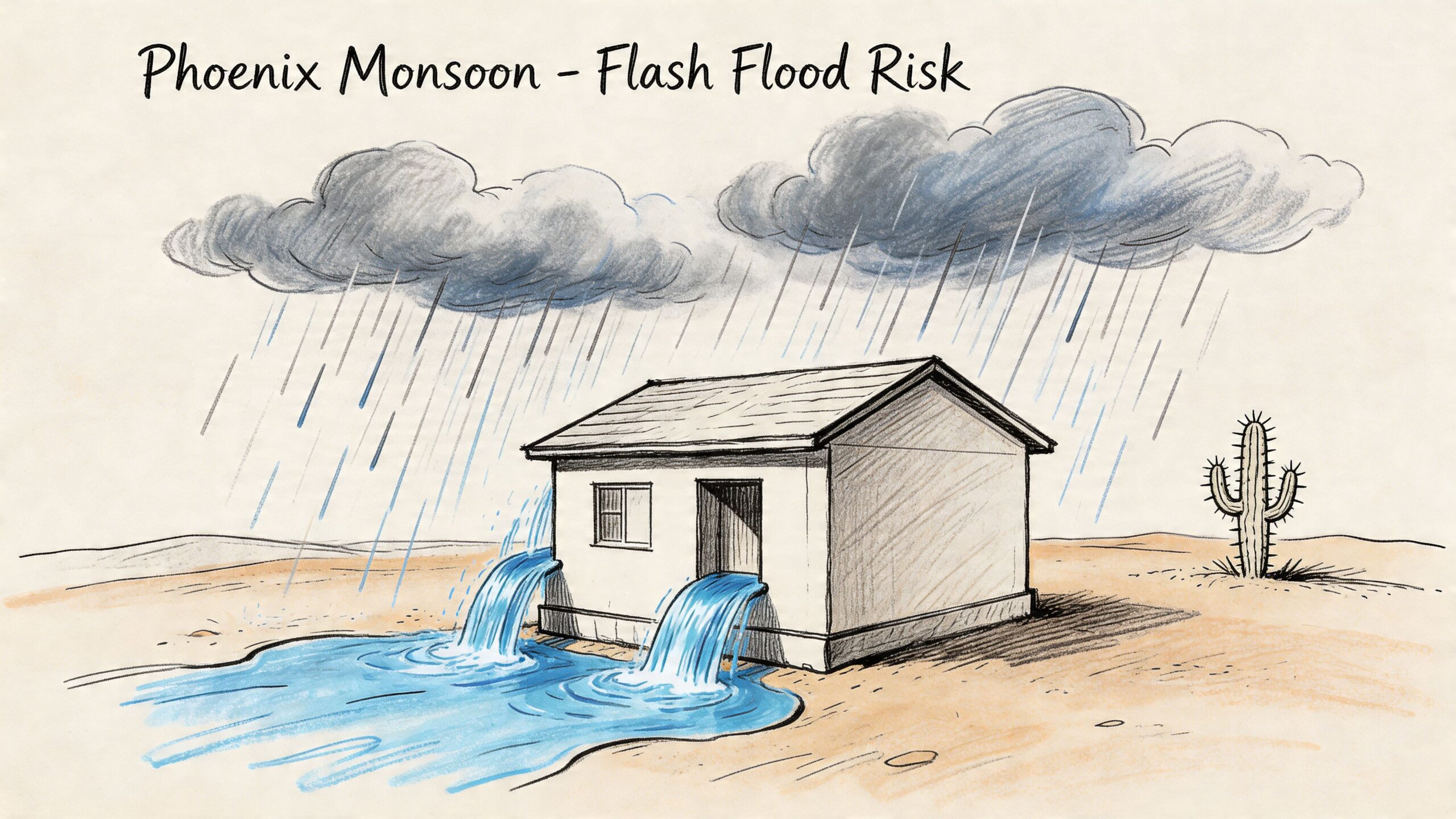
Monsoon losses change both the cleanup and the claim
Storm intrusion is a different event from a clean supply-line break. In Phoenix, monsoon water often carries soil, debris, sewage, and runoff from outside. That puts many of these losses in Category 3, which affects what can be cleaned, what needs to be removed, and how the crew should contain the work area.
That distinction matters for insurance too. The adjuster will want to see where the water entered, what materials were affected, and why certain materials could not be dried in place. If the contractor documents that clearly on day one with photos, moisture readings, and contamination notes, the claim file is stronger. If they treat storm water like a simple extraction job, the homeowner can end up arguing later about why demolition or sanitation was necessary.
Hard water often creates slow, expensive losses
Phoenix hard water is rough on valves, supply lines, appliance fittings, and water heater connections. I see plenty of losses that did not start with a dramatic burst. They started with a slow drip at an angle stop, a refrigerator line, or a corroded connector behind a wall.
Those are the claims that get messy.
A slow leak can stain materials in a way that makes the timeline harder to sort out. Mineral deposits can make a leak look older or more localized than it really is. For a homeowner, that means two practical steps matter right away. Document the visible staining and the failed part before it is discarded, and make sure the mitigation company records moisture spread beyond the obvious damage. In Phoenix homes with tile over slab, water can travel farther than people expect before it shows itself.
Desert heat can hide bad drying decisions
Hot, dry outdoor air does not dry a house by itself. Indoor drying still has to be measured and controlled under the IICRC standard of care, with humidity, temperature, and material moisture checked as the job progresses. Surfaces can feel dry while wall cavities, cabinet toe-kicks, and subfloors are still holding moisture.
That is where bad decisions create extra cost. If equipment is undersized, placed poorly, or pulled too early, materials can stay wet long after the room looks normal. If the system is pushed too aggressively, some finishes and wood materials can be damaged. Good drying in Phoenix is not about blasting heat into the space. It is about balancing airflow, dehumidification, and daily moisture verification so the contractor can show the structure reached a dry standard.
In Phoenix, a dry surface is not proof of a dry structure.
Local scoping changes what gets found
Phoenix construction details affect how water moves. Tile over slab can mask trapped moisture. Stucco assemblies and flat roof details can let storm water enter in one place and show up somewhere else. Garage step-downs, exterior door thresholds, and monsoon wind direction all change the inspection.
A local crew should look for those patterns early, because good scoping protects both the building and the claim record. Homeowners dealing with these conditions can review common Phoenix water damage scenarios and response steps to see how losses in the Valley often differ from water events in other climates.
Restoring Your Property and Peace of Mind
The worst part of a water loss is the feeling that everything is moving at once. Water is spreading. The insurance carrier wants information. Contractors are calling back. Parts of the house may be unsafe or unusable.
The way through it is more practical than dramatic.
Act safely first. Shut down hazards if you can do it without risk. Document conditions before they change. Then choose from water extraction companies based on process, not promises. You want certification, equipment, moisture tracking, clear communication, and documentation that supports the file from the first visit forward.
Keep your expectations grounded in how restoration works. Extraction is fast. Drying takes longer. Monitoring matters. Clean-looking materials may still need testing and verification before anyone should call the job done.
Phoenix adds another layer. Monsoon water can be contaminated. Hard water can obscure the actual age of a leak. Desert heat can make a surface feel dry long before the structure is ready. That’s why disciplined scoping and daily moisture control matter so much here.
If you remember one thing, remember this. The right early actions protect both the building and the claim. Those two goals are tied together more closely than most homeowners realize.
A good restoration project doesn’t just remove water. It rebuilds confidence room by room, reading by reading, decision by decision.
If you need help after a leak, flood, or burst pipe in the Phoenix area, Restore Heroes provides 24/7 disaster restoration services, including emergency water extraction, mitigation, structural drying, and insurance coordination. If you're in an active loss right now, getting a qualified team involved quickly can help you stabilize the property and make the next steps clearer.