
Think of water damage mitigation as the emergency first aid for your home. It’s not the full-blown repair job; it's the immediate, critical response to stop a leak or flood from causing even more chaos. The main goal here is to stop the bleeding, stabilize the situation, and prevent things from getting worse.
Understanding Water Damage Mitigation and Why It Matters
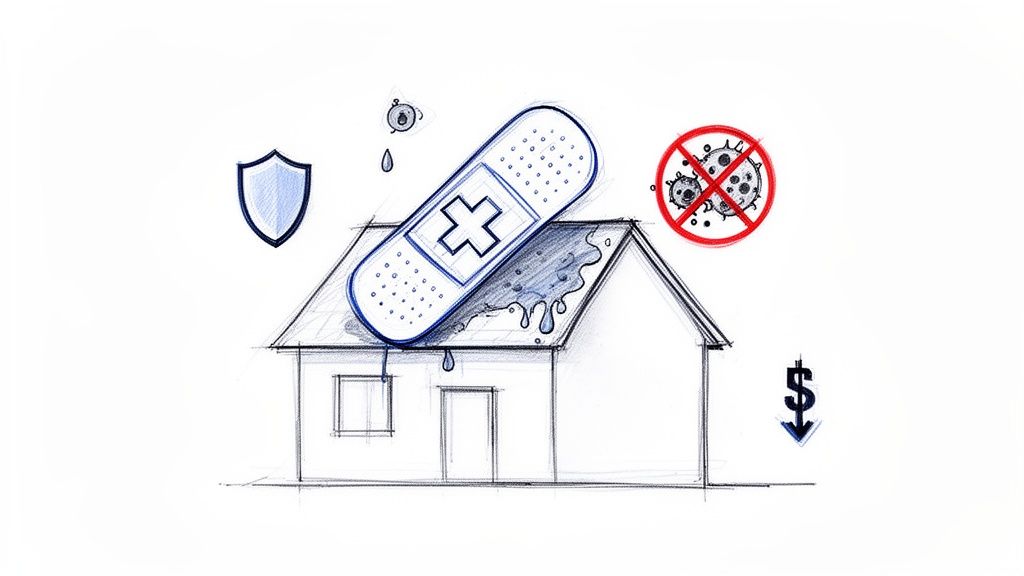
Here’s a simple analogy: if your house has a massive gash from a burst pipe, a mitigation crew is the paramedic team that rushes in. They aren't there to perform reconstructive surgery (that comes later). Their job is to stop the bleeding, clean the wound, and stabilize the patient—your home.
This means they jump into action to control the crisis before the long-term repairs, known as restoration, can even begin.
The crew's first priorities are purely defensive. They focus on extracting all standing water, tearing out materials that are too soaked to be salvaged, and setting up an army of high-powered fans and dehumidifiers. This isn't about making things look pretty; it's about damage control.
Without this urgent first step, water just keeps soaking deeper into everything porous—drywall, wood studs, subfloors, and insulation. This creates the perfect damp, dark environment for mold, which can start sprouting in as little as 24 to 48 hours. Mitigation is your first and best defense against a serious mold infestation and the structural rot that follows.
The True Cost of Delay
Waiting to call for help is one of the most expensive mistakes you can make. What might start as a straightforward water problem can spiral into a nightmare of structural decay and hazardous mold.
The need for a rapid response is more urgent than ever. Globally, flood disasters make up a staggering 40% of all weather-related catastrophes, and their frequency has shot up by 134% since the year 2000. These events cause average financial losses of US$388 billion annually. This really puts the value of immediate, professional mitigation into perspective.
Mitigation isn't just another cost—it's a crucial investment to prevent a much bigger, more expensive disaster. Every hour you wait allows water to cause more permanent damage, turning a manageable cleanup into a full-scale reconstruction project.
Mitigation vs Restoration A Quick Comparison
It's really important to know that mitigation and restoration are two totally different stages of the recovery process. People mix them up all the time, which can lead to confusion about how long things will take and what to expect.
Think of it this way: Mitigation is the emergency room visit. Restoration is the follow-up surgery and physical therapy.
To make it even clearer, let's break down the key differences.
Mitigation vs Restoration A Quick Comparison
Understand the different goals, timelines, and actions involved in the two critical phases of recovering from water damage.
| Aspect | Water Damage Mitigation | Water Damage Restoration |
|---|---|---|
| Primary Goal | Stop further damage and stabilize the property. | Repair and rebuild the property to its pre-damage condition. |
| Timeline | Immediate; starts within hours of the incident. | Follows mitigation; can take weeks or even months. |
| Key Actions | Water extraction, removing damaged materials, drying. | Replacing drywall, painting, installing new flooring. |
| Focus | Prevention and damage control. | Reconstruction and cosmetic finishes. |
Grasping this difference shows why getting a certified team on-site immediately is so critical. By starting with professional water damage mitigation, you create the best possible foundation for a restoration process that is smoother, faster, and much less expensive in the long run.
Your First Steps After Discovering Water Damage
That sinking feeling you get when you see water pooling on your floor can easily lead to panic. But what you do in these first few moments and hours can make a massive difference. Staying calm and acting fast will help you get a handle on the situation and can seriously reduce the final repair bill.
Think of this as your emergency action plan.
Your first thought must be safety. Water and electricity are a lethal mix. If there's standing water anywhere near electrical outlets, appliances, or your circuit breaker, stay out of the area. If you can safely get to your home’s main breaker panel, shut off the power to the wet rooms.
With the power off, your next job is to stop more water from coming in. Whether it's a burst pipe under the sink or a faulty appliance hose, find your home’s main water shutoff valve and turn it off. This one simple move stops the problem from getting worse and buys you precious time.
Document Everything Immediately
Before you touch or move anything, pull out your phone. This is non-negotiable for your insurance claim.
Start taking pictures and videos of absolutely everything.
- Find the Culprit: Get clear shots of the broken pipe, leaky dishwasher, or whatever caused the mess.
- Show the Full Picture: Use wide-angle photos and videos to show how far the water has spread. Pan across rooms to capture the full scope.
- Detail the Damage: Zoom in on soaked furniture, rugs, electronics, and personal items. Don’t forget to open up cabinets and closets to show what’s wet inside.
- Don't Forget to Look Up: Water travels, and ceiling stains or sagging drywall are common signs. Make sure to get photos of that, too.
This visual evidence is your proof. It creates a clear, undeniable record of what your home looked like right after the event, which is exactly what your insurance adjuster needs to see.
Prioritize and Protect Your Belongings
Once you've made the area safe and documented the damage, it's time to start moving things out of harm's way. You're trying to get valuables and absorbent materials away from the water before they're ruined.
Focus on moving these items to a dry spot first:
- Electronics and Important Documents: Your laptop, TV, and irreplaceable papers like passports or birth certificates should be the first things you grab.
- Furniture with Wood Legs: A neat trick is to place small squares of aluminum foil or wood blocks under the legs of your chairs, tables, and couches. This stops the wood from wicking up water and staining your carpet.
- Rugs and Floor Coverings: If you can manage it, roll up any area rugs and get them off the wet floor.
- Artwork and Photos: High humidity can quickly ruin photos and art, so move them to a dry room.
The first 48 hours are the most critical. Quick action to remove belongings and call in a professional dramatically lowers the risk of mold and permanent structural damage.
After you've handled these immediate steps, your most important call is to a certified water mitigation company. What you’ve done is fantastic first aid, but it’s not the cure. To learn more about what the pros do in a major water event, you can read about the professional emergency flood cleanup process and see why it’s so critical. A professional team has the right gear and know-how to find and dry the hidden moisture that you can't see, making sure your home is truly dry and safe.
How Professionals Handle Water Damage Mitigation
When you call in a professional water damage mitigation team, you're not just getting a crew with a few fans. You're getting a systematic, science-backed process designed to stop damage in its tracks and head off much bigger problems down the road. This isn't about guesswork; it's about precision, technology, and proven techniques.
The moment they arrive, their mission is clear: figure out how bad the damage is, stop it from spreading, and get the water and moisture out as fast as humanly possible. Think of it less like a cleanup and more like a strategic operation to save the bones of your home.
The graphic below outlines the first few things you, the homeowner, should do. Your actions set the stage for the pros to take over.
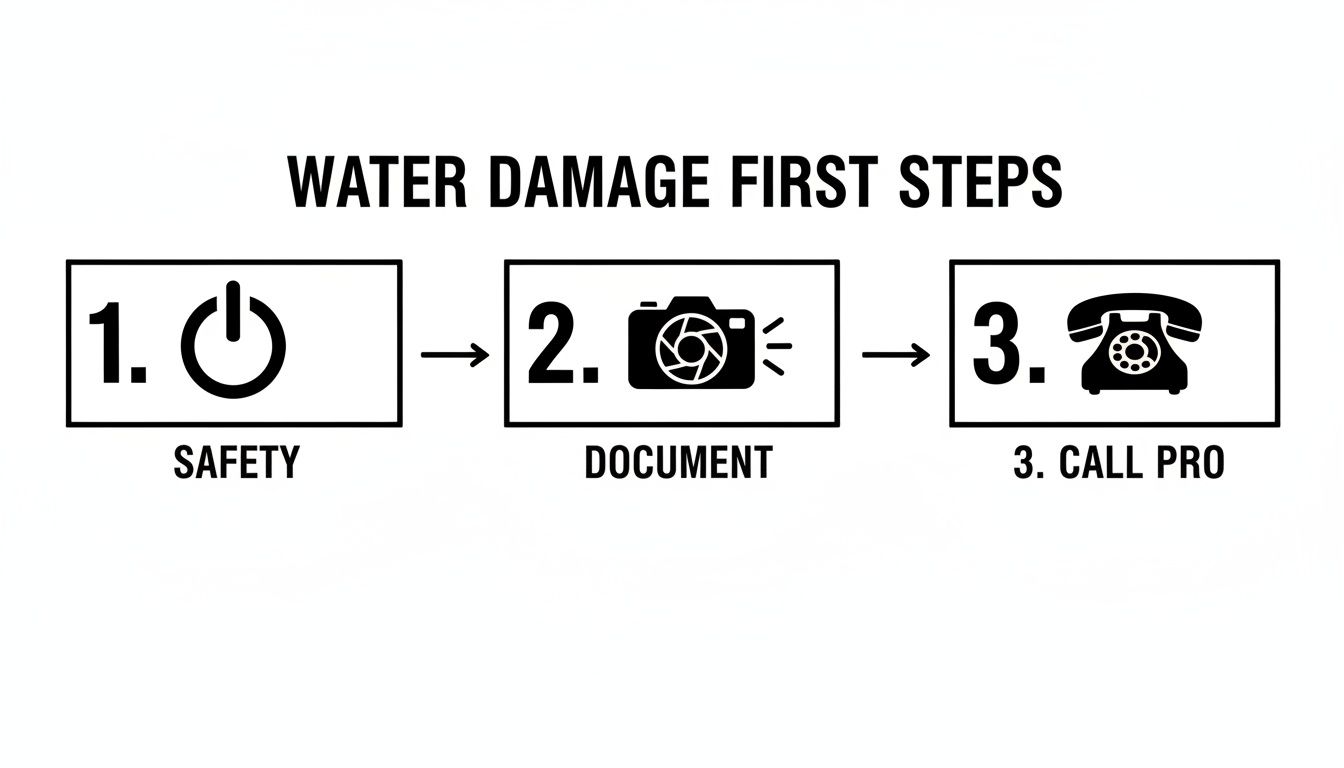
As you can see, once you've made sure everyone is safe and snapped a few photos, the most critical next step is getting a certified professional on the phone.
Step 1: Initial Inspection and Damage Assessment
The very first thing a certified technician does is a deep-dive inspection. This goes way beyond what you can see with your own eyes. Using specialized gear, they map out exactly where the water went and how much of it is hiding.
- Moisture Meters: These gadgets are essential. They have probes that can get inside materials like drywall, flooring, and carpet to measure the moisture content. This tells the team precisely how far the water has soaked in.
- Thermal Imaging Cameras: This is where it gets really high-tech. These cameras spot temperature differences, and since wet areas are cooler, they allow technicians to "see" water behind walls, under floors, and in ceilings without tearing everything apart first.
This thorough assessment lets the team classify the water—from Category 1 (clean water from a supply line) to Category 3 (black water with serious contaminants)—and build a smart, targeted game plan.
Step 2: Powerful Water Extraction
With a clear map of the damage, the team immediately shifts into the water extraction phase. The goal here is simple: get the standing water out, and get it out now. The less time water has to sit, the less it can soak into porous materials and cause permanent damage.
Pros use powerful, truck-mounted extraction units and submersible pumps for this. We're not talking about your average shop vac. These are industrial-strength machines that can pull out hundreds or even thousands of gallons of water in a surprisingly short amount of time. This step is a game-changer because it dramatically cuts down the time needed for the next phase.
Think of it this way: physically removing 97% of the water is vastly more efficient than trying to evaporate it. This critical first move sets the stage for a much faster and more effective drying process.
This rapid response is more important than ever. Studies show that extreme rainfall events are getting more intense worldwide, with maximum daily precipitation jumping by 2.3% per decade. This, combined with wild swings between wet and dry conditions, means flood risks are rising even in places that never used to worry. Professional-grade water extraction is the first line of defense against these modern weather patterns.
Step 3: Advanced Drying and Dehumidification
Once the standing water is gone, the real science of drying begins. The mission now is to pull out all the hidden moisture that's been absorbed by the structure of your home. This is where a strategic combination of equipment does the heavy lifting.
- Industrial Air Movers: You might know them as carpet dryers. These high-velocity fans are carefully placed to create a vortex of airflow across wet surfaces. This pushes the trapped moisture out of materials and into the air. If you're curious, you can learn more about how pros use these specialized water damage fans.
- Commercial Dehumidifiers: As the air movers do their job, the air becomes heavy with moisture. That's where commercial-grade dehumidifiers come in. These beasts pull that moisture right out of the air, capturing dozens of gallons of water vapor per day. This prevents it from just settling back into other dry materials.
This isn't a "set it and forget it" process. For the next several days, technicians will return to your home daily. They'll use their moisture meters to track the drying progress, moving equipment around to hit stubborn damp spots until every material is back to its normal, pre-loss moisture level.
Step 4: Cleaning and Sanitizing
The final piece of the water damage mitigation puzzle is a thorough cleaning and sanitizing. Water, especially from contaminated sources, can leave behind a nasty cocktail of bacteria, grime, and odors.
Professionals use EPA-approved antimicrobial and anti-fungal treatments to clean every affected surface. This is a non-negotiable step to help prevent mold from taking hold later and to ensure the air quality in your home is safe. Depending on the situation, they might also use special equipment like thermal foggers to neutralize any lingering smells, leaving your home feeling fresh and truly restored.
Navigating the Insurance Claim Process
Let's be honest: dealing with an insurance claim can feel more overwhelming than the water damage itself. Suddenly you're buried in unfamiliar paperwork, trying to understand confusing terminology, and racing against deadlines. But with the right approach, you can navigate it with confidence.
Think of it as a project. From the moment you spot the water, everything you do and every detail you collect builds the case for your claim. Good, solid documentation is your single most important asset.
Your Role in the Claims Process
The very first phone call you make should be to your insurance company. When you get them on the line, be ready to give them the straight facts about what happened.
Just stick to what you know. Avoid guessing about the cause or how bad the damage might be. Simply tell them when you found the water and where it seems to be coming from. Right after you hang up, start a communication log.
- Track Every Call: Write down the date, time, and name of every person you talk to.
- Note the Details: Briefly summarize what you talked about and any instructions they gave you.
- Organize Your Emails: Create a special folder in your inbox just for claim-related emails.
This simple habit of keeping detailed records can prevent a world of headaches and misunderstandings later on. It’s your proof of who said what and when, which is priceless if any disagreements pop up.
How a Professional Mitigation Company Helps
While you're handling the phone calls and emails, a certified water damage mitigation company gets to work providing the hard evidence your claim needs to move forward. They become your expert data collectors, creating the kind of detailed, technical reports that insurance adjusters need to see.
A professional team will give your adjuster essential documents, including:
- Moisture Maps: These aren't just simple sketches. They are detailed diagrams created with moisture meters and thermal cameras, showing exactly where water is hiding behind walls or under floors.
- Detailed Photo Logs: Technicians will take tons of pictures throughout the entire process. This creates a clear visual story, from the initial disaster to the moment everything is properly dried.
- Scope of Work Reports: This is the official document that lists every single action taken—from pumping out standing water to setting up specialized drying equipment—and explains why it was necessary.
- Drying Logs: These are daily records tracking temperature, humidity, and moisture levels in the affected materials. They provide concrete proof that your property was dried correctly according to industry standards, which is key to preventing mold.
A professional mitigation report translates the physical damage into the language of insurance. It provides the objective, third-party validation needed to process a claim efficiently and accurately.
It's crucial to remember that while a mitigation company works with your insurer, they ultimately work for you. Their primary job is to protect your property and document the facts. The final decision on coverage always comes down to your insurance provider and the details of your specific policy.
For a deeper dive, check out our guide on key tips for handling a water damage insurance claim.
How to Choose the Right Mitigation Company
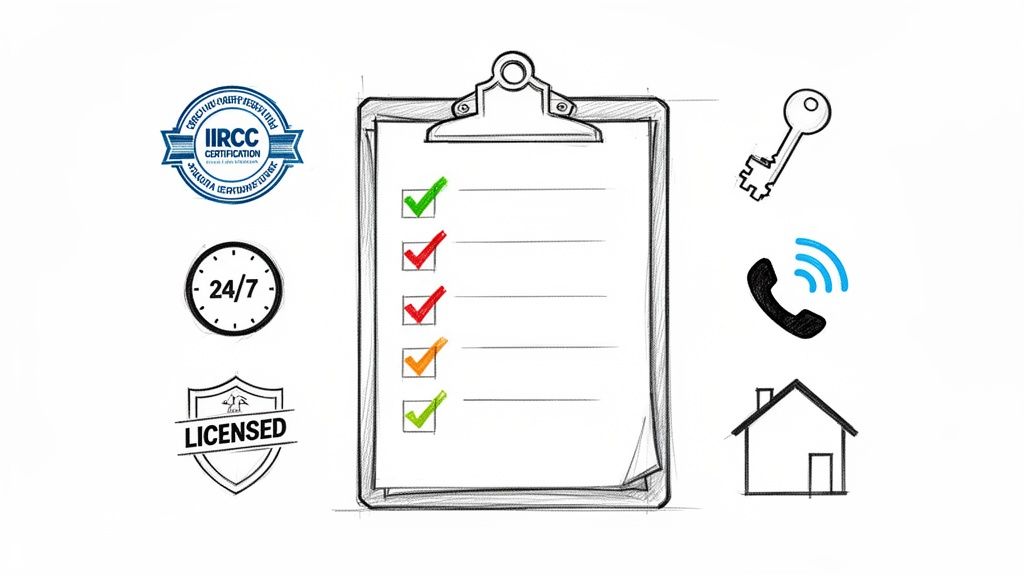
When your home is flooding, the stress of finding someone trustworthy to fix it can be overwhelming. But the choice you make in that moment is huge. The right water damage mitigation company can save you thousands and prevent a world of future headaches, while the wrong one can easily make a bad situation much worse.
This isn't a time for guesswork. You need a team that brings genuine expertise and a sense of urgency to get the job done right, right away.
Why IICRC Certification is The Gold Standard
If there's one thing you should look for, it's a certification from the Institute of Inspection, Cleaning and Restoration Certification, or the IICRC. Think of them as the organization that writes the official playbook for the entire restoration industry. It’s not just a fancy logo; it's your assurance that a company knows what it's doing.
An IICRC-certified firm means their technicians have been through serious training and passed exams on the latest, most effective methods for water removal, drying out structures, and dealing with mold. They understand the science behind the process and are held to the highest ethical standards. It's truly the single best indicator of a company's competence.
The Non-Negotiables: What Every Good Company Has
Beyond that crucial certification, a few key things separate the real pros from the rest. When you're making that frantic phone call, make sure the company you pick has these fundamentals covered.
- 24/7 Emergency Availability: A burst pipe or a flooded basement doesn't care about business hours. A serious company is ready to go 365 days a year because they know that every single minute counts.
- Proper Licensing and Insurance: They must be fully licensed to work in Arizona and carry both liability and worker’s comp insurance. This is non-negotiable—it protects you from being on the hook for any accidents on your property.
- Modern, Professional-Grade Equipment: Do they use tools like thermal imaging cameras and high-tech moisture meters? This equipment is critical for finding hidden water that, if missed, will absolutely lead to mold and rot down the road.
Choosing a certified and properly equipped mitigation team is one of the smartest things you can do to protect your investment. It directly stops secondary damage from happening, which is what really drives up the final repair bill.
The stakes are higher than most people realize. The global economic toll of water-related disasters has soared past US$360 billion in a single year. That number powerfully shows the financial risk everyone faces. Research confirms that the final cost of a disaster comes down to preparedness, and having a go-to, certified mitigation company is a huge part of being prepared.
A Quick Checklist for Hiring a Pro
In the middle of a crisis, it’s tough to think straight. The table below is a simple checklist to help you vet any potential water damage mitigation company and make a smart choice under pressure.
| Qualification Checklist | Why It Matters | Ask The Contractor |
|---|---|---|
| IICRC Certification | This is the industry’s top credential, ensuring technicians are trained in the latest science-backed methods. | "Are your technicians IICRC-certified?" |
| 24/7 Availability | Water emergencies happen at all hours. You need a company that can respond immediately to prevent further damage. | "How quickly can you have a team at my property?" |
| Proof of License & Insurance | Protects you from liability if a worker is injured and ensures the company is legitimate. | "Can you provide proof of your license and insurance?" |
| Experience with Insurance Claims | A seasoned company knows how to document everything properly, making your claim process much smoother. | "Do you have experience working with insurance companies?" |
Keep these questions handy. They’ll help you quickly identify a true professional who can get you back on your feet.
Finding the right partner isn't just about drying out your house; it's about restoring your safety and your peace of mind. To dig a little deeper into this, check out our guide on how to select a qualified water damage restoration contractor.
Common Questions About Water Damage Mitigation
When you're dealing with a water emergency, your mind is probably racing with questions. It's totally normal. Getting some straight answers can make a stressful situation feel a lot more manageable and help you make the right calls for your home.
Let's walk through some of the most common questions we get from homeowners about water damage mitigation.
How Long Does Water Mitigation Take?
This is usually the first thing everyone wants to know: "How long is this going to take?" There's no single answer, but we can give you a pretty good idea of the timeline. Getting the standing water out is the first big step, and that usually happens within the first 24 hours after a crew arrives.
The real workhorse of the process, though, is the drying. Powerful, industrial-grade air movers and dehumidifiers typically need to run around the clock for about 3 to 5 days. Technicians will check on things daily, take moisture readings, and make sure everything from the drywall to the subfloor is back to its normal, dry state before any equipment is removed.
Can I Handle Minor Water Damage Myself?
It's tempting. For a small spill on a surface like tile, grabbing a towel feels like the right move. But water is sneaky. It can slip under baseboards, soak into the subfloor, and creep up the back of your drywall where you'd never see it.
Without the right moisture-detecting tools, you're just guessing if it's truly dry.
Trying to DIY anything more than a tiny, contained puddle is a roll of the dice. You're risking hidden mold and long-term structural damage that can silently wreck your home. Calling a pro is always the smartest, safest bet.
What Are the Different Water Categories?
You've probably heard terms like "clean water" or "black water." It's not just industry jargon; these categories tell us how contaminated the water is and what safety measures are needed.
- Category 1 (Clean Water): This is the stuff that comes from a clean source, like a burst supply line or a sink that overflowed. It isn't considered immediately harmful to touch or be around.
- Category 2 (Gray Water): This water has some contamination in it and could make you sick if you swallowed it. Think of water from an overflowing dishwasher or washing machine.
- Category 3 (Black Water): This is the serious stuff. It's heavily contaminated and can cause severe illness. We're talking about sewage backups or floodwater from a storm. Tackling this requires full protective gear and very strict safety rules.
Knowing the category of water is why a response to a sewage backup is so much more intense than a simple pipe leak. It's all about making sure your home is left completely safe and clean for you and your family.
When disaster strikes your Phoenix-area home, you need a team you can trust to respond immediately and handle the job with expertise. Restore Heroes is IICRC-certified and ready 24/7 to manage your water damage emergency from start to finish. Get a free onsite inspection and the peace of mind you deserve by visiting us at https://www.restoreheroesaz.com.