
Yes, sheetrock can absolutely get wet—and when it does, the damage is often far worse than most people think. The best way to picture standard drywall is like a dense, chalky sponge wrapped in paper. Once water hits it, that gypsum core starts soaking up moisture, and the whole board rapidly loses its strength and stability. This is why acting fast isn't just a good idea; it's essential.
Understanding What Happens When Sheetrock Gets Wet
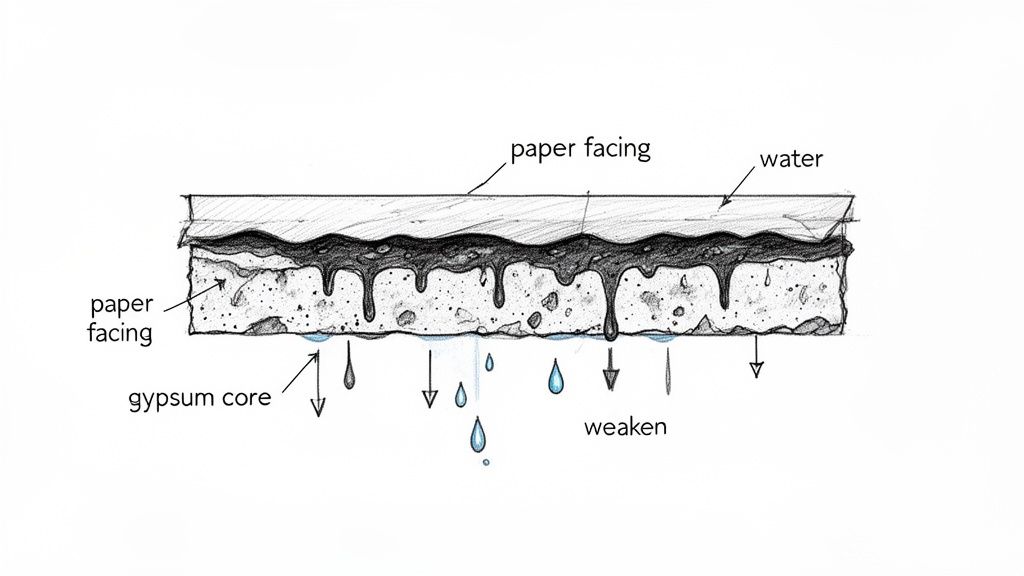
Your basic drywall is pretty simple: it’s a slab of a mineral called gypsum pressed between two heavy sheets of paper. This design makes it light and cheap, but it’s also what makes it so incredibly vulnerable to water. As soon as moisture touches that paper face, it wicks right through to the gypsum, compromising the entire board from the inside out.
The first thing to go is the sheetrock's structural integrity. Even a little bit of water makes a huge difference. Research has shown that when drywall's moisture level goes from 0% to just 2%, its strength plummets. Push that to about 5% moisture content, and it becomes brittle enough to crumble with little effort.
Common Causes in the Phoenix Area
Here in the Phoenix area, we see a few common culprits behind wet sheetrock. The intense summer monsoon season often leads to sneaky roof leaks. Overworked AC units can create condensation overflows that drip into ceilings and walls. And, of course, a sudden burst pipe can saturate an entire room in minutes. It's crucial to know how to spot the early signs of water damage on your ceiling to get ahead of the problem.
Because that gypsum core is so absorbent, the water doesn't just sit there—it spreads and creates a cascade of other issues:
- Weakening and Sagging: The board gets heavy and soft, which is why you see ceilings start to bulge or sag under their own weight.
- Crumbling: As the core disintegrates, the drywall loses all its strength and can literally fall apart when you touch it.
- Mold Growth: That damp paper facing is the perfect food for mold. In our warm climate, mold can start colonizing in as little as 24 to 48 hours.
The real danger isn't just the ugly water stain you can see. It's the silent damage happening inside the wall, where moisture is turning a solid building material into a weak, crumbling mess—and creating a perfect breeding ground for mold.
For a quick overview, here's how the damage progresses over time. It really shows why a fast response is non-negotiable.
How Water Affects Sheetrock At A Glance
| Time Elapsed | Impact on Sheetrock | Associated Risk |
|---|---|---|
| First 24 Hours | Paper facing and gypsum core absorb water. Visible staining and swelling begin. | Structural weakening starts immediately. Board becomes soft to the touch. |
| 24-48 Hours | The board becomes saturated and heavy. Sagging and bulging become much more noticeable. | High risk of mold growth begins. Paint may start to peel or bubble. |
| 1 Week & Beyond | Gypsum core begins to crumble and disintegrate. The board loses all structural integrity. | Widespread mold contamination is likely. Risk of ceiling collapse increases. |
As you can see, waiting even a day or two can dramatically change the outcome, turning a simple repair into a major remediation project.
Understanding Different Types Of Drywall
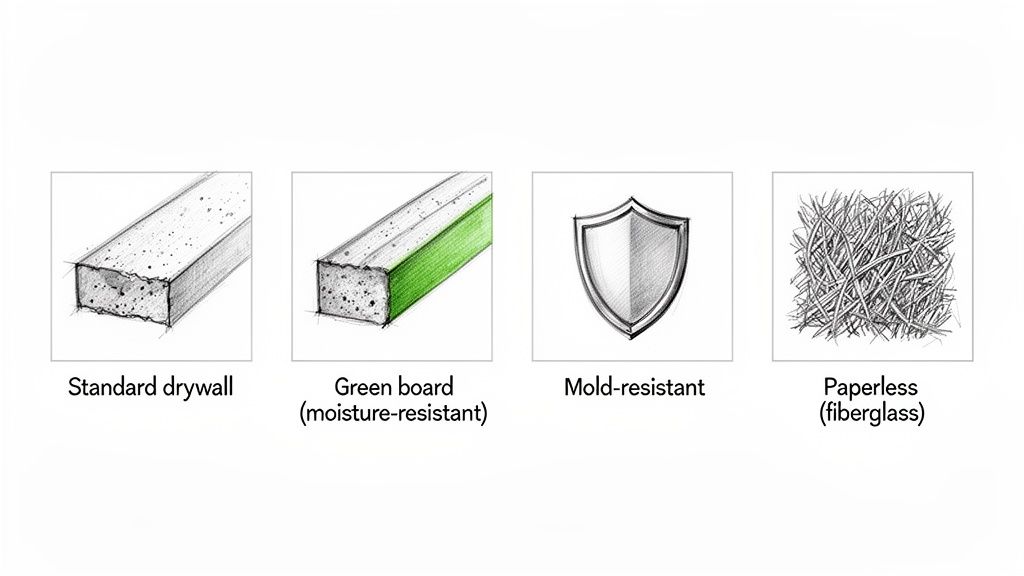
So, can sheetrock get wet? The honest answer is: it depends on the type. You see, not all drywall is created equal, and the specific kind installed in your home is the single biggest factor in how it will react to water. Knowing the difference is a game-changer for any Phoenix homeowner trying to figure out what they’re up against.
Let’s start with the basics. Standard white drywall is the workhorse of the industry—it's affordable and found in most living rooms, bedrooms, and hallways. The problem is its paper facing and absorbent gypsum core act like a sponge. Even a little bit of water can make it swell, lose its strength, and quickly become a five-star hotel for mold.
Specialized Drywall For Humid Areas
Now, builders aren't clueless. They know certain rooms need more protection, which is where specialized drywall comes in. These boards are designed to perform better in damp spaces, but it's critical to know they have their limits.
You've probably heard of moisture-resistant drywall, which most pros call "green board" because of its color. The paper on this type has a waxy coating to help it shrug off humidity and splashes. It's the go-to choice for bathrooms, laundry rooms, and kitchens.
But here’s something you absolutely need to know.
Moisture-resistant is not waterproof. Green board is designed to handle steam from a shower or an occasional splash, not a burst pipe or a serious leak. If it gets truly soaked, it will fail just like standard drywall.
Taking it a step further is mold-resistant drywall, often called "purple board." This stuff has a denser core and the paper is treated to actively stop mold from growing. It’s a definite upgrade from green board, but it’s still made with paper, which is a food source for mold when it gets wet enough.
The Most Water-Resistant Option
For the best possible defense against water, you have paperless drywall. Just like the name says, it ditches the paper facing for a fiberglass mat. This is huge because it removes the organic material that mold needs to survive, making it incredibly tough against both water damage and fungal growth.
Here’s a quick breakdown of how they all stack up:
- Standard Drywall: Think of it as a paper towel. It offers almost no real protection against water and soaks it right up.
- Green Board (Moisture-Resistant): Good for steamy rooms and minor moisture, but it will get overwhelmed if it gets truly wet.
- Purple Board (Mold-Resistant): Fights mold growth and handles water better than green board, but it's still not a waterproof solution.
- Paperless Drywall: Your best bet. By removing the paper, you remove the food source for mold, giving it superior moisture resistance.
Figuring out what type of sheetrock you have in different areas of your Phoenix home can help you assess your risk. A small leak in a bathroom with green board is less of an immediate crisis than that same leak in a living room with standard drywall. But remember, no matter the type, when sheetrock gets wet, acting fast is always your best move.
The Hidden Dangers Of Wet Drywall
That little water stain on your wall might seem like just an ugly spot, but it’s often the tip of the iceberg. Wet sheetrock is rarely just a cosmetic issue. It’s a warning sign for much deeper problems that can put your home's structure and your family's health on the line. Once water soaks into drywall, the clock starts ticking.
If you ignore it, you’re basically letting two major threats take root in your home. The first is a direct hit on your home's bones—its structural integrity. The second is a serious health risk that can quietly contaminate the very air you breathe.
Structural Integrity at Risk
Imagine drywall as a stiff, solid board. Now, introduce water. That once-solid gypsum core turns to mush, losing all its strength. Saturated sheetrock can’t even support its own weight anymore, let alone the heavy insulation or light fixtures attached to it.
This weakness quickly turns into visible—and dangerous—problems:
- Sagging Ceilings: The first sign is often a gentle bow in the ceiling as the drywall panel droops under the weight of trapped water.
- Crumbling Walls: The internal gypsum structure breaks down completely. What was once a solid wall can now crumble with a simple touch.
- Compromised Fastenings: The screws and nails holding the sheetrock up can easily pull right through the softened material, creating a very real collapse hazard.
The integrity of the material itself is crucial. A well-known case of defective Chinese drywall imported between 2005 and 2006 affected up to 24,000 U.S. homes. This drywall released corrosive sulfur compounds, damaging wiring and causing health issues, which really drives home how vital material quality is in construction.
The Critical Health Hazard: Mold
Even more urgent than the structural damage is the threat of mold. Standard drywall is faced with paper, which is made of cellulose—a favorite food for mold. Just add a little water, and you’ve rolled out the welcome mat for a mold colony.
Mold can start growing on damp drywall in just 24 to 48 hours. By the time you spot it on the surface, you can bet there’s a much larger, hidden colony growing on the back of the board inside your wall.
This is a huge deal for us here in Phoenix. Our powerful AC systems are fantastic at cooling, but they're also great at circulating air everywhere. If mold is growing in one wall, the HVAC unit can pick up those spores and spread them throughout your entire home, tanking your indoor air quality. This can kick off allergies, asthma attacks, and other respiratory issues for your family.
Moisture in building materials is a universal invitation for mold. This isn't just a drywall problem; you can find similar issues with black mold on hardwood floors, showing how quickly fungal growth takes over when things get wet. Because mold grows deep inside the porous gypsum, simply wiping the surface clean does next to nothing. To see why professional help is almost always needed, check out our guide on how to properly handle black mold on drywall.
Deciding Between Drywall Repair And Replacement
Once you've found wet drywall, you're faced with a big question: can I get away with just drying it out, or does it all need to be torn out? There's no single right answer, but a few key things will point you in the right direction. Walking through them helps you figure out if you're dealing with a minor fix or a major replacement project.
The 48-Hour Rule
The first thing to consider is time. How long has that sheetrock been wet?
If you caught a tiny leak from a pipe under the sink within a few hours and the wall is just a little damp, you're probably in luck. Drying it out is a real possibility. But if that drywall has been soaking for 48 hours or more, it’s a different story. Replacement is almost certainly your only option. By that point, the gypsum core starts to break down, lose its strength, and the risk of mold growth shoots through the roof.
The Water Source Matters Most
Next, you have to know where the water came from. This one is a deal-breaker.
- Clean Water (Category 1): Think burst supply lines or an overflowing sink. If you get to it immediately, drywall soaked with clean water can often be saved.
- Contaminated Water (Category 2 & 3): This is the bad stuff—water from an overflowing toilet with waste, a sewer backup, or floodwaters from outside. This water is swimming with bacteria and other contaminants that soak right into the porous drywall. Drywall hit with contaminated water must always be replaced, no exceptions. It’s a serious health risk.
This decision tree breaks it down visually, showing how time and water source are your two main guides.
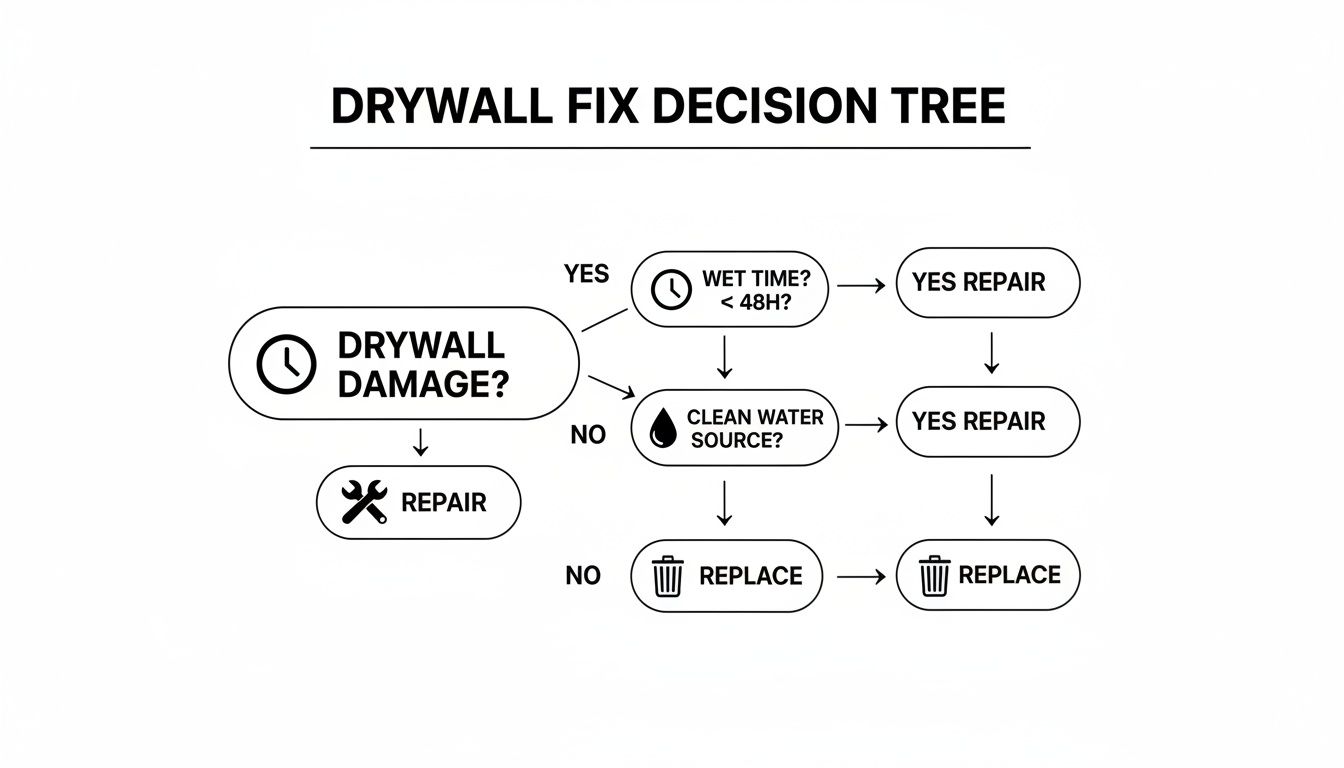
As you can see, the source of the water is the first and most important question. If it's contaminated, the answer is always replacement.
How Bad Is The Damage, Really?
Finally, take a hard look at how much of the wall is actually wet. A small, isolated damp spot from a drip is a world away from an entire wall that got drenched by a burst pipe.
If you see that the water has wicked several inches up the wall, saturated the insulation behind it, or caused the drywall to visibly sag or crumble, repair is off the table. The material is just too far gone to be saved.
To make things a bit clearer, here’s a quick guide to help you decide.
Repair Or Replace Decision Guide
| Situation | Recommended Action | Why It Matters |
|---|---|---|
| Small, damp spot from a clean water source, caught within hours. | Repair | The drywall's core is likely intact, and rapid drying can prevent mold. |
| Drywall is soft, sagging, or crumbling, even if the area is small. | Replace | The structural integrity is gone. The gypsum has broken down and can't be saved. |
| Water came from a sewer line, toilet overflow, or flooding. | Replace | The drywall is contaminated with harmful bacteria, posing a significant health risk. |
| Water has been sitting for more than 48 hours, regardless of the source. | Replace | The risk of hidden mold growth is extremely high, and the material has weakened. |
This table is a good starting point, but every situation is unique. Remember, trying to save heavily damaged or contaminated drywall is a gamble you don't want to take.
The rule of thumb is simple: when in doubt, tear it out. You’ll save yourself from bigger headaches like hidden mold, structural problems, and much higher repair bills down the road.
Of course, cost is always a factor. To get a better handle on the financial side of things, it helps to understand the costs associated with water damage repair. Knowing what to expect can help you budget for the right solution instead of a temporary patch.
Your First Steps For Handling Water Damaged Drywall
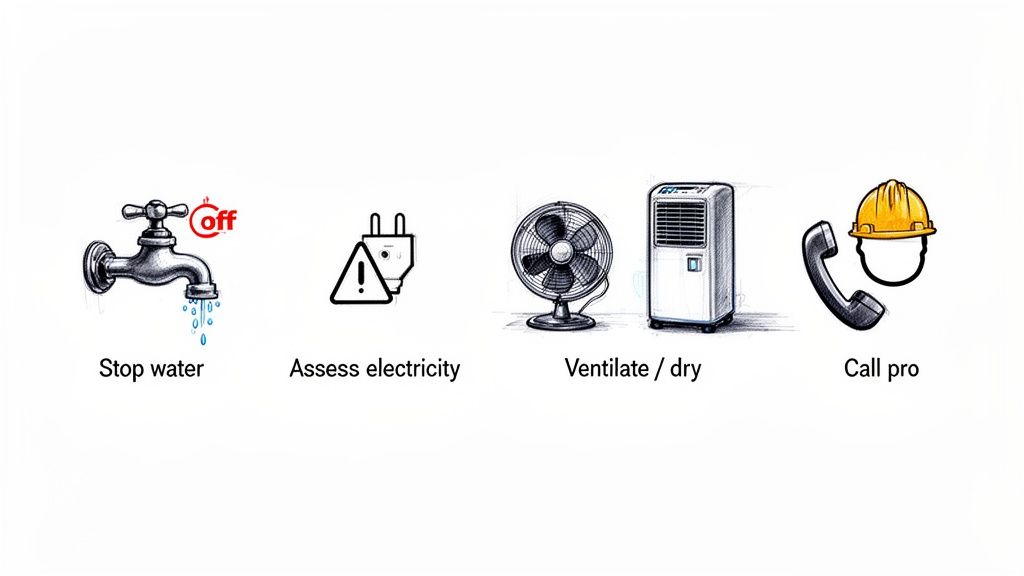
That sinking feeling you get when you discover a water leak is universal. But in those first few moments, what you do next can make all the difference between a minor repair and a major overhaul. The key is to act fast, putting safety first and stopping the problem from spiraling.
Your absolute first priority is safety. Water and electricity are a lethal combination. If you see water anywhere near electrical outlets, appliances, or your breaker box, shut off the power to that area immediately. Don't even think about wading into standing water until you're 100% sure the electricity is off.
Initial Mitigation Steps You Can Take
Once you've made the area safe, your mission is simple: stop the water. This could be as easy as turning off the valve under a leaky sink, or you might need to shut off the main water supply to your entire house. Every second the water runs, the damage spreads.
With the leak contained, it’s time to get some air moving. Throw open any windows and doors to create cross-ventilation. If it’s safe to use power, set up fans to start circulating air across the damp surfaces. Here in the Phoenix area, our high ambient humidity can work against us, so reducing moisture in the air is critical. Getting help with a professional dehumidifier installation in Phoenix can pull a surprising amount of moisture out of the air, helping the drywall dry from the inside out.
These are great first steps, but they're just the beginning.
The most common mistake homeowners make is assuming that surface-level drying is enough. The real danger is the moisture you can't see, trapped deep within the gypsum core and wall cavities, which is where mold thrives.
Knowing what you can tackle yourself versus when it's time to call in the pros is probably the most important decision you'll make in this whole process.
Knowing the Limits of DIY
Your quick actions are crucial for damage control, but there’s a hard limit to what fans and open windows can achieve. They might make the surface of the drywall feel dry, but they can't do a thing about the water soaked into the insulation or trapped behind your baseboards. This is where professional expertise isn't just helpful—it's essential.
Certified restoration pros come equipped with tools that see what the naked eye can’t.
- Moisture Meters: These devices give a precise reading of the moisture content inside the drywall. This is the only way to know for sure when the material is truly dry and no longer at risk for mold.
- Thermal Imaging Cameras: These cameras spot temperature variations behind walls and under floors, instantly revealing hidden pockets of moisture you would have otherwise missed.
Trying to patch, paint, or otherwise repair sheetrock that’s still damp on the inside is a recipe for disaster. You’re essentially sealing in the moisture, which all but guarantees you'll be dealing with a serious mold problem and rotting studs later on. If you want to learn more, check out our guide on how to prevent mold after a water event.
Bringing in an expert ensures the entire structure is professionally and verifiably dried, protecting not just your home's value, but your family's health too.
Why Professional Restoration Is Non-Negotiable
Taking quick action after a leak is fantastic, but the single biggest mistake we see homeowners make is thinking that a wall that feels dry actually is dry. The real danger isn't the surface you can touch; it's the hidden moisture trapped deep inside the wall cavity.
Surface drying just doesn't cut it. Especially here in Phoenix, that intense heat can turn a damp, dark space behind your drywall into the perfect breeding ground for mold. This is precisely where calling in a professional isn't just a good idea—it's essential. Trying to handle saturated drywall yourself often just masks the problem, leading to much bigger headaches like structural rot and unhealthy air quality down the road.
The Professional Advantage
Certified restoration technicians don’t guess; they use data. They come armed with specialized tools that see what the naked eye can't, helping ensure your home is thoroughly and safely dried out.
- Advanced Moisture Meters: These aren't your basic hardware store gadgets. They allow technicians to measure the moisture content deep within the gypsum core, providing concrete data to confirm when the sheetrock is truly dry and no longer at risk for mold.
- Thermal Imaging Cameras: This technology is a game-changer. It can show temperature differences behind a wall, revealing hidden pockets of water that would otherwise go completely unnoticed.
Peace of mind comes from knowing the job was done right. Professional restoration helps ensure every last bit of moisture is removed, protecting your home's structural integrity and your family’s health from the long-term dangers of hidden mold.
When you work with a certified company, you're getting experts who have the right technology for the job. To get a better sense of the equipment they may use, you can learn about the different types of specialized fans for water damage restoration. If you even suspect your drywall is wet, don't leave it to chance.
Got Questions About Wet Sheetrock? We’ve Got Answers.
Even after the initial panic of a water leak subsides, you're often left with a lot of questions. Knowing what to do next with damp drywall can make all the difference in preventing bigger, more expensive problems down the road. Here are some straightforward answers to the questions we hear most from homeowners around Phoenix.
How Long Does It Really Take for Sheetrock to Dry?
This is a tricky one. The surface of the drywall might feel dry to the touch in just a few days, but that's incredibly misleading. Water seeps deep into the gypsum core and the wood studs behind it, and that hidden moisture can stick around for weeks. That's the perfect breeding ground for mold.
This is why professionals don't guess. Technicians can use professional moisture meters to get a precise reading. They are typically looking for the moisture content to drop below a safe threshold, which is often around 15%. Slapping a coat of paint on the wall before it hits that number is one of the worst mistakes you can make. It essentially seals the moisture in, greatly increasing the risk that mold and rot will follow.
Can I Just Spray Some Bleach on the Mold?
Please don't. Using bleach on moldy drywall is a classic DIY mistake that is seen all the time, and it just doesn't work. The reason is simple: drywall is porous, like a sponge. Mold isn't just a surface-level stain; it grows deep roots (called hyphae) right into the paper and gypsum core.
Bleach is mostly water, and it can't soak in deep enough to kill those roots. Worse yet, the water in the bleach can actually feed the mold that's left behind. You might make the surface look clean for a little while, but the mold will almost always come roaring back. The only way to properly deal with mold on drywall is to cut out and remove the affected sections completely.
Will My Homeowners Insurance Cover This?
This can be a complex question. A standard homeowners policy will often cover water damage—and the cost of replacing the ruined sheetrock—if the cause was "sudden and accidental." Think of a pipe bursting behind the wall or a washing machine hose suddenly failing.
Where you may run into trouble is with gradual damage. Insurance policies typically do not cover problems that stem from a lack of maintenance, like that slow drip under the kitchen sink you've been ignoring for months. Damage from natural floods also usually requires a separate flood insurance policy. The key is to document everything with pictures and call your insurance agent right away to start the process and find out exactly what your policy may cover.
When you’re dealing with water-damaged drywall, a quick, expert response is your best defense. If you need a professional to assess the damage, you can call Restore Heroes for an onsite inspection. You can learn more about our water damage restoration services and how we can help.