
Finding mold in your Phoenix home is a gut-wrenching moment. Your first thought might be to search for "mold remediation services near me," and that’s exactly the right move. Here in Arizona, it’s a critical service. Our unique climate, with its monsoon moisture and constantly-running AC units, can accidentally create a perfect storm for mold to take hold.
When we talk about professional remediation, we're not just talking about a deep clean. It’s a highly specific process designed to safely contain the problem, remove the mold, and help stop it from coming back.
Why You Need Professional Mold Remediation in Phoenix
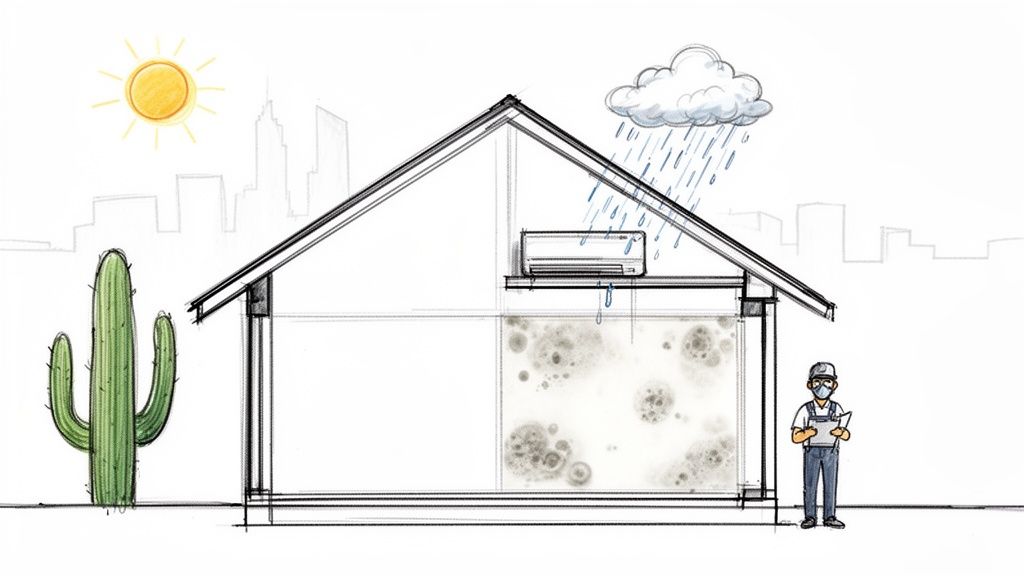
That dark spot on your wall isn't just an ugly stain. It’s a living organism, and it can eat away at your home's structure while putting your family's health at risk.
Think of it like a weed in your garden. You can’t just chop the top off and call it a day, right? The roots are still there. Trying to fix a mold problem yourself with a bottle of bleach is the same thing. You might get rid of the surface stain, but the mold's "roots"—its hyphae—are still buried deep inside materials like drywall and wood, just waiting for the chance to grow back.
Professional mold remediation is a comprehensive way to pull that weed out by the roots. Certified experts know how to handle contaminated materials without accidentally spreading millions of microscopic spores all over your house. That’s a crucial difference.
The Unique Challenge in Arizona Homes
Living in Phoenix means we're fighting a different kind of battle against mold. Our scorching summers keep the AC running nonstop, which can lead to condensation and slow leaks inside our walls. Then, BAM—the monsoon season hits, bringing sudden downpours that can find their way into your home's structure.
This one-two punch creates an ideal environment for mold to flourish. In fact, all it needs is 24 to 48 hours of moisture to start growing. Since the problem often begins out of sight in attics or behind walls, it can spread for weeks before you even know it's there.
The need for professional help isn't just a local issue. The global demand for mold remediation was valued at around USD 1,340.3 million in 2025 and is expected to climb past USD 1,751.9 million by 2032. This growth is directly tied to an increase in water damage incidents around the world.
When you bring in a professional, you’re hiring someone to solve the entire problem. They don't just scrub what you can see; their first job is to find and fix the water source that’s feeding the mold.
You can learn more about the complete process of addressing mold damage in our comprehensive guide. Taking this thorough approach is an effective way to protect your home and your family's health.
Learning to Spot the Hidden Signs of Mold
Mold isn't always obvious. You won't always see a big, ugly black patch on the wall. Think of it more like an iceberg—what you see on the surface is often just a hint of a much bigger problem lurking out of sight. To protect your home, you have to become a bit of a detective and learn to trust your senses, especially your nose, to find what’s hiding behind drywall, under floors, or up in the attic.
Often, the very first clue is a persistent, musty odor that you just can't seem to pin down. If a room or even your whole house has a damp, earthy smell, that’s a huge red flag. That smell comes from gasses that mold releases as it grows, and it’s a clear sign that moisture and mold are hiding somewhere nearby.
Beyond the Senses: Physical Symptoms and Visual Clues
Sometimes, your own body is the best mold detector. Are you constantly sneezing, dealing with itchy eyes, a runny nose, or even skin rashes that seem to get worse when you're at home? If those allergy-like symptoms seem to clear up when you go out, your body could be reacting to mold spores in the air.
And these health concerns are no joke. In the U.S., it's estimated that about 1 in 5 homes has some level of mold, and that number can jump here in Phoenix, especially after our monsoon storms. For anyone with asthma or other respiratory conditions, it’s even more serious—mold exposure is known to aggravate about half of all asthma cases. For a closer look at these statistics, this 2025 mold remediation report offers some detailed insights.
Besides smells and health issues, your house itself will often show you where moisture is getting in, and moisture is what mold needs to thrive. Keep an eye out for these subtle clues that are pretty common in Phoenix homes.
- Discoloration and Stains: Be on the lookout for yellowish or brownish water stains on ceilings and walls. Pay close attention to areas around AC vents and plumbing.
- Peeling or Bubbling Surfaces: If you see paint or wallpaper that’s cracking, bubbling up, or peeling away, it’s a classic sign that moisture is trapped inside the wall.
- Warped Materials: Look at your baseboards and any wood flooring. If they seem to be warping or buckling, it could be from a slow, steady leak that’s been soaking the material for a while.
Remember, mold can't grow without moisture. So even if a water stain feels dry now, it's like a historical marker showing exactly where mold had the perfect chance to take hold.
If you’re noticing any of these red flags, it’s definitely time to look a little closer. For a more detailed guide on what to search for, read our post on the signs of mold in walls. Catching these clues early is the key to protecting both your home and your health.
What Happens During Professional Mold Remediation
You might hear the term "remediation" and think it sounds complicated, but it's really just a methodical, step-by-step process to get mold out of your property. Think of it like a surgical procedure for your house—every step is precise, designed to stop the mold from spreading and to help prevent it from coming back.
Knowing what to expect can take the mystery out of searching for "mold remediation services near me." Often, the first clue you have a problem comes from your own senses.
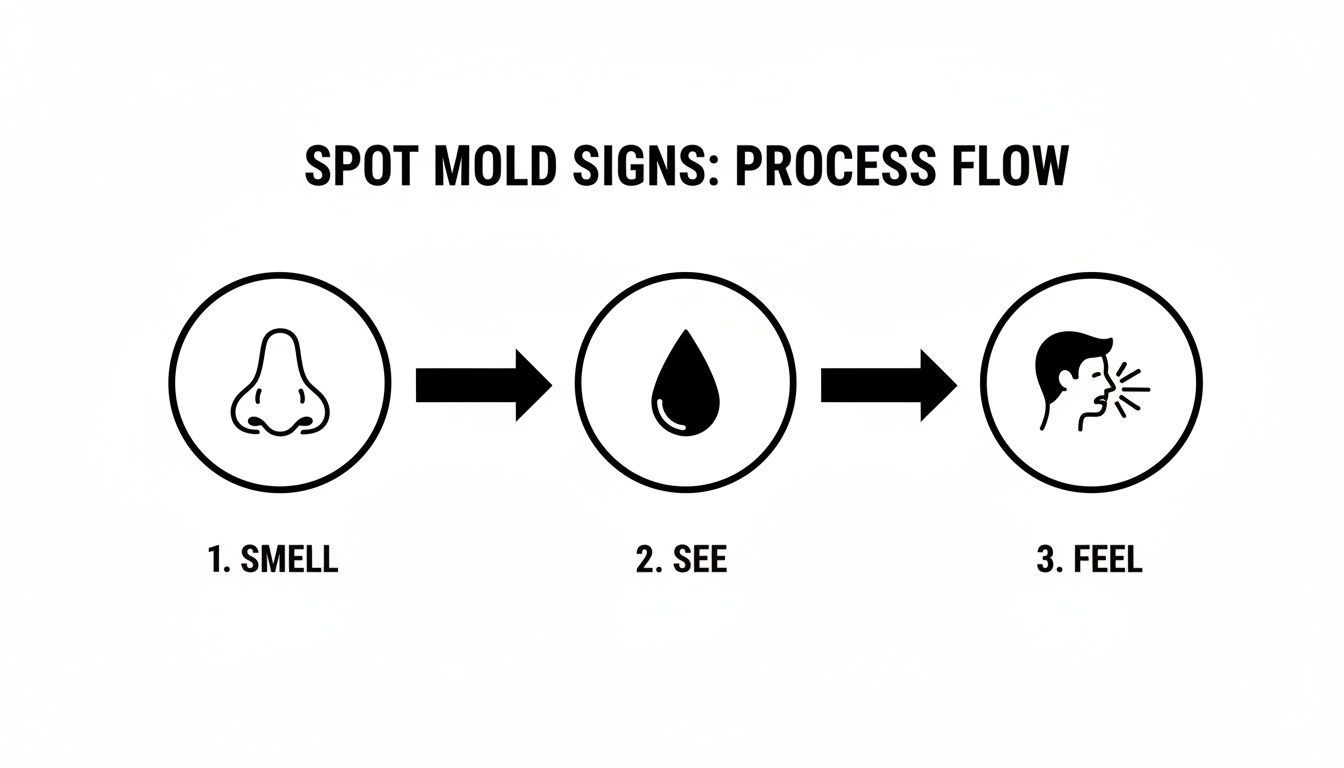
A musty smell, visible water stains, or even feeling unwell can be the first red flags. A true professional process goes way beyond just cleaning what you can see; it tackles the root cause of the problem.
The Initial Assessment and Containment
First things first, a professional team will perform a thorough assessment and inspection. We don't just glance at the fuzzy stuff on the wall. We become detectives, hunting down the hidden source of moisture that’s feeding the mold. This is a critical step—if you don't fix the leak, the mold is likely to return.
Once we’ve pinpointed the problem, our next move is containment. Think about what happens if you spill glitter. If you’re not incredibly careful, it ends up everywhere. Mold spores are microscopic and behave the same way. We use heavy plastic sheeting and negative air pressure machines to create a sealed-off work zone, preventing those tiny spores from escaping into the rest of your home while we work.
A professional remediation process is methodical. It’s not just about cleaning; it's about isolating the problem, removing the contamination at its source, and purifying the environment to prevent future growth.
Air Filtration and Material Removal
With the area safely contained, we start cleaning the air itself. We bring in powerful air filtration devices fitted with HEPA filters. These machines act like industrial-strength air purifiers, running constantly to capture microscopic mold spores, dust, and any other airborne particles.
Next is the tough part: removing contaminated materials. Things like drywall, carpet, and insulation are porous. Once mold takes root deep inside, they often can't be truly cleaned. Trying to save them can be a recipe for failure. Our technicians will carefully cut out and bag these materials for proper disposal, following strict protocols to avoid cross-contamination.
Cleaning and Restoration
After the unsalvageable materials are gone, we get to work on what's left. Any non-porous surfaces like wood studs, concrete, or metal are meticulously cleaned with special antimicrobial treatments. For stubborn, deep-set growth, we might use techniques like sanding or media blasting to remove as much of the remaining mold as possible.
The final phase is restoration. This is where we put your home back together. It could involve hanging new drywall, laying new flooring, or repainting. Our goal is to return the area to its pre-mold condition, making it look like the damage never even happened.
You can get a closer look at all the details by learning more about our process and how we aim for a safe and complete recovery for your home.
Understanding Remediation Costs and Insurance
Let’s be honest, the first question on every homeowner's mind when they find mold is, "How much is this going to cost me?" There's no single price tag for mold removal, because every situation is a little different. It's a lot like fixing a car—the final bill depends entirely on what’s wrong under the hood.
The biggest factors are the size of the problem and the materials involved. A small spot of mold behind a bathroom sink is a much simpler fix than a full-blown infestation that has taken over your attic insulation. Getting mold out of porous stuff like drywall or carpet, which often needs to be completely torn out, is generally more expensive than just cleaning it off hard surfaces like tile or concrete.
Navigating Homeowner's Insurance
The next big question is, will my insurance pay for this? This is where it gets a bit complicated. When it comes to mold, many insurance policies hinge on one key detail: what caused the water problem in the first place.
Typically, insurance companies draw a line between sudden, accidental damage and problems that fester over time due to a lack of maintenance.
- Potentially Covered: Mold that grows after a pipe suddenly bursts and you get it fixed right away.
- Often Not Covered: Mold that develops over months because of a slow, dripping leak under the kitchen sink that wasn't repaired.
Think of it this way: insurers may see mold as a symptom, not the root cause. They're more likely to cover the mold if it’s a direct result of a primary event they already cover, like a storm or a busted washing machine hose. They may not cover mold that’s a result of neglect.
Knowing how to handle the claims process is crucial. Learning about navigating home insurance claims can save you a lot of headaches and money. The best first step is to call your insurance agent the moment you find a problem. Ask them point-blank what your policy says about mold, including any specific limits or exclusions.
Getting clear answers upfront will help you plan and avoid potential financial surprises. To get a better handle on how these jobs are priced, you can see how we break down the numbers for our water damage repair cost. Having that knowledge really helps you take control of the financial side of things.
How to Choose the Right Mold Remediation Company

Searching for "mold remediation services near me" can throw a lot of names at you, and picking the right one feels like a high-stakes decision. It is. You’re letting people into your home to handle a serious health hazard, so you need to know you can trust them completely.
Think of it less like hiring a handyman and more like choosing a surgeon. You want a specialist with the right training, the best tools, and a long list of successful operations.
The first thing on your checklist should be their credentials. Any reputable company will be fully licensed, bonded, and insured. This isn't just paperwork; it’s your protection against liability and a baseline for professional standards. But the real game-changer is IICRC certification.
The IICRC (Institute of Inspection, Cleaning and Restoration Certification) is the gold standard in our industry. An IICRC-certified technician has proven they know the science behind safe and effective mold removal. It’s the difference between a professional and just some person with a bottle of bleach.
Verify Their Credentials and Experience
Beyond the certificate on the wall, you need a team that knows Phoenix. Our climate brings its own unique set of problems, from sneaky water intrusion during monsoon season to condensation build-up from our hard-working AC units. A local pro has seen it all and knows exactly where to hunt for those hidden mold colonies.
Don't be shy about asking for proof of their qualifications. Check their online reviews from other homeowners in your area. A consistent track record of happy customers is one of the best signs you’ve found a company that will do the job right.
Choosing a contractor is about more than just a quote. You're hiring a partner to restore your home's health. Their ability to explain their process, answer your questions clearly, and provide verifiable credentials is a direct reflection of the quality of their work.
Essential Questions to Ask Any Contractor
Once you've shortlisted a few certified companies, it's time for a little Q&A. A true professional will be happy to answer your questions and walk you through their process. Having a list of questions ready helps you compare apples to apples. Knowing the right Questions to Ask Before Hiring a Mold Removal Company can make all the difference.
Here are a few must-ask questions to get you started:
- Can you explain your containment process? They should immediately talk about using plastic sheeting and negative air pressure machines to keep mold spores from escaping the work area. If they don't mention this, it's a huge red flag.
- Do you perform post-remediation testing? The best companies will recommend third-party air quality testing after they're done. This independent verification can prove the mold is gone and the air is clean.
- What is your experience with situations like mine? Ask for examples of jobs they've handled that are similar to yours, especially if it involves a common local issue like an AC leak.
- Can you provide a detailed, itemized quote? This is crucial. A transparent quote breaks down all the costs so you know exactly what you’re paying for, with no surprise fees later.
Asking tough questions upfront helps you find a qualified and honest partner. The principles for vetting a good mold pro are very similar to finding any great restoration expert, something we cover in our guide on choosing a water damage restoration contractor.
What to Do Next for a Mold-Free Home
Discovering mold can be unsettling, but now you know what to look for and how to approach the problem. The absolute most important thing is to act fast. That musty smell or tiny water spot you've been ignoring? That's an open invitation for mold to spread, turning a small headache into a full-blown crisis.
Think of it this way: a successful mold cleanup isn't just about scrubbing away the visible spots. It's about following a proven battle plan. You have to find and fix the water source, quarantine the contaminated zone so spores don't escape, and then physically remove every bit of the affected material. This is far beyond what household cleaners can do; it demands a professional strategy to help make sure the mold does not come back.
Your Game Plan for Taking Control
Knowing what to do next is half the battle. Your first move is to figure out if you actually have a problem and, if so, how big it is. Here’s a quick rundown of your immediate action items:
- Play Detective: Do a walkthrough. Sniff for musty odors and look for any water stains or discolored patches, paying close attention to areas around pipes, windows, and your AC unit.
- Document the Evidence: Snap clear photos of anything that looks suspicious. This will be incredibly helpful if you end up filing an insurance claim.
- Don't Touch It: Whatever you do, resist the urge to start scrubbing with bleach. Disturbing a mold colony without proper containment gear is like kicking a hornets' nest—it can send millions of spores airborne.
Your most powerful move right now is to call in an expert. A professional inspection gives you an unbiased, fact-based assessment of what's really going on, creating a clear path forward.
If you even think you might have mold, don't put it off. The best way to protect your home's value and your family's well-being is to get a professional inspection on the calendar. It’s the single most important step you can take toward a safe, healthy, and mold-free home.
Your Mold Questions, Answered
When you find mold, your mind starts racing with questions. Getting straight answers is the first step to getting your home back to normal and regaining your peace of mind.
Is "Black Mold" the Only Dangerous Kind?
That term "toxic black mold" gets thrown around a lot, but the truth is a bit more complicated. While certain black molds, like Stachybotrys chartarum, are infamous, the reality is that any type of mold—black, green, white, or orange—can cause allergic reactions and respiratory problems.
The color isn't the real issue. Any visible growth means you have a problem that needs to be taken seriously. A true professional will treat every type of mold with the same careful approach.
How Long Does This Whole Process Take?
There's no one-size-fits-all answer here; it really depends on the size and scope of the infestation.
A small, isolated patch on a bathroom wall might be taken care of in just 1 to 3 days. But if mold has worked its way into your attic, basement, or behind drywall, you could be looking at a week or more. The only way to know for sure is to have an expert come out and see it firsthand.
An accurate timeline can only be determined after a thorough on-site assessment. The amount of growth, what materials are affected, and where the moisture is coming from all dictate how long the job will take.
Can't I Just Spray It With Bleach or Paint Over It?
This is probably the biggest—and most dangerous—mistake we see homeowners make. Painting over mold is just hiding the problem. The fungus is still there, happily eating away at your drywall or wood underneath the fresh coat of paint.
And bleach? It's not the silver bullet many people think it is. It might kill some surface mold, but it can't penetrate porous materials like wood or drywall to get to the roots. In fact, scrubbing can actually release millions of spores into the air, making your air quality worse.
Professional remediation is the proper way to tackle the problem at its source and help make sure the mold is gone.
If you're seeing signs of mold and need a professional eye, the certified team at Restore Heroes is here to help. Find out how we can restore the health and safety of your Phoenix-area home by visiting us at https://www.restoreheroesaz.com.