
So, you've found a water stain. The first question that pops into your head is always the same: "Is this happening right now?"
It’s a great question, and figuring out the answer is the first step in tackling the problem. The quick-and-dirty method is to check how it looks and feels. New damage is usually damp with dark, well-defined edges. Old damage, on the other hand, is typically dry to the touch and has tell-tale faded rings. This initial gut check is what helps you decide how fast you need to act.
Your First Look: What to Spot Immediately
That sinking feeling when you spot a mystery stain on a ceiling or wall is all too familiar. Is it from that big storm last week, or a slow, sneaky pipe leak that’s been causing trouble for months?
Figuring this out is crucial. Knowing whether the water damage is new or old can be the difference between a small cleanup and a massive, expensive repair project.
An active, fresh leak is going to look and feel very different from an old, dried-out stain. The most reliable first move is a simple touch test. Go ahead and carefully touch the area. If it feels damp, cool, or even a little mushy, you're likely dealing with an active leak or very recent water exposure. That moisture is still trapped in the material.
If the spot is bone dry and hard, the damage is probably old. But don't stop there. The stain itself can tell you a lot more.
Quick Visual Clues
Think of a water stain as a timeline. The color, shape, and edges all provide clues about its history.
Sharp vs. Faded Edges: New water damage creates a stain with a distinct, sharp border. The water hasn't had much time to spread out and evaporate, so the outline is really clear. Old damage that has gone through cycles of getting wet and drying out will have blurry edges or multiple rings, almost like a coffee stain on paper. Each ring marks a different time it got wet.
Color Variation: A fresh water stain on drywall might just look like a dark, wet patch with not much color change. But an old stain has had time for minerals and tannins from the building materials to get pulled to the surface, leaving behind a classic yellow or brownish discoloration.
This diagram gives a great side-by-side comparison of what to look for.
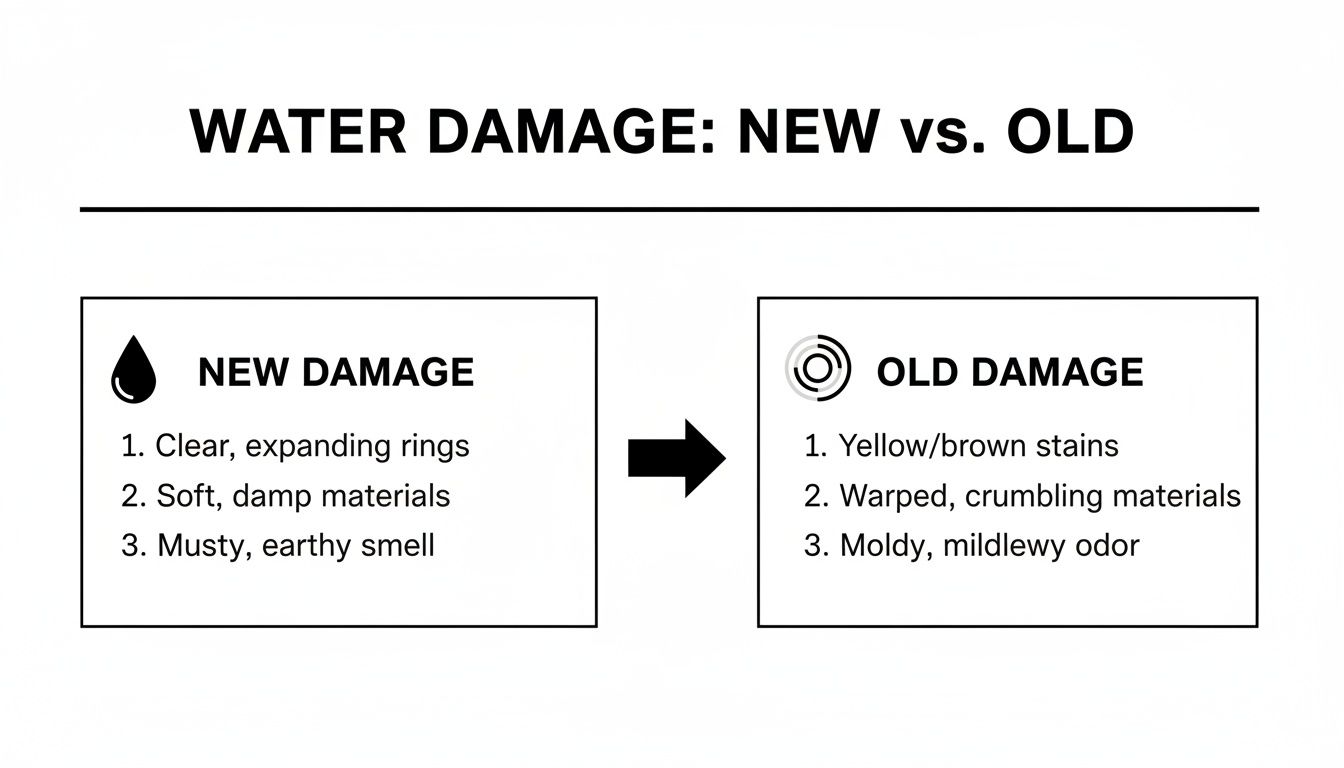
As you can see, new damage is all about active moisture and sharp outlines. Old damage is defined by those dry, faded rings and stains.
New vs Old Water Damage At a Glance
To make it even simpler, here’s a quick comparison table of the most common signs that can help you identify the age of water damage in your home. Use it as a handy cheat sheet when you're assessing a problem area.
| Indicator | Sign of New Water Damage (Less than 72 hours) | Sign of Old Water Damage (Weeks to Months) |
|---|---|---|
| Feel | Damp, wet, or soft to the touch | Dry and firm to the touch |
| Stain Color | Often just a darker shade of the material; minimal discoloration | Distinct yellow or brown staining |
| Stain Edges | Sharp, well-defined borders | Blurry, faded edges with multiple rings |
| Material Integrity | May be swollen or slightly sagging | Can be crumbly, brittle, or cracked |
| Mold/Odor | Unlikely to have visible mold; may have a slight "wet" smell | Visible mold spots (black, green) and a musty, earthy odor |
| Paint/Wallpaper | May show bubbling, blistering, or peeling | Peeling, cracking, or flaking is common |
Remember, this table is a guide. Sometimes you might see a mix of signs, especially if a new leak has occurred on top of an old, pre-existing water stain.
The most important thing I can tell you is this: don't wait. Even a tiny leak can spiral into a huge problem if you ignore it. A fast, accurate assessment is your best defense.
Understanding these first signs is a great start. To really get ahead of the problem, it’s smart to learn about professional water damage mitigation and what it involves. Knowing the right steps to take can save you a lot of time, money, and stress down the road.
Reading The Signs On Walls And Ceilings
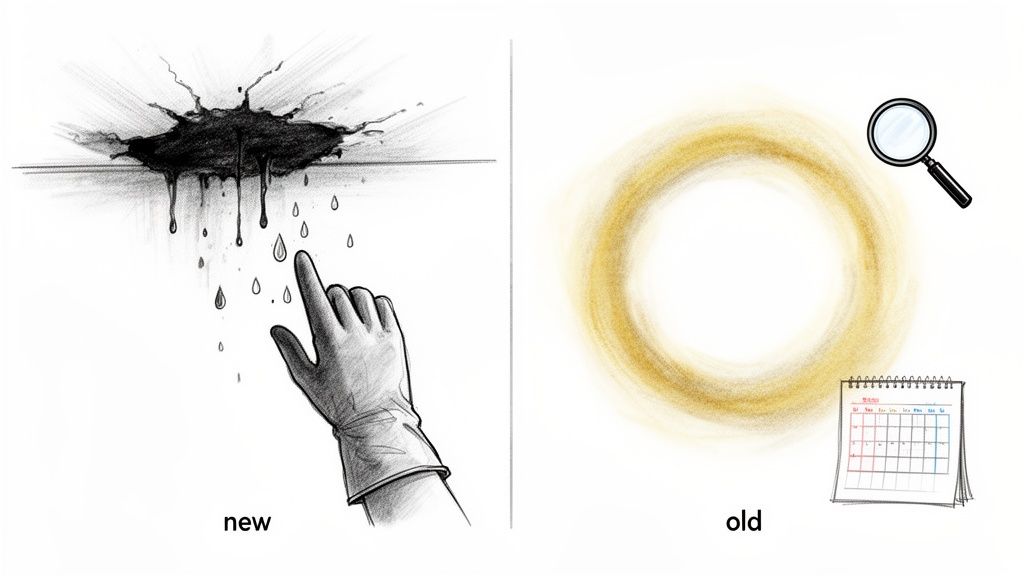
When you find a water stain on a wall or ceiling, you’re basically looking at a crime scene. The stain itself leaves a trail of clues, and if you know how to read them, you can piece together what happened and when. Knowing how to tell if water damage is new or old is the first step in figuring out how serious the problem is.
Think about a sudden event, like a dishwasher overflowing last night. The evidence will be fresh and obvious. You'll see a dark, wet-looking spot on the drywall. The edges will be sharp and distinct because the water hasn't had time to spread out and dry. Often, the color is simply a darker version of your paint, not the ugly brown or yellow you might expect.
Now, contrast that with a problem that's been brewing for a while—a tiny, sneaky leak in a pipe behind the wall. This creates a completely different kind of stain. As water seeps in, dries out, and then seeps in again, it leaves behind mineral deposits and pulls tannins from the wood and drywall. This cycle is what creates that classic sign of old water damage: faint, yellowish-brown rings with soft, blurry edges.
Interpreting Stain Characteristics
The color and shape of a water stain are your best storytellers. It's just like the ring a wet coffee cup leaves on a coaster—the more rings you see stacked on top of each other, the more times it’s gotten wet and dried. This is a clear indicator that you're dealing with a recurring issue, not a one-time accident.
A fresh stain is usually dark and well-defined. On drywall, you'll see deep browns or even dark yellows, since the moisture is still saturated in the material. Professionals often find a moisture content of 20-30% or more in the first 24-72 hours.
Old damage looks tired and faded. You’ll see those yellowish-brown halos with fuzzy, irregular edges because the water has wicked up the wall and evaporated over and over again. You might even spot "tide marks" that are 3-6 inches tall, which show how high the water repeatedly rose before receding. You can find more restoration industry findings that highlight these patterns.
Paint Blistering vs. Peeling
The paint itself tells its own story. How it's reacting—or has reacted—to moisture is a huge clue about how long the water has been there.
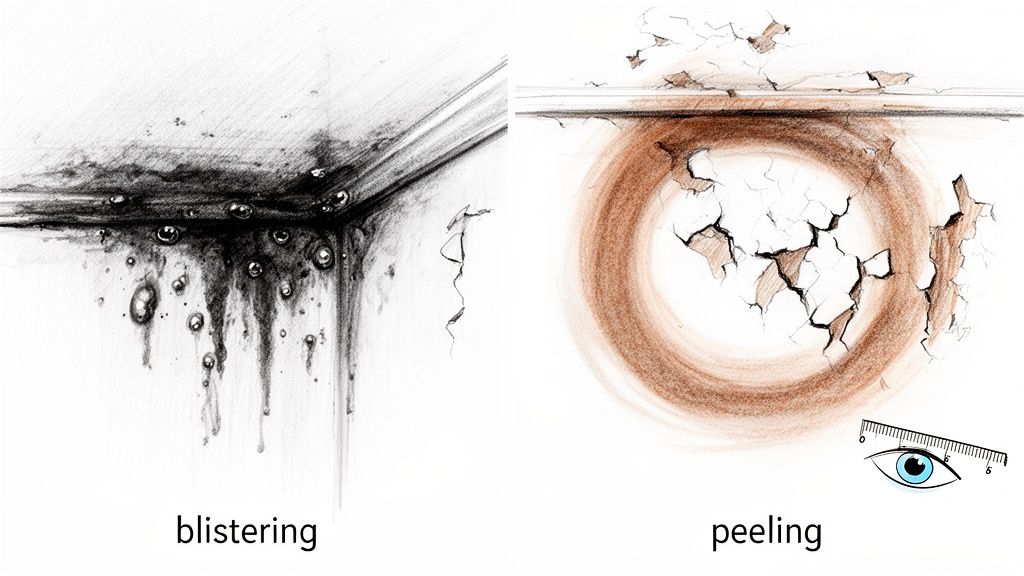
Active Blistering: If the paint is bubbling up and feels soft to the touch, you're looking at a new problem. Those blisters are often filled with water that's literally pushing the paint off the wall. This points to a leak that is happening right now or just happened.
Peeling and Flaking: On the other hand, if the paint is already cracked, brittle, and peeling away, you’re dealing with an old issue. This happens after the wall has been wet, dried out completely (which makes the paint lose its grip), and possibly gotten wet again. The paint is no longer flexible and just crumbles or flakes off.
Spotting these differences isn't just about curiosity. When you call a professional, being able to say, "The paint is blistering and the stain is dark with sharp edges," gives them a massive head start on diagnosing the problem before they even walk through your door.
This initial detective work helps you and your restoration team know what you’re up against. For an even deeper dive, our guide on the specific signs of water damage on a ceiling is a great resource for what to look for overhead.
Go Beyond Sight: Using Touch and Smell to Investigate
While a water stain is the first thing you’ll notice, what you can’t see often tells you the most. To get the real story, you need to rely on your other senses. Your sense of touch and smell can uncover clues that visual signs alone might hide, helping you understand just how urgent the problem is.
When you find a suspicious spot, a quick touch test is your next step. As long as it's safe, gently press on the affected drywall or wood. If it feels damp, spongy, or even cool to the touch, you’re likely dealing with an active leak. That coolness is from evaporation, a clear indicator that moisture is recent.
On the other hand, an old, dried-out stain will feel firm and dry, just like the surrounding material. But be careful—it might also feel surprisingly soft, brittle, or crumbly. This happens when water has sat long enough to start breaking down the structural integrity of the material. It's a clear sign you’re looking at a long-term issue.
Your Nose Knows: Interpreting Odors Is a Key Clue
Now, let's talk about the smell. Your nose is an incredibly powerful tool here, as different stages of water damage have very distinct odors. A brand-new leak might have a surprisingly clean, earthy scent, like damp concrete or a wet towel. It’s simply the smell of water meeting building materials.
A persistent, musty odor, however, paints a much different picture. That’s the classic calling card of mold and mildew, which can start growing after just 24-48 hours of moisture. If you smell that, it signals that the clock is ticking and microbial growth has already begun. This changes everything.
The moment you smell that musty odor, the problem has evolved. It's no longer just a water issue; it's a potential mold contamination that needs a more careful and specialized approach to fix properly.
When you start seeing stains on your ceilings, it's often the first sign of trouble from above. Knowing how to find roof leaks can help you trace the water back to its source before the damage spreads.
Common Smells and What They Really Mean
Being able to describe the smell can help you explain the situation to a professional. Here’s a quick rundown:
- Clean, Wet Smell: This usually points to a new or very recent leak. The materials are wet, but the nasty stuff hasn't had time to grow yet.
- Musty, Earthy Odor: This is a big red flag for old water damage and often means mold is present. That smell is a byproduct of mold literally eating away at the organic materials in your home.
This distinction is crucial. If you're smelling a musty odor, especially coming from a carpet, you'll need more than a fan and a bottle of cleaner. To learn how to eliminate wet carpet smell, you have to address the underlying microbial growth, which often requires professional help. By using both touch and smell, you get a far more accurate read on whether the water damage you're facing is new or old.
Look for Mold and Material Breakdown
When water sticks around for too long, it almost always brings a friend: mold. Seeing visible mold is one of the surest signs you're dealing with older water damage. At this point, it’s no longer just a water problem; it’s a potential health hazard that needs to be taken seriously.
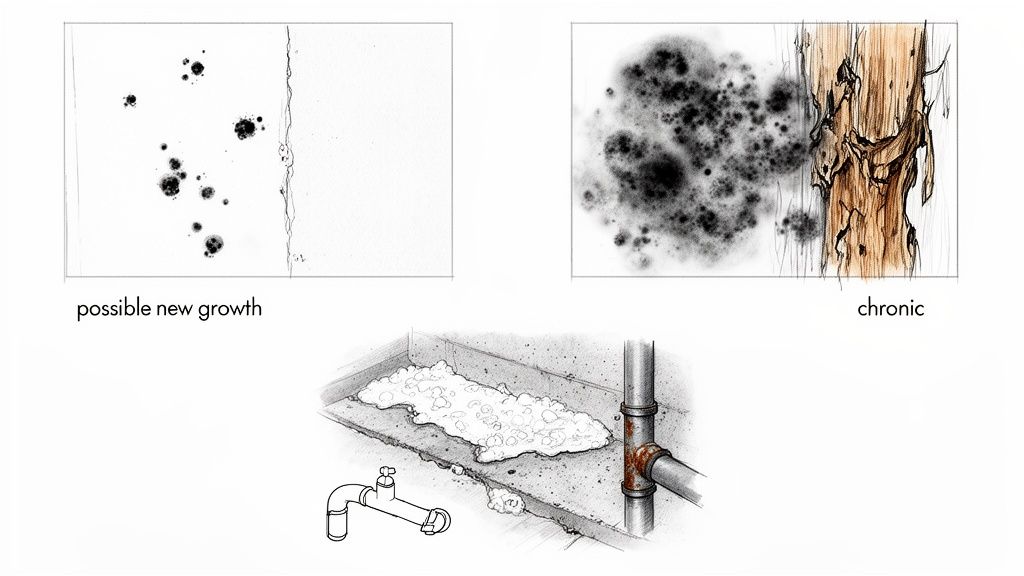
While mold can technically start to grow within 24-48 hours, what you're really looking for is the extent of that growth. A few small spots, maybe under one or two inches, could be from a fairly recent event. But if you uncover large, dark colonies of black or green mold—we're talking patches over six inches wide—that's a tell-tale sign of a chronic issue. That kind of widespread growth, often accompanied by a musty, earthy smell, takes weeks or even months to develop. The scale of the problem often escalates faster than homeowners realize, a trend highlighted in disaster restoration industry research.
It’s Not Always Mold: Other Signs of Decay
Sometimes, the evidence of long-term water damage isn't mold at all, but other forms of material decay. These clues can be just as revealing.
Efflorescence: Ever see a crusty, white powder on brick or concrete walls? That’s efflorescence. It's the salt deposits left behind after water has seeped through the masonry and evaporated. This process is slow and a dead giveaway for long-term moisture problems, not a fresh leak.
Wood Rot: Give any suspect wood a poke with a screwdriver. If it feels soft, spongy, or just crumbles away, you've got wood rot. This only happens after prolonged exposure to moisture has destroyed the structural integrity of the wood.
Corrosion: Don't forget to check the metal. Rust on screw heads, plumbing fixtures, or pipes is a clear indicator of a persistent water issue. Metal doesn’t rust in a day. It’s a sign of a problem that's been going on for a while.
Any evidence of material decay—be it mold, rot, or rust—is a red flag. It tells you this isn't a new problem. You're looking at a long-standing issue that likely has more hidden damage than what’s visible on the surface.
What the Mold Can Tell You
The presence of mold is more than just a sign; it's a story. The size, color, and location can give you valuable clues about the history of the water damage. Widespread, dark growth points to a problem that has been festering for a long time. For example, tackling black mold on hardwood floors is a completely different challenge than dealing with a small, recent spot.
Understanding what mold on drywall looks like is also crucial. It helps you distinguish between surface mildew and a more serious infestation that has penetrated deep into the wall cavity. When trying to figure out if water damage is new or old, a careful look at the mold is one of your most reliable methods for uncovering the truth.
When to Involve a Professional Restoration Company
Being able to spot the difference between new and old water damage is a fantastic skill for any homeowner. But there’s a clear line between a quick DIY assessment and a situation that’s way over your head. Knowing when to put down your flashlight and pick up the phone is just as important.
Some water issues are simply too big, too dangerous, or too hidden to tackle on your own. Calling in the experts isn't admitting defeat—it's making a smart call to protect your home from serious, long-term harm.
Your safety and the structural integrity of your home always come first. If you feel overwhelmed or even a little unsure about what you're seeing, that’s your cue to stop and call a professional.
Clear Signs You Need to Call for Help
While you might be able to monitor a small, contained ceiling stain, some situations are non-negotiable emergencies. If you run into any of these, it's time to bring in a certified restoration team immediately.
Widespread Water Damage: Is the affected area bigger than a small throw rug (roughly 10 square feet)? If water has spread to multiple rooms or saturated a large space, you’re past the point of using towels and a fan. Pros have the industrial-grade air movers and dehumidifiers needed for a job this size.
Contaminated Water: This is a major one. If the water came from a sewage backup, an overflowing toilet, or overland flooding, it’s considered Category 3 water—a serious biohazard. You absolutely need trained professionals with the right personal protective equipment (PPE) to handle this safely.
Structural Sagging or Buckling: Take a look at your ceilings, floors, and walls. Do you see any bulging, sagging, or warping? If a floor feels soft or spongy when you walk on it, that's a huge red flag. It means the water's weight has already started to compromise the building materials, and you need an expert to assess the structural safety right away.
The Problem of Hidden Moisture
Honestly, the biggest reason to call a professional is for what you can't see. Water is incredibly sneaky. It travels behind walls, soaks into insulation, and seeps under flooring, creating a perfect hidden breeding ground for problems.
A professional crew doesn't rely on guesswork. They use specialized tools like moisture meters and thermal imaging cameras to trace the water's exact path, creating a complete moisture map of a home. This process is crucial for making sure every last bit of dampness is found and dried out. It’s the only way to prevent secondary damage like the widespread mold growth that loves a warm climate.
To see what this process looks like, take a look at our guide on finding the right water damage restoration contractor. Trust me, getting a pro involved is the best way to be certain the problem is fixed for good, not just on the surface.
Your Top Water Damage Questions Answered
Dealing with water damage is stressful, and it's natural to have a lot of questions as you try to figure out your next steps. After years in the field, we’ve heard just about all of them. Here are the answers to some of the most common things Phoenix homeowners ask when trying to tell how to tell if water damage is new or old.
I Found a Small, Dry Water Stain. Can I Just Ignore It?
That’s a question we get all the time. Even if an old stain feels bone dry, our advice is always the same: don't ignore it. It’s a clear sign that a leak or failure happened once, and it could definitely happen again.
The real problem is what might be lurking behind the drywall. The moisture that made that stain had to go somewhere, and it often soaks into insulation, wood studs, and subflooring. This creates a hidden risk for structural rot or mold. It’s always best to get it checked out to make sure a small, forgotten stain hasn’t turned into a much bigger issue.
How Fast Does Water Damage Get Worse in the Arizona Heat?
The intense Phoenix heat can be tricky. You’d think it would dry everything out in a flash, but it actually creates the perfect storm for mold growth inside your walls.
That trapped moisture, combined with the warmth, creates a humid, dark space where mold thrives. Professionals have seen mold start to colonize in as little as 24-48 hours here. This is why acting fast is so crucial in our climate; a minor leak can quickly become a serious contamination problem.
We can't stress this enough: just because a surface feels dry to the touch doesn't mean you're in the clear. The heat we deal with can turn hidden moisture into a mold factory. Don't let that dry desert air fool you.
Does Homeowners Insurance Cover Old Water Damage?
Typically, the answer is no. Homeowners insurance is generally there for "sudden and accidental" events—like a pipe that bursts overnight or a supply line that suddenly fails.
Damage that happens slowly over time, like from a tiny drip under a sink that you don't notice for months, is usually considered a maintenance issue and often isn't covered. This is exactly why knowing whether damage is new or old is so critical. If you have a sudden event, documenting it immediately with photos and notes may improve your chances of a successful insurance claim.
What’s the Difference Between Water Mitigation and Water Restoration?
People often use these terms interchangeably, but in the industry, they mean two very different things. Think of it as the emergency response versus the rebuilding process.
Water Mitigation: This is the first-responder phase. The goal is to stop the damage from getting worse. It involves finding and stopping the water source, extracting any standing water, and setting up heavy-duty drying equipment. It's all about stabilizing the situation.
Water Restoration: This is the repair and rebuild phase that comes after everything is dry. This is where we focus on fixing or replacing damaged materials—like drywall, flooring, cabinets, and paint—to get your home back to the way it was before the incident.
A full-service company can handle both, taking you from the initial emergency call all the way to the final walk-through.
If you've found water damage—new or old—and feel like it's more than you can handle, please don't wait. The team at Restore Heroes is on call 24/7 to provide a free onsite inspection to help you figure out what to do next. You can learn more about our certified restoration services at https://www.restoreheroesaz.com.