
Finding a patch of mold in your home is unnerving. Your first instinct might be to grab a spray bottle and start scrubbing, but hold on. True residential mold abatement is about much more than just wiping away what you can see.
It's a comprehensive process designed to safely address mold colonies by tackling the root cause: moisture. Simply put, it’s about making sure that mold doesn't come back.
So, What Exactly Is Residential Mold Abatement?
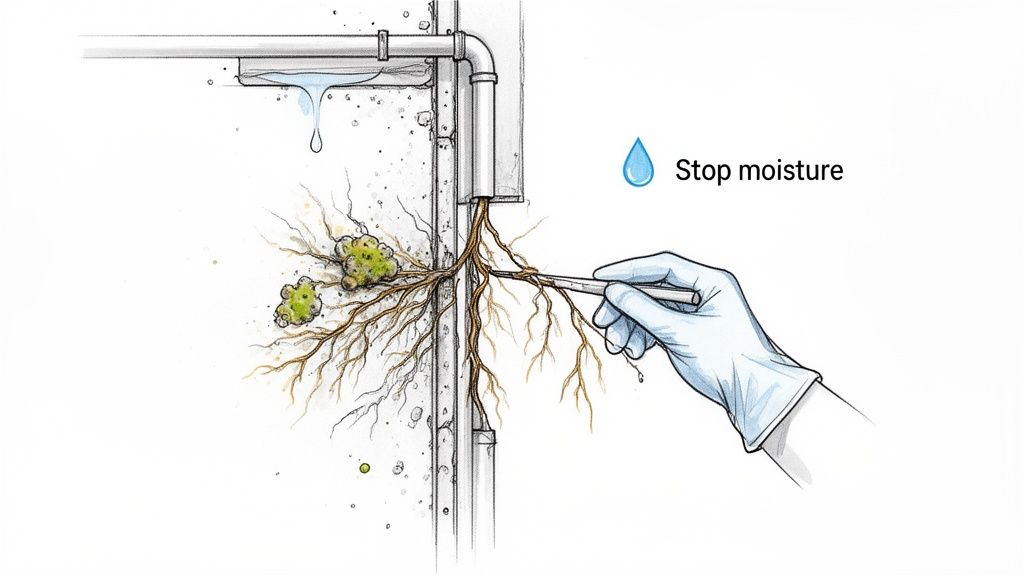
Think of mold as a weed in your garden. You can’t just snip off the flower and call the job done; if the roots are still in the soil, it’s only a matter of time before it pops up again. Spraying mold with a household cleaner is just like that—it might look clean for a day or two, but you haven't touched the microscopic roots growing deep into your drywall or the moisture that’s feeding them.
Professional residential mold abatement is the expert gardener you call in. The goal is not just to remove the weed, but to dig out the entire root system and then figure out how to stop it from getting watered. This approach is what separates a quick fix from a long-term solution.
To really understand the difference, it helps to see the two approaches side-by-side.
At a Glance Mold Abatement vs DIY Cleaning
| Aspect | DIY Cleaning | Professional Mold Abatement |
|---|---|---|
| Goal | Remove visible surface mold. | Eliminate mold colonies, prevent regrowth. |
| Scope | Surface-level cleaning, often with bleach or household products. | Comprehensive containment, removal, and decontamination. |
| Moisture | Does not address the underlying water source. | Identifies and helps correct the source of moisture. |
| Safety | High risk of spreading spores and chemical exposure. | Uses containment, HEPA filtration, and proper PPE. |
| Effectiveness | Temporary cosmetic fix; mold often returns. | A long-term solution that restores a healthy environment. |
As you can see, the work in a professional setting is in a completely different league from a weekend cleaning project. It's a systematic process for a complex problem.
It’s More Than A Surface Problem
Mold is always a symptom of a bigger issue, and that issue is almost always water. Even here in dry Phoenix, moisture finds a way. A tiny, slow leak behind a cabinet, condensation from a struggling air conditioner, or water seeping in after a monsoon storm can all create the perfect breeding ground.
The real goal of mold abatement isn't just to get rid of the fuzzy stuff you see. It's to find and fix the water problem so the mold never has a chance to come back.
This is why a professional assessment is critical. A certified technician doesn’t just look for mold; they play detective, hunting for the hidden moisture that’s fueling its growth. This is a core part of what a restoration company does to help ensure your home is truly safe.
Why This Matters for Your Health and Home
Putting a band-aid on a mold problem can have serious consequences. This issue is more common than you’d think. The global mold remediation market hit USD 1,234.6 million in 2023, and homeowners were the biggest clients, making up 58.7% of that market.
Here in Phoenix, the stakes are high. A simple AC leak can spark aggressive mold growth in just 24-48 hours. This isn’t just an industry statistic; it's a real-world timeline we see every day.
A proper abatement process is a multi-step operation that you just can't replicate with supplies from the hardware store. It involves:
- Containment: Using plastic sheeting and negative air pressure to seal off the affected room, preventing mold spores from spreading through your house.
- Air Filtration: Running powerful HEPA air scrubbers to pull microscopic spores out of the air while we work.
- Safe Removal: Carefully cutting out and bagging mold-infested materials like drywall, carpet, or insulation for proper disposal.
- Thorough Cleaning: Wiping down all remaining surfaces in the area with special antimicrobial treatments to address any lingering mold.
Following these steps is the path to ensuring the mold is gone, the air is clean, and your home is healthy once again.
Becoming a Mold Detective in Your Home
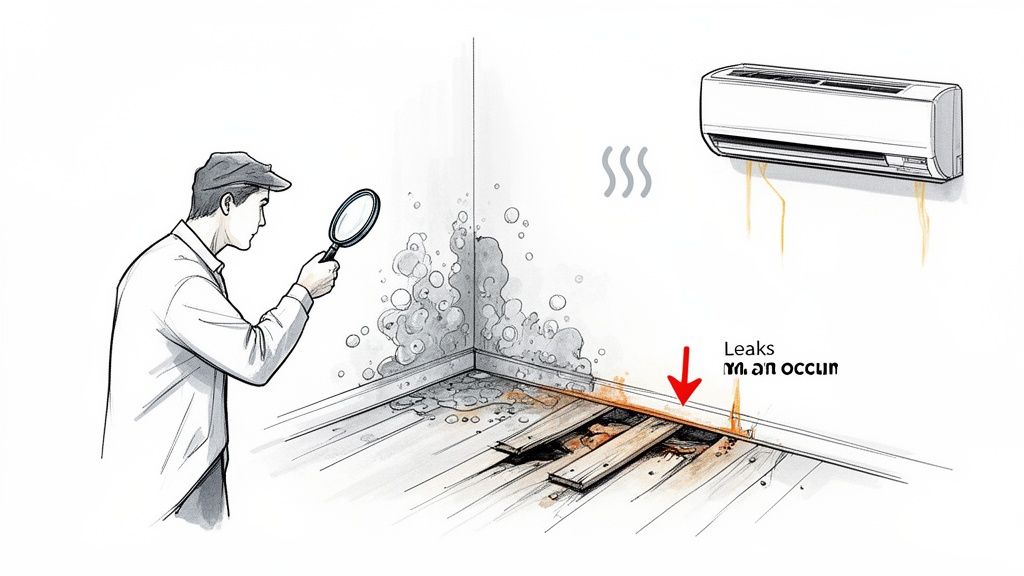
Most mold problems don’t show up as a big, obvious spot on the wall. They’re sneaky. They often start out of sight—tucked away behind drywall, creeping under floorboards, or thriving in a dark attic. To really protect your home, you need to learn how to spot the subtle clues that point to a hidden issue.
Catching these early warning signs is everything. If you ignore them, a small, manageable problem can quickly spiral into a major one that demands extensive residential mold abatement. By simply paying attention to what your home is telling you, you can stop mold in its tracks.
Tune Into Your Senses
Your best tool for finding hidden mold? Your own nose. As mold grows, it releases microbial volatile organic compounds (mVOCs), which have a very distinct smell.
If you notice a persistent, earthy or musty odor—the kind that reminds you of a damp basement or old, wet books—that’s a huge red flag. Don't just write it off as an "old house smell." If that odor gets stronger in a particular room or corner, you’re probably getting close to the source.
Pay attention to how you feel, too. Are you or your family dealing with allergy-like symptoms that flare up at home but get better when you go outside? That could be your body reacting to airborne mold spores. Look out for things like:
- Constant sneezing or a runny nose
- Itchy, watery eyes
- Unexplained coughing or wheezing
- Skin rashes or irritation
These symptoms can be your body's alarm system, warning you that something is off with your indoor air quality.
Look for Physical Evidence
Beyond what you can smell or feel, your house will often show physical signs of a moisture problem. These are the tell-tale clues that water is getting in where it shouldn’t, creating the perfect breeding ground for mold.
Keep an eye out for these visual cues on your walls, ceilings, and floors:
- Bubbling or Peeling Paint: When drywall gets wet, it can push the paint layer away from the surface, causing it to bubble, crack, or flake off.
- Warped or Stained Wallpaper: Just like paint, wallpaper will often discolor, stain, or start peeling away from the wall if there’s moisture behind it.
- Warped Floorboards: Wood and laminate flooring are like sponges. If there’s moisture underneath, the boards can soak it up and start to cup, warp, or separate.
- Discoloration and Stains: Even if you don’t see actual mold, dark splotches or water stains on ceilings, walls, or baseboards are a clear sign of a past or present leak.
These secondary signs aren't just cosmetic flaws—they are hard evidence of a moisture problem. And where you have consistent moisture, mold growth becomes a strong possibility.
If you want a more systematic way to hunt for clues, a checklist can be a huge help. You can download our comprehensive mold inspection checklist to guide you through a thorough search of your home.
Special Considerations for Phoenix Homes
Living here in the Phoenix area comes with its own unique set of challenges. Our heavy reliance on air conditioning during the brutal summers creates some very specific mold hotspots. Condensation from AC units and clogged drain lines are incredibly common culprits, causing slow leaks inside walls or closets that mold just loves.
It’s also crucial to check for water intrusion around windows, doors, and your roof after a big monsoon storm. If you have a strong suspicion of mold but just can't find it, professional testing is a logical next step. This helpful Tucson Mold Testing Guide is a great resource for understanding that process. Ultimately, being a good mold detective is about connecting these dots so you can act fast and keep your home safe.
Understanding the Health Side of Mold Exposure
So, why is quick residential mold abatement so important? It’s not just about protecting your property value or fixing an ugly spot on the wall. First and foremost, it’s about protecting the health of the people living inside your home.
Think of the air in your house as a constant, invisible stream. When a mold colony takes hold, it can pump countless microscopic spores into that stream, and your family may breathe them in day after day. These tiny particles are what can cause the trouble, acting as allergens and irritants that may set off a whole host of health problems.
From Annoying Allergies to Serious Symptoms
For a lot of people, the first clue they have a mold problem isn't something they see—it's something they feel. If you've suddenly developed allergy symptoms that just won't quit, your body might be trying to tell you something.
These common allergic reactions can be your immune system fighting back against the mold spores in your air:
- Constant sneezing or a runny nose
- Itchy, red, or watery eyes
- Strange skin rashes or hives
- A scratchy throat and a nagging dry cough
A big giveaway is if these symptoms flare up at home but seem to get better when you’re out and about. That's a classic sign that the trigger may be an indoor allergen, and mold is a very common culprit. It's wise not to dismiss these reactions as minor annoyances; they could be your body's early warning signal.
When Symptoms Become More Severe
Of course, not everyone has the same reaction. For some, especially those with existing health issues, mold exposure can be much more dangerous. People with asthma, weakened immune systems, or chronic lung diseases are at a much higher risk.
For these vulnerable groups, mold isn't just an irritant—it can be a direct trigger for serious health episodes. Ongoing exposure can cause severe respiratory problems like persistent coughing, wheezing, and a frightening shortness of breath.
The data on this is pretty clear. The connection between household mold and respiratory illness has become a major public health focus. In the U.S. alone, out of 21.8 million people who have asthma, an estimated 4.6 million of those cases are directly linked to dampness and mold exposure at home.
This is exactly why you can't afford to ignore a musty smell or a small water stain. A seemingly minor problem can grow, particularly when you're dealing with more aggressive types of mold. While most are allergenic, some are toxigenic. To see what that looks like, you can learn more about how to handle toxic black mold on drywall in our detailed guide.
At the end of the day, professional mold removal is a health-focused service. It’s all about getting that contamination source out of your home so you can restore clean air and feel confident that your house is a truly safe place for your family.
What to Expect During a Professional Mold Abatement
So, you've confirmed you have a mold problem. Calling in the professionals can feel like a big, unknown step. What exactly do they do? It's not just a fancy cleaning service; it's a systematic, science-backed process to get your home safe and healthy again.
Think of it less like wiping down a counter and more like a small-scale environmental cleanup project right inside your house. Knowing the steps can take a lot of the mystery and stress out of the situation. It’s all about safety, thoroughness, and addressing the problem at its source.
This flowchart breaks down the basic game plan professionals follow on every job.
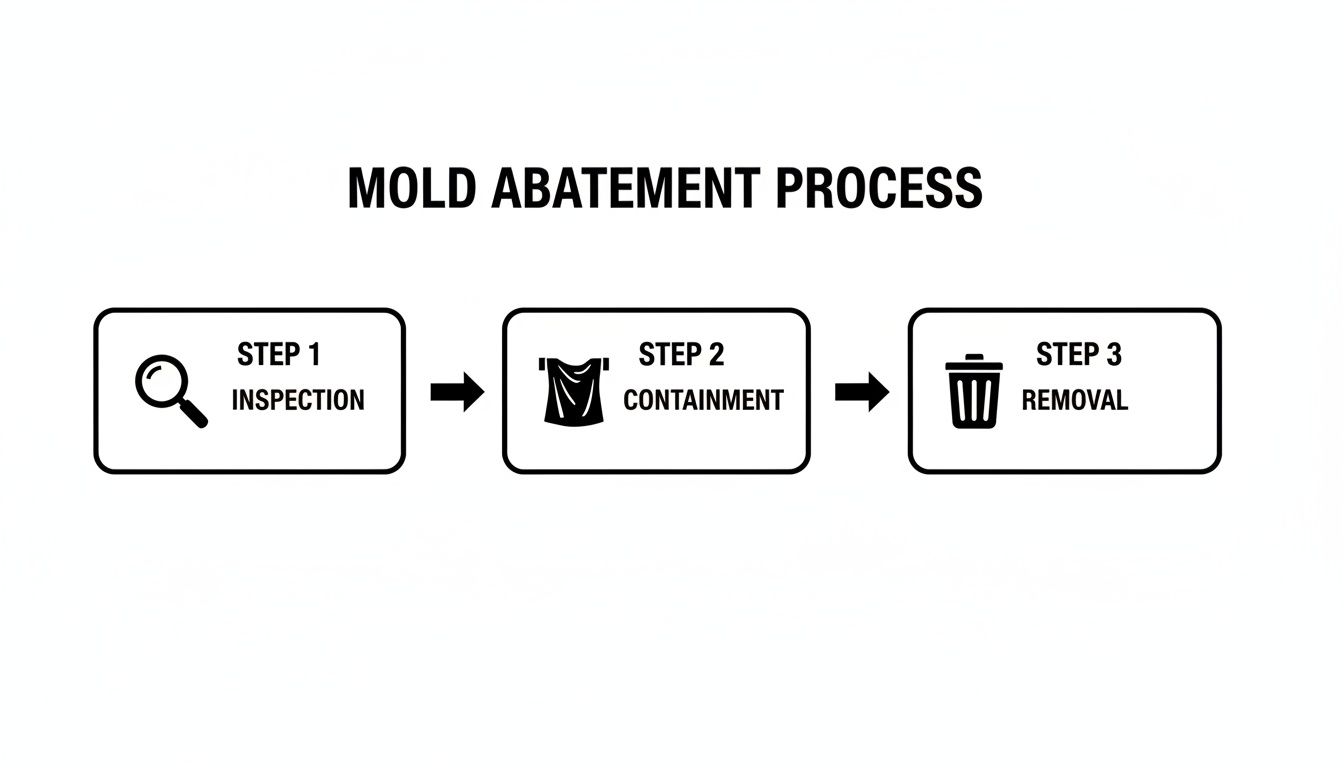
As you can see, each step builds on the one before it. The process starts by identifying the scope, then containing it, and finally, removing it. This methodical approach is the way to prevent cross-contamination and ensure you're solving the root cause, not just treating a symptom.
Stage 1: Containment and Preparation
The very first thing a professional team does is seal off the work area from the rest of your house. This is, without a doubt, a critical step. The goal is to stop microscopic mold spores from going airborne and finding new places to grow.
To do this, a containment zone is created. This involves:
- Sealing Off the Area: Using thick plastic sheeting and tape to seal every opening—doorways, HVAC vents, and more.
- Creating Negative Air Pressure: Setting up a special piece of equipment called a negative air machine. It sucks air out of the contained room, filters it through a HEPA filter, and vents it safely outside. This ensures air can only flow into the work zone, never out.
- Protecting Belongings: Any furniture or items in the affected area are either moved completely or wrapped and sealed in heavy-duty plastic to keep them safe and clean.
This meticulous prep work turns the room into a controlled environment. It’s the key to keeping the mold problem from spreading—something you just can't do yourself.
Stage 2: Air Filtration and Scrubbing
At the same time containment is being set up, professionals start cleaning the air itself. They will bring in one or more industrial-grade air scrubbers and place them inside the sealed-off area. These machines are a whole different beast than your typical home air purifier.
An air scrubber is a powerful, portable filtration system. It pulls in massive volumes of air, forces it through a series of filters—including a critical High-Efficiency Particulate Air (HEPA) filter—and then exhausts clean air back into the room.
HEPA filters are the gold standard here. They're designed to capture 99.97% of airborne particles as small as 0.3 microns. That’s tiny. For perspective, a single mold spore is usually between 3 and 40 microns, so they don’t stand a chance. These air scrubbers run 24/7 throughout the entire project, grabbing any spores kicked up during the removal work.
Stage 3: Removal and Cleaning
Once the area is fully contained and the air is being scrubbed, the real work begins: getting the mold out. This physical removal is the core of the whole process. In fact, the remediation stage was projected to make up 63.4% of the global mold remediation market in 2026. When you consider that indoor air pollution is linked to a staggering 7 million deaths worldwide each year, you can see why getting this part right is so critical. You can learn more about the mold remediation market and its drivers here.
This stage is all about careful demolition and cleaning:
- Removing Porous Materials: Anything soft that mold has grown into—like drywall, insulation, carpet, and padding—often has to go. These materials are carefully cut out, sealed in heavy-duty bags, and disposed of according to local regulations.
- Cleaning Non-Porous Surfaces: Harder surfaces like wood studs, concrete, or metal can often be saved. They are cleaned meticulously, sometimes using abrasive methods like wire brushing or media blasting, then treated with an antimicrobial solution to address any lingering mold.
- HEPA Vacuuming: After the heavy lifting is done, everything inside the containment zone is vacuumed with a special HEPA-filtered vacuum. This picks up any remaining dust and spores from every single surface—walls, floors, and ceilings.
After all that, a final wipe-down of all the cleaned surfaces is typically performed. This detailed, step-by-step journey is what truly fixes a mold problem and gives you peace of mind in a healthy home.
How to Choose a Reputable Mold Contractor in Phoenix
When it comes to getting rid of mold, the company you hire is everything. This is single-handedly one of the most important decisions you'll make. A great team can solve the problem effectively. A bad one could actually make things worse by spreading spores and never fixing the original water issue.
Sorting through your options can feel like a chore, but there's one key credential that immediately separates the real experts from the rest. For mold work, certification from the Institute of Inspection, Cleaning and Restoration Certification (IICRC) is the industry's seal of approval. This isn't just some badge they pay for; it proves their technicians have passed tough exams on the proper, safe way to handle mold.
An IICRC-certified firm is committed to a higher standard of safety and effectiveness. It tells you they understand the science behind mold growth and follow a proven, methodical process for containment, removal, and verification.
Beyond that crucial certification, there are a few other must-haves you'll want to confirm before letting anyone start tearing into your walls.
Your Vetting Checklist for Phoenix Contractors
Before you even think about signing a contract, you need to do a little homework. A trustworthy contractor will be an open book, ready to provide any information you ask for. Think of it as a job interview—you're hiring them for a critical role protecting your home and family.
Here's a quick checklist of things you absolutely need to confirm:
- Proper Licensing and Insurance: In Arizona, contractors need a license from the Registrar of Contractors (ROC). Ask for their number and look it up. More importantly, they should carry both general liability and pollution liability insurance. Your standard policy might not cover mold, so this specific pollution coverage is a non-negotiable.
- Local and Recent References: Ask for the phone numbers of a few recent clients right here in the Phoenix area. A company that does good work should have a list of happy customers who are willing to vouch for them.
- Experience with Homes Like Yours: A crew that mostly works on big commercial buildings might not be the best choice for your house. Make sure they have plenty of experience with residential properties and the challenges we see in our climate, like mold from AC units.
Getting this information upfront is your best protection. If a company gets defensive or hesitant about providing these details, consider it a major red flag and move on.
Key Questions to Ask a Potential Mold Contractor
Once you've narrowed it down to a couple of certified and insured companies, it's time to dig a little deeper. The way they answer questions about their process reveals a lot about their expertise and whether they cut corners.
Before you hire any of the mold removal companies near you, arm yourself with these essential questions. The table below breaks down what to ask and why it matters.
Key Questions to Ask a Potential Mold Contractor
| Category | Question to Ask | Why It's Important |
|---|---|---|
| Process & Documentation | "How will you document the project from beginning to end?" | They should offer daily logs and plenty of photos. This is vital for any insurance claims and serves as proof the job was done right. |
| Verification | "What's your process for post-remediation verification?" | The best contractors will recommend third-party clearance testing after they're done. This gives you unbiased proof that the mold has been addressed. |
| Safety Protocols | "Can you walk me through your containment and air filtration methods?" | A solid answer will include negative air pressure, plastic barriers, and HEPA air scrubbers. This shows they know how to stop mold from spreading. |
| Timeline & Scope | "Will I receive a detailed, written scope of work and a clear timeline?" | A vague "it'll take a few days" isn't good enough. You need a written plan outlining every single step, from demolition to the final cleanup. |
Asking these direct questions helps you find a true partner—someone who isn't just there to do a job, but is genuinely committed to making your home safe again.
Life After Abatement: Your Role in Mold Prevention
Getting rid of a mold problem is a huge relief, but the job isn’t quite done when the professionals pack up and leave. Think of a professional abatement as hitting the ultimate reset button for your home. Now, it's your turn to keep things that way. Your role as the homeowner is crucial for making sure mold doesn't get a second chance.
This new chapter actually begins even before the abatement work starts. A little bit of prep on your end can make a world of difference, helping the entire process be faster, safer, and more effective.
Preparing Your Home for Abatement Work
Before technicians arrive, you can help them work more efficiently and protect your belongings by getting the work area ready. Clearing the space allows a team to set up containment properly and work without any obstacles.
Here are a few simple things you can do:
- Clear Personal Items: Remove furniture, pictures, rugs, and any other personal belongings from the rooms being treated. This not only protects your items from damage but also prevents any potential for cross-contamination.
- Secure Valuables: Be sure to pack away and store any valuable or sentimental items that are located in or near the work zone.
- Plan for Pets and Family: The abatement area will be sealed off, and you can expect some noise and activity. It’s usually best to arrange for pets, small children, and anyone with respiratory sensitivities to be out of the house during the main work days.
Once you’ve been given the all-clear and your home is officially mold-free, your focus shifts to one simple, long-term mission: controlling moisture.
Post-Abatement: Your Long-Term Prevention Strategy
At the end of the day, keeping mold from coming back boils down to a few key habits. Without water, mold simply can't grow. It's that straightforward.
The most effective way to prevent future mold growth is to become a moisture detective. By controlling humidity, improving airflow, and acting fast on leaks, you take control of your home's environment.
Let's break that down into three core pillars of prevention.
- Control Humidity: Mold thrives when indoor humidity climbs above 50-60%. Run a dehumidifier in your basement, crawlspace, or any area that feels damp. Always use the exhaust fan in your bathroom during and after a shower, and flip on the range hood when you're cooking to pull steam out of the air.
- Improve Ventilation: Stagnant, humid air is an open invitation for mold. You want to keep the air in your home moving. This can be as easy as opening windows on nice, dry days or making sure your furniture isn’t blocking any air vents. Running your HVAC fan can also help circulate air throughout the house.
- Fix Leaks Immediately: That tiny drip under the sink can become a massive mold factory in no time. Get in the habit of regularly checking under sinks, around toilets, and near appliances like your washing machine or refrigerator. If you spot a leak—no matter how small—get it fixed right away.
By building these simple actions into your regular home maintenance routine, you’re no longer just reacting to mold. You’re actively preventing it. This ongoing vigilance is the final, and most important, piece of the puzzle.
Common Questions About Residential Mold Abatement
Even after you get the big picture, a lot of practical questions start bubbling up. It’s completely normal. After years of helping Phoenix homeowners with residential mold abatement, we’ve found that most people have the same key concerns about the process, the timeline, and the cost.
Let's walk through some of the most common questions we get, so you can feel confident and prepared.
How Long Does Residential Mold Abatement Usually Take?
This is almost always the first thing people ask. The honest answer? It depends. The timeline is tied directly to how big the problem is, what kind of materials are affected, and the source of the moisture.
A small, straightforward job—say, some visible mold under a bathroom sink—might only take one to three days from start to finish. But if the mold has spread through drywall or into your HVAC system, it could take a week or even longer. Once a full inspection is performed, a professional can give you a much more solid timeline.
Why Can't I Just Use Bleach to Kill the Mold?
It’s a tempting thought, and we get why people ask. The myth that bleach is a cure-all for mold is everywhere. But it’s one of the worst things you can do.
While bleach might get rid of the ugly stain on a non-porous surface like tile, it doesn’t touch the mold's "roots" growing into porous materials like wood or drywall.
Think of it like this: Using bleach on drywall is like chopping the top off a weed. You've ignored the root system, so it is likely to grow right back. Worse, you've just added more moisture to the area, which is exactly what mold needs to thrive.
Plus, you run the risk of creating toxic fumes if bleach accidentally mixes with other cleaners. Professionals use specific, EPA-approved antimicrobial agents and physically remove contaminated materials to get rid of the problem.
Is Mold Testing Always the First Step?
Not necessarily. If mold is clearly visible, professionals can often get right to work on a plan to remove it. In many cases, paying for a test to confirm what's already visible may be an unnecessary expense.
However, testing is incredibly useful in a few key situations:
- You Suspect Hidden Mold: If you have that tell-tale musty smell but can’t find the source, air or surface testing can pinpoint its location.
- There Are Health Concerns: When someone in your home is dealing with unexplained respiratory issues or allergies, testing can identify the specific mold species and spore count, which can be valuable information for your doctor.
- You Need Post-Remediation Proof: After the work is done, third-party clearance testing is the gold standard for verifying that the area is truly clean and safe.
What's the Deal with Homeowners Insurance?
Navigating insurance coverage for mold can feel like a maze. It all comes down to your specific policy and what caused the mold in the first place. Generally, if the mold is the result of a "covered peril," like a pipe that suddenly bursts, your policy is more likely to help cover the cost.
Mold caused by slow, gradual leaks, high humidity, or lack of maintenance is frequently excluded. A professional can help you document the damage for a claim, and you can get a deeper look into this topic by reading about how much mold remediation costs and how it relates to insurance.
And remember, preventing future problems is key. Addressing moisture in spots like window frames is a great start. You can find some useful tips in this guide on How To Prevent Mold On Window Sills.
If you have other questions or just want an expert to take a look, Restore Heroes is ready to help. We offer free, no-pressure onsite inspections to give you clear answers and a solid plan. Contact us 24/7 for immediate assistance at https://www.restoreheroesaz.com.