
When you spot dark, slimy patches creeping across your walls, it's natural to feel a sense of alarm. But that ugly stain might be more than just an eyesore. What many people call "toxic black mold" is a specific species known as Stachybotrys chartarum.
This isn't the same powdery mildew you might wipe off a shower tile. It's a far more serious problem that loves to grow on building materials, especially drywall, that have been soaked with water.
What Is Toxic Black Mold and Why Does It Target Drywall?
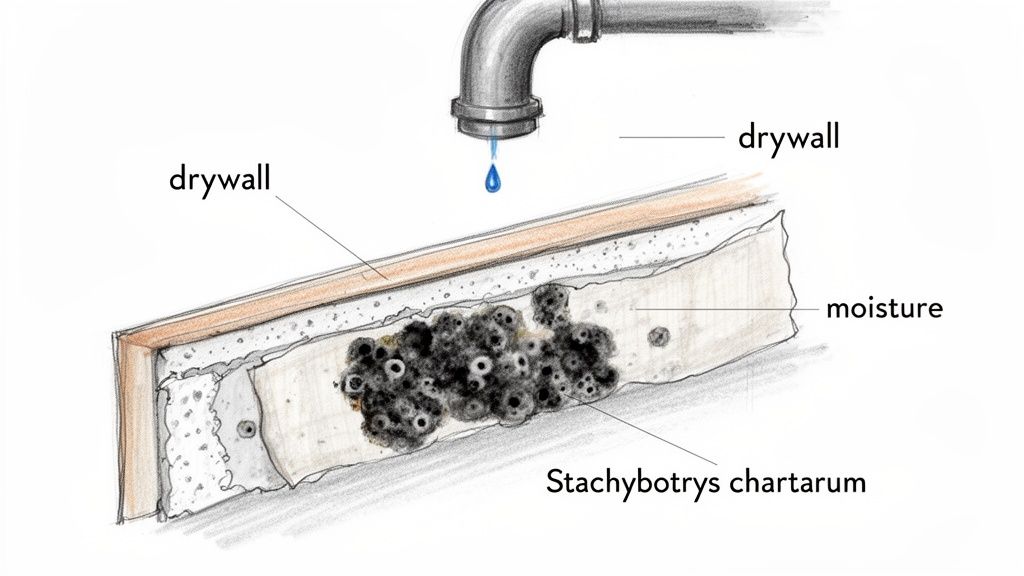
While many types of mold can look black, Stachybotrys chartarum has earned its "toxic" reputation for a very specific reason: it produces mycotoxins. These are microscopic toxic compounds that can be released into the air, posing significant health risks if you touch them or breathe them in.
It's these mycotoxins that make professional removal so important. To get a better sense of the science behind the risk, it's helpful to understand What Are Mycotoxins and How Do They Harm Your Health?. These substances are the real source of the danger.
The Perfect Home for Mold
So, what makes drywall such a prime target? Think of it as the perfect pre-packaged meal for mold. Drywall is essentially a slice of gypsum plaster sandwiched between two sheets of paper. While the gypsum itself isn't very appetizing, the paper backing is made of cellulose—an organic material that Stachybotrys loves to eat.
Once that drywall gets wet from a leaky pipe, a damaged roof, or even the high humidity during a Phoenix monsoon season, you have a recipe for disaster. All the necessary ingredients are there:
- Food Source: The cellulose-rich paper on the drywall.
- Moisture: A constant water source to activate and sustain growth.
- Darkness: The undisturbed space inside a wall cavity.
When these conditions align, dormant mold spores that are always present in the air can settle on the damp surface and start to colonize. As it grows, the mold not only eats away at the paper and compromises the drywall's integrity but also releases those harmful mycotoxins into your living space.
The real danger isn't just the visible mold patch. It's the silent release of airborne mycotoxins that can circulate throughout your home, affecting air quality and potentially leading to health issues.
Toxic Black Mold vs. Common Household Mold
It's easy to see a dark spot and jump to the worst-case scenario, but it’s important to know that not all molds are created equal. Distinguishing between common mildew and toxic black mold can help you gauge the urgency of the situation. While any mold warrants attention, Stachybotrys demands an immediate, professional response.
Here's a quick comparison to help you spot the differences.
Toxic Black Mold vs. Common Household Mold
| Characteristic | Common Household Mold (e.g., Mildew) | Toxic Black Mold (Stachybotrys chartarum) |
|---|---|---|
| Appearance | Powdery or fuzzy; can be gray, white, or light green. | Slimy or sooty; typically dark greenish-black or black. |
| Location | Grows on surfaces in high-humidity areas like showers and windowsills. | Thrives on chronically wet, cellulose-rich materials like drywall and wood. |
| Smell | Mild, musty odor. | Strong, earthy smell, often described like wet socks or rotting leaves. |
| Health Impact | Can trigger allergies and asthma in sensitive individuals. | Releases mycotoxins that can cause serious respiratory and neurological issues. |
Ultimately, looks can be deceiving. While these clues are helpful, the only way to be certain about the type of mold you're dealing with is through professional lab testing. Given the serious risks, the safest bet is to treat any significant mold growth on drywall after water damage as a major threat.
How to Spot the Hidden Signs of a Mold Invasion
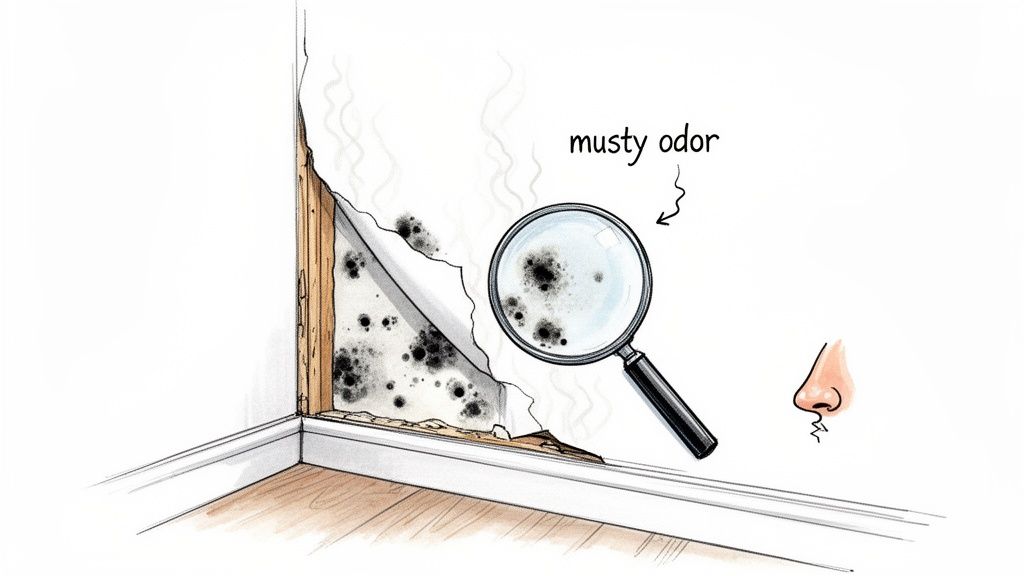
It’s easy to panic when you see a big, slimy black patch on your drywall. But the truth is, the most dangerous toxic black mold on drywall infestations aren't always so obvious. They're sneaky, preferring to grow in the dark, hidden spaces behind walls, under floors, or in ceilings.
What you can see is often just the very edge of a much larger colony thriving out of sight. Learning to spot the subtle clues of a hidden problem is crucial. Catching it early can make all the difference for your home and your family's health.
Trust Your Nose: The Persistent Musty Odor
Long before you ever see a speck of mold, you'll probably smell it. Your nose is one of the best mold detectors you have. That distinct, persistent smell is a tell-tale sign of Stachybotrys chartarum, produced as it consumes materials in your home.
We hear it described in a few common ways:
- Earthy and musty, like a damp, closed-off basement or a pile of wet leaves.
- Pungent and dirty, almost like a forgotten gym bag full of sweaty socks.
- Heavy and stagnant, an odor that just seems to hang in the air, no matter how much you try to air out the room.
Don't ignore that smell. If you have a funky, musty odor that just won’t go away, it’s a strong signal that mold is actively growing somewhere nearby, likely fueled by a hidden leak.
Look for Visual Disturbances on Your Walls
Even when mold is growing inside a wall, it can cause visible damage to the outside surface. As the mold colony feeds on the paper backing of the drywall and moisture soaks the inner gypsum core, the wall itself starts to show signs of distress.
It's so easy to write off a little bubbling paint or a faint stain as just part of a house settling. But from my experience, these little imperfections are often the first warning signs of a serious moisture and mold problem brewing inside the wall.
Keep a close watch for these subtle changes, especially in rooms with plumbing like kitchens and bathrooms, or near windows and under roofing.
- Peeling, bubbling, or cracked paint: When moisture pushes through drywall from behind, it breaks the bond between the paint and the wall surface.
- Water stains or discoloration: Faint yellow or brown marks on walls and ceilings are clear evidence of a water leak, either past or present. Where there’s water damage, mold is often not far behind.
- Warped or swollen drywall: If an area of your wall looks like it's bulging out or feels soft and spongy when you press on it, it’s a sign that the drywall has absorbed a lot of water.
Curious about what these and other mold types look like up close? Check out our visual guide on how to identify different types of mold on drywall.
Pay Attention to Unexplained Health Symptoms
Sometimes, your own body sounds the alarm first. If your family starts battling allergy-like symptoms that flare up at home but seem to get better when you're out, you could be reacting to airborne mold spores and mycotoxins.
You don't have to touch the mold to feel its effects; simply breathing the air in a contaminated house is enough. These health clues are incredibly important, especially when you can't see any obvious mold. Listen to your body and watch for new or worsening symptoms like:
- A nagging cough, constant sneezing, or a sore throat that won’t quit.
- Itchy, watery eyes and a runny nose that you can't seem to shake.
- Headaches or migraines that seem to come out of nowhere.
- Feeling unusually tired, foggy, or just "off."
If you find yourself feeling noticeably better after being away from home for a few hours or a day, it points strongly to an environmental trigger inside your house. That's your cue to start investigating a potential toxic black mold on drywall problem right away.
Understanding the Health Risks of Mold Exposure
Finding toxic black mold on drywall isn't just a cosmetic problem—it's a serious health hazard. What makes this type of mold so concerning isn't the fuzzy black spot you see. It's the invisible toxins it releases into your home's air.
These microscopic compounds, called mycotoxins, are the mold's defense mechanism, but they are incredibly harmful to people and pets. As the mold colony eats away at your drywall, it continuously pumps these toxins into the air you and your family breathe every single day. This is why you can't afford to wait.
The Impact on Your Respiratory System
The first thing most people notice is how mold affects their breathing. When you inhale mycotoxins from Stachybotrys chartarum (the scientific name for black mold), your body goes on high alert. It tries to fight off what it sees as a foreign invader, which leads to chronic irritation and inflammation in your lungs and sinuses.
You might start experiencing symptoms that feel like a cold you just can't kick:
- Persistent Coughing and Wheezing: A nagging, dry cough or a slight whistle when you breathe.
- Shortness of Breath: A frustrating feeling that you can’t quite catch a deep breath, especially in certain rooms.
- Sore Throat and Sinus Congestion: That stuffy, scratchy feeling that never seems to clear up, sometimes leading to sinus infections.
- Worsening Asthma and Allergies: If you already have asthma or allergies, you might notice your attacks become more frequent and much more intense.
A huge red flag is if these symptoms get better when you're away from home but come right back when you return. That's a strong clue that the problem is rooted in your home's environment. While black mold is a major offender, other types can be just as bad. We cover more of this in our article on dangerous molds in homes.
Beyond the Lungs: Neurological and Systemic Effects
Here’s what many people don't realize: the danger doesn't stop with your respiratory system. Over time, those mycotoxins can wreak havoc on your entire body, causing confusing symptoms that are often misdiagnosed. These toxins are small enough to pass into your bloodstream and even cross the blood-brain barrier, directly impacting your cognitive function.
I've talked to countless homeowners who just felt "off" for months, living with a constant sense of illness they couldn't explain. That feeling is your body screaming that your indoor environment is toxic.
Mycotoxin exposure isn’t an allergy; it's a form of chronic poisoning. It can lead to debilitating symptoms like brain fog, memory loss, extreme fatigue, and even mood swings. The longer you're exposed, the worse it gets.
Some of the most serious systemic problems tied to toxic black mold include:
- Chronic Fatigue: A deep, bone-weary exhaustion that sleep doesn't fix.
- Brain Fog and Memory Issues: Trouble focusing, feeling spacey, or struggling to remember names and details.
- Headaches and Migraines: A sudden increase in how often you get headaches or how severe they are.
- Skin Irritation: Unexplained rashes, hives, or itching can be caused by airborne toxin exposure.
Why Vulnerable Individuals Face a Higher Risk
While mold is bad for everyone, some people are at a much higher risk for severe, long-term health complications. Their bodies are simply not equipped to fend off a constant toxic assault, making immediate, professional remediation a life-or-death matter.
These vulnerable groups include:
- Children and Infants: Their immune systems are still developing, making them incredibly sensitive to toxins.
- The Elderly: A naturally weakening immune system makes it harder for their bodies to fight back.
- Immunocompromised Individuals: Anyone with a weakened immune system from conditions like HIV/AIDS or treatments like chemotherapy is in extreme danger.
- People with Chronic Lung Disease: For someone with asthma or COPD, mold exposure can trigger a life-threatening respiratory crisis.
For anyone in these groups, a home with toxic black mold on drywall is not a safe place to be. The risk is simply too great, and taking swift, professional action is the only responsible choice.
DIY Removal vs Professional Remediation
When you spot toxic black mold on drywall, it's tempting to think you can handle it yourself. Grabbing a sponge and a bottle of bleach seems like a logical first step. And for a little surface mildew on your shower tile, that might be fine. But with Stachybotrys chartarum, that instinct is a dangerous gamble. This isn't a simple cleaning job—it’s a hazardous material situation.
Trying to scrub or tear out the contaminated drywall is one of the worst mistakes a homeowner can make. Picture a dandelion puffball. The moment you touch it, seeds scatter everywhere. A mold colony works the same way. The slightest disturbance from scrubbing, sanding, or even bumping the wall sends millions of invisible spores airborne.
Without the right containment, those spores get sucked into your HVAC system and spread throughout your home. A problem that was contained to one wall can quickly become a whole-house infestation, seriously elevating health risks and the final cost of fixing it.
The Tools of a Certified Professional
The massive gap between a DIY attempt and professional remediation comes down to specialized training and equipment. Certified technicians don't just wipe away the mold; they follow a strict scientific process to contain the area, remove the source, and scrub the air clean.
Pros rely on a system of tools designed to completely control the environment and protect the rest of your home:
- Containment Barriers: We start by building a totally sealed-off work zone with heavy-duty plastic sheeting. This creates an isolated chamber, ensuring no disturbed spores can escape into other rooms.
- Negative Air Pressure Machines: These powerful fans vent to the outside, constantly pulling air into the contained area. This makes it impossible for contaminated air to flow out, effectively trapping all the nasty stuff inside.
- HEPA Air Scrubbers: Inside the containment zone, these machines run nonstop. Their High-Efficiency Particulate Air (HEPA) filters are engineered to capture 99.97% of all airborne particles, pulling mold spores, dust, and mycotoxins right out of the air.
The Limits and Dangers of DIY Methods
Household cleaners, especially bleach, just don't work on porous materials like drywall. Bleach might fade the surface stain, making you think you've solved the problem, but it can't reach the mold's "roots" that have grown deep into the paper and gypsum core.
Trying to remove toxic black mold on drywall with bleach is like pulling the top off a weed but leaving the root system intact. It looks better for a short time, but the problem will inevitably grow back stronger and more widespread.
On top of that, DIY methods can create new dangers. Mixing the wrong cleaning chemicals can release toxic fumes, adding yet another hazard to the situation. And without professional-grade Personal Protective Equipment (PPE)—we're talking N95 respirators, full-body suits, and sealed eye protection—you're breathing in a concentrated dose of mycotoxins.
Choosing the right path is crucial, especially when mold is hiding where you can't see it. You can learn more about what that involves in our guide on how to remove mold from behind walls. Considering the serious health risks and the high potential for making things worse, professional remediation is the only truly safe and effective solution for toxic black mold.
A Step-by-Step Look at the Professional Remediation Process
When you call in a certified team to tackle toxic black mold on drywall, you’re getting much more than a simple cleaning service. You’re bringing in experts who follow a strict, science-based protocol to get rid of the mold and make your home safe again. Knowing what that process looks like can take a lot of the mystery—and stress—out of the situation.
This flowchart shows the night-and-day difference between a quick DIY attempt and the methodical approach a professional takes.
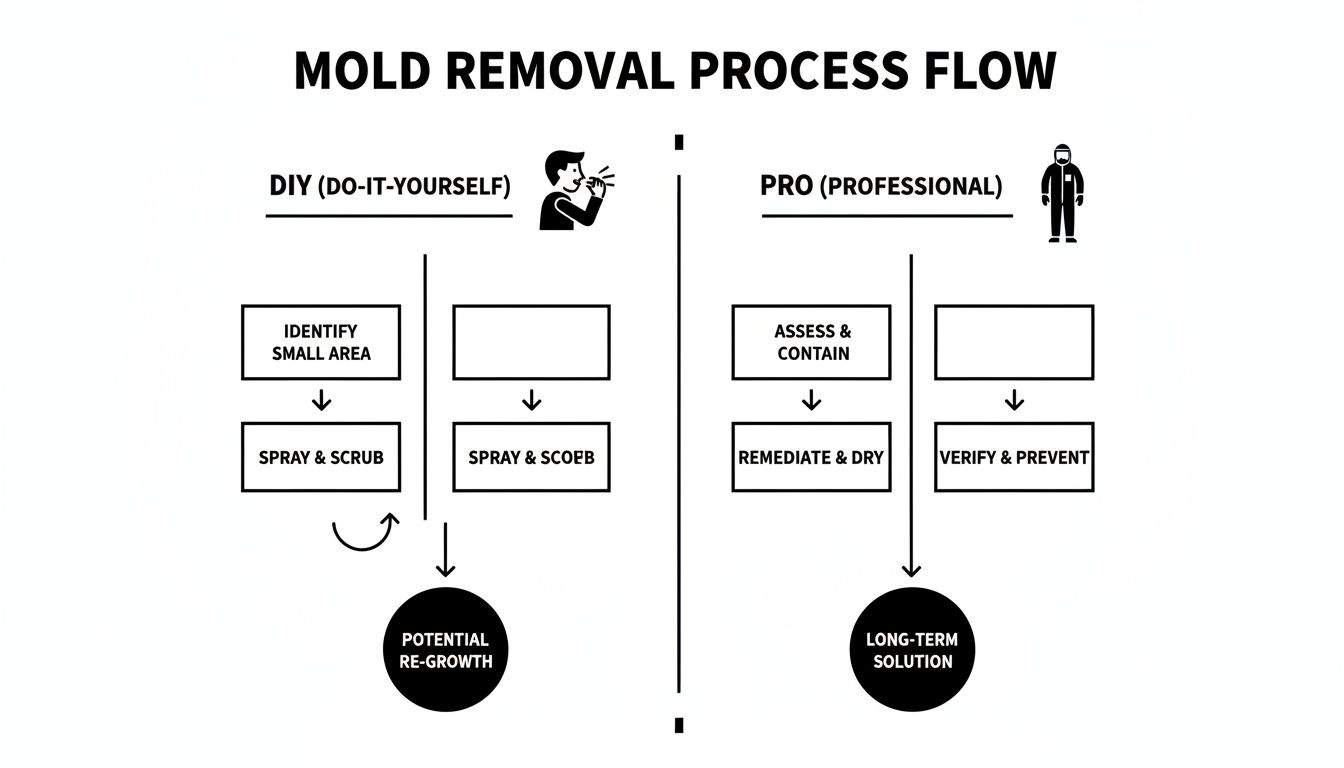
As you can see, the professional route is all about safety and containment—steps that, if missed, can end up spreading the problem instead of solving it.
Step 1: The Initial Assessment and Game Plan
First things first, a certified technician needs to see exactly what’s going on. They’ll come to your home to pinpoint the full extent of the mold, track down the water source that’s feeding it, and figure out how deep the damage goes. This is no quick peek.
Using tools like thermal imaging cameras and moisture meters, they can find hidden moisture trapped inside your walls, floors, or ceilings. This detailed assessment is what allows them to build a truly effective remediation plan, and it's something your insurance company may require.
Step 2: Containment and Air Scrubbing
Before a single piece of moldy drywall is touched, the entire work area gets sealed off from the rest of the house. This is probably the single most important step in the entire process.
We build a full containment chamber with thick plastic sheeting and zippered doorways. Then, we set up powerful fans that vent outside, creating negative air pressure. This creates a slight vacuum, ensuring that any spores kicked up during removal are sucked out of the home, not blown into clean areas.
Inside the chamber, commercial-grade HEPA air scrubbers are kept running 24/7. These machines are constantly filtering the air, capturing microscopic mold spores and mycotoxins right out of circulation.
Think of it like a surgical suite. A surgeon doesn't operate in the middle of a busy waiting room; they work in a sterile, contained environment to prevent infection. Mold remediation is the same—containment is our "sterile field" to protect the health of your entire home.
Step 3: Removing the Contaminated Materials
With the area completely secured, the physical removal begins. This is way more involved than just wiping down a wall. Technicians dressed in full Personal Protective Equipment (PPE) will carefully remove all porous materials that the mold has compromised.
This typically includes:
- Affected Drywall: Any drywall with mold or water stains is cut out, extending well past the visible spots to remove the mold's "roots" inside the wall cavity.
- Insulation: If insulation is wet or moldy, it has to go. It’s like a sponge and can't be properly cleaned.
- Carpeting and Flooring: Mold often grows on or underneath flooring, so these materials usually need to be removed as well.
Every piece of contaminated debris is carefully sealed in heavy-duty disposal bags before it leaves the containment area. This prevents any cross-contamination on the way out.
Step 4: Deep Cleaning and Disinfecting
Once all the moldy materials are gone, the team shifts its focus to cleaning every remaining surface within the contained space. It starts with a thorough HEPA vacuuming to capture any spores that have settled on surfaces.
After that, all non-porous structures—like wood framing, concrete slabs, or metal fixtures—are meticulously cleaned with special antimicrobial solutions. This not only kills any lingering mold but also helps inhibit future growth, making sure the problem doesn't come right back.
The professional mold remediation process is a carefully orchestrated series of steps, each one building on the last to ensure a safe and permanent solution. Here's a quick overview of what to expect from start to finish.
Phases of Certified Mold Remediation
| Phase | Key Actions and Goals |
|---|---|
| 1. Assessment | Identify mold and water sources with professional tools to create a detailed remediation plan. |
| 2. Containment | Isolate the affected area with plastic barriers and negative air pressure to prevent cross-contamination. |
| 3. Removal | Safely remove all contaminated porous materials like drywall, insulation, and carpeting. |
| 4. Cleaning | HEPA vacuum all surfaces, then clean with antimicrobial agents to kill any remaining mold. |
| 5. Drying | Use industrial dehumidifiers and air movers to completely dry the structure. |
| 6. Clearance | Conduct post-remediation testing to verify the area is clean and safe for reconstruction. |
Each phase is critical for ensuring that when the job is done, it's done right, and your home is truly mold-free.
Step 5: Drying, Testing, and Final Clearance
The final, crucial phase is to make sure the area is bone-dry, tackling the original moisture issue head-on. The team brings in high-powered dehumidifiers and air movers to pull every last bit of moisture out of the building materials.
Once everything is clean and dry, an independent "clearance test" is often performed. This involves taking new air and surface samples to get third-party verification that the mold is gone and the air quality is back to normal. After getting the all-clear, the containment barriers come down, and your home is officially ready for repairs.
To see how we apply these certified steps in the real world, learn more about our comprehensive mold damage restoration process.
How to Prevent Future Mold Growth in Your Phoenix Home
Once you've finally gotten rid of a mold problem, the absolute last thing you want is a round two. The best defense against toxic black mold on drywall is simply not letting it start in the first place. Here in Phoenix, that all comes down to controlling moisture, especially when our monsoon season sends the humidity through the roof.
Think of it this way: mold needs water to live. That’s it. If you can keep your home dry, you’re making it an impossible place for mold to set up shop. Even a tiny, slow leak provides the perfect damp, dark breeding ground for Stachybotrys chartarum to thrive unseen.
Control Your Indoor Climate
Humidity is public enemy number one in the fight against mold. As soon as your indoor humidity creeps above 60%, you’re practically inviting mold to move in. During our hot, humid summers, your AC is already doing a lot of the heavy lifting by pulling moisture out of the air.
But sometimes, your AC just can't keep up. That’s where dehumidifiers come in handy, especially in areas that are naturally damp like bathrooms, laundry rooms, and closets. Your goal is to keep the humidity in that sweet spot between 30-50%. Don’t forget about ventilation, either—always use your exhaust fans when cooking or showering to push all that steam outside where it belongs.
Stay Vigilant with Regular Inspections
I’ve seen it a hundred times: a tiny water issue, ignored for too long, turns into a massive mold disaster. Making a quick home inspection a regular habit is one of the smartest things you can do. Getting familiar with the basics of how to prevent mold growth is a great first step toward keeping your home safe.
Here's a simple checklist to run through every few months:
- Under Sinks: Get a flashlight and check for any drips, water rings, or musty smells in your kitchen and bathroom cabinets.
- Appliance Hoses: Feel the hoses for your washing machine, dishwasher, and refrigerator ice maker. Are they dry and free of cracks?
- Windows and Doors: After a good rain, check the seals and frames for any signs that water is getting in.
- Roofs and Attics: Glance at your ceilings, especially after a storm. Any new, faint brown spots are a major red flag.
Mold doesn't need a flood to start growing. It just needs a consistent moisture source. That slow-drip leak under the sink is often more dangerous than a major burst pipe because it can go unnoticed for weeks, giving mold plenty of time to establish a hidden colony.
Act Immediately on Any Water Intrusion
If you find a leak or have a spill, you have to move fast. Mold can start growing on damp drywall in as little as 24 to 48 hours. That’s an incredibly short window, which means there’s no time to waste.
Get any standing water cleaned up right away. Aim fans directly at the wet spot and bring in dehumidifiers to pull moisture out of the air and the materials themselves. If your drywall, baseboards, or flooring got soaked, drying them out immediately is your only real defense. For a more detailed action plan after a bigger water problem, check out our guide on how to prevent mold after a flood.
Ultimately, staying on top of moisture is how you win this battle.
Your Top Questions About Toxic Black Mold, Answered
Finding what looks like toxic black mold on drywall can be alarming, and your mind probably starts racing with questions. We get it. Let’s walk through some of the most common concerns we hear from homeowners every day.
Can I Just Paint Over the Black Mold on My Drywall?
It’s a tempting quick fix, but please don’t do it. Painting over mold is like putting a flimsy lid on a boiling pot—it only hides the problem for a moment before it gets much worse.
Mold is a living thing. It will happily continue to eat the paper on your drywall right under that new coat of paint. The colony keeps growing, unseen, while still releasing harmful toxins into your home. The only real solution is to cut out the affected drywall and have a professional handle the contamination properly.
Is Every Black Mold the "Toxic" Kind?
Not necessarily. The notorious toxic black mold is Stachybotrys chartarum, but other common household molds like Alternaria can look just as dark and menacing. The bottom line is you can't tell what you're dealing with just by looking.
Because different molds can release allergens and mycotoxins that affect your health, the only safe bet is to treat any significant growth on a porous surface like drywall as a potential hazard. Only professional testing can give you a definitive answer.
With health on the line, especially after any kind of water leak, it's never worth the gamble. It's always best to have a certified expert take a look.
What Does Professional Mold Remediation Usually Cost?
This is one of the trickiest questions to answer without seeing the situation first-hand. The final cost depends on a few key things: how large the contaminated area is, where it's located (inside a wall is tougher than out in the open), and how much water damage needs fixing.
That’s why any trustworthy mold company will insist on an in-person inspection. It allows them to see the full picture and give you a transparent quote with no surprises. They can also help you figure out what your homeowner's insurance might cover.
When you're facing a potential mold crisis, you need a team you can count on to make your home safe again. Restore Heroes is an IICRC-certified company, ready 24/7 to help homeowners across the Phoenix metro area. If you think you have a mold problem, contact us today for a free onsite inspection.