
When you find mold in your basement, it's easy to dismiss it as just an ugly stain. The reality is far more serious. That seemingly harmless patch poses a significant threat to your family's health and the very structure of your home. It's a silent intruder that thrives in damp, dark spaces, releasing spores that can wreak havoc on your respiratory system while literally eating away at your house.
The Two-Front War Against Basement Mold
Think of basement mold as fighting a war on two fronts: your health and your property. It’s an unwanted houseguest that not only makes everyone sick but also destroys your home from the inside out. On one side, it releases microscopic spores into the air you breathe. On the other, it feeds on your home’s organic building materials.
This is a widespread problem. In fact, an estimated 47% of homes across the U.S. deal with dampness or mold, exposing families to health risks. As CBS News has reported, this has become a nationwide health crisis, and basements are often ground zero. They are naturally cool and damp, creating the perfect conditions for mold to take hold on walls, floors, and even inside your HVAC system, spreading spores throughout the house.
This flowchart breaks down exactly what's at stake.
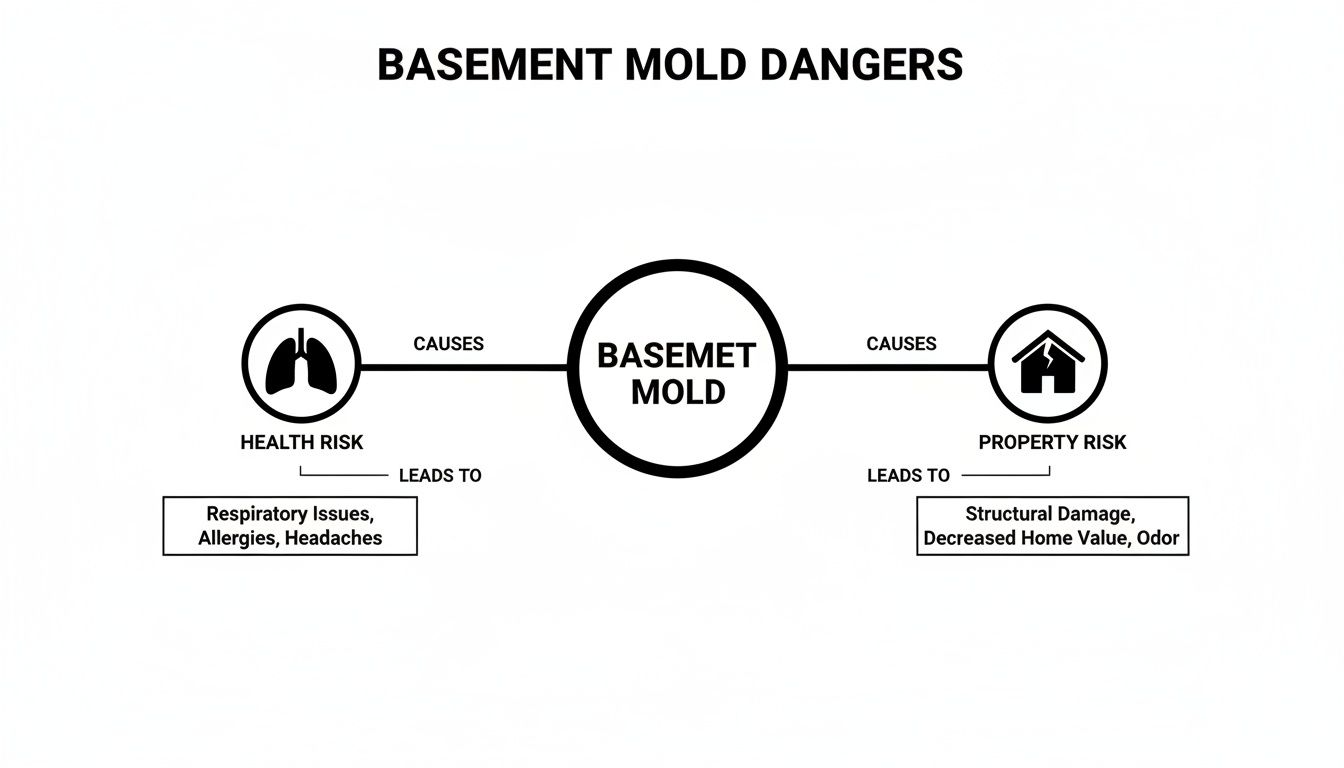
As you can see, a single source—basement mold—branches out to cause distinct but equally serious problems for any homeowner.
The real danger with basement mold is that it operates out of sight. By the time you notice that musty smell upstairs, a colony may have already established a strong foothold, compromising both your air quality and your home’s structural integrity.
Why Your Basement Is the Perfect Breeding Ground
Your basement's environment is practically designed for mold growth. It's underground, which keeps it cooler than the rest of the house and prone to condensation, especially during a humid Phoenix summer. Add in the lack of sunlight and poor air circulation, and you have a perfect incubator.
It doesn't take much to turn a normal basement into a mold factory. The most common triggers are:
- Minor Leaks: A slow drip from a pipe or a pinhole leak in a water heater provides the constant moisture source mold needs to survive.
- High Humidity: Without a good dehumidifier, even the ambient moisture in the air is often enough to sustain a colony.
- Flooding or Water Intrusion: A monsoon storm, a burst pipe, or even a foundation crack can quickly saturate drywall, carpeting, and wood framing.
Understanding the different dangerous molds in basements is the first step. From there, you can learn how to spot the signs and take the right steps to reclaim your home for good.
How to Identify Mold in Your Basement
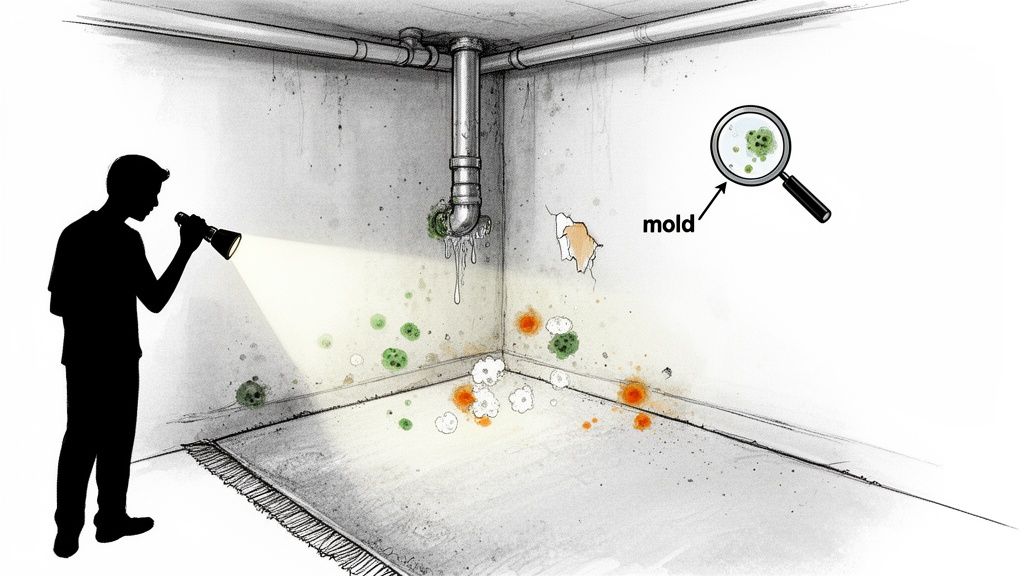
Finding mold in your basement is a lot like being a detective. Mold is sneaky, preferring to grow in dark, damp corners where you’re least likely to look. But even when it’s hiding, it almost always leaves a few tell-tale clues. You just have to know what to look—and smell—for.
Often, your nose will notice a problem long before your eyes do. As mold grows and feeds, it releases gasses called microbial volatile organic compounds (MVOCs). These compounds have a very distinct, persistent odor that’s hard to miss.
If you walk into your basement and are hit with a musty, earthy smell—kind of like damp dirt or rotting leaves—that’s a major red flag. Don't just write it off as a "normal basement smell." That scent is mold’s calling card, and it’s telling you there’s a moisture issue somewhere nearby.
Using Your Senses to Uncover Mold
Once your nose has tipped you off, it’s time to use your eyes. Many people assume mold is always black and fuzzy, but it comes in a surprising variety of colors and textures. It can be green, white, gray, orange, or even brown, depending on the mold species and the surface it’s growing on.
You might see:
- Fuzzy or hairy-looking patches, especially on organic surfaces like wood joists or old cardboard boxes.
- Spots with a velvety or powdery texture, which you’ll often find on drywall or even concrete.
- Stains and discoloration that look like old water marks, but are often darker or more concentrated.
Where there's water damage, there's often mold. In fact, studies show that while 98% of buildings with water issues have visible water stains, a full 20% have visible mold growth, too. If you spot signs of a leak or past water intrusion, a closer look for mold should be your next move.
Looking for Secondary Signs of Moisture
What if you can smell the mold but can’t see it? That usually means the colony is growing behind a wall, under the carpet, or in another hidden spot. When this happens, you have to look for the secondary signs of a moisture problem—the breadcrumbs that lead you back to the source.
These indirect clues are often easier to spot than the mold itself:
- Peeling, Bubbling, or Cracking Paint: Moisture getting into a wall will push the paint right off the surface.
- Warped Wood or Buckling Floors: When wood framing or floorboards soak up moisture, they swell and bend out of shape.
- Persistent Condensation: If you constantly see "sweat" on pipes, windows, or concrete walls, the humidity is too high. This creates a perfect breeding ground for mold.
- Efflorescence: This is a white, chalky powder that appears on concrete or brick. It’s not mold, but it’s a sign that water is evaporating through the masonry, leaving mineral salts behind. It’s proof of a moisture pathway.
Finding peeling paint or warped floorboards doesn't mean you're in the clear just because you don't see mold. It often means the real problem—and the mold colony—is hiding just out of sight.
To do a thorough search, grab a flashlight and check all the usual hiding spots. In Phoenix homes, pay special attention to the areas around sump pumps, under basement carpeting, behind storage boxes, inside HVAC ductwork, and near any plumbing or water heaters. These places offer the perfect trifecta for mold: moisture, darkness, and a food source like dust or drywall paper.
If you want a better idea of what you're looking for on a specific surface, you can learn more about what mold looks like on drywall in our detailed guide.
Common Types of Basement Mold and Their Characteristics
Recognizing what kind of mold you might have can help you understand the potential risks. Here’s a quick guide to some of the usual suspects you might find in your basement.
| Mold Type (Common Name) | Typical Appearance | Common Surfaces in Basements | Associated Risks |
|---|---|---|---|
| Alternaria | Velvety texture; dark green or brown | Drywall, wood, carpeting, near windows | Common allergen; can trigger asthma and hay fever-like symptoms. |
| Aspergillus | Powdery; can be green, white, yellow, or black | Walls, insulation, dusty areas, HVAC systems | Allergenic; some species can cause respiratory infections in weakened individuals. |
| Cladosporium | Suede-like texture; olive-green to brown or black | Wood, painted surfaces, fabrics, under carpets | Allergenic; can cause sinus, skin, and lung infections. |
| Stachybotrys (Black Mold) | Slimy when wet, sooty when dry; greenish-black | Areas with severe water damage: drywall, wood, ceiling tiles | Can produce mycotoxins, leading to serious health issues like respiratory distress. |
| Serpula (Poria) | Yellow, often with a cottony or web-like appearance; causes dry rot | Wood structures (joists, floorboards) | Primarily a structural risk; can destroy wood rapidly. |
While this table is a helpful starting point, remember that only a professional can definitively identify a mold species through testing. If you see something that looks like one of these, especially Stachybotrys, it's always best to err on the side of caution.
What Basement Mold Does to Your Health
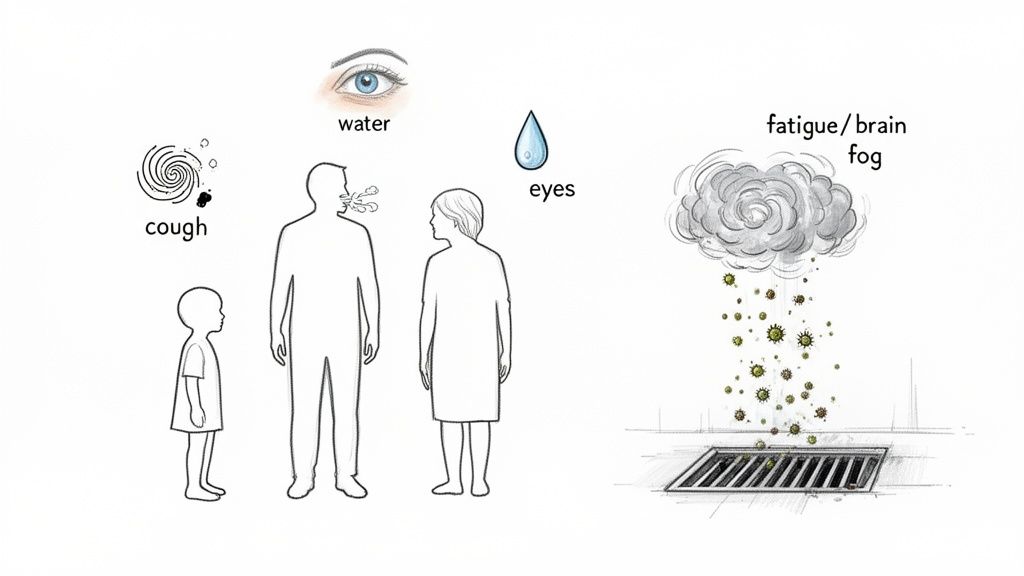
It’s easy to dismiss basement mold as just an ugly stain or a musty odor. But the real problem isn't what you can see—it's what you can't. That patch of mold is actively pumping millions of invisible spores into the air. These spores are so tiny and light, they catch a ride on the natural air currents, moving from your basement, into your HVAC system, and throughout every room in your home.
When you breathe in that air, you’re also breathing in those spores. How your body reacts can range from mild, annoying symptoms to serious, long-term health issues. It all depends on the type of mold, how long you've been exposed, and your own unique health situation.
Allergic Reactions and Respiratory Distress
For a lot of people, the first clue that something is wrong is a nagging, allergy-like feeling that never seems to clear up. This is your immune system kicking into high gear, trying to fight off what it sees as foreign invaders.
These common allergic responses often look like:
- Constant sneezing, especially when you’re in the house.
- Itchy, watery eyes that feel like a bad pollen day, but indoors.
- A runny or stuffy nose that isn't from a cold.
- Unexplained skin rashes or hives.
If you or someone in your family has asthma, basement mold is a major red flag. Mold spores are a notorious trigger for asthma attacks, causing more frequent and severe episodes of wheezing, shortness of breath, and tightness in the chest.
The connection is undeniable. A major 2007 study by the EPA and Berkeley National Laboratory found that 4.6 million of the nation's 21.8 million asthma cases were linked to dampness and mold in homes. Exposure can increase the risk of various respiratory problems by 30-50%—a clear sign of how seriously your indoor air affects your ability to breathe.
The Threat of Mycotoxins and Toxic Mold
While any mold can cause allergies, some types produce a far more dangerous chemical payload. You’ve probably heard of "toxic black mold," or Stachybotrys chartarum. This and other specific species create harmful substances called mycotoxins.
Think of mycotoxins as the mold's chemical weapons. They aren't the spores themselves but are toxic compounds that can attach to spores and dust particles. When that happens, they become airborne, making them easy to inhale or even ingest.
Black mold loves environments that are consistently wet and full of cellulose-based materials—like the drywall, wood framing, and ceiling tiles in a damp basement. The presence of mycotoxins is exactly why you have to take the dangers of toxic black mold on drywall so seriously and act fast.
Chronic Illness and Vulnerable Individuals
When you're exposed to mold for a long time, especially the toxin-producing kinds, it can sometimes lead to very complex and systemic health problems. One of these is Chronic Inflammatory Response Syndrome (CIRS), sometimes called biotoxin illness. CIRS is a whole-body illness that happens when a person’s system just can't get rid of the biotoxins from mold.
The symptoms can be confusing and debilitating, including:
- Crushing fatigue and weakness
- Body aches, pains, and relentless headaches
- Cognitive problems like "brain fog," memory issues, and trouble focusing
- Digestive issues and sensitivity to light
It's also important to know that mold doesn't affect everyone equally. Certain people are much more susceptible to its effects.
- Infants and children have developing immune and respiratory systems that are more easily harmed.
- The elderly may have a weaker immune response.
- Anyone who is immunocompromised (from conditions like HIV/AIDS, chemotherapy, or organ transplants) is at a much higher risk of serious fungal infections.
- People with chronic lung diseases like COPD will find their conditions are easily made worse by mold.
Because the symptoms overlap with so many other illnesses, it’s easy to overlook your home’s air quality as the root cause. If you or a loved one is dealing with unexplained, chronic health problems, it's time to take a hard look at what might be lurking in your basement.
Structural Damage and Your Property Value
Beyond the very real health risks, mold wages a silent war on the structure of your home. It’s easy to dismiss it as just an ugly stain on the wall, but that’s a dangerous mistake. Mold is a living thing, and to survive, it has to eat. Unfortunately, its favorite foods are the very materials holding your house together.
Think of it this way: mold is actively digesting your home. It feasts on the paper of your drywall, turning it into a soft, crumbly mess. It digs its roots into wooden support beams, floor joists, and subflooring, causing them to rot from the inside out. This isn't just a cosmetic problem—it's a direct assault on the structural integrity of your house.
How Mold Consumes Your Home and Belongings
What might look like a small, harmless patch can quickly spiral into a major structural issue. This slow-motion demolition can lead to incredibly expensive repairs that go way beyond a simple cleaning job.
And it’s not just the house itself. Any of your personal belongings stored down there are on the menu, too:
- Wooden Furniture: Mold will happily feed on wood, causing it to warp, decay, and develop stains that are impossible to remove.
- Cardboard Boxes: These act like sponges for moisture, creating the perfect habitat for mold to destroy priceless photos, important documents, and family heirlooms.
- Upholstery and Fabrics: Carpets, stored clothing, and upholstered furniture can become so deeply infested that your only option is to throw them away.
This is why protecting your home from structural damage really starts with moisture control. Learning about proper basement finishing techniques is key, because sealing out moisture from the start is the best way to keep mold from ever gaining a foothold.
The Financial Fallout of a Mold Problem
The hit to your wallet doesn't stop at repairs. A mold problem, especially a long-term one, can absolutely tank your property's value. Real estate data shows a home's resale price can plummet by 20% to 37% just because of a known mold infestation.
The impact on a home sale is immediate and severe. Reports indicate that as many as 50% of interested buyers will walk away from a deal after discovering the property has or had a mold issue, even if it has been remediated.
This fear from buyers is completely understandable. A mold disclosure on a property report is a huge red flag for mortgage lenders and can make it harder or more expensive to get homeowners insurance.
Before you can even think about listing your home, you’ll almost certainly be on the hook for a professional, and often expensive, remediation project. What could have been a manageable issue snowballs into a major financial barrier, threatening to delay or even kill the sale of your biggest asset. The dangers of mold in the basement aren't just about health; they are a direct threat to your financial well-being.
Your Immediate Action Plan After Finding Mold
That moment you spot mold in your basement can send your mind racing. It’s unsettling, for sure, but the absolute worst thing you can do is panic. Your first moves are what really count, both for your family’s safety and for stopping a small issue from becoming a huge, expensive disaster.
Think of it this way: a mold colony is like a dandelion puffball. The moment you disturb it, you send thousands of tiny spores flying everywhere. The number one priority is containment.
Secure the Area and Protect Yourself
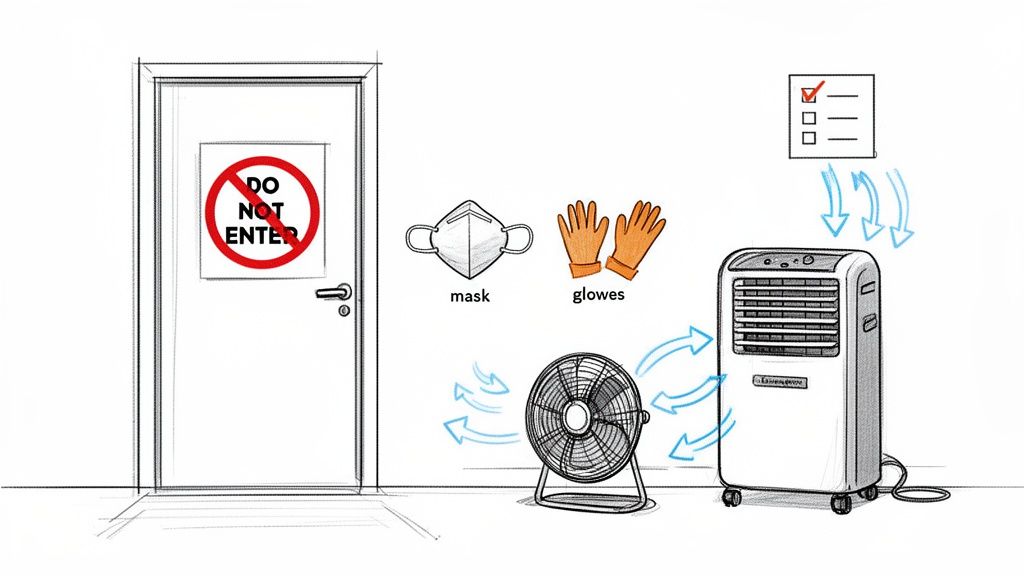
First things first, get everyone out of the basement. Keep children, pets, and family members with asthma or weakened immune systems far away from the area.
Seal it off as best you can. Close any doors leading to the basement and stuff a towel under the crack to block airflow. The goal is to isolate the problem.
If you have to go back in, you absolutely must wear the right personal protective equipment (PPE). This isn't a suggestion—it's critical for your health.
- An N-95 or P-100 respirator mask to keep from breathing in spores.
- Goggles with no vent holes to protect your eyes.
- Long gloves that cover your sleeves to prevent skin contact.
Once you’re geared up, your next task is to find the water source. Is a pipe dripping? Is a water heater leaking? If you can safely turn off a water valve to stop an active leak, do it. Cutting off the moisture is the only way to stop the mold from growing.
Control the Environment but Avoid DIY Removal
After you've stopped the water, it's time to start drying things out. Get some fans running to circulate the air. If you have a window, point a fan outward to help push some of that contaminated air outside. Running a dehumidifier on full blast will also work wonders by pulling moisture from the air.
I know it’s tempting to grab some bleach and a scrub brush and just attack the mold yourself. But please, don't. For any patch larger than a few square feet, scrubbing is one of the worst things you can do. It blasts a cloud of spores into the air, and bleach often won't kill the mold's "roots" in porous materials like drywall or wood, giving you a false sense of security.
The World Health Organization has clearly linked damp indoor spaces to a rise in respiratory problems and asthma. In fact, studies show a spike in these illnesses after major storms when mold has a chance to invade homes. Once mold is found, effective maintenance and repairs are essential to fix the underlying problem.
When you're ready to learn about the right way to handle the cleanup process, our full guide on how to clean basement mold breaks down every step.
Knowing When to Call a Mold Remediation Professional
So you've found mold in your basement. The big question now is, can you clean this up yourself, or is it time to call in the pros? Getting this decision wrong can unfortunately turn a small problem into a whole-house nightmare, spreading spores everywhere and putting your family’s health on the line.
The rule of thumb you’ll often hear from the EPA is that a small patch of mold—less than 10 square feet (think a 3-foot by 3-foot square)—might be a DIY job. But that comes with a huge asterisk. This only really applies if the mold is on a hard, non-porous surface like concrete, tile, or metal, and it wasn't caused by something nasty like a sewage leak.
But that’s where the DIY advice gets tricky. If that mold is growing on anything porous like drywall, wood studs, or carpeting, what you see on the surface is just the tip of the iceberg. The mold’s “roots” are already deep inside the material, and simply scrubbing the surface won't get rid of them.
Red Flags That Demand Professional Help
Beyond just the size, some situations are immediate, non-negotiable signs that you need an expert. Trying to tackle these on your own is not only a waste of time but can be downright dangerous.
These are the red flags that mean it's time to pick up the phone:
- It’s a Big Problem: Anything spreading beyond that 10-square-foot guideline is too much to handle safely without professional containment and air filtration gear.
- You Smell It But Can't See It: That strong, musty, “old basement” smell is a classic sign of hidden mold. It's likely growing behind your walls, under the floorboards, or even inside your HVAC system where you can't get to it.
- The Water Was Contaminated: If the moisture came from a sewage backup or overland floodwater, you're not just dealing with mold. That area is a biohazard, teeming with bacteria that require specialized cleanup protocols.
- Someone in the House is Sick: If anyone at home has allergies, asthma, a weakened immune system, or is already experiencing respiratory symptoms, don't even think about disturbing the mold yourself. The health risks are just too high.
When we find mold in an HVAC system, it’s a game-changer. That system is now actively blowing spores into every single room of your house. This scenario is never a DIY fix and always requires a professional.
The Professional Remediation Process Demystified
When you hire a certified mold remediation team, you're not just getting someone to spray some chemicals. You're bringing in specialists who follow a strict, scientific process to contain the problem and remove it for good. They know exactly how to prevent spores from escaping the work area and contaminating the rest of your home.
While every project has its own quirks, the process almost always follows these core steps:
- Containment: First things first, the crew will seal off the entire area with thick plastic sheeting. They use special negative air pressure machines to ensure that all airborne particles and spores stay inside the containment zone.
- Air Filtration: Powerful HEPA air scrubbers run continuously, capturing microscopic mold spores right out of the air. This is a critical step many people miss.
- Removal and Cleaning: Any materials that can't be saved, like contaminated drywall and insulation, are carefully bagged and removed. Hard surfaces are then meticulously cleaned with antimicrobial solutions.
- Drying and Dehumidification: Finally, commercial-grade air movers and dehumidifiers are brought in to completely dry out the space. This eliminates the moisture that allowed mold to grow in the first place.
Picking the right company is just as important as the process itself. If you're ready to find an expert, our guide on choosing mold removal companies near you has some great tips for finding a qualified pro you can trust.
A Few Common Questions About Basement Mold
When you find mold, your head probably starts spinning with questions about costs, safety, and what to do next. It can feel overwhelming, but you're not alone. Most homeowners have the same concerns. Let's walk through some of the most common questions we hear and get you some clear, straightforward answers.
Can I Just Paint Over Mold in My Basement?
We get this question all the time, and the answer is a firm no. It’s tempting to think a fresh coat of paint will solve the problem, but it’s really just a band-aid on a much bigger issue. In fact, you're just giving the mold a new food source.
Mold is a living thing, and it will happily eat through the new paint, causing it to bubble, crack, and peel surprisingly fast. Meanwhile, the mold continues to thrive underneath, compromising your air quality and causing more structural damage. The only way to fix it for good is to have the mold completely removed and the moisture problem solved before you even think about picking up a paintbrush.
Think of it this way: Painting over mold is just feeding it. The mold will digest the paper on the drywall and then start on the paint itself, ultimately making the problem worse and harder to address later.
Will Homeowners Insurance Cover Basement Mold Removal?
This one is tricky, and the answer is almost always: it depends. Coverage for mold removal hinges entirely on what caused it in the first place. If the mold grew because of a "covered peril" that was sudden and accidental—like a burst pipe or a washing machine that suddenly flooded the room—your policy might offer some coverage.
However, insurance almost never covers mold that results from long-term issues. This means problems from slow leaks, persistent high humidity, or general lack of maintenance are typically on you. It's really important to pull out your policy and read the fine print. A professional restoration company can also help by documenting the source of the damage, which is a big help when you file a claim.
How Long Does Professional Mold Remediation Take?
The timeline for a professional job can vary quite a bit. It really depends on the size of the mold problem, what kind of materials are affected (drywall, wood, concrete), and how deep the growth goes.
Every project is different, but here’s a general idea of what to expect:
- Small, Contained Jobs: For a small, isolated patch on an easy-to-reach surface, a pro can often have it properly contained, cleaned, and dried within 1 to 3 days.
- Larger, More Complex Projects: If we need to start removing contaminated drywall, flooring, or insulation, the job could easily take a week or more to finish safely and thoroughly.
A certified remediation specialist can give you a much more accurate timeline once they've had a chance to assess the situation in person.
Is Black Mold More Dangerous Than Other Molds?
The infamous "black mold," or Stachybotrys chartarum, gets a lot of attention because it can produce mycotoxins, which are genuinely harmful compounds. But here’s the unvarnished truth: any type of mold growing in your home should be treated as a potential health risk.
You can't tell how dangerous mold is just by looking at its color. Plenty of different mold species are black, and other molds that are green, white, or orange can also trigger serious allergic reactions and respiratory issues. Everyone's sensitivity is different; a patch of mold that one person barely notices could make another person very sick. The best approach is to treat all visible mold with caution and have it removed by a professional, no matter its color or type.
If you’ve spotted mold and are worried about the dangers it poses to your basement and your family, don't wait for the problem to spread. Restore Heroes offers emergency services with a team of IICRC-certified professionals ready to help. For a no-obligation on-site inspection in the Phoenix area, contact us today.