
Finding mold in your home is never a welcome discovery. It’s stressful, and naturally, the first question that pops into your head is probably, "How much is this going to cost me?"
There's no single price tag for mold remediation. Most homeowners end up paying between $1,200 and $3,750 for a professional job, but the cost can run anywhere from $10 to $25 per square foot. Let's break down what those numbers really mean so you can get a clearer picture of what to expect.
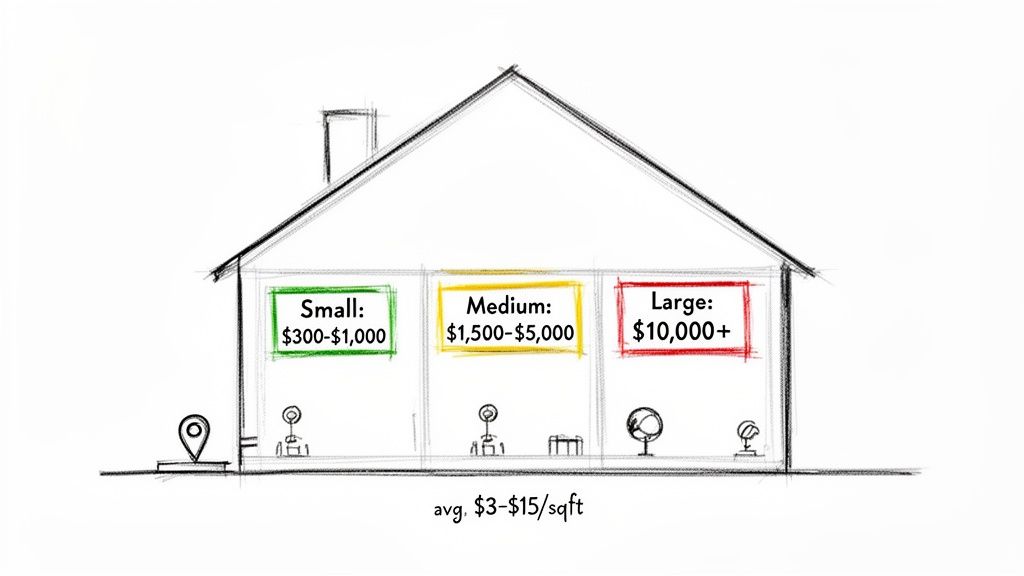
A Quick Look at Mold Remediation Costs
It’s completely normal to feel a bit overwhelmed when you find mold, but getting a handle on the potential costs is the first step toward feeling back in control. The final bill isn't a set number; it really depends on how widespread the mold is and where it’s hiding. It’s a bit like a car repair—a simple fix is one thing, but a major engine problem is a whole different story.
So, what does a "typical" job look like? Based on 2026 market data, the national average for professional mold remediation hovers around $2,300 to $2,400.
To give you a better sense of how these costs are broken down, we've put together a quick reference table. It outlines the typical national price ranges you might see based on the size of the mold problem.
Estimated Mold Remediation Costs at a Glance (2026)
| Contamination Level / Size | Typical Cost Range (National Average) |
|---|---|
| Small (e.g., under 10 sq. ft.) | $300 – $1,000 |
| Medium (e.g., 10 to 100 sq. ft.) | $1,500 – $5,000 |
| Large (e.g., over 100 sq. ft.) | $5,000 – $10,000+ |
Keep in mind, these are just ballpark figures. The key takeaway is that the sooner you catch and address a mold problem, the less damage it may do to both your home and your wallet.
Why Location Matters: Phoenix vs. National Averages
While those national numbers are a great starting point, where you live can make a difference. A major metro area like Phoenix has its own unique set of factors that can affect the price, including local labor rates, specific disposal fees, and even the way homes are built here.
You might think a dry climate like Arizona’s would mean fewer mold issues, but that's not always the case. Our monsoon season and unexpected plumbing failures are notorious for causing water damage that can lead to serious mold growth.
That's why finding a trusted local professional is so important. If you need some help starting your search, our guide to the top 7 mold remediation companies near you is a great resource. Ultimately, your best bet is to get a few different quotes from certified contractors in your area. It’s the only way to get a truly accurate idea of what mold remediation may cost for your specific situation.
What Really Drives Your Final Remediation Bill
Ever wonder why your neighbor’s mold problem cost $1,500 to fix, but you just got a quote for over $10,000? It’s a fair question, and the answer isn't arbitrary. The final price tag comes down to a few key things that professionals have to assess on-site.
Think about it like taking your car to the mechanic. A simple, visible scratch is one thing—a quick and easy fix. But if that scratch is a sign of a bent frame underneath, you're suddenly looking at a much bigger, more expensive job. Mold remediation is similar. What you see is often just the beginning.
The Scale of the Contamination
The biggest and most straightforward factor is simply how much mold there is. A small, contained spot under a leaky sink is a world away from mold that has crept across an entire basement.
Most professionals price their work by the square foot. So, the more ground they need to cover, the more labor, materials, and time it will take. A tiny job under 10 square feet will likely be on the low end. But once it spreads past 100 square feet or into multiple rooms, the project becomes much more involved and the cost reflects that.
This is why a professional property damage assessment is so important right from the start. It gives everyone a clearer map of what needs to be done.
Location and Accessibility
Where the mold is hiding is just as important as how much there is. Getting to it can be simple or incredibly complex, and that has a huge impact on the labor involved.
- Easy-to-Access Areas: Mold on an open wall or some bathroom tile is the simplest scenario. Technicians can get right to work without much fuss.
- Hard-to-Access Areas: This is where costs can jump by 50% or more. Mold loves to hide behind cabinets, inside walls, under floors, and especially in HVAC systems.
- Specialty Locations: Attics and crawl spaces are their own unique headache. They're often cramped, dark, and poorly ventilated, which makes the work much tougher and more time-consuming for the crew.
When mold is hidden, the job isn't just about cleaning. It involves careful demolition—like cutting out sections of drywall or removing flooring—and then rebuilding everything once the mold is gone. Those extra steps add up quickly.
Think of it this way: pulling a single weed from the middle of your lawn is easy. But if that weed's roots have twisted under your stone patio, you have a much bigger project. You have to pull up the stones, dig out the entire root system, and then perfectly re-lay the patio. The extra work of taking things apart and putting them back together is what really drives up the cost.
The Type of Mold and Related Damage
All mold needs to go, but the real cost driver here isn't usually the specific type of mold. It's the water damage that caused it in the first place.
If the mold grew from a small leak that's already been fixed, the job is pretty straightforward. But if you're dealing with the aftermath of a flood or a long-term, hidden leak, you have two problems to solve. You have to eliminate the mold and fix the source of the water.
This often means tearing out and replacing anything that got soaked—saturated drywall, warped floorboards, and ruined insulation. When water is a major part of the problem, understanding the typical water damage repair cost will give you a much more complete picture of the total expense.
The Professional Remediation Process and Its Costs
Getting rid of mold isn't just about spraying some chemicals and wiping things down. A real professional job is a detailed, multi-phase process designed to contain the mold, remove it, and help make sure it doesn’t come back.
It helps to know what these phases are so you can understand what you're paying for in an estimate. Think of it like a serious medical procedure—every single step matters. If you cut corners, the problem will almost certainly return, and you could be looking at an even bigger bill down the road.
This image highlights the three main things that will shape the final cost of your project: how much mold there is, where it's located, and what type you're dealing with.
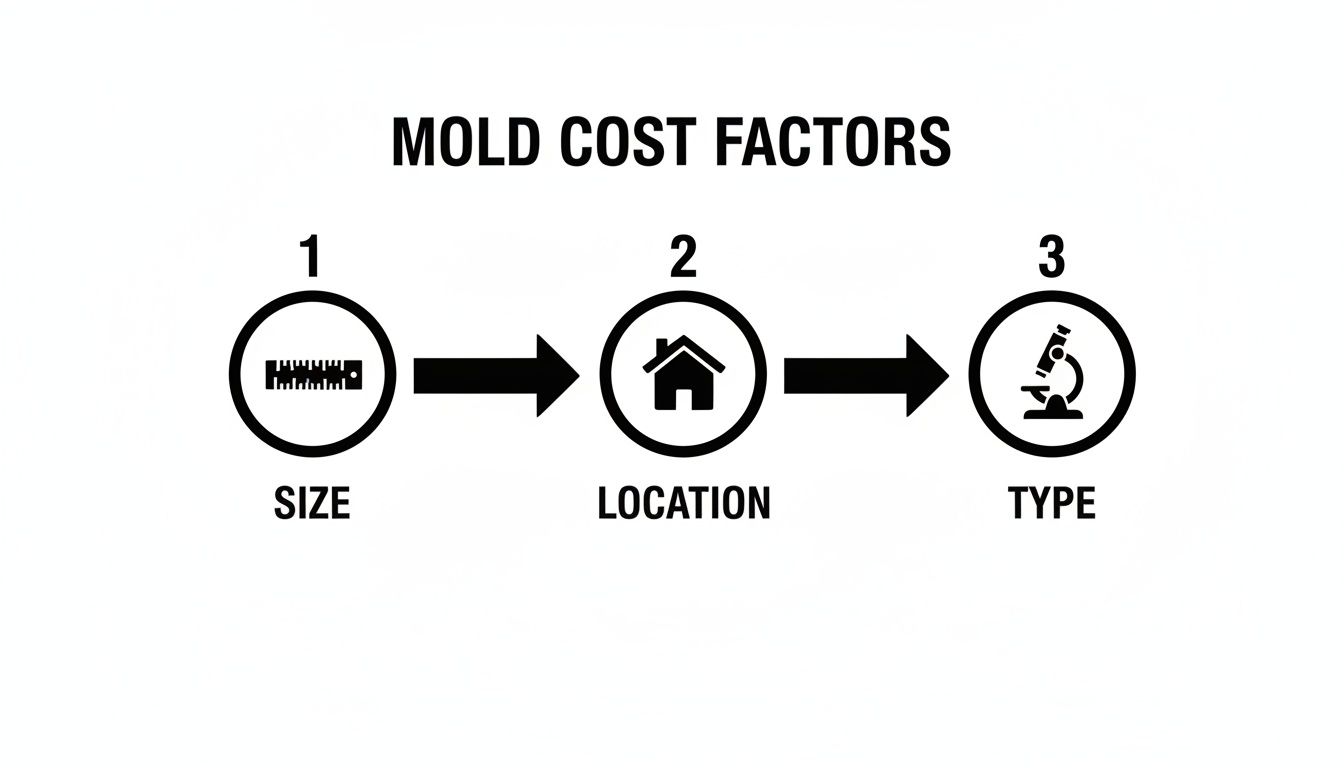
As you can see, these factors all play a part in determining just how complex and expensive the job will be.
Phase 1: Initial Inspection and Testing
The first thing any reputable team will do is a thorough inspection. They aren't just looking for visible mold; they're trying to understand the full extent of the problem. This initial step can involve a visual check, moisture readings with infrared cameras, and even taking air and surface samples to a lab for analysis.
A simple visual inspection might only run you $150 to $250. But if you need comprehensive testing with lab reports, the price typically lands between $400 and $700. For a major issue that requires multiple samples and a detailed work plan, costs can easily climb to $700 to $1,000 or more.
Phase 2: Containment and Air Filtration
Once the team knows what they’re up against, their first priority is to stop the mold from spreading. This containment phase is non-negotiable for professionals. Crews will use thick plastic sheeting to seal off the work area and create negative air pressure with special fans that push contaminated air outside.
It works just like the isolation rooms in a hospital. The whole point is to keep the "infection"—the mold spores—from escaping the contained space and contaminating the rest of your home.
At the same time, they'll set up powerful air purifiers called HEPA (High-Efficiency Particulate Air) air scrubbers. These machines work around the clock to capture any stray spores floating in the air. The cost for all this setup and equipment rental is usually baked into the total project fee. It's a key part of the process, focused on improving indoor air quality.
Phase 3: Removal of Contaminated Materials
Now for the dirty work. When mold grows into porous materials like drywall, insulation, or carpet, you can't just kill it and leave it there. Even dead mold spores can trigger allergies and health issues, so the contaminated materials have to go.
This is where much of the labor cost comes from. Technicians will carefully cut out and bag up any affected materials, which often includes:
- Sections of drywall and insulation
- Carpet and the padding underneath
- Porous wood fixtures or framing
This is usually the most physically demanding part of the entire remediation. If you're curious about all the tasks a team handles on a job like this, you can learn more about what a restoration company does.
Phase 4: Cleaning and Post-Remediation Verification
With all the contaminated materials gone, it's time for a deep clean. The crew will use special antimicrobial cleaners on all the remaining surfaces, like wall studs and concrete floors. They might even sand or wire-brush wood framing to make sure every last trace of mold is gone.
Finally, you might want proof that the job was done right. This is called a post-remediation verification, or clearance test. An independent expert can come in to take new air and surface samples, helping to confirm that your home's air quality is back to an acceptable level. It’s a final step that can provide you with peace of mind.
Breaking Down a Sample Remediation Estimate
Talking about price ranges is one thing, but seeing an actual estimate is where it all starts to click. It’s a good way to understand what you might be paying for and helps you confidently compare quotes from different contractors.
Think of it like getting an itemized bill at a restaurant instead of just a total. You can see the cost of the appetizer, the main course, and the drinks, making it crystal clear where your money went. A professional mold remediation estimate should give you that same transparency.
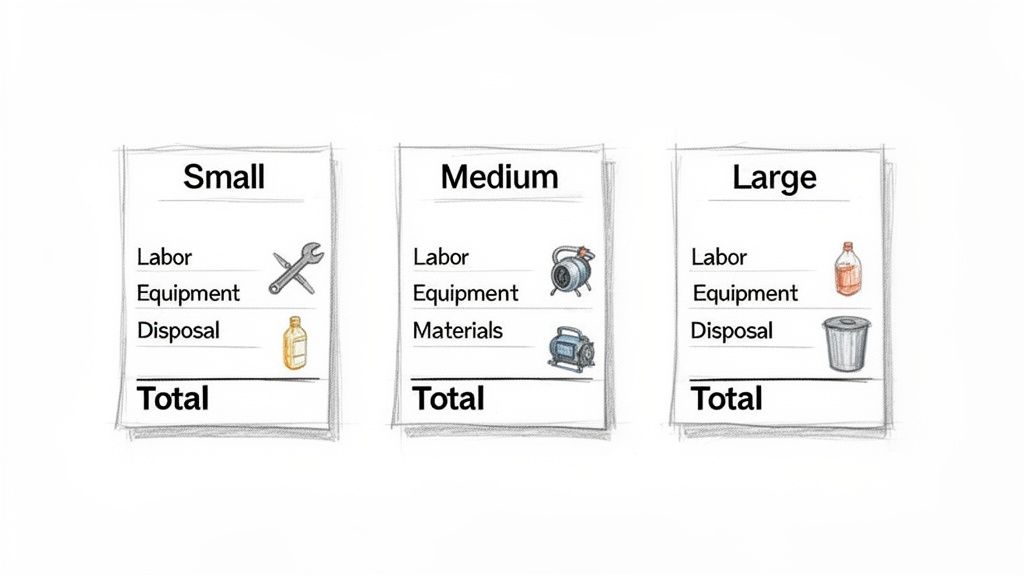
To give you a better idea, let's walk through three common scenarios we see all the time, from a minor cleanup to a major project.
Example 1: Small-Scale Contamination
Let's start with a classic. Imagine you find a slow, hidden leak under your kitchen sink. After a few months, you spot a dark patch of mold covering about 15 square feet on the cabinet floor and the drywall behind it.
A job like this is pretty straightforward. The estimate would likely have just a few key line items:
- Containment: A small plastic barrier to keep mold spores from spreading out of the kitchen.
- Equipment: One HEPA air scrubber running for a day or two to clean the air.
- Labor: A few hours for a technician to carefully remove the cabinet, cut out the moldy drywall, and clean the studs.
- Disposal: Bagging and disposing of the contaminated materials.
The total for a project this size is usually on the lower end of the spectrum. Just remember, this price typically only covers the mold removal itself—not the cost of a new cabinet or repairing the drywall afterward.
Example 2: Medium-Scale Contamination
Now, let's step it up a notch. Say a pipe bursts inside a bathroom wall, soaking the drywall and insulation. By the time you find it, mold has bloomed across 150 square feet of the wall and has started creeping into the flooring. This is a solid medium-sized job.
Here, the line items on the estimate get much more extensive because the job is more complex.
A detailed quote for a job of this size is a clear sign of professionalism. It shows the contractor has thoroughly assessed the situation and is providing a transparent breakdown of all necessary services, leaving no room for surprise charges later on.
To show you how the costs add up, here’s a sample breakdown for this kind of project. Keep in mind these are example ranges and not a firm quote.
Sample Estimate Breakdown for Medium-Sized Remediation (150 sq. ft.)
| Service / Item | Example Cost Range |
|---|---|
| Containment Setup & Negative Air | $300 – $600 |
| HEPA Air Scrubber Rental (3 days) | $450 – $750 |
| Labor (Demolition & Cleaning) | $1,200 – $2,500 |
| Antimicrobial Treatments & Sealants | $200 – $400 |
| Debris Disposal Fees | $150 – $300 |
| Project Management & Admin | $200 – $500 |
| Hypothetical Total Remediation Cost | $2,500 – $5,050 |
As you can see, the final cost for a mid-sized project is a sum of several different parts. The biggest expense is almost always labor, which involves skilled technicians safely removing materials without cross-contaminating the rest of your home.
Example 3: Large-Scale Contamination
Finally, let's look at a major project. A damp, musty crawl space has allowed mold to take over the entire 600-square-foot area, growing on floor joists, insulation, and the subfloor.
This is a serious situation that requires significant resources. The estimate for this job would be quite long and include:
- Extensive Containment: The entire crawl space would need to be sealed off from the home above.
- Multiple Air Scrubbers: Several units running for up to a week to handle the high concentration of mold spores.
- Intensive Labor: A team of technicians working in a difficult, cramped space to tear out all the insulation, scrub or sand down the joists, and treat every surface.
- Specialized Equipment: This might even involve things like dry ice blasting to strip mold from wood without adding more moisture.
- Large-Scale Disposal: A dumpster would likely be needed to haul away all the contaminated debris.
The cost for such an extensive remediation can easily climb past $6,000 to $10,000, and sometimes more, depending on how bad the growth is and how hard it is to access. These real-world examples show that the final price tag for mold remediation really depends on the unique details of the problem.
DIY Mold Removal vs. Hiring a Professional
When you first spot mold, it’s tempting to think you can handle it yourself. A quick trip for some bleach, a bit of scrubbing, and problem solved, right? The internet is full of tutorials that make it look easy and cheap, a simple way to dodge the whole "how much does mold remediation cost" question.
But is that really the smart play?
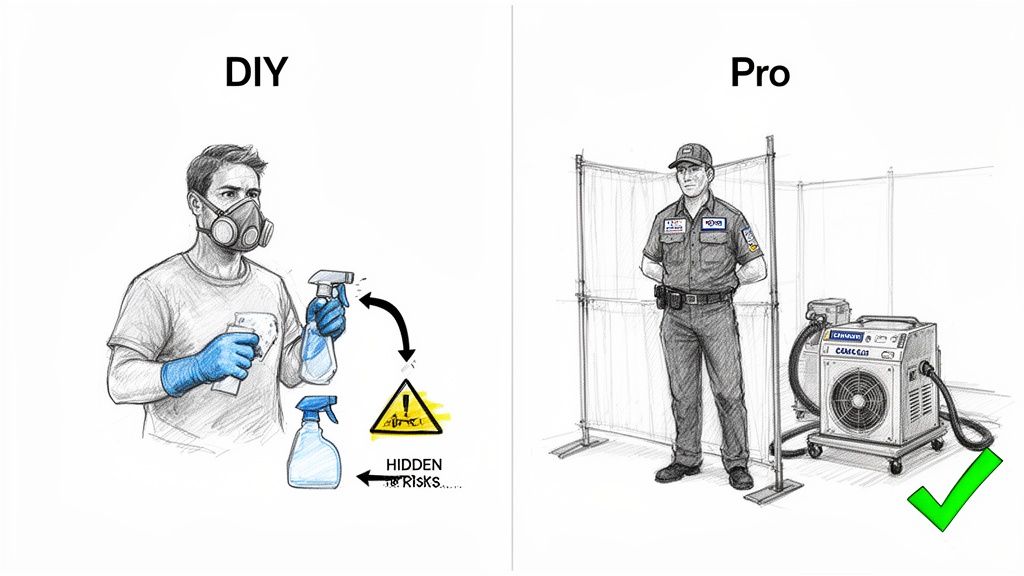
This isn't just about saving a few bucks. It’s a decision that directly impacts your family's health, your home's integrity, and your long-term peace of mind. Let’s talk about when you might get away with a DIY approach and when calling in a pro is often the more responsible choice.
When a DIY Approach Might Be an Option
There are very few situations where DIY mold cleaning is advisable. The Environmental Protection Agency (EPA) gives a loose guideline: if the affected area is less than 10 square feet (think a 3×3 foot patch), you might be able to manage it.
But there’s a huge catch. This only applies if the mold is on a hard, non-porous surface like glass, metal, or glazed tile. We’re talking about a small spot of mildew in the shower, not a patch on your drywall. Once mold gets its roots into porous materials, it's a whole different ballgame.
The Hidden Costs and Dangers of DIY Mold Removal
Trying to save money on mold removal often backfires spectacularly. What those quick-fix videos don't show you are the very real risks that can lead to much bigger problems and higher costs down the road.
The single biggest danger is cross-contamination. When you scrub or spray mold, you can disturb it, sending millions of invisible spores airborne. It’s like blowing on a dandelion puff—those seeds go everywhere. Without professional containment, those spores can hitch a ride through your HVAC system and start new colonies all over your house. A small bathroom problem can quickly become a whole-house disaster.
There's a reason the professional mold remediation service market is booming. It was valued at USD 1.20 billion in 2023 and is expected to hit USD 1.62 billion by 2033. Homeowners are becoming more aware of the serious health issues, like chronic respiratory problems, that can come from botched mold removal. You can see the data behind this trend in this detailed market report.
And what about those "savings"? They often disappear once you account for the hidden costs:
- Real Safety Gear: A paper dust mask and rubber gloves aren't enough. Proper protection means N-95 respirators, full-coverage goggles, and disposable suits to keep spores off your skin and out of your lungs.
- Specialized Equipment: To prevent cross-contamination, you need to rent a commercial-grade air scrubber with HEPA filtration. This isn't cheap.
- Ineffective Cleaners: Bleach is a common go-to, but it’s a poor solution. It might kill surface mold, but it doesn't reach the "roots" embedded in porous materials like wood or drywall. That means the mold is likely to grow back.
The Value of Hiring a Certified Professional
Hiring an IICRC-certified professional isn't just paying someone to clean. You're investing in a safe and effective approach.
A pro team brings critical advantages you simply can't replicate on your own:
- Proper Containment: They build sealed containment zones with plastic sheeting and create negative air pressure. This acts like a vacuum, helping ensure no spores can escape the work area.
- Specialized Equipment: Professionals use a powerful arsenal of tools, including HEPA air scrubbers, industrial dehumidifiers, and antimicrobial agents designed to address mold at its source.
- Liability and Insurance: A reputable company is licensed and insured. If something goes wrong during their work, their business insurance may offer protection. That’s a huge piece of mind you don’t get with a DIY project.
- Verification: The job isn't done when the cleaning stops. A true professional may recommend verifying their work with post-remediation air quality testing to show the mold issue has been addressed.
A tiny bit of mildew on your shower grout is one thing. But for anything larger, or anything that's penetrated drywall, wood, or carpet, professional help is essential. Trying to tackle a significant problem in a sensitive area like a basement, for example, is a job for experts. Our guide on how to properly clean basement mold shows just how complex that process can be.
Ultimately, the upfront cost of hiring a pro is a wise investment when you weigh it against the health risks and potential for much greater expense from a DIY attempt gone wrong.
Frequently Asked Questions About Mold Remediation
When you discover mold in your home, your mind probably starts racing with questions. It’s a stressful situation, and knowing what you're up against is the first step toward getting it handled. Let's walk through some of the most common concerns homeowners have when facing mold remediation.
Will Homeowners Insurance Cover Mold Remediation Cost?
This is the big one, and the honest answer is: it depends. Your insurance coverage for mold hinges entirely on what caused the moisture in the first place.
Generally, if the mold grew because of a "covered peril"—an event that was sudden and accidental, like a burst pipe or water from a fire being put out—then you may have a good chance your policy will help. However, even then, many policies put a cap on mold coverage, often between $5,000 and $10,000.
It's crucial to understand that mold resulting from gradual damage, such as a slow leak you didn't fix, poor maintenance, or general humidity, is almost always excluded from coverage. The best first step is to review your policy documents and call your insurance agent immediately.
While a professional remediation company can provide the detailed documentation needed for a claim, they cannot interpret your policy or guarantee coverage. For a deeper dive into this topic, check out our guide on whether homeowners insurance covers mold.
How Long Does Professional Mold Remediation Take?
The timeline for getting your home back to normal really scales with the size of the problem. There's no single answer, but here are some good rules of thumb.
- Small, Contained Jobs: For a minor patch of mold in an easy-to-reach spot, the work might be done in just 1 to 2 days.
- Medium-Sized Projects: A more serious issue, like a significant portion of a basement or a large section of drywall, usually takes about 3 to 5 days.
- Large or Complex Scenarios: If you're dealing with extensive contamination after major water damage, or if the mold has gotten into your HVAC system or crawl space, the project could easily last a week or even longer.
Remember, the total time includes everything from setting up containment and running air scrubbers to the actual removal, cleaning, and post-remediation testing. The sooner you act, the shorter this timeline is likely to be.
Can I Stay In My Home During Mold Remediation?
Your safety is always the top priority, so whether you can stay put depends on the specifics of the job. Your remediation team will give you a clear recommendation after their assessment.
If the problem is tiny and completely isolated to one room that can be sealed off, you might be able to stay. More often than not, however, it may be safer and more practical to find a temporary place to stay.
Here's why you might need to vacate:
- The HVAC system is involved: If your heating and cooling system needs to be cleaned, there's a risk of spores being circulated throughout the house.
- Widespread contamination: When work is happening in multiple areas or central living spaces, it can be difficult to effectively contain the work zone.
- Vulnerable household members: Children, elderly family members, and anyone with asthma, allergies, or a compromised immune system should not be present. The remediation process can temporarily stir up spores into the air.
Plus, the professional cleaning agents and sealants used can create fumes, making it uncomfortable to be in the house until it’s been fully aired out and cleared for re-entry.
What Happens If I Do Not Remove Mold From My Home?
Ignoring a mold problem is one of the most expensive mistakes a homeowner can make. It can create a snowball effect that impacts your property, your health, and your wallet.
First, mold is alive. As long as it has moisture and a food source (like wood or drywall), it will keep growing and spreading. A small spot you could have dealt with easily can mushroom into a massive infestation that may compromise your home's actual structure, turning a simple remediation into a major construction project.
Second, mold degrades your indoor air quality by releasing spores. It's estimated that 21% of asthma cases in the U.S. are attributable to dampness and mold in the home. This can lead to everything from nagging allergy symptoms to more serious, long-term respiratory issues.
Finally, an unresolved mold issue can impact your property value and make your home extremely difficult to sell. Most buyers will run the other way at the first sign of mold. Taking care of it quickly is an investment in your home's value and, more importantly, your family's health.
If you’ve discovered mold and are concerned about how much mold remediation will cost for your specific situation, don’t wait. The Restore Heroes team is here to help 24/7. We offer free, no-obligation onsite inspections to assess the damage and provide a clear, transparent plan to make your home safe again. Visit us at https://www.restoreheroesaz.com to schedule your inspection today.