
When you're standing in front of your home after a fire, it’s hard to know what to do next. For Phoenix homeowners, the first few hours are crucial. Your immediate priorities are simple: make sure everyone is safe, call your insurance agent, and take a few key steps to stop the damage from getting worse while you wait for professional help with fire damage restoration Phoenix.
Your First Steps After a Fire in Your Phoenix Home
The moments right after a fire are overwhelming and chaotic. Once the fire department has done its job and says it's okay to approach the property, your focus has to shift to safety and getting the recovery process started. What you do in the first 48 hours can make a huge difference in how smoothly the restoration goes.
Think of it like triage after an accident. The main goal is to stabilize the situation and prevent any more harm before the real specialists can get to work.
Prioritize Safety Above All Else
First things first: safety. Even after the flames are out, your home is filled with hidden dangers. The fire department will give you an initial assessment, but you need to be cautious.
Damaged electrical wiring is one of the biggest risks. To help make the property safe before anyone enters, you might need to call for emergency electrical services to shut things down properly and prevent any electrical hazards.
Contact Key Parties and Secure the Property
With your family safe, you have two very important phone calls to make. The first is to your insurance company. Reporting the fire right away gets the claims process started, and your agent can walk you through their specific requirements.
Your second call should be to a certified fire damage restoration company. A professional team can secure your home by boarding up broken windows and doors, which protects against vandalism and keeps the elements out.
The scale of fire damage across the country is staggering. In 2025 alone, the U.S. experienced over 1.3 million fires, causing $23.2 billion in property damage. Here in the Phoenix metro area—from Mesa and Gilbert to Scottsdale—our dry climate adds another layer of risk. Water used to fight the fire can quickly lead to major mold problems if not handled immediately.
Document Everything and Avoid Common Mistakes
Start taking photos and videos of the damage right away. This visual record is essential for your insurance claim, so capture everything before anything gets moved or cleaned.
It's natural to want to start cleaning up, but you can easily make things worse. Be sure to avoid these common mistakes:
- Do not try to wipe soot off walls or furniture. Soot is oily and acidic; trying to wipe it will just smear it deeper and can cause permanent stains.
- Do not plug in or use any electrical appliances. They may have been damaged by heat, soot, or water and could short-circuit or even start another fire.
- Do not eat any food or drink anything that was exposed to the fire, smoke, or heat. It's almost certainly contaminated.
Having a clear plan helps you get through these first stressful hours. For a more complete guide, you can download our what to do after a house fire checklist to make sure you don’t miss a single step.
The Professional Restoration Process from Start to Finish
When a professional fire damage restoration team arrives at your Phoenix home, you're not just getting a cleanup crew—you're getting a team of specialists who know how to handle the chaos. Think of it like an ER for your house. Every step is deliberate and follows a proven path to help bring your home back to life.
The very first thing a restoration company does is a comprehensive inspection. A lead technician will walk through the entire property to understand the full picture. They are looking at the obvious fire and smoke damage, of course, but just as importantly, they are assessing the water damage left behind by firefighting. In our dry Phoenix climate, that water is a ticking clock for mold growth.
This initial walkthrough forms the blueprint for the entire project. It tells the team what can be saved, what might be a total loss, and exactly which techniques and tools they will likely need to get the job done right.
This chart highlights the first critical things you need to do after a fire—long before the heavy lifting starts. It's all about safety, communication, and protecting what's left.
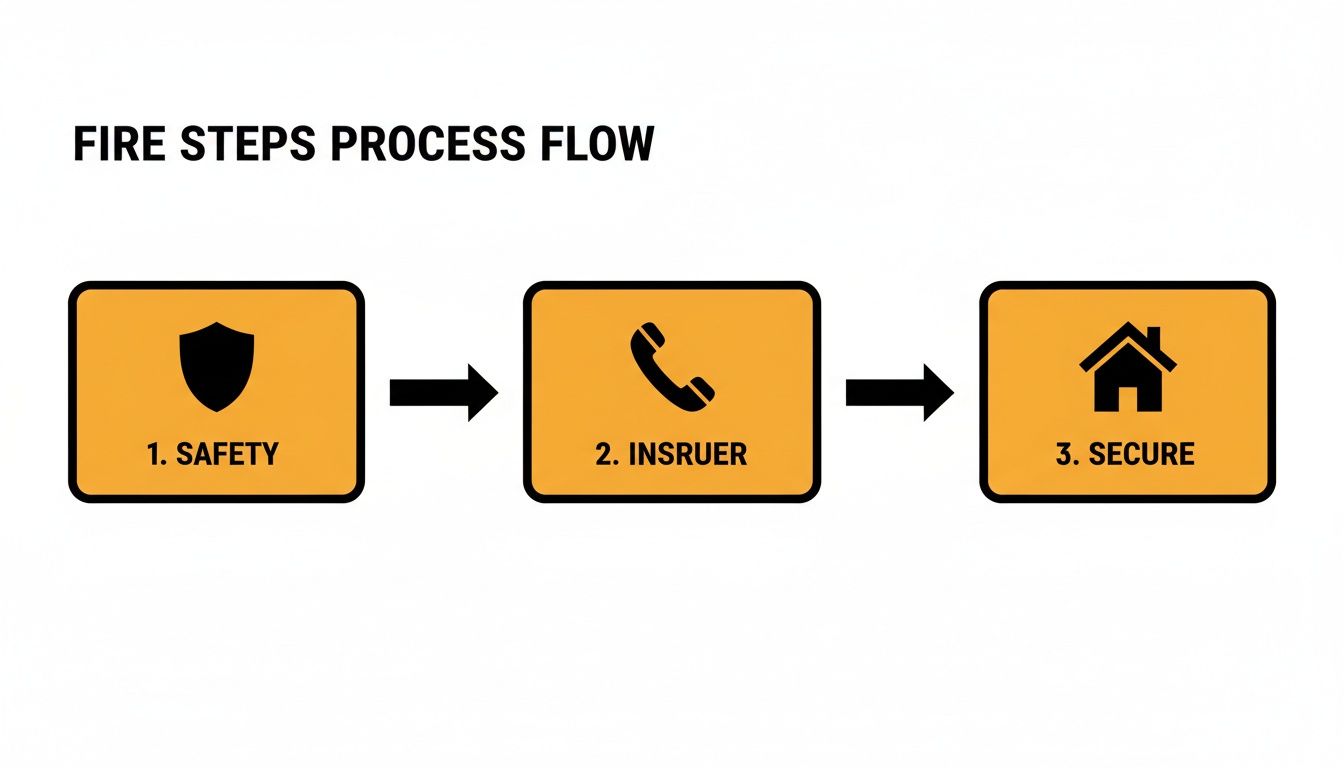
As you can see, ensuring everyone is safe and getting your insurance company in the loop are the absolute priorities.
The table below breaks down the key phases you can expect during a professional restoration project. It gives a bird's-eye view of how a team moves from initial damage control to the final touches that can make your house a home again.
Phases of Professional Fire Damage Restoration
| Phase | Objective | Key Activities |
|---|---|---|
| 1. Assessment & Securing | Evaluate the scope of damage and prevent further harm. | Detailed inspection, board-up of windows/doors, roof tarping, initial safety checks. |
| 2. Water Mitigation | Remove water from firefighting efforts to prevent mold. | Water extraction, setting up air movers and commercial dehumidifiers. |
| 3. Soot & Smoke Removal | Clean all surfaces affected by corrosive soot and smoke residue. | Use of specialized sponges and cleaning agents, detailed cleaning of structures. |
| 4. Cleaning & Sanitizing | Salvage personal belongings and deep-clean the property. | Pack-out of salvageable items, cleaning of contents, structural cleaning, and sanitization. |
| 5. Deodorization | Eliminate stubborn smoke odors. | Thermal fogging, ozone/hydroxyl treatments to neutralize trapped smoke particles. |
| 6. Reconstruction | Repair or rebuild damaged areas of the home. | Drywall replacement, painting, flooring installation, structural repairs. |
Each phase is a critical step on the road to recovery, building on the one before it to aim for a complete and lasting restoration.
Securing the Property and Mitigating Further Damage
With a solid plan, a crew’s first hands-on job is to stop any more damage from happening. This means immediately boarding up broken windows, securing busted doors, and tarping any holes in the roof. This keeps the weather out and prevents any security issues.
At the same time, the team can start extracting water. Fire hoses can dump an incredible amount of water, and if it sits, you’re looking at rot, crumbling drywall, and mold growth in as little as 24-48 hours. Professionals use powerful, truck-mounted vacuums to pull out all the standing water.
After the bulk of the water is gone, they bring in the heavy-duty drying equipment:
- High-Volume Air Movers: These aren't your average fans. They blast air across floors, walls, and other surfaces to speed up evaporation.
- Commercial Dehumidifiers: These machines are workhorses, pulling gallons of moisture out of the air and the structure itself to stop mold in its tracks.
The Meticulous Cleanup of Soot and Smoke
Once the property is stable and dry, the focus can shift to the soot and smoke. This is where real expertise comes in, because the residue from a wood fire is totally different from a plastic or protein fire, and each requires a specific cleaning method.
Soot isn't just dirt; it's acidic and incredibly corrosive. If left alone, it can permanently etch glass and stain surfaces within just a few days. Trying to wipe it off with a regular cloth will only smear the oily film, driving it deeper into the material.
Technicians use special tools like dry-cleaning chemical sponges that lift soot without smudging. They also have an arsenal of cleaning agents designed to break down smoke residue. Every single affected surface—from the ceilings down to the items in your kitchen drawers—is painstakingly cleaned.
Salvaging Belongings and Eliminating Odors
A huge part of any fire damage restoration phoenix job is figuring out which of your personal belongings can be saved. Specialists are trained to sort items that can be restored from those that are unfortunately beyond repair. Anything salvageable is often carefully packed and moved to a separate facility for specialized cleaning.
Finally, the team can tackle the most persistent reminder of a fire: the smell. Smoke particles are microscopic and get into everything—wood, drywall, fabrics, you name it. Just wiping down the surface won't cut it.
To help get rid of the odor, advanced deodorization techniques are used:
- Thermal Fogging: This creates a fine mist with a deodorizer that follows the same path the smoke did, getting deep into all the nooks and crannies.
- Ozone or Hydroxyl Generation: These technologies create oxidizing agents that can break down smoke molecules on a chemical level, eliminating the odor instead of just covering it up.
This is the final, crucial step to making your house feel and smell like home again. If you'd like to get into the nitty-gritty of how this all works, check out our in-depth guide to the complete fire damage restoration process.
How to Navigate Your Fire Damage Insurance Claim
After a fire, dealing with your insurance company can feel like a second disaster. The mountain of paperwork, the confusing jargon, and the endless phone calls are overwhelming when you’re already trying to process what happened. But you can get through it.
Think of your insurance policy as the rulebook for your recovery. Understanding a few key rules and having the right people on your side makes all the difference. Let's break down the process into manageable steps.
Initiating Your Claim and Documenting Everything
Once everyone is safe, your very first call should be to your insurance company. This kicks off the official claims process and gets an adjuster assigned to your case—they're the person responsible for evaluating the damage and your claim.
From that moment on, become a meticulous record-keeper. Your new job is to document everything. Start a notebook or a file on your computer and log every single conversation with your insurer: note the date, the time, and who you spoke with. This simple habit can prevent a world of headaches and "he said, she said" arguments down the road.
Your insurance policy is a binding contract. Getting your claim approved and moving forward often comes down to following the procedures it outlines and providing solid proof of your loss. This is where a professional restoration company can become your most valuable partner.
As you begin navigating this process, you might find extra support in a homeowner's guide to insurance claims assistance. It offers more context for working with your provider.
Key Insurance Terms You Need to Know
Your adjuster will use a lot of specific terms that can sound like a foreign language. Getting a handle on them is essential for making smart decisions about your home and your finances.
Here are the two big ones you'll hear over and over:
- Actual Cash Value (ACV): This is what your damaged property is worth today, not what you paid for it. Think of it as the garage sale price for your five-year-old couch, factoring in wear and tear. It’s the initial amount most insurers may pay out.
- Replacement Cost Value (RCV): This coverage is designed to pay for a brand-new replacement of similar kind and quality, without subtracting for depreciation. Typically, you might get the ACV amount first. Then, once you buy the new item and show the receipt, the insurance company may pay the difference.
You'll also want to ask about Loss of Use coverage. If your home is unlivable, this part of your policy may help pay for additional living expenses like a hotel, laundry services, and even meals out while the fire damage restoration Phoenix work is underway.
The Role of a Professional Restoration Company
Hiring an experienced restoration company isn't just about getting the physical repairs done. It can also be about getting an expert advocate for your insurance claim. These pros speak the same language as insurance adjusters, which can dramatically smooth out the process.
They provide the exact, detailed documentation your adjuster needs to see, including:
- Itemized, line-by-line estimates for all repairs.
- Comprehensive photo and video evidence of the damage.
- Moisture maps and drying logs for any water damage from firefighting efforts.
- A complete inventory of all personal belongings that were damaged or destroyed.
A certified restoration team can talk directly with your adjuster, clearly explaining why certain repairs are necessary and justifying the costs. This professional-to-professional communication can get questions answered faster, help cut through red tape, and keep your recovery moving forward. For a closer look at what your policy may cover, you can learn more about how homeowners insurance covers fire damage on our blog.
After a fire, two questions immediately come to mind: "How much is this going to cost?" and "How long will it take to fix?" It's completely understandable. While there's no single answer—every fire is different—we can walk through the factors that shape the budget and timeline for a fire damage restoration phoenix project to give you a clearer picture.
Think of it like car repairs. A fender bender that needs a new bumper and a quick paint job is a few-day fix. But a major collision that bent the frame and damaged the engine? That’s a different story, easily taking weeks or months. Fire damage is the same. The scope of the damage sets the pace for everything that follows.
What Goes Into the Restoration Bill?
The final cost isn't just about the size of the fire. The type of smoke it produced and the amount of water needed to put it out are huge factors, too. A small, contained kitchen fire is often less expensive to repair than one that spread through several rooms and got into the home's structure.
When we look at the numbers, structural fires are a major cause of property loss nationwide. While some local Phoenix data points to average repair costs between $2,297 and $2,360, a full-blown restoration that tackles soot, smoke, and water damage often pushes past $4,000. Looking at the national picture, the average cost hits around $12,900. This can range from $1,200 for a simple smoke cleanup to over $72,300 for a major structural rebuild, as shown in recent industry reports and data on Phoenix fire damage repair expenses.
Several key services make up the total bill:
- Structural Repairs: This is often the biggest variable. It can mean anything from replacing drywall and flooring to rebuilding entire sections of your home from the ground up.
- Soot and Smoke Removal: The materials that burned (like wood versus plastic) create different kinds of soot. Each type demands a specific, technical cleaning process.
- Water Damage Mitigation: Pumping out the water from firefighting efforts and drying out the structure with powerful air movers and dehumidifiers is a critical—and often urgent—first step.
- Personal Property Cleaning: The cost to professionally clean, deodorize, and restore your salvageable belongings can also be a significant part of the overall project.
Setting a Realistic Timeline for Your Project
Just like the costs, the timeline can vary widely. Getting a handle on what to expect can really help lower the stress of the recovery process. For a minor incident, like a small kitchen fire that only left behind smoke and odor, the work might only take a few days. The job is focused on specialized cleaning and getting the smell out.
More serious damage, however, requires a step-by-step approach that simply takes time. If a fire damaged one or two rooms but the home is still structurally sound, you might be looking at several weeks. That timeframe includes water removal, deep cleaning, and then the reconstruction work like painting and installing new floors.
A lot of people think the worst is over once the flames are out. The truth is, the secondary damage from acidic soot and all that water can be just as destructive if it isn't handled right away. The timeline isn't just about rebuilding; it's about carefully undoing every layer of damage first.
Major structural fires are in a league of their own. When a blaze has compromised the roof, support beams, or foundation, the restoration can easily take several months. This longer schedule has to account for getting structural assessments from engineers, securing the right permits from the City of Phoenix, and the massive amount of reconstruction required to make your home safe and sound again. For a more detailed breakdown of what goes into the budget, check out our guide on the cost of fire damage restoration.
How to Choose the Right Fire Restoration Company in Phoenix
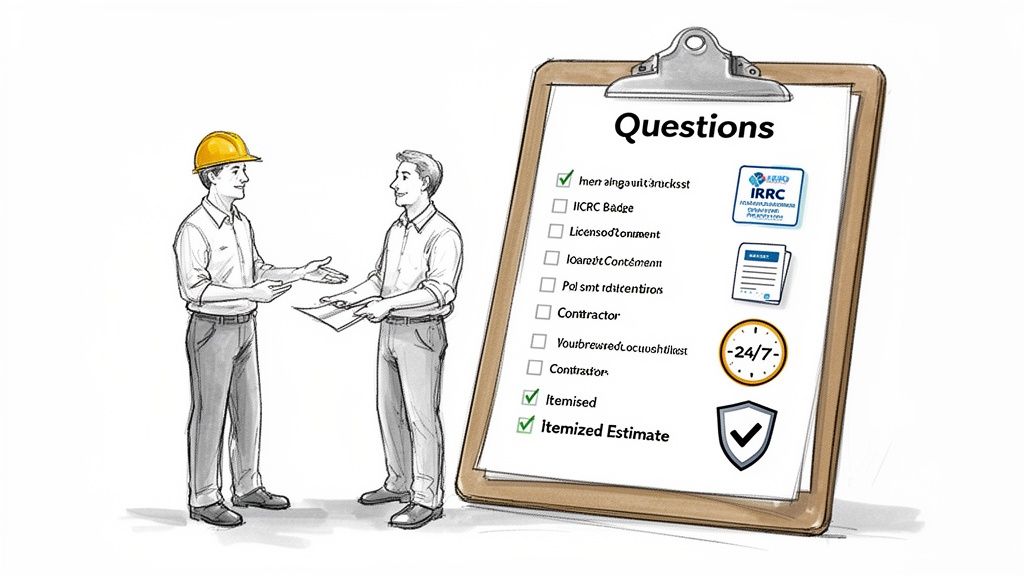
Picking the right company to rebuild your home is probably the single most important decision you'll make after a fire. This isn't just about repairs; it's about handing over the keys to a team you can trust with your property, your memories, and your family's future. To confidently choose a reputable firm for fire damage restoration Phoenix, you need to know exactly what to look for and which questions to ask.
Think of it like hiring a surgeon for your home. You wouldn't let just anyone operate without first checking their credentials and track record. The same principle applies here, and it all starts with confirming a few non-negotiable qualifications.
Verify Credentials and Experience
Your very first step should be to check for proper certifications. In our industry, the gold standard is IICRC certification. That stands for the Institute of Inspection, Cleaning and Restoration Certification, and it’s a sign that a company's technicians are trained to meet strict global standards for safety and effective restoration.
Beyond that, make absolutely sure any contractor you're considering is fully licensed, bonded, and insured to work in Arizona. This protects you from any liability if a worker has an accident on your property. Any legitimate company should have this documentation ready to show you without hesitation.
Never work with a company that hesitates to show you their license or proof of insurance. Reputable contractors are transparent because they have nothing to hide. This single step can save you from predatory companies and unqualified operators who often appear after a disaster.
Essential Questions to Ask Every Contractor
Once you’ve confirmed their basic qualifications, it’s time to dig a little deeper to see if they’re the right fit for your unique situation. Come prepared with a list of questions, and pay close attention not just to what they say, but how they say it. A trustworthy company will be patient and thorough.
Here are the critical questions you should always ask:
- Are you available 24/7 for emergencies? Fires don’t stick to a 9-to-5 schedule, and the recovery process needs to start immediately to stop the damage from getting worse.
- Do you have experience with projects like mine? Ask for examples or even references from similar fire damage jobs they've completed in the Phoenix area.
- Can you provide a detailed, itemized estimate? A vague, one-page quote is a huge red flag. You need a line-by-line breakdown of all the work and associated costs.
- Will you work directly with my insurance company? An experienced contractor knows how to speak the same language as your adjuster, which can dramatically speed up the claims process.
- Who will be my main point of contact? Having a dedicated project manager to call gives you a direct line for answers and provides enormous peace of mind.
This vetting process helps you spot red flags and choose a true partner—someone who will not only restore your property but also give you the clear communication and support you need. The more you know about what the job entails, the better your decisions will be. To get a better handle on the process, you can learn more about what a restoration company does from start to finish.
Phoenix-Specific Challenges in Fire Restoration
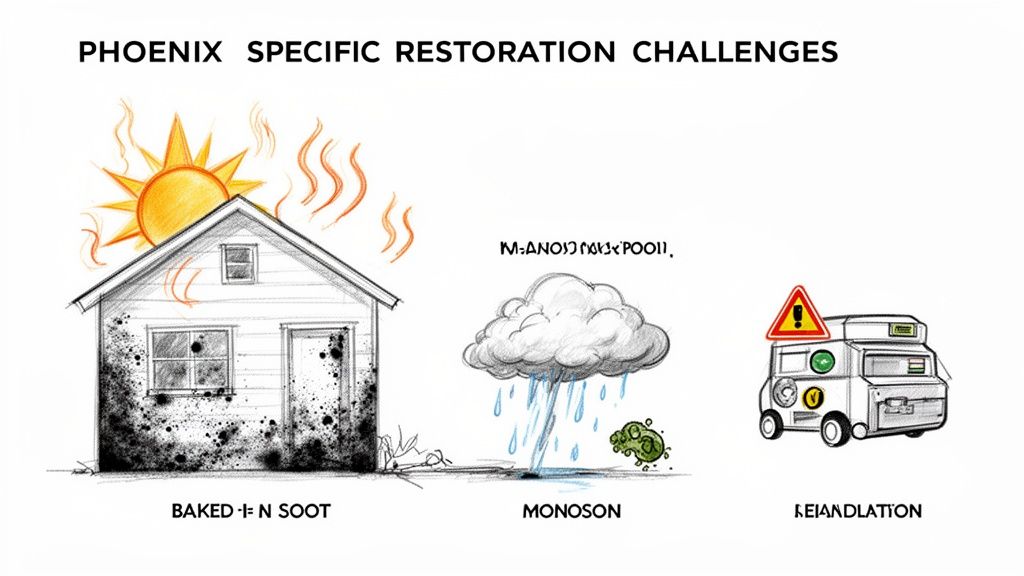
Cleaning up after a fire here in Phoenix isn't like anywhere else. You can't just apply the same old techniques and expect good results. Our Sonoran Desert environment—with its blistering heat and sudden monsoons—creates a whole different set of problems that can turn a bad situation into a catastrophe.
Think about soot. In a cooler, damp climate, it’s a messy powder. Here, the relentless Arizona sun can literally bake that soot onto your walls, ceilings, and belongings. It can transform from a simple residue into a stubborn, varnish-like coating that’s incredibly tough to remove without causing more damage.
Then there's the water. Firefighters use thousands of gallons to save a home, and all that moisture gets trapped inside. This is where our climate’s two extremes—bone-dry and suddenly humid—work against you.
The Heat and Humidity Problem
That combination of intense Phoenix heat and a sudden flood of water creates the perfect storm for mold. After the fire is out, your home is saturated. Once the sun comes out, the entire structure effectively becomes a giant incubator.
We see it all the time. Mold can explode in as little as 24 to 48 hours in these warm, damp conditions. That’s why immediate, professional water extraction and structural drying are non-negotiable. Waiting even a single day can be the difference between a manageable water issue and a full-blown mold remediation nightmare.
Choosing a restoration company without deep local experience is like asking a desert guide to navigate a tropical jungle—they might know the basics, but they won't understand the specific dangers. A Phoenix-based team knows that the clock on mold starts ticking much faster here and will likely prioritize aggressive drying from day one.
Local Building Materials and Codes
The way we build homes in the Valley also changes the game. Stucco exteriors, concrete slab foundations, and specific roofing materials are all designed for our climate, and they all react differently to fire, smoke, and water. You can't just slap a patch on damaged stucco; it takes a specialized touch to repair it correctly.
On top of that, a good contractor has to be an expert in the local building codes for Phoenix, Scottsdale, Mesa, and all the surrounding cities. They need to know exactly what’s required to ensure every repair is compliant, saving you from the headache of failed inspections and costly delays. This isn't just a "nice-to-have"—it's essential for getting the job done right.
Emerging Local Risks
The fire risks in Phoenix are also evolving. We're seeing more challenges from things like lithium-ion battery fires in electric vehicles (EVs). These fires are notoriously hard to put out and can reignite long after they seem to be extinguished, posing a unique threat that requires specialized training and gear.
Fortunately, our city is adapting. Phoenix recently secured over $9.5 million in federal funds, and $800,000 of that is earmarked for new equipment specifically designed to fight EV battery fires. With the U.S. seeing $23.2 billion in fire-related losses in 2025, it’s clear that these local investments are crucial for protecting our community. You can read more about how Phoenix is bolstering its fire response capabilities on the city's official site.
Frequently Asked Questions About Fire Restoration
Going through a fire is overwhelming, and you’re bound to have a ton of questions. We get it. Here are some straightforward answers to the questions we hear most often from Phoenix homeowners trying to figure out what comes next.
Is It Safe to Go Back Inside My House After a Fire?
Absolutely not. You should never, ever re-enter a home after a fire until the fire department has given the official all-clear. Even if the flames are out, you're facing serious, often invisible, dangers.
The building’s structure could be compromised and at risk of collapse. Beyond that, toxic gases can linger, electrical wiring is often damaged and hazardous, and the soot coating everything is acidic and harmful. Always wait for a professional to assess the situation and tell you it's safe. It’s the only way to protect yourself and preserve the scene for your insurance claim.
Can I Just Clean Up a Little Smoke Damage Myself?
Tackling smoke and soot on your own is a bad idea, and here's why: it almost always makes the problem worse. Soot isn't like regular dust; it’s an oily, acidic residue. Trying to wipe it away with a household cleaner is like trying to clean up a grease spill with a wet paper towel—it just smears the mess deeper into the surface.
Professionals use special tools for this, like chemical dry-cleaning sponges that are designed to lift oily soot particles off a surface without smearing them. This technique is crucial for preventing permanent staining on your walls, furniture, and other belongings.
What About All the Water Damage from the Fire Hoses?
Dealing with the water damage is actually one of the very first things a professional team does on a fire damage restoration Phoenix job. All that water from the firefighters creates the perfect breeding ground for mold, which can take hold in just 24-48 hours in our warm Arizona climate.
A professional crew can jump on this immediately. The process usually involves:
- Using powerful pumps and vacuums to get all the standing water out.
- Setting up high-powered industrial air movers to get air circulating and speed up evaporation.
- Bringing in large, commercial-grade dehumidifiers to pull every last bit of moisture from the air, drywall, and wood framing.
Drying everything out quickly and aggressively is the key to stopping secondary damage like wood rot and a major mold infestation.
Will the Smell of Smoke Ever Truly Go Away?
Yes, it can—but only with professional-grade deodorization. That campfire smell isn't just in the air; the microscopic smoke particles have worked their way deep into porous materials like drywall, wood, insulation, and carpet. Spraying air freshener just covers it up for a little while.
To get rid of the odor for good, the smoke particles themselves have to be neutralized. Professionals use advanced equipment like thermal foggers, which recreate the behavior of smoke to carry a deodorizer to the same places the smoke traveled. They also use ozone or hydroxyl generators that create a chemical reaction to break down the odor-causing molecules. This isn't masking the smell; it's eliminating it at its source.
When disaster strikes, you need a team you can trust. Restore Heroes is an IICRC-certified, licensed, and insured company ready to help 24/7. We offer immediate response and free onsite inspections to homeowners across the Phoenix area. We handle everything from assessment to reconstruction, working directly with your insurance provider to make the process as smooth as possible. Let our heroes restore your home and your peace of mind. Get professional help now at https://www.restoreheroesaz.com.