
A fire can escalate from a minor incident to a devastating event in minutes, making proactive prevention the most critical defense for any property owner. While we hope you never need emergency services, a systematic approach to safety can significantly reduce risks. This detailed fire safety inspection checklist is designed to empower property managers, business owners, and homeowners in the Phoenix area to identify and address potential hazards before they lead to catastrophe.
Organized into 10 crucial areas, this guide offers more than just a list. It provides actionable steps, compliance notes, and expert insights to help you create a safer environment. We will cover everything from the proper placement and maintenance of fire extinguishers to the complex requirements of electrical systems and commercial kitchen safety. Think of this as your blueprint for a thorough, repeatable inspection process that methodically assesses your property.
This guide will help you understand:
- How to check fire extinguishers, smoke detectors, and emergency exits.
- Key inspection points for electrical panels, HVAC systems, and kitchens.
- Common failure points and simple remediation steps.
- Signs that indicate you should call a professional restoration contractor.
It is important to note that this guide is for informational purposes and does not suggest any guarantees of service, coverage, or pricing for any professional services mentioned. Following this checklist helps you methodically evaluate your property's readiness, but for certified inspections and post-disaster recovery, professional consultation is key. Let’s begin building a more resilient property.
1. Fire Extinguisher Accessibility and Compliance
A readily available and functional fire extinguisher can be the difference between a minor incident and a catastrophic fire. This critical checkpoint on any fire safety inspection checklist ensures that these first-line-of-defense devices are properly placed, fully charged, and compliant with national and local standards. The core principle is simple: when a fire starts, an extinguisher must be immediately accessible and operable by anyone in the vicinity.
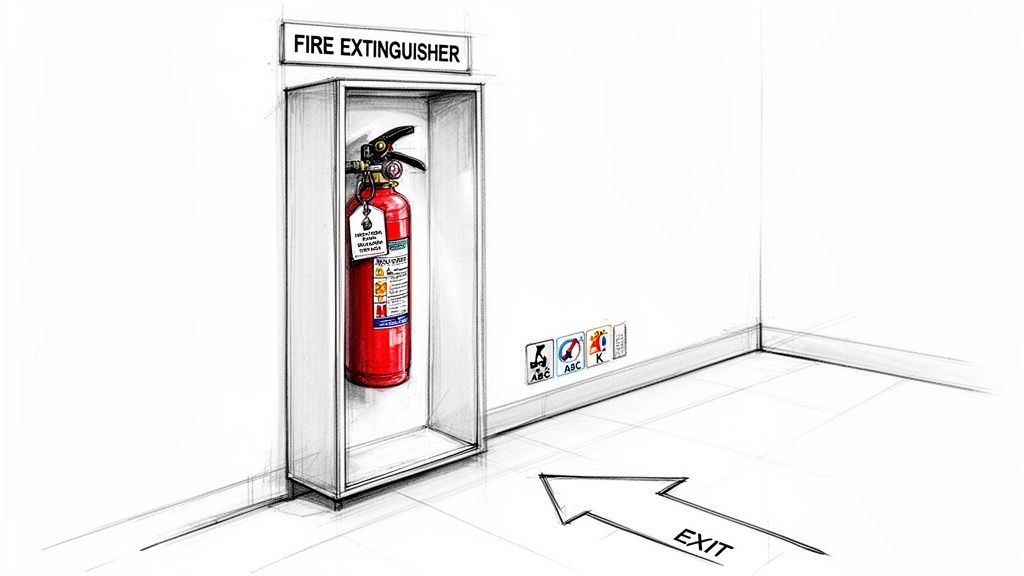
This involves more than just having extinguishers on the property. Compliance with NFPA 10 standards, adopted by the Phoenix Fire Code, dictates specific requirements. For instance, extinguishers should be mounted so the top is no more than 5 feet from the floor (or 3.5 feet for heavier units), ensuring they are easy for most adults to lift. Travel distance is also key; a person should not have to travel more than 75 feet to reach one. For comprehensive details on maintaining these vital devices, refer to a practical guide on fire extinguisher inspection.
Key Inspection Points and Actions
To confirm compliance, verify the following during your inspection:
- Visibility and Marking: Is the extinguisher clearly visible, or is its location marked with a prominent sign? It should not be obstructed by furniture, equipment, or decorations.
- Pressure Gauge: Check that the needle on the pressure gauge is in the green "charged" zone. If it's in the red, the unit needs immediate servicing or replacement.
- Physical Condition: Look for signs of damage like dents, rust, or a broken or missing safety pin. The nozzle should be clear of any debris.
- Inspection Tag: Confirm the professional inspection tag is current. In Arizona, commercial buildings often require annual servicing by a certified technician.
- Placement: Ensure extinguishers are located near exists and specific hazards like kitchens, server rooms, and mechanical closets.
Pro Tip: Train all building occupants on the P.A.S.S. method: Pull the pin, Aim the nozzle at the base of the fire, Squeeze the handle, and Sweep from side to side. An extinguisher is only effective if people know how to use it. In the event an extinguisher is used or a fire spreads, swift professional response is critical to address the aftermath of a commercial fire damage event.
2. Emergency Exit Routes and Egress Clearance
In a fire emergency, a clear and accessible path to safety is non-negotiable. This part of the fire safety inspection checklist focuses on ensuring that all emergency exit routes, also known as means of egress, are unobstructed, properly marked, and lead occupants swiftly and directly to an outdoor safe area. The fundamental goal is to prevent panic and confusion by providing a straightforward escape, a requirement strictly enforced by OSHA and the Phoenix Fire Department.
This principle is vital across all building types, from multi-story residential buildings in Chandler with clearly marked stairwells to sprawling retail properties in Phoenix requiring multiple, redundant exits. According to the International Building Code (IBC), exit routes consist of three parts: the exit access (the path to an exit), the exit itself (like a doorway or protected stairwell), and the exit discharge (the path to a public way). Each component must be maintained to help ensure a building can be evacuated quickly.
Key Inspection Points and Actions
To confirm your property meets egress standards, verify the following during your inspection:
- Clear Pathways: Are all hallways, corridors, and stairwells completely free of storage, equipment, furniture, or debris? Even a single misplaced box can create a dangerous bottleneck.
- Exit Door Operation: Do all exit doors open easily from the inside without a key, special knowledge, or effort? They must not be chained, bolted, or otherwise locked. Check that they open outward in the direction of travel.
- Illuminated Signage: Are all exit signs clearly visible and illuminated? Test the battery backup on lighted signs to ensure they function during a power outage.
- Emergency Lighting: Is the exit route equipped with emergency lighting? Test these systems to confirm they activate automatically and provide enough light to guide occupants to safety.
- Minimum Width: Ensure the egress path maintains its required minimum width at all points. This is especially important in storage areas and back-of-house corridors.
Pro Tip: Conduct and document monthly visual inspections of all egress routes, taking dated photos of any identified issues and their correction. This creates a clear record of due diligence and helps instill a continuous culture of safety among all occupants. If a fire does occur, blocked exits can worsen the situation and lead to more significant commercial fire damage and potential liability.
3. Smoke Detection System Installation and Testing
A functional smoke detection system is a fundamental component of any fire safety plan, providing the crucial early warning needed to escape a fire. This part of your fire safety inspection checklist ensures that detectors are correctly installed, fully operational, and compliant with current codes. The objective is to verify that these life-saving devices will activate promptly in the presence of smoke, giving occupants time to evacuate safely.
Proper installation and maintenance are governed by standards like NFPA 72, which are widely adopted by local fire departments across Arizona, from Phoenix to Scottsdale. These codes specify placement to maximize effectiveness, such as installing detectors in all sleeping areas, hallways outside bedrooms, and on every level of a property. For example, many multi-family apartment buildings in Mesa now feature interconnected systems where if one alarm sounds, they all do, providing a more robust alert.
Key Inspection Points and Actions
To ensure your smoke detection system is ready to protect your property, check the following points during your inspection:
- Monthly Testing: Press the "test" button on each detector monthly to confirm the alarm sounds. This simple action verifies that the power source and internal circuitry are working.
- Battery Replacement: Replace batteries every six months or according to the manufacturer's guidelines. A common best practice is to change them when you change your clocks for daylight saving time.
- Proper Placement: Confirm detectors are installed on the ceiling or high on a wall, at least 18 inches away from where the wall and ceiling meet. They must be at least 10 feet from cooking appliances to prevent false alarms.
- Detector Type: Identify the type of detectors used. Ionization alarms are better at detecting fast-flaming fires, while photoelectric alarms are more responsive to slow, smoldering fires. Dual-sensor units offer a strong combination of detection capabilities.
- Expiration Date: Check the manufacturing date on the back of each unit. Smoke detectors should be replaced every 10 years, as their sensors lose sensitivity over time.
Pro Tip: Keep a log of all installation, testing, and battery replacement dates for every detector in the building. This documentation is invaluable for maintenance tracking and demonstrating compliance. For comprehensive home safety, familiarizing yourself with the essential information on smoke alarms in Australia, including installation and maintenance, is critical. Read more in Your Guide to smoke alarms Australia: Essential Home Safety Tips. Even a small fire can leave behind a difficult and persistent odor, and it is important to understand how to remove smoke smell from a house properly after an incident.
4. Fire-Rated Doors and Compartmentalization
Effective fire safety in a large structure relies on containment. Fire-rated doors, walls, and barriers create sealed compartments designed to contain fire and smoke, preventing their rapid spread. This checkpoint on a fire safety inspection checklist verifies that these crucial barriers are functioning as intended. The core principle is to slow a fire’s progress, providing valuable time for occupants to evacuate safely and for first responders to arrive.
This process involves checking that these specialized components are properly installed, maintained, and free from defects. Standards from the International Building Code (IBC) and NFPA 80 dictate requirements for fire door assemblies, including their frames, hardware, and closing mechanisms. In Phoenix, multi-story office buildings, hospitals, and residential buildings with attached garages all rely on this passive fire protection system. The door's rating (e.g., 20-minute, 60-minute, 90-minute) indicates how long it can resist fire, a detail that must match the rating of the wall it's installed in.
Key Inspection Points and Actions
To confirm compliance and safety, verify the following during your inspection:
- Self-Closing and Latching: Does the door close completely and latch securely on its own when opened fully? It should never be propped or blocked open.
- Physical Condition: Inspect the door, frame, and hardware for damage like warping, dents, or holes. Check that all hardware listed on the door’s label is present and functional.
- Gaps and Seals: Check the gaps around the door. The clearance between the door and frame should typically be no more than 1/8 inch. If intumescent or smoke seals are required, ensure they are intact and not damaged.
- Glass and Glazing: If the door has a window (lite kit), confirm the glass is marked as fire-rated and is not cracked or broken.
- Wall Penetrations: Ensure any holes in surrounding fire-rated walls for pipes, wires, or ducts are sealed with approved firestop materials.
Pro Tip: Test fire door closers quarterly. A simple check is to open the door fully and let it go. It should close smoothly and firmly latch without slamming. Any failure to do so requires immediate adjustment or repair by a qualified technician. Documenting all inspections and maintenance provides a clear history of compliance.
5. Sprinkler System Coverage and Maintenance
Automatic sprinkler systems are a building's most effective form of active fire protection, designed to control or extinguish fires in their early stages, often before the fire department arrives. This crucial part of a fire safety inspection checklist verifies that the system provides adequate coverage, has a reliable water supply, and undergoes regular professional maintenance. The goal is to ensure that when heat from a fire activates a sprinkler head, the system performs exactly as designed, minimizing property damage and protecting lives.
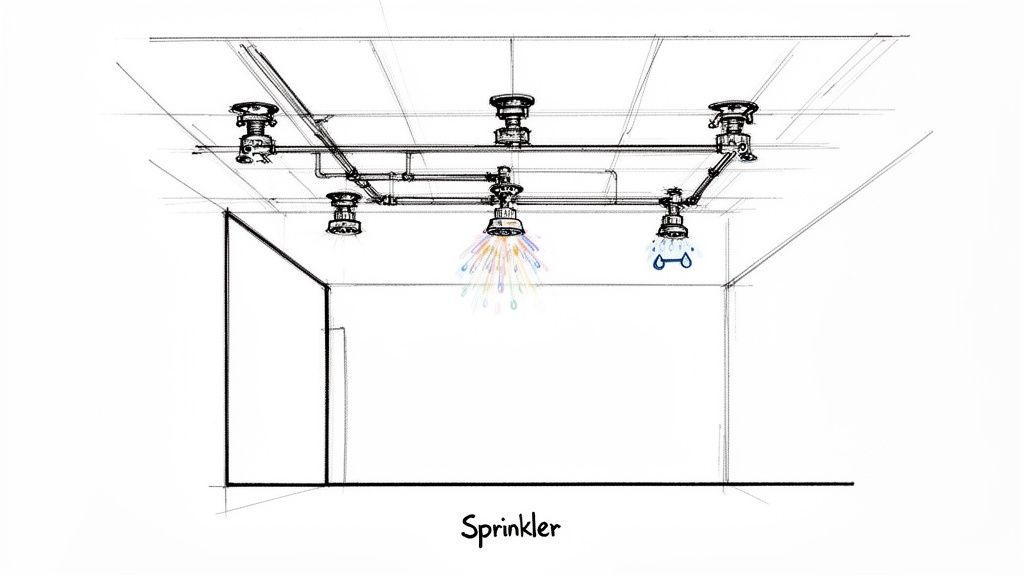
These systems are non-negotiable for many large commercial properties, from high-rise office buildings in downtown Phoenix to sprawling warehouses in Mesa and Gilbert. Compliance with NFPA 13, the standard for sprinkler system installation, is paramount. One of the most critical and easily overlooked rules involves clearance; there must be at least 18 inches of clear space below each sprinkler head to allow for proper water distribution. This prevents shelves, stacked boxes, or tall furniture from obstructing the spray pattern and rendering the system ineffective in a specific area.
Key Inspection Points and Actions
To confirm your sprinkler system is ready to operate, check for these points:
- Clearance: Walk the property and measure the distance from the top of storage or furniture to the sprinkler deflector. Anything less than 18 inches must be moved immediately.
- Physical Condition: Visually inspect sprinkler heads for paint, heavy dust, corrosion, or physical damage. Never hang items from heads or piping. Any compromised head must be replaced by a professional.
- Gauges and Valves: Check that pressure gauges on the system riser are in the normal operating range and that all control valves (like the main shut-off and sectional valves) are in the open and locked position.
- Professional Inspection Records: Verify that the system has a current tag from a certified fire protection company. NFPA standards require various inspections quarterly, annually, and every five years. Keep all maintenance records accessible.
- Alarm Integration: Ensure the system is properly tied into the building’s fire alarm system and that the monitoring service is active. This is typically tested quarterly by a service provider.
Pro Tip: Keep a small stock of spare sprinkler heads and a special wrench in a cabinet near the riser. This allows a qualified technician to quickly replace a damaged or activated head, getting your fire protection system back in service faster. Even with a sprinkler system, water damage can occur, and it's important to address the aftermath of a commercial fire damage event with professional help.
6. Electrical System Safety and Fire Prevention
Faulty electrical systems are a leading cause of both residential and commercial fires, making this an essential part of any fire safety inspection checklist. This checkpoint focuses on examining circuit breaker panels, wiring integrity, outlet conditions, and the proper use of protective devices like GFCI/AFCI circuits. Issues such as overloaded circuits, damaged insulation, outdated wiring, and improper grounding can create serious fire hazards that often go unnoticed until it's too late.
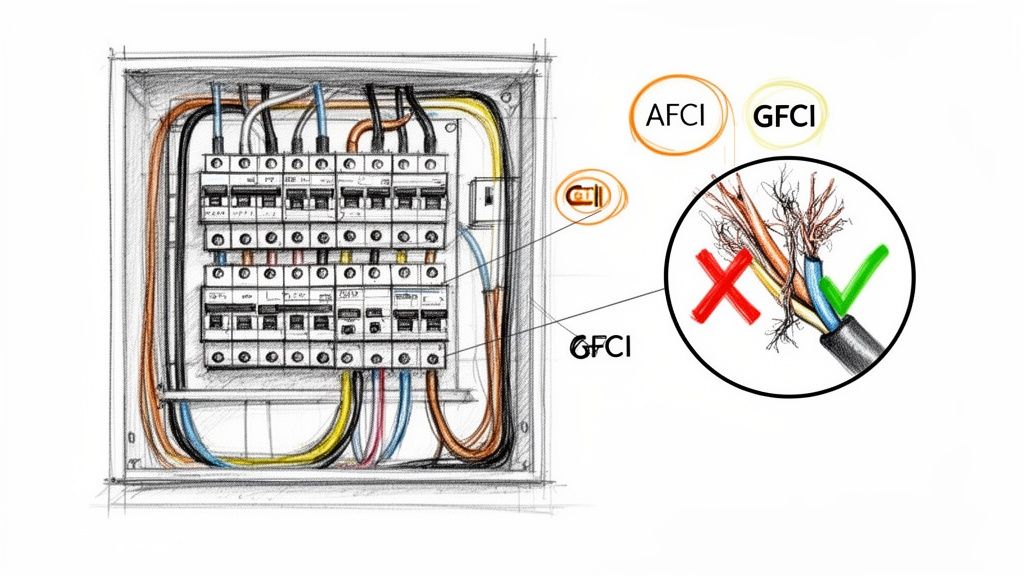
Adherence to the National Electrical Code (NEC) is critical for preventing these dangers. For example, many older Phoenix homes may have original aluminum wiring that requires professional evaluation and potential upgrades to meet current safety standards. Similarly, modern building codes often mandate AFCI protection in bedrooms and living areas to prevent fires caused by arcing faults. A thorough electrical inspection helps identify and correct these dangerous conditions before a fire can start.
Key Inspection Points and Actions
To ensure your electrical system is safe, focus on these points during your check:
- Circuit Panel: Is the panel accessible and free of obstructions? Check for signs of overheating, such as discoloration or a burning smell. All breakers should be clearly labeled.
- Outlets and Switches: Inspect outlets for looseness, damage, or scorch marks. Test GFCI outlets (typically found in kitchens, bathrooms, and outdoors) monthly using their built-in "TEST" buttons.
- Cords and Extensions: Never use extension cords as a permanent wiring solution. Immediately replace any appliance cords that are frayed, cracked, or damaged.
- GFCI/AFCI Protection: Verify that Arc-Fault Circuit Interrupters (AFCIs) are installed where required, particularly in sleeping areas. These devices are designed to detect dangerous arcing conditions that standard breakers miss.
- Professional Review: Maintain records of all electrical work and ensure a licensed electrician performs periodic inspections, especially in older buildings or commercial facilities.
Pro Tip: If you ever smell a persistent burning odor from an outlet or panel, or if breakers trip frequently, contact a licensed electrician immediately. These are clear warning signs of a hazardous condition. After an electrical fire, dealing with the residue is a specialized task; knowing how to properly address the aftermath, including details on how to clean soot from walls, is crucial for a safe recovery.
7. Flammable Material Storage and Hazard Control
Improperly stored flammable and combustible materials are a significant fire hazard, acting as potent fuel that can quickly turn a small spark into an inferno. This part of a fire safety inspection checklist confirms that substances like paint, solvents, gasoline, and cleaning chemicals are managed correctly. The objective is to isolate these materials from ignition sources and ensure they are stored according to safety standards to prevent fires before they start.
This checkpoint is crucial for various settings, from janitorial closets in Phoenix apartments to maintenance departments in large commercial buildings. Regulations like OSHA 29 CFR 1910.106 and NFPA 30 provide strict guidelines for storing these liquids. For example, specific quantities of flammable materials must be kept in approved, specially designed cabinets that are intended to contain a fire for a minimum of 10 minutes, giving occupants time to evacuate.
Key Inspection Points and Actions
To confirm compliance with storage and hazard control, verify the following:
- Approved Containers & Cabinets: Are all flammable and combustible liquids in approved, sealed containers? Are they stored inside a designated flammable materials storage cabinet that is properly labeled?
- Separation from Ignition Sources: Verify that storage areas are far from heat sources like water heaters, furnaces, electrical panels, and areas where sparks may occur.
- Clear Labeling: Check that all containers are clearly and accurately labeled with their contents and corresponding hazard warnings. Faded or missing labels are a violation.
- Waste Accumulation: Inspect the area for accumulations of combustible waste like oily rags, cardboard, or wood debris. These must be removed and disposed of in proper receptacles.
- Ventilation: Is the storage area well-ventilated to prevent the buildup of flammable vapors? This is a critical factor in preventing explosive atmospheres.
Pro Tip: Keep quantities of hazardous materials to a minimum. A "just-in-time" inventory approach reduces the overall fire load on your property. Regularly schedule disposal of old or unneeded chemicals through a certified hazardous waste service to maintain a safer environment.
8. Fire-Resistant Building Materials and Construction
The structural integrity of a building during a fire is paramount for occupant safety and limiting property damage. Using fire-resistant materials in walls, ceilings, and other structural components is a fundamental design principle that slows fire spread and contains it within a specific area. This crucial part of a fire safety inspection checklist confirms that a building's construction meets the fire-resistance ratings required by code, providing valuable time for evacuation and first responder arrival.
This checkpoint involves evaluating whether the materials used in construction can withstand fire for a specified duration. For instance, many commercial buildings in Phoenix are required by the International Building Code (IBC) to use fire-rated assemblies. This could mean upgrading from standard drywall to Type X drywall, which contains special additives to increase its fire resistance. These materials are tested and rated by organizations like Underwriters Laboratories (UL) to ensure they perform as expected under fire conditions.
Key Inspection Points and Actions
To confirm your building's construction provides adequate fire protection, check the following during an inspection:
- Material Documentation: Review construction plans and material specification sheets. Do they specify fire-rated materials like Type X drywall, fire-rated doors, or non-combustible insulation?
- Wall and Ceiling Assemblies: Verify that walls separating units or enclosing critical areas (like utility rooms and stairwells) are constructed as fire-rated assemblies. Look for proper installation, including sealed gaps and penetrations.
- Structural Protection: Are exposed structural elements, like steel beams or wood trusses, protected with intumescent coatings or enclosed in fire-rated materials? These applications can prevent the structure from weakening and collapsing prematurely.
- Doors and Windows: Check that fire doors are properly labeled, self-closing, and latching. Any glass in fire-rated walls or doors must also be fire-rated.
- Flooring Materials: Ensure that flooring materials, especially in exit corridors and high-traffic areas, have a Class A fire rating to prevent rapid flame spread along the floor.
Pro Tip: During renovations or new construction, always consult with a qualified architect or building code official to ensure the correct fire-rated materials are specified and installed. Proper documentation is not just for compliance; it's essential information during the aftermath of a fire. Understanding the complete fire damage restoration process can help you appreciate why these initial construction choices are so important for recovery.
9. Kitchen Safety and Cooking Equipment Fire Prevention
Kitchens are a high-risk area for fires in both residential and commercial properties, making this a crucial point on any fire safety inspection checklist. The combination of high heat, flammable cooking oils, and potential for human error creates a significant hazard. This checkpoint focuses on the proper maintenance of cooking equipment, ventilation systems, and the presence of specialized fire suppression systems to mitigate these risks. The core goal is preventing grease buildup, which acts as a potent fuel for fires.
Standards like NFPA 96 (Ventilation Control and Fire Protection of Commercial Cooking) outline strict requirements for establishments like restaurants and hotel kitchens in Scottsdale and Phoenix. This includes regular professional cleaning of range hoods, ducts, and filters to prevent dangerous grease accumulation. For commercial applications, a dedicated Type K fire suppression system is often mandatory, designed specifically to combat grease fires. Residential kitchens in Mesa multi-family communities also benefit from regular inspections and tenant education on safe cooking practices.
Key Inspection Points and Actions
To ensure your kitchen is safe from fire hazards, verify the following during your inspection:
- Grease Accumulation: Check stovetops, backsplashes, range hoods, and filters for grease and food residue. All surfaces should be cleaned regularly.
- Ventilation System: Ensure the range hood and ventilation system are operational. In commercial kitchens, confirm that professional duct cleaning records are up to date (typically every 6 months).
- Fire Suppression System: In commercial kitchens, verify the Type K wet chemical suppression system is present, unobstructed, and has a current service tag. Staff should be trained on its activation.
- Clearances: Confirm that all cooking equipment has proper clearance from combustible materials like curtains, paper products, and cleaning chemicals.
- Equipment Condition: Inspect cords and connections on appliances like deep fryers and microwaves for signs of fraying or damage.
Pro Tip: Never use water to extinguish a grease fire; it will only spread the flames. Instead, smother the fire by sliding a lid over the pan or use baking soda. In a commercial setting, a Class K extinguisher is the correct tool for the job. Staff training on these procedures is vital.
10. Fire Safety Training, Drills, and Occupant Awareness
A building's fire safety systems are only effective if its occupants know how to react in an emergency. Educated individuals who understand procedures and respond calmly to alarms drastically improve evacuation success and reduce potential injuries. This vital checkpoint on any fire safety inspection checklist confirms that regular fire drills, training sessions, and clear communication protocols are in place to ensure everyone can respond effectively during a real fire.
The importance of this preparedness is emphasized by OSHA and local fire departments across Arizona. For example, office buildings in Phoenix often conduct quarterly drills, while hospitals in Scottsdale implement specialized procedures for patient evacuation. The goal is to build muscle memory, so that during a chaotic event, occupants can act instinctively and safely. This involves more than just running outside; it includes knowing evacuation routes, understanding warden responsibilities, and practicing how to assist those with mobility limitations.
Key Inspection Points and Actions
To ensure your building’s occupants are prepared, verify the following during your inspection:
- Written Procedures: Are there documented and easily accessible evacuation plans specific to the building's layout? These should be posted in common areas.
- Drill Documentation: Check records of past fire drills. Documentation should include the date, time, duration, number of participants, and any observations or issues encountered.
- Occupant Training: Confirm that new occupants receive fire safety orientation and that all occupants receive refresher training annually. This is especially critical in multi-family residences in Gilbert or senior communities in Chandler.
- Designated Roles: Has a fire warden or safety coordinator been assigned for each floor or department? These individuals should be trained to account for personnel.
- Signage and Communication: Are emergency procedures, exit maps, and assembly point locations clearly posted and easy to understand?
Pro Tip: Conduct unannounced drills to get a realistic measure of your occupants' readiness. Use these drills as positive training opportunities to identify weaknesses in your plan, not as a punitive exercise. After an actual fire, knowing the immediate next steps is just as important; this checklist for what to do after a house fire provides a valuable guide for property owners navigating the recovery process.
10-Point Fire Safety Inspection Comparison
| Item | Implementation Complexity 🔄 | Resource Requirements ⚡ | Expected Outcomes 📊⭐ | Ideal Use Cases 💡 | Key Advantages ⭐ |
|---|---|---|---|---|---|
| Fire Extinguisher Accessibility and Compliance | Low — mounting, signage, routine inspections | Low — extinguishers, tags, periodic servicing, basic training | Quick containment of small fires; lower liability and insurance | Homes, offices, common areas, kitchens | Affordable, visible first-response tool; easy to deploy |
| Emergency Exit Routes and Egress Clearance | Medium — may need structural/lighting upgrades | Moderate — signs, emergency lighting, backup power, inspections | Faster evacuations; reduced injuries; code compliance | Multi-story buildings, public spaces, high-occupancy sites | Direct life-safety impact; legal and insurance compliance |
| Smoke Detection System Installation and Testing | Low–Medium — placement and interconnection work | Low–Moderate — detectors, batteries or wiring, occasional professional setup | Early warning & increased survival rates; reduced damage | Residential, apartments, hotels, corridors | High effectiveness for early detection; legally required |
| Fire-Rated Doors and Compartmentalization | High — specialized installation and sealing | High — rated doors, frames, seals, annual inspections | Limits fire/smoke spread; buys evacuation time; property protection | High-rises, hospitals, commercial stairwells | Strong passive containment; improves safety and continuity |
| Sprinkler System Coverage and Maintenance | High — engineered design and installation | High — piping, water supply, monitoring, ongoing testing | High suppression success; major reduction in loss & downtime | High-rises, warehouses, healthcare, large retail | Most effective active suppression; may lower insurance costs |
| Electrical System Safety and Fire Prevention | Medium — inspections, wiring upgrades, panels | Moderate–High — licensed electricians, parts, phased rewiring | Prevents electrical-origin fires; improves system reliability | Older buildings, residences with aluminum wiring, commercial sites | Addresses a leading fire cause; increases property value |
| Flammable Material Storage and Hazard Control | Medium — approved storage and segregation measures | Moderate — cabinets, ventilation, labeling, inventory controls | Reduced storage-area fire risk; environmental/health protection | Maintenance rooms, garages, landscaping, industrial stores | Lowers ignition risk; regulatory compliance for hazardous goods |
| Fire-Resistant Building Materials and Construction | Medium–High — specification and correct installation | High — fire-rated materials, coatings, professional labor | Slower fire spread; improved containment and code adherence | New construction, renovations, institutional facilities | Long-term passive protection; may improve insurability |
| Kitchen Safety and Cooking Equipment Fire Prevention | Medium — regular cleaning + specialized suppression | Moderate — hood maintenance, Type K systems, duct cleaning | Prevents common cooking fires; reduces smoke and odor damage | Restaurants, commercial kitchens, residential kitchens | Targets leading fire source; effective oil-fire suppression |
| Fire Safety Training, Drills, and Occupant Awareness | Low–Medium — program creation and drill scheduling | Low — training time, materials; periodic refreshers | Faster, orderly evacuations; identifies procedural gaps | Offices, schools, hospitals, multi-family residences | High behavioral impact; cost-effective risk reduction |
From Checklist to Action: Partnering for a Safer Future
Moving through a detailed fire safety inspection checklist is more than just a routine task; it is an active commitment to the safety of your property, employees, tenants, and family. This article provided a detailed framework, breaking down the essential inspection points from smoke detectors and electrical systems to emergency exits and kitchen safety protocols. The real power of this knowledge isn't in simply reading it, but in its consistent and diligent application.
A checklist is a static tool. True safety comes from the dynamic process it initiates: regular inspection, accurate documentation, and swift, decisive action to correct any deficiencies. What you have now is a guide to transform passive awareness into proactive protection.
Key Takeaways for Proactive Fire Safety
The difference between a minor incident and a catastrophe often lies in preparation. As you put this checklist to use, remember these critical principles:
- Consistency is Crucial: A one-time inspection provides a snapshot, but regular, scheduled checks create a moving picture of your property's safety status. Adhering to the recommended frequencies (monthly, quarterly, annually) for different systems helps ensure that wear and tear, environmental changes, or human error don't create unnoticed vulnerabilities.
- Documentation Creates Accountability: Simply fixing a problem isn't enough. Maintaining a log of your inspections, noting pass/fail results, and documenting the remediation steps taken creates a clear record of due diligence. This is invaluable for compliance, insurance purposes, and future safety planning.
- Empowerment Through Education: Fire safety is a collective responsibility. Beyond functional equipment, ensuring that occupants know the emergency plan, recognize the sound of alarms, and can locate the nearest exit is just as important. Regular drills and clear communication are non-negotiable components of a robust safety culture.
Turning Your Checklist into a Living Safety Plan
A completed checklist with a "Fail" mark is not a failure; it is an opportunity. It's a precise, actionable instruction telling you exactly where to focus your resources to make your environment safer. For property owners and facility managers across the Phoenix metro area, from the busy commercial corridors of Scottsdale to the residential communities in Gilbert and Chandler, this process is fundamental.
A Proactive Mindset: View your fire safety inspection checklist not as an administrative burden, but as your first line of defense. Each checked box is a confirmation of security, and each noted issue is a chance to strengthen your defenses before they are ever tested by a real emergency.
The goal is to create a property so well-prepared that the systems in place-from fire-rated doors and clear egress paths to properly maintained sprinkler systems-function exactly as designed during a crisis. This level of readiness significantly minimizes potential damage and, most importantly, protects lives. While this guide and your diligent efforts are focused on prevention, it's also wise to have a plan for the unexpected. An immediate, professional response following a fire event can be the key to a successful recovery.
Even with the most thorough prevention plan, accidents can happen. When they do, a fast and expert response is essential to mitigate damage and begin the recovery process. For comprehensive fire and smoke damage restoration in the Phoenix area, contact the IICRC-certified team at Restore Heroes. Visit Restore Heroes to learn how their 24/7 emergency services can help you recover and rebuild.