
A house fire is a deeply disruptive and traumatic event. In the immediate aftermath, knowing what to do first can feel overwhelming, with a swirl of emotions and urgent decisions competing for your attention. This guide is designed to cut through that chaos, providing a clear, prioritized what to do after a house fire checklist to help you navigate the critical steps ahead. Our goal is to break down this complex process into manageable, actionable items that you can follow one by one.
This is not just a list; it is a strategic plan designed to protect your well-being, secure your property, and streamline your insurance claim process. We will walk you through everything from ensuring your family's safety and contacting your insurance provider to coordinating with professional restoration teams and beginning the long-term path to recovery. Each step is crucial, and following this sequence can help prevent costly mistakes, protect your financial interests, and simplify the restoration journey.
Following a structured plan is essential for minimizing stress and ensuring no critical tasks are overlooked. From documenting damage for your claim to arranging temporary housing and understanding the restoration process, this comprehensive checklist covers the immediate, short-term, and long-term actions you need to take.
Important Note: The information provided is a general guide. Services, insurance coverage, and pricing are never guaranteed and depend entirely on your specific policy, the circumstances of the event, and the professionals you hire. Always consult directly with your insurance provider and licensed contractors to understand your specific options and obligations.
1. Ensure Personal Safety and Evacuate the Property
The absolute first priority in any "what to do after a house fire checklist" is to confirm the safety of every person and pet. Before you think about possessions, insurance, or the structure itself, your focus must be on life and well-being. Once everyone is out, stay out. The urge to re-enter to grab sentimental items or assess the damage is strong, but it is extremely dangerous.
Fire-damaged structures are unstable and can collapse without warning. Furthermore, the air can be filled with toxic gases like carbon monoxide and hydrogen cyanide, and smoldering embers, known as hotspots, can reignite unexpectedly. Only trained and properly equipped personnel, like the fire department or a certified restoration company, can safely enter and assess the building's integrity.
Why This is the Critical First Step
Ignoring this step can lead to tragic consequences. The Phoenix Fire Department, for example, often restricts access to a property for at least 24 hours after a major fire to prevent such accidents. The primary benefit of prioritizing evacuation and staying out is preventing injury or death, which outweighs any material loss.
Key Insight: A building can be rebuilt and possessions can be replaced, but human life is irreplaceable. Your first and only job in the immediate moments of a fire is to get everyone to safety.
Actionable Tips for Immediate Safety:
- Establish a Meeting Point: Before an emergency happens, designate a safe meeting spot outside your home, like a specific neighbor’s house or a landmark across the street. This helps you quickly account for everyone.
- "Get Low and Go": Teach every family member to drop to the floor and crawl below the smoke to the nearest exit.
- Account for Everyone: Once at your meeting point, do a head count to ensure all family members and pets are accounted for. Inform first responders immediately if anyone is missing.
- Do Not Go Back Inside: Reinforce this rule with all family members. Under no circumstances should anyone re-enter the home until the fire chief has officially declared it is safe to do so.
2. Document All Damage with Photographs and Video
Once the fire department has declared the property safe to enter, your next immediate task is to create a comprehensive visual record of the damage. This documentation is a cornerstone of the insurance claims process. Before anything is moved, cleaned, or discarded, meticulously photograph and video every affected area of your home, both inside and out. This evidence provides your insurance adjuster with a detailed account of the destruction.
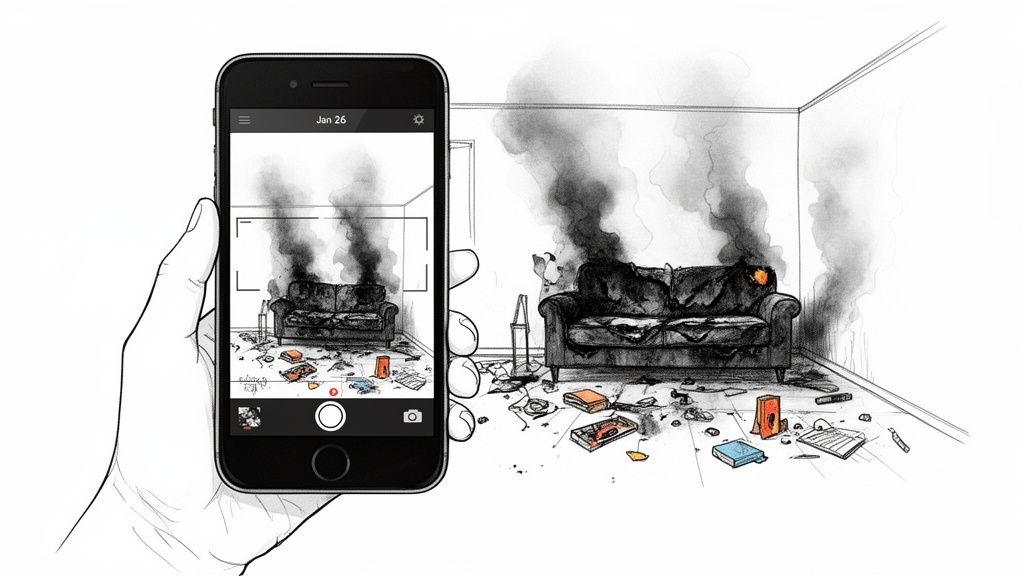
This step is crucial because memories can fade, and the sheer scale of the loss can be overwhelming to recall later. A thorough visual log serves as your primary proof of loss. Major insurance providers like State Farm and Allstate emphasize the importance of immediate photo documentation to substantiate a claim. A professional restoration company will also perform its own detailed documentation to align its scope of work with the insurance assessment, which can help create a smoother recovery process.
Why This is a Critical Step for Your Claim
Failing to document damage properly can lead to disputes, delays, or a lower settlement from your insurance company. The adjuster may not be able to accurately assess the value of items that were cleaned up or thrown away prematurely. This initial documentation sets the foundation for your entire claim, directly impacting the financial resources you receive for rebuilding and replacing your belongings. It also helps identify secondary issues, like water damage from firefighting efforts, which can lead to other problems. Understanding the signs of mold in walls, for example, becomes easier with clear before-and-after photos.
Key Insight: Your smartphone is your most powerful tool in the initial claims process. A detailed, time-stamped visual inventory is the most effective way to prove the full extent of your loss to your insurance carrier.
Actionable Tips for Effective Documentation:
- Capture Everything: Take wide shots of each room to show the overall damage, then move to medium shots and close-ups of specific items, structural issues, and smoke residue.
- Film a Walkthrough: Create a slow, steady video tour of the property. Narrate what you are seeing, describing the damage in detail as you film.
- Date-Stamp Your Files: Turn on the date and time stamp feature on your camera or phone. This adds a layer of credibility to your documentation.
- Organize and Back-Up: Create digital folders for each room and save your photos and videos immediately. Upload everything to a cloud service like Google Drive or iCloud to prevent losing the files.
- Don't Touch Anything Yet: Document the scene exactly as you found it. Wait until after your adjuster has visited before you start any cleanup or salvage efforts.
3. Contact Your Insurance Company Within 24-48 Hours
After ensuring everyone's safety, your next critical phone call should be to your insurance company. This step is a cornerstone of any "what to do after a house fire checklist" because it officially starts the recovery process. Most insurance policies require homeowners to provide "prompt notice" of a loss, and delaying this can complicate or even jeopardize your claim. Contacting them within 24 to 48 hours demonstrates due diligence and gets the necessary resources moving your way.
This initial call is not about having all the answers; it's about providing notification. You'll give your policy number, the date and location of the fire, and a brief, factual description of the event. This allows the insurer to assign a claims adjuster, authorize emergency mitigation services to prevent further damage, and advise you on the next steps, such as securing temporary housing or documenting losses.
Why This is a Critical Early Step
Promptly notifying your insurer sets the entire claim process in motion and establishes a clear timeline. Early contact can lead to faster assignment of an adjuster and quicker authorization for emergency services, like professional board-up or water removal, which may be covered under your policy. For example, a company like Restore Heroes can often coordinate directly with the assigned adjuster, streamlining communication and approvals for the restoration work that needs to begin immediately. This proactive communication helps avoid delays and misunderstandings down the line.
Key Insight: Your insurance policy is a contract that requires action from you. Initiating contact quickly is the first step in upholding your end of the agreement and unlocking the support you need to rebuild.
Actionable Tips for Notifying Your Insurer:
- Have Information Ready: Keep your policy number and the insurance company’s 24-hour claims hotline number stored in your phone or in a digital file for easy access.
- Document Everything: When you call, note the date, time, and the name of the representative you speak with. Follow up with an email to create a written record of your conversation.
- Stick to the Facts: Provide only factual information about the fire. Avoid speculating on the cause or exaggerating the extent of the damage in this initial call.
- Ask About Emergency Services: Specifically ask your agent what your policy covers for immediate mitigation, such as boarding up windows, securing the property, or water extraction from firefighting efforts.
- Request Next Steps in Writing: Ask for a written confirmation of your claim and the contact information for your assigned adjuster.
- Share Adjuster Information: Once you have an adjuster, provide their contact details to your chosen restoration company to facilitate direct communication and billing.
4. Hire an IICRC-Certified Restoration Company and Obtain Written, Itemized Estimates
Once the immediate danger has passed and you have been cleared by officials, the next step in the "what to do after a house fire checklist" is to engage a professional restoration company. It is crucial to choose a company that is licensed, insured, and, most importantly, IICRC-certified. The Institute of Inspection, Cleaning and Restoration Certification (IICRC) is the global standard-setter for the restoration industry, indicating that technicians have the expertise to handle complex fire damage scenarios.
These certified professionals are trained in specialized techniques for soot removal, smoke odor elimination, structural drying, and hazardous material assessment. Attempting to clean the property yourself can often cause more harm by smearing acidic soot or using the wrong chemicals, which can set stains permanently. A certified company will provide a detailed, written scope of work and an itemized estimate, which is essential for preventing misunderstandings and is a requirement for most insurance claims.
Why This is a Critical Step for Recovery
Hiring an uncertified or uninsured contractor can lead to disastrous outcomes, including incomplete or improper repairs, denied insurance claims, and potential liability if a worker is injured on your property. Major insurance carriers often recommend or prefer working with IICRC-certified contractors because they adhere to a documented standard of care, which can streamline the claims process. For example, in Arizona, the Department of Licensing regulates contractor bonding and licensing, and state law requires written estimates for projects over a certain value, protecting homeowners from fraud.
Key Insight: A certified restoration company acts as your professional guide through the recovery process, using industry-approved methods to restore your home safely and effectively while providing the detailed documentation your insurance company needs.
Actionable Tips for Hiring a Restoration Company:
- Verify IICRC Certification: Use the official IICRC database to confirm a company's certification status before hiring them.
- Request Proof of Insurance: Ask for copies of their general liability insurance and workers' compensation policies.
- Get Itemized Written Estimates: Obtain detailed estimates from at least two or three certified companies. Ensure the estimate specifies that IICRC-certified personnel will perform the work and outlines costs for labor, materials, and equipment.
- Check Their Experience: Ask for references or examples of previous fire damage restoration projects they have completed.
- Understand the Scope: Before signing anything, clarify the project timeline, work schedules, and how they will coordinate with other necessary contractors like electricians or structural engineers.
- Get Insurance Approval: Submit the written estimate to your insurance adjuster for approval before authorizing any work to begin. Understanding how these costs are broken down can be complex; seeing examples of water damage repair cost can provide insight into how professional estimates are structured.
5. Prevent Secondary Water and Mold Damage During Initial Assessment
After the fire is out, a new threat emerges: water. The large volumes of water used for fire suppression can saturate every part of your home, from the attic to the foundation. This creates the perfect breeding ground for mold, which can begin to colonize within just 24-48 hours. Addressing this moisture immediately is a critical part of any "what to do after a house fire checklist" to prevent further structural damage and health risks.
Emergency mitigation involves deploying professional-grade equipment like water extractors, industrial dehumidifiers, and high-velocity air movers to dry the structure rapidly. It also includes securing the property by tarping the roof or boarding up windows to prevent additional moisture intrusion from the elements, a significant risk during Arizona's monsoon season. Failing to act quickly can significantly complicate and increase the cost of restoration.
Why This is a Critical Step
Secondary damage from water and mold is often not immediately visible but can be more destructive and expensive to fix than the initial fire damage. The Institute of Inspection, Cleaning and Restoration Certification (IICRC) sets the standard that moisture control must begin swiftly to be effective. In fact, combining extensive water and fire damage can increase total restoration costs substantially, turning a difficult situation into a catastrophic one. Acting fast mitigates these expenses and protects the structural integrity of your home.
Key Insight: The clock starts ticking on water damage the moment the fire is extinguished. Prioritizing professional water mitigation within the first 24 hours is essential to prevent a secondary disaster from mold and rot.
Actionable Tips for Water and Mold Prevention:
- Request Emergency Mitigation Immediately: When you contact a restoration company like Restore Heroes, specifically ask for emergency water mitigation to be part of the initial assessment and estimate.
- Ensure Proper Documentation: Verify that the restoration team will take daily moisture readings with calibrated meters and document the drying progress for your insurance claim.
- Ask About Monitoring: Inquire about the company's protocols for monitoring the drying equipment, especially during nights and weekends, to ensure the process is continuous.
- Allow Full Access: Technicians need to access all affected areas, including wall cavities, attics, and crawlspaces, to identify and eliminate hidden moisture.
- Understand Air Quality: Ask if air quality monitoring or testing is part of their process, especially if you have family members with respiratory sensitivities. You can learn more about how to prevent mold after a flood and the risks it poses.
6. Arrange Temporary Housing and Document Living Expenses
Once your immediate safety is secured and you've made the necessary initial calls, the next practical step in any "what to do after a house fire checklist" is finding a safe place to stay. If the fire department has deemed your home uninhabitable, you will need to arrange for temporary housing. This is where your homeowner's insurance policy, specifically the Additional Living Expenses (ALE) or Loss of Use coverage, becomes a critical resource.
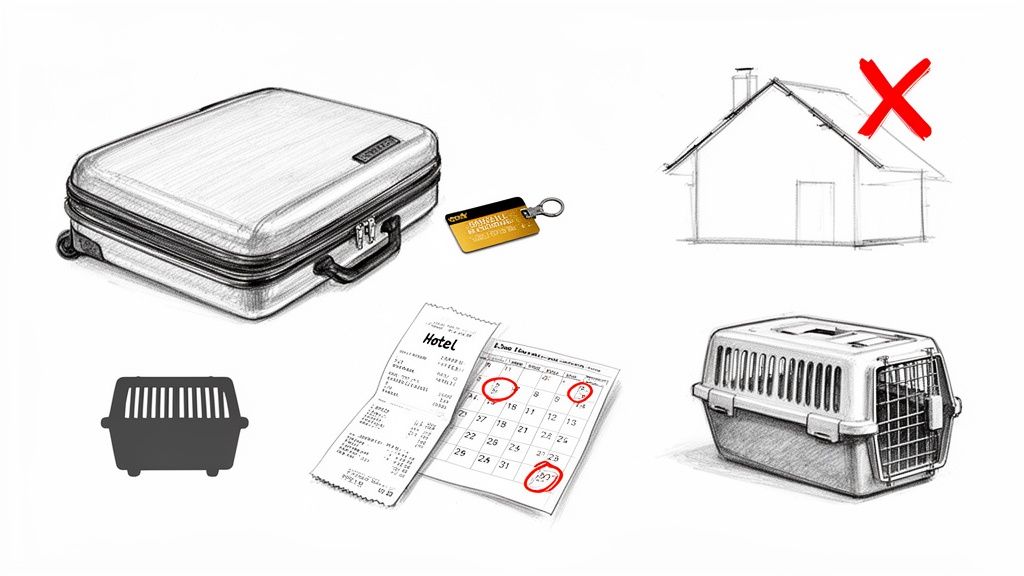
This coverage is designed to reimburse you for reasonable costs incurred when you cannot live in your home due to a covered loss. It typically covers the difference between your normal living expenses and the new, higher costs of living elsewhere. For example, if your mortgage is $2,000 a month and your temporary apartment is $3,000, ALE may cover the $1,000 difference, plus other costs like meals if you don't have a kitchen.
Why This is the Critical Next Step
Securing stable temporary housing provides your family with a sense of security and a base of operations during a chaotic time. It allows you to focus on the recovery process without the added stress of wondering where you will sleep each night. In the Phoenix area, many hotels like La Quinta or extended-stay properties like Extended Stay America are experienced in working with insurance companies and can sometimes bill the insurer directly, simplifying the process for you. Diligently tracking every expense is crucial for receiving proper reimbursement.
Key Insight: Your Additional Living Expenses (ALE) coverage is a lifeline. Treat it as a budget for maintaining your standard of living, not a blank check. Meticulous documentation is the key to maximizing this benefit and ensuring a smoother financial recovery.
Actionable Tips for Housing and Expenses:
- Coordinate with Your Adjuster: Before booking a long-term stay, ask your insurance adjuster about approved vendors or daily spending limits. Many have preferred partners that can streamline billing.
- Keep Meticulous Records: Save all receipts for lodging, meals, toiletries, laundry, pet boarding, and even extra mileage. Use a dedicated folder or a digital app to keep everything organized.
- Document Everything: For each expense, note the date, the amount, and a brief description of why it was necessary. This documentation is your proof when filing for reimbursement.
- Ask About Direct Billing: Inquire if your hotel or temporary housing provider can bill your insurance company directly. This can significantly reduce your out-of-pocket financial burden.
- Consider All Needs: Don't forget expenses related to pet care, temporary storage for salvaged items, or even increased transportation costs if your temporary home is further from work or school. Discuss these potential needs with your adjuster.
7. Coordinate Utility Disconnection/Reconnection and Safety Inspections
After a fire, your home's utility systems-including electrical, gas, and water lines-are often severely compromised. The fire department or your restoration company will typically coordinate the immediate disconnection of these services to prevent further hazards like electrical shocks, gas leaks, or additional water damage from burst pipes. Restoring these services is not a simple flip of a switch; it requires a systematic process of professional inspection, repair, and official certification.
This step is a crucial safety checkpoint in any "what to do after a house fire checklist." Damaged wiring can cause new fires, and compromised gas lines are an explosion risk. Even the plumbing and HVAC systems can harbor hidden damage that could lead to extensive mold or structural issues if not properly addressed. Local utility providers like Salt River Project (SRP) in Arizona will not restore power to a fire-damaged property until it has passed a formal safety inspection by a licensed professional.
Why This is a Critical Safety and Compliance Step
Reconnecting utilities without proper inspections is both dangerous and often illegal. Municipalities like the City of Phoenix require building permits and inspections for significant restoration work to ensure it complies with current safety standards, such as the National Electrical Code (NEC). Skipping this process could void your insurance coverage for any future incidents and put your family at extreme risk. The benefit is twofold: ensuring your home is safe for re-occupancy and meeting legal requirements for the restoration.
Key Insight: Damaged utilities pose an invisible but potent threat. Professional inspections and certified repairs are non-negotiable steps to ensure your home's long-term safety and compliance with local building codes.
Actionable Tips for Managing Utilities and Inspections:
- Confirm Disconnection: Verify with the fire department or your restoration team that all major utilities (gas, electric, water) have been shut off.
- Hire Licensed Professionals: Only use licensed and insured electricians, plumbers, and HVAC technicians for inspections and repairs. Verify their credentials through the Arizona Registrar of Contractors.
- Obtain Multiple Quotes: Get at least two to three written estimates for any required repair work before authorizing it.
- Document Everything: Photograph all utility-related damage before repairs begin. Keep detailed records of all inspection reports, permits, repair invoices, and safety certifications for your insurance claim and personal records.
- Schedule Inspections Early: Permitting and city inspections can cause delays. Work with your contractor to schedule these as early as possible in the restoration timeline to avoid bottlenecks. The overall timeline can be complex; understanding the sequence of repairs helps manage expectations, similar to how one might track the duration of a water damage restoration project.
8. Assess and Plan for Structural Repairs Beyond Fire Damage Restoration
Once the immediate hazards are managed, a crucial item on your "what to do after a house fire checklist" involves looking beyond the surface damage. Fire damage restoration focuses on cleaning soot, smoke, and water, but intense heat can severely compromise your home's structural integrity. This step requires determining whether the building's core components, like its frame, foundation, and roof trusses, need significant repair or complete reconstruction.
Hiring a licensed structural engineer or an experienced general contractor is essential for this evaluation. They can assess load-bearing walls, floor joists, and other critical elements that may appear fine but are dangerously weakened. An expert assessment provides the necessary documentation for your insurance claim and a safe, code-compliant plan for rebuilding.
Why This is a Critical Step for Safe Recovery
Skipping a structural assessment can lead to catastrophic failure long after restoration is complete. A weakened roof could collapse under its own weight, or a compromised foundation could shift, causing new cracks and damage. Many insurance companies and local building authorities, such as those in the Phoenix area, require an engineer's report to approve large-scale repairs and ensure the home is safe for occupancy. This evaluation provides a clear roadmap for what must be done to make your home truly whole again.
Key Insight: Restoration cleans the damage you can see; a structural assessment protects you from the dangers you can't. Ensuring the home's "bones" are sound is just as important as restoring its appearance.
Actionable Tips for Structural Assessment:
- Request an Integrated Assessment: Ask your IICRC-certified restoration company if a structural assessment can be included in their comprehensive estimate and scope of work.
- Hire a Licensed Professional: Engage a licensed Professional Engineer (PE) for maximum credibility. Their certified report provides irrefutable evidence for your insurance provider.
- Provide the Report to Your Insurer: Submit the engineer's report and any contractor estimates directly to your insurance adjuster to substantiate the full scope of structural damages.
- Plan for Permits: Ask the engineer or contractor if the recommended repairs will require building permits and city inspections to ensure all work is up to code. It's also important to understand how other materials may have been affected, as even elements like drywall can suffer unseen damage. You can learn more about how water and moisture affect drywall integrity as part of this process.
- Coordinate Timelines: Work with your restoration company and general contractor to align the structural repair and restoration timelines, ensuring a smooth and efficient recovery process.
9. Establish Communication Protocol and Regular Progress Updates
Once the fire restoration process begins, the period can feel overwhelming and chaotic with multiple parties involved. Establishing a clear communication protocol from the outset is essential for a smooth and transparent recovery. This means setting up defined channels and expectations for updates between you, your restoration company, your insurance adjuster, and any other contractors involved in rebuilding your home.
A structured communication plan prevents misunderstandings, manages expectations, and keeps the project on track. Without it, you risk delays, budget overruns, and immense frustration. By designating a primary point of contact and agreeing on the frequency and format of updates, you create a system of accountability that empowers you as the homeowner and ensures all stakeholders are aligned.
Why This is a Critical Step for a Smooth Restoration
Poor communication is one of the biggest sources of conflict during a complex restoration project. A fire damage restoration is not a simple repair; it involves many phases, from demolition and cleaning to reconstruction and finishing. Restoration companies that prioritize client communication, such as providing regular updates and maintaining open availability, often deliver a more positive and less stressful experience. Clear, documented communication provides a record of decisions and progress, which is invaluable if disputes arise.
Key Insight: Proactive communication turns a potentially chaotic process into a manageable, collaborative project. Insist on a written communication plan before restoration work begins to ensure transparency and accountability.
Actionable Tips for Effective Communication:
- Assign a Primary Contact: Identify one person at the restoration company who will be your main point of contact. This prevents conflicting information from different crew members.
- Establish a Cadence: Request regular progress updates, such as daily texts with photos during active work phases or a detailed email summary at the end of each week.
- Use a Shared Digital Folder: Create a shared online folder (like Google Drive or Dropbox) for all parties to access important documents, including the scope of work, photos, change orders, and invoices.
- Get Everything in Writing: Ensure any changes to the original plan, scope of work, or budget are documented in a formal change order and signed by you before the work proceeds.
- Schedule Walkthroughs: If possible, schedule weekly or bi-weekly walkthroughs on-site with your project manager to see the progress firsthand and ask questions.
- Document Conversations: Keep a simple log of all phone calls and meetings, noting the date, the person you spoke with, and a summary of what was discussed.
10. Plan for Emotional Recovery and Obtain Support Resources
Beyond the structural damage and loss of belongings, a house fire inflicts a significant emotional and psychological toll. Addressing this trauma is a crucial, yet often overlooked, part of any "what to do after a house fire checklist." The process of rebuilding your life includes rebuilding your sense of security and well-being. Giving yourself and your family the space and resources to heal emotionally is just as important as restoring the physical property.
The stress, grief, and anxiety that follow a fire can be overwhelming. These feelings are normal reactions to a traumatic event. Proactively seeking support from professionals, community groups, and loved ones helps you process the experience, manage stress, and develop healthy coping mechanisms. This step ensures that your family's mental health recovery happens in parallel with the home restoration.
Why This is a Necessary Part of Recovery
Ignoring the psychological impact of a fire can lead to long-term issues like post-traumatic stress disorder (PTSD), anxiety, and depression. Organizations like the American Red Cross Phoenix chapter offer immediate disaster mental health services because they recognize this critical need. The primary benefit of prioritizing emotional recovery is building resilience, which empowers you to navigate the complex and often lengthy restoration process more effectively.
Key Insight: The invisible damage from a fire can be just as devastating as the visible destruction. Emotional support is not a luxury; it is a foundational component of a complete and healthy recovery.
Actionable Tips for Emotional Support:
- Check Your Benefits: Ask your insurance agent about mental health services that may be covered by your policy. Also, contact your employer to see if an Employee Assistance Program (EAP) is available for counseling services.
- Find Specialized Help: Use resources like the Psychology Today directory to find licensed therapists in the Phoenix area who specialize in trauma or PTSD.
- Lean on Community: Connect with local support groups through organizations like NAMI Arizona or faith-based communities that offer disaster assistance. Sharing your experience with others who understand can be incredibly healing.
- Prioritize Basic Needs: Ensure you and your family are getting adequate sleep, nutrition, and light exercise. These fundamentals are essential for managing stress and maintaining emotional balance during a crisis.
- Communicate Openly: Talk with your family members about their feelings and needs. Acknowledging the shared trauma and supporting one another is a powerful step toward healing together.
10-Point Post-Fire Checklist Comparison
| Action Item | Implementation Complexity 🔄 | Resource Requirements ⚡ | Expected Outcomes ⭐ | Results / Impact 📊 | Key Tips / Advantages 💡 |
|---|---|---|---|---|---|
| Ensure Personal Safety and Evacuate the Property | Low 🔄 — straightforward but high-stress | Minimal ⚡ — people, pets, emergency kit, communications | ⭐ Protects life and prevents injury | 📊 Secures scene for responders; may delay assessment | 💡 Pre-establish meeting point; wait for official clearance |
| Document All Damage with Photographs and Video | Moderate 🔄 — methodical, immediate actions needed | Low-Moderate ⚡ — smartphone/camera, time, cloud backup | ⭐ Strong evidence for claims and scope assessment | 📊 Increases claim accuracy and reduces disputes | 💡 Time-stamp, narrate walkthroughs, back up files |
| Contact Your Insurance Company Within 24-48 Hours | Low 🔄 — procedural and time-sensitive | Low ⚡ — policy details, phone/email, documentation | ⭐ Activates claim, emergency authorization | 📊 Faster adjuster assignment; documents timeline | 💡 Record call details; ask about mitigation coverage |
| Hire an IICRC-Certified Restoration Company and Obtain Written, Itemized Estimates | High 🔄 — vetting and insurer coordination required | High ⚡ — certified labor, advanced equipment, written estimates | ⭐ Professional quality, reduced remediation risk | 📊 Faster, compliant restoration; insurer-favored | 💡 Verify IICRC and licensing; get multiple itemized estimates |
| Prevent Secondary Water and Mold Damage During Initial Assessment | High 🔄 — rapid technical mitigation required | High ⚡ — extraction, dehumidifiers, monitoring equipment | ⭐ Prevents mold colonization and secondary loss | 📊 Lowers long-term repair costs and health risks | 💡 Start mitigation within hours; document moisture readings |
| Arrange Temporary Housing and Document Living Expenses | Moderate 🔄 — coordination with insurer and lodging | Moderate ⚡ — upfront costs, receipts, bookings | ⭐ Ensures safe shelter and continuity | 📊 Reimbursable ALE tracking; reduces family disruption | 💡 Seek pre-authorization; keep all receipts and dates |
| Coordinate Utility Disconnection/Reconnection and Safety Inspections | Moderate-High 🔄 — multiple trades and permits | Moderate ⚡ — licensed inspectors, fees, permits | ⭐ Ensures safe, code-compliant reconnection | 📊 Prevents secondary fires, gas leaks; required for closure | 💡 Obtain permits, keep inspection certificates on file |
| Assess and Plan for Structural Repairs Beyond Fire Damage Restoration | High 🔄 — engineering assessment and planning | High ⚡ — structural engineer, contractor bids, permits | ⭐ Confirms structural safety and repair scope | 📊 Guides rebuild decisions; strengthens claims | 💡 Hire licensed PE; include engineer report with claims |
| Establish Communication Protocol and Regular Progress Updates | Moderate 🔄 — set channels and cadence | Low-Moderate ⚡ — time, project tools or platform | ⭐ Improves transparency and decision-making | 📊 Reduces delays, documents change orders | 💡 Assign primary contact; request scheduled photo updates |
| Plan for Emotional Recovery and Obtain Support Resources | Low-Moderate 🔄 — outreach to counselors/support groups | Variable ⚡ — therapy time/cost; hotlines often free | ⭐ Supports mental health, reduces trauma impact | 📊 Better long-term recovery and family resilience | 💡 Use crisis hotlines, ask insurer/EAP about coverage |
Your Next Steps Toward a Full Recovery
Navigating the aftermath of a house fire is an overwhelming journey, but you are not without a map. The comprehensive what to do after a house fire checklist you’ve just reviewed provides a structured, step-by-step framework to transform chaos into a manageable recovery process. From the immediate priority of ensuring your family's safety to the long-term goal of rebuilding your life, each item on this list is a critical milestone on the path back to normalcy.
The power of this checklist lies not just in what to do, but how and when to do it. You now understand that immediate and thorough documentation with photos and videos is your most powerful tool in the insurance claims process. You know the importance of contacting your insurance provider within the first 24 to 48 hours to set the recovery in motion and begin documenting all your living expenses for reimbursement. This proactive approach prevents costly delays and helps you access the resources you may need for temporary housing and other necessities.
From Immediate Action to Long-Term Healing
The most crucial takeaway is the importance of assembling a reliable team. This is not a journey to take alone. Your team includes your insurance adjuster, a trusted contractor for structural repairs, and most importantly, an IICRC-certified fire damage restoration company.
Why is this professional partnership so vital?
- Expertise in Hidden Dangers: A certified team can identify and mitigate issues you cannot see, such as toxic soot particles within your HVAC system, hidden moisture that leads to mold, and compromised structural integrity.
- Insurance Navigation: They speak the language of insurance. An experienced restoration company can provide the detailed, itemized estimates and documentation required by adjusters, which can streamline the claims process.
- Coordinated Effort: They manage the complex logistics of cleanup, deodorization, and restoration, allowing you to focus your energy on what truly matters: your family’s well-being and emotional recovery.
By delegating the technical complexities to qualified professionals, you reclaim your mental bandwidth. This allows you to focus on securing stable housing, supporting your loved ones, and accessing the mental health resources necessary to process the trauma. Remember, your emotional recovery is just as important as the physical restoration of your home.
Moving Forward with Confidence
The road ahead will demand patience, meticulous organization, and resilience. Treat this checklist as your living document. Print it out, keep it with your important papers, and refer to it often. As you check off each item, you are not just completing a task; you are actively rebuilding your life and reclaiming your sense of security.
Every phone call you make, every receipt you save, and every professional you hire is a deliberate step toward a fully restored home and a brighter future. You have the knowledge and the plan to navigate this challenge successfully. Rely on your support system, trust the professionals you hire, and give yourself the grace to move forward one day at a time. The journey is long, but it is manageable, and you are now equipped to take the next confident step.
If you're in the Phoenix metro area and facing the overwhelming task of fire damage restoration, you don't have to manage it alone. The IICRC-certified professionals at Restore Heroes specialize in helping homeowners navigate the entire recovery process, from initial damage assessment and insurance coordination to complete restoration. Contact Restore Heroes for expert guidance and to start your journey back to a safe and healthy home.