
The journey to bring your home back to life after a fire is a step-by-step process. It's a carefully planned sequence that begins with making the area safe, moves through cleanup and repairs, and ends with getting things back to the way they were. Think of it as a methodical recovery plan to undo the damage and prevent any further problems from setting in.
What To Do Immediately After a House Fire
The moments right after a fire are overwhelming. It's tough to think clearly, but what you do first is absolutely crucial for both your safety and the recovery of your home. This is the "first aid" stage for your property—acting quickly and smartly can stop the damage from getting worse and paves the way for a smooth restoration. The number one rule? Safety first.
Before you even think about your belongings, make sure every person is safe and accounted for. Once the firefighters have done their job, you have to wait for them to give you the official all-clear. Do not go back inside. The structure could be unstable, and invisible dangers like toxic gases and smoldering embers are a real threat.
Your First 24 Hours
In the first day, your game plan boils down to three key actions: stay safe, make calls, and protect your property from any more harm. After a fire, the air can be filled with hazards you can't see or smell, so it’s critical to know how to test for carbon monoxide to help keep everyone safe from this deadly gas.
Next on the list is calling your insurance company. Get the ball rolling on your claim as soon as possible. You’ll also want to call a certified fire damage restoration company. A professional crew can get there fast, size up the situation, and start the essential work of preventing things from getting worse.
This flowchart breaks down exactly what you should do right away.
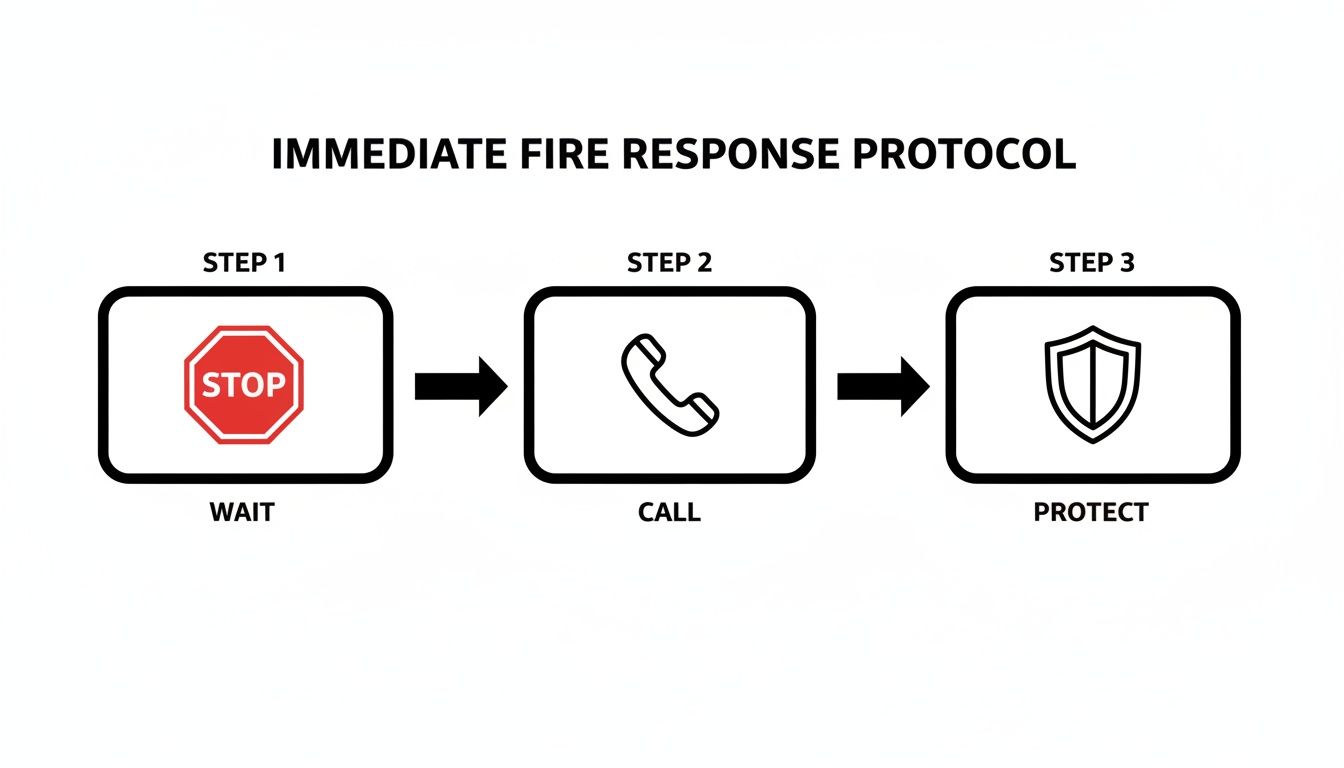
It’s simple: Wait for the professionals to say it’s safe, call for expert help, and take steps to protect the property. These are the cornerstones of a successful recovery.
The Dangers of Delay
Waiting to call for professional help is a costly mistake. In the U.S., where North America holds a 40.56% share of the disaster restoration market, speed is everything. For homeowners in places like Phoenix, where wildfire threats are real, a quick response is critical. Professionals can immediately start extracting the massive amounts of water used to fight the fire, which is a key step in preventing mold. If left unchecked, mold can become a secondary disaster, impacting up to 70% of fire-damaged homes.
The mix of acidic soot, smoke, and firefighting water creates a highly corrosive sludge. This toxic brew can permanently etch and stain surfaces within just a few hours—not days.
Acting fast isn’t just about cleaning up the mess; it’s about salvaging everything that can possibly be saved. For a more detailed breakdown, you can find a comprehensive https://restoreheroesaz.com/tag/emergency-checklist/ on our site that walks you through these first critical actions. Taking these steps right away helps stabilize your home and gets it ready for the full restoration process that lies ahead.
Securing Your Property and Assessing The Damage
Once the fire department says it's safe to go back in, the real work of recovery begins. This isn't the time for demolition; it's a careful, methodical process that starts with two critical steps: securing your property from any further damage and performing a top-to-bottom assessment of what the fire, smoke, and water actually did.
Think of it like a hospital emergency room for your house. The first thing professionals typically do is stop the bleeding and stabilize the patient before they figure out the full treatment plan.
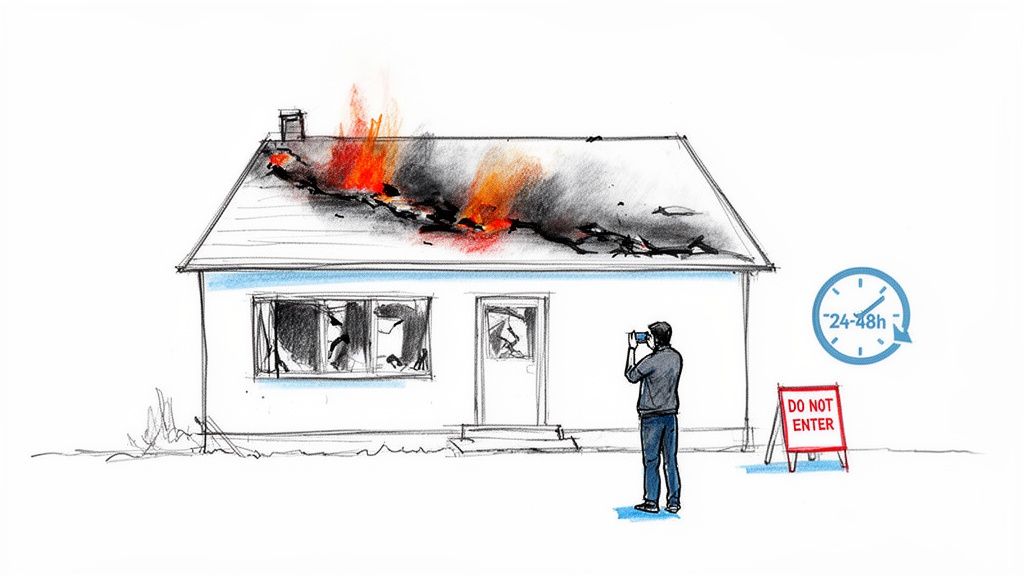
First, Stop Further Damage
A fire leaves a home vulnerable. Windows are shattered, doors might be broken down, and parts of the roof could be completely gone. This leaves your property wide open to the elements, theft, or vandalism. A professional restoration team’s first priority is often to lock it down tight.
- Boarding Up: They’ll secure any broken windows or doors with sturdy plywood.
- Roof Tarping: If the roof is damaged, they’ll cover it with heavy-duty tarps to keep rain out.
- Temporary Fencing: For major structural damage, they might put up a fence to keep people safely away from the property line.
These immediate actions are non-negotiable. They prevent a terrible situation from getting even worse while the team gets a handle on the scope of the work ahead.
Creating the Restoration Blueprint
With the property secured, the pros move on to the damage assessment. This is far more than a quick walkthrough. It's a forensic investigation to see exactly how far the fire, soot, and water traveled. Smoke is incredibly invasive and can easily creep inside walls, through ductwork, and into attics—places you’d never think to look.
During this stage, it's also crucial to be aware of hidden hazards. For example, a fire can easily disturb old building materials, so knowing how to identify asbestos insulation can be a critical safety concern for older homes.
This detailed evaluation creates the master plan for the entire restoration project. It pinpoints:
- How badly the structure itself was burned or warped by heat.
- Where corrosive smoke and soot have settled.
- The extent of water damage from the firefighting efforts.
- Whether the building is safe enough for crews to work in.
This documentation is essential not just for planning the cleanup, but also as critical proof for your insurance claim. Getting this right from the start is everything.
It’s helpful to understand what your role is versus what the professionals will handle in these critical first 48 hours. This table breaks down the immediate responsibilities.
Initial Fire Damage Response: Homeowner vs. Professional Roles
| Action Item | Homeowner's Role (Do's & Don'ts) | Professional's Role (IICRC Certified Techs) |
|---|---|---|
| Safety | DO wait for official clearance. DON'T enter a damaged structure alone. | Establish a safe work zone and identify structural hazards. |
| Security | DO contact a restoration company. DON'T leave valuables unsecured if safe to retrieve. | Board up windows/doors, tarp the roof, and install temporary fencing. |
| Documentation | DO take photos/videos from the outside. DO contact your insurance agent. | Perform a comprehensive, room-by-room inspection of fire, smoke, and water damage. |
| Mitigation | DON'T try to clean soot yourself. DON'T turn on utilities. | Set up air scrubbers, begin initial water extraction, and create a formal mitigation plan. |
This clear division of labor promotes your safety while allowing experts to lay the groundwork for a successful recovery.
A thorough, professional assessment is the foundation of a successful fire restoration. It helps ensure no damage is overlooked, preventing costly surprises and secondary issues like mold down the line.
The findings from this assessment allow the team to map out a precise, step-by-step plan. This blueprint will guide everything that comes next, from removing water and cleaning soot to the final repairs. You can explore more about these specialized fire and smoke damage services to see how experts tackle the cleanup. Getting this foundational stage right is what sets you on the fastest, safest path back to a fully restored home.
Dealing With Water Damage and Soot
After the immediate danger is over and your property is safe to enter, the real work begins. We’re now fighting a battle on two fronts: the water used to put out the fire and the nasty, acidic soot that has covered everything in sight. This is a careful, two-part cleanup mission where we have to be both fast and incredibly precise.
First up is the water. It takes a massive amount of water to extinguish a fire, and all of it is now soaking into your home’s floors, walls, and belongings. If you let it sit, you’re inviting mold to move in. Wood can start to warp, drywall can turn to mush, and metal can begin to rust. This is where professional water mitigation is absolutely critical.
First, We Tackle the Water
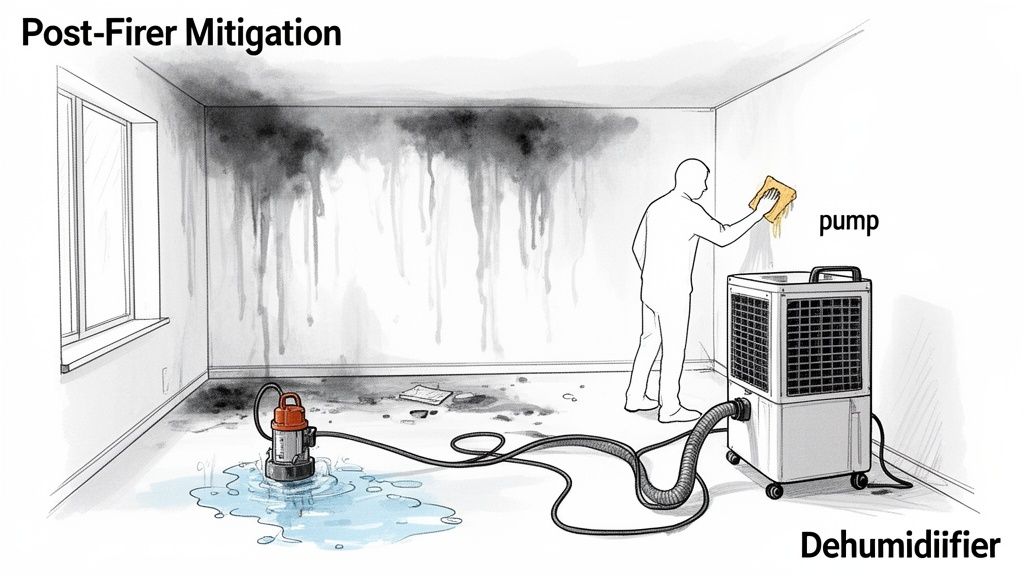
Before we can even think about the soot, we have to get the building completely dry. Our crews roll in with some serious equipment built for exactly this kind of job.
- Industrial Pumps & Vacuums: These are the workhorses that get rid of any standing water, fast.
- High-Velocity Air Movers: Think of these as super-powered fans. We set them up to blast air across wet surfaces, which dramatically speeds up evaporation from carpets, walls, and floors.
- Commercial-Grade Dehumidifiers: These machines are the final step, pulling all that lingering moisture right out of the air. They’re crucial for drying out the hidden parts of your home, like the inside of walls.
This gear works together to get the moisture out and bring the humidity back to normal. If you've ever dealt with a wet basement, you'll recognize some of these principles. You can learn more about the basics in our guide on how to dry out a flooded basement.
The Forensic Work of Soot Cleanup
Once the place is drying out, we can turn our attention to the soot. This stuff is far worse than simple ash. It’s an oily, acidic film that is actively eating away at whatever it touches.
Not all soot is the same, either. The type of soot depends on what burned and how hot the fire was. A hot, fast-burning fire leaves behind a fine, powdery soot that's relatively easy to clean. A slow, smoldering fire, on the other hand, creates a thick, greasy smudge that’s a nightmare to remove. An experienced pro knows how to identify the type of soot and match it with the right cleaning technique for every single surface, from your curtains to the drywall.
Every surface needs a specific approach. Using the wrong cleaner or method can permanently set a soot stain, turning a fixable problem into permanent damage.
This isn't just cleaning—it's a race against the clock. We aim to get structural stabilization underway within 48 hours. Waiting any longer can increase the damage by as much as 25% each day as smoke acid corrodes metals and etches into drywall.
Here in the Phoenix area, for example, our bonded and insured teams use specialized tools like ozone generators to neutralize stubborn smoke smells that can hide in an HVAC system for months. With residential jobs making up 55.67% of our work, we often perform a "pack-out," where we carefully move salvageable items to our facility for ultrasonic cleaning. This advanced process can restore 80-90% of contents that would otherwise be a complete loss. You can find more restoration industry insights like these from Qualified Remodeler.
Taking this careful, scientific approach to removing both water and soot is what stops long-term issues in their tracks. It clears the way for the deeper cleaning, odor removal, and repairs that come next.
Deep Cleaning, Sanitizing, and Getting Rid of the Smell
Once the water is gone and the most obvious soot is cleaned up, we move into the really deep, almost scientific, part of the job. Just wiping down surfaces isn't going to cut it. Smoke particles are microscopic—they get everywhere, worming their way deep into porous materials like wood, drywall, and your favorite armchair, which is why that awful smell sticks around.
This stage is less about what you can see and more about neutralizing the hidden threats. Think of it like a doctor treating an infection. You don't just put a bandage on it; you need the right medicine to kill the bacteria at its source. In the same way, specialized technology is used to break down those odor-causing particles on a molecular level.
It's More Than Just Masking the Smoke Odor
Spraying air freshener after a fire is like turning up the radio to drown out a weird clunking noise from your car's engine—it doesn't fix the real problem. True odor removal requires technology that actually destroys the smoke molecules causing the smell.
Thermal Fogging: This is a neat trick. We use a machine that heats up a deodorizing agent until it becomes a fine fog. This fog is made of particles about the same size as smoke particles, so it can travel into all the same tiny cracks and absorbent surfaces to neutralize the odor right where it's hiding.
Hydroxyl Generators: These are a game-changer for cleaning the air safely and effectively. The machines use UV light to create hydroxyl radicals—these are nature's little air scrubbers. They actively break apart odors, bacteria, and other contaminants in the air and on surfaces, leaving behind nothing but harmless water vapor and carbon dioxide.
This kind of technology has completely changed the game, with modern techniques slashing recovery times by as much as 30-50%. For instance, pros might use negative air machines to contain the area first, then bring in hydroxyl generators that are 95% effective at neutralizing even stubborn smoke smells. A job that used to take weeks can now often be done in days, saving thousands in potential secondary damage from things like mold.
Sanitizing for a Truly Safe Home
After a fire, a house is dealing with more than just soot. The water used to put out the flames can introduce bacteria, and the soot itself is full of nasty chemicals. That’s why a critical step in any professional restoration is a complete sanitization to help make sure the environment is safe for you and your family to come back to.
This means applying EPA-approved antimicrobial agents to all the affected surfaces to kill off bacteria, fungi, and viruses. Technicians meticulously clean and disinfect everything—walls, floors, countertops, and even the HVAC system. This step is about restoring not just how your home looks, but its actual health and safety. It also helps head off future problems, which is why our approach to things like professional mold removal services follows the same deep-cleaning principles.
A truly restored home isn’t just clean and odor-free—it's hygienically safe. Professional sanitization is what removes the invisible dangers a fire leaves behind.
The "Pack-Out": Saving Your Valuables
Sometimes, certain belongings—like furniture, clothing, or electronics—are either too damaged or too delicate to be cleaned properly on-site. When that happens, we perform what's called a pack-out. Our team can carefully inventory, pack up, and move these salvageable items to a secure, climate-controlled facility for specialized cleaning.
Taking things off-site gives us access to more intensive restoration methods that just aren't practical to do inside a home, such as:
- Ultrasonic Cleaning for complex or fragile items.
- Specialized Laundering for textiles and clothes exposed to heavy smoke.
- Content Deodorization Chambers to pull stubborn odors out of furniture and upholstery.
Once everything is restored, your belongings can be stored safely until your home is repaired and ready for them to be returned. This careful, methodical process helps to save everything we possibly can and get it back to its pre-fire condition, finishing this vital part of your home's recovery.
Repairing and Rebuilding Your Home
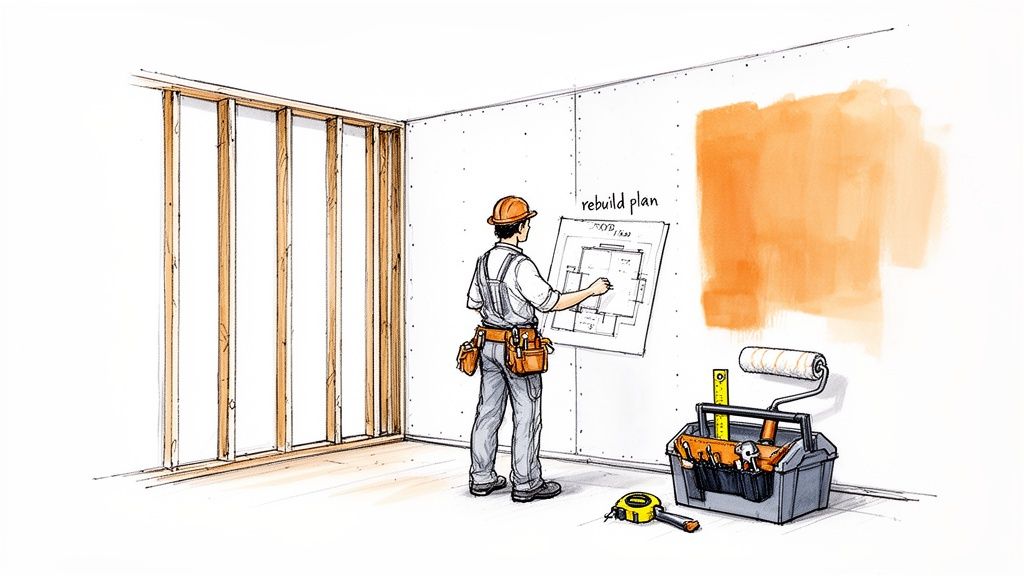
Once the deep cleaning and deodorizing are done, we get to the final—and most satisfying—part of the job. This is where your property stops looking like a restoration site and starts feeling like home again. The focus shifts from cleanup to construction, turning the clean, stable shell back into the space you remember.
Think of it this way: all the previous steps were about prepping the canvas. Now, the skilled tradespeople arrive to paint the masterpiece, bringing your home back to life with precision and care.
From Minor Fixes to Major Overhauls
The amount of rebuilding work really depends on how bad the fire was. For some homeowners, it might just be a few cosmetic touch-ups. For others, it's a full-blown construction project that gets down to the studs.
- Minor Repairs: This could be as simple as replacing drywall in one room, putting in new carpet, and giving the walls a fresh coat of paint.
- Major Reconstruction: When the damage is severe, we might be rebuilding entire sections of your house—that means new framing, roofing, and even brand-new electrical and plumbing systems.
Whether the job is big or small, the goal is always the same: make the new work blend seamlessly with the parts of your home that weren't damaged. When it's done, you shouldn't be able to tell where the repairs even happened.
The Advantage of a Single Point of Contact
Trying to manage a big repair project can feel like juggling chainsaws. You have framers, electricians, plumbers, and painters all needing to be scheduled and coordinated. A professional restoration company takes that chaos off your plate and acts as your single point of contact.
This approach simplifies what can be an incredibly stressful process. Instead of you having to track down, vet, and schedule a dozen different contractors, the project manager handles everything.
A professional restoration company coordinates a whole network of licensed and insured contractors. They work to ensure all the work not only looks great but also meets all local building codes and regulations.
Having one team in charge helps keep the project moving smoothly, prevents expensive delays, and promotes high-quality work from start to finish. It frees you up to focus on your family and getting life back on track while the experts handle the logistics of putting your home back together.
What Does the Rebuilding Phase Include?
The reconstruction phase is all about restoring every single damaged piece of your home. A professional team coordinates a wide range of services to bring your property back to how it was before the fire—or sometimes, even better.
| Service Category | Examples of Work |
|---|---|
| Structural Repairs | Framing walls, repairing or replacing roof trusses, pouring new concrete. |
| Interior Finishing | Installing drywall, painting, laying new flooring (carpet, tile, wood). |
| System Installation | Electrical wiring, plumbing pipes, and HVAC system components. |
| Cabinetry & Fixtures | Installing kitchen cabinets, bathroom vanities, light fixtures, and faucets. |
Every step is planned and carried out in the right order to ensure the job is done efficiently and correctly. This methodical approach is the final, crucial part of the journey. Ultimately, the goal isn't just to fix the damage but to completely erase any sign that a fire ever occurred, making your house feel like home again.
Navigating The Insurance Claim Process
After the shock of a fire, dealing with an insurance claim can feel like weathering a second storm. The mountain of paperwork, the confusing industry jargon, and the constant back-and-forth can add a whole new layer of stress right when you're most vulnerable. But getting a handle on this part of the fire damage restoration process can make all the difference.
Think of your restoration company as your expert guide through this maze. They're fluent in the language of insurance adjusters and know exactly what kind of detailed, professional proof is needed to get your claim approved and processed smoothly.
The Power of Professional Documentation
The single most important document in this whole process is called the scope of work. This isn't just a simple price quote. It’s an incredibly detailed, room-by-room breakdown created by the restoration pros that lists every single task required, from cleaning microscopic soot particles to rebuilding entire walls.
This document uses industry-standard software and pricing that your insurance company recognizes and trusts. It essentially translates the physical damage into a clear, justifiable action plan for the adjuster. This is also why jumping into a DIY cleanup can backfire—you might accidentally erase crucial evidence of the damage before it can be professionally documented for your claim.
A detailed scope of work from a certified restoration firm is your best advocate. It builds a bulletproof case for the necessary repairs using the exact language and line-item format adjusters require.
Working With Your Insurance Adjuster
A good restoration company doesn’t fight with your insurance adjuster; they work with them. They can become the bridge between you and the insurance company, helping to make sure communication is clear and all technical questions get answered correctly. It’s a team effort that helps move everything forward.
Your restoration team will usually:
- Meet the adjuster right at your property to do a joint walkthrough of the damage.
- Supply all the necessary evidence, like photos, thermal imaging results, and moisture readings, to back up the scope of work.
- Explain the specific restoration techniques and why certain steps are necessary.
This partnership helps to ensure that nothing gets overlooked and all covered damages are accounted for. Every policy is unique, of course, but having a pro in your corner who knows the ropes is invaluable. We have more tips available if you want to learn how to manage a fire insurance claim and navigate the process.
Key Insurance Terms to Know
Let's be honest, the insurance world is full of confusing terms. Getting familiar with a few key phrases will help you feel much more in control of the situation.
| Term | What It Means for You |
|---|---|
| Deductible | This is the fixed amount you pay out of pocket before your insurance policy kicks in to cover the rest. You'll find this number in your policy documents. |
| Loss of Use | If your home is unlivable during the restoration, this coverage may help pay for temporary living expenses, like a hotel or rental. |
| Actual Cash Value (ACV) | This is what your damaged property was worth at the exact moment of the loss, factoring in depreciation (age and wear). It's not the original price you paid. |
| Replacement Cost Value (RCV) | This is the cost to repair or replace your property with new materials of similar quality, without any deduction for depreciation, as defined by your policy. |
Understanding these basics will help you follow the conversations and make sense of the paperwork, giving you the confidence to manage the financial side of your recovery.
A Few Common Questions About Fire Restoration
Even when you understand the steps involved, the reality of a fire is overwhelming. It’s completely normal to have a lot of questions running through your mind.
Getting clear, straightforward answers can make a world of difference. Here are some of the most common things we get asked by homeowners and property managers trying to navigate the road back to normal.
How Long Does The Fire Damage Restoration Process Take?
This is usually the first question people ask, and the honest answer is: it really depends. The timeline is tied directly to how much damage the fire, smoke, and water caused.
If you had a small fire contained to the kitchen, the project might take just a few days or a week. But for a major fire that has compromised the structure of your home, you could be looking at several weeks or even months. The amount of water used to put out the blaze, the kind of materials that got covered in soot, and how complex the rebuilding will be are all major factors. Once a professional gets on-site and does a thorough inspection, they can give you a much more accurate timeline.
Is It Safe To Stay In My Home During Restoration?
For your own health and safety, it’s almost always best to find somewhere else to stay. A house that’s been through a fire is full of hidden dangers. You've got potentially weakened floors and ceilings, not to mention the air quality, which can be filled with toxic soot particles and other contaminants.
Our crews wear specialized personal protective equipment (PPE) and set up containment barriers precisely because of these risks.
It's not about convenience—it's about keeping you safe. Moving out protects you from breathing in harmful substances and lets the restoration team work efficiently to get you back home as soon as possible.
This also helps speed up the fire damage restoration process because our teams can work without interruption, getting you back into a clean, safe environment that much faster.
Can I Clean Up The Damage Myself?
I get it. You see the mess and your first instinct is to grab a sponge and start scrubbing. But please, fight that urge. Trying to clean up fire damage yourself can actually make things much, much worse.
Soot isn't just dirt; it's an oily, acidic residue. If you try to wipe it with standard household cleaners, you'll likely smear it, driving the fine particles deeper into walls, upholstery, and carpets. This can cause permanent staining and etching. Water damage is another huge risk. If you don’t dry things out with the right equipment, you’re basically inviting mold to start growing behind your walls, which is a whole other expensive problem. Professionals have the training and the right gear to handle these hazardous materials safely and effectively, which is also crucial for your insurance claim.
Why Is IICRC Certification Important?
Think of the IICRC (Institute of Inspection, Cleaning and Restoration Certification) as the gold standard for our industry. When a company is IICRC-certified, it means their technicians have been through intense training and passed exams on the most effective, science-backed methods for fire and smoke restoration.
It's a mark of quality and professionalism. It serves as your assurance that the team working on your home isn’t just guessing—they're following a proven process to get your property back to a safe, healthy condition. It buys you peace of mind, and after a fire, that’s priceless.
Going through a fire is incredibly tough, but you don’t have to face it alone. The certified professionals at Restore Heroes are on call 24/7 to help guide you through every single step of the fire damage restoration process. If your property in the Phoenix area has been damaged by fire, give us a call for a free, no-obligation inspection. Let’s get you back on your feet. Learn more at https://www.restoreheroesaz.com.