
A lot of Phoenix homeowners first notice mold the same way. Not by seeing it, but by smelling it.
You come home after a monsoon storm, the AC kicks on, and there’s a stale, earthy smell that wasn’t there before. Or maybe a bathroom corner keeps getting dark no matter how often you wipe it down. Sometimes the clue is subtler. A cabinet under the sink feels damp, paint starts to bubble near a baseboard, or one closet always smells a little off.
That’s when concern sets in. Is it really mold? Is it dangerous? And in a dry place like Phoenix, how could this even happen?
Those are fair questions. Desert homeowners often assume mold is mostly a problem for humid states. But Arizona homes have their own version of the same problem. Air conditioners create condensation. Monsoon storms push water into roofs, walls, and window frames. Small plumbing leaks can stay hidden for weeks because the air outside feels so dry. The house can seem dry overall while one wall cavity, vent chase, or attic corner stays damp enough for mold to grow.
If you’ve been searching for what causes black mold in homes, the short answer is simple. Moisture causes it. The longer answer is what matters, especially in Phoenix, where the moisture source often hides in places people don’t expect.
If the warning sign you’re dealing with is odor, this guide on why a basement smells musty can help connect that smell to possible moisture problems.
That Musty Smell Might Be a Warning Sign
A musty smell usually means moisture has been sitting somewhere longer than it should. Not always out in the open. Often behind drywall, under flooring, inside an AC closet, or around a slow plumbing leak.
In Phoenix homes, that smell often appears after a very ordinary event. A clogged condensate line. A roof leak during a summer storm. An upstairs shower pan that lets a little water escape every day. None of those sound dramatic, but mold doesn’t need drama. It needs dampness and time.
Why the smell often shows up first
Mold can stay hidden even when the house looks clean. A wall can appear normal while the paper backing on the drywall behind it stays wet. A cabinet can look fine until you remove stored items and notice staining or soft material underneath. That’s why many homeowners notice odor before they spot visible growth.
Practical rule: If a room smells earthy, wet, or like old cardboard, treat that as a moisture clue first and a cleaning problem second.
The confusing part is that Phoenix air tricks people. When it’s dry outside, it’s easy to assume the inside of the home must be dry too. But indoor moisture behaves differently. Your AC makes water through condensation. Bathrooms trap steam. Kitchens create humidity. Monsoon-driven leaks can soak building materials that stay wet long after the storm passes.
A calm way to think about it
A musty odor doesn’t automatically mean a worst-case scenario. It does mean your home is giving you information. Something somewhere is staying damp, and damp materials invite mold.
That’s why the smartest first move isn’t panic. It’s curiosity. Ask a few practical questions:
- Did this start after rain: Storm timing often points to roof, window, or flashing issues.
- Is the smell stronger when the AC runs: That can suggest condensate, duct, or air-handler moisture.
- Does one room feel stuffier than the rest: Poor airflow often lets moisture linger.
- Are there stains, bubbling paint, or warped trim nearby: Those are common signs that water has been there before.
The Real Story Behind Black Mold
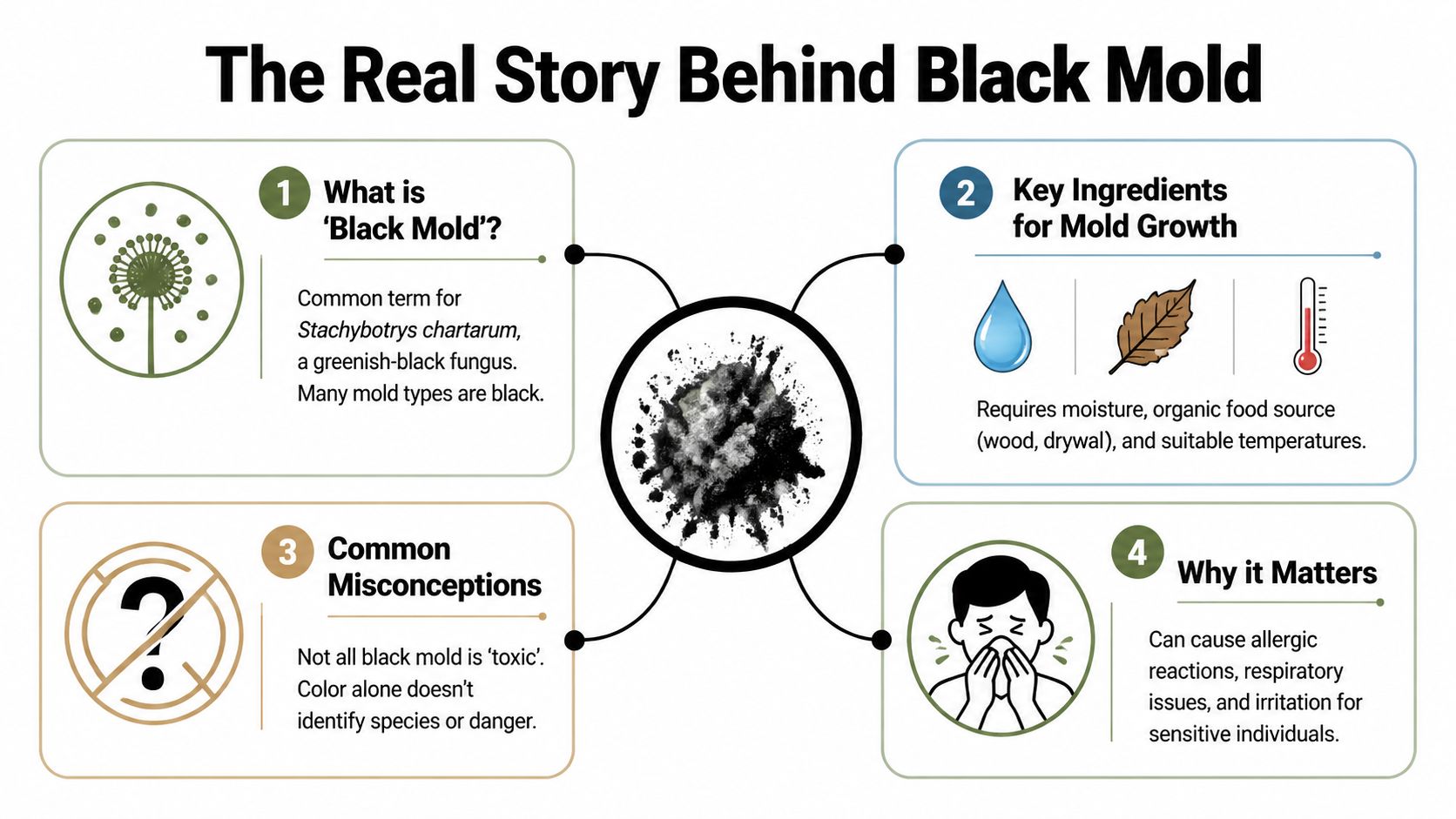
People use the term black mold as if it describes one clear, easy-to-identify thing. It doesn’t. The name usually refers to Stachybotrys chartarum, but many molds can look dark or black to the eye. Color alone doesn’t tell you exactly what species you’re seeing, and it doesn’t tell you how serious the moisture problem is.
What matters most is understanding how mold starts.
Think of mold like a recipe
To understand what causes black mold in homes, consider baking. A cake won’t appear because one ingredient is sitting on the counter. You need the right combination.
Mold works the same way. It needs:
- A food source: Drywall paper, wood, cardboard, dust, fabric, and other organic material
- Suitable temperatures: The kind most homes already have
- Moisture: The ingredient that decides whether growth starts or not
The food source is everywhere in a house. So are mold spores. They travel through normal air movement and settle on surfaces all the time. According to the EPA, black mold growth begins when airborne spores land on damp materials with organic content, and those materials stay wet enough for growth to start. The same EPA guidance notes that visible colonization can appear within 24 to 48 hours under favorable conditions, and materials should be dried to less than 16% moisture content within 48 hours to help prevent growth according to the EPA mold guidance.
What people often get wrong
The biggest misunderstanding is this. People think the mold itself is the first problem. Usually, it isn’t. The moisture problem is first. Mold is the result.
That changes how you respond. If you only wipe away the visible spot but ignore the leak, condensation, or humidity behind it, the mold often comes back. It’s like mopping a floor while a pipe is still dripping overhead.
Another common confusion is around appearance. Mold may look fuzzy, slimy, speckled, flat, greenish-black, gray, or brown. Homeowners often focus on color because the phrase “black mold” sounds specific and alarming. But for practical decision-making, the more useful question is this: Why is this surface staying damp?
Mold is less like a stain and more like a symptom. If you remove the symptom and leave the cause, you usually see it again.
Where black mold tends to feed
Black mold often grows on materials that hold water and contain cellulose. In plain language, that includes things commonly found in homes:
| Material | Why mold likes it |
|---|---|
| Drywall | The paper facing acts as a food source when wet |
| Wood trim and framing | Organic material absorbs and holds moisture |
| Cardboard storage boxes | Easy food source in damp garages, closets, or attics |
| Insulation facing | Can trap moisture near leaks or condensation |
| Ceiling tiles and paper-backed products | Porous surfaces stay wet longer |
If you’re trying to understand the difference between black mold and other problem molds, this guide to dangerous molds in basements gives useful context.
Moisture The One Ingredient You Can Control
You can’t remove every mold spore from the air. You also can’t build a house without materials mold likes to feed on. Drywall, wood, and dust are part of normal living.
What you can control is water.
That’s why moisture is the most important part of the story. The CDC confirms that Stachybotrys chartarum needs constant moisture from water damage, leaks, condensation, or flooding to grow, and the EPA states that mold doesn’t grow without water or moisture. The same summary notes that mold can begin forming in as little as 24 to 48 hours after water damage, which is why quick drying matters so much according to this mold and moisture overview.
The three moisture patterns homeowners deal with
Most household mold problems trace back to one of these:
Active leaks
A leaking supply line, roof opening, appliance hose, or shower connection sends water directly into materials.High air moisture
Humid indoor air hangs around long enough to keep rooms, closets, or attics damp.Condensation
Water forms on cooler surfaces such as AC components, ducts, pipes, or windows.
These don’t always look the same. A roof leak may leave a stain. Condensation may leave no obvious mark at first. High humidity may just show up as a bathroom that never seems to dry out.
Why moisture control beats surface cleaning
If mold were only a surface issue, cleaning would solve most cases. But mold roots itself where moisture stays available. That’s why a wall can look dry while the insulation behind it is still damp. It’s also why a room can smell musty even after repeated wiping and spraying.
A better approach is to think like a water detective.
- Follow the source: Ask where the water is coming from
- Check where it travels: Water often moves along framing, pipes, and flooring
- Dry the material, not just the room: Air can feel dry while hidden materials stay wet
For homeowners who want practical humidity basics, this guide to reducing household dampness does a good job explaining everyday moisture control.
If there’s already been a leak or flood, the bigger priority is proper drying. This overview of water and mold mitigation explains why drying, monitoring, and source repair need to happen together.
Top 5 Mold Triggers in Phoenix Area Homes
Phoenix doesn’t have the year-round sticky air people associate with coastal mold problems. That’s exactly why certain mold triggers get missed here. The outdoor climate feels dry, so people overlook indoor moisture pockets.
In local homes, mold often starts in the same handful of ways.
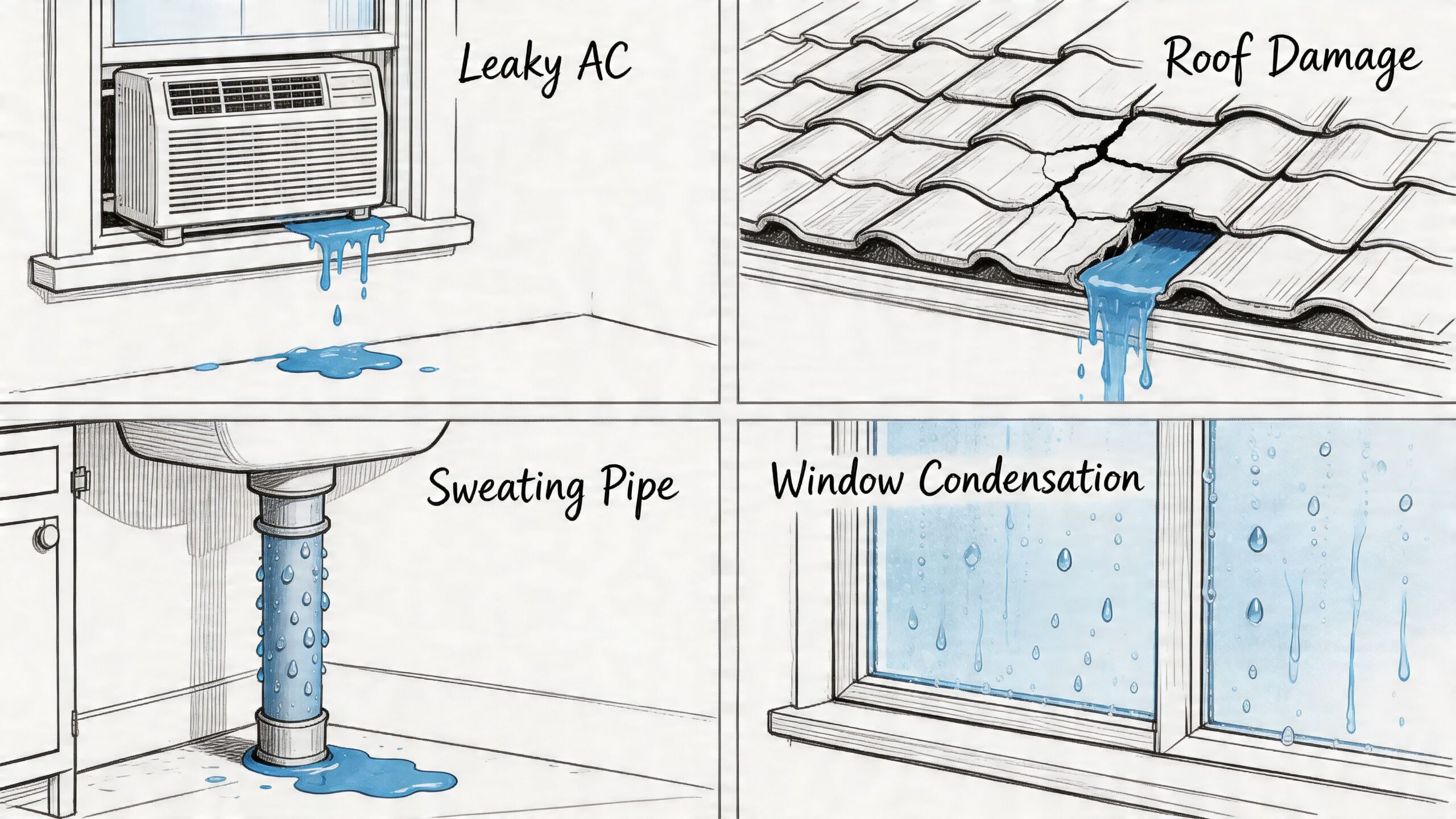
Leaky or clogged AC condensate lines
Air conditioners don’t just cool air. They also pull moisture out of it. In Arizona summers, that matters a lot.
Poor ventilation can create indoor microclimates where relative humidity rises above 60%, and in Arizona’s 110°F+ summers, AC evaporator coils can drip water from condensation. Guidance summarized from ASHRAE 55 recommends keeping indoor relative humidity below 50 to 60% to suppress mold growth, and levels above 70% can let mold penetrate gypsum board within 72 hours, as explained in this discussion of how black mold forms.
When the drain line clogs, that water has to go somewhere. Sometimes it overflows into the drain pan. Sometimes it wets nearby framing, drywall, or insulation. Because the system is often tucked in a closet, attic, or garage area, the problem can go unnoticed until odor or staining appears.
A typical Phoenix example is the upstairs air handler sitting above a hallway ceiling. The homeowner notices a faint smell when the AC starts. A few days later, the ceiling texture begins to discolor. The mold didn’t appear because the house was generally humid. It appeared because one mechanical component kept one building area damp.
Hidden plumbing leaks in walls or slabs
Phoenix homes often hide plumbing well. That’s convenient until a small leak starts.
A pinhole leak behind a vanity wall may release only a little water at a time. But drywall paper, baseboards, and cabinet materials don’t need much. Slow leaks are particularly sneaky because they rarely create dramatic puddles. They create soft drywall, warped trim, and that persistent smell people can’t quite place.
Slab leaks can be even harder to spot. Sometimes the first clue is flooring that starts to cup or separate. In other cases, the base of a wall feels warmer or damper than expected. Mold follows the wet materials above the leak path, not just the leak point itself.
If the surface damage seems small but keeps returning, the hidden water source is usually the real story.
High indoor humidity from swamp coolers or poor airflow
This is one of the most misunderstood Phoenix mold triggers.
People hear “Arizona is dry” and assume indoor humidity can’t be the issue. But some homes rely on evaporative cooling, and even homes with refrigerated air can develop stale, damp pockets when airflow is poor. Bathrooms without good exhaust, packed closets on exterior walls, and hot attics with weak ventilation can all trap moisture.
In these spaces, humidity doesn’t have to dominate the whole home. It only needs to stay high in one enclosed zone long enough for mold to grow. That’s why one bathroom ceiling, one laundry room corner, or one closet can develop mold while the rest of the house seems fine.
Monsoon storm damage and roof leaks
Monsoon season changes the mold conversation in the desert.
A roof may handle months of sunshine without a problem, then fail during one hard wind-driven storm. Water gets under tile, around flashing, or through an opening near a vent boot. Homeowners may not see immediate interior damage because the water travels first. It can soak roof decking, insulation, or drywall from above before a stain appears in the room below.
Delay leads to extensive damage, not just financial expense. Wet materials often stay hidden in attic cavities and wall tops. By the time the stain appears, the moisture may have been present for days.
The local challenge isn’t constant rain. It’s sudden, intense water intrusion followed by the false sense that everything must dry quickly because the climate is arid.
Everyday condensation in bathrooms and kitchens
Not every mold problem starts with a dramatic event. Many begin with normal daily habits.
Hot showers leave steam on ceilings, grout lines, window frames, and paint. Cooking releases moisture into the air. Dishwashers and sink cabinets add another layer if small drips go unnoticed. If the room doesn’t vent well, surfaces stay damp longer than they should.
The bathroom version is familiar. A ceiling above the shower keeps getting speckled. You wipe it off, repaint, and it returns. Often the issue isn’t the paint. It’s trapped moisture plus weak exhaust.
The kitchen version is quieter. A disposal connection loosens under the sink. The cabinet base swells a little. Stored cleaners hide the problem until the wood darkens and smells musty.
A quick way to compare local triggers
| Trigger | Why Phoenix homes miss it |
|---|---|
| AC condensation | Outdoor dryness makes indoor mechanical moisture easy to overlook |
| Slow plumbing leaks | Small leaks hide behind walls and cabinets for a long time |
| Poor room ventilation | Mold can form in isolated damp pockets, not just whole-house humidity |
| Monsoon roof intrusion | Water enters suddenly, then stays hidden in attic or wall materials |
| Daily condensation | Bathrooms and kitchens create repeated moisture even in dry climates |
How to Spot Mold and Understand Potential Risks
Most homeowners expect mold to be obvious. Sometimes it is. Sometimes it’s a dark patch spreading across caulk or drywall. But many mold problems announce themselves in smaller ways first.
What to look for in the house
A reliable mold check uses more than your eyes. Use your nose, your hands, and your sense of pattern.
Here are common clues:
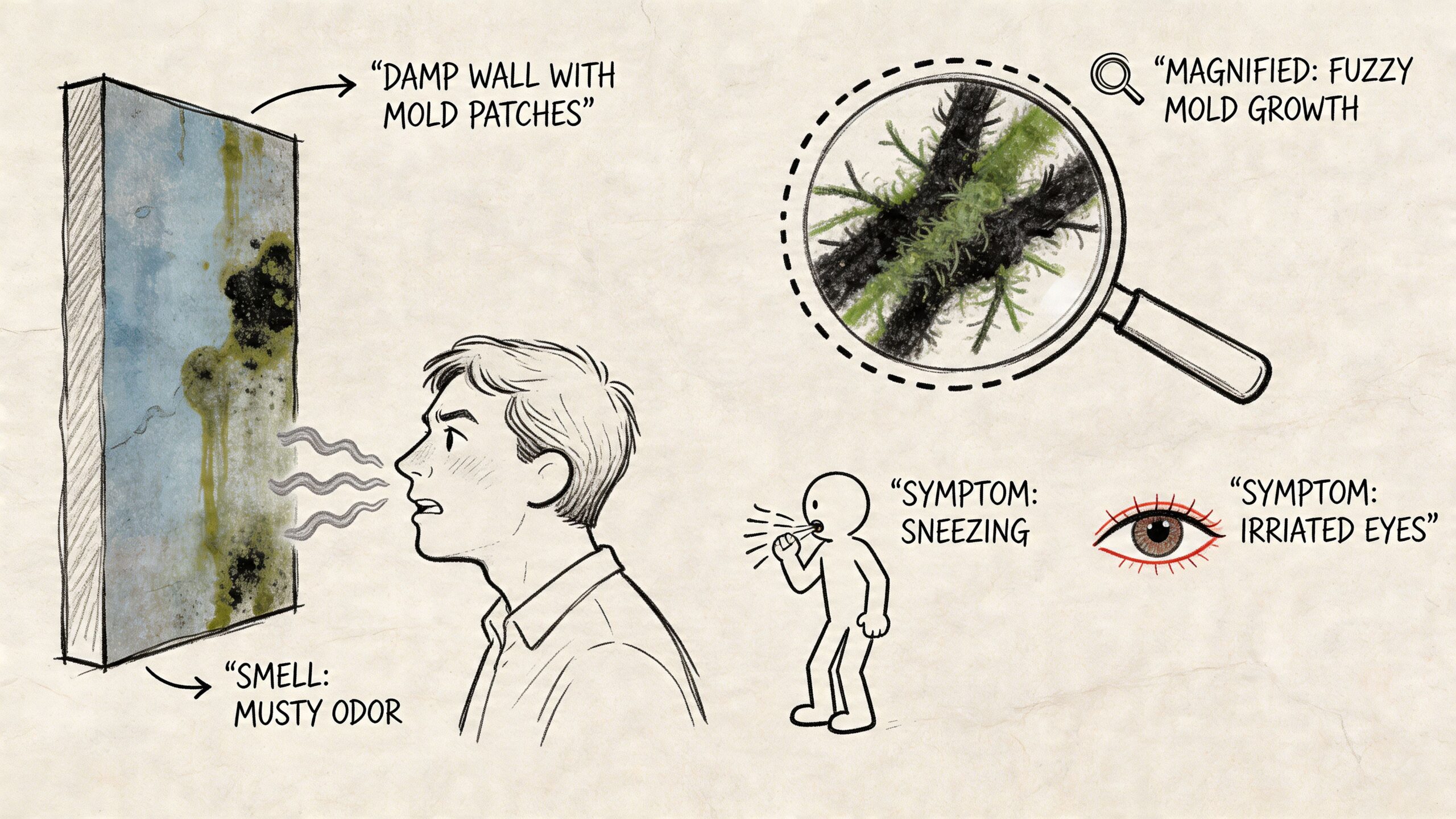
- Musty odor: Often strongest in the morning, after rain, or when the AC starts
- Discoloration: Black, greenish, gray, or brown spotting on walls, ceilings, caulk, or wood
- Texture change: Fuzzy patches, slimy film, flaking paint, or soft drywall
- Material damage: Bubbling paint, peeling wallpaper, warped baseboards, swollen cabinets
- Condensation patterns: Repeated fogging or dampness on windows, vents, or pipes
- Recurring cleanup spots: Areas that look better after cleaning but keep coming back
A flashlight helps. So does a simple habit of looking behind furniture, under sinks, around supply vents, and inside less-used closets.
What hidden mold often looks like indirectly
You won’t always see mold itself. You may only see what moisture does to materials.
That can include:
| Sign | What it may mean |
|---|---|
| Baseboard separation | Moisture behind the wall or floor edge |
| Ceiling staining | Roof or HVAC-related water intrusion |
| Persistent damp cabinet smell | Slow plumbing leak or poor airflow |
| Paint bubbling near a shower | Ongoing condensation or wall moisture |
| Warped flooring | Water moving below the visible surface |
If you suspect growth inside a cavity, this article on signs of mold in walls can help you compare what you’re seeing.
Understanding the health side without panic
Mold affects people differently. Some notice no symptoms at all. Others react quickly, especially if they already deal with allergies, asthma, or respiratory sensitivity.
The World Health Organization links 21% of U.S. asthma cases to dampness and mold in homes, and research also shows older homes can have a higher moldiness index because of structural vulnerabilities and the absence of central air conditioning in some cases, according to this review in the WHO-linked dampness and mold research.
That doesn’t mean every patch of mold causes severe illness. It does mean damp indoor environments deserve attention.
A mold problem is also a moisture problem, and moisture problems affect both buildings and the people living inside them.
People who are sensitive may notice:
- Nasal irritation: Stuffy or runny nose
- Eye and throat irritation: Scratchy throat or watery eyes
- Coughing or wheezing: Especially if symptoms feel worse in one room
- Asthma flare-ups: Damp, moldy spaces can be a trigger for some people
- General discomfort indoors: Symptoms that improve after leaving home can be a clue worth discussing with a healthcare professional
This short video gives a useful overview of how mold issues can show up in a home.
When concern is reasonable
You don’t need to panic over every dark speck. But it’s reasonable to take mold seriously when:
- The odor is persistent
- The affected area keeps returning
- The material is soft, wet, or damaged
- The problem followed a leak, flood, or storm
- Someone in the home feels worse in that space
Those signs point to a broader moisture issue that needs attention, not just cosmetic cleanup.
Your Mold Action Plan Prevention and First Steps
The best response to mold has three layers. Prevent what you can. Handle small issues carefully. Bring in professional help when the situation goes beyond safe surface cleanup.
That sounds simple, but many homeowners get stuck because they jump to the wrong layer. They scrub when they should dry. They repaint when they should inspect. Or they wait too long because the house is in Arizona and “should dry out on its own.”
In arid climates like Phoenix, low outdoor humidity can hide indoor moisture traps from AC systems and monsoon flooding. One source summary notes that remediation delays average 72 hours after flooding, which is far longer than the 24 to 48 hour window when mold colonization can begin. That’s a major reason fast drying matters in desert homes, as described in this overview of black mold in arid climates.
Prevention that fits real life
Good prevention isn’t complicated. It’s consistent.
A practical home routine includes:
- Check AC drain lines and pans: Look for standing water, overflow, or staining near the air handler
- Use bathroom fans every time: Keep them running long enough to clear steam after showers
- Inspect under sinks and behind appliances: Small drips often start there
- Watch roof and ceiling areas after storms: Especially around vents, skylights, and roof transitions
- Avoid packed closets against exterior walls: Air needs room to circulate
- Dry damp materials quickly: Towels, rugs, cardboard, and stored items can hold moisture longer than expected
For broader upkeep habits that help limit moisture problems in finished lower areas and storage spaces, this article on Northpoint Construction property maintenance offers useful maintenance ideas.
What you can do right away with a small visible spot
If you find a small patch on a non-porous surface such as tile, metal, or sealed glass, start carefully.
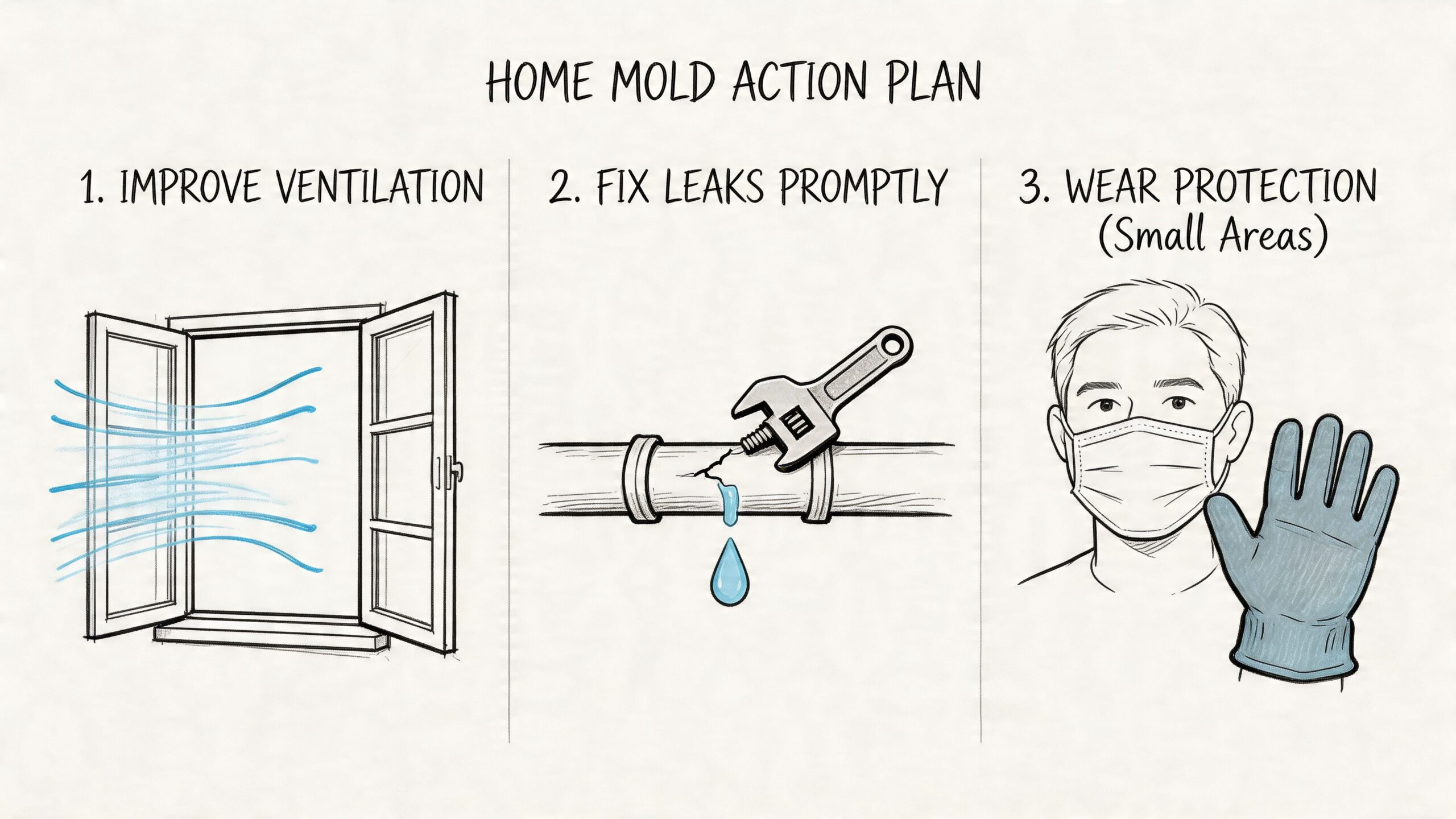
Protect yourself first
Wear gloves, eye protection, and a mask. Open ventilation if doing so won’t spread dust into the rest of the house.Fix the moisture source
If the exhaust fan doesn’t work, the sink is dripping, or condensation is forming, address that problem first.Clean the surface gently
Wipe the growth from the hard surface. Bag and dispose of used cloths or towels after cleanup.Dry the area completely
A cleaned but still damp surface is an invitation for the problem to return.
What not to do
This part matters as much as cleanup.
- Don’t scrub large moldy areas aggressively: That can spread particles into the air
- Don’t paint over staining: Paint hides evidence but doesn’t solve moisture
- Don’t assume bleach fixes porous materials: If drywall, insulation, or particleboard is affected, the moisture may be deeper than the surface
- Don’t ignore repeat growth: Return growth means the water problem is still active
- Don’t disturb HVAC components casually: Mold linked to ducts or air handlers can spread through airflow
What homeowners often miss: The goal isn’t to make mold invisible. The goal is to make the material dry and keep it dry.
When it’s time to call a professional
Some situations move beyond safe DIY quickly. It’s smart to get professional help when:
- The affected area is larger than about 10 square feet
- Mold keeps returning after cleaning
- You suspect growth inside walls, ceilings, or flooring
- The HVAC system may be involved
- The material is porous and water-damaged
- A family member has asthma, allergies, or heightened sensitivity
- The mold followed a flood, roof leak, or sewage-related event
A professional approach matters because hidden moisture requires more than visual inspection. It often takes moisture mapping, controlled removal, drying equipment, and post-cleaning verification.
Why Professional Remediation Is Different
Professional mold remediation isn’t just “stronger cleaning.” It’s a controlled building-science process focused on three goals. Find the water. Stop the spread. Remove affected material safely.
That difference matters because mold problems are rarely limited to what you can see on the surface.
What professionals actually do
A proper remediation process usually includes:
- Inspection and moisture detection: Technicians use moisture meters and often thermal imaging to find damp materials behind walls, under floors, or above ceilings
- Containment: Work areas are isolated so disturbed particles don’t move into clean parts of the home
- Air filtration: HEPA-filtered equipment helps capture airborne particles during removal
- Targeted demolition and cleaning: Porous materials that can’t be effectively restored may need removal, while salvageable structural components are cleaned and dried
- Verification: The team checks that materials are dry and the original moisture source has been corrected
That’s why professional remediation is different from spraying a product on a visible spot. One approach treats appearance. The other treats the building condition that allowed mold to grow.
Why local experience matters in Phoenix
Phoenix homes have their own moisture profile. AC systems run hard for long periods. Monsoon storms can drive water into roof assemblies quickly. Desert conditions also cause homeowners to underestimate hidden dampness because the surrounding air feels dry.
A restoration team familiar with local conditions is more likely to check the places where Arizona moisture hides. That includes air-handler closets, condensate lines, attic transitions, roof penetrations, shower surrounds, and slow leaks in slab-adjacent walls.
If you’ve ever wondered what a restoration company handles beyond cleanup, this explanation of what a restoration company does gives a helpful overview.
The value of a structured response
For a homeowner, the value of professional help is clarity. You find out:
| Question | Why it matters |
|---|---|
| Where is the moisture coming from | Mold returns if the source stays active |
| How far has it spread | Visible damage may only show part of the problem |
| Which materials can be saved | Some surfaces clean up well, others do not |
| Whether the area is actually dry | Dry-looking and dry-measured are not the same |
When a mold issue follows a leak, storm, or unexplained odor, a systematic inspection often saves time and frustration. It gives you a defined path instead of guesswork.
If you’re dealing with a musty smell, recent water damage, or signs of hidden mold, Restore Heroes can help you figure out what’s causing the problem and what the next step should be. Their Phoenix-area team is licensed, bonded, insured, and IICRC-certified, with experience handling water damage, drying, and mold-related restoration issues common in Arizona homes. A professional inspection can help you separate a small surface issue from a deeper moisture problem before it gets worse.