
You notice it after the shower. The bathroom smells earthy even after the fan runs. A few days later, you move a basket, a picture frame, or a piece of furniture and see a faint stain that wasn’t there before. In Phoenix, that moment catches homeowners off guard because mold doesn’t fit the desert image people have in mind.
Still, mold damage phoenix homes deal with usually follows a pattern. Water gets in, humidity gets trapped, and growth starts somewhere people don’t look every day. The good news is that there’s a practical path forward. If you know what to look for, what not to disturb, and what a proper remediation process should involve, you can make calm decisions instead of guessing.
That Musty Smell in Your Home Might Be a Warning Sign
A musty smell is one of the most useful early clues in a house. It often shows up before there’s obvious surface growth. In my field, that odor usually means one thing. Moisture has been sitting where it shouldn’t, and materials nearby have stayed damp long enough for biological growth to take hold.
Phoenix homeowners often tell themselves it’s probably just an old towel, a dusty vent, or stale air from a closed room. Sometimes it is. But when the smell keeps returning after cleaning, it deserves a closer look.
What that smell often points to
Common problem spots include:
- Behind baseboards: Small plumbing leaks can keep drywall and trim damp without leaving a dramatic stain.
- Around windows: Failed seals let moisture collect where homeowners rarely inspect closely.
- Inside bathroom walls: Shower spray, loose caulk, and weak ventilation create the right conditions over time.
- Near HVAC components: Condensation can feed hidden growth in utility closets, returns, and nearby framing.
If you’re dealing with persistent odors, this article on musty basement smell causes and solutions can help you think through what that smell may be telling you.
Practical rule: If an odor comes back after routine cleaning, treat it as a moisture problem first and a cleaning problem second.
A lot of homeowners also benefit from learning the basics of condensation and humidity management before the issue gets worse. This Guide to effective moisture control gives a useful plain-language overview of how trapped moisture behaves indoors.
Stay calm, but don’t ignore it
A musty smell doesn’t automatically mean a large remediation project. Sometimes the fix is straightforward because the problem is found early. The mistake is waiting for visible damage before taking the next step.
That’s especially true in Phoenix, where desert assumptions can delay action. Mold here is real, but it’s manageable when you identify the source and deal with the moisture correctly.
Why Mold Thrives in the Phoenix Desert
People hear “desert climate” and assume mold can’t be much of an issue here. That’s not how houses work. Mold doesn’t care what the weather is doing outside if water is showing up indoors.
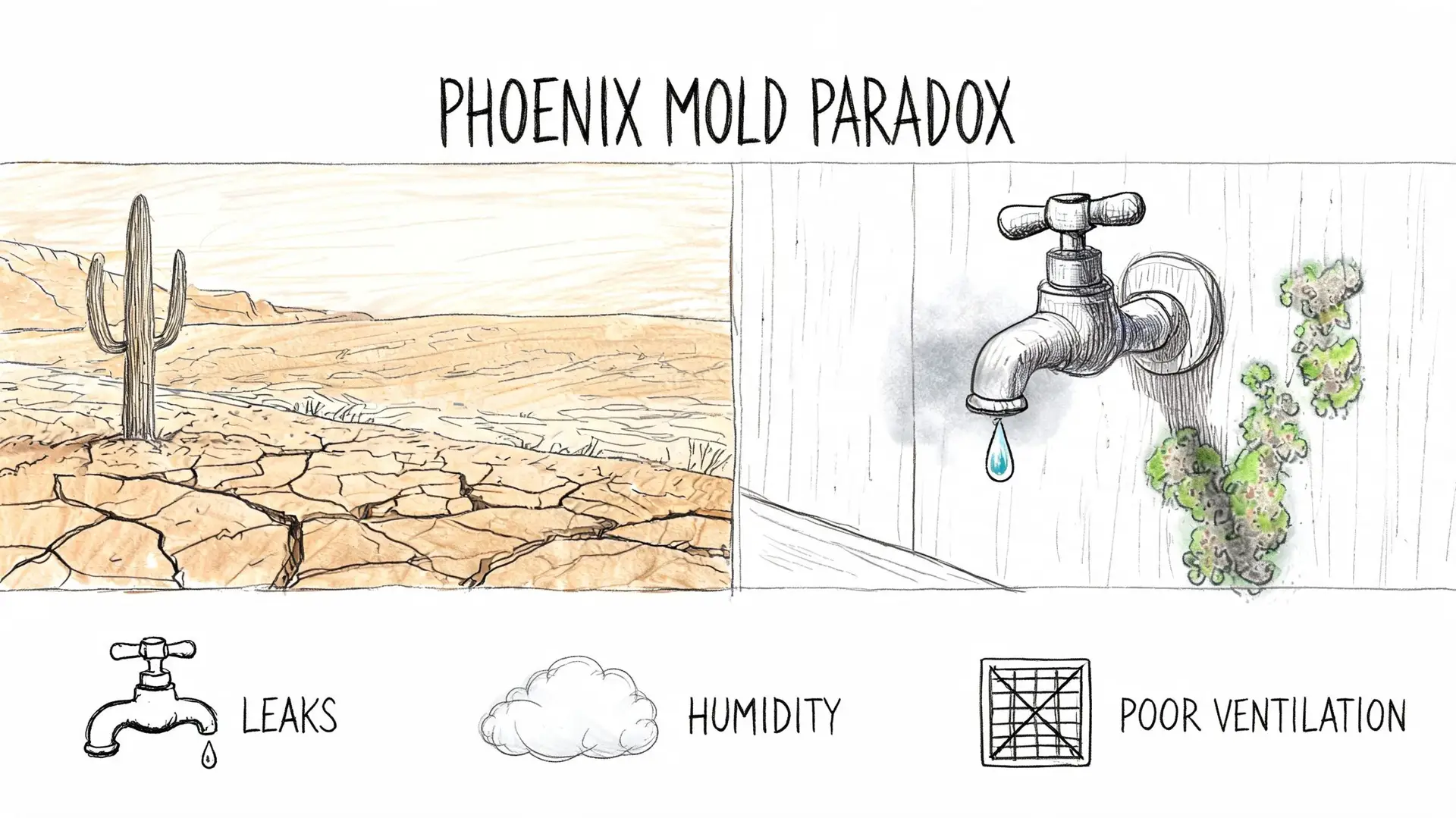
Monsoon moisture changes the equation
Phoenix gets sudden, intense wet periods. Monsoon storms can push water into roofing systems, window assemblies, wall cavities, and attics. A house may look fine from the living room while moisture is sitting above the ceiling line or inside insulation.
The tricky part is timing. Homeowners usually focus on the visible event, like a drip, a roof stain, or wet flooring. The hidden issue is the leftover moisture that stays trapped after the storm passes.
That’s why post-storm inspections matter more than many people realize. Even a small intrusion can leave enough dampness in drywall, wood, or insulation to support growth later.
Air conditioning creates hidden damp areas
Phoenix homes lean heavily on AC systems for much of the year. That creates a local mold pattern you don’t see discussed enough. Condensate lines clog. Drain pans hold water. Supply vents sweat. Ducts and air handlers develop localized moisture.
When an HVAC problem is the source, homeowners often notice symptoms before they see damage:
- Musty air when the system kicks on
- Odor strongest near a hallway return or utility closet
- Staining around vents or ceiling boots
- Recurring moisture around the indoor unit
If you want a deeper look at where darker mold growth can start in real homes, this piece on what causes black mold in homes is a useful reference.
In Phoenix, I see many mold problems start with ordinary building systems doing ordinary things badly. A drain line backs up. A vent fan underperforms. A roof detail fails during one hard storm. That’s usually enough.
Sealed homes can trap indoor humidity
Phoenix homes are built and operated to keep heat out. That makes sense for comfort and energy use, but it also creates a side effect. Despite Phoenix's arid climate, modern homes are often sealed so tightly for energy efficiency that they create 'humid pockets' in bathrooms, kitchens, and laundry rooms, fostering mold growth even without obvious leaks (local inspection guidance on humid pockets in Phoenix homes).
That means the moisture source isn’t always a broken pipe. It can be daily living:
- Long hot showers without enough exhaust
- Cooking steam that lingers
- Laundry rooms with poor airflow
- Closed interior rooms that don’t dry well
What works and what doesn’t
What works is controlling moisture at the source. Fix the leak. Clear the drain. Improve ventilation. Dry the assembly fully.
What doesn’t work is masking the symptom. Air fresheners won’t solve trapped moisture. Painting over a stain won’t dry framing behind it. Running a room fan without addressing the source often just moves contaminated air around.
Recognizing Mold Damage and Associated Health Risks
You walk into a back bedroom that stays closed most of the day. The air smells stale, the supply vent is running, and one corner of the wall looks a shade darker than it did last month. In Phoenix, that combination deserves a closer look. Desert homes can hide moisture well, especially around AC lines, windows, roof penetrations, and rooms that do not get much airflow.
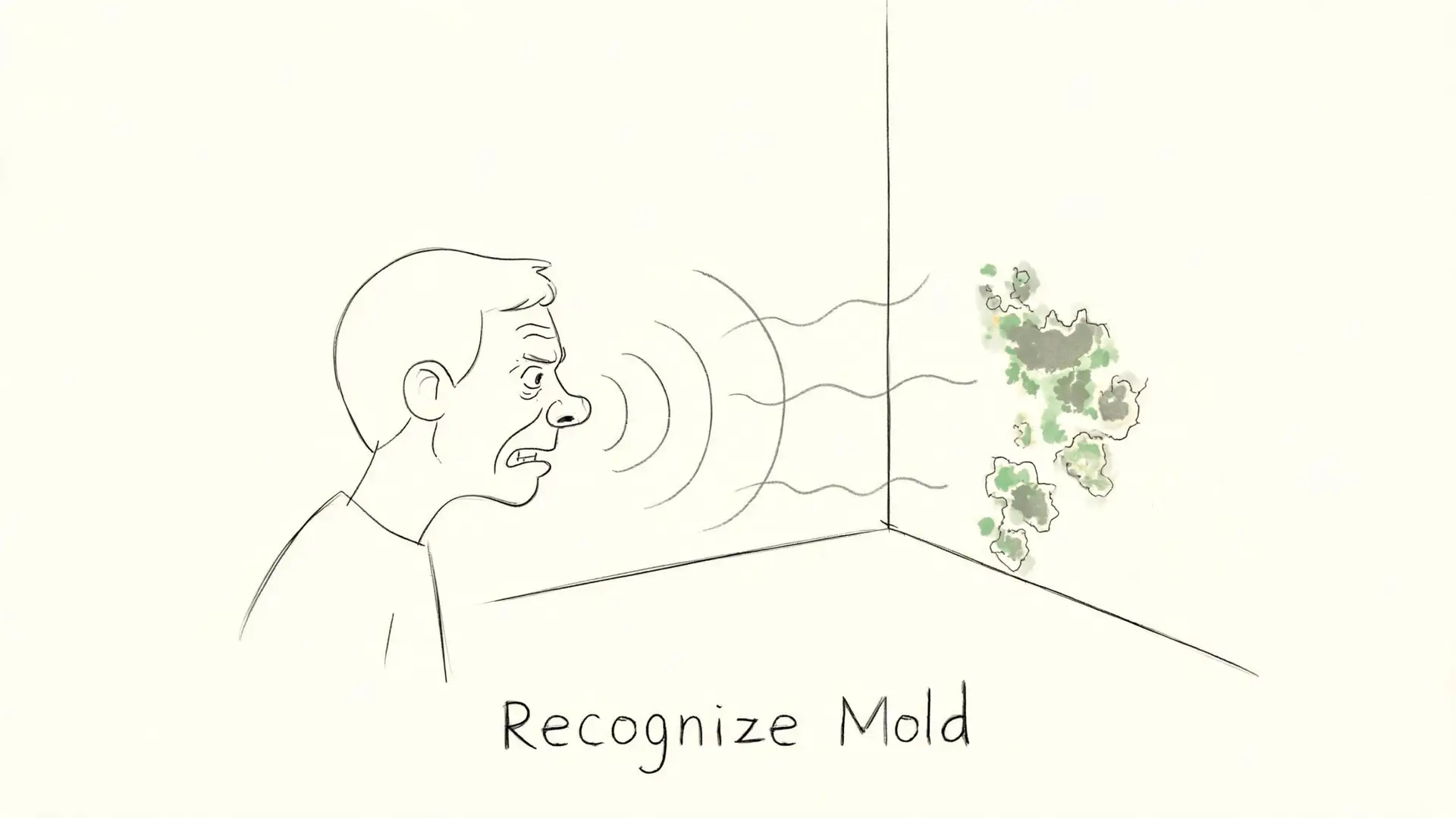
Signs you can see and smell
Homeowners usually notice mold damage before they see a large patch of growth. The first clues are often small and easy to dismiss. A musty odor that keeps returning after cleaning matters. So does paint that starts to blister near a window, a ceiling stain that slowly spreads after monsoon season, or baseboard material that feels swollen near a bathroom or laundry wall.
Common signs include:
- A persistent musty or earthy odor
- Discoloration on drywall, ceilings, trim, or caulk
- Patches that look black, green, white, or orange
- Paint that bubbles or peels without another clear explanation
- Drywall or wood that feels softer than it should
Pattern matters more than color. In the field, I pay attention to edges, spread, and repeat appearance. A one-time stain with no change over time can point to an old event. Speckling that comes back, staining that grows, or material that stays damp usually means moisture is still active.
Health concerns usually show up as irritation first
Mold exposure does not affect everyone the same way. One person in the house may feel fine, while another develops more nasal congestion, coughing, irritated eyes, headaches, or asthma flare-ups after spending time indoors. The EPA notes that molds can produce allergens and irritants, and mold exposure can trigger reactions in sensitive individuals (EPA guidance on mold and health).
Phoenix adds a local wrinkle. Many homes run air conditioning for long stretches of the year, so indoor air recirculates constantly. If growth is developing near ducts, air handlers, or wall cavities connected to return air pathways, occupants may notice symptoms in several rooms instead of one obvious spot.
If symptoms ease up when you are away from home and return after a few hours inside, schedule an inspection. That pattern does not diagnose mold, but it is a practical reason to check the property.
Areas homeowners miss all the time
Visible growth is only part of the picture. Some of the worst damage I find in Phoenix homes is hidden behind materials that still look mostly intact from the room side.
Check the risk areas first:
- Behind vanities and cabinets on plumbing walls
- Inside wall cavities below roof or window leaks
- At the underside of roof decking after monsoon intrusion
- Around window framing and sill corners
- Inside or near HVAC closets, drain pans, and supply boots
This is why surface wiping has limits. If the drywall paper is colonized, the cabinet back is wet, or the AC condensate issue has not been corrected, the problem keeps coming back.
If you want to compare practical approaches to darker wall growth, these effective black mold removal methods help explain why method matters. And if the concern extends to lower levels or enclosed storage areas, this guide to dangerous molds in basements can help you think through risk points.
Do not judge the risk by color alone
Homeowners ask about "black mold" all the time. Color is not how I judge a job. Instead, the questions are where the moisture came from, how long materials stayed wet, how far contamination spread, and whether porous materials need to be removed or can be cleaned and dried in place.
That approach keeps the decision practical. The goal is to identify the source, evaluate the extent, protect occupants during cleanup, and avoid a cosmetic fix that leaves hidden damage behind.
The Professional Mold Remediation Process Step by Step
A proper remediation job should feel organized, not mysterious. Homeowners deserve to know what’s happening, why each step matters, and what separates real remediation from a cosmetic cleanup.
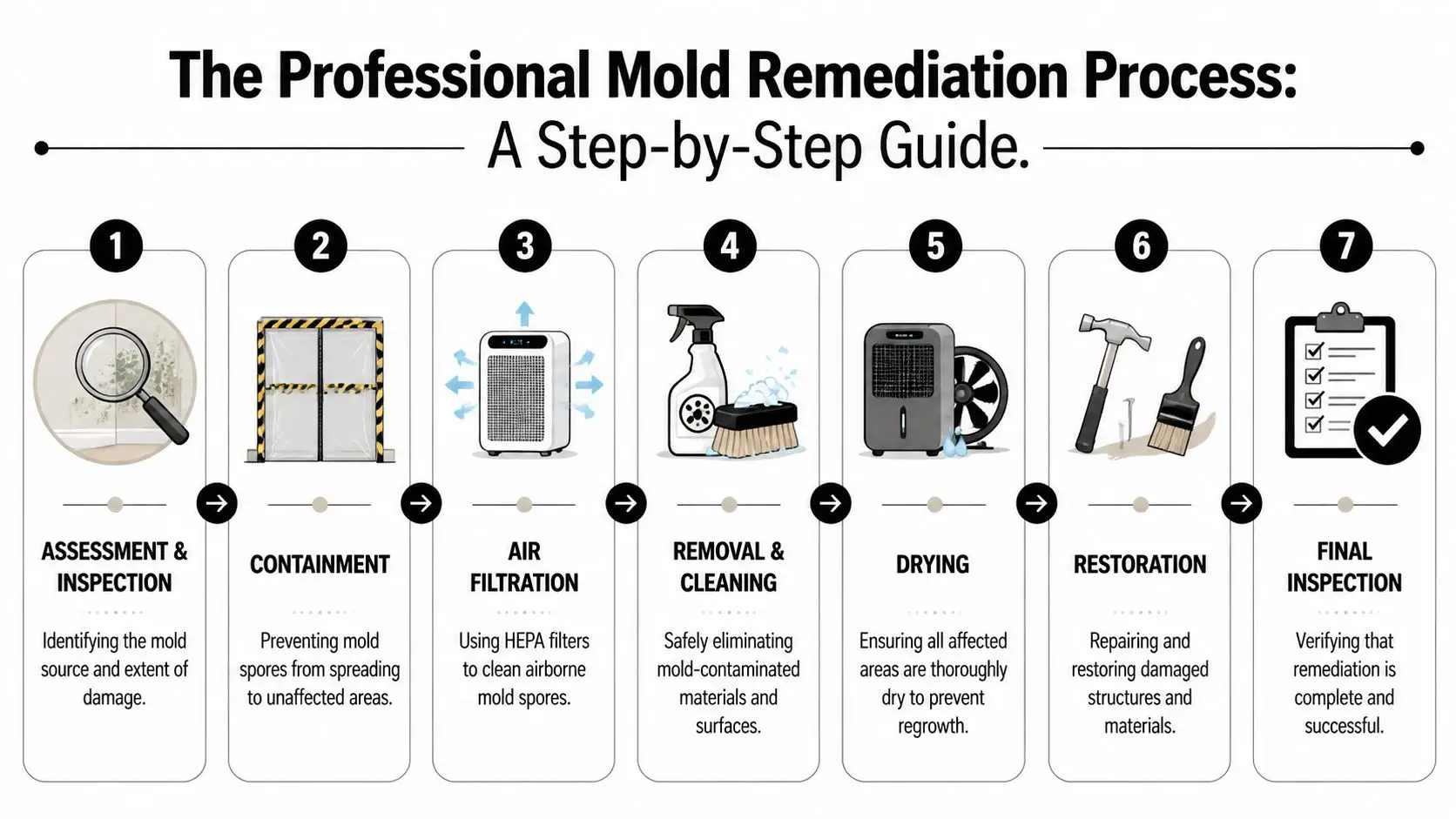
Step 1 and Step 2
The first part is inspection and containment.
Inspection and damage assessment means finding the moisture source, identifying affected materials, and determining how far the issue extends. On a real job, that may involve moisture meters, visual inspection of adjacent assemblies, attic or crawl access, and checking HVAC-adjacent spaces when the pattern suggests air movement is involved.
Containment comes next because disturbing mold without isolating the area can spread contamination into clean parts of the house. Professionals typically use plastic containment barriers and negative air pressure to control where particles travel during removal.
Field insight: If a crew starts tearing into mold-affected materials before isolating the work area, that’s a warning sign. The first job is control, not demolition.
Step 3 and Step 4
Air cleaning and material removal happen together.
Air filtration uses HEPA-equipped air scrubbers to capture airborne particles generated during the work. This helps protect adjacent spaces and improves conditions inside the work zone.
Removal and cleaning depends on the surface involved. Non-porous and some semi-porous materials may be cleaned if they’re structurally sound and contamination is limited. Porous materials that have been significantly affected often need removal because mold roots into the material, not just the surface.
Typical materials that often require close evaluation include:
- Drywall
- Insulation
- Carpet pad
- Baseboards and trim
- Cabinet toe-kicks or sink bases
Here’s a helpful overview of what a restoration company does if you want the broader context beyond mold alone.
A short video can also make the process easier to visualize:
Step 5 through Step 7
The back half of the job is where many shortcuts show up if the contractor is rushing.
Drying
After contaminated material is removed and surfaces are cleaned, the area still has to be dried properly. If the moisture source remains or materials stay damp, regrowth is likely.Restoration
Once the area is clean and dry, rebuilding begins. That may mean replacing drywall, reinstalling trim, repainting, or repairing sections opened for access.Final inspection
The job should close with a careful review of the work area. Homeowners should be able to understand what was removed, what was cleaned, what repairs were completed, and what moisture correction was made.
What a good remediation process should feel like
You should see a sequence that makes sense. Inspect first. Contain before disturbing. Clean the air while work is happening. Remove what can’t be saved. Dry thoroughly. Restore what was opened.
What doesn’t work is skipping straight to spraying chemicals and painting over affected areas. That may change the appearance for a while, but it won’t solve mold damage phoenix properties face when moisture is still trapped behind the finish surface.
DIY Cleanup vs Calling a Certified Professional
Homeowners don’t need a professional for every spot they see. Some small surface issues can be handled safely. The problem is that many situations look simple at first and aren’t.
The biggest risk with DIY cleanup is false confidence. People wipe off what they can see, assume the issue is handled, and miss hidden moisture or spread contamination during the process.
When DIY may be reasonable
A cautious DIY response may make sense when all of the following are true:
- The affected area is small and isolated
- The growth is on a non-porous surface
- There’s no ongoing leak or dampness
- No HVAC component is involved
- No one in the home is reacting to the area
Even then, the priority is gentle cleaning and moisture correction, not aggressive scrubbing that sends debris into the air.
When you should stop and call a pro
Some conditions move the job out of DIY territory quickly. The Arizona Department of Health Services warns that improper mold cleanup can spike airborne spore counts to levels 10 to 1,000 times higher than the background level, significantly increasing health risks (Arizona mold cleanup warning).
That’s why professional help is the safer choice when mold is:
- Inside the HVAC system
- Behind walls or under flooring
- Tied to sewage or contaminated water
- Spread across a larger area
- Returning after prior cleaning
- Connected to strong indoor health symptoms
Disturbing mold is often the moment a manageable problem turns into a house-wide contamination issue.
Mold Removal Decision Guide DIY vs Professional
| Situation | Recommended Action |
|---|---|
| Small visible spot on a hard, non-porous surface with no active moisture | Careful DIY cleaning may be reasonable |
| Musty odor with no visible source | Professional inspection |
| Growth around vents, returns, or the air handler | Certified professional |
| Repeated mold after cleaning | Certified professional |
| Soft drywall, bubbling paint, or staining near plumbing | Professional inspection |
| Mold linked to flooding, sewage, or contaminated water | Certified professional |
| Occupants with asthma, allergies, or worsening symptoms indoors | Professional evaluation |
What works better than guessing
A good decision test is simple. If you can’t confidently explain the moisture source, don’t assume you’re looking at a surface-only issue. Hidden moisture is what turns small cleanup efforts into recurring callbacks.
Understanding Insurance Coverage and Remediation Costs
A common Phoenix call goes like this. The homeowner finds a musty smell after a monsoon storm, notices staining near an exterior wall or around an AC closet, and then asks two questions right away. Will insurance help, and how expensive is this going to be?
Both answers depend on how the moisture started and how far it spread before anyone caught it.
How insurance usually approaches mold claims
In practice, adjusters usually start with the cause. A sudden pipe break, an overflowing appliance, or storm-related water intrusion is often reviewed differently than a slow leak under a sink, long-term condensation around an air handler, or moisture that kept returning through more than one Phoenix summer.
That distinction matters in desert homes. Phoenix properties rely heavily on air conditioning for much of the year, and we often find mold tied to condensate line backups, poorly insulated cold lines, roof leaks exposed during monsoon season, or hidden moisture that sat inside a wall cavity longer than the homeowner realized.
Good documentation makes these claims easier to handle. Take clear photos, keep plumber or HVAC invoices, save any emergency dry-out paperwork, and write down when you first noticed the odor, staining, or water. If you want a plain-language overview before you call your carrier, this guide on whether homeowners insurance covers mold is a useful starting point.
What changes the price of remediation
Mold pricing is driven by scope, access, and the amount of reconstruction needed after cleanup.
A small issue on an exposed bathroom ceiling is one kind of job. Mold inside wall cavities, under flooring, or around a contaminated HVAC system is a different project entirely. In Phoenix homes, costs also rise when crews have to trace moisture connected to an AC problem, open up tightly sealed energy-efficient assemblies, or remove materials that have been damaged by repeated humidity around the same area.
The main cost drivers are:
- How large the affected area is
- Whether the mold is visible or hidden
- What materials are affected, such as drywall, insulation, cabinets, or flooring
- Whether containment and negative air are needed
- Whether the HVAC system or ductwork is involved
- Whether the water source was clean, dirty, or sewage-related
- How much post-remediation repair or rebuild work is required
The range homeowners should expect
For a typical residential problem, professional remediation can be a modest project or a major one. Small, accessible jobs may stay on the lower end. Multi-room contamination, HVAC involvement, demolition, and reconstruction can push costs much higher.
No ethical contractor should give a firm number from a phone description alone.
A proper inspection should separate a few different buckets of cost. First is the remediation work itself. Second is drying or moisture correction if the source is still active. Third is reconstruction, which may include drywall, paint, baseboards, flooring, or cabinetry. Keeping those line items separate helps you compare estimates and discuss coverage with your insurer more clearly.
A practical way to handle the financial side
Start with the moisture source. Then get the scope.
Ask for written findings, photos, and a clear explanation of what has to be removed, what can be cleaned, and what repairs come after remediation. If you are preparing for adjuster conversations, this overview on navigating home insurance claims can help you get organized.
The goal is clarity, not guesswork. In my experience, Phoenix homeowners make better decisions when they treat mold as two connected problems. Moisture caused it, and remediation addresses the result. Both have to be accounted for if you want the house clean, dry, and less likely to have the same issue return.
Phoenix Mold FAQs and Your Next Step
Can I just use bleach to kill mold
Sometimes bleach changes the appearance of staining on hard surfaces, but it doesn’t solve most real mold problems in a house. If the material is porous or the moisture source is still active, the problem usually returns.
How long does remediation take
It depends on where the mold is, what materials are affected, and how much drying or repair is needed after cleanup. A small contained issue moves much faster than a multi-room problem with hidden moisture.
Is a little mold normal
A house shouldn’t have ongoing indoor mold growth. Small spots can happen around condensation or a minor leak, but recurring growth is a sign that moisture control has failed somewhere.
What should I do first
Don’t scrub aggressively. Don’t paint over it. Don’t assume the desert climate means it will dry out on its own. Limit disturbance, note where the odor or staining is strongest, and arrange for a proper inspection.
If you’re also trying to make sense of claim paperwork and next steps, this overview on navigating home insurance claims may help you prepare for the conversation.
The main thing is simple. Mold damage phoenix homeowners face is usually manageable when the response is fast, targeted, and based on the moisture source instead of the surface stain.
If you’ve found a musty smell, visible staining, or signs of hidden moisture, Restore Heroes can help you remove the uncertainty. Their IICRC-certified team serves the Phoenix metro with 24/7 response and a free, no-obligation onsite inspection, so you can get clear answers, understand the next steps, and address the problem before it spreads further.