
Seeing mold on drywall is one of those discoveries that makes your stomach drop. It’s unsettling because we instinctively know that those ugly spots aren't just surface stains—they're a warning sign of a much deeper problem. What you see is usually just the tip of the iceberg, hinting at a hidden moisture issue that needs to be handled fast.
Why You Are Seeing Mold on Your Drywall
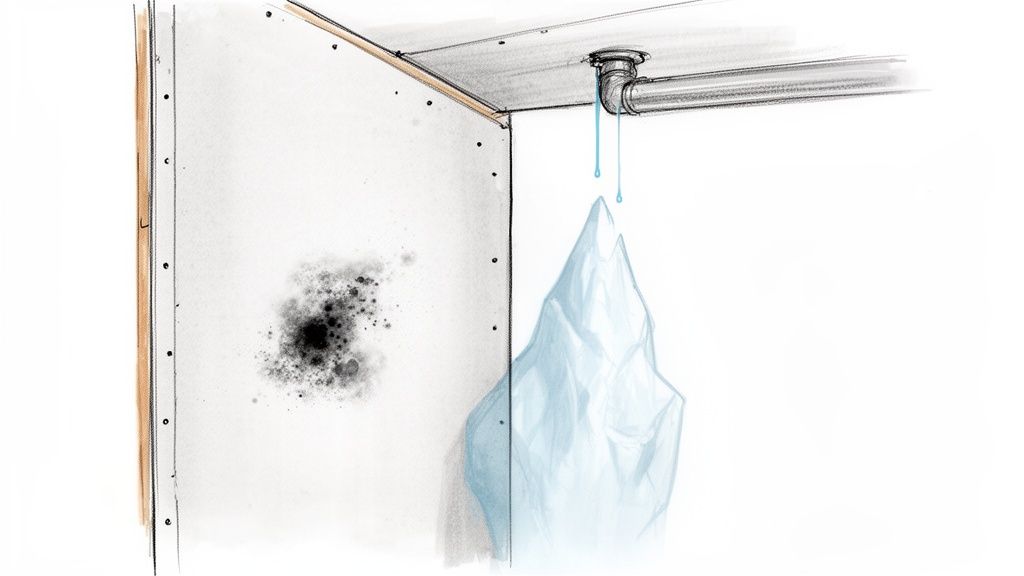
Think of drywall as a pre-packaged meal for mold. It’s essentially a gypsum core sandwiched between two sheets of thick paper. When that paper gets wet, it becomes a perfect food source for mold spores, which are always floating around in the air, just waiting for an opportunity.
That’s why you can’t just wipe mold on drywall away and call it a day. You're dealing with a living fungus that is literally eating the paper on your walls. As it feasts, it weakens the drywall's integrity and pumps more and more spores into your home's air.
The Problem Is More Than Skin Deep
The mold you can actually see is proof that water has been around long enough for a colony to take hold. The real kicker, though, is that the source of that water is often hiding inside the wall, causing damage you can't see.
- Weakened Structure: As mold digests the paper facing, the drywall itself becomes soft and crumbly.
- Hidden Growth: Moisture often comes from behind the wall, which means mold is likely thriving on the back of your drywall and even on the wooden studs.
- Air Quality Issues: Active mold releases spores and microbial volatile organic compounds (mVOCs), which create that telltale musty smell.
This is a surprisingly common headache for homeowners. Studies have found that somewhere between 21% and 47% of homes in the U.S. deal with dampness and mold. In fact, even a standard air conditioner can harbor thousands of mold colonies. You can find more of these surprising mold statistics over at wifitalents.com.
Common Culprits Here in the Phoenix Area
For those of us in Phoenix, mold on drywall is often tied directly to our unique climate. We live in a desert, but certain situations create the perfect storm for mold growth right inside our homes.
In my experience, the most destructive mold problems are caused by slow, steady moisture. A tiny, pinhole leak in a pipe or constant condensation from an AC duct can cause massive damage before you ever see a single spot of mold.
Here are a few of the most frequent causes we see in Arizona homes:
- AC Condensation: Your air conditioner works hard in the summer, and units in hot attics can produce a lot of condensation that drips onto ceilings or into wall cavities.
- Slow Pipe Drips: A small, persistent drip from a water line inside a wall is a perfect, steady moisture supply for mold.
- Monsoon Storm Leaks: Those intense seasonal downpours are great at finding weak spots in roofing or window seals, letting water get where it shouldn't.
Figuring out what those discolored patches mean is the first step. You can learn more about how to identify different kinds of growth in our guide on what mold on drywall looks like. The most important thing to grasp is that you have a moisture problem, not just a stain problem.
Uncovering the Common Causes of Wall Mold in Phoenix
It seems strange to talk about mold in a dry climate like Phoenix, right? But the truth is, if you’re seeing mold on your drywall, there’s an unwanted water source hiding somewhere. It’s that simple. Think of that mold spot as the tip of the iceberg—your first real clue that something is wrong. Finding where that water is coming from is the only way to solve the problem for good.
Sometimes it’s a big, obvious flood. More often, though, it’s a sneaky, slow-moving issue that gives mold plenty of time to set up shop. Let’s walk through the most common culprits we see in homes across the Valley.
1. Sudden Water Events and Their Aftermath
The most dramatic cause of mold on drywall is a major water event. We’re talking about the kind of flood you can't possibly miss. These incidents drench building materials in a hurry, creating the perfect conditions for mold to explode, sometimes in as little as 24 to 48 hours.
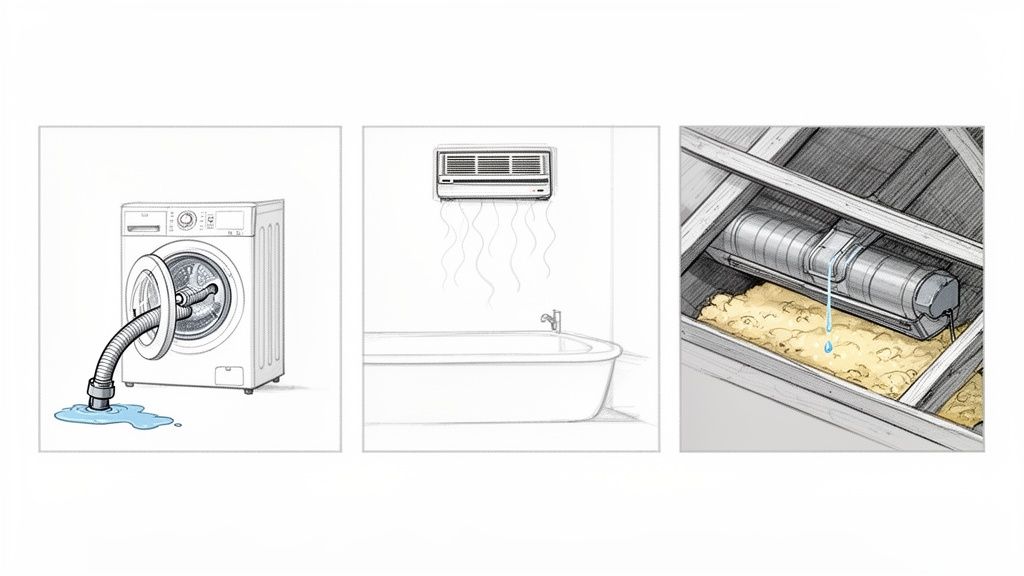
Picture a washing machine hose letting go while you’re out, or a fierce monsoon storm pushing rain right through a weak spot in your roof. The water soaks everything—carpets, furniture, and especially the drywall. Even after you’ve cleaned up the standing water, the moisture that got trapped inside the wall is what really feeds the mold.
We see these scenarios all the time in Phoenix:
- Appliance Failures: A dishwasher leak, an overflowing toilet, or a water heater that finally gives out can dump gallons of water in minutes.
- Monsoon Storm Damage: Heavy rain finds its way past old window seals or compromised roof flashing, leading to serious water intrusion.
- Burst Pipes: A pipe inside a wall suddenly fracturing will saturate the drywall and insulation almost instantly.
The main thing to remember is that the clock starts ticking the second the drywall gets wet. If it isn't dried out completely and professionally, mold is almost a sure thing. We cover this in more detail in our guide on what happens when drywall gets wet.
2. The Sneaky Problem of Hidden Leaks
Even more common—and frankly, more destructive—are the slow, hidden leaks. These can drip for weeks or months without anyone knowing, providing a steady water supply for mold to thrive behind a wall or up in an attic. By the time you notice a stain on the paint, the damage behind the scenes is usually far worse than you’d expect.
Slow leaks are the silent destroyers of homes. A pinhole-sized drip from a copper pipe might only release a few ounces of water a day, but over a year, that adds up to dozens of gallons soaking into your home's structure, creating a perfect habitat for mold.
Here in Arizona, one of the biggest offenders is the air conditioning system. Our AC units work hard all summer, and that process creates a lot of condensation. If the drain line gets clogged with dust and algae—which happens all the time—that water has to go somewhere. It often overflows the drip pan and seeps into the ceiling or wall below.
Other sneaky sources include:
- A slow drip from a shower valve or drainpipe inside a bathroom wall.
- A tiny, persistent leak from the ice maker line tucked away behind the fridge.
- Moisture wicking up from the concrete foundation into the bottom edge of the drywall.
3. High Humidity and Stagnant Air
Finally, you don’t even need a leak to end up with a mold problem. Any room with high humidity and poor airflow is a prime candidate for surface mold on drywall. Bathrooms and laundry rooms are the classic examples.
Just think about a bathroom without a good exhaust fan (or one that no one ever turns on). Every hot shower fills the air with steam. This warm, moist air hits the cooler drywall, condenses into water droplets, and provides just enough moisture for mold to start growing. You’ll often see this as small black or gray specks appearing on the ceiling or high up on the walls.
The Risks of Ignoring Mold on Your Drywall
That little patch of mold on the drywall might seem like just an ugly spot—something you can paint over or scrub away. But seeing mold is like seeing smoke; where there’s a little, there's often a much bigger fire hidden from view. Ignoring it is a gamble with both your family’s health and the integrity of your home.
When mold takes hold, it releases tiny, invisible spores into the air. For many, breathing these in day after day triggers allergy-like symptoms that never seem to quit: a runny nose, constant sneezing, itchy eyes, and even skin rashes. It can feel like having a permanent head cold.
Things get even more serious for anyone with asthma or other respiratory issues. Mold acts as a constant irritant, potentially leading to more frequent and severe asthma attacks. Your home should be a safe haven, not a place that makes you sick.
How Mold Eats Your House from the Inside Out
It's not just your health at risk; mold poses a very real threat to your home's structure. Think of it this way: mold is actively eating your drywall. The paper facing on drywall is made of cellulose, which is a perfect food source.
As the mold colony feasts, it breaks down the drywall, making it soft, crumbly, and weak. You might notice the wall starting to bulge or warp. Eventually, it can crumble entirely. That solid wall becomes a sagging, unstable mess.
The most destructive part of a mold problem is often the one you can't see. The moisture that allows mold to thrive on the surface is also soaking the wooden studs inside your walls. This leads to wood rot, which silently compromises the very frame of your house.
Suddenly, a simple drywall issue turns into a major structural repair. Replacing rotten studs is a far more complex and expensive project than just cutting out a patch of moldy drywall.
From One Small Spot to a Whole-Home Problem
Mold is designed to spread. Those microscopic spores catch a ride on air currents and can travel anywhere in your house, looking for another damp spot to land and start a new colony. A localized problem can quickly become a widespread contamination.
- Your HVAC system is a superhighway for spores, capable of spreading them from one room to every room in just a few hours.
- Mold can easily jump from drywall to nearby materials like carpet, baseboards, and even furniture.
- A visible spot on the wall almost always signals a much larger, hidden colony growing on the back of the drywall.
Ignoring mold doesn't make it disappear—it just gives it time to grow, spread, and cause more damage. Taking quick action is the only way to protect your family and your property. While this guide focuses on drywall, mold can appear anywhere moisture is present. For instance, knowing the risks of black mold on window sills gives you a fuller understanding of household mold. To dig deeper into specific fungi you might find, our article on dangerous molds found in homes is a great resource.
The Professional Mold Remediation Process Explained
When you’re staring at a large patch of mold on drywall, you know a simple wipe-down isn't going to cut it. That's where professional mold remediation comes in. This isn't just about cleaning; it's a methodical process that safely removes the mold, addresses the moisture that caused it, and aims to prevent it from coming back.
For homeowners, knowing what to expect can make a stressful situation feel much more manageable. The process isn't a secret—it’s a series of careful, deliberate steps that certified pros follow to make your home safe again. Let's walk through exactly what happens when the experts take over.
Initial Inspection and Damage Assessment
First things first, a certified technician needs to understand the full scope of the problem. We start with a detailed inspection, looking at the visible mold but also digging deeper to find its source. The mold you can see is often just the tip of the iceberg.
We use professional tools like moisture meters and thermal imaging cameras to track down hidden moisture behind walls or under floors. Think of it as a blueprint for the entire project. This assessment tells us exactly which materials are affected and how far the problem has spread, allowing us to create a precise plan of attack.
Containment of the Affected Area
Once we know the extent of the damage, our top priority is to stop the mold from spreading to other parts of your home. When disturbed, mold releases millions of microscopic spores into the air, and the last thing you want is to contaminate clean areas.
To prevent this, we set up a full containment zone. This involves:
- Sealing off the area: We use heavy plastic sheeting to seal doorways, HVAC vents, and any other openings.
- Creating negative air pressure: A special machine called a negative air machine is installed. It pulls air from the contaminated room, filters it through a HEPA filter, and vents it safely outside. This helps ensure that any airborne spores are captured and removed, rather than drifting through your house.
This step is the single biggest difference between a DIY attempt and professional remediation. It's like creating a sterile operating room to help ensure the problem stays contained.
Air Filtration and Scrubbing
While the containment keeps spores from escaping the room, we also need to clean the air inside it. We bring in powerful machines called "air scrubbers" equipped with HEPA filters.
These machines run constantly throughout the project, capturing tiny mold spores, dust, and other particles from the air. This continuous filtration dramatically cleans the air, making the entire process safer and contributing to a healthy, breathable environment once containment comes down.
The professional remediation process is fundamentally about control. It's a methodical approach to controlling the spread of spores, controlling the air quality, and, most importantly, controlling the moisture that caused the problem in the first place.
Removal of Mold Damaged Materials
With the area fully contained and the air being scrubbed, we can begin the physical removal. Since mold’s roots grow deep into porous materials like drywall and insulation, simply cleaning the surface won't work. The contaminated material has to go.
Our technicians will carefully cut out and remove all mold-infested drywall and any other compromised materials. Everything is sealed in thick, 6-mil polyurethane bags before it’s taken out of the containment zone. This prevents any cross-contamination on the way out.
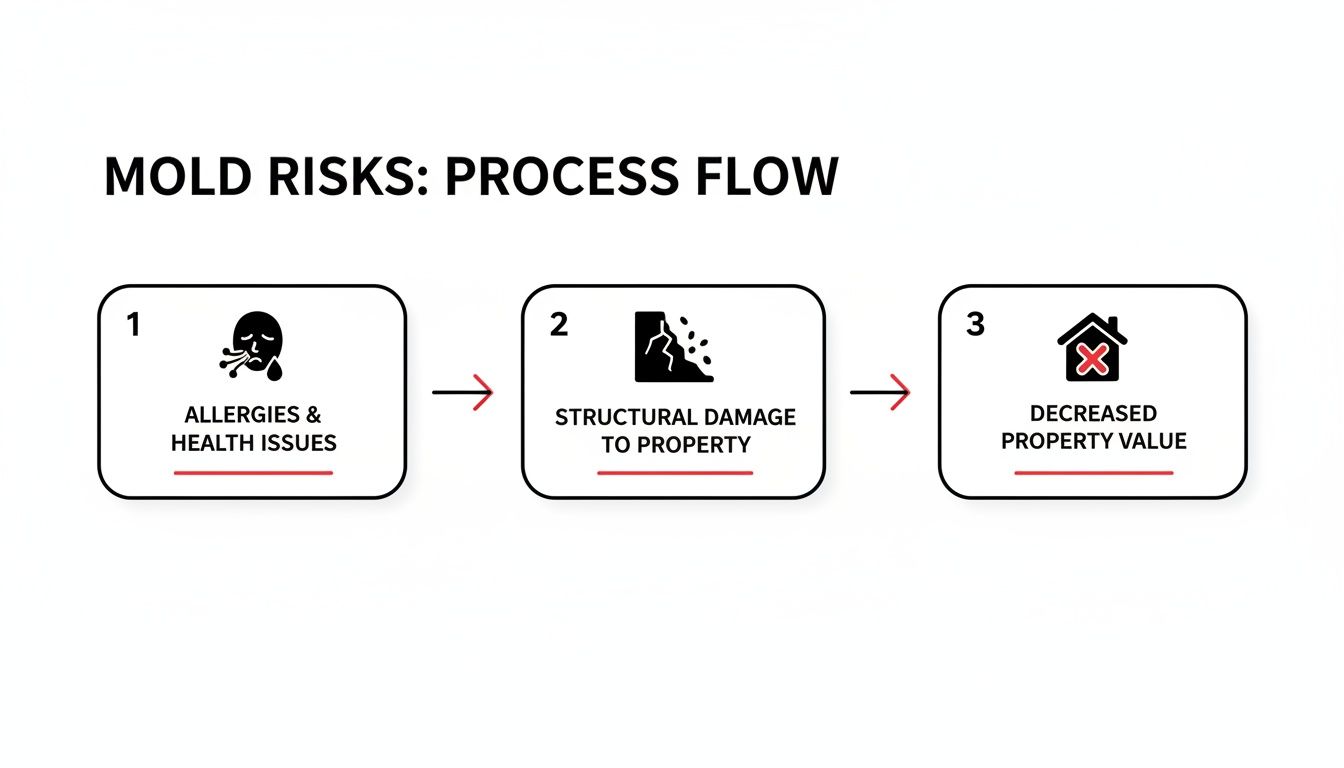
The image above really drives home why this is so important—unchecked mold doesn't just look bad; it can trigger health issues and literally eat away at your home's structure.
Cleaning Sanitizing and Restoration
After all the damaged materials have been removed, the job still isn't done. The remaining structural elements, like wood studs and subflooring, are meticulously cleaned with special antimicrobial agents to kill any lingering mold and help prevent it from returning.
Next comes the most critical step: drying. We use commercial-grade dehumidifiers and high-velocity air movers to get every last bit of moisture out of the air and the building materials. If we skip this, the mold will just come right back.
Only when the area is confirmed to be clean and completely dry does the final restoration phase begin. This is where we rebuild what was removed, installing new drywall, painting, and restoring your home to the way it was before the mold ever appeared. To get a better feel for the final steps, you can learn more about what a restoration company does on our services page.
Actionable Steps to Prevent Future Mold Growth
Once you’ve gone through the headache of removing mold on drywall, you certainly don't want to see it come back. The good news is, you’re in the driver's seat when it comes to prevention. It all boils down to a single, simple truth: if you control the moisture, you control the mold.
Think of it like keeping your car maintained—a little proactive attention goes a long way in preventing a major breakdown. Here are some real-world strategies you can use to make your home a place where mold simply can’t thrive.
Keep Indoor Humidity in Check
Mold doesn't always need a big, dramatic leak to get started. Sometimes, all it needs is damp air. High indoor humidity is a common culprit, creating the perfect breeding ground for mold, especially in corners and closets with poor airflow.
Your goal is to keep indoor humidity between 30% and 50%. Anything higher is an open invitation for mold spores. While our Phoenix climate is dry, monsoon season or even daily activities like cooking and showering can easily push humidity into the danger zone.
- Get a hygrometer: These are cheap, simple gadgets that measure the moisture in your air. It takes the guesswork out of knowing when your home is too humid.
- Use dehumidifiers: If you have a room that always feels a bit damp, running a dehumidifier is a game-changer.
By keeping an eye on your home's humidity, you're robbing mold of the one thing it needs most to grow. It’s a small effort with a huge payoff.
Improve Your Home's Air Circulation
Stale, damp air is a welcome mat for mold. Good ventilation is your best friend here, as it helps dry out moisture before it can settle into your drywall. This is especially critical in bathrooms, laundry rooms, and kitchens.
Always run your bathroom exhaust fan during a shower and for at least 20-30 minutes afterward. Honestly, this one simple habit is one of the most powerful ways to stop those little black spots from ever forming on your bathroom walls and ceiling.
A few other small habits can make a massive difference in airflow:
- Use Your Exhaust Fans: They aren't just for smells! Use your kitchen and bathroom fans every single time you cook or shower to vent moist air straight outside.
- Open Up the Windows: When the weather is cool and dry, nothing beats a natural cross-breeze to air out the entire house.
- Service Your AC: Here in Arizona, your air conditioner is your primary dehumidifier. Getting it professionally serviced every year is non-negotiable for both cooling and moisture control.
A key part of prevention is eliminating mold's favorite hiding spots. Learning how to clean window tracks to get rid of mold is a fantastic proactive step, as it removes a common starting point before it can creep onto the surrounding drywall.
Be Vigilant About Leaks
Slow, hidden drips are the secret enemy behind many massive mold on drywall problems. By making a habit of checking for water, you can catch these tiny issues before they turn into huge disasters.
Every few months, do a quick walk-through. Look under sinks, around toilets, behind the washing machine, and near your water heater for any water stains, peeling paint, or that tell-tale musty smell. A quick glance at your AC's condensation line to make sure it's draining freely is also a smart move. If you've had a bigger water incident, our guide on how to prevent mold after a flood has more detailed advice.
Upgrade to Mold-Resistant Materials
If you ever have to replace drywall, it's worth investing in mold-resistant products. This isn't just regular drywall; it's built with a paperless backing or is treated to stop mold growth in its tracks. It's the perfect choice for bathrooms, basements, laundry rooms, or anywhere else that sees a lot of moisture.
This isn't a niche product anymore. The market for mold-resistant drywall now accounts for roughly 13% of all drywall sales, which is a massive 44% jump in market share since 2020. It shows a real shift in the construction world toward building smarter, especially in places prone to humidity.
Your Drywall Mold Questions, Answered
Even when you know the basics, discovering mold on your drywall can leave you with a lot of questions. It’s a stressful situation, and as experts who deal with this in Phoenix homes every day, we know that getting clear answers is the first step toward feeling in control again.
Let's walk through some of the most common concerns we hear from homeowners just like you.
Can I Just Paint Over the Mold on My Drywall?
We get this question all the time, and the answer is a hard no. It might seem like a quick and easy fix, but slapping a coat of paint over mold is one of the worst things you can do.
Think of it like this: the mold is a living organism, and the drywall paper is its food source. Painting over it just hides the problem. The fungus will keep eating away at the drywall underneath, compromising its integrity. Before you know it, the mold will push right through the new paint, and you'll be right back where you started—only this time, the problem is bigger. Plus, painting does nothing to fix the moisture issue that caused the mold in the first place.
It's like putting a nice rug over a hole in your floor. The hole is still there, and sooner or later, someone's going to fall through.
To truly solve the problem, the mold-damaged drywall has to be physically removed and the water source has to be stopped for good.
How Do I Know If I Have the Dangerous "Black Mold"?
The phrase "toxic black mold" (which usually refers to Stachybotrys chartarum) is all over the internet, and it understandably makes people panic. But here’s something a professional will tell you: you can't identify a mold species by its color. Many different types of mold look black or greenish-black.
From a practical standpoint, the color doesn't really matter. Any type of mold growing inside your home can trigger allergies, asthma, and other respiratory issues, especially for children, the elderly, or anyone with a sensitive immune system. The presence of any significant mold on drywall is your signal that you have a moisture problem that needs to be fixed.
The key things to remember are:
- Color is not a reliable identifier for mold.
- All indoor mold growth should be treated as a potential health hazard.
- The removal process is the same no matter what color the mold is.
Instead of trying to guess the species, your focus should be on getting it removed safely and completely.
What Does Professional Mold Removal Usually Cost?
This is probably the second question everyone asks, right after they ask about black mold. It's a critical question, but there's no simple, flat-rate answer. The cost of professional mold remediation depends entirely on what we find during an on-site inspection.
Several factors will determine the final price:
- The Size of the Problem: A small, contained spot on a bathroom wall is a completely different project than mold that has spread throughout an attic. As a rule of thumb, any area bigger than 10 square feet is a job for a professional.
- Location, Location, Location: Is the mold on an exposed wall, or is it hiding behind cabinets, under flooring, or inside a cramped crawlspace? The harder it is to get to, the more labor is involved.
- The Extent of the Water Damage: We're not just there to remove mold. If the underlying moisture has rotted wooden studs or soaked insulation, those materials also have to be repaired or replaced, which adds to the project's scope.
This is why any reputable company will insist on seeing the problem in person before giving you a quote. We can work with many insurance providers if the mold resulted from a covered event, which can help with the financial side of things.
When Is It Time to Call a Professional for Mold?
While you might be able to handle a tiny bit of surface mildew on a shower tile with a store-bought cleaner, most drywall mold situations are best left to the pros. Knowing when to make that call can save you from a much bigger headache down the road.
You should always call for professional help when:
- The mold covers more than 10 square feet. This is the industry-standard size where professional containment is necessary to prevent cross-contamination.
- You smell a strong, musty odor but can't see the mold. This is a huge red flag for a hidden mold problem behind walls, under floors, or in your AC ducts.
- The source was contaminated water. If the mold came from a sewer backup or flood, it's considered a biohazard and requires specialized training and equipment.
- Someone in your home has health issues. If anyone in your family has asthma, severe allergies, or is immunocompromised, you simply can't risk exposing them to airborne spores during a DIY attempt.
Professionals use containment barriers, negative air pressure machines, and HEPA filtration to remove mold on drywall safely, which helps prevent spores from spreading to the rest of your house. It’s all about making sure the job is done right—the first time.
If you're dealing with a mold issue and need straightforward advice, don't let the problem get worse. Restore Heroes is available 24/7 for emergency service and offers free, no-pressure on-site inspections across the Phoenix area. Our IICRC-certified team is here to help you get your home and your life back to normal. Contact us today at https://www.restoreheroesaz.com.