
Water has a way of making everything feel urgent at once. The floor is wet, the smell is changing, something is dripping, and your mind jumps straight to ruined carpet, damaged walls, and a claim you do not want to deal with.
That reaction is normal. In Phoenix, a water emergency is not only a storm problem. It can start with a burst supply line, an overflowing appliance, a leaking water heater, or an air conditioning issue that goes unnoticed until the drywall feels soft under your hand. What matters most in those first moments is not panic. It is getting the situation stabilized quickly and correctly.
A Water Emergency Can Happen Anytime
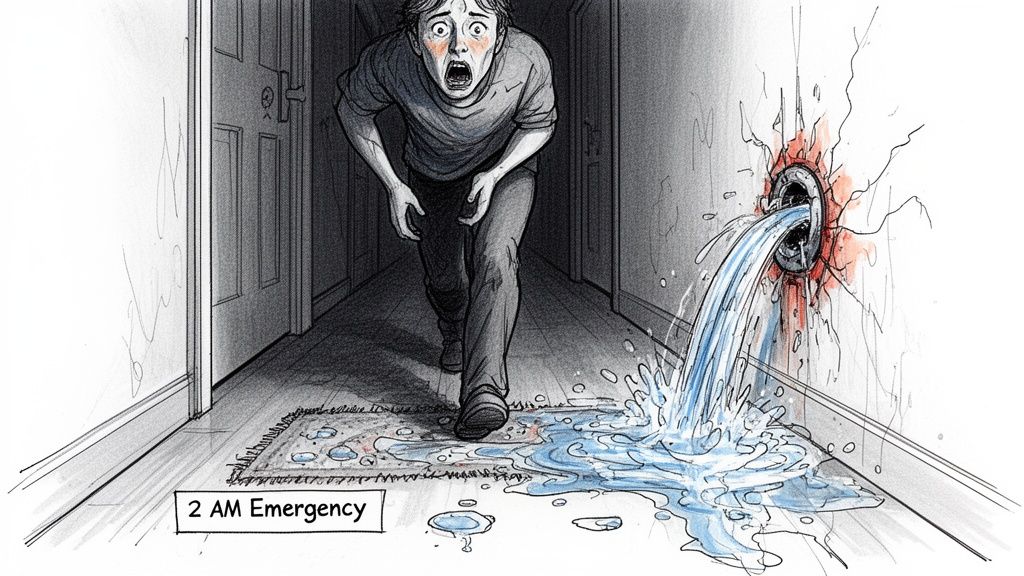
It is 2 a.m. You wake up to a strange sound and step into a hallway that feels cold under your feet. The carpet is soaked. Water is creeping under the baseboards. A pipe in the wall may have burst, or the washing machine line may have failed while everyone was asleep.
That is the kind of moment when people freeze. They grab towels, start moving shoes and boxes, and wonder if they should wait until morning. In water damage, waiting is usually what makes a smaller loss turn into a larger one.
Phoenix homeowners deal with a mix of water risks that can feel counterintuitive in a dry climate. Monsoon storms can push water indoors fast. Older plumbing can fail without much warning. Appliance lines, water heaters, and HVAC systems can all create serious indoor flooding.
One local fact puts that into perspective. In the Phoenix metro area, over 20,000 water damage claims are filed annually, driven by monsoon storms, burst pipes, and appliance failures in a region where heat and growth put unusual stress on water infrastructure, according to this Phoenix water damage claims overview.
Why the middle of the night matters
A leak that starts during the day is often noticed quickly. A leak that starts overnight can soak flooring, cabinets, drywall, and contents for hours before anyone sees it.
That is why 24/7 water extraction matters. It is not just “someone answers the phone.” It means the response is built for emergencies that do not wait for business hours. If you are dealing with active water damage, a resource like emergency water damage help in Phoenix can help you understand what immediate response usually involves.
Practical takeaway: If water is still entering the home, your first goal is to stop the source if it is safe. Your second goal is to get professional extraction started as soon as possible.
The first few decisions are usually the hardest
Most stressed homeowners ask the same questions right away:
- Is this dangerous: It can be, especially if water is near outlets, appliances, or ceilings that look swollen.
- Can I clean this up myself: Sometimes you can remove a little visible water, but visible water is rarely the whole problem.
- Will this dry on its own in Phoenix: The dry air helps some evaporation, but it can also make people assume everything is fine while moisture stays trapped behind walls or under flooring.
That last point causes a lot of confusion. Phoenix feels dry. Your house may not.
What 24/7 Water Extraction Really Means
Many people hear “24/7 water extraction” and picture a crew arriving with a few wet vacs. Professional response is much more than that.
A better comparison is an emergency room for your home. The first job is to stop the immediate threat. Then the team works to stabilize the structure so the damage does not spread into more materials than necessary.
It is not just water removal
Extraction is the urgent part of mitigation. Technicians remove standing water and trapped moisture from flooring and other affected areas before they move into controlled drying.
That distinction matters because water damage is not only about what you can see. Water moves. It slips under vinyl planks, into carpet pad, behind baseboards, and into wall cavities. If too much remains, drying equipment has to work against a bigger moisture load.
According to the EPA, household leaks waste nearly 900 billion gallons of water annually across the U.S., equivalent to the yearly water use of 11 million homes. The average family can lose 9,400 gallons yearly from small leaks alone, as explained in the EPA’s WaterSense statistics and facts.
What professionals mean by fast action
Fast action does not mean rushing blindly. It means moving in the right order.
Identify the source
If the water is still active, the source has to be addressed first when it is safe to do so.Assess where the water traveled
Surface wetness can be misleading. A room may look manageable while the subfloor or wall cavity is saturated.Extract before trying to “air dry”
Drying wet materials without proper extraction often leaves hidden moisture in place.Set up a drying plan
Fans alone are not a plan. Drying works best when extraction, airflow, humidity control, and monitoring are coordinated.
If you want a simple service-level view of what this kind of response includes, water extraction in Phoenix is the kind of work that focuses on the emergency removal phase and the first stabilization steps.
Why a rented machine is not the same thing
A homeowner wet vac can help with a spill. A larger water loss is different.
Professional crews are thinking about:
- Water category
- Material type
- Hidden saturation
- Contamination concerns
- Documentation for the claim
- Drying targets, not guesswork
Key idea: The point of 24/7 water extraction is not to remove puddles. It is to reduce the scope of secondary damage before it spreads deeper into the building.
Why this is especially important in Phoenix
In a humid climate, people often notice lingering dampness. In Phoenix, surfaces may feel dry sooner than the structure is. That can create false confidence.
So when a professional says the home needs extraction, drying, and monitoring, they are not adding steps for the sake of it. They are trying to keep the visible problem from becoming a hidden one.
The Professional Restoration Process Step-by-Step
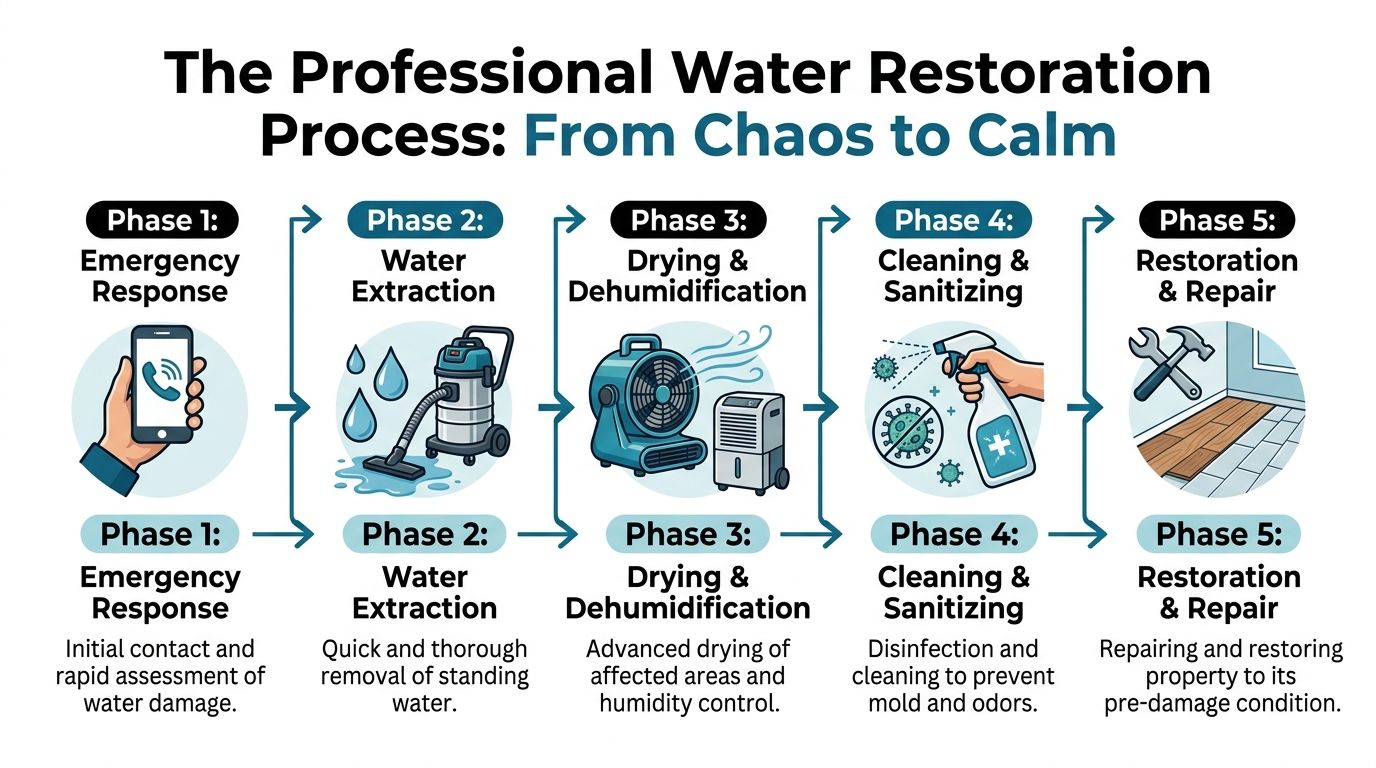
When homeowners first see water damage, the process can feel vague and overwhelming. In practice, the work follows a clear sequence. Each phase has a purpose, and each one affects what comes next.
Emergency assessment and inspection
The first phase is about understanding the loss, not guessing at it. Technicians inspect the affected areas, identify the likely source, and determine how far the water moved. At this stage, people often underestimate the problem. A wet hallway may also mean moisture under the adjacent bedroom flooring, inside the lower wall, or under a cabinet toe-kick.
The inspection usually focuses on:
- Safety conditions: Electrical hazards, slip risks, ceiling sag, or contaminated water concerns
- Material impact: Carpet, pad, wood, drywall, insulation, baseboards, cabinets
- Water category: Clean water is handled differently from gray or black water
- Moisture spread: The visible edge of the damage is rarely the full edge
A clear overview of the broader role a mitigation team plays can help here. What a restoration company does usually starts with this inspection and scope-building step.
High-volume water extraction
Once the area is assessed, the urgent goal is bulk water removal. Professional extraction earns its value here.
According to IICRC S500 standards, professional water extraction should remove 70–90% of intruding water volume before any drying equipment is deployed, because that sharply reduces humidity and helps stop moisture from migrating into unaffected materials, as described in this explanation of IICRC S500 extraction guidance.
That number helps explain why extraction comes before “just setting fans.” If a large amount of water remains in the structure, drying becomes slower, less controlled, and more invasive.
Structural drying and dehumidification
After extraction, the work shifts from removing liquid water to removing moisture held in materials and in the air.
This stage often confuses homeowners because the room may already look much better. The carpet may no longer squish. The standing water may be gone. But wet drywall, subfloor, framing, and trapped air pockets can still hold moisture.
Technicians usually build a drying chamber of sorts. They place air movers to move damp air off wet surfaces. They use dehumidifiers to pull that moisture out of the air so evaporation can continue in a controlled way.
Moisture mapping matters
Drying is not something responsible crews should eyeball. They check moisture levels in affected materials and compare readings over time.
That is why you may see technicians return to inspect the same areas again. They are not repeating work. They are verifying progress.
Tip: If a room “looks dry” but no one has measured the structure, you still do not know whether the structure is dry.
Cleaning, sanitizing, and decontamination
Not every water loss requires the same cleaning approach. A supply line break is different from a sewage backup. Stormwater intrusion is different from a sink overflow.
Once extraction and drying are underway or complete, affected surfaces and salvageable contents may need cleaning and odor treatment. In some losses, certain porous materials cannot be saved and must be removed for safety.
This part of the process is about more than smell. It is about making the space safe and suitable for normal use again.
Full restoration and repair
Mitigation and reconstruction are related, but they are not the same thing. Extraction and drying stabilize the property. Restoration and repair bring it back to pre-loss condition.
That might involve replacing drywall, reinstalling baseboards, repairing flooring, repainting, or rebuilding damaged sections. Some jobs are modest. Others require a more involved repair plan.
A simple way to think about the whole job is this:
| Phase | What happens | Why it matters |
|---|---|---|
| Assessment | Inspection and moisture evaluation | Prevents missed damage |
| Extraction | Standing water removal | Shrinks the moisture load early |
| Drying | Airflow and dehumidification | Removes moisture from materials |
| Cleaning | Sanitizing and odor control | Supports health and usability |
| Restoration | Repair and rebuild work | Returns the home to normal function |
What homeowners should expect
A professional process should feel organized, even if the loss itself was chaotic.
You should expect:
- A clear explanation of affected areas
- Documentation of what was found
- A plan for extraction and drying
- Updates as moisture readings change
- Honest discussion of what can be saved and what cannot
What you should not have to accept is vague reassurance without measurements or a crew that treats all water losses the same. Burst pipes, appliance leaks, storm intrusion, and contaminated backups require different decisions.
Tools of the Trade and The Power of Certification
Good water restoration is not just about effort. It is about using the right equipment, in the right sequence, with people who understand the science of drying.
Why extraction equipment matters
On a larger loss, suction power and capacity make a real difference. A mop and a consumer wet vac remove surface water slowly. Professional extraction tools are designed for speed, reach, and continuous use.
One example is the truck-mounted extractor. Professional truck-mounted extractors can generate 13–15 inches of mercury (Hg) of vacuum, allowing them to effectively lift water through up to 150 feet of hose, which is especially useful in multi-story buildings or flooded basements, according to this overview of truck-mounted water extraction equipment.
In plain language, that means crews can remove a large amount of water without relying on small tanks that fill up constantly. It also means they can work from outside the building while reaching deep into the affected space.
The other tools homeowners usually see
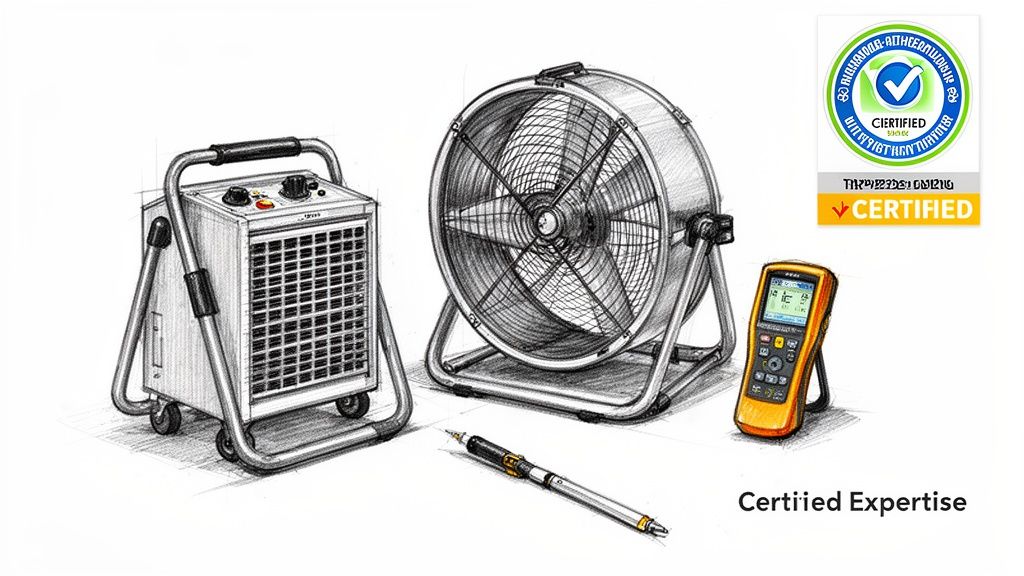
Extraction is only one part of the equipment picture. A proper drying setup often includes several categories of tools:
- Air movers: These push air across wet surfaces to support evaporation.
- Dehumidifiers: These remove moisture from the air so wet materials can keep releasing water.
- Moisture meters: These check how much moisture remains in materials like drywall or wood.
- Thermal imaging tools: These can help locate temperature differences that suggest hidden moisture.
- Containment materials: These isolate affected areas when needed.
A service page like water damage fans can give homeowners a visual sense of the air-moving equipment often used during drying.
Certification changes how the tools are used
Equipment alone does not make a job professional. Two companies can own similar machines and produce very different results.
That difference often comes down to training and standards. IICRC certification matters because it signals that technicians have been trained in recognized restoration practices, including water categories, material response, extraction priorities, drying principles, and documentation.
A certified team is less likely to treat every wet room the same way. They are more likely to ask the right questions:
- Is the water clean or contaminated?
- Which materials are salvageable?
- Where is the hidden moisture likely to be?
- What readings show that drying is complete?
This short video gives a helpful look at professional drying and extraction equipment in action.
One practical example
If a kitchen supply line breaks, a trained crew does not just vacuum the tile and leave. They may check under cabinets, at drywall behind the toe-kick area, around transitions into nearby rooms, and under flooring edges where moisture can migrate.
That is the difference between surface cleanup and mitigation.
One Phoenix-based option in this category is Restore Heroes, which states that it provides 24/7 extraction, structural drying, and IICRC-certified restoration services for residential and commercial losses. The important thing for homeowners is not the brand name alone. It is whether the company uses documented moisture verification and trained technicians rather than a “set fans and hope” approach.
Key takeaway: Tools remove water. Training determines whether the hidden moisture gets found and dried before it becomes a much bigger problem.
Navigating Insurance Claims Timelines and Costs
After the first panic settles, most homeowners focus on two worries. How long will this take, and what is insurance going to do with it?
Those are fair questions. The honest answer is that both timelines and costs depend on the type of water, how long it sat, how far it spread, and which materials were affected.
Why documentation matters so much
Insurance carriers usually want a clear record of the loss. That often includes photos, notes on affected materials, moisture readings, and a description of the mitigation work performed.
A restoration company that documents carefully can make the claim easier to understand. That does not mean every claim is simple or that every item will be covered. It does mean the file is stronger when the condition of the property has been measured instead of guessed at.
If you are trying to understand what helps before you speak with your carrier, water damage insurance claim tips can provide useful guidance on what homeowners are usually asked to gather.
The hidden issue that can affect claims later
One of the biggest long-term risks in Phoenix is incomplete drying. Homeowners sometimes assume that because the air is dry, the structure must be dry too. That assumption can create problems months later.
In arid climates like Phoenix, low ambient humidity can mask incomplete structural drying, allowing hidden mold to thrive within 48–72 hours. A study found 40% of water-damaged homes in desert regions had undetected mold after “professional” extraction due to a lack of thorough moisture verification, according to this discussion of emergency water extraction and hidden moisture risk.
That is not just a health concern. It can also complicate the claim and the repair scope if the original loss was not dried and documented thoroughly.
What tends to influence timeline and price
Instead of focusing on a flat number, it helps to understand the variables:
| Factor | Why it changes the job |
|---|---|
| Water source | Clean water losses are handled differently from contaminated water |
| Material type | Carpet, hardwood, drywall, and cabinets respond differently |
| Hidden spread | Water under flooring or inside walls takes more work to verify and dry |
| Demolition needs | Some materials may need removal to allow safe drying |
| Repair scope | Mitigation may be separate from reconstruction work |
A calm way to approach the claim
Keep your focus on accuracy. Not speed for its own sake. A fast but incomplete job can leave you with a cleaner-looking room and a worse underlying problem.
Practical advice: Ask how the drying will be verified, how the affected areas will be documented, and how updates will be shared with your adjuster.
A good restoration process supports the claim because it creates a record. It does not promise an outcome that no contractor can control.
Your Immediate Water Damage Checklist
If you are waiting for help to arrive, these steps can reduce risk and help limit additional damage. Safety comes first. Do not take any step that puts you at risk of shock, collapse, or contact with contaminated water.
Immediate Actions for Homeowners
| Priority | Action | Reason |
|---|---|---|
| High | Turn off electricity to the affected area if it is safe to do so | Water near outlets, cords, or appliances can create shock risk |
| High | Stop the water source if you can do it safely | Shutting off a valve can limit how much more water enters the home |
| High | Avoid rooms with sagging ceilings or obvious structural instability | Wet materials can weaken and fail without warning |
| High | Keep children and pets away from the affected area | Slips, contamination, and electrical hazards are easier to control |
| Medium | Move valuables, documents, and electronics to a dry space | This can reduce content damage while mitigation is being arranged |
| Medium | Lift furniture off wet flooring if possible | This may reduce staining, swelling, or finish transfer |
| Medium | Place foil or protective material under furniture legs | This can help reduce damage to wet carpet or flooring surfaces |
| Low | Take photos of visible damage | Photos can help with documentation later |
| Low | Gather basic details about what happened | A simple timeline helps when speaking with restoration teams and insurers |
What not to do
A few common mistakes cause extra damage:
- Do not use a household vacuum on standing water: Standard vacuums are not built for this hazard.
- Do not pull up materials aggressively: You can spread contamination or damage salvageable areas.
- Do not assume a dry surface means a dry structure: Hidden moisture is one of the most common problems after a water loss.
- Do not enter contaminated water without proper protection: If the source is uncertain, treat it carefully.
If you only remember three things
- Make the area safe
- Stop the source if possible
- Start professional extraction quickly
That order helps reduce both immediate danger and avoidable secondary damage.
Restore Heroes Your Phoenix Restoration Partner
When water enters a home or building, the first priority is stabilization. The second is making sure the structure is dry, not just dry-looking. In Phoenix, that timeline matters because the climate can hide moisture problems that other homeowners would notice sooner.
Restore Heroes serves the Phoenix metro area as a licensed, bonded, insured, and IICRC-certified disaster restoration company handling water damage, fire and smoke damage, mold removal, and biohazard cleanup. The company states that it is available 24/7, works with insurance carriers, and provides onsite inspections for affected properties.
If you are facing active water damage, the most useful next step is simple. Talk to a qualified restoration professional right away, explain what happened, and ask how they will handle extraction, drying verification, and documentation. A clear process and measured drying plan matter more than reassuring slogans.
Frequently Asked Questions
How fast should water extraction start
As soon as the area is safe and the source is controlled. Water tends to move into more materials over time, and early extraction usually gives technicians more options to save flooring, drywall, and contents.
Can Phoenix air dry my home naturally
It can help evaporation, but it should not be your plan. Dry air can make surfaces seem normal while moisture remains under floors, behind walls, or inside cabinets.
Is water extraction the same as restoration
No. Extraction is the emergency removal of water. Restoration includes the broader process of inspection, drying, cleaning, repair, and returning the property to usable condition.
Will insurance pay for everything
Coverage depends on your policy and the cause of loss. A restoration company can often help document the damage and communicate the scope of work, but it should not promise claim approval or a specific payout.
Do I need moisture testing after the visible water is gone
Yes. Visible improvement is not the same as confirmed drying. Moisture readings help show whether the structure is ready for normal use or repair.
Should I stay in the home during drying
That depends on the affected area, the water category, noise, access needs, and any safety concerns. In some cases, staying is manageable. In others, it may be more practical to avoid the work zone until drying and cleanup are further along.
If you need help with water damage in the Phoenix area, contact Restore Heroes to discuss your situation and the next safe step. A prompt, documented response can make the cleanup process more manageable and help protect your property from avoidable secondary damage.