
When you hear "mold remediation," you might just picture someone scrubbing a black spot off the wall. But in reality, it's a highly technical process that digs much deeper than surface-level cleaning. It's about finding out why the mold is there in the first place, containing it, removing it safely, and helping to make your home healthy again.
Why Mold Is a Unique Problem in Phoenix
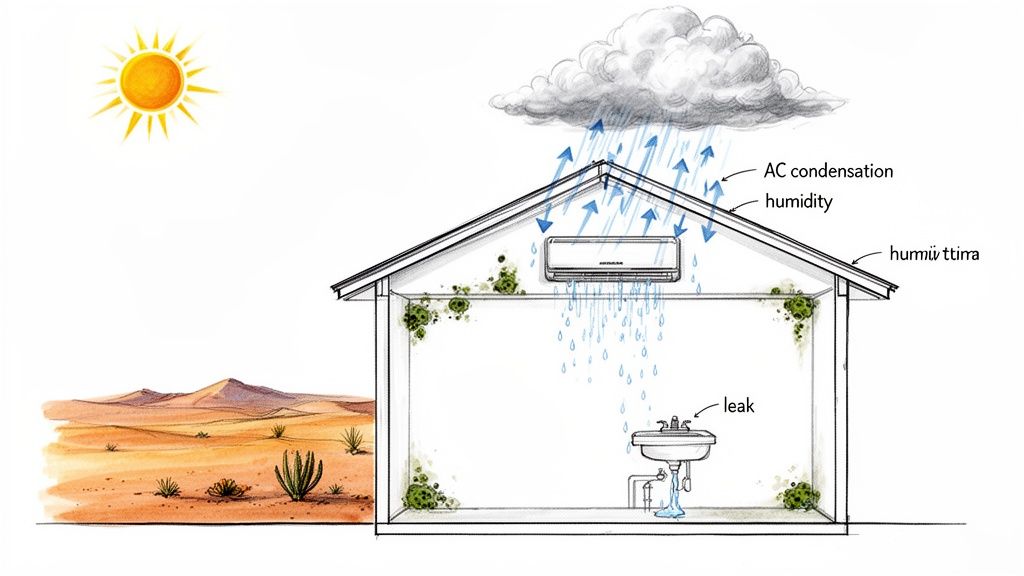
It’s easy to assume mold can't be a problem here. We live in a desert, after all. But the truth is, our modern, tightly sealed homes can accidentally create the perfect conditions for mold to take hold, even when it's over 100 degrees outside. Understanding these local quirks is the first step to protecting your home.
Think of your house like a sealed terrarium. While it’s bone-dry outside, the inside can become its own little ecosystem. Once moisture gets introduced and trapped, mold has everything it needs to thrive.
The Terrarium Effect in Phoenix Homes
Several common factors in the Valley of the Sun contribute to this "terrarium effect," turning a dry desert home into a surprisingly humid haven for mold. Often, it’s a combination of these things that creates the perfect storm for an infestation.
Here are the key culprits we see all the time:
- Powerful Air Conditioning: Your AC is a workhorse, and all that cooling creates condensation. If the drip pan or drain line gets clogged—which happens a lot—water can easily overflow and soak the surrounding drywall, insulation, or flooring. It's a hidden water source that mold loves.
- Monsoon Season Humidity: When the summer monsoons roll in, the outdoor humidity can spike. Our well-sealed homes are great for energy efficiency, but they also trap that damp air inside, raising indoor humidity to levels that encourage mold growth, especially in closets, bathrooms, and other spots with poor airflow.
- Minor Leaks: That slow drip under the kitchen sink or a faulty seal on a toilet can go unnoticed for weeks or even months. This steady supply of moisture is an open invitation for a mold colony to set up shop behind a wall or under a cabinet.
Mold is more than just an ugly spot on the wall; it's a symptom of a larger moisture problem. The goal of professional mold remediation in Phoenix, AZ, is not just to clean the mold you see but to correct the underlying conditions that allowed it to grow in the first place.
Defining True Mold Remediation
This is where a lot of people get it wrong. Mold remediation is not a DIY cleaning job. Spraying bleach on a patch of mold on drywall is like pulling the top off a weed—it doesn't touch the roots. In fact, since bleach is mostly water, it can actually feed the remaining mold structure and make the problem come back even worse.
Real, professional remediation is a structured, scientific process. You can learn more about the complete process of mold damage restoration in our detailed guide, but it typically follows a strict protocol.
The full process involves:
- Identifying the Moisture Source: First things first, we find the water leak or humidity issue and stop it. Without this step, the mold is likely to return.
- Containment: The affected area is sealed off with plastic sheeting to help stop mold spores from spreading to the rest of your home during removal.
- Removal of Contaminated Materials: Porous materials that can't be saved, like drywall, carpet, and insulation, are carefully bagged and removed.
- Cleaning and Sanitizing: All remaining structures are cleaned with specialized antimicrobial agents.
- Restoring Healthy Air Quality: We use industrial-grade air scrubbers with HEPA filters to capture any lingering airborne spores.
It’s estimated that at least 45 million U.S. buildings have unhealthy levels of mold. Here in Phoenix, where a typical remediation project can average around $1,836, catching the problem early is the best way to keep a small issue from turning into a huge, expensive headache.
How to Spot the Telltale Signs of Mold
Finding mold early is a lot like catching a small roof leak before it turns into a ceiling-caving disaster. The sooner you spot it, the easier and less expensive it may be to fix. A lot of folks here in Phoenix figure our dry air keeps us safe, but mold is sneakier than you think. It's an expert at hiding right under our noses, often disguised as something else entirely.
Your first clue? Your own nose. Long before you see a single spot, you’ll often smell it. If you walk into a room and get hit with a persistent damp, earthy, or musty odor—that’s the classic calling card of a hidden mold colony. Trust your senses; that smell suggests there's a moisture problem somewhere nearby.
Uncovering Visual Clues
Of course, seeing is believing. But visible mold doesn't always look like the fuzzy, black stuff from horror movies. It comes in all sorts of colors and textures, depending on the species and what it’s eating.
When you're doing a walkthrough of your home, keep an eye peeled for these dead giveaways:
- Discolored Patches: Look for splotches of black, green, brown, or even white on your walls and ceilings. These often pop up after a big monsoon storm or from a slow, nagging plumbing leak you didn't even know you had.
- Weird Textures: Mold can look like a patch of velvet or even a slimy film. You'll often find these textures in chronically damp spots—think bathrooms, under kitchen sinks, or around window sills where condensation loves to gather.
- Bubbling or Peeling Surfaces: This is a huge red flag. If you see paint or wallpaper starting to peel, crack, or bubble, it could mean moisture is trapped underneath. That trapped moisture creates a perfect little greenhouse for mold to thrive completely out of sight. Warped drywall is another classic sign of the same hidden water issue.
These are your home’s warning flares. To dig a little deeper, our guide on the subtle signs of mold in walls can help you become an expert at spotting problems before they take over.
Beyond What You Can See
Sometimes, the clearest signs of mold have nothing to do with what you can see or smell. In fact, your own body can be an incredibly sensitive mold detector. Are you dealing with unexplained physical symptoms that seem to clear up when you leave the house? That's a major clue.
A sudden onset of allergy-like symptoms that just won't quit, even with medicine, can be one of the indicators of a mold problem. Your body is often reacting to the airborne spores long before the source colony becomes visible.
Pay close attention to these health signals. They could be pointing to a hidden infestation that needs professional help for mold remediation in Phoenix, AZ.
A Quick Checklist for Your Mold Inspection
Here’s a simple checklist to run through every so often. Staying proactive is truly the best defense against a small mold spot growing into a full-blown remediation project.
What to Look and Smell For:
- That Musty Smell: Do you notice a damp, earthy odor, especially near the AC closet, bathrooms, or laundry area?
- Visible Growth: Any fuzzy, slimy, or discolored spots on walls, ceilings, or around pipes?
- Surface Damage: Have you spotted any peeling paint, bubbling wallpaper, or warped drywall?
- Condensation: Is there consistent moisture gathering on your windows, pipes, or walls?
What to Feel For:
- Mystery Health Issues: Do you or your family have a constant stuffy nose, itchy eyes, or headaches that only seem to happen at home?
- Clammy Air: Does the air in certain rooms feel heavy and humid, even with the air conditioning running?
If you found yourself nodding "yes" to any of these, don't panic. It doesn't automatically mean your house is overrun. It does, however, mean it's time to investigate. These are the telltale signs that you may have a moisture issue—and where there's moisture, mold is never far behind.
The Professional Mold Remediation Process Explained
Finding mold in your Phoenix home is a gut-wrenching moment. But what happens next doesn't have to be a mystery. Professional mold remediation isn't just a fancy term for cleaning up. It's a highly controlled, scientific process designed to not only get rid of the mold you see but also to help ensure it doesn't come right back.
Think of it less like wiping down a counter and more like a careful surgical procedure for your home. A true pro follows a strict set of steps, and each one is critical for getting your property back to a safe, healthy state. Here’s a look at exactly what you can expect.
Stage 1: Inspection And Damage Assessment
The first thing any certified pro will do is play detective. This initial inspection is a very important part of the entire job. It’s not a quick glance; it’s a deep dive to figure out the full story of your mold problem. We use specialized gear like moisture meters and thermal imaging cameras to find the hidden water source and see just how far the contamination has spread.
Finding out where the water is coming from is everything. Whether it's a slow leak behind a wall, a humidity problem in the attic, or condensation from an AC unit, you have to stop the water at its source. If you don't, the mold is very likely to return. This assessment creates the blueprint for the entire project.
Stage 2: Containment And Air Filtration
Once we know exactly what we're up against, the next priority is to lock down the area. Mold spores are microscopic and become airborne the moment you start disturbing them. The last thing you want is for a small problem in the bathroom to spread throughout your entire house via the HVAC system.
To prevent this, we set up a containment zone. This typically involves:
- Sealing the Area: We use heavy-duty plastic sheeting to create physical barriers, completely isolating the affected room from the rest of your home.
- Creating Negative Air Pressure: We set up special fans called "negative air machines" that pull air from inside the contained area and vent it safely outside. This helps keep contaminated air from escaping.
- Scrubbing the Air: Inside the containment, powerful HEPA air scrubbers run continuously. These machines are designed to capture tiny mold spores right out of the air, cleaning it on a microscopic level.
Stage 3: Removal And Cleaning
With the area safely contained, the real work begins. This is where we physically remove all materials that have been damaged by mold.
Mold isn't just a surface stain; it grows roots (called hyphae) deep into porous materials like drywall, insulation, and carpet. You can't just wipe it off. That's why these contaminated materials have to be carefully cut out, sealed in thick bags, and disposed of properly.
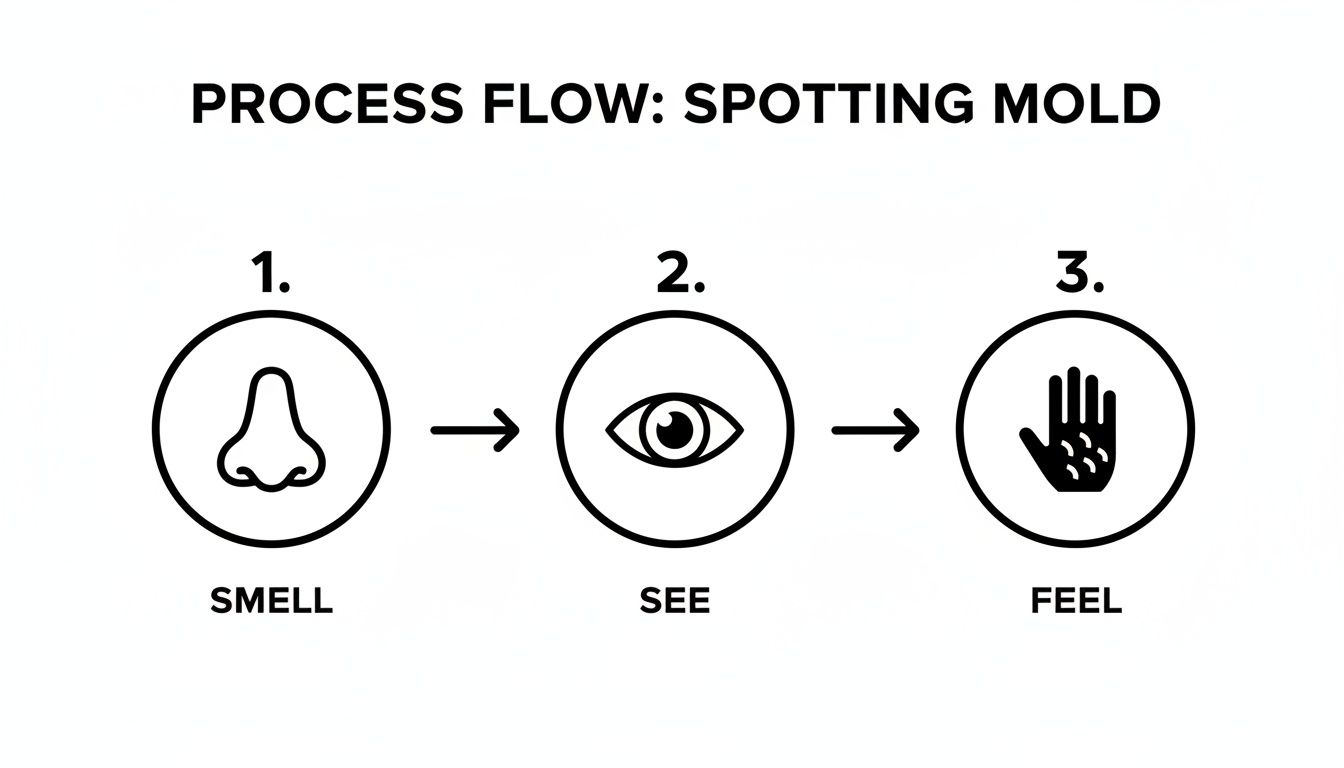
As the image shows, you can often spot a potential problem early on with your own senses. Once the contaminated materials are gone, we meticulously clean all remaining surfaces—like wood studs or concrete—with antimicrobial treatments to kill off any lingering mold.
Stage 4: Drying And Restoration
Getting rid of the mold is only half the battle. The final and perhaps most crucial stage is making sure the entire area is bone dry before we start putting things back together.
A professional mold remediation job is only complete when the moisture problem that caused it is solved. Simply removing the mold without drying the structure is a recipe for a recurring problem.
We bring in industrial-grade dehumidifiers and high-speed air movers to aggressively pull moisture from the building materials and the air. We don't guess when it's dry; we use moisture meters to confirm that everything has returned to normal, acceptable levels.
Only then does the restoration begin. This is the part where your house starts to look like a home again—replacing drywall, laying new carpet, painting, and rebuilding cabinets. It’s all about making it seem like the damage never even happened. This full-circle approach is at the heart of our work, and you can learn more about what a restoration company does in our detailed guide.
Understanding Mold Remediation Costs in Phoenix
The moment you find mold, one of the first questions that pops into your head is, "What's this going to cost me?" The honest answer is: it depends. There’s simply no one-size-fits-all price for mold remediation in Phoenix, AZ. The final bill is more like a puzzle, with several different pieces that all determine the total investment.
Think of it like taking your car to the shop. A quick oil change has a predictable price, but a full engine rebuild is a whole different story. It’s the same with mold. Cleaning a small, visible patch of surface mold in your bathroom is a far cry from tackling a major infestation that’s been secretly growing behind your attic walls.
Key Factors That Influence Your Cost
A few key variables really drive the price of any remediation project. Knowing what they are can help you set realistic expectations.
- Size: The size of the affected area is the biggest factor. A contained spot under a kitchen sink is a much smaller job than mold that has spread throughout an entire crawlspace.
- Location: Where the mold is growing matters a lot, too. A colony in an easy-to-reach closet is simpler to handle than one inside your HVAC system or deep within your attic's insulation.
- Materials: Finally, the type of materials involved is crucial. We can often clean non-porous surfaces like tile or metal. But porous materials like drywall, carpet, and insulation almost always have to be cut out, bagged, and replaced.
Estimated Mold Remediation Costs in Phoenix (2026)
While every job is unique, it helps to have a ballpark idea of what you might be looking at. The table below gives a snapshot of typical cost ranges for different types of mold jobs right here in the Phoenix area.
| Scope of Work | Average Cost Range (Phoenix, AZ) |
|---|---|
| Small, Isolated Area (e.g., under 10 sq ft) | $500 – $1,500 |
| Bathroom Remediation | $500 – $1,000 |
| Attic or Crawlspace Remediation | $1,500 – $4,000+ |
| Whole-House Remediation (Extensive) | $10,000 – $30,000+ |
| HVAC System Decontamination | $3,000 – $10,000 |
Keep in mind, these are just estimates. For a more detailed breakdown, you can learn more about how much mold remediation costs in our in-depth guide.
Navigating Insurance and Professional Help
Trying to figure out your homeowner's insurance policy in the middle of a mold crisis can be a real headache. This is where a certified remediation company becomes your greatest ally. They may provide the detailed documentation, moisture readings, and photos that are essential for filing an insurance claim.
While tackling a tiny spot of mold yourself might seem like a good way to save a few bucks, calling in a professional for anything larger than a few square feet is a smart investment. It may help protect your home’s value and, more importantly, your family's health. Certified specialists get to the root of the problem, aiming to ensure it’s gone, not just wiped from the surface.
There's actually a bit of good news for Phoenix residents. The average cost for a mold remediation project in Phoenix is $1,836, which is a remarkable 25% less than the national average. This is partly thanks to a competitive local market and our dry desert climate, which helps speed up the drying process. Don't let that lull you into a false sense of security, though. Ignoring a mold problem can cause serious financial damage down the line, as homes with known mold issues can lose a significant chunk of their value. You can find more local cost data from this breakdown of local mold remediation costs from Angi.com.
Choosing the Right Mold Remediation Company
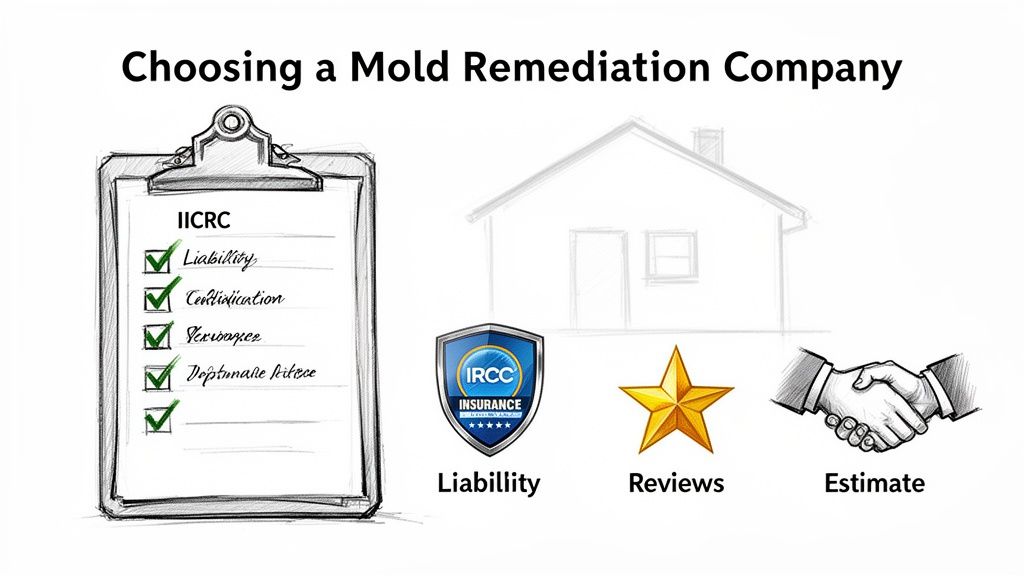
Finding out you have mold is stressful enough, but then comes the challenge of picking the right company to fix it. This decision feels huge, and frankly, it is. Hiring a mold remediation team is a lot like choosing a surgeon—you need a specialist with proven skills, the right credentials, and a history of getting the job done right.
With so many companies offering mold remediation in Phoenix, AZ, it's easy to get overwhelmed. A little homework now can save you a world of headaches later by ensuring you hire a real professional who will address the problem, not just slap a bandage on it.
Verify Their Credentials and Licensing
Before you waste time on a phone call, your first move should be to check a company's credentials. This is a simple step that immediately separates the pros from the pretenders. The single most important certification you need to look for is from the IICRC (Institute of Inspection, Cleaning and Restoration Certification).
The IICRC is the industry's standard-bearer. They set the rules for safe and effective mold remediation. If a company is IICRC-certified, it means their team has been properly trained on the science behind mold removal, containment, and safety protocols. Don't just take their word for it—ask to see their certification.
Ask for Proof of Insurance
Next up is insurance. Any contractor you hire should carry both general liability and, crucially, pollution liability insurance. General liability protects your property from accidental damage during the job. But pollution liability is the one that's specific to mold work; it covers you if their containment fails and mold spores get spread to other parts of your home.
Any pro worth their salt should have their insurance documents ready to go. If a contractor gets cagey or makes excuses when you ask for proof, that's a giant red flag. Just walk away.
This coverage is absolutely critical. Without it, you could be the one left holding the bill for any accidents or further contamination that happens on their watch.
Check Their Reputation and Local Reviews
It’s never been easier to get the scoop on a local company. Spend a few minutes scrolling through reviews on Google, Yelp, and Angi. Look for the story the reviews are telling. Are customers repeatedly mentioning the company's professionalism, clear communication, and thorough work?
Also, see how they handle the occasional bad review. A professional response that tries to solve the problem is a great sign they stand behind their work. When you're looking for a contractor, it's also worth noting how they present themselves online. A strong digital presence, often driven by smart local SEO for home service companies, can show a level of professionalism and commitment to their local Phoenix customers.
What to Expect During the Estimate
From the moment you first call, a trustworthy company will have a clear, professional process. When they arrive to give you an estimate, here’s what should happen:
- A Detailed Inspection: They shouldn't just glance around. A real pro will perform a thorough visual inspection and use tools like moisture meters to pinpoint the water source causing the mold.
- A Written Estimate: You need a detailed, itemized proposal in writing. It should spell out the exact scope of work, how they'll contain the area, and the specific steps they'll take. A vague, verbal quote isn't good enough.
- No High-Pressure Sales: Watch out for scare tactics or anyone trying to force you into signing a contract right away. A true professional will explain the problem and give you the space to make a smart decision.
We've put together some more thoughts on what to look for in a top-notch local provider. You can get our full perspective on finding the best mold remediation companies near you.
At the end of the day, choosing a company that is certified, fully insured, and transparent is the best way to get the peace of mind that the job will be done correctly.
Your Top Questions About Phoenix Mold Problems, Answered
Even after you get the basics down, it’s completely normal to have more questions. When it comes to mold, there’s a lot of bad information out there, and it can be tough to separate fact from fiction. Let’s clear up some of the most common questions we hear from Phoenix homeowners every day.
Can I Just Use Bleach to Kill the Mold?
This is probably the biggest—and most dangerous—myth in the world of DIY cleanup. Reaching for the bleach bottle is a classic mistake. It might look like it's working for a day or two, but you could actually be making the problem worse in the long run.
Think of it like this: drywall and wood are porous, like a sponge. Mold isn't just sitting on the surface; it has roots (called hyphae) that dig deep into the material. Bleach is mostly water, and its chemical makeup keeps it from soaking in and reaching those roots.
So what really happens? The bleach kills the mold on the surface, which is why it disappears visually. But the water in the bleach solution soaks right into the drywall, feeding the roots you can't see. You've effectively just given the mold a big drink of water. A few weeks later, it can come roaring back, often worse than before.
A professional mold remediation in Phoenix, AZ team will never use bleach on porous surfaces. We use specialized, EPA-approved antimicrobial agents that are designed to penetrate materials and kill mold at its source—without adding the moisture that fuels its growth.
Does Homeowners Insurance Cover Mold in Arizona?
This is a tricky one, and the honest answer is: it depends. In Arizona, whether or not your insurance will cover mold remediation almost always comes down to what caused the water problem in the first place.
Here's how it usually breaks down:
- Covered (Often): Sudden & Accidental Damage. If the mold grew because of a "covered peril" like a pipe that suddenly bursts, a failed washing machine hose that floods the laundry room, or water used to put out a fire, you may have coverage. The mold is seen as part of the damage from that single event.
- Not Covered (Often): Gradual Damage & Neglect. If the mold is from a slow leak under the sink that’s been dripping for months, poor ventilation in a bathroom, or a known roof leak you haven't fixed, the claim may be denied. Insurance companies often see these situations as preventable maintenance issues.
Your best bet is to pull out your policy and look for any "mold limitation" or "fungus exclusion" clauses. These sections spell out exactly what's covered. Many policies also put a dollar limit—or cap—on what they'll pay for mold, even when it's part of a covered claim. Having a professional remediation company on your side can make a world of difference here, as they provide the detailed documentation and moisture readings needed to support your claim.
How Long Does Mold Remediation Take?
The timeline for a project can range from a couple of days to over a week. It really just depends on how big the problem is and where it’s located.
Here’s a rough guide to help you set expectations:
- Small & Contained (1-3 Days): Think of a small spot of mold under a kitchen sink that’s only affected the cabinet and a little bit of drywall. This is a fairly quick job involving containment, removal of the damaged materials, and cleaning.
- Medium-Sized Project (3-5 Days): This might be a larger section of a wall that got wet from a leaky window. It involves more demolition, cleaning, and a longer drying time.
- Large or Complex Project (A Week or More): If you're dealing with an entire basement, a contaminated crawlspace, or mold that has spread through your HVAC system, get ready for a longer project. These jobs require serious containment and a lot more time to ensure every last bit of moisture is gone.
A good contractor will not rush the drying phase. Making sure the structure is bone dry is a critical step in preventing the mold from coming right back. A professional estimator can give you a solid timeline after they’ve inspected the property in person.
Is Black Mold More Dangerous Than Other Molds?
The term "toxic black mold" gets thrown around a lot in the media, and it causes a ton of unnecessary panic. It’s true that one type of black mold, Stachybotrys chartarum, can produce compounds called mycotoxins. But the color of the mold is a terrible way to judge how dangerous it is.
Here’s what you really need to know:
- Any Mold Can Cause Problems: There are thousands of species of mold. Whether it’s green, white, orange, or black, many can trigger allergies, asthma attacks, and other respiratory problems for sensitive people.
- "Toxic Mold" is the Wrong Term: The mold itself isn't toxic. Some types are toxigenic, meaning they can create toxins. Not all black-colored molds do this, and some molds of other colors can. You can't tell just by looking.
- All Mold Should Be Removed: Both the CDC and the EPA agree: if you have mold growing in your home, you need to get rid of it. Period. It’s an indoor contaminant, and trying to guess its species or color is a waste of time.
Instead of worrying about the color, just focus on the fact that you have mold. It’s a clear signal of a moisture problem that needs to be fixed and a contaminant that should be removed by a professional to keep your home healthy.
If you think you might have a mold issue or just want an expert opinion, don't wait for it to spread. The certified team at Restore Heroes is here to help. Contact us today for a free, no-obligation onsite inspection, and we’ll give you the straight answers you deserve. Visit us at https://www.restoreheroesaz.com to get started.