
When a pipe bursts under a sink, when a dryer fire leaves smoke in the attic, or when a monsoon storm pushes water where it doesn't belong, most Phoenix homeowners ask the same question first: Is my house still safe?
That question can feel bigger than the cleanup itself. You're dealing with wet drywall, a strange crack that wasn't there before, a door that suddenly sticks, or a ceiling stain that keeps spreading. It's hard to know what's cosmetic, what's serious, and what needs immediate attention.
That's where a structural integrity assessment comes in. It isn't just another item on a disaster checklist. It's the process engineers use to decide whether a building can still safely do its job after damage, stress, or movement.
Your Guide to Structural Safety After a Disaster
If you're standing in your home right now looking at water damage, fire damage, or storm-related cracks, uncertainty is usually the hardest part. Most property owners don't expect to become experts in framing, load paths, or foundation movement overnight. You shouldn't have to.
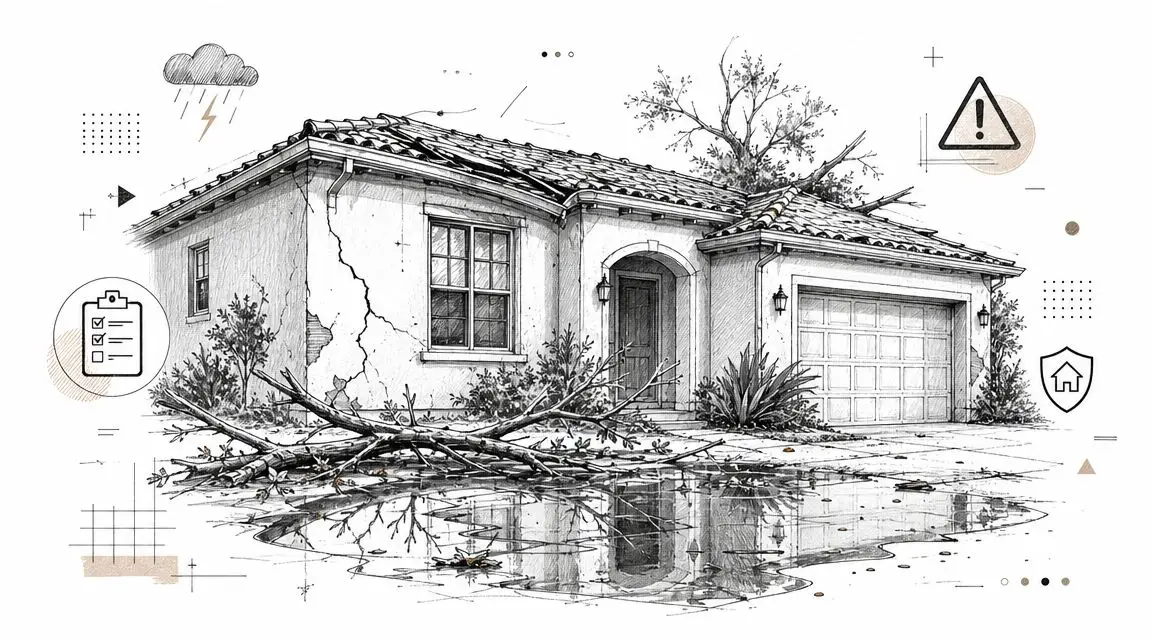
In practical terms, the first priority after an event is to stop ongoing damage. If the issue started with a leak, flood, or appliance failure, quick containment matters. Homeowners dealing with active water intrusion often start with emergency water mitigation in Phoenix so moisture doesn't keep spreading into framing, flooring, and insulation while the next decisions are being made.
Why this process matters
A structural integrity assessment gives you a professional path forward. Instead of guessing, you get a methodical review of what happened, what parts of the house were affected, and whether the structure still has the strength and stability it needs.
That matters because visible damage can be misleading. A wall stain may point to long-term moisture around wood framing. A small crack may be harmless settling, or it may signal movement that needs closer analysis.
Practical rule: Treat visible damage as a clue, not a conclusion.
What concerned homeowners usually need to know
Individuals typically seek answers to a few basic questions:
- Is it safe to stay in the home: That depends on what was damaged, where the damage occurred, and whether key structural elements were affected.
- What kind of professional should look at it: Cleanup crews, contractors, and engineers all have different roles. The assessment helps separate those responsibilities.
- What happens after the assessment: The findings guide repair, reinforcement, monitoring, or a safe return to normal use.
This process can feel technical, but it's manageable when you break it into steps. Once you understand what the assessment is really checking, the whole situation becomes less abstract and a lot easier to manage.
What a Structural Integrity Assessment Really Is
The easiest way to understand a structural integrity assessment is to compare it to a medical exam. A quick visual inspection is like checking your temperature. It tells you something, but not enough to make a confident decision if the underlying issue is deeper.
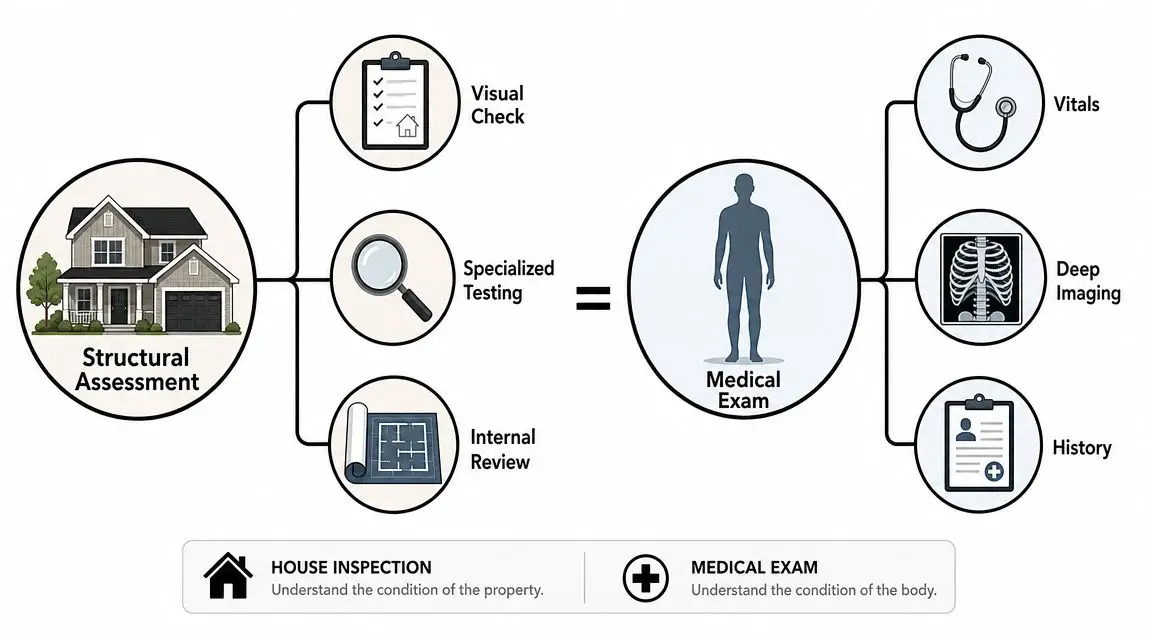
A formal assessment goes further. Engineers define it as a process for determining whether a structure can reliably carry current and future loads, and that work can include visual inspection, probing, sampling, crack-width measurement, and even foundation testing, as described in this engineering reference on structural reliability assessment.
It's about load, not just damage
Your house is always carrying weight. That includes its own materials, the people inside, furniture, stored items, and outside forces such as wind. A structural integrity assessment asks a simple but serious question: Can the house still carry those loads safely after the event?
That's why a contractor's opinion and an engineering assessment aren't the same thing. A contractor may spot damaged finishes. An engineer is looking at whether damaged materials or movement have changed how force travels through the building.
Here's where people often get confused. They think, “The wall is still standing, so it must be fine.” But structural concerns aren't limited to collapse. Engineers also look at reduced stiffness, weakened connections, shifted support, and hidden deterioration.
More than a walk-through
A proper assessment usually includes several layers of review:
- Document review: Drawings, prior repairs, maintenance records, and past inspection notes can reveal whether a problem is new or part of an older pattern.
- Field investigation: The engineer checks cracks, deflection, moisture effects, foundation clues, and areas where loads transfer from one part of the structure to another.
- Targeted testing: If a visual check can't answer the question, more focused testing may be needed.
If you want a plain-language overview of who does what after property damage, what a restoration company does during recovery helps put the assessment in the broader process.
A good assessment doesn't just identify damage. It connects that damage to safety, function, and repair decisions.
For homeowners trying to think ahead, it also helps to understand the bigger picture of assessing natural and financial property hazards. Structural risk is one part of owning property in an area where water events, heat, and storms can all affect building performance over time.
Common Triggers for an Assessment in Phoenix
In Phoenix, structural concerns often start with events that seem ordinary at first. A leaking water heater. A roof problem after a monsoon. A garage fire that looks contained. What matters isn't only the event itself. It's how that event may have affected framing, connections, or the foundation system.
The local damage patterns homeowners see most often
Here are the triggers that most often justify a closer structural review after a loss event:
| Trigger | Potential Structural Risk |
|---|---|
| Water damage from leaks or flooding | Swollen materials, wood deterioration, hidden moisture in framing, movement around foundations |
| Fire and smoke exposure | Heat-related weakening of materials, damaged connections, later corrosion from residue |
| Long-term mold conditions | Ongoing moisture exposure that may point to rot or decay in structural wood |
| Impact or building movement | Cracks, misalignment, settlement clues, localized overstress after collision or storm damage |
Water damage is often more than a wet surface problem
Water is one of the most deceptive causes of structural trouble. A burst supply line behind a wall can soak studs, subfloors, and base plates long before the damage becomes visible in the room. Monsoon-driven intrusion can also affect lower wall cavities, door openings, and attached structures like garages or patios.
If you're noticing active leakage signs, common signs of a burst pipe can help you recognize when the source may be bigger than a simple plumbing nuisance.
Water also matters because it can change how building materials behave. Wood can swell, fasteners can corrode, finishes can separate from the structure, and soils near the foundation can be affected by repeated saturation.
Fire, smoke, mold, and impact each create different structural questions
A small kitchen fire may look localized, but heat can affect nearby framing, steel components, or connection points. Smoke residue also isn't only a cleaning issue. After the flames are out, corrosive residue may continue affecting some materials if it isn't addressed.
Mold usually gets attention as an indoor air problem, but from a structural standpoint it often signals chronic moisture. When moisture sticks around, wood decay becomes part of the conversation.
Impact and movement create yet another category of concern. That could mean a vehicle strike, storm-related tree impact, or signs of settlement such as widening wall cracks and sticking doors.
- Look at patterns, not isolated marks: One hairline crack may be minor. A crack paired with floor slope, door misalignment, and recent water intrusion deserves more attention.
- Watch for changes over time: New damage after a storm matters more than old cosmetic flaws that haven't moved in years.
- Consider the event history: Repeated leaks in the same area can be more important than one short, contained incident.
How Professionals Inspect Your Property
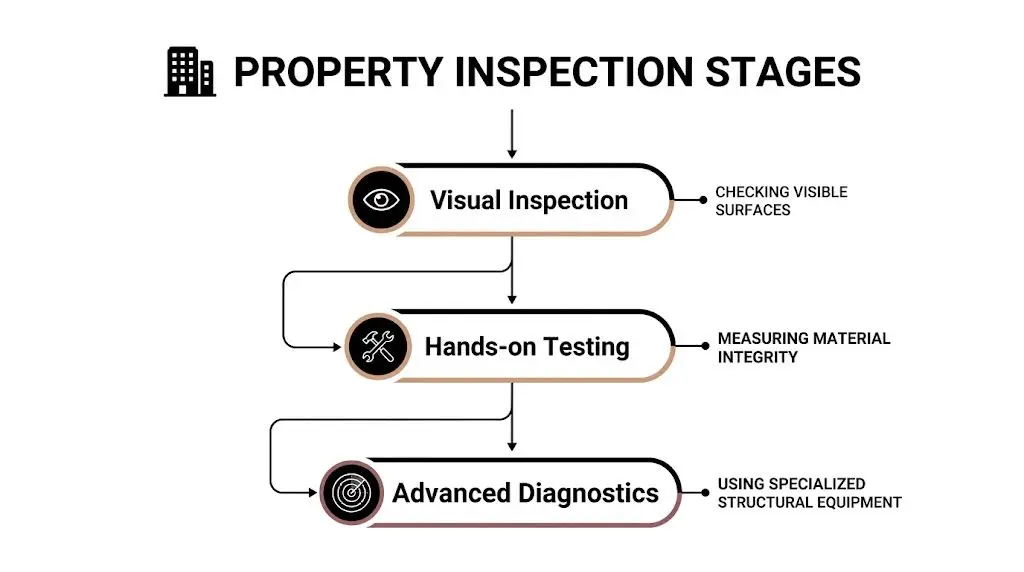
A thorough inspection usually moves from simple observations to more specialized testing. That order matters. Professionals don't start with expensive tools just because they exist. They begin by understanding the building, the reported event, and the visible symptoms.
First comes the paper trail
A sound workflow starts with records. Industry guidance describes the process as reviewing as-built drawings, maintenance history, earlier reports, and material information before moving into field verification and, when needed, non-destructive testing such as ultrasonic or radiographic methods to connect visible defects to remaining capacity and service life, as outlined in this structural assessment guide.
For a homeowner, that means the inspector wants context. If a crack was documented years ago and hasn't changed, that's different from a crack that appeared after a slab leak last month.
Then the on-site inspection gets specific
The field visit often starts with visible conditions:
- Cracks and separation: Walls, ceilings, slabs, and exterior finishes can show movement patterns.
- Sagging or deflection: Floors, roof lines, and headers may reveal where support has changed.
- Water clues: Staining, soft materials, warped trim, and damp zones can point to hidden moisture.
- Corrosion or deterioration: Metal components, fasteners, and anchors may show loss of integrity.
In moisture-related losses, professionals may also use mapping tools to follow where water traveled. Homeowners often assume the wet spot marks the whole problem. In reality, water can move sideways, down, and behind surfaces before it appears.
If you want to understand how room-by-room moisture checks are typically organized, a mold inspection checklist for hidden moisture areas can help you see why attics, wall cavities, and subfloor transitions matter.
A short visual explanation helps here:
When visual signs aren't enough
Some problems sit below the surface. That's where non-destructive testing comes in. Depending on the material and the question, professionals may use methods that help identify internal flaws, thickness loss, or surface-breaking defects without tearing apart large sections of the home.
The goal isn't to collect more data for its own sake. The goal is to answer one decision question clearly.
In some property contexts, newer tools are also changing field access and documentation. For example, aerial workflows are transforming asset inspection by helping teams review difficult rooflines and exterior conditions more efficiently.
Finally, the engineer interprets what it all means
Inspection findings alone aren't the end point. The key step is interpretation. The engineer looks at whether the observed damage affects load paths, support continuity, stiffness, and usable safety margin.
That's what turns scattered observations into an actual structural integrity assessment instead of a list of defects.
Understanding Your Assessment Report and Scope of Work
Most homeowners feel better once the site visit is over, then anxious again when they wait for the report. That's normal. The report is the point where all the observations, testing, and engineering judgment get translated into a decision you can act on.
What the report is really deciding
The core output is a risk-based decision. According to this explanation of structural assessment outcomes, the analysis determines whether the structure's capacity is sufficient, whether targeted remediation is needed, and whether the findings point to actions such as repair, reinforcement, shoring, or return to service.
That means the report usually answers one of three broad questions:
- Can the structure continue in service as is
- Can it remain in service with monitoring
- Does it need repair, strengthening, or temporary support before normal use
Cosmetic damage versus structural damage
Homeowners often need the clearest explanation. Cosmetic damage affects appearance. Structural damage affects how the building carries loads or stays stable.
A drywall crack by itself might be a finish issue. That same crack paired with framing movement, connection distress, or foundation shift is a different matter. The engineer's report helps separate those categories so money and repair time go to the actual problem.
What to look for in plain language: not just where damage appears, but whether it affects support, movement, or safety.
How the report turns into a scope of work
Once the report identifies what matters, the restoration and repair plan becomes much more accurate. Instead of replacing materials blindly, the scope of work can focus on root cause, damaged structural elements, and the sequence needed to restore safe performance.
A practical scope of work may include:
- Source correction: Stopping the leak, moisture source, or movement condition that caused the damage.
- Selective demolition: Opening only the areas needed to access damaged materials and confirm conditions.
- Structural repair or reinforcement: Replacing weakened members, improving connections, or adding support where the engineer calls for it.
- Monitoring or follow-up checks: If the issue doesn't call for immediate heavy repair, the report may recommend watching for change.
Homeowners also usually want to compare repair planning with budget expectations. A general guide to water damage repair cost factors can help frame how scope, material type, and hidden conditions tend to influence the work that follows.
The most useful reports don't bury the answer in technical language. They give a path forward.
How Restore Heroes Coordinates Your Assessment and Restoration
After a disaster, the hard part often isn't one single decision. It's juggling several people at once. You may have an insurance adjuster asking for documentation, an engineer evaluating safety, and separate crews handling mitigation or repairs.
That's where coordination matters more than most homeowners expect.
What coordination looks like in real life
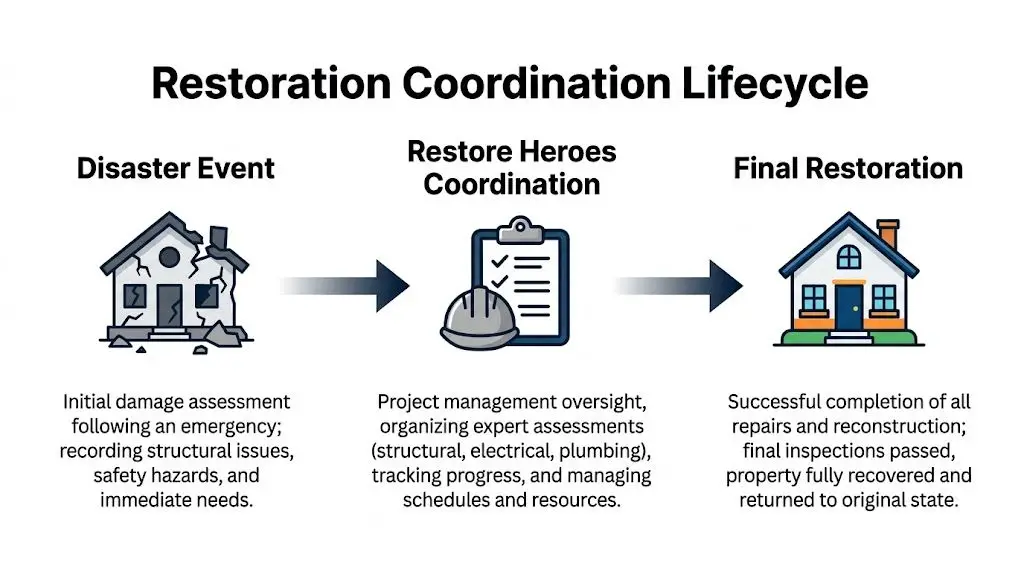
A structured recovery process often follows a Plan Do Check Act cycle. An industry summary describes that approach as setting objectives and inspection criteria, carrying out inspection and monitoring, analyzing findings, and then implementing repairs or operational adjustments through a methodical loop in this overview of structural integrity management.
For a homeowner, that usually looks less formal and more practical:
- First, the damage is stabilized: Ongoing water, smoke contamination, or unsafe access conditions have to be controlled.
- Then, the right expert evaluates the structure: If there's reason to suspect structural impact, an independent engineer may need to inspect.
- After that, the repair plan follows the findings: The work should line up with what the engineer documented, not just what appears damaged on the surface.
One point of contact reduces confusion
This is the point in the process where many owners appreciate having one company coordinate scheduling, site access, documentation, and communication. Restore Heroes can serve in that project-management role by helping align mitigation work, engineering findings, and the restoration scope around the official assessment rather than around guesswork.
That doesn't replace the engineer's judgment or the carrier's role. It makes the moving pieces easier to track.
When the paperwork, field notes, and repair decisions all line up, claims and restoration usually move with less confusion.
Why this matters after a loss event
Post-disaster properties change quickly. Wet materials need drying. Fire-damaged surfaces may need removal. Occupancy decisions may depend on whether key areas are safe to use. If those steps happen out of order, homeowners can end up paying to open the same area twice or repair finishes before the underlying issue is settled.
Good coordination keeps the process documented, sequenced, and easier to understand. In a stressful situation, that alone can make a major difference.
Your Next Steps After Receiving the Report
Once the report lands in your hands, the situation usually feels more concrete. You're no longer reacting to uncertainty. You're deciding what to do with a professional finding.
If the report says repair is needed
Start by matching every recommended action to the actual scope of work. If the engineer calls for reinforcement, selective replacement, shoring, or moisture-related corrections, those items should appear clearly in the contractor's plan. Vague language is a sign to ask more questions.
Keep a copy of the report, photos, invoices, moisture records, and communication with your insurer in one folder. That makes later questions much easier to answer.
If the report recommends monitoring
Not every concern leads straight to major repair. Some conditions need observation rather than immediate structural work. That may involve repeat inspections, crack monitoring, moisture follow-up, or checking whether movement has stopped after the source issue was corrected.
Recent literature also points to a broader shift toward combining one-time inspection with monitoring and data-driven prognostics, including sensors or real-time data in some situations, as discussed in this review of newer structural monitoring approaches.
A practical decision checklist
Use the report to answer these questions before you move forward:
- What was confirmed: Not what was suspected, but what the engineer identified.
- What action is required now: Immediate repair, temporary support, limited use, or simple observation.
- What issue caused the problem: Leak, heat, settlement, impact, or repeated moisture exposure.
- What records should be preserved: Reports, photos, drying logs, testing notes, invoices, and insurer correspondence.
Don't let the report sit unread because it looks technical. Ask for the findings in plain language and tie each recommendation to a next step.
Think beyond the immediate repair
After the urgent work is done, many Phoenix homeowners want to know how to avoid repeating the same problem. That's a smart instinct. Long-term peace of mind usually comes from fixing the source condition, documenting the repair properly, and knowing when a follow-up check makes sense.
A structural integrity assessment is valuable because it replaces guesswork with a defensible plan. Once you have that plan, the next step is to follow it carefully.
Frequently Asked Questions
Is a structural integrity assessment the same as a home inspection
No. A home inspection is broader and more general. A structural integrity assessment is a focused engineering process used to decide whether the structure can safely carry loads after damage, deterioration, or movement.
Does every water loss require one
No. Some water losses affect finishes only. An assessment becomes more important when there are signs of framing damage, repeated moisture exposure, settlement concerns, sagging, major cracking, or uncertainty about safety.
Who usually performs the assessment
A licensed structural engineer or a qualified engineering professional typically performs the formal structural review. Restoration contractors, plumbers, and general contractors may identify warning signs, but they don't replace the engineer's role.
What if the damage looks small
Visible size doesn't always match structural significance. A small crack or stain can be minor, or it can be the visible clue to hidden movement or moisture damage. Context matters.
Will the report always mean major repairs
No. Some reports support continued use, some call for monitoring, and some recommend targeted repairs rather than broad replacement.
Should I keep the report after repairs are done
Yes. Keep the assessment, repair records, photos, and related insurance documents. They can help with future maintenance, resale questions, or any later claim review.
If you're dealing with water, fire, smoke, or mold damage in the Phoenix area and need help organizing the next step, Restore Heroes can help coordinate the remediation process around the documented findings, so you have a clearer path from emergency response to repair.