
You notice them while changing a light bulb, making the bed, or lying awake at night. Just a few faint dots. Maybe one light brown ring. Maybe a tiny cluster near a vent. At first glance, it looks like something you can ignore until the weekend.
Most of the time, small brown spots on ceiling surfaces are not random discoloration. They're a sign that moisture has moved through a building material and left something behind. That “something” can be minerals, rust, tannins, dirt, or residue from an older leak. The stain is the clue. The actual issue is usually above it, behind it, or nearby.
For Phoenix homeowners, that matters even more than many national articles admit. Here, ceiling stains often connect to hard summer cooling loads, condensate line problems, roof penetrations stressed by heat, and sudden monsoon-driven leaks that show up fast. A small spot in June can point to HVAC condensation. The same spot appearing after a storm can point to roof entry.
The good news is that a brown spot doesn't automatically mean major damage. Some stains are old, dry, and stable. Others are active and need quick attention. The difference comes down to diagnosis, not guesswork.
Why You Should Not Ignore Small Brown Spots on Your Ceiling
You see a dime-sized brown mark over the hallway, press it with a fingertip, and tell yourself you will deal with it later. That delay is where small ceiling stains turn into larger repairs.
A ceiling stain matters because it points to an underlying moisture issue, past or present. In my line of work, the stain itself is rarely the main problem. The true concern is what happened above the drywall, how long it has been happening, and whether the area is still wet.
In Phoenix homes, small spots often show up after two very different stressors. One is monsoon rain finding a weak roof penetration or flashing detail. The other is heavy air-conditioning use, where condensation, duct sweating, or a condensate drain problem leaves a localized mark near a vent, chase, or ceiling register. Those are different problems with different repair paths, and the sooner you sort that out, the better.
Why a small spot deserves prompt attention
Drywall and texture absorb moisture and spread it beyond the point where it first entered. A stain can appear several feet away from the source. By the time color shows through paint, water has already moved through materials and left residue behind.
Practical rule: Treat a new ceiling spot as evidence, not decoration.
That approach helps avoid the two mistakes I see most often:
- Ignoring it because the ceiling still feels solid. Moisture can sit above the visible stain and continue affecting insulation, framing, or fasteners.
- Covering it with stain-blocking paint too early. Paint hides the symptom. It does not confirm the source is fixed.
There is also a health side to this. Ongoing moisture can support microbial growth in hidden cavities, especially around insulation, drywall paper, and dusty HVAC components. If you are concerned about hidden growth, this guide on what causes black mold in homes explains why moisture control matters.
What prompt attention does
Early inspection gives you a clearer answer to three questions that affect cost, scope, and whether insurance may come into play.
| Question | Why it matters |
|---|---|
| Is the spot active? | A cool, damp, enlarging stain needs a faster response than a dry, unchanged mark. |
| What sits above it? | Attic space, roof penetrations, plumbing lines, and HVAC equipment each point to a different source. |
| Has the material weakened? | Soft drywall, peeling texture, or sagging means the repair may involve removal, drying, and replacement, not just cleaning and paint. |
That matters for documentation too. If a monsoon event or sudden plumbing failure caused the damage, photos, moisture readings, and a clear timeline help during the insurance conversation. If the issue came from long-term deferred maintenance, coverage is often harder to secure. Phoenix homeowners are usually better served by diagnosing first, documenting what they find, and then deciding whether to file.
Homeowners in colder climates may read about roof staining in the context of winter problems and start comparing notes. Articles on understanding ice dam expenses can be useful background for how water enters roof systems, but Phoenix homes more often deal with storm-driven intrusion and cooling-related moisture, not ice buildup.
A small brown spot does not mean you need to panic. It does mean the house is giving you a clue. Catch it early, confirm whether it is active, and you keep the fix smaller and the diagnosis more accurate.
What Causes Brown Spots on Ceilings
Most homeowners assume every brown mark is a roof leak. Sometimes it is. Often it isn't. Small brown spots on ceiling finishes have a short list of usual suspects, and the pattern of the stain usually narrows the field.
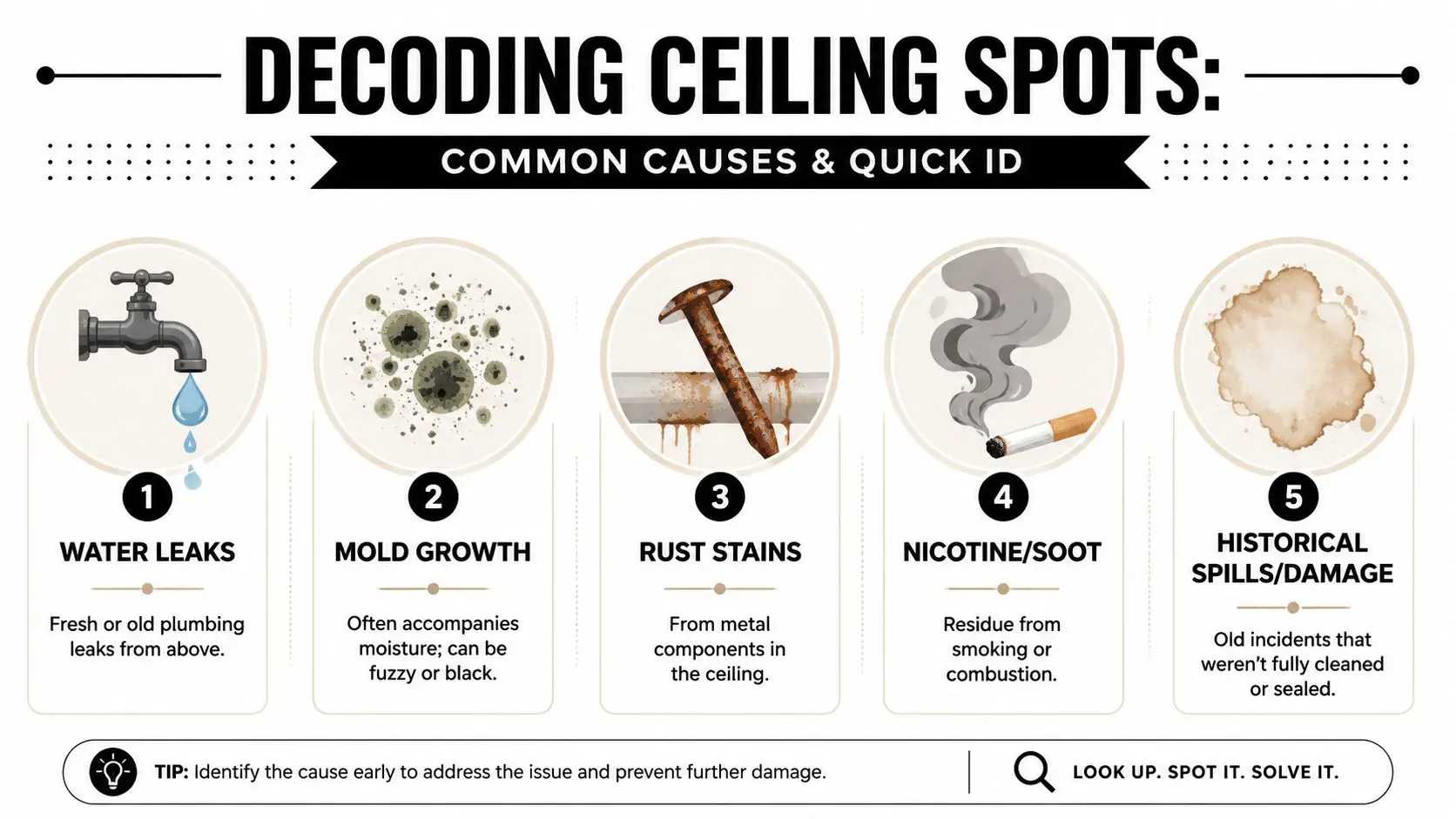
Water intrusion is the most common cause
Small brown spots on a ceiling are most often the visible end result of a moisture pathway. The stain forms when water migrates through materials, evaporates at the ceiling surface, and leaves behind dissolved minerals and other discolorants. In Phoenix, condensation from HVAC systems is a particularly relevant cause due to high temperature differentials (King Roofing on brown ceiling stains).
That's why water stains often look like coffee dried on paper. The liquid moves outward, then leaves a ring or patch as it evaporates. The brown color is usually residue, not “brown water.”
Common water-related origins include:
- Roof leaks: Often show up near vents, skylights, flashing, or after heavy rain.
- Plumbing leaks: More likely below bathrooms, kitchens, or laundry areas.
- HVAC moisture: Frequently appears near attic air handlers, ceiling registers, or condensate routes.
If you've dealt with winter roof water entry in colder climates before moving here, resources on understanding ice dam expenses can be useful context for how roof-related moisture problems escalate when the source is ignored, even though Phoenix homes usually face different weather mechanics.
Other causes that can mimic water stains
Not every spot is active water damage. A few look similar at first glance.
Mold growth
Mold often follows moisture, but it doesn't always look like a classic large black patch. On painted ceilings, early growth may appear as tiny peppered dots, dingy smudges, or clustered specks near chronic dampness.
Surface spotting around a vent or in a bathroom might be light mildew. Hidden growth above the ceiling is a separate issue. If you want a clearer explanation of moisture-driven fungal growth, this guide on what causes black mold in homes is a useful companion.
Rust staining
A small circular brown dot can come from a metal fastener, corner bead, or pipe component reacting to moisture. The spot may stay very localized. If a nail head or screw is involved, you'll often see a pinpoint center with a faint halo.
Nicotine or soot residue
In older homes or homes with repeated smoke exposure, ceiling discoloration can bleed through paint. This usually looks more diffuse than a leak stain. It tends to appear in broader film-like patches rather than a defined ring under a source point.
Historical spills or old damage
Some marks are leftovers from a resolved problem. The leak happened months or years ago, the area dried, but the stain was never properly sealed before repainting. Those spots usually stay unchanged unless humidity or fresh moisture reactivates the stain.
A brown spot tells you what happened at the surface. It doesn't tell you by itself whether the problem is current, old, shallow, or hidden.
Quick visual cues
| Appearance | More likely cause |
|---|---|
| Ring or halo | Repeated wetting and drying from moisture |
| Tiny rust-colored dot | Fastener or metal-related staining |
| Cluster of specks | Surface mildew, residue, or insect-related contamination |
| Diffuse film-like discoloration | Smoke, nicotine, or older bleed-through |
| Spot near vent or attic equipment | HVAC condensation or condensate issue |
How to Assess the Damage and Risk
Homeowners can do a useful first check without opening the ceiling or disturbing the area. The goal is simple. Observe, document, and stay safe.
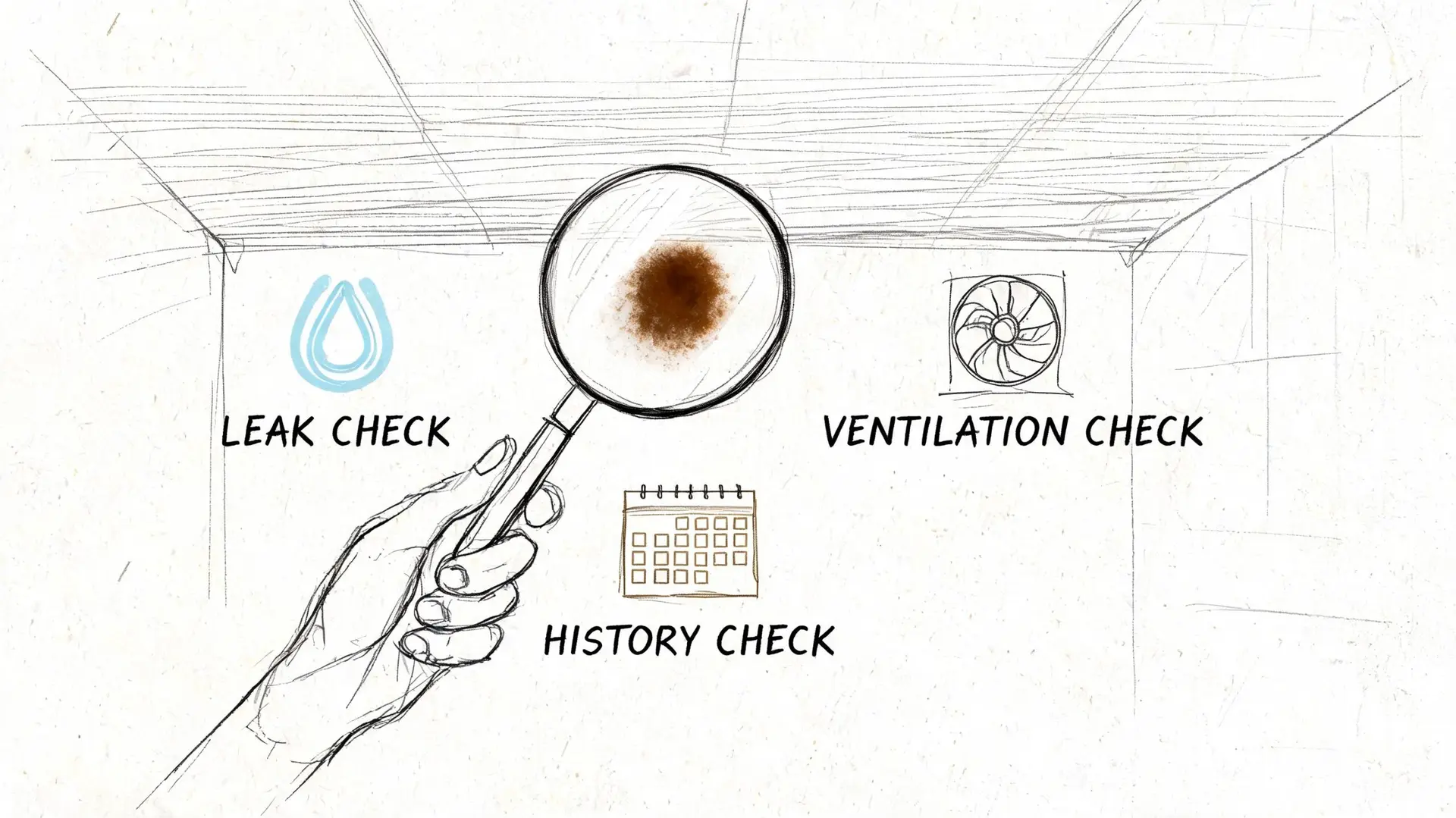
Start with location and timing
Ask two questions before you touch anything.
What's above the stain? A bathroom, attic air handler, roof penetration, laundry room, or nothing obvious? Location cuts down the guesswork fast.
When did it appear? If it shows up after rain, roof entry moves higher on the list. If it gets darker after heavy AC use, think condensate, duct sweating, or HVAC-related moisture. Homeowners who want a roof-focused visual checklist can compare notes with Four Seasons Roofing roof leak advice.
Check the surface without pressing hard
Use a flashlight. Look from an angle. You're checking for changes in texture more than color.
- Dry and firm: Often points to older, inactive staining, though not always.
- Soft, swollen, or blistered: Suggests recent or recurring moisture.
- Sagging or bulging: This raises the risk level immediately.
- Peeling paint: Often means moisture moved under the paint film.
Don't poke a wet-looking ceiling with a screwdriver, broom handle, or finger. If the drywall is weakened, you can break the paper face and make a small problem larger.
If the ceiling is sagging, treat it as unstable. Keep people clear of the area until it's evaluated.
Document changes over a few days
Take a clear photo now, then another from the same angle later. Put a piece of painter's tape nearby as a reference point, not on the stain itself. You're watching for spread, darkening, or repeat wetting.
A good field check includes:
- Photo documentation: Same lighting if possible.
- Odor check: A musty smell matters even when the spot looks minor.
- Room pattern: Look for nearby wall staining, vent discoloration, or baseboard swelling.
- Use pattern: Notice whether shower use, laundry, storms, or air conditioning seem to trigger changes.
If you're trying to tell whether the stain is likely recent or historical, this article on how to tell if water damage is new or old can help frame what you're seeing.
When your own assessment should stop
A homeowner inspection should end before demolition starts. Don't cut drywall, remove insulation, or chase the stain into attic cavities unless you already know how to do that safely.
Your job is to recognize risk, not to turn the house into an exploratory project.
DIY Cleaning and Temporary Ceiling Spot Fixes
If the stain is small, dry, stable, and confirmed inactive, there are a few DIY steps that make sense. Cosmetic work only helps after the moisture source is dealt with. If the source is still active, cleaning is just cover-up.
What you can do safely
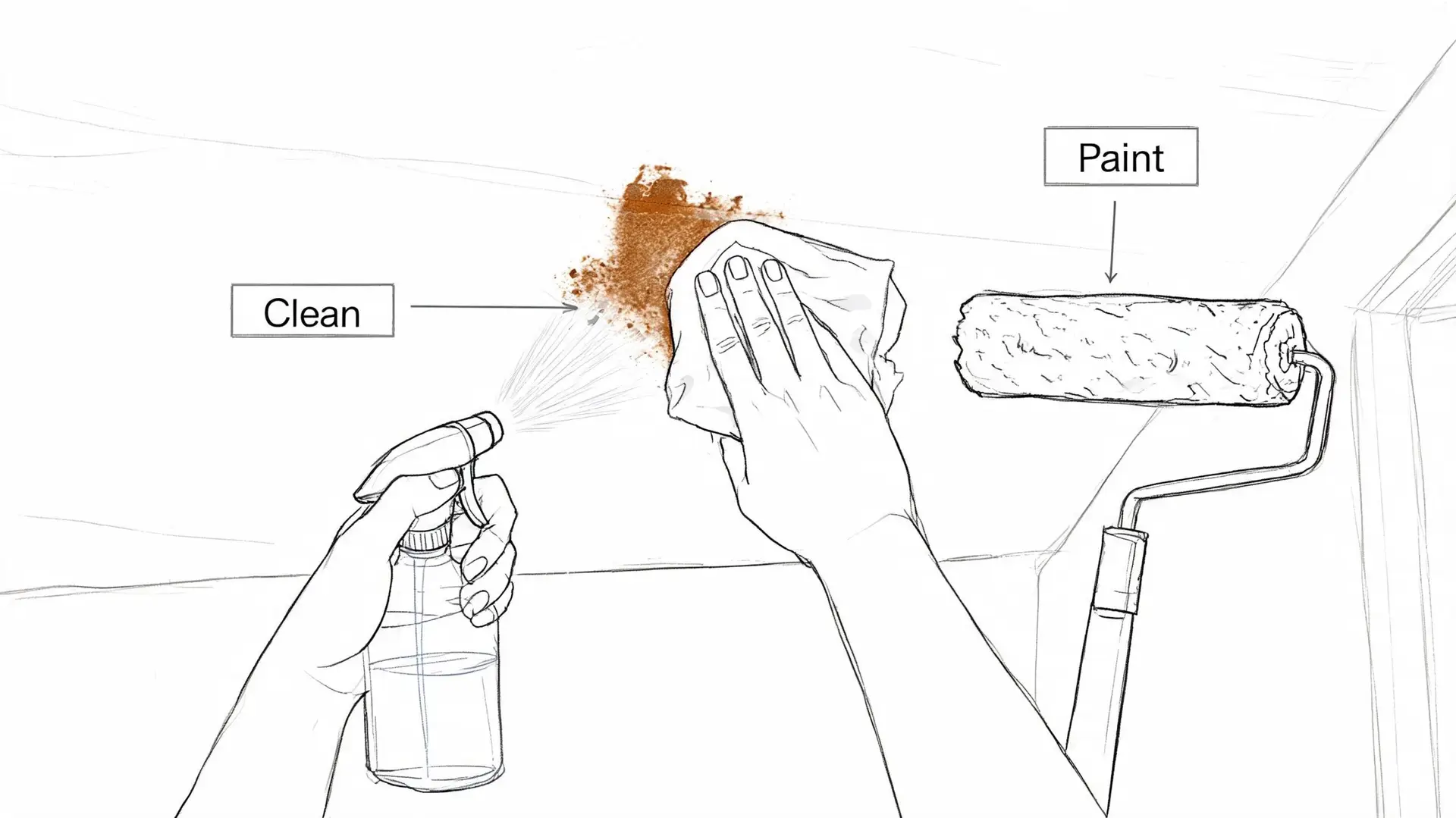
For a dry surface stain, start with the least aggressive option. A soft cloth or sponge with mild soap and water can remove loose residue, dust, or some superficial marks. Don't soak the ceiling. You're cleaning the paint film, not washing drywall.
For a very small patch of confirmed surface mildew, light cleaning may help, but only if the material underneath is dry and solid. If you suspect the spotting is more than superficial, stop there. A ceiling can look lightly affected from below while the cavity above has ongoing moisture.
A stain-blocking primer is usually the difference between a repair that lasts and one that bleeds back through. Regular ceiling paint often won't hold back brown discoloration on its own.
Field note: If you can still see the outline before priming, there's a good chance you'll still see it after painting.
A simple order that works better
Use this sequence for old, inactive spotting:
| Step | What to do |
|---|---|
| 1 | Confirm the area is fully dry and not changing |
| 2 | Clean the surface lightly and let it dry |
| 3 | Apply a stain-blocking primer |
| 4 | Repaint to match the ceiling finish |
This is also where many homeowners make the biggest mistake. They skip the primer, put fresh paint over the spot, and think it's solved.
Here's a visual example of the kind of prep involved before repainting:
What not to do
Some fixes make a stain worse or hide a problem that needs real attention.
- Don't paint over a damp ceiling: Moisture under fresh paint usually comes back as peeling, bubbling, or recurring discoloration.
- Don't use heavy water or over-scrubbing: Wetting drywall paper can damage the finish.
- Don't treat suspected hidden mold as a cleaning project: Surface wiping won't address growth inside the cavity.
- Don't assume bleach fixes everything: It may lighten some spotting, but it does not correct the moisture cause.
If the stain involves suspected mold on drywall, this guide on how to remove black mold from drywall helps explain where DIY stops and material removal may become necessary.
DIY is best for old evidence, not active damage.
Signs You Need Professional Restoration Services
A ceiling stain can stay small for months, then turn into a larger repair after one storm cycle or a few weeks of AC use. In Phoenix, I see this pattern often. A faint brown ring near an attic access, vent, or bathroom ceiling looks minor, but the visible spot is sometimes just the last place water showed up.
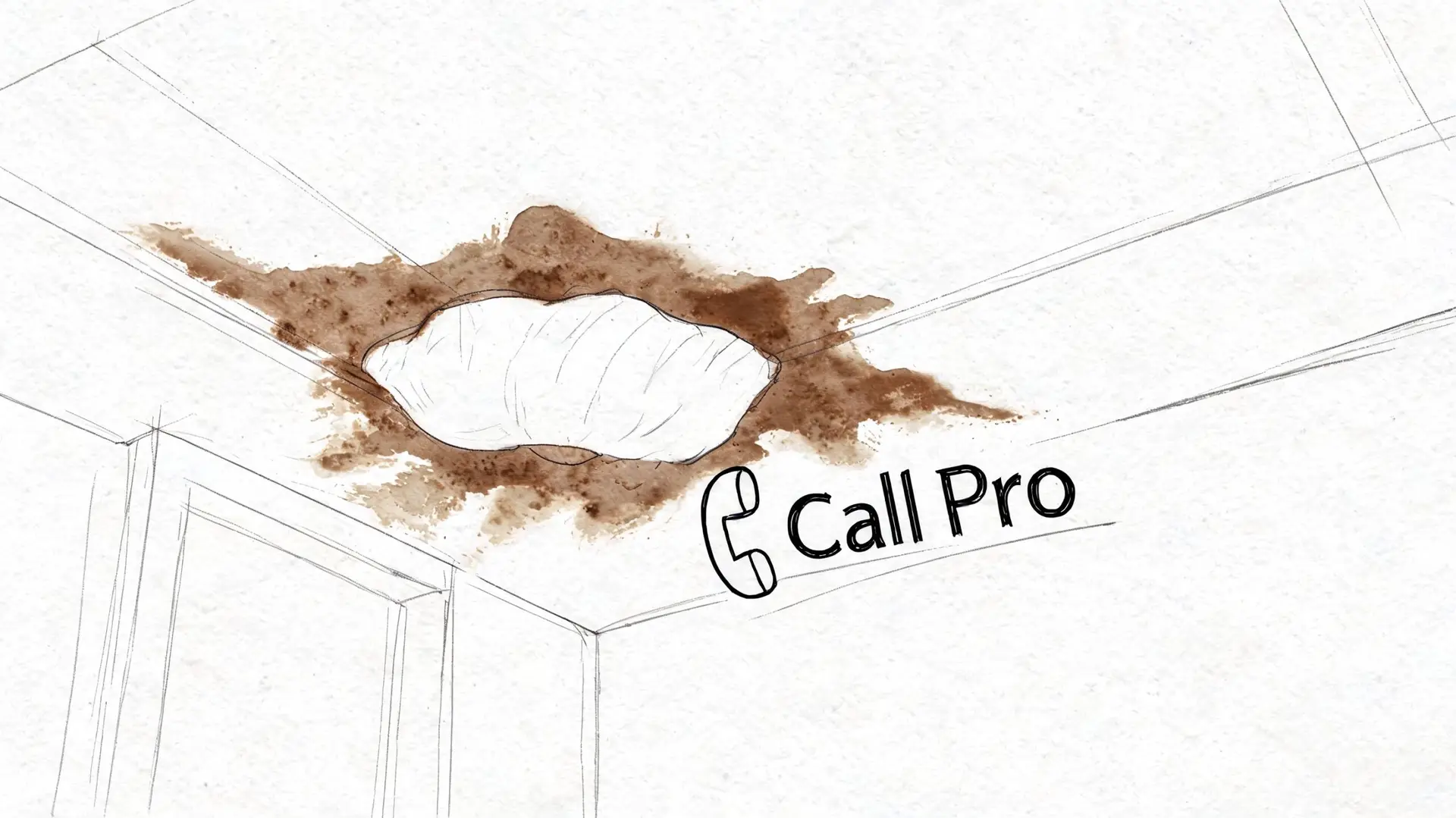
The decision point is simple. If the stain suggests active moisture, hidden spread, or material breakdown, bring in a restoration professional before treating it like a paint problem.
Red flags that move this beyond DIY
Professional evaluation makes sense if any of these are true:
- The stain is getting larger or darker: Active change points to an unresolved moisture source.
- The ceiling is sagging, bulging, or cracking: Wet drywall can lose strength and become unsafe.
- The area feels soft or damp: That usually means repeated wetting, not an old, harmless mark.
- There is a musty odor: Smell often shows up before hidden mold is visible.
- The stain returns after cleaning, priming, or repainting: The source was not corrected.
- The spot is under a bathroom, laundry area, roof penetration, or attic HVAC equipment: Those locations often hide slow leaks and condensate issues.
- You have several stains or an irregular pattern: Water may be traveling across framing, drywall, or insulation before it appears.
One stain can still be a larger problem.
Why early inspection usually costs less than delayed repair
Small ceiling spots are cheaper to investigate than widespread moisture damage is to repair. A minor source issue, such as flashing, a drain line problem, or a localized plumbing leak, is often more manageable than replacing wet drywall, insulation, texture, and paint across a broader area.
That is the practical trade-off homeowners need to understand. Waiting saves nothing if moisture is still entering the assembly. It usually increases the scope.
What a restoration company adds
A qualified restoration contractor checks more than the discolored surface. The job is to identify where the moisture started, how far it traveled, which materials are still wet, and whether drying will solve it or removal is the safer option. That is a different scope from a painter or general handyman.
If you want a plain-language overview, this guide on what a restoration company does explains source detection, mitigation, drying, cleanup, and rebuild in the order they should happen.
One local option in Phoenix is Restore Heroes, which provides moisture inspection, mitigation, structural drying, and mold-related restoration services. That matters in Arizona homes because the stain you see after monsoon rain or long AC run times is often disconnected from the true entry point.
Phoenix Ceiling Stains and Monsoon Season
Phoenix creates its own ceiling-stain patterns. National advice is often too broad because it doesn't account for long AC run times, intense heat, sudden monsoon rains, and attic temperature swings.
Why HVAC shows up so often here
In Phoenix homes, air conditioning systems work hard for long stretches. That makes condensate lines, drain pans, duct insulation, and cold surfaces more important than many homeowners realize. A small stain near a ceiling register or below attic equipment may have nothing to do with the roof at all.
High indoor-outdoor temperature differences can also support localized condensation. You won't always see dripping. Sometimes the only visible clue is a faint brown ring that slowly darkens over time.
Why monsoon leaks can appear suddenly
Monsoon season changes the pattern. A roof assembly that seems fine in dry weather can show its weakness during wind-driven rain. Water may enter at flashing, around a vent, or through a small roof penetration and then travel before it shows on the ceiling.
That's why homeowners get confused when the stain isn't directly below the actual roof defect. In the field, the source and the visible spot often don't line up neatly.
After a monsoon storm, the timing of the stain matters. If it appears or darkens right after rain, document it immediately and compare it to dry-weather conditions.
Insurance and documentation in real life
Insurance questions usually start with cause and timing. Homeowners should take photos, note when the stain appeared, and write down what was happening at the time. Did it follow a storm? Heavy shower use? AC issues? That basic timeline helps everyone, including your adjuster and any contractor inspecting the damage.
Covered-peril questions depend on the policy and the cause of loss. Sudden storm-related water entry may be handled differently than long-term maintenance issues or slow unresolved leaks. The cleaner your documentation, the easier those conversations usually go.
For Phoenix-area moisture issues, it also helps to work with an IICRC-certified company that understands both local building conditions and the practical side of drying, containment, and documentation. If the stain turns out to involve broader hidden moisture, moisture damage repair is the category of work that usually follows source correction.
If you're dealing with small brown spots on ceiling surfaces and you're not sure whether the issue is old, active, or tied to monsoon or HVAC moisture, Restore Heroes is one Phoenix-area option for inspection, mitigation, and restoration guidance.