
You've aired out the room, washed the sheets, and the mattress still smells like smoke. That's a common spot to be in after a kitchen flare-up, a nearby wildfire, or a larger house fire. The frustrating part is that a mattress can hold odor long after the visible haze is gone.
Smoke doesn't just sit on top of fabric. It settles into seams, ticking, padding, and foam. That's why a quick spray with something scented usually disappoints. If you want to know how to get smoke out of a mattress, the job starts with figuring out how bad the exposure is, then choosing the least risky method that still has a real chance of working.
Assessing the Smoke Damage to Your Mattress
Start by looking at the mattress in bright light. Pull back bedding, check the top and sides, and pay attention to piping, tufting, and seams. Those areas trap fine residue more easily than flat fabric.
Then use your nose carefully. Smell the surface first, then the seams, then the area around the mattress foundation or bed frame. A light odor that stays near the surface is a different problem from a deep, stale smell that seems stronger when you press on the mattress.
What minor exposure looks like
A mattress may still be a reasonable DIY project if the smoke exposure was limited, such as:
- A short-lived kitchen smoke event that drifted into the bedroom
- Outdoor smoke intrusion from wildfire conditions without visible soot on the bed
- A nearby incident where the room smells smoky but the mattress fabric looks clean
In those cases, you're usually dealing with odor and settled particles on the surface. That doesn't make it easy, but it does make home treatment more realistic.
What heavy contamination looks like
A mattress becomes much harder to save when you see signs that smoke contamination went beyond the surface.
Look for these red flags:
- Visible soot streaks or speckling
- Yellowing or gray film on the fabric
- A harsh odor deep in the seams
- Burn marks, melted fabric, or heat damage
- A smell that transfers to clean linens quickly
Smoke-damaged mattresses act like porous filters. They collect airborne particles, and once those particles settle into foam and stitching, surface cleaning has limits.
If the room itself has broader fire damage, it helps to understand the larger contamination pattern before focusing only on the bed. A mattress often mirrors what happened in the rest of the room, especially after a more serious smoke-damage-to-house event.
The practical test
Ask three questions before you spend hours cleaning:
- Is there visible soot?
- Does the odor seem trapped inside the mattress, not just on the fabric?
- Does the mattress already have age, wear, or existing stains that make a full recovery less worthwhile?
If the answer is yes to more than one of those, keep your expectations modest. DIY can reduce odor. It can sometimes solve light smoke exposure. But it won't always remove contamination that has worked its way into the core.
Immediate Steps to Mitigate Smoke Odor
The first moves matter. Homeowners often make the odor harder to remove by rubbing soot around, spraying too much cleaner, or leaving contaminated bedding in place. Treat the first response like a cleanup checklist, not a deodorizing session.
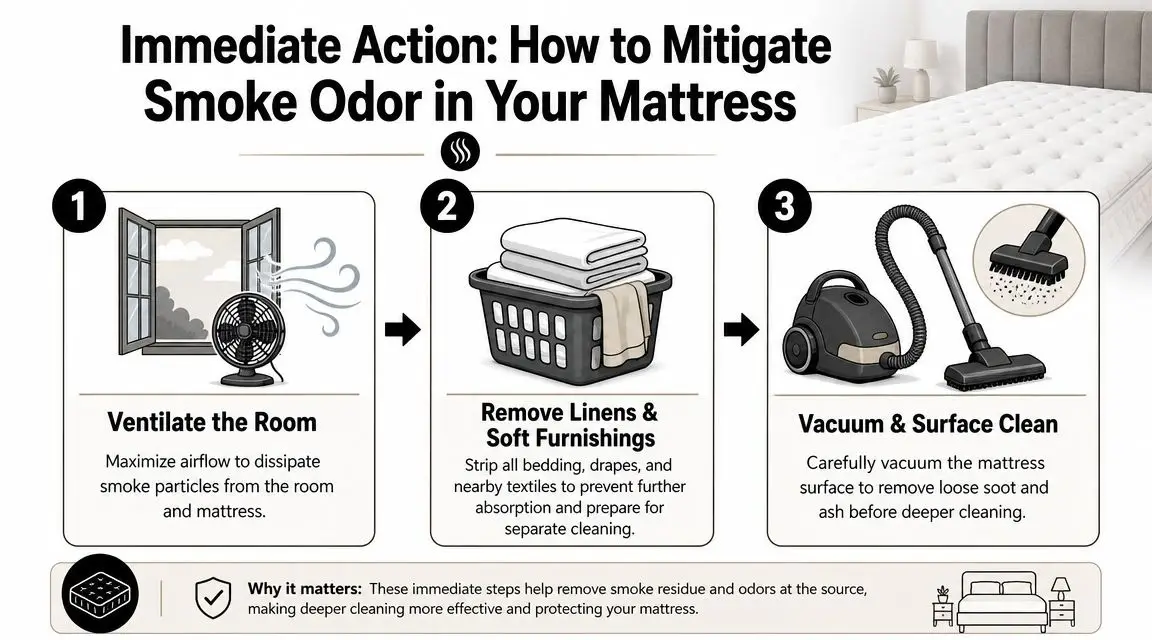
Start with air movement
Open windows if outdoor air conditions are safe. Use fans to move air out of the room rather than just around it. You're trying to reduce suspended smoke particles and keep the room from re-depositing odor onto the mattress while you work.
If outdoor smoke is still active, skip wide-open ventilation and focus on isolating the room from new contamination.
Strip everything off the bed
Remove sheets, pillowcases, blankets, comforters, mattress pads, and any washable soft goods nearby that picked up odor. Don't leave them piled in the same room. Launder them separately so they don't keep feeding smoke smell back into the mattress area.
Purple outlines a practical workflow for smoke odor remediation: strip and launder all bedding first, then HEPA-vacuum the mattress surface and seams, apply a dry deodorizer, and allow dwell time before extraction. The same guide says a baking soda or cornstarch treatment can sit for 30 minutes to 2 hours, with overnight dwell for stronger odors, followed by vacuuming with the upholstery brush in its mattress deodorizing guide.
Vacuum before you deodorize
Use a vacuum with a HEPA filter if you have one. Fit it with an upholstery brush or soft brush attachment. Work slowly across the top, sides, seams, handles, and labels.
The reason is simple. Loose soot and ash are part of the odor source. If you skip vacuuming and go straight to sprays or powders, you can smear particles deeper into the fabric.
Use this order:
- First pass on the surface to lift loose residue
- Second pass on seams and piping where soot hides
- Bed frame and nearby floor next so the mattress doesn't pick contamination back up
Practical rule: Remove the particles first. Deodorizing before particulate removal often means you're treating the symptom and leaving the source.
If the room picked up other unpleasant odors during the event, some of the same thinking applies to getting rid of sick smell effectively. The materials differ, but the principle is the same: remove the source before trying to neutralize the smell.
For broader room cleanup beyond the mattress itself, this guide on how to remove smoke smell from a house helps connect the bed cleanup to the rest of the indoor environment.
Deep Cleaning Methods for the Mattress Surface
Once you've removed loose residue, you can work on surface odor. This is often the initial thought, but it only works well when the mattress isn't loaded with soot.
Use baking soda the right way
A solid starting method is plain baking soda. Lowe's recommends covering the mattress with a thick layer of baking soda and letting it sit for at least 15 minutes, and for stronger odors leaving it on overnight, then vacuuming it off in its mattress odor removal guide.
Don't dust on a token amount. Cover the sleeping surface evenly, and give extra attention to the spots where odor seems strongest. If one side of the mattress smells worse, focus there instead of treating the whole thing lightly.
A practical sequence looks like this:
- Vacuum first so you're not trapping soot under powder.
- Apply a generous layer of baking soda across the fabric.
- Let it dwell long enough to absorb odor from the surface materials.
- Vacuum thoroughly with the upholstery attachment.
If the smell improves but doesn't disappear, that's useful information. It suggests you removed some surface odor, but the mattress may still be holding smoke deeper down.
Use vinegar lightly, not heavily
A light vinegar-and-water mist can help with residual surface odor after dry treatment, but here, DIY jobs often go sideways. More liquid does not mean more cleaning.
Mist a clean cloth, not the mattress directly if possible, then blot or wipe the fabric lightly. The point is to freshen the surface, not soak the interior layers.
Never saturate a smoke-damaged mattress. Excess moisture can push odor deeper into padding and make drying much harder.
If you use any liquid step, keep it controlled. Spot-cleaning beats broad wetting every time.
When mixed residues complicate the job
Sometimes smoke isn't the only issue. A mattress may also have body oils, pet residue, food spills, or other organic contamination. In that situation, an enzyme cleaner may help on the specific stained area, but only if you apply it sparingly and according to the label.
What enzyme cleaners won't do is solve embedded smoke contamination by themselves. They're a targeted tool, not a full smoke-removal strategy.
DIY smoke odor removal methods compared
| Method | Best For | Effort Level | Risk |
|---|---|---|---|
| Baking soda | Light to moderate surface odor | Low | Low if fully vacuumed off |
| Light vinegar-and-water wipe | Residual surface smell after dry treatment | Moderate | Medium if over-applied |
| Repeated vacuuming | Loose soot and ash on fabric and seams | Moderate | Low with a soft attachment |
| Enzyme cleaner on isolated spots | Smoke mixed with other residue on a small area | Moderate | Medium if over-wet or misused |
If you can still smell smoke strongly after careful surface cleaning, stop assuming one more spray will fix it. At that point, you're testing the limits of the mattress, not your effort.
If other upholstered items in the room also picked up smoke, this guide on how to remove smoke smell from furniture can help you keep the whole room from cross-contaminating the bed again.
Properly Drying and Deodorizing Your Mattress
Drying is where you either protect your progress or undo it. A mattress that stays damp too long can develop a second problem that's harder to deal with than the original smoke smell.
Focus on airflow first
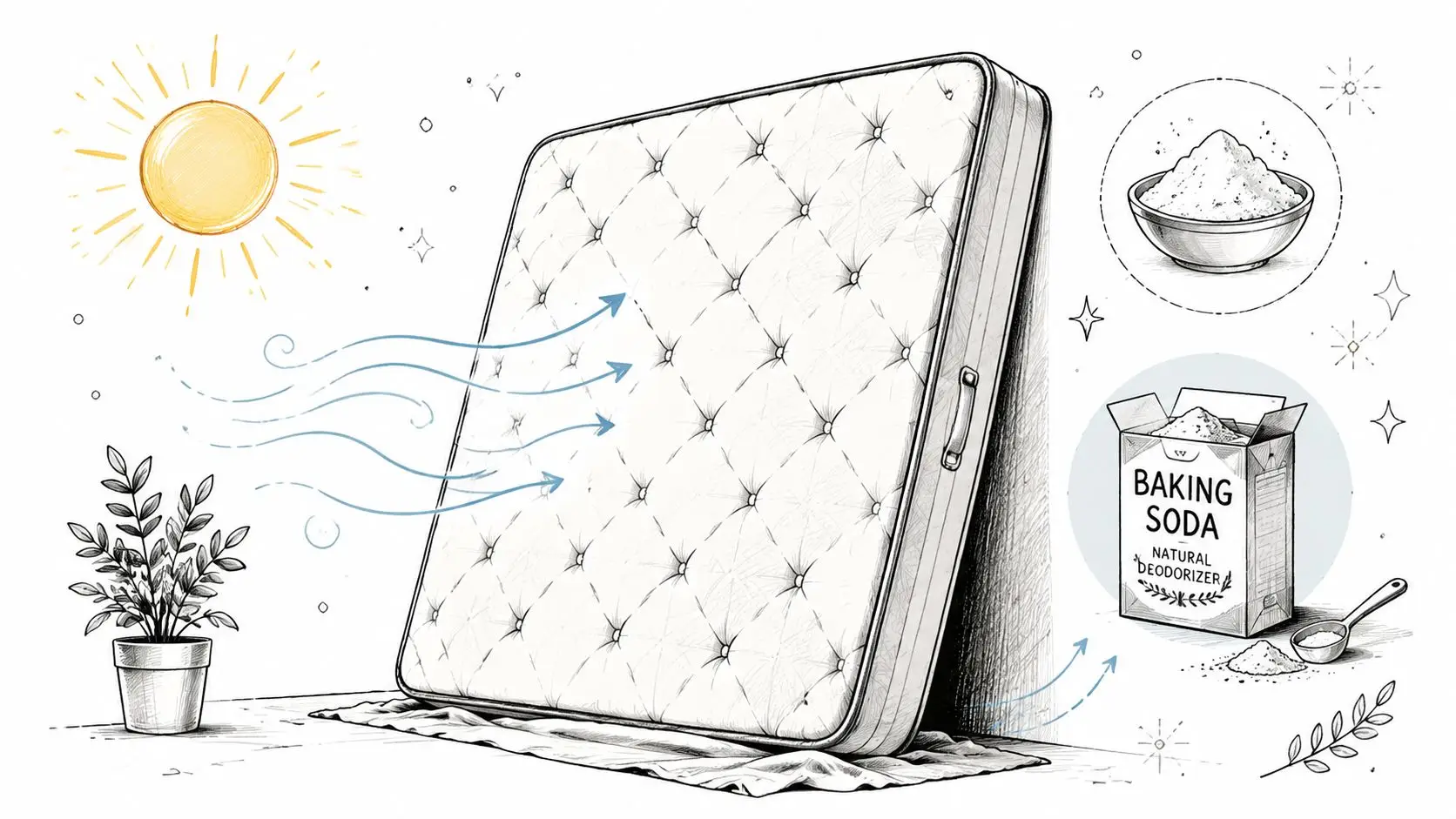
Stand the mattress up if the manufacturer allows it and the frame setup makes that safe. Point fans across the surface rather than directly into one small wet spot. Cross-ventilation helps more than random air movement.
For homeowners dealing with slow drying after any low-moisture cleaning, professional-style air movement and drying fans show the same basic principle. You want consistent airflow over the material, not trapped humidity around it.
Sunlight can help with odor reduction, especially when the mattress gets a chance to air out in a dry environment. But don't leave it baking outside for too long, especially in Phoenix heat. Too much sun and heat can be hard on fabrics and foams.
Add activated charcoal for persistent odor
Activated charcoal is useful as a follow-up deodorizer once the mattress is dry. A mattress cleaning guide notes that charcoal works because of its high porosity and recommends placing charcoal packets or a shallow tray on the mattress for at least 24 hours, then removing them and vacuuming any remaining particles in this activated charcoal mattress odor guide.
That step makes sense after particulate removal and basic cleaning. It doesn't replace them.
Use it this way:
- Place charcoal packets or a shallow tray on the mattress surface
- Leave it undisturbed for at least 24 hours
- Vacuum afterward if any residue is left behind
- Repeat if needed when the odor is milder but still noticeable
Here's a visual walkthrough of mattress odor treatment methods that pairs well with the steps above.
What finishing actually looks like
The mattress is ready for use again only when it is fully dry, the surface feels normal, and the room no longer amplifies the odor. Put clean bedding back on only after that point.
If you rush the finish, body heat and trapped moisture can bring the smell right back the first night you sleep on it.
Using Mattress Encasements and Knowing When to Replace
A mattress encasement can be a smart final step when you've reduced the odor to a faint trace and the mattress is otherwise in good condition. It won't clean the mattress, but it can help contain minor remaining odor and protect the surface from future contamination.
Use an encasement after the mattress is fully dry. If you zip up a mattress that still holds moisture, you can create a different problem inside the cover.
When an encasement makes sense
An encasement is reasonable when:
- The smoke smell is now very light
- There's no visible soot left
- The mattress still feels structurally sound
- The odor doesn't intensify quickly with normal room use
If you need a protective cover for storage, transport, or sealing the mattress after cleanup, practical options for packaging for mattresses can help you compare cover styles and materials.
When replacement is the smarter call
There's a point where more cleaning becomes effort without a good return. Replace the mattress if the odor keeps returning, if the fabric shows fire or soot damage, or if sleeping on it releases smoke smell again from body heat.
That decision gets easier when you stop thinking in terms of “Can I improve it?” and start asking “Would I want to keep sleeping on this if the smell comes back next month?” If the answer is no, replacement is often the more practical choice.
A mattress can look clean and still act like an odor reservoir. If it keeps re-releasing smoke, the problem probably isn't on the surface anymore.
When to Call a Fire Restoration Professional
DIY methods work best on light exposure. The line gets crossed when contamination is heavier, the odor keeps coming back, or the mattress is part of a larger fire-damage cleanup.
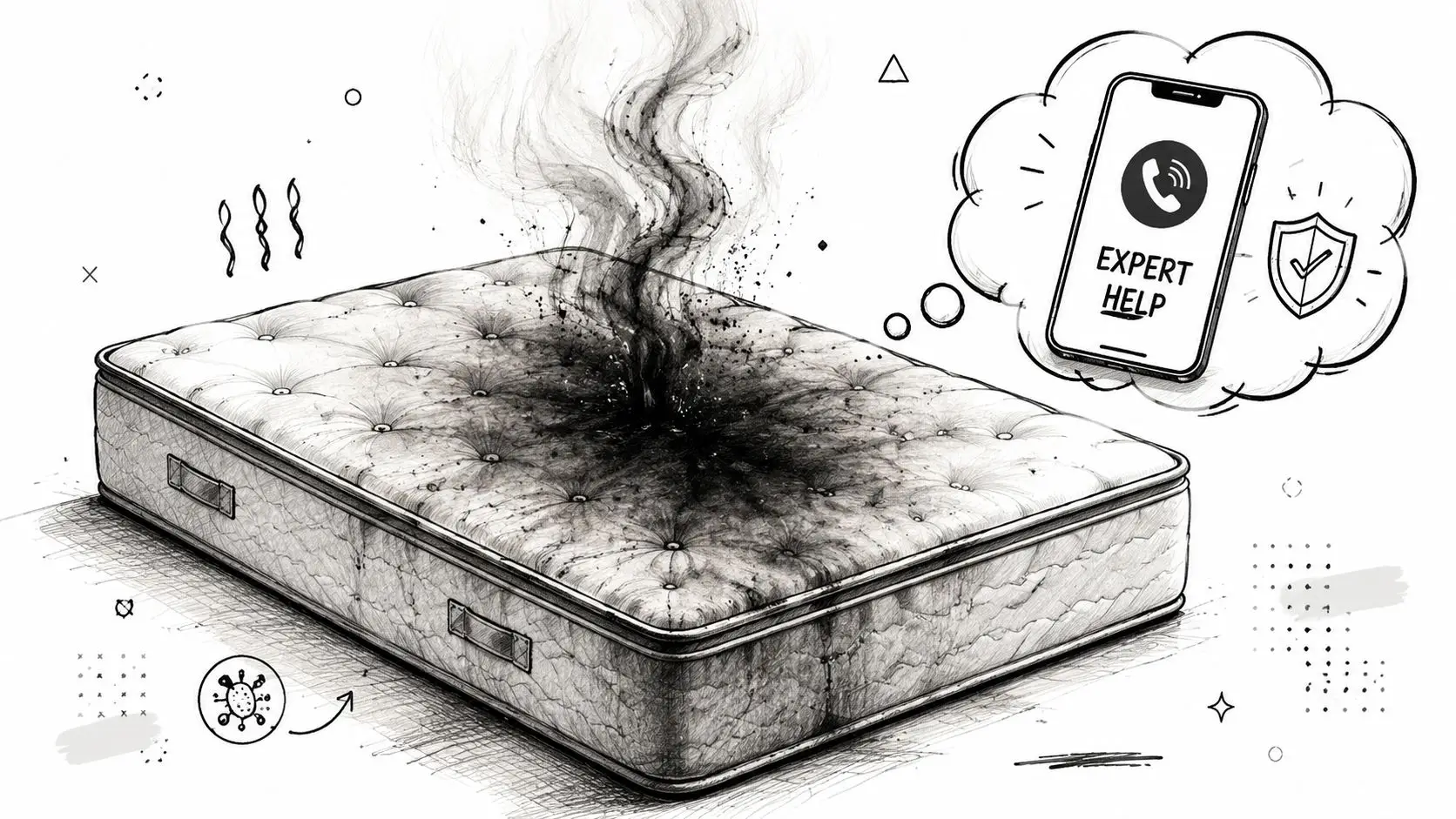
A practical warning from a smoke-removal case study is that DIY treatment can miss odor that has penetrated beyond the surface, and in hot climates like Phoenix, warmth can re-activate trapped odor compounds inside the foam so the smell returns later in this smoke-smell mattress discussion.
Signs it's time to stop the DIY cycle
Call a professional when you notice any of these:
- Heavy soot or staining
- A strong odor after repeated dry treatments
- Smoke exposure from a structural fire
- Odor that comes back during hot afternoons or warm nights
- Questions about what can be cleaned versus documented for insurance
Professional fire restoration may involve specialized odor-control methods such as ozone treatment or thermal fogging, along with room-wide soot and contamination cleanup. The mattress decision then becomes part of the larger property recovery, not an isolated home-cleaning project.
For a broader look at how that process works, this overview of the fire damage restoration process gives useful context. If you're also weighing whether the bed was near the end of its useful life anyway, these mattress insights from Tip Top Furniture are a practical supplement.
Restore Heroes provides fire and smoke damage cleanup in the Phoenix area, including remediation steps that go beyond what household cleaning can usually accomplish after significant smoke exposure.
Insurance may cover parts of smoke damage in some situations, but that depends on the cause of loss, the policy, and the condition of the item. Document the odor, take photos of any soot or visible damage, and keep notes on what cleaning attempts you made. That makes later conversations easier, whether the mattress is cleaned, evaluated, or replaced.
If you're dealing with smoke odor after a fire, wildfire exposure, or a serious indoor smoke event, Restore Heroes can help you evaluate what's salvageable and what isn't. A careful assessment can save you from wasting time on a mattress that won't hold a clean result, especially in Phoenix heat where trapped odors often come back.