
Once the fire trucks leave, you might think the worst is over. While the flames cause the most dramatic destruction, it's often the smoke damage to your house that proves to be the most stubborn and widespread problem, seeping into places the fire never even reached.
What’s left behind is a sticky, toxic film of microscopic particles that blankets everything, causing issues that go far beyond a simple bad smell or surface stain.
Understanding How Smoke Truly Damages Your Home
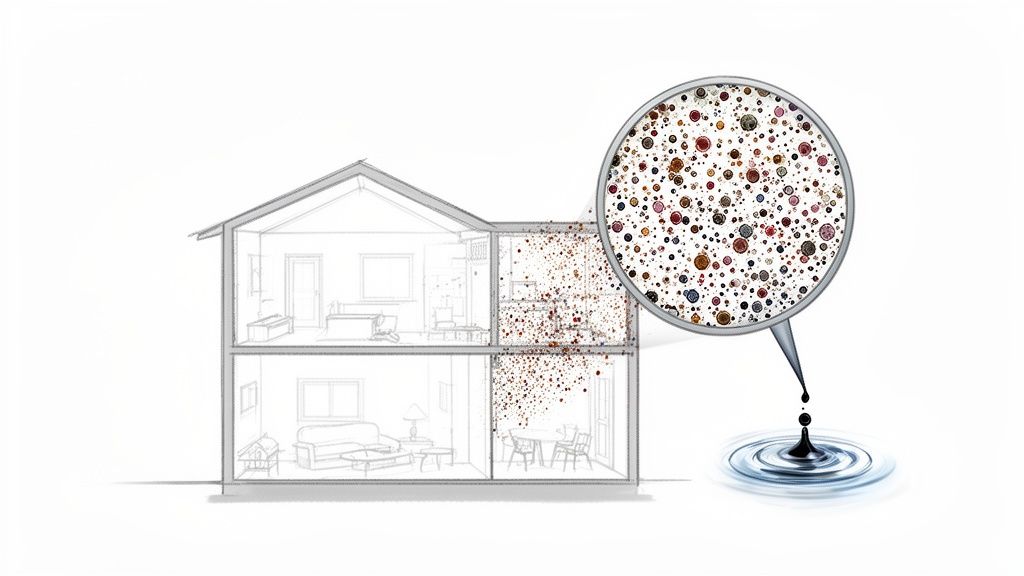
When something burns, it doesn’t just turn to ash. The fire releases countless tiny particles—a nasty cocktail of unburned fuel, chemicals, and acids. These particles are incredibly small, often just a few microns wide, which allows them to float through the air and settle far from the original fire.
Think of it like dropping a single bead of ink into a bucket of clean water. That one drop quickly spreads and tints all the water, making it impossible to separate the two. In the same way, a small fire contained to your kitchen stovetop can easily produce enough smoke to contaminate your entire home.
The Sneaky Nature of Smoke Particles
Smoke doesn’t just sit on top of things; it actively works its way inside them. Driven by the intense heat, hot, pressurized smoke expands rapidly, pushing into cooler, lower-pressure areas all over your property. This is what forces soot and that lingering odor deep into porous materials.
This is why we often find smoke damage in the most surprising places, like:
- Inside drywall and behind baseboards
- Throughout the ductwork of your HVAC system
- Behind kitchen cabinets and inside bedroom closets
- Deep within the fibers of carpets, furniture, and clothing
Because these particles are so fine, just wiping them down often makes things worse. You can easily smear the greasy residue, pushing it deeper into the surface and creating a bigger mess. That’s why knowing how to clean soot from walls correctly is so important for a successful recovery.
Smoke damage is more than a cosmetic issue; it's a physical alteration of your property at a microscopic level. These particles can be acidic and corrosive, actively damaging materials long after the fire is out.
Not All Smoke Damage Is Created Equal
The kind of damage you're facing depends entirely on what burned, how hot the fire got, and how much oxygen was available. Different fires create different types of smoke residue, and figuring out which one you have is the first step in creating a real cleanup plan.
Here’s a quick look at the most common culprits we see in the field.
The Four Main Types of Smoke Damage
| Smoke Type | Common Source | Residue Characteristics | Damage Caused |
|---|---|---|---|
| Wet Smoke | Low-heat, smoldering fires (e.g., plastics, rubber) | Sticky, greasy, and smears easily. Has a very strong, pungent odor. | Difficult to clean, causes smearing, and leaves stubborn stains. |
| Dry Smoke | High-heat, fast-burning fires (e.g., wood, paper) | Powdery, fine dust. Less odor than wet smoke. | Easier to clean from hard surfaces but gets into every tiny crevice. |
| Protein Residue | Kitchen fires involving evaporated food (e.g., meat, poultry) | Virtually invisible film that is extremely pungent and discolors surfaces. | Lingering, hard-to-remove odors. Can permanently yellow paint and varnish. |
| Fuel Oil Soot | Furnace puff-backs or issues with oil-fired appliances | Dense, sticky, and dark. Can have a greasy or dry texture. | Requires specialized cleaning methods and can coat entire systems. |
Each of these residue types demands a unique approach. A greasy wet smoke might permanently stain your walls, while the acidic nature of dry smoke can tarnish metal and etch glass if left for too long. Understanding what you’re up against is critical for getting your home back to normal.
The Invisible Health Risks Lurking After a Fire
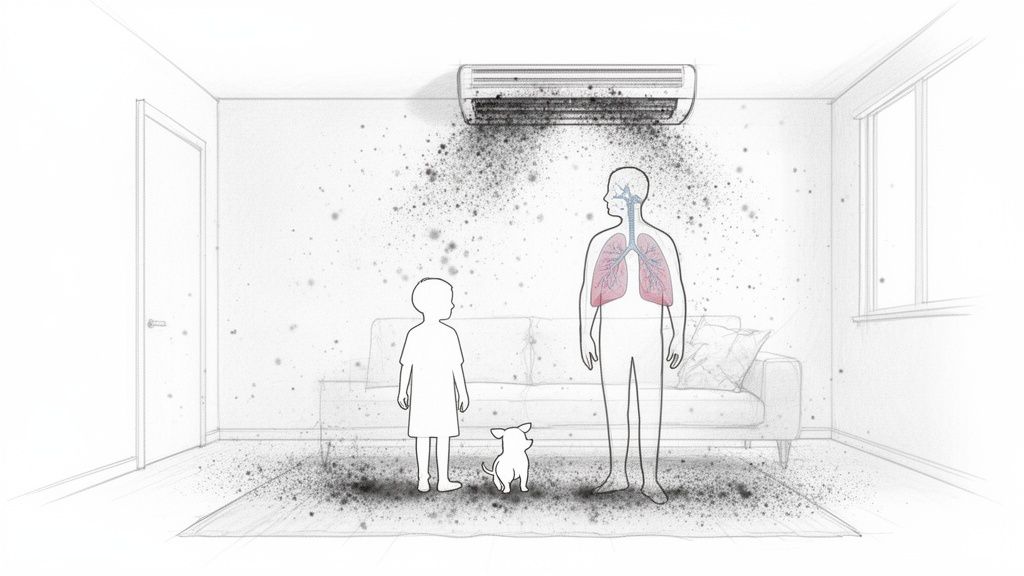
That stubborn smell after a fire isn't just an unpleasant reminder—it's a warning sign. While the blackened walls are the most obvious problem, the real threat from smoke damage to a house is often completely invisible.
During a fire, countless microscopic soot particles are released. These aren't just simple ash; they're tiny carriers for a nasty cocktail of acids, chemicals, and other toxic materials. Once the smoke clears, these particles settle on everything and work their way deep into porous items like drywall, carpets, and furniture.
Every time you walk across the room or fluff a cushion, you’re kicking those particles right back into the air you and your family are breathing.
How Lingering Smoke Affects Your Health
Living in a house after a fire, even a small one, can lead to immediate health issues. Breathing in air filled with fine soot and smoke residue irritates your lungs and sinuses, which can cause everything from a persistent cough and shortness of breath to bronchitis. If someone in your family already has asthma or COPD, the impact can be far more serious.
Beyond the soot you can see, these microscopic particles and lingering odors can tank your home's indoor air quality. Worse yet, your HVAC system can pick up these contaminants and circulate them throughout the entire house, turning a localized problem into a home-wide health hazard.
This is why professional decontamination is so important. Standard cleaning just can’t touch these hidden threats. For particularly severe cases, you may need a team that specializes in https://restoreheroesaz.com/biohazard-remediation-company/ to make sure your home is truly safe again.
Vulnerable Family Members Are at Greatest Risk
Not everyone is affected by smoke residue in the same way. Some members of your household are far more susceptible to the dangers of poor air quality.
- Children: Their respiratory systems are still developing, and they breathe more air relative to their small body size, which means they get a bigger dose of any contaminants.
- The Elderly: Older adults may have weaker immune or respiratory systems, making them more vulnerable to the inflammation these particles can cause.
- Pets: Our furry friends live closer to the floor where heavy particles settle. Their sensitive respiratory systems put them at an even higher risk.
- Individuals with Chronic Illnesses: Anyone with a heart condition, asthma, or other respiratory issues can suffer a dangerous flare-up of their symptoms.
The presence of smoke residue transforms your home from a safe haven into an environment that can cause ongoing harm. It’s a health issue, not just a cleaning task.
The goal isn't just to make your home look clean, but to make it biologically safe to live in. A real recovery means tackling the threat at a microscopic level—neutralizing both the visible soot and the invisible toxins clinging to every surface. It’s the only way to restore your peace of mind and be sure the air your family breathes is healthy again.
Your First Steps for a Safe and Effective Recovery
After the shock of a house fire, it’s completely natural to want to dive right in and start cleaning up. But in these first few hours, what you don't do is just as important as what you do. Taking a measured, step-by-step approach is the key to keeping yourself safe and making sure your insurance claim and restoration go as smoothly as possible.
The absolute first rule is safety first. You should not re-enter your home until a fire official has explicitly given you the all-clear. The flames might be out, but the danger isn't gone. Things like weakened floors, compromised roof structures, and electrical hazards are very real risks.
Secure Your Property and Protect What's Left
Once you get the green light to go back in, your first job is to secure the property from any further damage. If windows are shattered or doors are broken, get them boarded up right away. This protects your home from the weather and keeps it secure while you figure out the next steps.
Whatever you do, don't turn on your HVAC system. Firing up the heat or AC is one of the fastest ways to make a bad situation worse. It will pull soot and ash into the ductwork, spreading the smoke damage to your house and contaminating rooms that might have been untouched.
Before You Touch Anything, Document Everything
Now, grab your phone. Before you move a single piece of furniture or wipe down a single surface, you need to become a detective. This documentation is the bedrock of your insurance claim.
If you move or clean things before you take photos, you're unintentionally weakening your insurance claim. The adjuster needs to see the full, initial scope of the damage to do their job properly.
Start with wide shots and videos of every single room. Capture the big picture first, then get up close. Take detailed photos of the damage on walls, ceilings, furniture, and personal items. Don't forget to open up cabinets and closets—it’s crucial to show how far the smoke and soot traveled. This visual proof is priceless.
Create a Detailed Inventory of Damaged Items
While you're taking photos, start building out a home inventory list. Go through your home room by room and write down every single item that's been damaged. Get as specific as you can—note the brand, its rough age, and what it might have cost if you can remember.
I know this is an emotionally draining task, but a detailed list is absolutely essential for a few reasons:
- Insurance: It gives your provider the concrete proof they need to properly reimburse you for your losses.
- Restoration: It helps the professionals figure out what can be saved and what, unfortunately, is a total loss.
- Organization: It provides a clear, organized roadmap during a time that feels anything but.
For a more in-depth look at what to tackle in these early moments, our what to do after a house fire checklist is an invaluable resource.
Call Your Insurance Agent and a Certified Restoration Pro
With your initial photos and list in hand, it's time to make two phone calls that will set your recovery in motion. First, call your insurance agent to report the fire. They'll get the claims process started and connect you with an adjuster.
Second, contact a certified restoration company. It's tempting to try and clean the smoke damage to your house yourself, but this often backfires. Household cleaners aren't equipped to handle the acidic nature of soot, and using the wrong technique can permanently set stains. A certified pro has the training, technology, and understanding to tackle the hidden damage and, most importantly, eliminate the hazardous particles and lingering odor for good.
The Professional Restoration Process Demystified
After a fire, looking at the mess can feel completely paralyzing. Your first instinct might be to grab a sponge and start scrubbing away the soot, but dealing with smoke damage to a house is a science. It's far more than a simple cleaning job.
Think of it this way: professional restoration is a systematic, almost surgical process. It's designed to tackle not just what you can see, but the corrosive, hidden damage smoke leaves behind. When you hire an IICRC-certified team, you're getting experts who understand the chemistry of a fire. They know that greasy soot from a kitchen fire needs a different approach than the fine, powdery soot from burning drywall.
These first few actions you take are critical and pave the way for what the professionals will do.
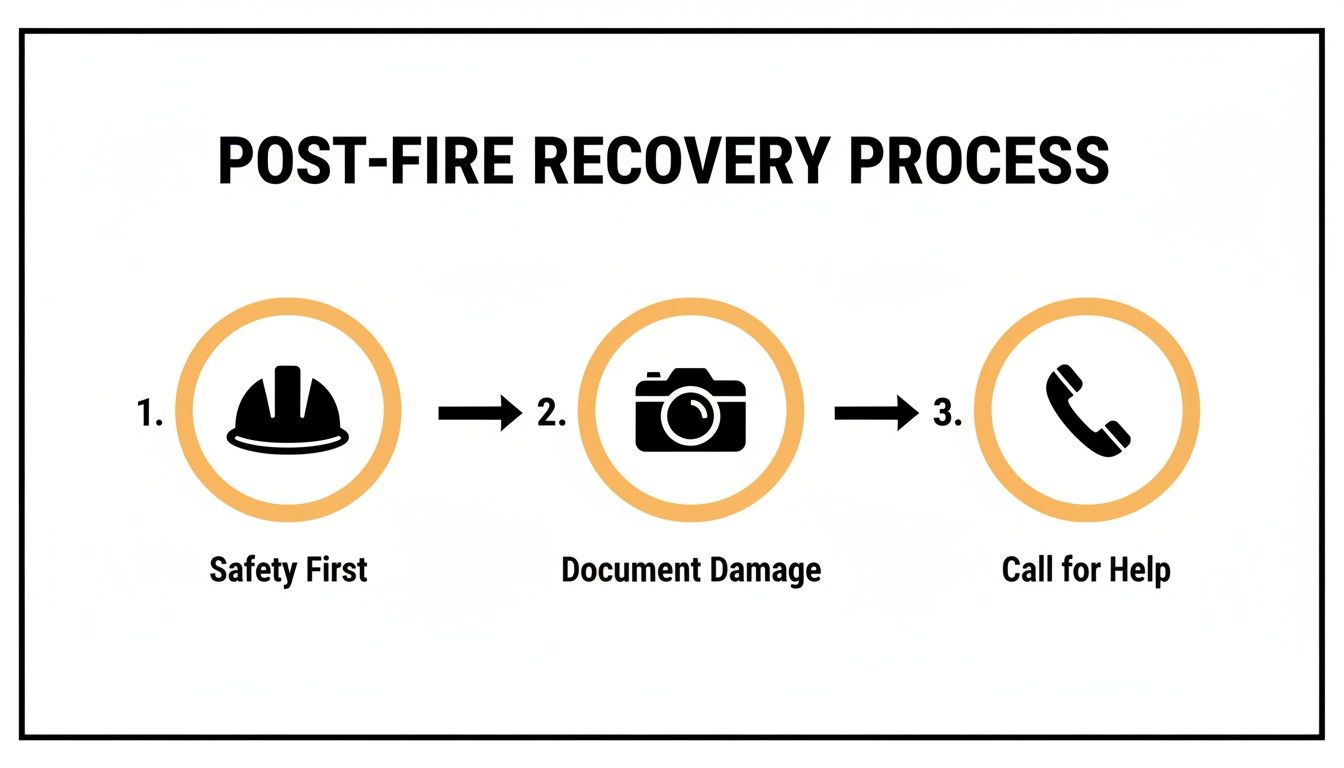
As you can see, the path to recovery starts with safety, proper documentation, and calling in the experts.
Specialized Equipment and Techniques
This is where the difference between a DIY attempt and professional work really becomes clear. We’re not talking about store-bought cleaners and shop vacs. Professionals come armed with highly specialized equipment to attack smoke and soot on a microscopic level. The goal isn’t just to make your home look clean—it’s to permanently remove the contaminants.
Here’s a look at some of the tools of the trade:
- Industrial Air Scrubbers and HEPA Vacuums: The moment a team arrives, these machines are set up to start pulling harmful particles straight out of the air. They capture soot, ash, and other invisible toxins, which immediately improves air quality and stops the grime from settling back onto surfaces.
- Chemical Sponges: You can't just wipe soot with a wet rag; that will smear it and drive it deeper, creating a permanent stain. These special "dry" sponges are made specifically to lift fine soot powder off delicate surfaces like painted walls or even lampshades without making things worse.
- Thermal Fogging: This is the secret weapon against that stubborn smoky smell. A thermal fogger heats a deodorizer into a vapor that acts just like smoke. It travels into the exact same porous materials—drywall, wood, carpet padding—and neutralizes the odor molecules right at the source.
Every step is deliberate and builds on the last. To see how it all comes together, you can get a closer look at the complete fire damage restoration process and understand why each phase is so important.
Professional Restoration Versus DIY Cleanup
It’s completely understandable to want to save money and tackle the cleanup yourself. But honestly, this is one of those times where trying to cut corners can cost you much more in the long run. Using the wrong cleaner on a surface can cause a chemical reaction with the soot, setting a stain for good. Worse, you’re only cleaning what you can see.
A professional restoration team isn’t just cleaning; they’re decontaminating. Their job is to bring your home back to its pre-fire condition, which means getting rid of the microscopic toxins and corrosive particles that DIY methods always miss.
The difference in approach and outcome is night and day. This table breaks it down clearly.
Professional Restoration vs DIY Cleanup
| Aspect | Professional Restoration (Certified) | DIY Cleanup |
|---|---|---|
| Soot Removal | Uses specialized chemical sponges and techniques tailored to the type of soot, preventing smears and permanent stains. | Often uses wet cloths or generic cleaners that can push soot deeper into surfaces, setting the stain permanently. |
| Odor Elimination | Employs advanced technology like thermal fogging or ozone generators to neutralize odor molecules at their source. | Relies on air fresheners or surface cleaners that only mask odors temporarily, allowing them to return. |
| Hidden Damage | Inspects and treats smoke damage within wall cavities, HVAC systems, and attics to remove hidden contaminants. | Focuses only on visible surfaces, leaving toxic particles and odors trapped within the home’s structure. |
| Safety | Utilizes proper personal protective equipment (PPE) and follows safety protocols to handle hazardous materials safely. | Exposes individuals to harmful soot particles and toxic residues without adequate protection, posing health risks. |
At the end of the day, bringing in a professional team is an investment in your property's health and your family's safety. It’s the best way to be certain that every trace of the fire—both visible and invisible—is gone for good.
Navigating Insurance Claims and Restoration Costs
Once the shock of a house fire begins to fade, a new wave of stress often hits: how in the world are you going to pay for all of this? This is where your homeowner's insurance policy is supposed to step in, but navigating the claims process can feel like a full-time job you never asked for.
The good news is that most standard policies cover smoke damage to a house, even if the fire itself was small and contained. The secret to a smooth process lies in getting things right from the very beginning.
First Steps: Filing Your Claim and Understanding Your Coverage
Your first phone call should be to your insurance agent to report the fire. This is the official starting gun for your claim and gets an adjuster assigned to your case.
But don't stop there. Before you get too deep into the process, it's smart to get familiar with your policy. Taking some time to understand the different home insurance coverage types can show you what your policy might cover for smoke damage, personal belongings, and even temporary living expenses. Knowing these details can make a huge difference in your financial recovery.
This is where all that documentation you gathered—the photos, videos, and lists of damaged items—becomes your most important asset. It provides clear, undeniable proof of your home's condition right after the fire, leaving little room for debate over the extent of the damage.
The True Cost of Fire and Smoke Damage
The financial toll of a house fire can be staggering and goes far beyond just what the flames touched. The numbers don't lie.
In 2025 alone, the total cost of damage from all residential fires in the U.S. climbed to $11.3 billion. The average restoration bill for a single fire was $27,175. Even the 7,000 house fires started by smoking materials caused $408.7 million in property damage, a figure that has jumped 52% in the last decade after adjusting for inflation.
These statistics aren't meant to scare you; they're meant to show why filing a thorough and accurate insurance claim is absolutely critical.
What Drives the Final Restoration Bill?
There’s no flat-rate price for smoke damage restoration because every fire is unique. The final cost to repair the smoke damage to your house will depend on a handful of key factors.
Here’s what your adjuster and a professional restoration team will look at:
- The Size of the Area: A small kitchen fire is one thing. Smoke that’s been sucked into your HVAC system and pushed into every room of the house is a completely different ballgame.
- The Type of Smoke: A smoldering, low-heat fire creates a wet, greasy soot that’s difficult to clean. A hot, fast-burning fire leaves behind a drier, more powdery soot that’s easier to remove but travels farther.
- The Materials Affected: Cleaning hard surfaces like countertops is relatively simple. Restoring porous materials like drywall, unfinished wood, and fabrics requires much more specialized work and expertise.
- How Bad the Smell Is: If that smoky odor has seeped deep into the home's structure, basic cleaning won't cut it. You'll likely need advanced deodorization techniques like thermal fogging or ozone treatments to truly get rid of the smell.
Knowing these details will help you have a much more informed and productive conversation with your insurance adjuster. You can see how professionals break down the numbers by reading our guide on the factors that determine fire damage restoration cost.
Hiring an IICRC-certified restoration company can be a huge advantage here. They speak the same technical language as insurance companies and can help ensure necessary repairs are documented, justified, and accounted for in your claim.
Of course. Here is the rewritten section with a more human, natural, and expert tone.
Proactive Steps to Prevent Future Fire and Smoke Damage
Once you've gone through the ordeal of a fire, the last thing you ever want is a repeat. This is the perfect time to build a safer future for your home and family, turning a tough lesson into powerful prevention. A few simple checks and smart habits can dramatically reduce the risk of another fire.
Your absolute best friend in fire prevention is a good smoke detector. Think of it as a 24/7 lookout, ready to give you and your family those precious, life-saving minutes to get out safely. For real peace of mind, you need them inside every bedroom, just outside each sleeping area, and on every single level of your home—basement included.
Your First Line of Defense: Smoke Alarms
A smoke alarm only works if it's in good working order. That’s why a little bit of consistent attention goes a long, long way. It's a simple routine, but it's one of the most important you'll ever have.
Make this part of your monthly checklist:
- Monthly Testing: Just push the test button on each alarm once a month. It only takes a second.
- Annual Battery Swap: Change the batteries at least once a year. A good habit is to do it when you change the clocks for daylight saving time.
- 10-Year Replacement: The sensors inside smoke detectors wear out. The whole unit needs to be replaced every 10 years to stay effective.
Peace of mind comes from knowing you’ve taken every reasonable step to prevent a disaster. A few minutes of prevention each month are worth more than weeks of recovery.
Tackling Common Fire Hazards Head-On
Next, let's focus on the spots in your home where fires most often start. The kitchen is a major one, with unattended cooking being a top cause of house fires. The rule is simple: never walk away from a hot stove. Keep anything that can burn, like dish towels or paper towel rolls, far away from the stovetop.
Faulty electrical systems are another huge culprit. Take a quick walk through your house and look for frayed cords or overloaded outlets. Never run cords under rugs where they can be damaged, and don't plug big appliances like space heaters into a simple extension cord.
Finally, we have to talk about smoking. The numbers here are truly sobering. While smoking only caused about 5% of U.S. house fires between 2014 and 2018, those same fires were responsible for a shocking 23% of all fire deaths. The financial toll is staggering, too, with these fires causing $408.7 million in property damage in 2025 alone, as detailed in these smoking-related fire statistics on the U.S. Fire Administration website. If someone in your home smokes, insist they do it outside and use a deep, heavy ashtray.
Your Smoke Damage Questions, Answered
When you're dealing with the aftermath of a fire, your head is probably swimming with questions. It's a stressful, confusing time, and even a small amount of smoke damage to a house can feel completely overwhelming. Let's walk through some of the most common questions we get from homeowners just like you.
How Long Does Smoke Damage Restoration Usually Take?
This is often the first question, and the honest answer is: it depends. There’s no one-size-fits-all timeline. A small fire contained to the kitchen stovetop might only take a few days to address. But if the smoke has traveled throughout your entire home, it could be several weeks or even months of intensive work.
A few key things will determine the schedule:
- The size of your home: It simply takes more time to work through a larger property.
- The materials involved: Wiping soot off a countertop is quick. But cleaning it out of porous materials like drywall, carpet, or your favorite upholstered chair? That's a much more delicate and time-consuming process.
- The type of smoke: A smoky fire from a synthetic material leaves behind a greasy, sticky residue that’s far tougher to clean than the dry, powdery soot from a wood fire.
Once a certified pro can get on-site and put eyes on the situation, they can give you a much more accurate timeline.
Can I Just Clean Up Smoke Damage Myself?
I know how tempting it is to grab a sponge and try to save some money. But when it comes to smoke damage, this can be one of the worst things you can do. It's not just a matter of cleaning what you can see.
Soot particles are often acidic and can cause even more damage if you use the wrong products. A classic mistake is using a wet cloth on dry soot—it instantly smears the particles, driving them deeper into the surface and creating a stain that might never come out.
Even more importantly, the store-bought cleaners on your shelf aren't powerful enough to tackle the microscopic toxic particles that are now in your home. They also won't get rid of that stubborn smell that has worked its way into your walls and HVAC system. This is a job that truly requires professional-grade equipment and expertise to make your home safe again.
One thing we see all the time with DIY attempts is that people miss the hidden damage. Heat pushes smoke and soot into places you'd never think to look—inside wall cavities, attics, and all through your ductwork. Out of sight, yes, but it will continue to off-gas and ruin your air quality for a long, long time.
Will That Awful Smoke Smell Ever Go Away?
Yes, it can—but not on its own. That smell is a constant reminder of the fire because the odor-causing particles have literally embedded themselves into everything porous: your drywall, wood studs, carpets, and furniture. Spraying an air freshener is like putting a band-aid on a broken arm; it masks the problem for a few minutes, but the source is still there.
To get rid of the smell for good, it needs to be neutralized at the molecular level. Professionals use specialized equipment like thermal foggers or ozone generators to do this. These technologies create a vapor or gas that follows the exact same path the smoke did, penetrating deep into materials and destroying the odor particles at their source. It's the only way to permanently eliminate the smell and ensure the air in your home is truly clean.
Is Smoke Damage Covered by My Homeowners Insurance?
For the vast majority of homeowners, the answer is often yes. Standard policies frequently cover damage from both fire and smoke. This is a crucial point, because smoke can cause devastating smoke damage to a house even if the actual fire was tiny and put out in seconds. The smoke travels everywhere.
Your job is to document everything. Take photos and videos of every surface you see with soot or discoloration, no matter how insignificant it seems. Call your insurance provider right away to get the claims process started. A detailed inventory of damaged items, along with your visual evidence, will be your best friend when talking to the insurance adjuster. Always pull out your policy to double-check the specifics of your coverage.
Facing the aftermath of a fire is tough, but you don't have to go through it alone. The IICRC-certified professionals at Restore Heroes are on call 24/7 to help you secure your property and start the recovery process. For a free, no-obligation onsite inspection in the Phoenix area, visit us at https://www.restoreheroesaz.com.