
When you have a serious electrical problem, you don’t pull out a DIY guide and start messing with wires. You call a professional. The same exact logic applies to hazardous clean up—it’s the emergency service you may need when you're facing materials that pose a real threat to your health and property.
This isn't your average cleaning job. We're talking about biohazards, chemical spills, or aggressive mold that regular methods simply can't handle.
Understanding Hazardous Clean Up and When You Need It
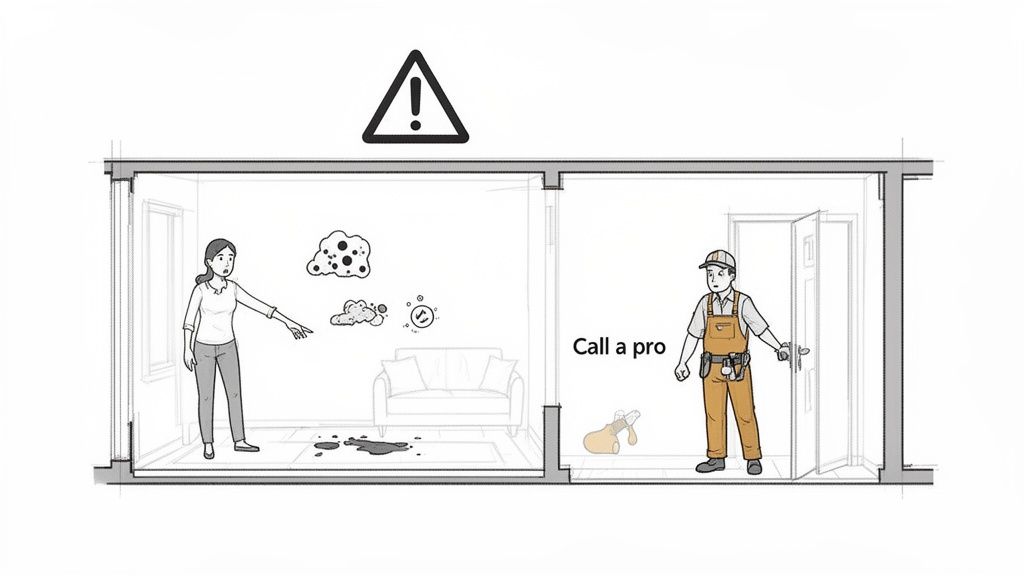
After an emergency hits your home or business, the visible mess is often just the tip of the iceberg. What you can't see is often far more dangerous. Hidden dangers like toxic substances, infectious agents, and corrosive materials require a professional hazardous clean up.
This isn't just about mopping the floor. It’s a highly controlled process to contain, remove, and safely dispose of materials that could cause serious long-term harm. For property owners and managers in Phoenix, knowing what makes a mess officially "hazardous" is the first step to making the right call and keeping everyone safe.
What Makes a Situation Hazardous?
So, what separates a nasty spill from a genuine hazard? It all comes down to the material itself. A situation becomes hazardous when it involves substances that are toxic, infectious, corrosive, or flammable.
These aren't everyday messes. They carry specific risks that demand specialized equipment, extensive training, and strict disposal protocols. Trying to handle them yourself can backfire badly, exposing you to severe health problems and spreading the contamination even further.
To help you know when to call for backup, we’ve put together a table of common hazards. If you see something on this list, it's a clear sign you may need an expert.
Common Situations Requiring Professional Hazardous Clean Up
| Type of Hazard | Common Examples in Homes & Businesses | Potential Risks |
|---|---|---|
| Biohazards | Blood or bodily fluids from a trauma scene, unattended death, or crime scene. | Exposure to bloodborne pathogens like HIV, Hepatitis B & C; emotional trauma. |
| Chemical Hazards | Spills from industrial chemicals, cleaning agents, pesticides, or even battery acid. | Skin burns, respiratory damage, poisoning, fire, or explosion. |
| Asbestos | Disturbed insulation, floor tiles, or "popcorn" ceilings in older buildings. | Inhaling fibers can lead to serious lung diseases, including asbestosis and cancer. |
| Sewage Backup | Flooding from overflowing toilets, broken sewer lines, or septic system failures. | Exposure to bacteria (E. coli, Salmonella), viruses, and parasites causing severe illness. |
| Severe Mold | Widespread mold growth (over 10 sq. ft.) after a flood or hidden water leak. | Allergic reactions, asthma attacks, respiratory infections, and toxic effects. |
Seeing your situation in the table above is a strong signal that it’s time to step back and let trained professionals take over.
Why Professional Intervention Is Not Negotiable
Bringing in a professional team is about so much more than just convenience. It’s a critical decision for safety, liability, and legal compliance.
Trained technicians understand the science behind what they’re cleaning. They follow strict, proven protocols to help make sure your property is truly safe and restored, using personal protective equipment (PPE) and advanced tools that the average person simply doesn't have.
More importantly, a certified company handles the disposal of all hazardous waste according to local, state, and federal laws. This helps protect you from fines and legal trouble down the road and provides documentation that the property has been properly remediated. To get a better sense of all that’s involved, feel free to check out our detailed guide on what a restoration company does.
Ultimately, professional cleanup helps ensure your property is safe, compliant, and livable again. It can provide peace of mind when you need it most.
When people hear "hazardous cleanup," it's easy to picture a full-blown industrial disaster. But the reality is, some of the most dangerous situations we handle are hidden inside everyday Phoenix homes and businesses.
It's crucial to know that hazardous clean up isn't a generic service. The approach we take changes entirely based on the specific material we're facing. Each hazard demands its own set of rules, specialized gear, and certified training to manage safely and correctly. This isn't about causing alarm; it's about being prepared. Understanding what you might be up against is the first step in keeping everyone safe.
Here’s a look at the most common hazards we encounter.
Biohazards From Trauma and Unattended Death
A biohazard is any organic material that carries pathogens—things like viruses and bacteria that can make you sick. We most often deal with these at trauma scenes, crime scenes, or after an unattended death where blood or other bodily fluids are present.
A simple wipe-down is never enough. In fact, it's incredibly dangerous. Pathogens like Hepatitis B, Hepatitis C, and HIV can survive on surfaces for days or even weeks, posing a huge risk to anyone who comes near. Our professional biohazard team follows rigid protocols to clean, disinfect, and deodorize the entire area, working to ensure not a single trace of danger is left behind. We treat these sensitive situations with the utmost care, which you can learn more about in our guide to homicide cleanup services.
Chemical Spills in Residential and Commercial Settings
You don't need to be in a factory to have a dangerous chemical spill. It can happen right in your own home or business. We've seen it all: a leaking container of old pesticides in a garage, a drum of cleaning solvent knocked over in a back room, or even acid leaking from a car battery.
These chemicals can cause nasty skin burns, damage your lungs, and lead to serious long-term health problems if you don't handle them correctly. Our pros use specific neutralizing agents and containment strategies to control the spill before disposing of everything according to strict environmental laws.
Think of a chemical spill like a venomous snake in your home—you wouldn't try to handle it without the right tools and knowledge. Attempting to clean it yourself can make the situation far more dangerous, spreading the contamination and risking direct exposure.
Asbestos and Its Hidden Dangers
Asbestos was a go-to building material for decades because it was great for insulation and fire resistance. If your Phoenix property was built before the 1980s, there's a good chance it's lurking in popcorn ceilings, old vinyl floor tiles, pipe insulation, or siding.
The material is perfectly safe as long as it's left alone. The trouble starts when it gets disturbed. During a renovation or after water damage, these materials can crumble and release microscopic fibers into the air. Breathing in those fibers is directly linked to devastating lung diseases like asbestosis and mesothelioma, a particularly aggressive cancer. An asbestos hazardous clean up requires sealing off the area completely, running HEPA-filtered air scrubbers, and keeping all materials wet to stop those dangerous fibers from going airborne.
Severe Mold Growth After Water Damage
Just because we live in the dry Arizona climate doesn't mean we're safe from mold. A slow, hidden leak behind a wall in a Gilbert office or a burst pipe in a Chandler home creates the perfect damp breeding ground. Once mold covers an area larger than 10 square feet, it’s a serious problem that demands professional remediation.
Some molds, like Stachybotrys chartarum (black mold), release mycotoxins that can cause allergic reactions, asthma attacks, and other chronic respiratory problems. Proper mold removal isn't just about scrubbing it away. We have to contain the area to keep spores from spreading, remove all contaminated materials, and, most importantly, address the moisture problem so it doesn't come back.
Sewage Backups and Contaminated Water
A powerful monsoon storm can easily overwhelm the city's system, causing raw sewage to back up into your Scottsdale basement. This is what we call "black water," and it's a toxic soup of dangerous bacteria, viruses, and parasites that can cause severe illnesses like E. coli and Salmonella.
Just getting the water out is barely scratching the surface. Every single thing the water touched has to be professionally cleaned, sanitized, and thoroughly dried to kill the pathogens and prevent a massive mold outbreak. Due to the immediate and severe health risks, this is one of the most critical types of hazardous clean up we perform.
A Step-by-Step Look at the Professional Cleanup Process
Walking into a hazardous situation can feel like chaos unleashed. But when you call in the professionals, you’ll find that a hazardous clean up is anything but chaotic. It's a highly disciplined, methodical process designed to bring your property back to safety, one deliberate step at a time.
Let’s imagine a Mesa business owner who walks into his storage room to find a barrel leaking an unknown chemical. To help you understand what happens next, we'll follow his journey from that first stressful discovery to the final all-clear, showing how our experts systematically turn danger back into a safe, usable space.
Step 1: The First Call and On-Site Assessment
It all starts with your call. For our Mesa business owner, this is his chance to tell us what he knows—a strange smell, a leaking barrel, the location. The more information we can get over the phone, the better prepared our team can be when they arrive.
Once on-site, our team leader doesn't just jump in. The first move is a careful, strategic assessment of the scene. We're looking to answer critical questions: What is this substance? How far has it spread? What are the immediate risks? This isn't a casual glance; it's a vital evaluation that determines the exact plan, the right equipment, and the necessary personal protective equipment (PPE) for the job.
Step 2: Securing the Site and Containing the Hazard
Once we know what we’re up against, the next priority is safety. We immediately secure the area, creating a clear boundary with physical barriers and warning tape. Think of it as putting the problem in a box so it can’t affect anyone else. This is a non-negotiable step to protect employees, customers, or family members from accidental exposure.
With the perimeter secure, we focus on containing the hazard itself. In the Mesa chemical spill, this would involve using specialized absorbent booms and pads to create a dam, stopping the liquid dead in its tracks. The entire goal here is to prevent a manageable problem from escalating into a widespread disaster.
Containment is the critical turning point in any hazardous cleanup. It’s where we draw a line in the sand, stopping the damage from spreading and protecting the rest of your property.
Step 3: Safe Removal and Disposal of Materials
Now that the hazard is contained, it’s time to get it out of there. Our technicians, geared up in the proper PPE—from respirators and chemical-resistant gloves to full-body hazmat suits—begin the meticulous work of removal. They collect every bit of contaminated material: the spilled substance, the used absorbents, and any items too damaged to be salvaged.
This isn't your regular trash pickup. All hazardous waste is carefully sealed in special, puncture-proof containers labeled for proper disposal. We document every step to help ensure full compliance with federal EPA and local Arizona regulations, aiming for a safe, legal, and environmentally responsible process from start to finish.
This flowchart gives you a simple look at how these core steps fit together.
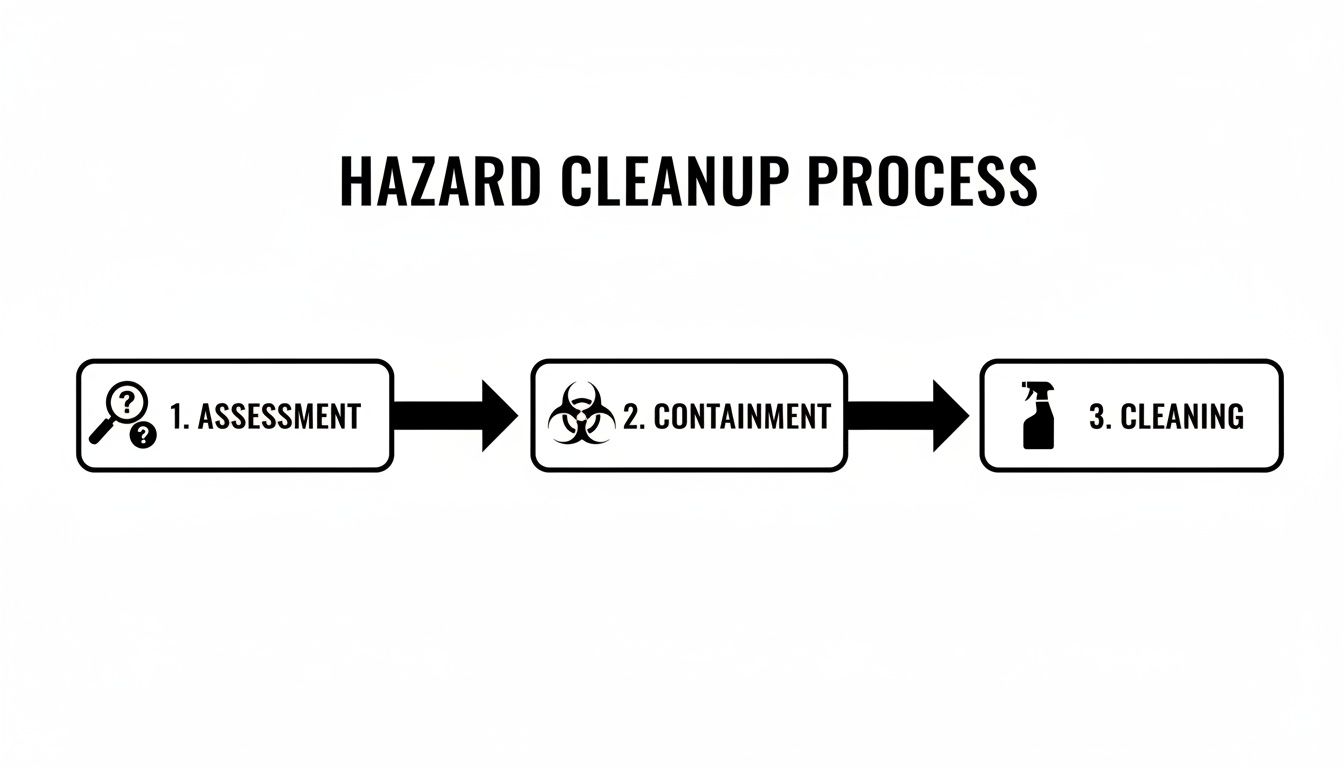
As you can see, moving methodically from assessment to containment and then cleaning helps ensure nothing gets missed.
Step 4: Thorough Decontamination and Cleaning
With the primary source of the hazard gone, the real deep cleaning begins. This is where true professional expertise makes all the difference. Our team uses EPA-approved, industry-specific cleaning agents to break down and neutralize any and all lingering residues on floors, walls, and equipment.
Depending on the specific situation, our decontamination process might include:
- Scrubbing and washing all non-porous surfaces.
- Running HEPA air scrubbers to capture and filter out any airborne particles.
- Applying powerful disinfectants or specific chemical neutralizers.
This isn’t just about making the area look clean; it's about making it scientifically safe for people to be in again. To learn more about this detailed work, our guide explaining what a professional biohazard remediation company does provides a closer look.
Step 5: Final Inspection and Handover
We're not done until we can prove it. The final step is a thorough inspection, which often includes post-remediation verification testing. We may use scientific tools or lab sampling to confirm that contaminant levels are back to safe levels.
Only after the area passes this final check do we remove the containment barriers. We then hand the property back to you—in the case of our Mesa business owner, a completely clean and safe storage room. You also get all the documentation showing the hazardous clean up was completed according to professional and regulatory standards, which can offer peace of mind and protection from future liability.
Why Professional Certification and Regulations Matter
Trying to clean up hazardous materials yourself is a bit like trying to perform your own surgery after watching a few online videos. You might think you're saving money, but the reality is you're taking a massive, unnecessary risk. The rules and certifications in the hazardous cleanup industry aren't just bureaucratic red tape; they're the guardrails that protect you, your property, and the public from things going terribly wrong.
When you hire a company that’s properly certified, licensed, and insured, you're not just paying for a service. You're getting an elevated level of service and a commitment that the job will be done to a high standard of safety. These credentials are your best defense against shoddy work, future legal headaches, and health problems that can linger long after a crew leaves.
The Guardians of Safety: OSHA and the EPA
In the U.S., two main government bodies write the rulebook for handling hazardous materials: the Occupational Safety and Health Administration (OSHA) and the Environmental Protection Agency (EPA).
OSHA: Think of OSHA as the safety supervisor for the workers themselves. They set the non-negotiable standards for everything from what personal protective equipment (PPE) a technician needs to wear to the exact steps required for handling bloodborne pathogens. Following their rules keeps the cleanup team safe on your property.
EPA: The EPA, on the other hand, is focused on protecting the world outside your door. They lay down the law for how hazardous waste must be contained, transported, and disposed of. This is what keeps toxic materials out of our landfills, water supply, and the air we breathe.
Sticking to these regulations helps ensure your problem doesn't spiral into a much larger environmental issue. Poor waste management can have huge consequences. The Global Waste Index 2025, for instance, found that some countries landfill over 80% of their municipal waste, which often leads to more complex and dangerous cleanups down the line.
What Does an IICRC Certification Actually Mean?
You’ll often see companies advertise that they are IICRC-certified. This means their technicians have been formally trained and passed exams from the Institute of Inspection, Cleaning and Restoration Certification. It’s far more than just a sticker on their van; it's proof of real-world expertise.
An IICRC certification is a commitment. It tells you the people working on your property have been trained on the industry’s best practices for safely tackling specific hazards, whether it's a raw sewage backup or a chemical spill. They aren't just winging it—they're following a proven, science-backed process.
This level of training is absolutely crucial when dealing with things like widespread mold or contaminated floodwater. To get a better sense of what's involved, our guide on what water damage restoration involves breaks down the process further.
Your Ultimate Protection: Licensed, Bonded, and Insured
Beyond specific training, the phrase "licensed, bonded, and insured" provides a three-part safety net for you as the property owner. Here’s what it all means:
- Licensed: This is the basic entry ticket. It confirms the company is legally registered and permitted to operate in Arizona.
- Bonded: A bond provides financial protection. If a company fails to complete the job or does it improperly, the bond may help you recover your losses.
- Insured: This is arguably the most important piece. General liability insurance covers accidental damage to your property. But even more critically, a company should carry specialized coverage like Pollution Liability Insurance to protect you if a worker gets hurt or if contamination spreads. Without it, you could be held liable.
When it comes to hazardous cleanup, hiring a certified, fully insured professional isn’t just a smart move—it's the only responsible one. It’s how you help ensure the job is done safely, legally, and correctly, so you can truly have your home back.
Navigating Cleanup Costs and the Insurance Process
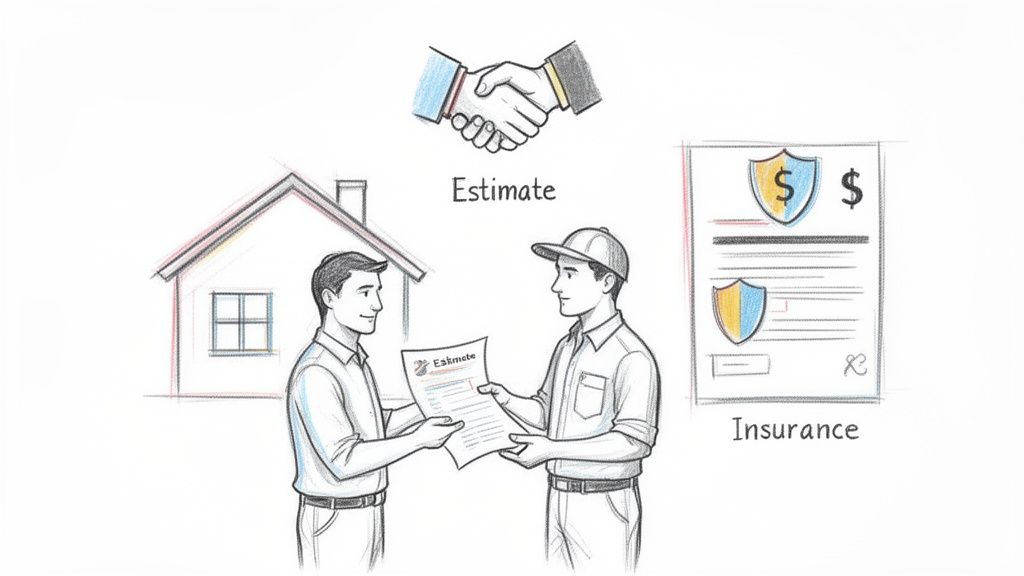
When you’re dealing with a dangerous mess at your property, the first question that comes to mind is almost always, "How much is this going to cost?" It’s a completely fair question, and the uncertainty can be just as stressful as the situation itself.
Think of it like taking a damaged car to a mechanic. They can't give you a price over the phone because they need to pop the hood and see what’s really going on. Hazardous clean up is the exact same way—every job is unique, and a proper, on-site inspection is the only way to get a realistic estimate.
What Determines the Cost of a Cleanup?
So, what are we looking for during that inspection? A few key factors come together to determine the final cost, and a professional estimate will break down each one so you see exactly what you’re paying for.
Our goal is complete transparency, giving you a full picture of the project from start to finish.
The biggest cost drivers include:
- Type of Hazard: The material we're dealing with sets the entire tone for the job. Cleaning up a chemical spill requires different equipment and safety protocols than disinfecting a biohazard scene or containing asbestos fibers.
- Size of the Affected Area: It's a simple matter of scale. A small, contained incident in one room will require far less labor, equipment, and materials than contamination that has spread throughout an entire floor.
- Disposal Requirements: This is a big one. Getting rid of hazardous waste isn't like taking out the weekly trash. It's a heavily regulated process, and the fees for specialized transport and disposal can vary wildly depending on the type and volume of waste. These rules, like the UK Hazardous Waste Disposal Regulations, are strict for a reason—to keep everyone safe.
These factors don't exist in a vacuum; they all influence each other to define the true scope of the work.
An accurate price can only come from an in-person inspection. This lets our technicians see everything—including hidden contamination or structural quirks—so we can build a plan that is truly complete, with no surprises down the line.
Working With Your Insurance Carrier
Here’s some good news. Many homeowner and commercial insurance policies do cover the cost of hazardous cleanup, especially if it was caused by a covered event like a burst pipe (sewage) or a fire. The trick is navigating the claims process correctly.
This is where a professional restoration company can become your best ally. We work with many insurance carriers day in and day out. We know the language they speak and the documentation they need—from detailed photos to line-item estimates—to process a claim quickly.
We can help with the back-and-forth with your adjuster, working to make sure the approved scope of work aligns with what's truly necessary to make your property safe again. This direct partnership takes a huge weight off your shoulders, turning a complicated and stressful process into a smooth and manageable one.
When you're dealing with a hazardous situation, your head is probably swimming with questions. That's completely normal. Getting clear answers is the first step to taking back control, and we're here to cut through the confusion and give you the straightforward information you need.
Let's tackle some of the most common questions we hear from homeowners and business owners facing a hazardous cleanup.
How Quickly Can You Respond To An Emergency In The Phoenix Area?
When there's an emergency, time is everything. We get it. That’s why professional teams like ours are on call 24 hours a day, 7 days a week, ready to roll the moment you need us.
While the exact time can depend on traffic and where you are in the valley, our goal is always to get to you fast. You can typically expect our assessment team to arrive within just a few hours. This quick response is absolutely crucial for containing the hazard and stopping any further damage in its tracks.
Is The Cleanup Process Disruptive To My Home Or Business?
Honestly, yes, there will be some temporary disruption. Our number one job is to keep everyone safe, and that means we have to create a controlled work zone. We'll seal off the affected area to prevent cross-contamination and limit who can go in and out.
We know that every minute your home is disrupted or your business is down costs you. Our crews are trained to work as efficiently as possible, sticking to strict safety protocols while moving quickly to get your life or business back on track.
What Makes Professional Cleanup Different From Trying It Myself?
This is a big one. The difference between a professional cleanup and a DIY attempt comes down to three things: safety, effectiveness, and legal compliance. Trying to handle hazardous materials yourself might seem like a way to save a few bucks, but it can create much bigger, more expensive problems down the road.
Here’s what separates the pros from a DIY job:
- Training and Certification: Professionals have undergone extensive training and hold certifications (like from the IICRC) for handling specific hazards. We understand the science behind the contamination and know the right way to remove it without accidentally spreading it.
- Specialized Equipment: We show up with gear you just can't get at a hardware store. This includes things like HEPA air scrubbers to clean the air, powerful dehumidifiers, and most importantly, the right Personal Protective Equipment (PPE) to keep our team safe.
- Legal Disposal: You can't just toss hazardous waste in your regular trash bin. There are strict federal, state, and local laws for its disposal. We handle all the paperwork and help ensure everything is disposed of legally, so you don't have to worry about fines or other legal troubles.
A DIY cleanup often just cleans the surface, leaving behind invisible threats that can cause serious long-term health issues. More importantly, it puts you and your family at immediate risk of exposure.
Will I Have To Move Out During The Cleanup?
Whether you need to find a temporary place to stay really depends on the scale of the problem. If it's a small, contained issue in a single room, you might be able to stay in an unaffected part of the house.
However, for bigger issues like a major sewage backup, widespread mold, or a chemical spill, it's almost always safer to relocate. The safety of you, your family, or your employees is the top priority. Our project manager will assess the risks during the initial inspection and give you a clear, honest recommendation.
A professional's first duty is to protect people. If the air quality is poor or there's any risk of exposure, we will always advise you to stay elsewhere until the area is fully decontaminated and tested.
Can You Save My Belongings?
This is a huge worry for most people, and the answer is: it depends. The key factors are what the item is made of and how porous it is. Think of it like a sponge versus a plate.
Porous materials like carpets, furniture, drywall, and books soak up contaminants, making them difficult or impossible to salvage safely. On the other hand, non-porous items like glass, metal, and sealed wood have a much better chance. Our technicians use special cleaning methods to restore these items whenever possible. We'll carefully sort everything and be upfront with you about what can be saved and what, for safety's sake, must be thrown away.
How Does Insurance Work For Mold Removal?
Insurance and mold can be a tricky combination. Coverage often hinges on what caused the mold in the first place. Most standard homeowner's policies may cover mold remediation if it was caused by a sudden, covered event, like a burst pipe. But if the mold grew slowly over time from a gradual leak or high humidity, it likely won't be covered.
Because this can be so confusing, it's important to review your specific policy. A professional restoration company will also help document the damage and its source to give your insurance claim the best chance of success.
When disaster strikes your Phoenix-area property, you need a team that responds fast with certified expertise. For 24/7 emergency services and a free, no-obligation onsite assessment, trust the professionals at Restore Heroes to restore your property and your peace of mind. Visit us at https://www.restoreheroesaz.com to get help now.