
You pull down a light fixture in a Phoenix ranch house, scrape a little popcorn texture from the ceiling, or start lifting old kitchen flooring in Mesa. Then you stop. The material looks old. It feels brittle. Someone in the family says, “Could that be asbestos?”
That moment is why clear guidance matters.
As a certified asbestos abatement supervisor, I've seen how quickly a normal remodel turns into a safety decision. In the Phoenix area, that's not unusual. Older homes in Phoenix, Scottsdale, Mesa, and nearby neighborhoods often contain legacy building materials that were common when those houses were built. The problem isn't just whether asbestos is present. The primary concern is whether the material is damaged, whether your project will disturb it, and whether testing alone is enough or full abatement is the safer path.
A lot of homeowners jump straight to removal. Others do the opposite and assume that if the material isn't crumbling, they can ignore it. Both reactions can lead to expensive mistakes. Good asbestos removal and testing starts with the right question at the right time.
Is Your Phoenix Home Hiding an Asbestos Problem
A common local scenario goes like this. A homeowner in Scottsdale buys a well-kept house with original ceilings and flooring. Everything looks fine until the remodel starts. Once demolition is on the calendar, old texture, vinyl tile, pipe wrap, or patching compounds suddenly matter in a way they didn't before.
That's because asbestos is usually a disturbance problem, not a visibility problem.
You can live in a house for years without realizing certain materials may contain asbestos. Then one contractor drills into a wall, cuts flooring, sands a ceiling, or opens a soffit, and what used to sit undisturbed in place becomes airborne debris risk. That's why experienced crews don't guess from appearance alone.
Why concern is reasonable, not overreaction
Asbestos still matters as a public health issue. The World Health Organization estimate cited by asbestos disease statistics and facts is that more than 90,000 people die each year from asbestos-related diseases, and over 125 million people globally remain at risk of occupational exposure.
Those numbers don't mean every older Phoenix home is dangerous. They do mean homeowners shouldn't treat suspicious materials casually.
Practical rule: If a material might contain asbestos and you plan to cut, scrape, sand, drill, remove, or demolish it, stop and get it assessed before the work continues.
What this usually looks like in Valley homes
In Phoenix-area housing, concern often starts with ordinary remodeling plans:
- Ceiling updates: Popcorn texture or older acoustic finishes get scraped during renovation.
- Flooring changes: Old sheet vinyl, mastic, or tile is exposed when kitchens or bathrooms are updated.
- Mechanical work: HVAC, plumbing, or electrical upgrades open walls and utility chases that haven't been touched in decades.
- Roof or exterior repairs: Older cementitious products or related materials can come into the conversation during replacement work.
Homeowners often ask me one of two things right away. “Do I need to remove it?” or “Can I just test it and leave it alone?” That's the right fork in the road. Not every asbestos finding requires removal. But once renovation or damage creates disturbance, the answer changes fast.
Understanding Asbestos Hazards and Where They Hide
Asbestos is best understood as a hidden material risk inside otherwise normal building products. It was used because it handled heat, durability, and insulation well. The challenge for homeowners is that it can be present in places that don't look unusual at all.
The most useful distinction is between material that stays bound together unless aggressively disturbed and material that releases dust more easily. Homeowners often describe both as “old stuff,” but that's too broad to make a safe decision.
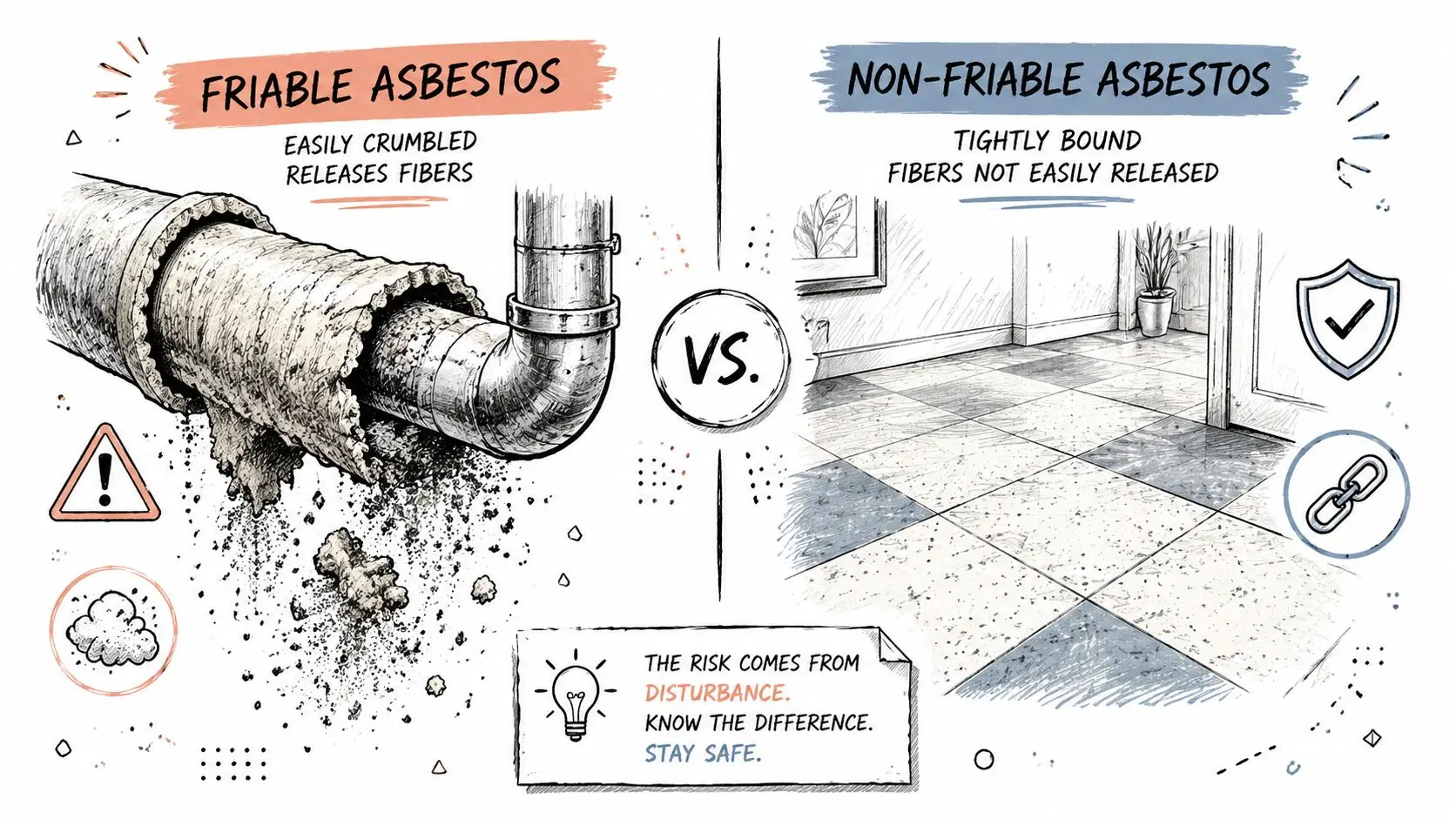
Where it commonly turns up in older Phoenix homes
In Valley homes built decades ago, suspicion often centers around a few categories:
- Textured ceilings: Especially where homeowners want a smooth modern finish.
- Older flooring systems: Tile, sheet flooring, and adhesive layers can all become part of the testing conversation.
- Pipe and utility insulation: More common in older homes and older service areas.
- Wall and patch materials: During demolition, repair compounds and surfacing materials may need review.
- Roofing-related materials: Some older exterior products may require caution during replacement.
An Arcadia homeowner may be worried about pipe insulation in a utility space. A Mesa homeowner may be focused on flooring before cabinet replacement. A central Phoenix owner may only discover the issue when a contractor starts opening walls. The location changes. The decision logic doesn't.
When testing is enough and when it isn't
This is the part many guides miss. A certified inspector should first sample suspected materials for lab analysis before any decision is made, because asbestos abatement includes not just removal, but also repair and encapsulation, and the right choice depends on whether the material can be safely managed in place or poses an active exposure risk, as explained in this abatement guide for homeowners.
That means testing may be enough when:
- The material is intact: No visible breakage, fraying, delamination, or dusting.
- You're not disturbing it: No renovation, demolition, or service work will touch it.
- A management plan is realistic: The material can be left in place, monitored, and protected.
Removal becomes more likely when:
- The material is damaged: Cracks, crumbling, impact damage, or water deterioration change the risk.
- A project will disturb it: Remodels, re-piping, electrical work, and demolition often move the decision from “monitor” to “abate.”
- It's in a vulnerable location: Repeated contact, vibration, or traffic can make in-place management unreliable.
Some asbestos problems are best handled by identifying the material, documenting it, and leaving it alone under controlled conditions. Others require containment and removal because the next step in the project will disturb it anyway.
If you're already dealing with a broader hazardous-material concern at the property, homeowners often also review related hazmat cleanup services in Phoenix.
The Complete Asbestos Testing Process
A Phoenix homeowner usually reaches this point after finding something suspicious during a remodel, a roof leak repair, or an HVAC update in an older home. In houses built decades ago across Phoenix, Mesa, and parts of Scottsdale, that concern is reasonable. The right next step is not always full removal. First, we confirm what the material is, whether the planned work will disturb it, and whether air clearance will be needed at the end.
Homeowners usually want three answers. Is it asbestos? Is the area safe to work in? Is the space ready to use again after abatement? A proper testing process is built to answer those questions in that order.
The process starts with material identification. If there is concern about a ceiling texture, vinyl floor tile, mastic, pipe insulation, wall patch, or another suspect building product, a trained inspector collects a controlled sample and sends it to a qualified lab. Visual judgment is not enough, especially in older Arizona homes where asbestos and non-asbestos materials can look nearly identical.
To make the testing flow easier to picture, this overview helps.
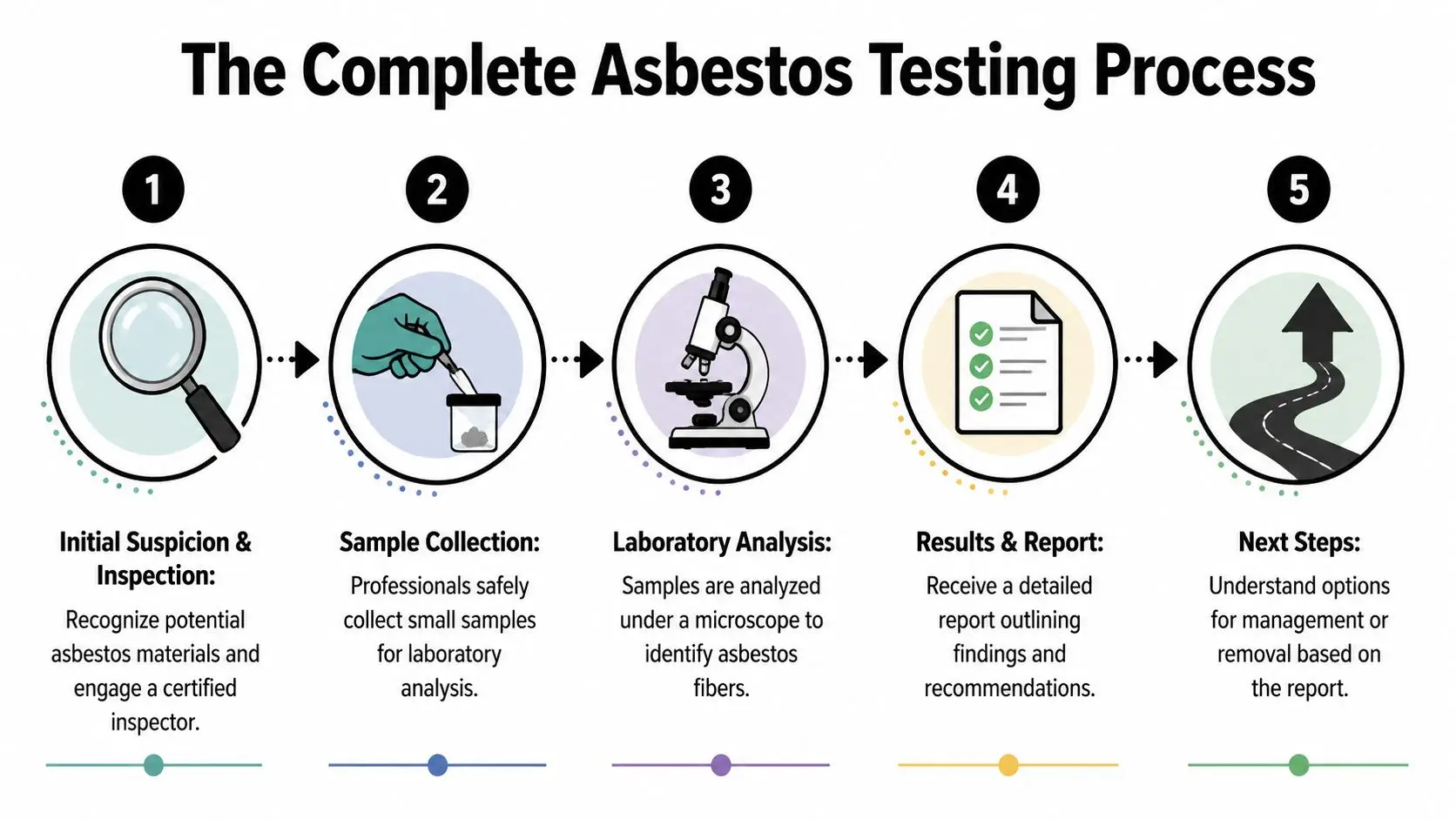
The first question is material identification
Under EPA asbestos guidance for schools and public buildings, a material is generally treated as asbestos-containing if lab analysis shows more than 1% asbestos, as outlined in the EPA asbestos inspection and reinspection requirements under AHERA. For a homeowner, that threshold matters because it changes how the material has to be handled, documented, and disposed of.
This is the point where testing alone may solve the problem.
If the material is intact, tucked away, and not going to be disturbed by the work ahead, the result may support a manage-in-place decision. If the sample comes back positive in an area that a plumbing reroute, kitchen remodel, or demolition crew will open up, the same test result points toward abatement planning instead. That decision path is what many generic guides skip.
DIY sampling creates unnecessary risk. Cutting into textured ceilings, brittle pipe wrap, or old flooring adhesive can release fibers before anyone has containment in place. In my work, the safer approach is simple. Treat suspect material carefully, sample it correctly, and make the removal decision after the lab result, not before.
The second question is whether the area passes clearance after work
Once abatement is performed, testing shifts from the material itself to the air inside the work area. Clearance is not a casual walk-through. It follows final cleaning, a visual inspection, and air sampling to confirm the area is suitable for reoccupancy. Arizona homeowners can review more local examples of asbestos testing services and project articles if they want to see how that process is applied on real jobs.
For practical reference, many contractors and consultants use established post-abatement procedures such as the New York State asbestos air sampling and clearance criteria. The point is straightforward. If removal occurred, the project is not finished until the contained area has been cleaned, inspected, and cleared through the required post-work process.
A short video can also help demystify what inspectors and abatement teams are doing on site.
What each test is actually for
| Test Type | Purpose | When It's Done |
|---|---|---|
| Bulk material sampling | Confirms whether a suspect building material contains asbestos | Before renovation, demolition, repair, or purchase decisions |
| Laboratory analysis | Determines whether the sampled material meets asbestos classification | After samples are collected |
| Project air monitoring | Helps evaluate conditions during abatement activity | During active containment and removal work |
| Clearance air testing | Confirms the area meets reoccupation criteria after abatement | After cleaning, visual review, and final preparation |
| Final documentation review | Shows whether the testing and removal path was completed properly | At project closeout |
If a contractor says a quick visual check is enough to decide whether a material is safe, slow the job down. Proper asbestos testing depends on controlled sampling, lab analysis, and documented clearance when removal takes place.
What to Expect During Professional Asbestos Removal
Professional asbestos abatement looks controlled, methodical, and a little inconvenient on purpose. That's a good sign. If a job looks casual, it's usually not being handled correctly.
Homeowners are often surprised by how much of the process is about controlling what can't be seen. The crew isn't just removing material. They're preventing fiber release, isolating the work zone, and making sure contamination doesn't travel into the rest of the home.
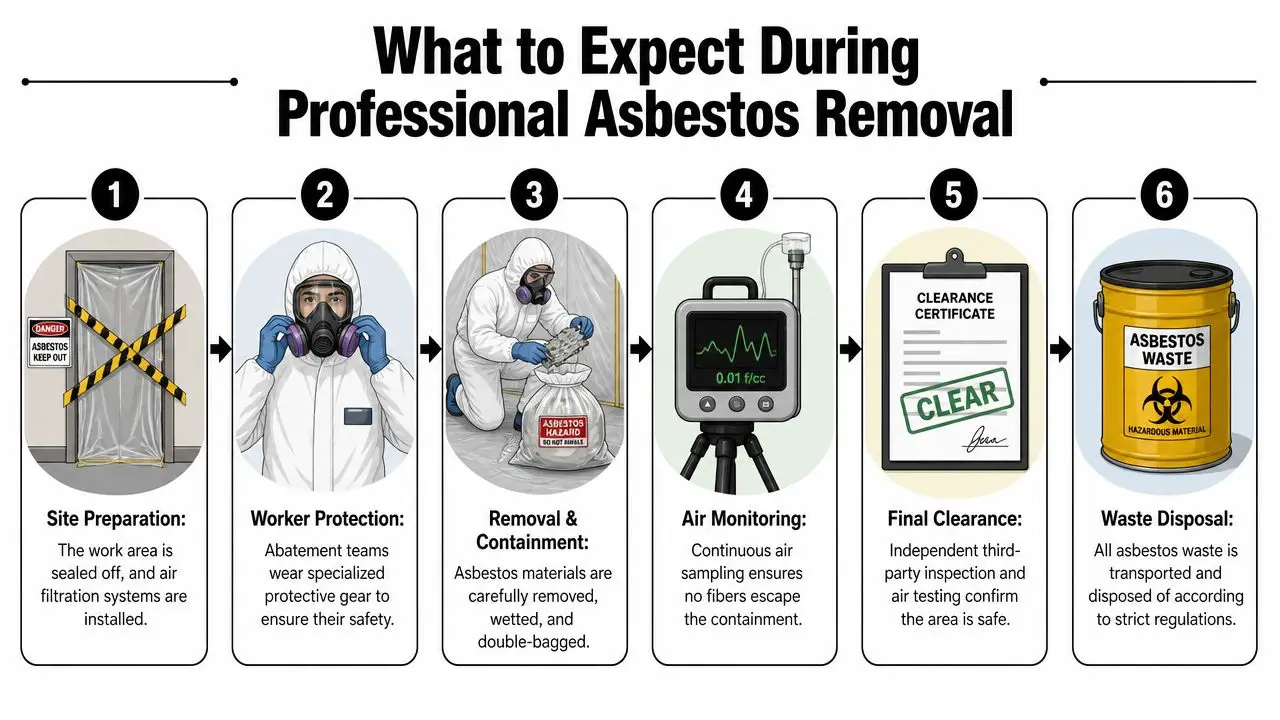
What happens before material is touched
The setup phase matters as much as the removal phase.
A technically sound abatement workflow uses sealed containment, sealed HVAC openings, and pressure-differential or negative-air control. After removal, the area is HEPA-vacuumed and wet-cleaned, left to settle for at least 12 hours, then cleaned again and visually inspected before final air clearance begins, according to this example asbestos abatement specification.
That sequence is there for a reason. If the area is rushed, settled debris can be missed. If containment is weak, fibers can migrate. If HVAC openings aren't sealed, contamination can move through the house.
What homeowners usually see on site
Most proper jobs include visible controls such as:
- Containment barriers: Plastic sheeting and isolated work zones keep the affected area separated from living space.
- Negative air equipment: HEPA-filtered machines help maintain directional airflow so fibers don't escape the enclosure.
- Protective gear: Workers wear respirators and disposable protective clothing because regular dust masks and work clothes aren't enough.
- Wet methods: Materials are kept damp during handling to reduce airborne release.
- Controlled waste handling: Removed materials are bagged, sealed, and prepared for legal disposal as regulated waste.
In homes, this often feels slower than normal demolition. That slower pace is part of safe work.
What happens after the visible debris is gone
The biggest misunderstanding is that once the old material is out, the room is done. It isn't. Post-removal work is where many weak contractors reveal themselves.
A compliant closeout usually includes cleaning, waiting for settled dust to be captured, re-cleaning, visual inspection, and only then air clearance. If you're comparing project types, some owners also look at how these standards apply on larger commercial asbestos removal projects, where containment discipline becomes even more obvious.
A clean-looking room is not the same thing as a cleared room. Final safety depends on the full sequence, not the appearance of the floor after debris is hauled out.
How to Hire a Licensed Asbestos Contractor in Arizona
Hiring the right contractor isn't a paperwork exercise. It's how you protect your family, your property, and your remodel from a dangerous shortcut.
In Arizona, homeowners should treat asbestos work as a specialist trade. If a general remodeler says they can “just take care of it” without a clear testing and abatement path, that's not reassuring. It's a warning.
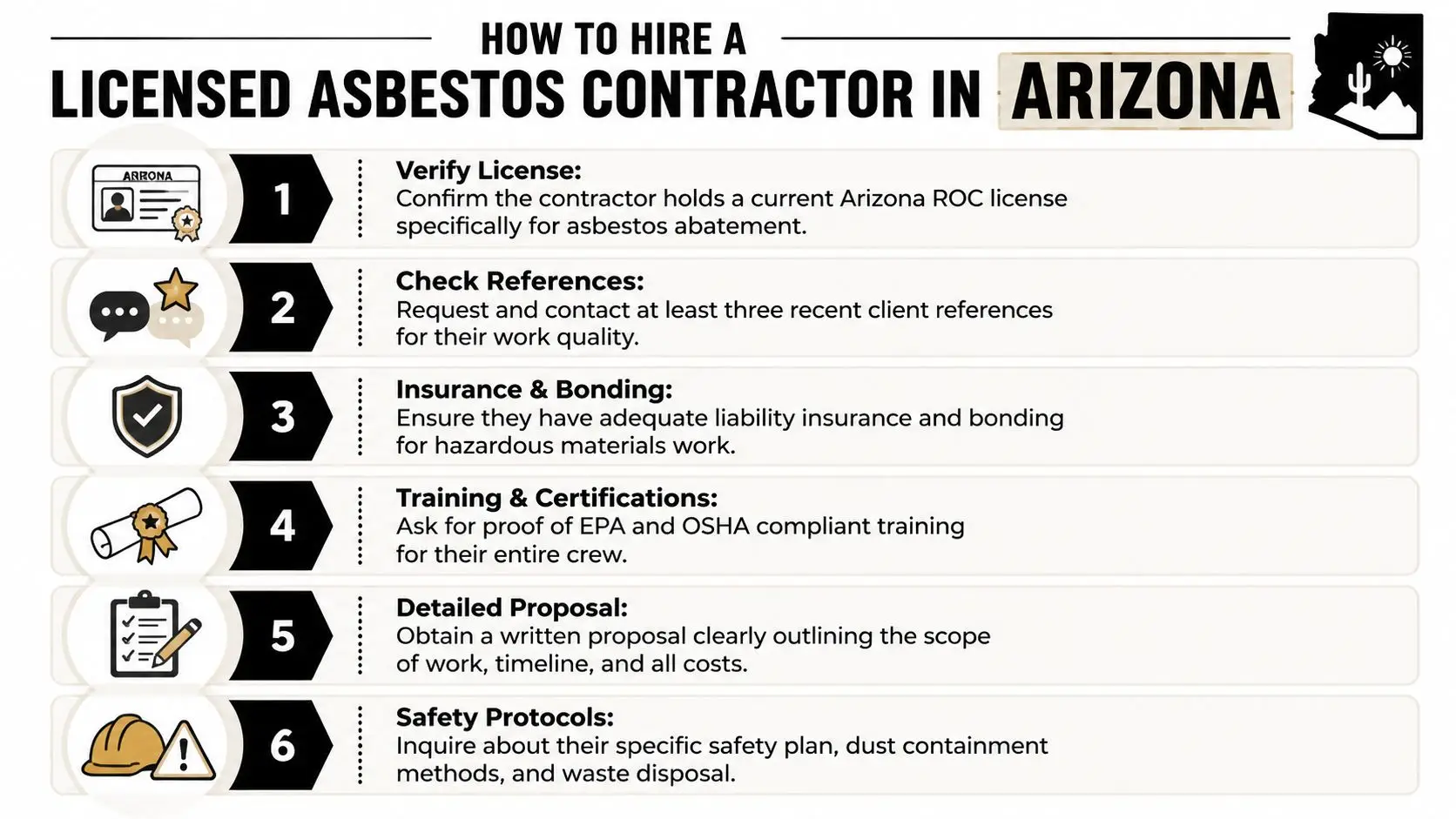
What to verify before anyone starts
Use a checklist, but don't treat every item as equal. Some questions are basic. Some tell you immediately whether the contractor takes asbestos seriously.
- License first: Verify the company holds the appropriate Arizona contractor credentials for this type of work.
- Training matters: Ask who will be on site and what asbestos-specific training or certification they hold.
- Insurance should match the risk: General liability alone isn't the same as coverage appropriate for hazardous-material work.
- Written scope only: The proposal should describe what is being tested, removed, contained, cleaned, and cleared.
- Disposal procedure: Ask where the waste goes and how it will be packaged and documented.
Homeowners comparing options for houses rather than commercial sites often review providers that handle residential asbestos abatement in Phoenix.
Red flags that deserve a hard stop
Some problems show up in the first phone call.
If a contractor wants to skip testing and go straight to demolition, that's a problem. If they minimize containment, call clearance “optional,” or give vague answers about disposal, move on. If the bid is dramatically lower than others, ask what protections have been removed from the scope. Cheap asbestos work usually means someone has cut out the slow, necessary parts.
A trustworthy contractor should also be able to explain the decision path. Not every positive asbestos result means full removal is required. If the company's only answer is “tear it all out,” they may be selling fear rather than judgment.
Why local reputation still counts
For specialty trades, reputation often shows up in details. Did they communicate clearly? Did they document the work? Did they protect the rest of the house? Did they finish with proper clearance steps instead of informal reassurance?
For homeowners evaluating contractors online, it also helps to know how legitimate local businesses improve local search visibility so you can separate established operators from thin online listings with little real presence.
Ask the contractor to explain what happens if testing shows asbestos is present but still stable. The answer should include options like management, repair, or encapsulation where appropriate, not only removal.
Understanding Asbestos Abatement Costs and Timelines
A Phoenix homeowner will often call after opening a wall in a 1970s ranch in Mesa or pulling up old vinyl in Scottsdale and ask the same question first. “Are we testing this, or are we already at removal, and how much time is this going to add?”
That is the right question.
As a certified asbestos abatement supervisor, I tell homeowners not to treat every positive asbestos result like an automatic full tear-out. In many cases, testing is the first step because the material may be intact, limited, and better managed in place. Removal becomes the safer path when the material is damaged, likely to be disturbed by renovation, or located where fibers can spread during normal use, repair, or demolition.
Cost follows scope. Scope follows condition, location, and the plan for the house.
What changes the price
Two homes with the same lab result can have very different abatement costs. A small area of asbestos-containing flooring that can be isolated is one kind of job. Damaged pipe insulation in a cramped attic or debris above a living area is another.
The main cost drivers are:
- Material and friability: Some asbestos-containing materials stay relatively stable unless disturbed. Others release fibers much more easily and require tighter controls.
- Condition: Cracked, crumbling, water-damaged, or previously cut material usually raises both labor and cleanup requirements.
- Location and access: Phoenix-area homes often hide suspect material in attic chases, around old duct boots, under flooring layers, and in patch compounds. Tight access slows every step.
- Occupied versus vacant work area: Keeping the rest of the home protected takes added setup, monitoring, and cleaning.
- Whether testing alone is enough: If sampling shows material is present but intact and not in the path of planned work, management or encapsulation may be more appropriate than removal.
- Final cleaning and clearance: The job is not finished when the material is bagged out. The containment has to be cleaned and cleared correctly before normal use resumes.
After removal, the work area typically goes through visual inspection and air clearance steps using standard asbestos air sampling methods and laboratory analysis, as described in post-removal asbestos air sampling and clearance procedures. That closeout work adds time, but it is part of a proper abatement job.
Why one job takes a day and another takes a week
Homeowners usually see the removal crew. They do not always see the time built around that crew. Containment setup, negative air, protected pathways, careful bag-out, detailed cleaning, and clearance can take as much attention as the actual removal.
For a small, isolated issue, the work may move quickly if access is good and the material is limited.
For a larger project, the timeline stretches for practical reasons. Older Phoenix homes often have layered repairs, additions, or hidden damage from roof leaks, old HVAC changes, or previous remodeling. Once suspect material shows up in more than one area, the project turns into sequencing, containment, and verification. Not just removal.
If asbestos concerns started after water damage, fire damage, or walls and ceilings were opened during another repair, it may also make sense to schedule a structural integrity assessment after exposure or demolition-related damage before the final repair plan is set.
The best pricing conversation is not “What does asbestos removal cost per room?” It is “Do we need testing only, management in place, or full removal, and what steps are required to make this house safe for the next phase of work?”
Frequently Asked Questions About Asbestos Safety
Can I test for asbestos myself
I don't recommend it. The risk isn't just the result. It's the act of disturbing the material to get the sample. Homeowners can turn a manageable issue into contamination in minutes by cutting, scraping, or breaking suspect material the wrong way.
If you suspect asbestos, keep people away from the area, avoid touching it, and arrange for qualified assessment.
Can I remove a small amount myself
That's also a bad idea. Size doesn't make asbestos harmless. A small damaged area in the wrong location can still release fibers if it's snapped, sanded, pried up, or bagged improperly.
The bigger issue is that homeowners often don't know what else the material is connected to. What looks like one damaged patch can be part of a larger system behind finishes or around utilities.
If you find a suspicious damaged material, don't sweep it, vacuum it with a household vacuum, or break off a piece to “see what it is.”
Do we need to leave the house during removal
Often, at least from the work area and sometimes from the home, depending on the project. That decision depends on the location, containment setup, and scope of work. A proper contractor should explain occupancy restrictions clearly before the job starts rather than improvising them mid-project.
If pets are in the home, treat the issue the same way you would for children. Keep them completely away from suspect materials and active work zones.
What if the material is intact and no remodel is planned
That's where testing can be enough. If the material is in good condition and won't be disturbed, management in place may be the most sensible option. The point is to make that decision based on inspection and lab information, not guesswork.
What if I already disturbed something before I knew
Stop work. Don't keep cutting to “finish quickly.” Don't dry sweep. Don't run fans through the area. Limit access and get professional guidance.
That's the most common mistake after accidental discovery in a renovation. People panic, then keep working. The safer move is the opposite. Pause, isolate, assess.
If you're in Phoenix, Mesa, Scottsdale, or elsewhere in the Valley and you need help understanding whether testing is enough or full abatement is the smarter next step, contact Restore Heroes to schedule a professional evaluation. A clear plan can turn a stressful discovery into a controlled, documented process that protects your home and the people in it.