
A lot of Phoenix homeowners find out about asbestos the same way. The plan is simple enough. Open a wall, replace old cabinets, fix plumbing after a leak, or deal with monsoon-related damage. Then a dry, fibrous material shows up around a pipe, behind old flooring, or above a ceiling panel, and the whole project suddenly feels different.
That moment is stressful, but it doesn't have to turn into panic. Residential asbestos abatement is manageable when it's handled the right way. The key is to stop disturbing the material, keep people out of the area, and get qualified help before cleanup, demolition, or drying work continues.
Discovering Asbestos in Your Phoenix Home
A common Phoenix scenario starts in a 1960s or 1970s ranch home. A homeowner pulls out an old vanity or opens a soffit during a kitchen remodel and notices brittle wrap on piping or crumbly debris near an HVAC chase. Sometimes the discovery happens after a water loss, when saturated drywall softens and hidden materials become exposed.
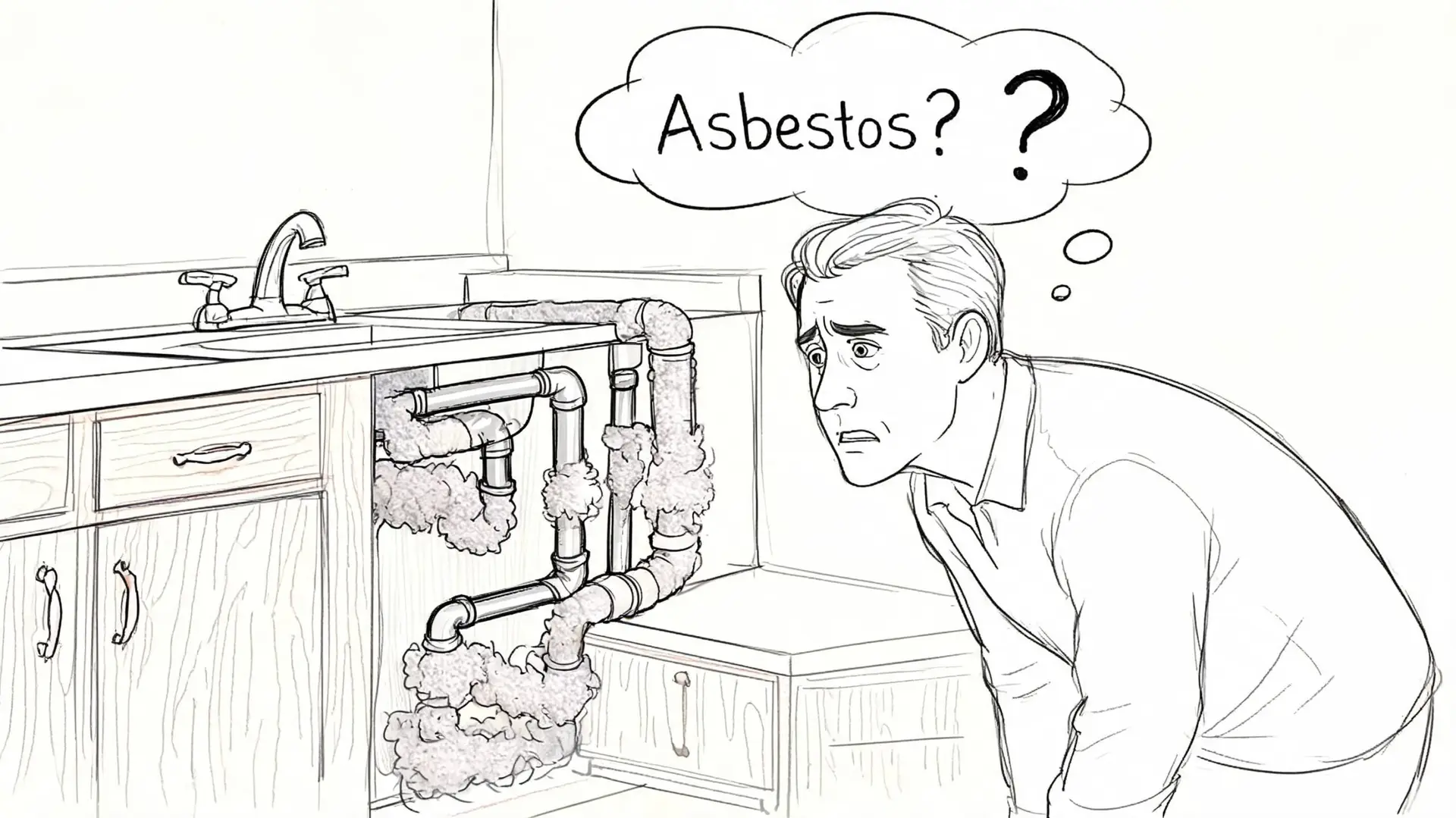
Phoenix has a large stock of older homes, so this isn't rare. As older building materials get disturbed during repairs and renovations, asbestos keeps showing up in active projects. In fact, the US asbestos abatement market was valued at $1.00 billion in 2024, driven in part by renovation work in homes built before the 1980s that exposes hazardous materials, according to The Insight Partners market report.
What homeowners usually do first, and what works better
The wrong first move is scraping, sweeping, shop-vacuuming, or “just getting a sample off” with no controls. That often creates the very problem people were trying to avoid.
A better first response looks like this:
- Stop work immediately: Leave the material alone.
- Limit access: Keep kids, pets, and other trades out of the area.
- Shut off air movement if practical: Don't run fans across the space.
- Document what you found: A few photos from a safe distance help later.
- Call the right kind of contractor: Not every remodeler or handyman is equipped for hazardous materials.
Practical rule: If a renovation uncovers suspicious insulation, flooring mastics, ceiling texture, or pipe wrap in an older home, treat it as suspect until testing and scope decisions are complete.
Many owners also ask who coordinates the rest of the project once a hazard interrupts water, fire, or rebuild work. If you need a quick overview of what a restoration contractor typically handles around containment, mitigation, and reconstruction, this guide on what a restoration company does is useful background.
And if your home is in transition because of a major move during repairs or abatement planning, practical relocation logistics matter too. A moving checklist like Emmanuel Transport's residential removalists guide can help you think through temporary packing and access issues while the home is partially offline.
Understanding the Health Risks and Common Sources
Asbestos is easiest to understand as a sleeping dragon. If the material is intact and undisturbed, it may remain for years. Once it's cut, sanded, broken, torn out, or water-damaged enough to crumble, the risk changes because fibers can become airborne.
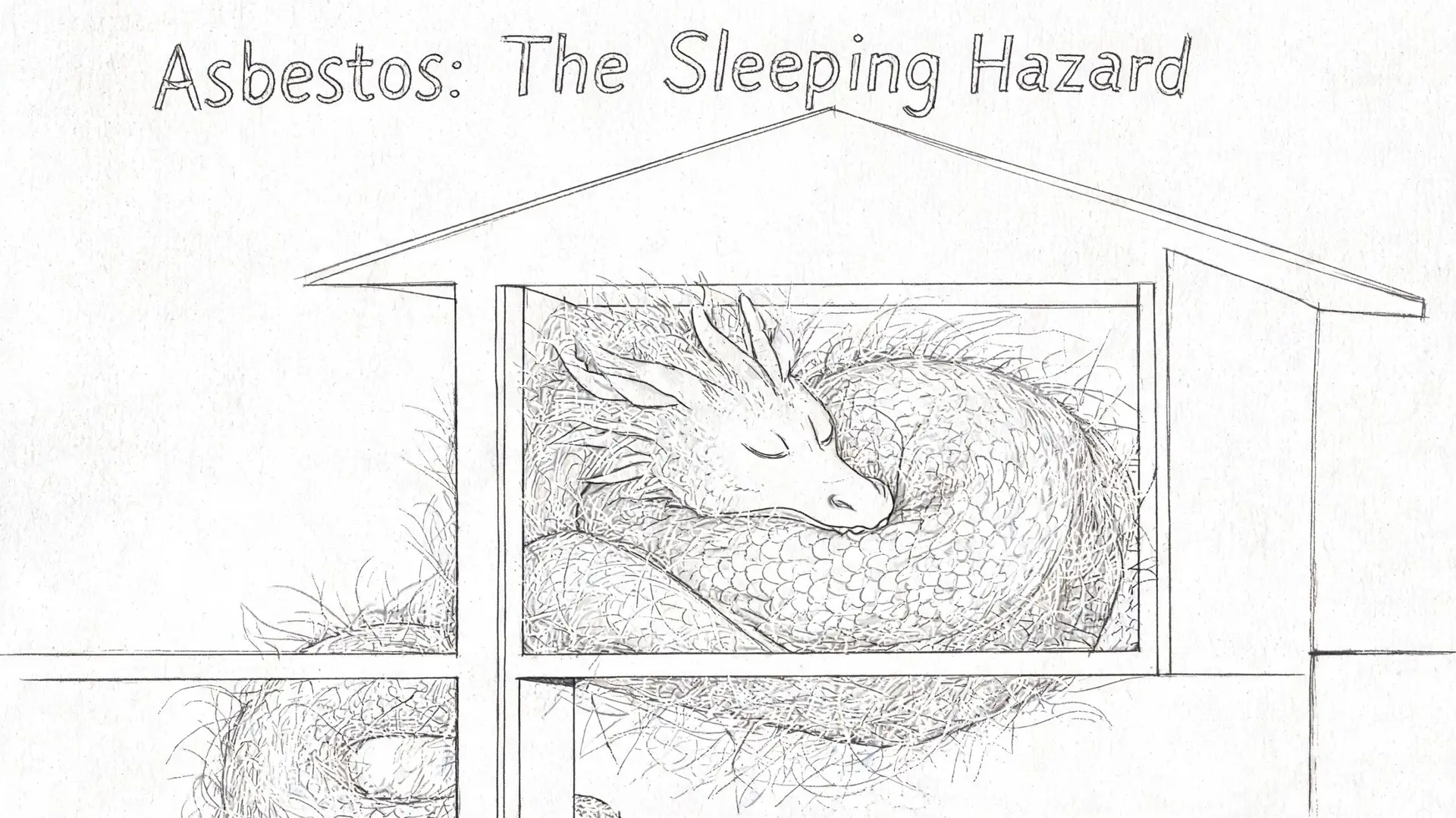
That's why friable material gets so much attention. Friable means it can break apart more easily and release fibers into the air. In homes, the concern isn't the name of the material alone. It's the condition, location, and whether the next step in your project will disturb it.
Where asbestos commonly hides in Phoenix-area homes
In residential work, the usual suspects include:
- Thermal insulation: Older pipe wrap, boiler insulation, and similar material in attics, crawlspaces, and utility areas.
- Ceiling texture: Popcorn ceilings and some patching compounds.
- Flooring systems: Vinyl tiles and the adhesives beneath them.
- Exterior materials: Roofing, siding, and some cement-like products.
- Wall and surfacing materials: Joint compounds, textured finishes, and certain legacy coatings.
The health side of this is why professionals take it seriously. According to the CDC figures cited by The Insight Partners, asbestos exposure was linked to over 18,000 deaths in the US by 2005, with nearly 30,000 additional fatalities projected by 2027, including deaths tied to legacy residential exposure. I'm stating that qualitatively here because the source link appears earlier in this article.
Why DIY is the wrong gamble
Homeowners often think the biggest danger is touching the material. Usually, the bigger danger is disturbing it. Pulling up old tile, cutting drywall around pipe insulation, or using a household vacuum can spread fibers farther than people expect.
A lot of emergency cleanup jobs start with another issue first. A burst pipe. A small kitchen fire. Roof leakage after a storm. Then the cleanup crew or homeowner opens an assembly and finds suspect material inside. That's when hazardous cleanup protocols become part of the conversation. If you want a sense of what contamination control work generally involves, this page on hazardous clean up gives a good high-level comparison.
A short visual overview can also help if you're trying to understand why disturbance matters:
When asbestos is intact, the priority may be managing it safely. When it's damaged or in the path of renovation, the priority shifts to controlled abatement.
What the health terms mean in plain English
The terms can sound abstract, so here's the simple version:
| Condition | Plain-language meaning |
|---|---|
| Asbestosis | Scarring of the lungs from inhaling asbestos fibers |
| Lung cancer | Cancer risk associated with asbestos exposure |
| Mesothelioma | A cancer strongly associated with asbestos exposure |
You don't need to diagnose the risk yourself. You just need to recognize that this isn't a dust problem or a normal demolition issue. It's a containment and exposure-control issue.
Navigating Asbestos Regulations in Arizona
Homeowners usually run into regulations at the worst possible time. The project is already open, another contractor is waiting, and someone asks whether testing, notification, or licensed abatement is required. In Phoenix, the answer depends on the material, the scope of work, and which agencies have jurisdiction over the project.
The agencies that matter locally
At the federal level, the EPA framework matters, especially for renovation and demolition activities involving regulated asbestos material. In Arizona, ADEQ is part of the compliance picture, and in the Phoenix area, Maricopa County Air Quality may also be involved depending on the project type and location.
For a homeowner, the practical takeaway is simple. If work will disturb suspect asbestos-containing material, don't assume a general contractor can just remove it as part of demolition. Licensed handling, documentation, and disposal procedures may apply.
The triggers that tend to create problems
These are the situations that most often need closer review:
- Demolition of part or all of a structure: Even a small tear-out can trigger compliance questions.
- Renovation that disturbs suspect material: Kitchens, baths, flooring, and plumbing access are common examples.
- Damage restoration work: Water or fire events can expose hidden insulation, mastics, or ceiling materials.
- Waste handling and transport: Disposal isn't regular construction debris disposal.
Where homeowners get into trouble is assuming “small job” means “no rules.” That's not a safe assumption. If the work involves suspect asbestos material, the right sequence is inspection, scope review, containment planning, licensed removal when required, and documented clearance.
Field note: A permit issue is frustrating. A stop-work order in the middle of a project is worse.
If you manage mixed-use property or own a residential building with business occupancy components, it can also help to understand how larger projects are scoped. This overview of commercial asbestos removal gives context for how regulated work is typically approached.
The cost side of compliance
The hard part for many Arizona homeowners is that financial help is limited. Federal HUD grants are often restricted to organizations rather than individual homeowners, which leaves many private owners paying for the work themselves, as discussed in Shelterforce's article on asbestos in low-income housing.
That doesn't make compliance optional. It just means homeowners need clear scopes, written documentation, and realistic budgeting before work starts.
A good contractor should explain three things plainly:
- what was found,
- what work can and cannot proceed,
- what documents you should keep for your records.
The Professional Abatement Process Explained
Most homeowners feel better once they understand the sequence. Professional asbestos work isn't random demolition in protective suits. It follows a controlled process designed to keep fibers from spreading through the home.
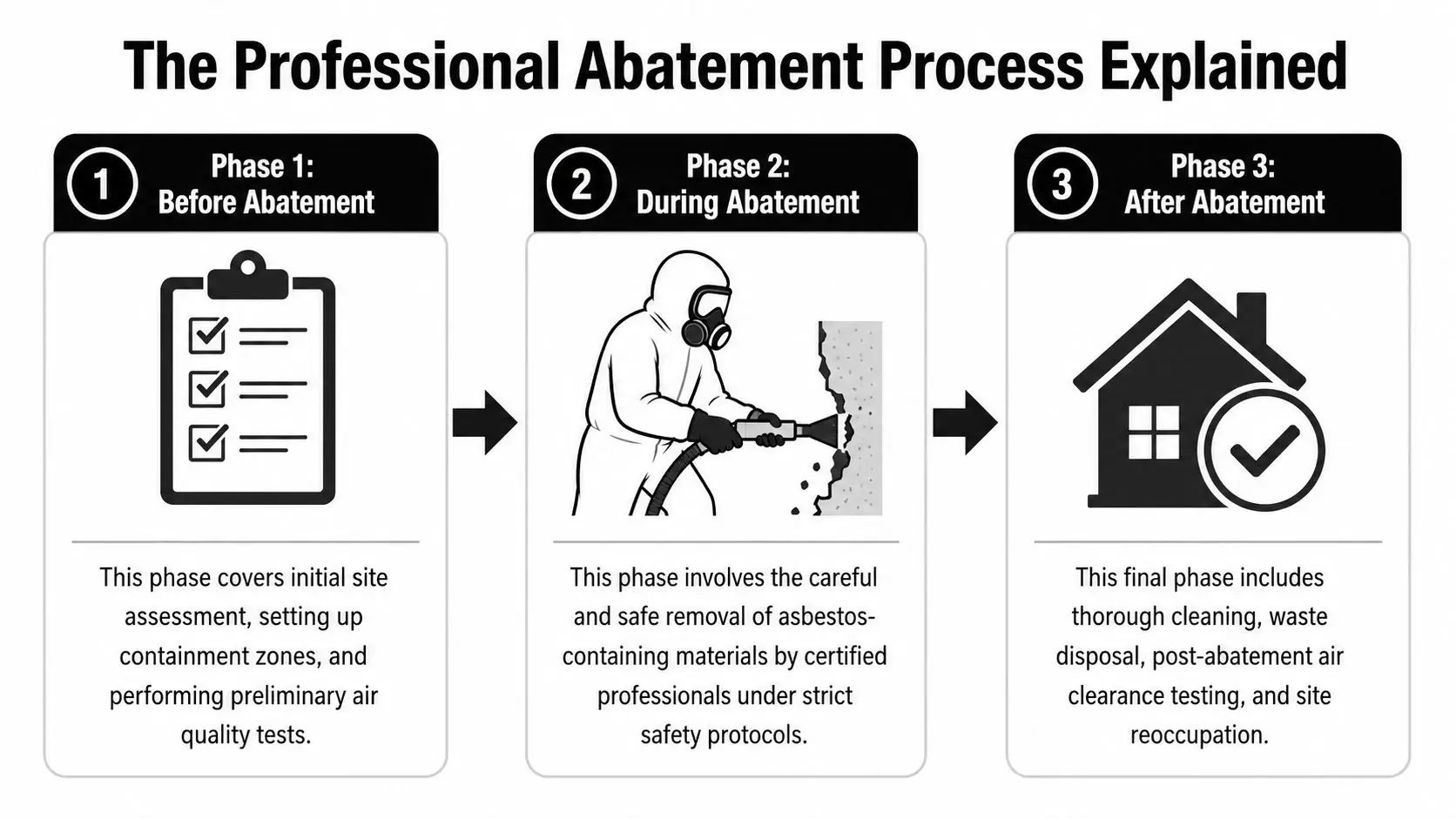
Before abatement
The first phase is preparation. The work area gets defined, isolated, and protected before any removal begins. For Class I material, which includes the most hazardous thermal system insulation, proper containment is critical.
According to the EPA Purple Book guidance, that means 2-layer 6-mil polyethylene sheeting and maintained negative pressure during removal, with special attention in dry climates like Phoenix where continuous misting helps keep fibers from drying out and becoming airborne again, as outlined in the EPA Purple Book.
A properly prepared site often includes:
- Containment barriers: Poly sheeting seals off the regulated work zone.
- Decontamination path: Workers need a controlled way to exit without carrying contamination out.
- HVAC protection: Open air movement through the home can spread fibers where you don't want them.
- Pre-work planning: Utilities, access routes, waste staging, and occupant protection all need to be decided before removal starts.
During abatement
This is the part many people imagine, but the key technique isn't brute-force removal. It's control.
Wet methods are used so material comes out with less fiber release. Negative air machines equipped with HEPA filtration help maintain inward airflow, which keeps contamination from escaping the containment. In Phoenix, arid conditions matter more than people realize. Material can dry quickly, so crews have to stay disciplined about moisture control during removal.
Different materials require different methods. Intact, limited pipe insulation may sometimes be handled with a glovebag approach. More damaged or extensive material may require full-room containment and a broader removal scope. The trade-off is time and disruption versus exposure control. Good contractors choose the method based on material condition, not convenience.
What works: slow removal, wet handling, sealed containment, and disciplined cleanup.
What doesn't: rushing demo, partial barriers, household vacuums, or letting other trades work nearby.
After abatement
The job isn't done when the visible material is gone. Post-removal cleaning is where a lot of project quality shows up.
A solid closeout usually includes:
- Detailed HEPA vacuuming
- Wet wiping and repeat cleaning
- Visual inspection for residual debris
- Waste packaging and disposal paperwork
- Clearance testing before reoccupancy
The reason this phase matters is simple. A room can look clean and still fail clearance if airborne fibers remain.
A homeowner should expect written documentation. At minimum, that typically includes what was removed, where it came from, and what testing or clearance documents apply to the project. If another part of the home is still under restoration after water or fire damage, the abatement scope also needs to be coordinated so reconstruction doesn't start too soon.
Estimating Asbestos Abatement Costs and Timelines
The two questions every homeowner asks are fair ones. How much is this going to cost, and how long is my house going to be disrupted? The honest answer is that cost and timing depend heavily on the material, the location, the access, and the level of containment required.
What drives the price
A small, accessible, limited-scope removal is a different job from friable pipe insulation above a kitchen ceiling or a full containment tied to demolition. Pricing usually moves based on factors like these:
- Material type: Pipe insulation is not priced like resilient flooring.
- Condition: Intact non-friable material is different from damaged friable debris.
- Access: Attics, tight chases, and occupied homes complicate setup and cleanup.
- Testing and clearance needs: Third-party sampling and documentation add steps.
- Waste handling: Packaging, transport, and disposal are part of the scope.
One useful benchmark comes from residential demolition analysis. Asbestos abatement added an average of $2.39 per square foot, representing nearly a third of the total demolition cost in that context, according to Grand View Research. That doesn't mean every home will price that way. It does show why asbestos can materially change a renovation budget.
What affects the timeline
Small contained removals may move quickly. Broader projects can stretch because the timeline includes more than removal alone.
A typical schedule may involve:
| Phase | What usually happens |
|---|---|
| Assessment | Inspection, sampling, scope review |
| Preparation | Notifications, containment setup, occupant planning |
| Abatement | Removal under controlled conditions |
| Closeout | Cleanup, clearance, documentation |
| Rebuild | Only after the area is released for follow-on work |
The disruption often comes from sequencing, not just labor. A bathroom may only contain a modest amount of suspect material, but if the material is in the path of plumbing, electrical, and finish trades, everyone else waits until the area is released.
For homeowners trying to compare bids, it helps to read a neutral explainer on budgeting for asbestos removal. It can help you spot the difference between a shallow quote and a scope that includes containment, disposal, and clearance.
If this kind of unexpected expense is hitting during another indoor-environment project, it may also help to compare how restoration scopes are estimated more broadly. This breakdown of mold remediation cost factors is useful because the same budgeting logic often applies. Scope, access, containment, and post-work verification drive cost more than square footage alone.
How to Hire a Qualified Contractor in the Phoenix Area
Choosing the right contractor is where a lot of risk gets reduced, or increased. The right company will slow the project down just enough to keep it compliant and safe. The wrong one will talk fast, promise easy cleanup, and leave you with exposure concerns, paperwork gaps, or a failed inspection.
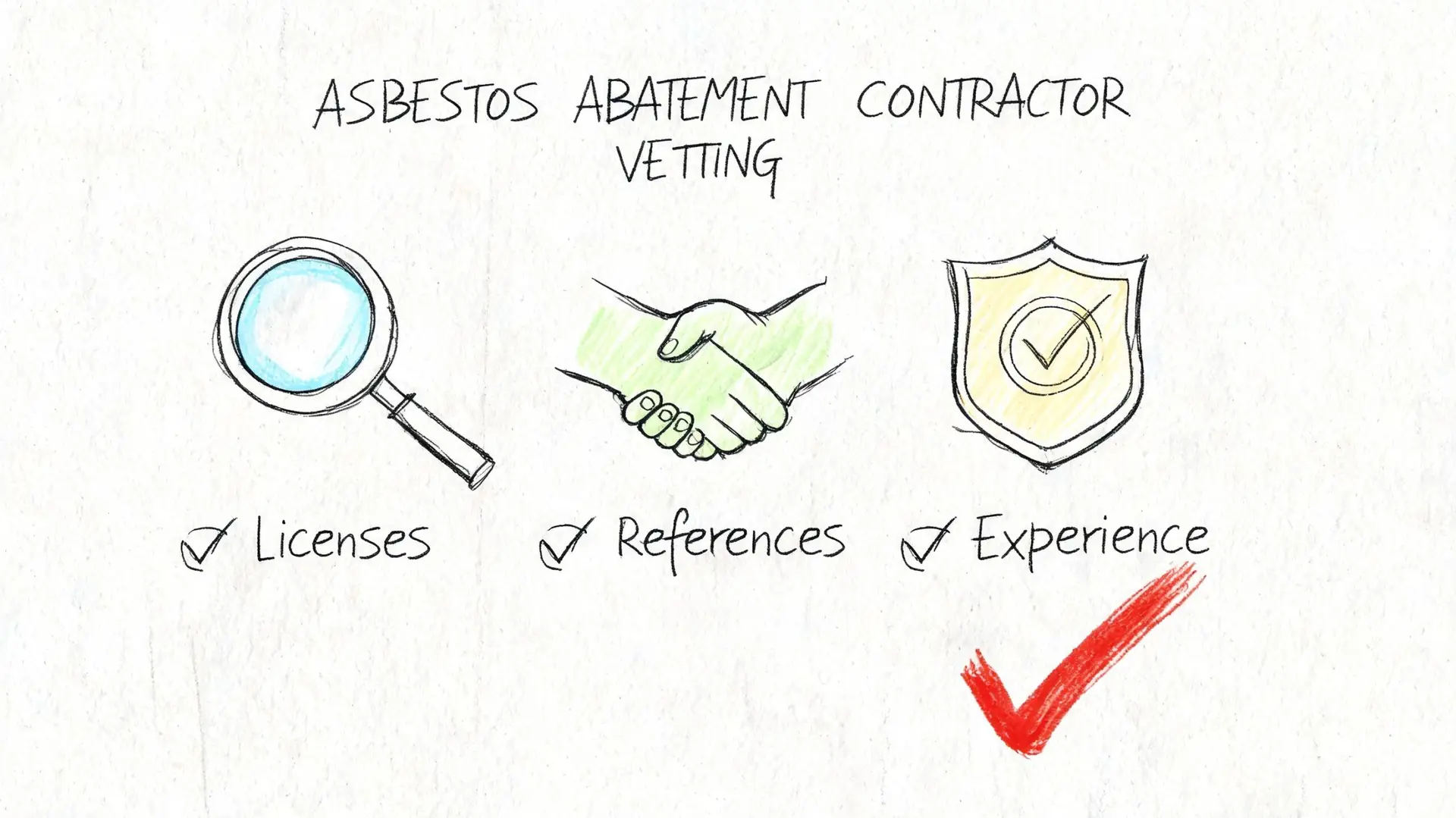
What to verify before anyone starts
Ask direct questions. A qualified contractor shouldn't dodge them.
Here's a practical screening list:
- Licensing and local compliance: Ask for the relevant asbestos credentials and how they handle ADEQ and Maricopa County requirements when applicable.
- Insurance: General liability matters, but pollution liability and workers' compensation matter too.
- Written scope: You want containment, removal method, waste handling, and clearance expectations in writing.
- Project documentation: Ask what records you'll receive at the end.
- Coordination with other trades: Abatement often sits in the middle of a bigger repair or remodel.
Questions that reveal whether a contractor is serious
Some questions are more useful than “How much per square foot?” Try these instead:
- What material do you believe is involved, and what testing supports that?
- What containment method will you use for this location?
- How will the crew protect unaffected rooms?
- Who performs clearance, and what paperwork will I receive?
- How is waste packaged, transported, and documented?
A strong contractor answers clearly. A weak one gets vague, skips documentation, or says things like “we'll just bag it and be done.”
Hiring advice: If a bid is light on containment details, cleanup procedure, and clearance language, it's probably light on the parts that matter most.
Why adjacent contractor standards still matter
Even if a project isn't a laboratory build, contractor discipline matters. You can see that mindset in industries that demand precise specifications and durable materials, such as Labs USA contractor products. Different field, same lesson. Good work starts with systems, not improvisation.
Homeowners also tend to search broadly for indoor-environment help when they're comparing companies. If you're reviewing local vendors and want a point of reference for how restoration firms present qualifications and service scope, this local page on mold removal companies near me is a useful comparison.
A contractor doesn't need to sell you confidence. Their paperwork, process, and answers should do that.
Your Next Steps for a Safe and Asbestos-Free Home
If you suspect asbestos in your Phoenix home, the immediate next step is simple. Stop disturbing the material. Don't scrape it, sweep it, break off a chunk, or let another trade keep working around it.
Then move into decision mode, not panic mode.
The safest path forward
A calm response usually looks like this:
- Secure the area: Keep people out and limit air movement.
- Document the location: Photos help later.
- Get qualified evaluation: Don't rely on visual guesses alone.
- Wait for the right scope: Testing, containment, and abatement decisions should come before demolition resumes.
- Keep your paperwork: You may need it for future disclosure, reconstruction, or insurance coordination.
For homeowners, the final benchmark matters more than how clean the room looks. Clearance air monitoring must confirm airborne fiber levels do not exceed 0.01 fibers per cubic centimeter, which is the reoccupation threshold described in this asbestos abatement process overview. That's the kind of result you want documented before people move back into the affected area.
What matters most in Phoenix
Local conditions change how asbestos work should be approached. Dry air, older housing stock, active remodels, and storm-related damage all create situations where suspect materials can go from hidden to exposed quickly. That's why the right contractor doesn't just remove material. They control the environment around it.
If you're in the Phoenix metro and you've uncovered suspicious pipe wrap, ceiling texture, flooring, or damaged insulation during a remodel or loss, don't wait for the problem to sort itself out. It won't. The safer route is a qualified inspection, a documented plan, and disciplined abatement if the material needs to come out.
If you need help after discovering suspected asbestos during a renovation, water loss, fire cleanup, or demolition planning, Restore Heroes serves the Phoenix area with licensed, bonded, insured, IICRC-certified restoration support. They're available 24/7, coordinate with insurance, and can help you take the next step toward a safe, properly managed response without guessing your way through it.