
You go down to the basement because something smells off. Not flooded. Not dramatic. Just a stale, damp odor that wasn't there before. Maybe a cardboard box feels soft on the bottom. Maybe the wall near one corner looks slightly darker than the rest. In Phoenix, that's often the moment homeowners get stuck between two bad assumptions. They either dismiss it because “this is Arizona, it's too dry for basement moisture,” or they jump straight to a dehumidifier and hope the smell goes away.
Both reactions miss the core issue. Dampness in basement spaces is usually a source problem first and an air problem second. If you don't identify where the moisture is coming from, you can spend months treating symptoms.
That Musty Smell is Your Basement's First Warning Sign
A musty basement usually starts without notice. You notice it after a monsoon storm, after running the AC hard for a week, or when you open a storage bin and catch that earthy smell. Homeowners often tell me the same thing: “There's no standing water, so I thought it wasn't serious.” That's a common mistake.
Basements don't need visible puddles to have a moisture problem. Odor is often the first sign that water vapor, condensation, seepage, or wet building materials have already been present long enough to change the space. A basement can feel “almost dry” and still be taking on moisture every day.
What makes this worth taking seriously is how common it is. About 60% of U.S. homes currently have wet basements, and approximately 98% of basements will experience some form of water damage during their lifespan, according to the American Society of Home Inspectors summary cited here. That tells you this isn't a rare defect or a sign you did something wrong as a homeowner. It's a widespread building problem that shows up in many different ways.
What that smell usually means
A musty odor often points to one or more of these conditions:
- Humidity lingering in the air and settling into porous materials
- Moisture moving through concrete even when walls don't look wet
- Condensation on cool surfaces caused by humid air and cold basement materials
- Hidden microbial growth behind trim, under flooring, or inside stored contents
A basement usually smells bad before it looks bad.
If the smell has become a regular part of the space, it's smart to treat it as a warning sign, not a nuisance. If you want a deeper look at what that odor can mean, this guide on why basement smells musty is a useful next read.
Decoding Dampness Common Causes and Tell-Tale Signs
Basement moisture isn't one problem. It's several different problems that can produce the same symptoms. That's why homeowners get frustrated. They try one fix for the wrong cause.
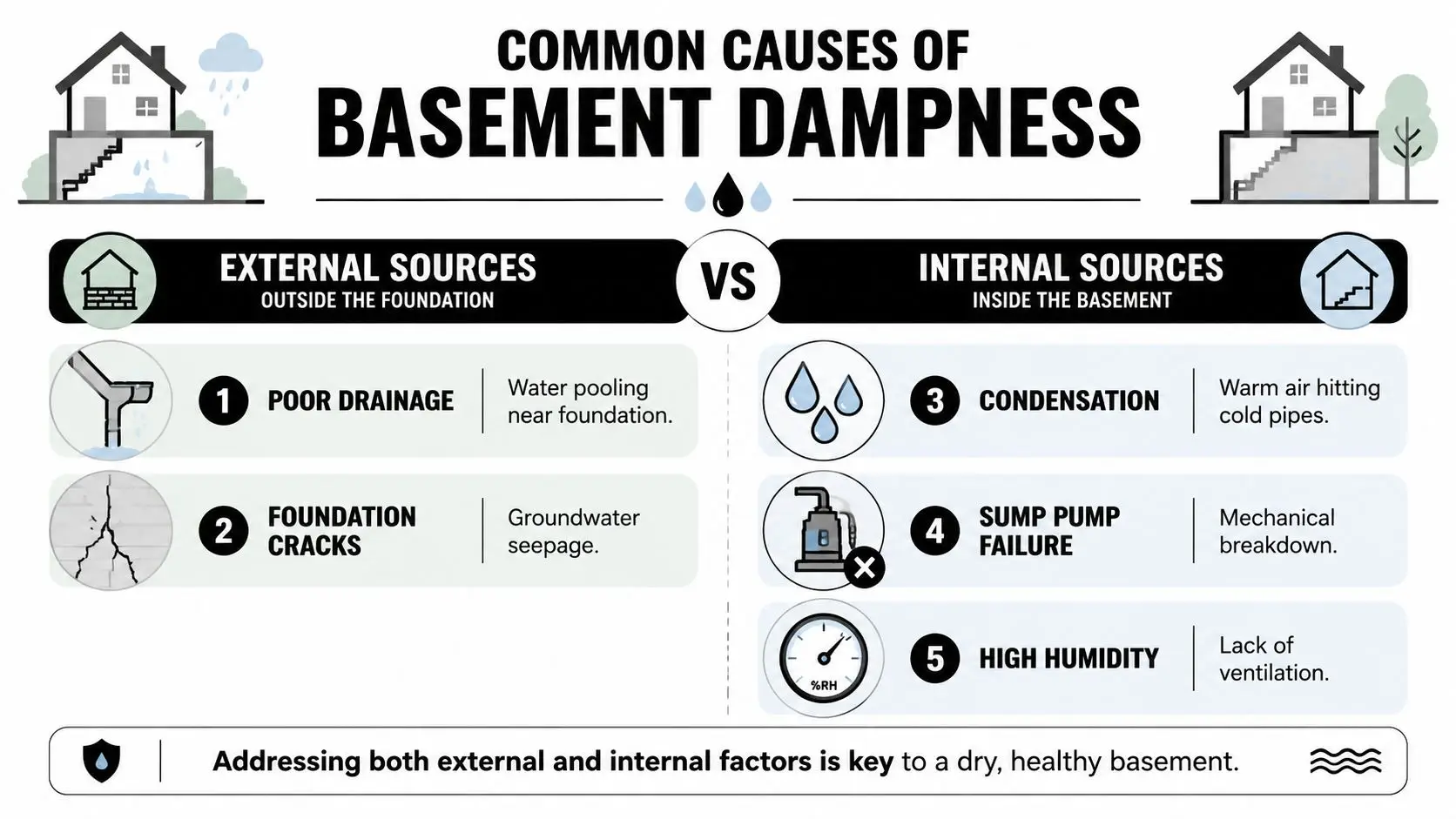
Groundwater pressure against the foundation
The biggest source of basement seepage is often hydrostatic pressure. This is the force water exerts against a submerged surface. When soil around your foundation gets saturated, that water pushes against basement walls and floors continuously. That pressure can reach up to 5,000 pounds per square foot on foundation walls, forcing moisture through porous concrete during heavy rain or high water table conditions, as explained in this overview of common causes of basement moisture and how waterproofers address them.
Tell-tale signs include:
- Damp wall bases where the wall meets the slab
- White chalky residue on masonry or concrete
- Recurring wet spots after storms
- Peeling paint or bubbled wall coatings
Condensation from indoor and outdoor air
Not every damp basement has a leak. In Phoenix, I often see basements that are technically dry from a groundwater standpoint but still feel clammy because humid air meets cool surfaces. Cold water lines sweat. Supply vents cool nearby materials. Concrete stays cooler than the living space above.
This type of moisture usually shows up as:
- Beads of water on pipes
- Cool, clammy walls
- A muggy feel without visible seepage
- Musty odors strongest in summer
Exterior drainage failures
A basement can stay damp because water isn't being moved away from the house correctly. Gutters overflow. Downspouts dump too close to the foundation. Soil settles toward the home instead of away from it. Hardscape can also trap runoff where it shouldn't.
That's one reason site work matters more than many homeowners realize. Even outside of houses, the same drainage logic applies to slabs and foundations. If you want a practical example of how surface prep and runoff control affect concrete performance, this article on excavating and forming durable shed pads explains the relationship well.
Plumbing leaks and hidden interior sources
Some basement moisture has nothing to do with rain. A loose shutoff valve, sweating HVAC components, a slow water heater leak, or a drain issue can mimic foundation seepage. The clue is usually pattern. Plumbing leaks tend to stay active regardless of weather.
Sump and drainage system failure
If a home already has a sump pump or drainage channel, don't assume it's working just because it's installed. Pumps fail. Floats stick. Discharge lines clog. Interior systems also need maintenance.
Quick field guide for homeowners
| Symptom | More likely cause | What to check first |
|---|---|---|
| Wet floor edge after storms | Groundwater pressure or exterior drainage | Downspouts, grading, wall-floor joint |
| Damp pipes and muggy air | Condensation | HVAC supply, pipe insulation, humidity |
| Isolated wet area in all weather | Plumbing or appliance leak | Water heater, softener, shutoffs, drains |
| Musty smell with no visible water | Elevated humidity or hidden damp materials | Stored contents, corners, carpet edges |
If you're also trying to separate moisture damage from actual microbial growth, this page on how to test for mold in a basement can help you think through that next step.
The Hidden Risks of a Damp Basement
Homeowners often tolerate basement dampness because the damage seems slow. That's exactly what makes it expensive. A basement doesn't have to flood to create serious structural and air-quality problems.
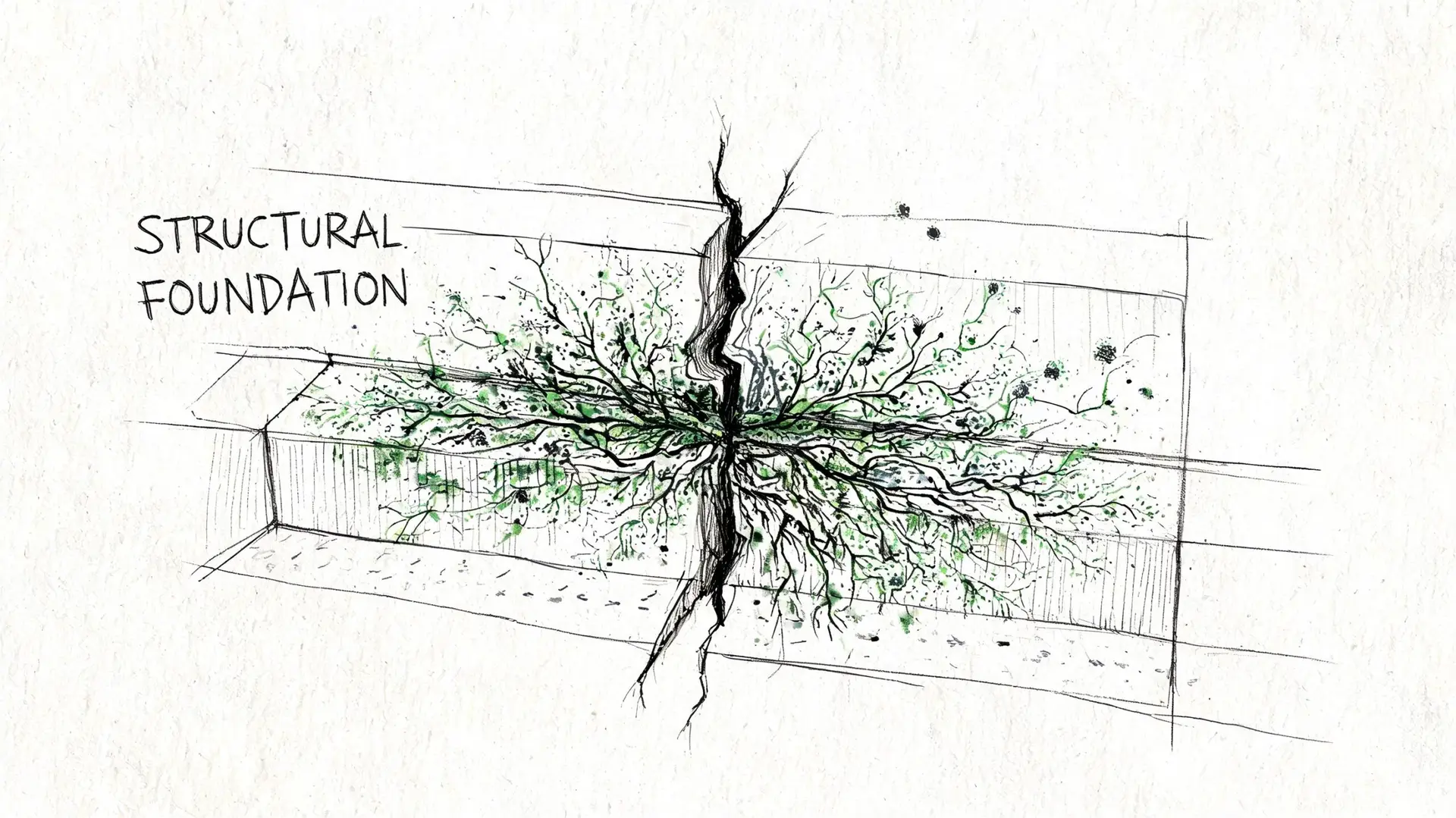
Structural damage starts with repeated moisture exposure
Concrete looks permanent, but it isn't immune to water. Prolonged moisture exposure degrades concrete by breaking down its chemical composition, leading to crumbling and weakening. This increases the foundation's susceptibility to cracks and fractures over time, according to this review of basement moisture survey findings.
Once moisture stays in the assembly, several things can happen:
- Concrete surfaces weaken and begin to shed material
- Cracks widen over time, especially when soils move
- Wood framing near damp masonry can rot
- Finished materials fail early, including baseboards, drywall, insulation, and flooring
Retaining structures show a similar pattern. Water pressure, poor drainage, and movement behind the wall often create visible distress long after the actual problem started. This guide to identifying common retaining wall drainage problems is helpful because it mirrors what happens around many home foundations.
Practical rule: If materials keep getting wet, they don't “adapt.” They deteriorate.
Health and indoor air concerns rarely stay in the basement
Even when the basement door stays shut, the house still shares air. Moisture in one part of the structure affects other parts because air moves through framing cavities, stairwells, returns, gaps, and utility penetrations. That's why a damp basement often turns into a whole-house odor complaint.
Common consequences include:
- Musty smells migrating upstairs
- Mold growth on stored items and finish materials
- Poorer indoor air quality
- More irritation for people sensitive to damp environments
If you're concerned about what ongoing moisture can lead to, this overview of the dangers of mold in basement areas is worth reading.
The key point is simple. Dampness in basement spaces doesn't stay neatly contained. It affects the structure, the contents, and the air people breathe in the rest of the home.
Your First Steps DIY Detection and Temporary Fixes
When a homeowner catches basement dampness early, a few simple checks can narrow down the cause fast. These aren't permanent solutions. They're ways to gather evidence, reduce immediate moisture stress, and avoid making the problem worse.
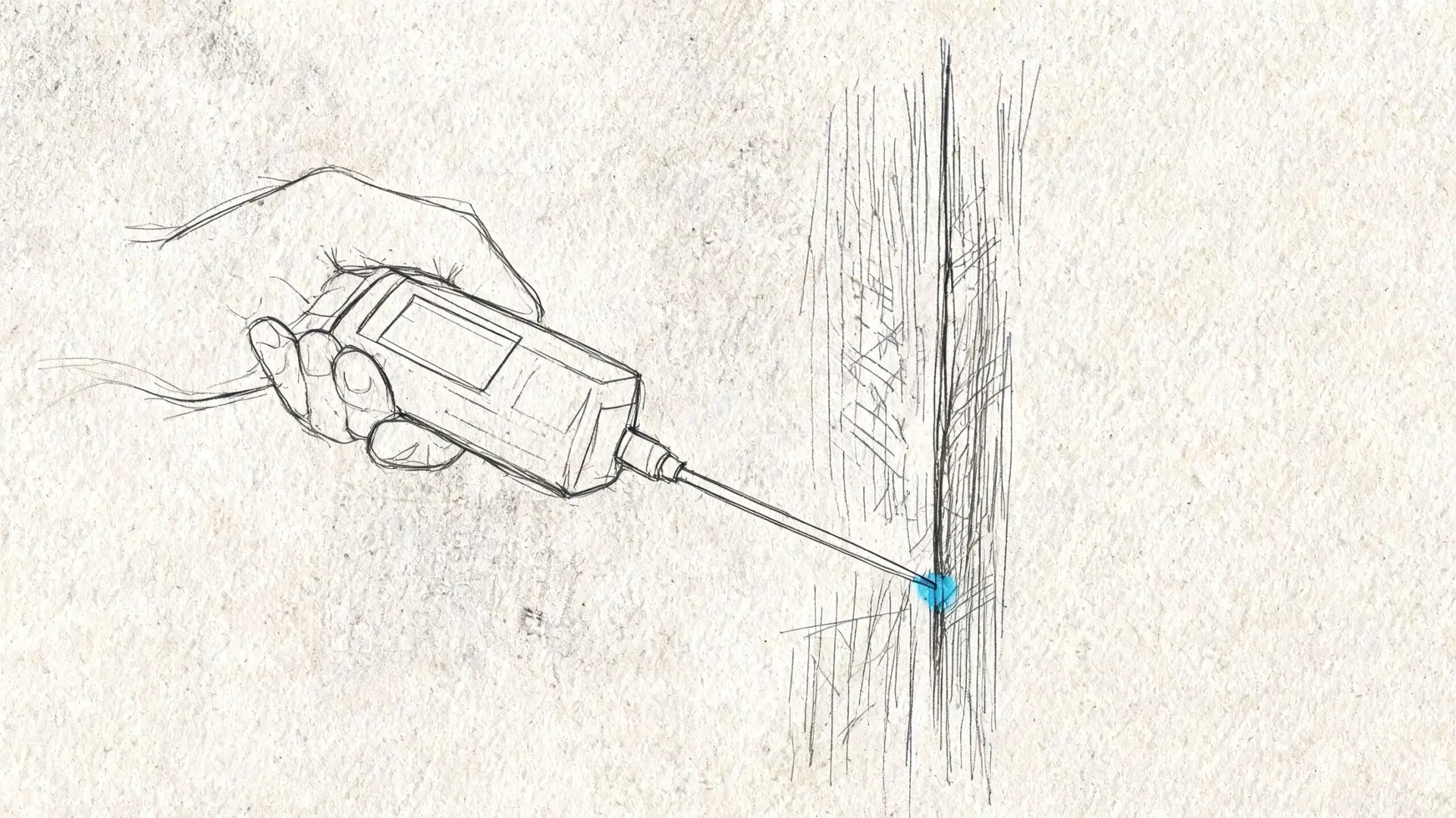
Start with observation, not products
Before you buy waterproof paint or a bigger dehumidifier, check timing and location.
- Track weather patterns. If the dampness appears after storms, look outside first.
- Check whether the moisture is localized. One corner suggests a specific source. A broad muggy feel suggests humidity or condensation.
- Look low. Water often shows first at the wall-floor joint, behind stored boxes, or under rugs.
- Use your hand and your nose. Cold and clammy surfaces matter. So do odors concentrated near one wall.
A basic moisture meter can help compare one area against another, but readings are only useful when paired with context. Wet readings near a pipe chase mean something different than wet readings along an exterior foundation wall.
Try the plastic sheet test
Tape a small square of clear plastic tightly against a concrete wall or slab and leave it in place for a day or two. If moisture forms on the room side, indoor humidity is likely condensing there. If moisture appears behind the plastic, the concrete is likely transmitting moisture from within or behind the assembly.
This isn't a lab-grade diagnosis, but it's a useful homeowner test.
If a dehumidifier helps the air but the wall still feels damp, you probably haven't reached the source yet.
Temporary fixes that can buy you time
These steps can help reduce damage while you arrange a fuller inspection or repair:
- Run a dehumidifier in the affected zone. Place it where air can circulate, not boxed into a corner.
- Use fans carefully. Air movement helps surfaces dry, but it won't stop active seepage.
- Move contents off the floor. Plastic bins on shelving are safer than cardboard on concrete.
- Check gutters and downspouts outside. Overflow near the foundation often shows up inside later.
- Remove wet materials early. Rugs, boxes, and pad can hold moisture longer than concrete does.
For homeowners dealing with actual wet materials rather than just humidity, this guide on how to dry out a flooded basement gives a practical overview of first-response drying.
A quick visual walkthrough can also help you recognize patterns before they spread:
What not to rely on
Don't count on these as permanent cures:
- Waterproof paint alone
- A fan pointed at a wet wall
- One dehumidifier for an active intrusion problem
- Masking odor with fragrance products
Those can make the basement feel better for a while. They don't correct drainage, pressure, condensation mechanics, or hidden wet materials.
Long-Term Solutions for a Permanently Dry Basement
A basement stays dry long-term when the fix matches the moisture pathway. Good remediation isn't about one magic product. It's a system. Some methods keep water away from the house. Others manage water that still gets close. The right answer depends on whether you're dealing with runoff, pressure, air movement, cracks, or a combination.
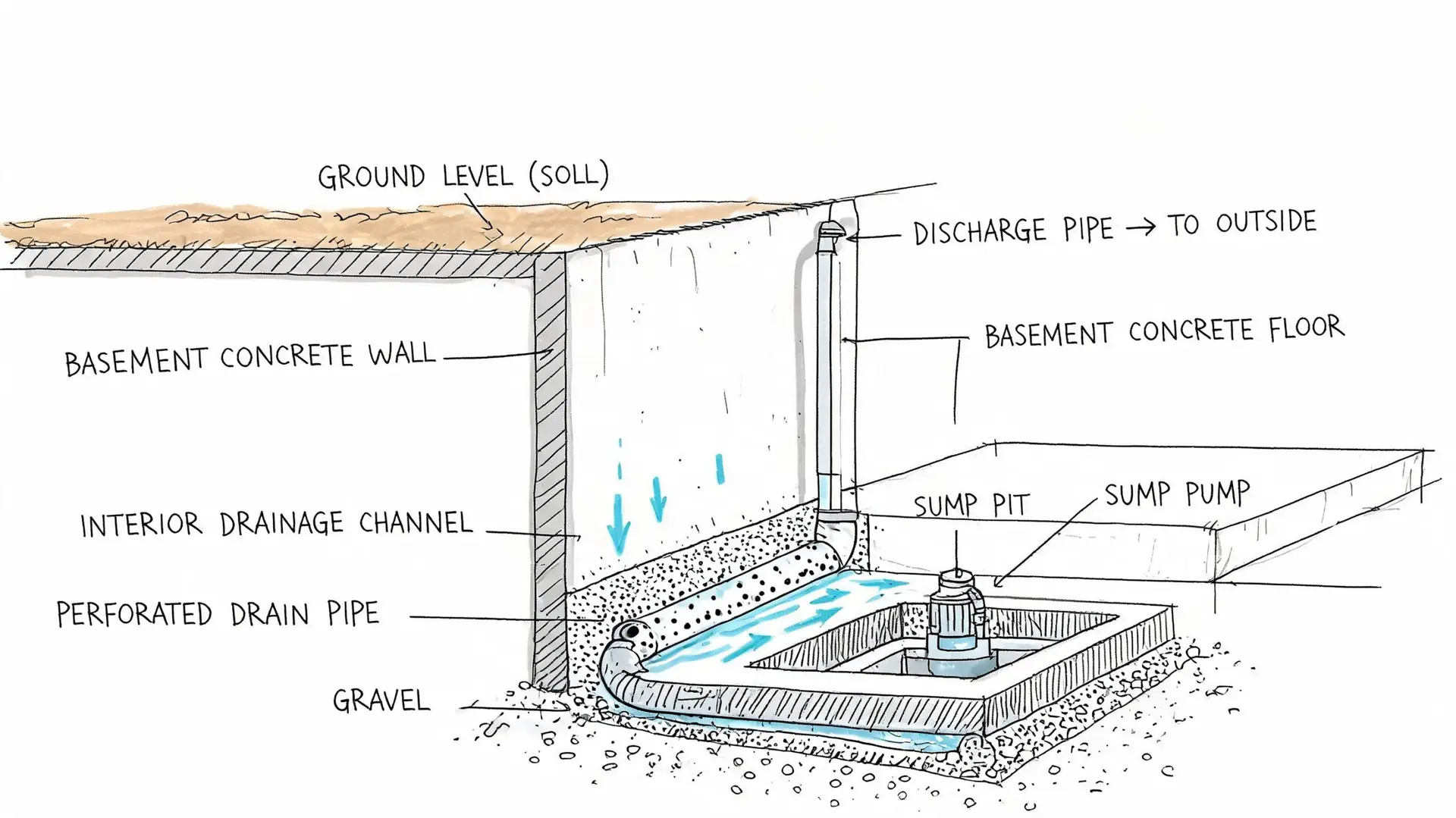
Exterior fixes stop the load before it reaches the wall
Exterior work is often the most direct way to reduce basement moisture because it addresses the pressure source. Depending on the house, that may include regrading soil, extending downspouts, correcting hardscape runoff, installing curtain or French drains, or exposing and waterproofing foundation walls from the outside.
These jobs can be disruptive, but they attack the cause instead of managing the symptom. When outside drainage is clearly the issue, exterior correction is usually the cleaner building-science answer.
Interior systems control water that gets through
Some homes can't be fully corrected from the exterior without major excavation. In those cases, interior water management can be the practical path. That might include perimeter drainage channels, drain tile, sump pump systems, vapor control layers, and crack injection using epoxy or polyurethane depending on the crack type and movement.
Interior systems don't make outside water disappear. They intercept, collect, and remove it before it damages the living space. That distinction matters. A managed basement can perform very well, but it's different from blocking all water at the exterior face.
Air sealing and humidity control matter more in Phoenix than many expect
In homes where condensation is driving the problem, air sealing and dehumidification are part of the permanent fix. The source might be humid outdoor air leaking in, supply air overcooling surfaces, or moisture accumulating around rim joists and utility penetrations.
Professional drying and moisture control commonly follow IICRC S500 standards, using high-capacity dehumidifiers to maintain relative humidity below 50% and air movers to accelerate evaporation so the structure returns to a safe, pre-loss condition, as described in this explanation of why a basement feels damp and how drying is handled.
Drying equipment treats wet materials. Waterproofing and drainage address why those materials got wet.
Matching the solution to the symptom
| Problem pattern | Better long-term solution | Usually not enough |
|---|---|---|
| Water after storms | Regrading, downspout correction, drainage system | Dehumidifier alone |
| Moisture through cracks | Crack injection plus drainage correction | Paint-on coating |
| Muggy air and sweating surfaces | Air sealing, insulation strategy, dehumidification | Fans only |
| Repeated wall-floor seepage | Interior drain system and sump, or exterior waterproofing | Surface patching |
After the space is dry and stable, finish materials matter too. Flooring is a common failure point in damp basements. If you're comparing resilient finish options, this guide on durable waterproof floors for GA homeowners is useful for understanding what types of flooring hold up better in below-grade spaces.
The best long-term result usually comes from combining categories. Drainage without drying leaves wet materials behind. Drying without source control means the problem returns.
The Phoenix Factor Dampness in a Desert Climate
Phoenix homeowners often ask the same reasonable question: how can a basement have moisture problems in the desert?
The answer is that desert climates create sharp moisture events, not an absence of moisture risk. Phoenix gets long dry stretches, then intense storms, aggressive cooling loads, and soil movement that generic basement advice doesn't fully address.
Monsoons create sudden water load
A home can go weeks looking perfectly fine, then take a hard hit during one storm cycle. In a 1-inch rain, 1,250 gallons of water fall on the roof of a 2,000-square-foot house, and in Phoenix that water can arrive fast enough to overwhelm standard drainage and saturate expansive clay soils around the foundation, as noted in this guidance on moisture in basements and water load from rainfall.
That matters because the issue isn't just rain volume. It's how quickly the site has to shed it.
Clay soil changes the stress on the foundation
Phoenix-area expansive soils can hold water, swell, and then shrink back during dry periods. That movement changes how the foundation is loaded. A home may stay quiet for months, then show damp spots, hairline cracking, or minor seepage after a weather shift because the surrounding soil just changed shape and moisture content.
Air conditioning creates its own moisture pattern
This is the part generic basement articles usually miss. In Phoenix, strong air conditioning can make basement walls, floors, and ducts cool enough to attract condensation when humid air enters during monsoon periods. So even if bulk water isn't pushing through the wall, the basement can still feel damp because the house is creating cold surfaces in a humid event window.
What Phoenix homeowners should watch closely
- Storm timing: Dampness that appears right after monsoon rain usually points outside.
- Seasonal odor changes: Mustier air during high AC use often points to condensation or hidden humidity.
- Crack behavior: Small changes in soil movement can reopen old vulnerabilities.
- Runoff handling: Homes need fast roof drainage and water discharge away from the foundation.
A dry climate doesn't cancel basement risk. It changes the pattern, which means diagnosis has to be local, not generic.
When to Call a Professional Restoration Expert
Some basement problems are worth monitoring. Others need a trained response right away. The trick is knowing the difference.
Call a professional when you see active seepage, standing water, visible mold growth, recurring moisture after every storm, or materials that stay wet even after ventilation and dehumidification. Foundation cracks that are changing, bowed finishes, lifting flooring, and strong odors that keep coming back also deserve a closer look.
What a proper inspection should sort out
A good restoration or moisture investigation should separate three questions that homeowners often bundle together:
- Where is the water coming from
- What materials are currently wet
- What needs drying versus repair versus waterproofing
Those aren't the same problem. A basement may need drying now, drainage correction later, and selective demolition only in isolated areas. Another may need a foundation specialist before any interior rebuild begins.
What the drying process usually involves
When materials are wet, professional drying follows IICRC S500 standards, often using high-capacity dehumidifiers to keep relative humidity below 50% and air movers to speed evaporation so the structure can be brought back to a safe, pre-loss condition. That standard matters because it keeps the process based on moisture conditions, not guesswork.
The right contractor shouldn't rush to tear everything out. They should identify what's wet, what's salvageable, and what caused it.
If you're evaluating who to call, this page on choosing a water damage restoration contractor is a practical place to start.
A note on insurance and expectations
Coverage depends heavily on the cause of loss. Sudden and accidental water events may be handled differently than long-term seepage or deferred maintenance. That's why documentation matters. Photos, timeline notes, moisture readings, and a clear description of when the issue began can make the conversation easier.
The main thing I'd tell any Phoenix homeowner is this: don't wait for a dramatic flood before taking basement dampness seriously. Musty odors, clammy walls, and recurring wet spots are often early warnings that give you a better chance to limit damage.
If your basement smells musty, feels clammy, or shows signs of hidden moisture after a storm, Restore Heroes can help you assess the issue and determine the next practical step. As an IICRC-certified restoration company serving the Phoenix metro area, the team handles water damage mitigation, structural drying, and moisture-related cleanup with a focus on clear communication and professional documentation.