
You pull a box out of storage, set it down, and notice a faint musty smell you've been ignoring for weeks. Then you look behind the stacked holiday bins and see a dark patch on the wall, or a little peeling paint near the floor, and suddenly the basement feels different. That moment is frustrating because it rarely looks like a disaster at first, yet the space below your feet has already been creating the exact conditions mold likes.
Basements are where homeowners run into the same trap again and again. The room feels dry enough at a glance, but the concrete stays cool, air moves slowly, and moisture can sit there long after the obvious water is gone. If you've been trying to figure out dampness in basement areas, the primary question usually isn't whether the basement got wet once, it's why moisture kept hanging around.
Why Basements Are a Perfect Storm for Mold
A basement often gives mold the three things it needs without much effort. It offers cool surfaces, limited airflow, and plenty of hidden places where dust, wood fibers, drywall backing, or cardboard can sit untouched. That combination is why a basement can go from “fine” to mold-prone with very little warning.
Think of a basement like a shaded corner of the house where water can linger. Concrete walls and floors stay cooler than upstairs rooms, so they can collect condensation when humid air meets them. Add storage boxes, framing, carpet backing, or wallboard, and you've got organic material for spores to colonize.
The U.S. EPA says indoor relative humidity should stay below 60%, ideally between 30% and 50%, and the NIEHS recommends controlling humidity and fixing leaking roofs, wet basements, and dripping pipes or faucets to prevent indoor mold growth (EPA mold course chapter 2). That matters because mold is really a moisture problem first. If humidity stays high or wetting keeps repeating, spores don't need a flood to start growing.
Practical rule: If the basement smells stale, feels clammy, or keeps making stored items damp, treat that as a moisture warning, not just a cleaning problem.
The other reason basements are so vulnerable is location. They sit closest to groundwater, foundation walls, slab seams, and plumbing lines, so small failures can show up there first. A tiny leak that would barely matter in a living room can become a mold factory downstairs because the moisture has nowhere to go.
The Three Ingredients Mold Needs to Grow
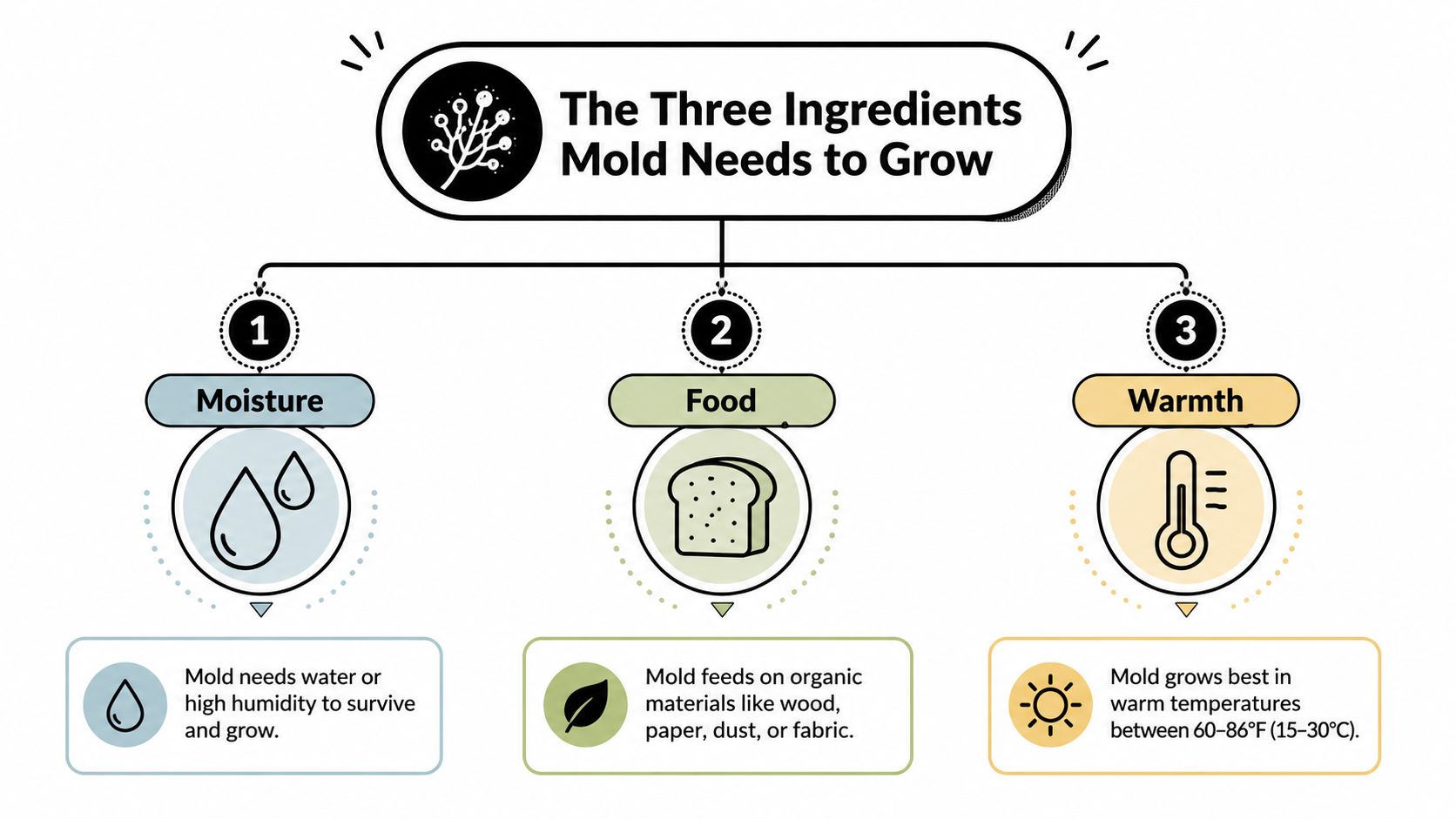
A basement can look dry and still support mold. The reason is simple, mold needs three things to take hold: moisture, food, and warmth. If even one of those ingredients is missing, growth slows down or stops.
Moisture is the switch that starts the process. Indoor air that stays too damp leaves surfaces wet longer, and mold gets the time it needs to settle in. EPA guidance says indoor humidity should stay below 60%, ideally between 30% and 50%, and it recommends controlling humidity while fixing leaks and wet areas to prevent indoor mold growth (EPA mold course chapter 2).
The food source is usually already in the room. Mold does not feed on concrete itself, but it can grow on the dust that settles there, the paper face on drywall, the cardboard in storage, the glue in flooring, and the wood in framing. That is why a basement filled with boxes, old carpet, or unfinished building materials can become a better target than an open utility area.
Warmth matters too, but not in the way many homeowners expect. Basements often stay cool enough for surfaces to collect moisture, yet they are still comfortable for mold growth. Spores are always present in indoor air, but they only become a problem when moisture hangs around long enough for them to attach and spread.
A basement can also trap air the way a closed car traps heat and humidity after rain. If that air never moves out, moisture lingers on walls, floors, and stored items, and mold has a steady place to grow.
Moisture starts the problem, time lets it spread.
That is why repeated dampness is a bigger concern than one wet spot that dries fast. A concrete patch that dries quickly is usually a short-term nuisance. A wall, box, or carpet edge that stays damp gives mold a place to settle, feed, and expand. If you are trying to fix damp basement walls, the first step is still finding where that moisture is coming from. For hidden slab leaks and similar problems, slab leak detection for basements can help identify a source that is not obvious to the eye.
The Main Moisture Pathways in a Basement
Basement mold usually starts with liquid water intrusion or persistent humidity, and the source is often more than one thing at once. Independent technical guidance describes seepage through slabs or walls, cold-joint entry, periodic high-water events, and moisture moving in from surrounding soil as core basement pathways (BMSCAT guidance). In plain terms, water gets in through structure, plumbing, weather, or air.
A hairline crack can matter. So can a loose pipe fitting, a wet sill plate, or air that turns into condensation when it hits a cool foundation wall. If you've ever wondered whether to fix damp basement walls, that decision usually starts with figuring out how the moisture is arriving in the first place.
| Pathway | How It Enters | Typical Trigger |
|---|---|---|
| Foundation seepage | Water works through porous concrete or cracks | Rain, groundwater pressure, poor drainage |
| Plumbing leaks | Water escapes from supply lines, drains, or fittings | Aging pipes, loose joints, hidden failures |
| Flooding and storm water | Water enters in larger volumes | Heavy rain, storm runoff, sewer backup |
| Condensation | Moist air hits cool surfaces and turns to water | Summer humidity, cold pipes, cool walls |
| Trapped humidity | Damp air lingers because it can't exchange well | Poor ventilation, closed spaces, long drying times |
| Exterior grading or waterproofing failure | Water pools against the house and pushes inward | Negative slope, clogged drainage, failed sealing |
Foundation seepage and groundwater intrusion
This is the classic basement problem. Water presses against the foundation, finds a crack, a cold joint, or a porous spot, and slowly enters the space. It may not look dramatic, but repeated seepage is enough to keep surfaces damp and feed mold over time.
Plumbing leaks
A leak from a supply line, drain, water heater connection, or washing machine line can wet framing, drywall backing, or flooring without making much noise. These problems are easy to miss because the water often appears far from the actual failure point. For suspected hidden plumbing issues, slab leak detection can matter when moisture seems to come from below rather than from the wall.
Flooding and storm-driven water
This one is obvious, but the aftermath is what causes trouble. Once a basement gets flooded, anything porous that stays wet can become mold-prone quickly. The water doesn't have to be high, it just has to sit long enough.
Condensation on cool surfaces
This is the hidden one many homeowners miss. Warm, humid air meets cold concrete or cold pipes, and water forms right on the surface. In a basement, that can happen without any visible leak at all.
Poor ventilation and trapped humidity
A basement can stay damp because the air doesn't move well enough to dry it out. Humidity lingers, wet items dry slowly, and surfaces remain in the danger zone. The problem isn't just water entry, it's water that can't leave.
Exterior grading and waterproofing failures
If the yard slopes toward the house or drainage is weak, water collects against the foundation and pushes inward. That pressure can keep walls damp even when the basement looks sealed from the inside.
The Hidden Causes Most Homeowners Miss
A lot of homeowners assume mold means a burst pipe or a visible flood. That's not always how it starts. In many basements, the first problem is humid air meeting cold surfaces, especially on foundation walls and pipes that never fully warm up.
That matters even more in places people think of as dry, including Phoenix. Outdoor air may feel arid, but indoor cooling can create local condensation on concrete, pipe runs, or storage items when warm air hits cold surfaces. Add summer humidity, closed windows, and constant air conditioning, and the basement can trap moisture without ever showing a dramatic leak.
Visible mold can appear within 24 to 48 hours on damp organic surfaces, and a colony can mature and begin releasing millions of spores within 7 to 10 days under the right conditions (Mold Inspection Canada). That timeline explains why a small damp patch or a wet cardboard box can become a much bigger issue faster than expected.
A basement doesn't need a flood to grow mold. It only needs surfaces that stay wet long enough.
Storage habits make this worse. Cardboard absorbs moisture and gives mold a place to feed. Clothing, paper goods, and boxes piled tight against a wall can trap damp air and hide early growth.
The tricky part is that no single sign has to show up first. A basement can look tidy, smell a little off, and still be developing growth behind stored items or under carpet edges. When humidity stays high and materials stay wet, mold doesn't need permission.
Early Warning Signs You Should Not Ignore
Mold rarely announces itself clearly at the start. The first clues are usually small, easy-to-dismiss changes in smell, texture, or how the basement feels when you walk in. A musty odor is one of the biggest tells, especially if it returns after you've cleaned or aired the room out.
Pay attention to surfaces too. Efflorescence on concrete, peeling paint, bubbling drywall, warped baseboards, or soft spots near the floor often point to moisture moving through or behind materials. If the same stain comes back after cleaning, that usually means the water source is still active.
Unexplained allergy flare-ups can also be a clue. Sneezing, watery eyes, coughing, or throat irritation that happens more when someone spends time downstairs can point to hidden mold or damp dust. Those symptoms aren't proof by themselves, but they're a reason to look harder.
The best habit is simple observation. Check corners, the backs of stored items, the bottoms of drywall panels, and the areas around windows, utility lines, and pipe runs. If you want a more practical walk-through, signs of water damage in basement areas are often the same clues that help reveal hidden mold.
If a surface looks fine but smells damp, trust the smell and keep investigating.
Hidden mold is the version that causes the most confusion because it grows behind finished walls, under carpet, or inside insulation. That's why a clean-looking basement can still be the one causing the musty odor upstairs.
Practical Steps to Prevent Basement Mold
Start with the air. A dehumidifier is one of the most direct ways to cut mold risk because it helps keep basement humidity in the safer range. The EPA recommends venting moisture-producing appliances outdoors and keeping drip pans and drain lines clear, while North Dakota State University advises reducing or stopping humidifiers when winter humidity climbs above 40% (EPA brief guide to mold, moisture, and your home).
Then work on water outside the house. If the soil slopes toward the foundation, rainwater has a direct path to the basement. Good drainage around the yard matters just as much as anything you do inside, and best yard drainage methods from R E and Sons Landscaping can help homeowners think through the exterior side of the moisture problem.
Inside, stop condensation at the source. Insulate cold water pipes, keep appliances checked, and seal small cracks before they become wet entry points. If a wall weeps after storms or the floor stays damp near the perimeter, the fix usually needs to address both water entry and drying.
Simple prevention moves that make the biggest difference
- Use plastic bins instead of cardboard: Cardboard absorbs moisture and gives mold a place to feed.
- Keep storage off the floor: A few inches of space under boxes improves airflow and reduces contact with damp concrete.
- Dry wet areas quickly: The longer moisture lingers, the easier it is for mold to establish itself.
- Open the space up for airflow: Better circulation helps moisture leave instead of collecting in corners.
- Check appliance lines and drain paths: Small drips can become chronic dampness over time.
If you're looking for a practical starting point, how to prevent mold growth is usually less about one big fix and more about stacking a few small ones. Each one makes the basement less comfortable for mold.
The goal isn't perfection. It's keeping moisture from staying long enough to become a pattern.
When to Call a Certified Restoration Company
Small, contained spots on nonporous surfaces can sometimes be cleaned safely with the right protection and a dry basement afterward. Bigger problems call for a different approach. If mold covers more than 10 square feet, keeps coming back after cleaning, involves sewage or floodwater, or shows up inside HVAC ducts, professional remediation is the safer route.
A certified crew does more than wipe visible growth. They look for the moisture source, map affected areas, and use containment so spores don't spread through the house. For a broader service overview, mold damage restoration is the kind of work that becomes necessary when the issue is no longer local to one corner or shelf.
Health symptoms matter too. If anyone in the home is dealing with respiratory irritation that seems worse around the basement, don't keep guessing. The safer move is to stop exposure, identify the moisture source, and decide whether the job is still a homeowner cleanup or a restoration project.
Restore Heroes is one local option for homeowners who need a certified assessment in the Phoenix area. A professional visit usually focuses on moisture mapping, source identification, and deciding whether the problem is surface-level or part of a larger hidden issue.
Key Takeaways and Common Questions
Mold in basements starts with moisture, not the mold itself. Keep the three ingredients in mind, moisture, food, and a favorable temperature, and remember that the main pathways are liquid water intrusion and persistent humidity. If you need a place to start, a dry basement, good drainage, and humidity control will do more than constant scrubbing ever will.
For homeowners comparing remediation options, water and mold remediation is only worth pursuing after the moisture source is addressed. A musty smell does not always mean visible mold, but it does mean something is staying damp. Mold can return quickly after cleaning if the wet material never fully dries.
A dehumidifier alone can help, but it won't fix seepage, plumbing leaks, or grading problems. The best results come from combining drying, drainage, and source repair so the basement stops feeding mold in the first place.
Restore Heroes helps Phoenix-area homeowners deal with basement moisture, mold, and water damage by finding the source, drying affected areas, and restoring the space with professional remediation methods. If your basement smells musty, keeps getting damp, or shows signs of hidden growth, visit Restore Heroes and take the next step toward a drier, safer home.