
From 2019 through 2023, U.S. fire departments responded to an estimated average of 328,590 home-structure fires annually, causing an average of $8.9 billion in direct property damage each year. Put life safety first, stop further damage by shutting off utilities and ventilating only when safe, document every condition for insurance, and call a licensed, IICRC-certified restoration professional within 24 hours to begin mitigation.
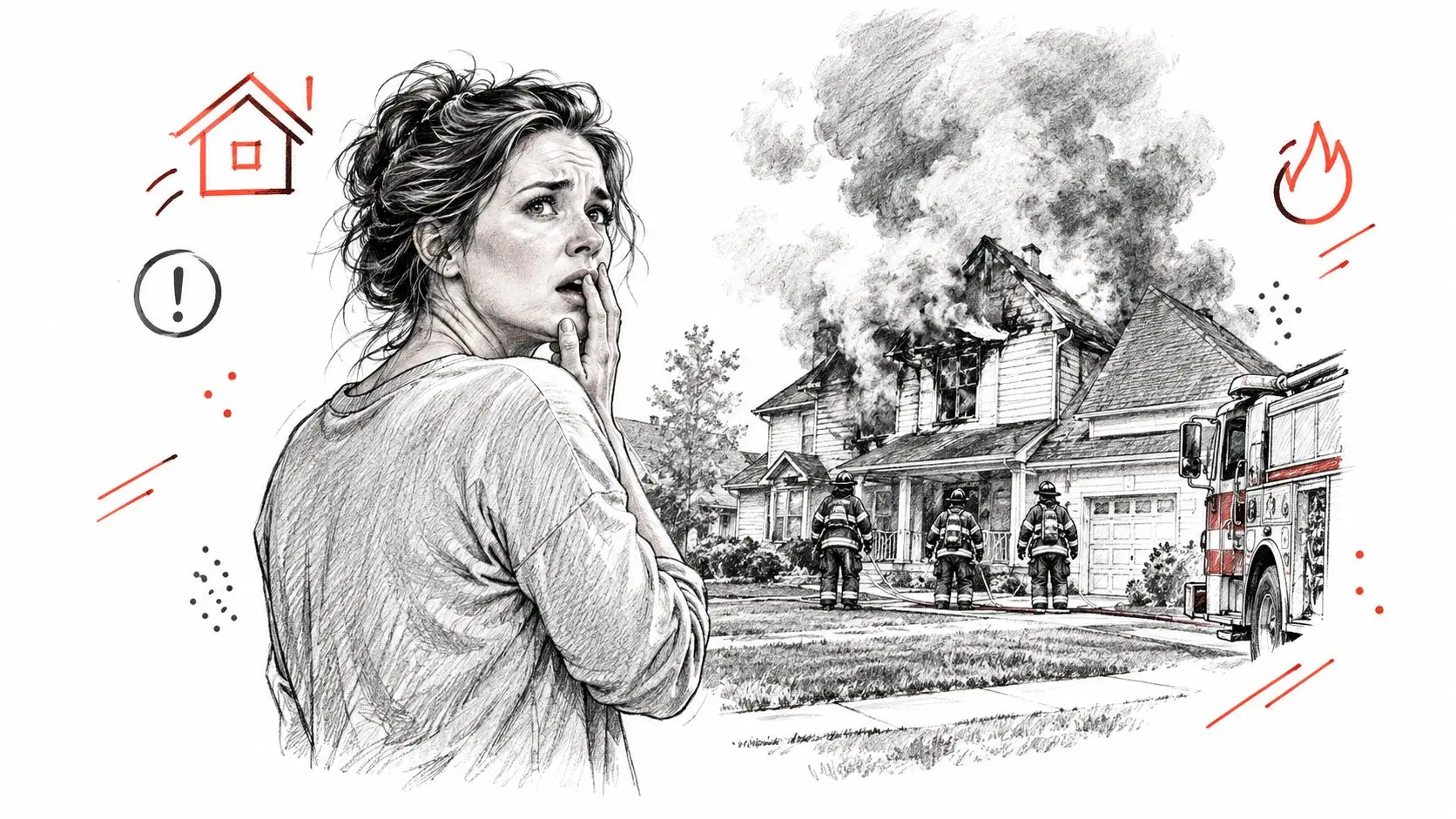
It's early morning. The fire department has contained the blaze, your family is standing on the lawn, and the house looks unfamiliar behind the smoke-darkened windows. You may be wondering whether you can go back inside for medication, whether the smell will ever leave, or what to tell your insurer first.
The first 72 hours are less about cleaning and more about making controlled decisions. Smoke residue, firefighting water, damaged contents, unstable surfaces, and contaminated HVAC systems can create problems beyond the room where flames were visible. The safest response is orderly: protect people, secure the property, preserve evidence, and bring in trained help before an eager cleanup turns a manageable loss into a wider one.
The First Hours After a House Fire
A Phoenix homeowner once stood beside her driveway with a phone, keys, and insurance papers. The fire was out, but smoke still drifted from a broken window. She wanted to retrieve family photographs. I advised her to wait until the fire department approved limited re-entry and a restoration professional identified a safe route.
That decision can prevent a second emergency. Firefighters confirm that the immediate fire threat is controlled, but their departure does not prove the structure is safe. Roof sections, ceilings, floors, electrical components, gas lines, plumbing, and wall cavities may remain damaged. Suppression water can also keep moving through flooring, insulation, cabinetry, and contents after the flames are gone.
National fire data shows why the first response deserves care. Single-family and two-family homes accounted for 68% of reported home fires but 85% of home-fire deaths during the period cited earlier, according to NFPA's home-structure fire data. The figures reinforce a practical point: treat the building as a changing worksite until qualified professionals assess it.
Make the first call in the right order
Start with people. Anyone with breathing trouble, burns, or other injuries needs 911 or medical care. Keep children, older adults, pregnant people, and anyone with asthma or heart or lung disease away from smoke, ash, standing water, and cleanup areas.
Homeowners can safely document conditions from outside or another approved location, photograph rooms before moving contents, gather policy information, and make a list of urgent needs. They should not test electrical equipment, disturb suspected structural damage, clean heavy soot, enter contaminated areas, or switch on HVAC equipment without professional direction.
The first 72 hours require judgment about what can wait. A certified fire restoration professional can evaluate hidden moisture, smoke residue, contents, and building systems, then establish containment and cleaning priorities. The newly published IICRC S700 standard sets industry best practices for professional fire and smoke damage restoration, giving contractors a clearer framework for that work.
A practical house-fire recovery checklist helps track calls, documents, temporary expenses, and property conditions while stress is high. It supports the restoration process, but it does not replace a qualified assessment.
Immediate Safety Steps and Damage Control
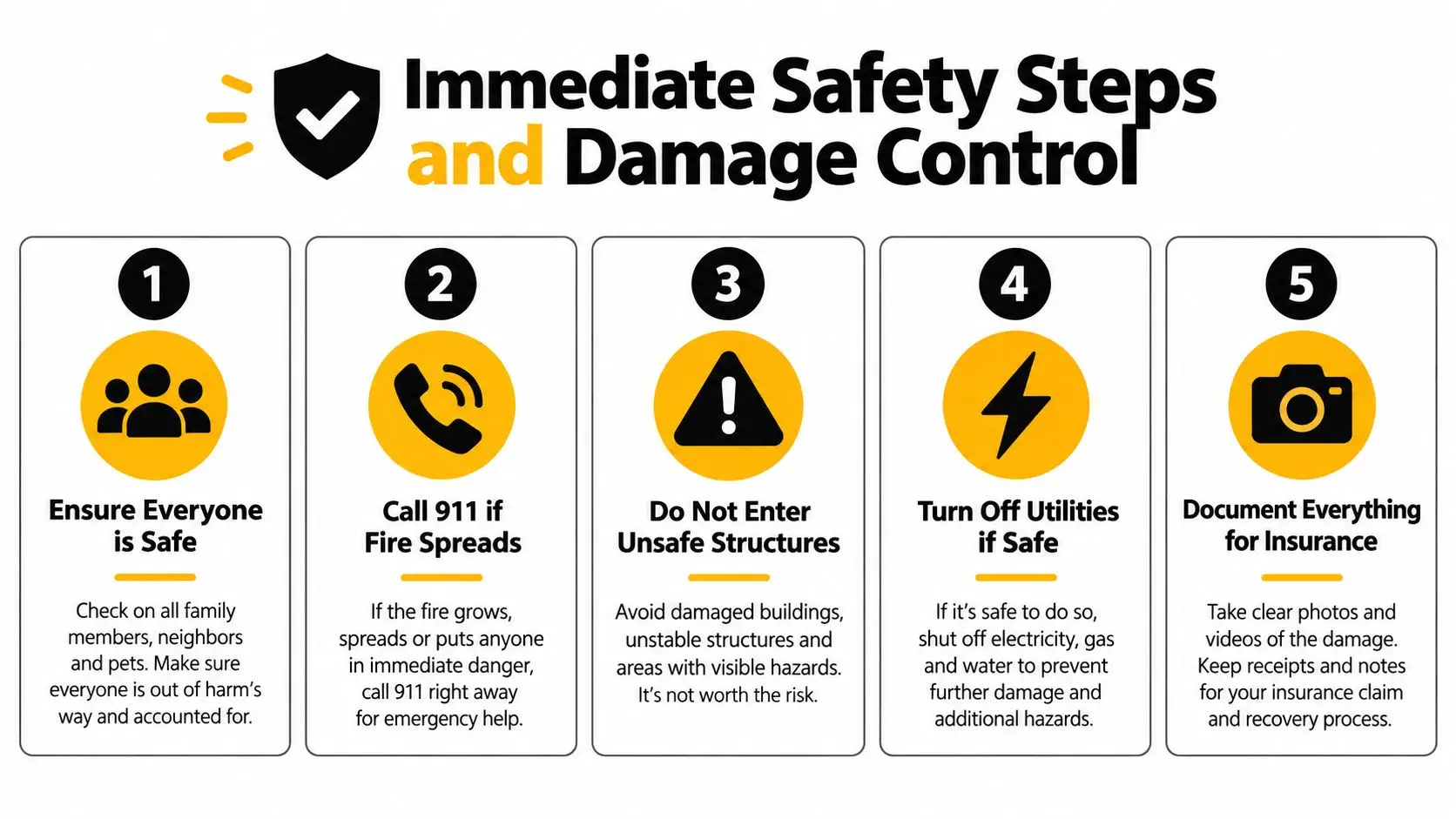
The first 72 hours should follow a simple rule: control hazards before attempting salvage. A defensible emergency fire-damage workflow begins with life safety and documentation, not cleaning. Confirm that re-entry is permitted, then assess the roof, windows, doors, electrical service, utilities, HVAC components, and structural openings from a safe position.
Five actions that prevent avoidable mistakes
Confirm that everyone is safe. Move occupants and pets away from smoke, ash, standing water, and unstable sections of the property. Cleanup areas should remain off limits to vulnerable household members.
Shut off utilities only when it's safe. Follow direction from firefighters, utility personnel, or a qualified professional. Don't operate damaged electrical panels, gas controls, or plumbing valves if fire, heat, water, or structural movement has affected them.
Secure openings and exposed areas. Broken windows, damaged doors, and roof openings can allow weather, animals, or unauthorized people into the building. Professional emergency board-up services provide a safer way to stabilize those openings while preserving access for inspection.
Ventilate selectively. Open windows or use ventilation only when outdoor air quality permits and doing so won't spread smoke or ash through the property. Keep HVAC equipment off until ducts, filters, coils, and nearby components have been assessed.
Document before discarding or cleaning. Photograph rooms, surfaces, contents, openings, water, soot patterns, and damaged systems. Keep a written inventory, save receipts, and note which items were moved for safety.
What homeowners can handle
You can usually handle administrative and low-risk tasks from outside the affected area. Call your insurer, photograph visible conditions, collect prescription medication if responders approve entry, preserve receipts, and separate uncontaminated essentials without walking through soot or debris.
You may also place clean, dry belongings in a protected area if you can do so without crossing contaminated zones. Wear gloves when handling ash- or soot-exposed items, and change clothing and footwear before entering clean spaces.
What not to do
Don't dry sweep ash. Don't use a conventional household or shop vacuum, because it can redistribute fine particles. EPA guidance supports lightly misting hard surfaces, wet mopping, and using a HEPA-type vacuum instead. Even then, premature wet cleaning can spread soluble soot and drive ash into porous materials, making removal more difficult. The FEMA smoke-damage remediation guide explains why material-specific decisions matter.
Don't spray generic cleaners onto upholstery, documents, electronics, unfinished wood, or clothing. Don't restart HVAC equipment just because the home feels hot. If you're comparing broader property-protection advice after a storm or roof opening, Aastro Roofing Company's storm guide offers useful context on why exposed building areas need prompt, careful protection.
What Professional Fire Restoration Involves
A professional response starts with a systematic assessment. The technician should identify the fire's origin area, smoke and soot migration, water impact, structural concerns, contents at risk, HVAC exposure, and openings that need stabilization. During the first 72 hours, this assessment guides safe decisions about what can remain in place, what needs protection, and what requires controlled removal. The written scope should separate cleaning, removal, drying, and reconstruction planning.
Assessment comes before demolition
Technicians document residue intensity and boundaries, inspect adjacent rooms, and check for contamination hidden beyond the visible burn pattern. They evaluate ceilings, wall cavities, insulation, flooring, cabinetry, contents, and air-distribution components. They also coordinate with the insurer and, where relevant, the authorities having jurisdiction.
Homeowners can usually provide access information, identify rooms used by family members, and point out medication, documents, or other priorities. They should leave structural inspection, HVAC evaluation, soot removal, and work above damaged ceilings to trained professionals. Opening walls or moving saturated materials can spread contamination and expose unstable areas.
The sequence generally runs from source control and stabilization to gross particulate removal, detailed surface cleaning, contents processing, odor treatment, HVAC assessment, and final verification. Firefighting water may require extraction and structural drying before cleaning begins. Trapped moisture behind finishes can support further damage, so cosmetic soot removal alone does not resolve the problem.
Watch the work closely enough to understand the purpose of each stage. This video offers a visual introduction to the equipment and restoration activities involved.
Contents need a separate plan
Technicians stabilize and segregate belongings, record their condition, identify salvageable materials, and select methods based on residue chemistry and material type. Dry, exposed surfaces may receive low-suction HEPA vacuuming with the nozzle held slightly above the surface. Brushes, water, and household cleaners can grind soot into fibers or push it deeper.
Weak furniture, framed artwork, paper, electronics, clothing, and porous furnishings require different handling. Items that cannot be cleaned safely on site may need controlled pack-out, specialized cleaning, storage, or documentation for replacement consideration.
On January 2, 2025, the IICRC announced publication of ANSI/IICRC S700, the first American National Standard specifically for professional fire and smoke damage restoration. The IICRC standard information covers fire-residue and odor assessment, affected buildings and contents, HVAC management, restoration cleaning, work plans, documentation, contractor qualifications, and coordination with authorities.
The fire damage restoration process shows how assessment, mitigation, cleaning, deodorization, and repair planning fit together. A properly managed project should leave a documented trail, not merely a home that looks cleaner.
Navigating Insurance Claims After Fire Damage
The fire crew has left, and the first 72 hours begin with smoke odor, damaged contents, and urgent decisions. Build the claim file while conditions are still clear. Record safe photographs, room-by-room notes, a contents inventory, receipts, purchase information, warranties, user manuals, temporary-living expenses, and every written exchange with the insurer. Homeowners can document and organize these materials themselves. Stay out of unstable or contaminated areas, and leave soot removal, structural drying, odor control, and hazardous contents to a qualified restoration professional.
Keep receipts, preserve damaged property, and document every conversation with your adjuster
Arizona's Department of Insurance and Financial Institutions states that homeowners insurance generally covers fire and smoke damage to the home's structure and personal belongings. A policy may also cover Additional Living Expenses when occupants must evacuate. Keep receipts for lodging, food, and other evacuation-related costs, while checking the policy's limits, conditions, and exclusions described in Arizona's disaster assistance guidance.
Do not discard damaged property after photographing it. Wait for the insurer to inspect the items and authorize disposal in writing or by email. Keep furniture, clothing, appliances, electronics, documents, and building materials available for inspection. If an item presents a health or safety hazard, notify the adjuster and restoration contractor promptly, and record why controlled handling is required.

Ask the restoration company to document conditions and prepare an estimate, but remember that the insurer decides what the policy covers. Request the claim number, adjuster's contact details, applicable deadlines, and emergency-mitigation instructions. Keep copies of estimates, authorizations, invoices, emails, photographs, and call notes. The newly published ANSI/IICRC S700 provides a framework for documented fire and smoke restoration work, which can help align the contractor's records with the claim.
Property managers handling a rental fire must track the building loss separately from tenant belongings, access issues, and temporary accommodation. The resource on homeowner insurance help for property managers can support that process.
Understand where FEMA fits
FEMA cannot duplicate benefits covered by insurance. If the policy leaves expenses uninsured, FEMA may request a settlement, denial letter, or proof that the loss is not covered. A denial because damage fell below the deductible can also serve as documentation.
Applicants have up to 12 months from the date of their FEMA application to submit insurance documents, according to FEMA's guidance on submitting insurance documents. Continue communicating with the insurer while seeking other assistance. The fire damage insurance claims guide can help organize adjuster conversations, but the policy controls coverage decisions.
Choosing the Right Restoration Contractor
During the first 72 hours after firefighters leave, a contractor's speed matters, but judgment matters more. The right team will explain what can be stabilized safely, what requires trained technicians, and which decisions should wait for inspection and documentation. Compare qualifications, safety controls, communication, and the written scope before authorizing work.
Compare qualifications, not just response time
Ask whether the company is licensed, bonded, and insured, and request proof you can verify. Confirm relevant IICRC credentials, identify the project supervisor, and ask who will be on site during emergency work. The newly published ANSI/IICRC S700 provides a recognized framework for systematic, documented fire and smoke restoration.
Homeowners can usually photograph accessible areas, record damaged contents, save receipts, and remove themselves from unsafe rooms. They should not enter a structurally compromised building, handle suspected asbestos or hazardous debris, clean heavily soot-coated surfaces, operate contaminated HVAC equipment, or discard damaged property without direction from the insurer and restoration team.
| Evaluation point | Strong practice | Warning sign |
|---|---|---|
| Assessment | Written scope, photographs, residue boundaries, moisture findings, and HVAC review | A quick visual price with no supporting details |
| Safety | Re-entry controls, protective equipment, and containment | Workers moving through debris without controls |
| Contents | Inventory, segregation, condition notes, and material-specific methods | Everything labeled “cleanable” without examination |
| Insurance | Clear adjuster communication and preserved evidence | Pressure to discard items or sign unclear paperwork |
| Contract | Services, exclusions, change-order process, and payment terms in writing | Vague promises or unexplained charges |
Questions worth asking before signing
Ask what the first visit includes, which emergency measures are proposed, and how unaffected rooms will be protected. Ask whether HVAC equipment stays isolated until assessed, how potentially salvageable contents are handled, who records damage, and how additional work receives approval.
Be cautious if anyone demands immediate signatures or payment, discourages insurer involvement, or promises that every cost will be covered. A contractor can organize evidence and communicate with the adjuster, but coverage is controlled by your individual policy, not by the restoration company. Arizona insurance guidance explains that policies contain limitations. Review Arizona's fire readiness and insurance coverage information before assuming a proposed service is covered.
Choose the team that separates safe homeowner tasks from professional work, identifies unanswered questions, and documents each decision before conditions change.
Key Takeaways for a Smoother Recovery
The best first-72-hour response is calm, documented, and deliberately limited. You don't need to solve the entire property loss from the driveway. You need to prevent additional harm and make the next professional decision easier.
Protect people first. Follow fire department instructions, keep vulnerable occupants away, and don't enter an unsafe structure.
Control further exposure. Shut off utilities only when safe, secure openings, and isolate HVAC equipment until a qualified assessment is complete.
Document before disturbing. Photograph rooms and contents, create an inventory, save receipts, and preserve damaged property until the insurer authorizes disposal.
Avoid aggressive DIY cleaning. Dry sweeping, ordinary vacuums, premature washing, and generic cleaners can spread or set soot. Handle only low-risk tasks that don't expose you to debris or contamination.
Call qualified help promptly. Look for a licensed, bonded, insured, IICRC-certified contractor that can stabilize the structure, evaluate smoke and water damage, process contents, document the work, and communicate with your insurer.
Treat smoke-only damage seriously. A property outside the burn area can still have ash and smoke in vents, filters, carpets, furnishings, and other hidden reservoirs. Guidance for properties just outside burned areas supports inspecting exterior surfaces, interiors, vents, and HVAC systems rather than relying only on visible soot.
A cleaner-looking room isn't proof that the restoration is complete. The meaningful finish includes controlled contamination, evaluated HVAC systems, documented contents decisions, reduced odor sources, and a clear plan for repair or reconstruction.
Restore Heroes provides 24/7 emergency fire and smoke damage restoration in the Phoenix metro area, including board-up, stabilization, soot cleanup, odor removal, contents handling, water extraction, structural drying, and reconstruction support. If your home or commercial property has been affected, visit Restore Heroes to request help with the next safe step.