
The most popular advice about mold is also the least useful: “Just remove it.” Taking away visible mold can improve a surface while leaving the leak, damp cavity, contaminated insulation, or unsafe air pathway untouched. The decision in mold remediation vs removal isn't which label sounds more professional. It's what finish line your property needs.
For a small, isolated spot on a hard surface, careful cleaning may be reasonable. A leaking wall, wet drywall, contaminated HVAC pathway, sewage intrusion, or affected area likely needs a controlled remediation plan. Phoenix properties face their own moisture patterns, including air-conditioning condensation, plumbing failures, roof leaks, and monsoon intrusion, so a dry climate doesn't eliminate indoor mold risk.
| Criterion | Mold Removal | Mold Remediation |
|---|---|---|
| Main purpose | Physically takes contaminated material or growth out of the building | Corrects the moisture problem and manages the entire cleanup |
| Typical work | Cleaning, demolition, disposal, or extraction | Assessment, containment, source correction, cleaning, drying, and verification |
| Primary concern | What gets removed | How contamination is controlled before, during, and after the work |
| Documentation | May show removed materials or cleaned surfaces | Should show moisture correction, containment, drying, inspections, and final condition |
| Main risk when used alone | Hidden moisture and cross-contamination remain | Requires more planning, controls, and evidence of completion |
Why the Words Mold Remediation and Removal Are Not the Same
Mold removal is an action. Remediation is a strategy. The difference matters because a contractor can remove visible growth without correcting the conditions that caused it. The CDC explains that remediation requires physically removing mold from contaminated surfaces, not merely disinfecting them, but the process also addresses moisture, containment, drying, cleaning, and the condition of the building before reoccupancy. CDC guidance on water and wind damage describes removal as one part of the larger response.
A removal-only quote may cover cutting out mold-damaged drywall, throwing away porous furnishings, or wiping a stained surface. That work can be necessary, but it isn't a complete answer if a failed condensate line is still dripping, a roof opening is still admitting water, or a wall cavity remains damp. Painting or caulking over mold doesn't stop regrowth, because the water problem must be corrected first.
Phoenix owners should ask a sharper question than “How much mold will you remove?” Ask, “How will you prove the moisture source was corrected and the area is ready for use?” That question protects health, supports insurance documentation, and exposes cosmetic fixes that only make the visible surface look better.
Practical rule: If the proposal doesn't explain source correction, containment, drying, cleaning, and final verification, it describes a task, not a finished remediation.
Odor adds another layer of confusion. A deodorizer can mask a smell while porous materials or hidden contamination remain. For general odor-control ideas, how to remove mold odor can help with the distinction between treating a smell and addressing its source. Property owners who want a broader explanation of the service category can also review what remediation services include.
The practical standard is simple: removal describes what leaves the building. Remediation describes how the building is returned to a dry, controlled, visibly clean condition.
How the Mold Remediation Process Works
A competent remediation job follows a defined order. Technicians do not tear out every stained material or spray chemicals across the room. They identify the moisture source, isolate the affected area, and decide which materials can be cleaned, dried, or removed.
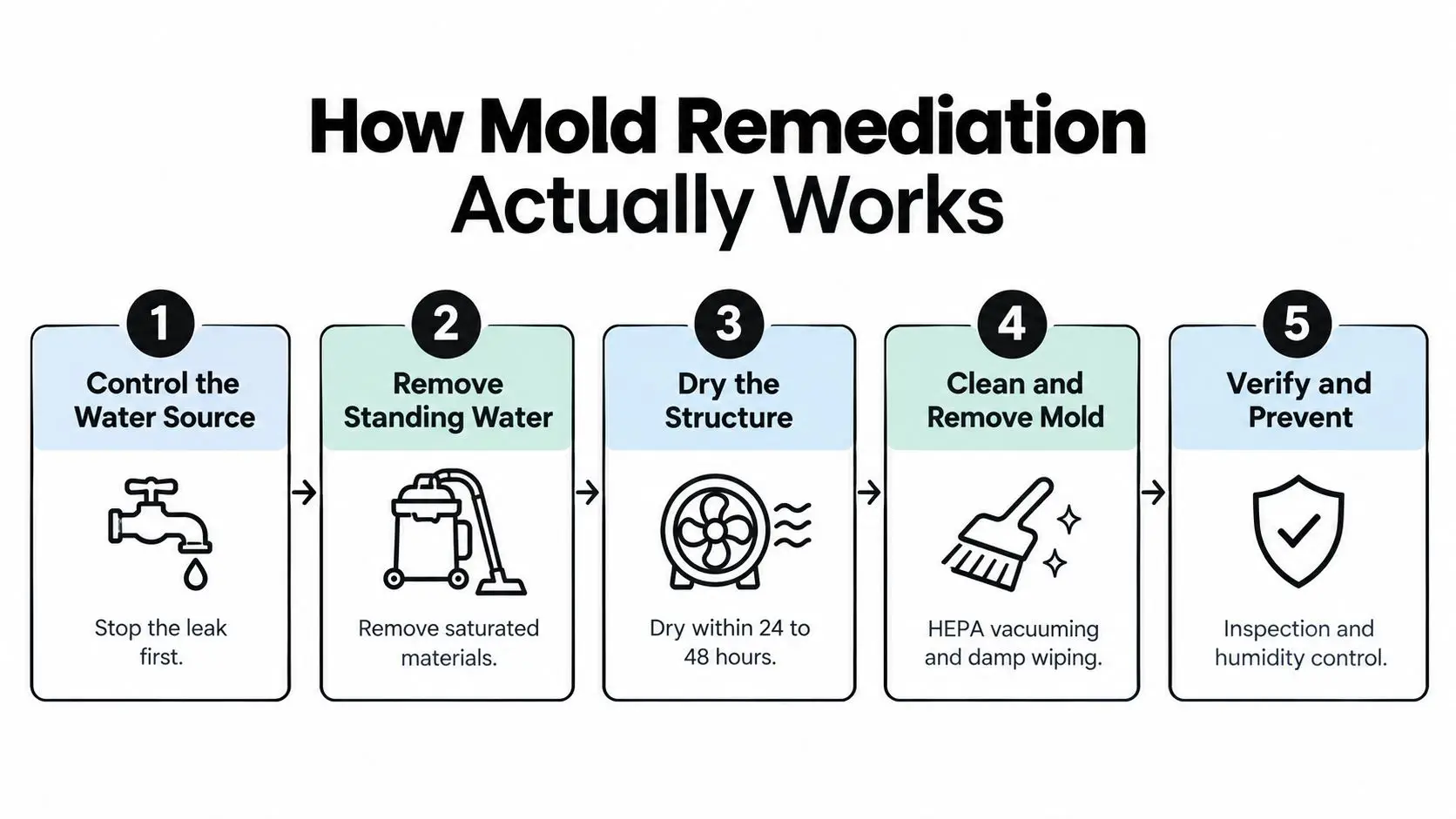
The work starts with water control
Stop the source first. That may require repairing a plumbing connection, correcting an air-conditioning drain problem, closing a roof opening, or sealing water entry around a window. The technician should document both the source and the repair. Cleaning without source control invites recurrence.
The crew then removes standing water and separates wet contents from dry areas. Saturated drywall, insulation, carpet, and other porous materials may require disposal if they cannot be fully cleaned and dried. Removal belongs at this stage, after the team understands the affected materials and the route contamination could take.
Drying determines the next decision
EPA guidance recommends drying wet materials within 24 to 48 hours when possible, keeping indoor humidity below 60%, ideally between 30% and 50%, and discarding porous materials that cannot be adequately cleaned and dried. EPA's homeowner mold and moisture guidance supports these benchmarks.
Technicians may use moisture meters, dehumidification, and controlled air movement. EPA also warns against using fans after mold growth has started because airflow can spread spores. Fans and dehumidifiers can still support drying when electrical conditions are safe and active growth is not being dispersed.
Cleaning and disposal are material-specific
Hard, nonporous surfaces may be cleaned with an appropriate method. Porous materials require a different decision because contamination can extend beyond the visible face. A worker may remove affected drywall, clean exposed framing, use HEPA-filtered equipment, and wipe nearby surfaces instead of treating the entire room indiscriminately.
The job ends with inspection and prevention. The crew checks whether the area is dry, dust and debris are gone, adjacent spaces were affected, and the original moisture pathway has been addressed. Our step-by-step guide to mold remediation expands on each stage, while every Phoenix-area property still needs its own assessment.
Mold Remediation vs Removal Side by Side
The difference becomes clearer when you compare decisions rather than definitions. Removal can be the correct physical action, but remediation determines when, where, and how that action occurs.
| Criterion | Mold Removal | Mold Remediation |
|---|---|---|
| Scope | Removes visible growth or contaminated materials | Manages the full corrective process from source control through verification |
| Process rigor | May involve cleaning, demolition, or disposal | Uses assessment, containment, protection, drying, cleaning, and final evaluation |
| Typical performer | Homeowner for a small isolated hard-surface spot, or a contractor for limited work | Trained restoration or remediation professionals handling controlled building work |
| Common situation | A limited, accessible, nonporous surface that can be cleaned | Water-damaged assemblies, concealed growth, HVAC concerns, extensive contamination, or sensitive occupants |
| Documentation | May be limited to an invoice or disposal record | Should include scope, moisture readings, containment checks, repairs, cleaning, and final observations |
| Stand-alone outcome | The surface may look clean while moisture or spores remain elsewhere | The property has a documented path toward a dry, clean, controlled condition |
A removal job is often narrower. The technician may remove a visibly colonized piece of drywall, bag it, clean the exposed framing, and leave once the immediate material is gone. That can be appropriate if the moisture source is already corrected, the affected area is limited, and surrounding spaces are verified.
Remediation is more demanding because it manages the exposure pathway. The team may seal vents, establish negative pressure, protect occupants, control demolition, clean settled dust, dry the structure, and inspect adjoining areas. A good plan also explains what happens to contents, HVAC openings, and materials that appear clean but were exposed to moisture.
The trade-off is straightforward. Removal is faster to describe, but remediation is harder to fake. A surface can be visually improved without producing evidence that the building is dry or that contamination wasn't redistributed.
Before approving a quote, compare the scope line by line. If one proposal promises “mold removal” and another lists moisture mapping, containment, controlled demolition, HEPA cleaning, drying records, and final inspection, you're not comparing identical services. Review practical questions about mold remediation cost without treating any general estimate as a promise for your property.
Containment Thresholds and Material Decisions
Visible size matters, but it isn't the only decision point. Two areas that look similar can require different responses because one involves cleanable tile while the other involves wet insulation connected to an occupied room or HVAC return.
EPA guidance recommends limited containment for affected areas of roughly 10 to 100 square feet, using a single layer of 6-mil fire-retardant polyethylene. For contamination exceeding 100 square feet, or work likely to spread spores, the guidance calls for full containment with double polyethylene barriers, an airlock or decontamination chamber, sealed vents, and negative pressure. EPA's commercial mold remediation containment guidance provides the operational framework.
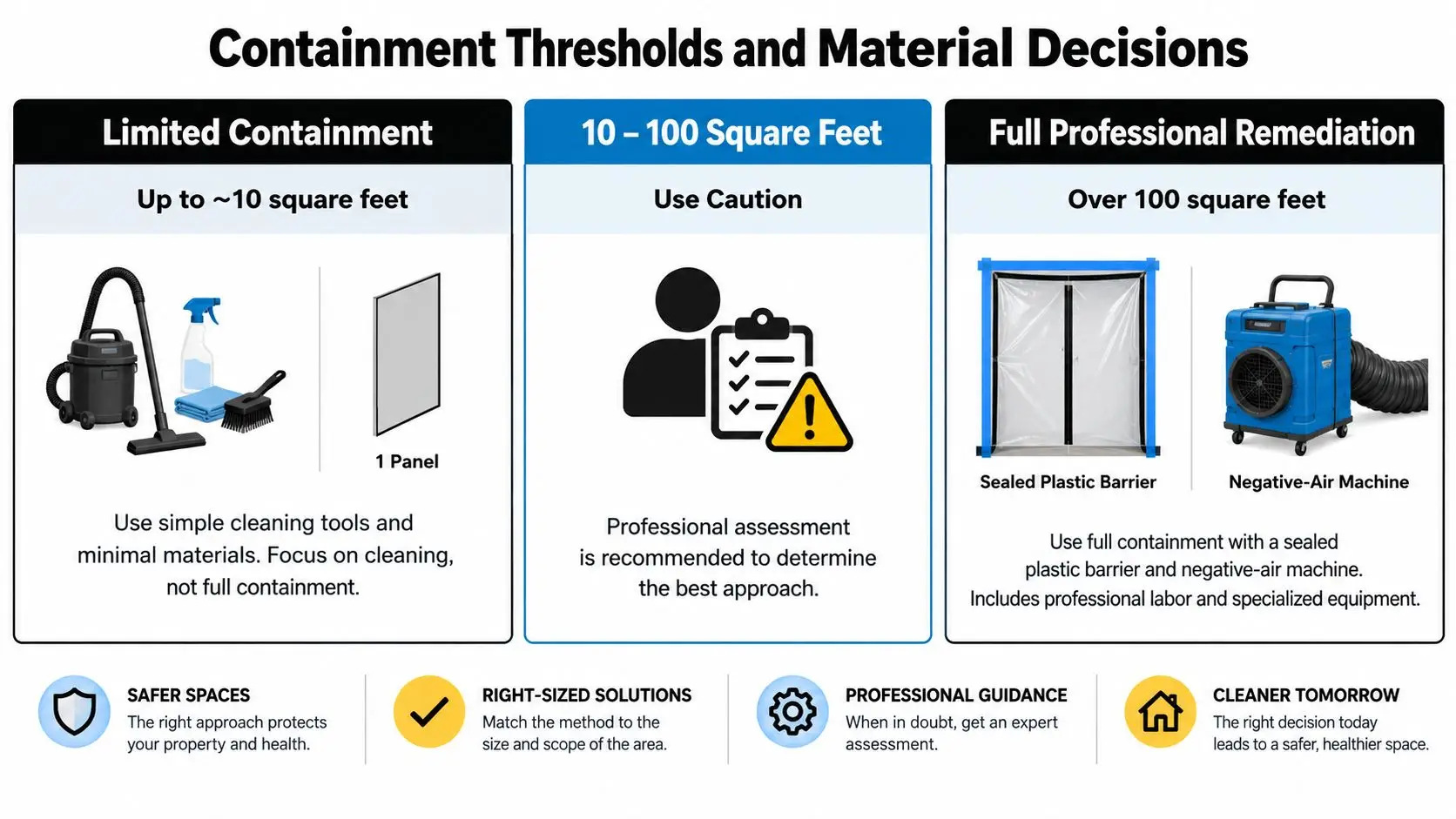
Material porosity changes the answer
Nonporous materials such as some metal, glass, and sealed surfaces may be cleanable. Porous materials, including carpet, ceiling tile, insulation, and some drywall, can hold contamination where ordinary wiping can't reach. If a porous item is visibly colonized, structurally compromised, or impossible to dry and clean adequately, removal is usually the practical choice.
That doesn't mean every porous item automatically goes in a dumpster. The decision should account for condition, moisture history, accessibility, and whether cleaning can be verified. A careful contractor records those reasons rather than using a one-size-fits-all demolition rule.
Hidden pathways can override the area estimate
HVAC connectivity changes the risk because disturbed material may spread through connected air pathways. Sewage-contaminated water also changes the work plan because it introduces additional contamination concerns and requires suitable PPE and containment. Vulnerable occupants can justify professional involvement even when the visible patch is limited.
The square-foot estimate starts the conversation. It doesn't finish the assessment.
Before work begins, ask whether the contractor evaluated the moisture source, material type, structural condition, HVAC relationship, occupied areas, and occupant sensitivity. Guidance on removing mold from behind walls is especially relevant when a clean-looking wall may conceal wet framing or insulation.
Real Scenarios Phoenix Property Owners Face
A Scottsdale condo with an air-conditioning condensate pan overflow may show a small brown area below an interior unit. The visible drywall could be removed, but the better plan starts with correcting the drain or pan problem, checking the wall cavity, and measuring moisture around the opening. If the framing is dry and the surface contamination is limited, the work may stay localized. If moisture traveled through the wall or reached insulation, controlled removal and drying become necessary.
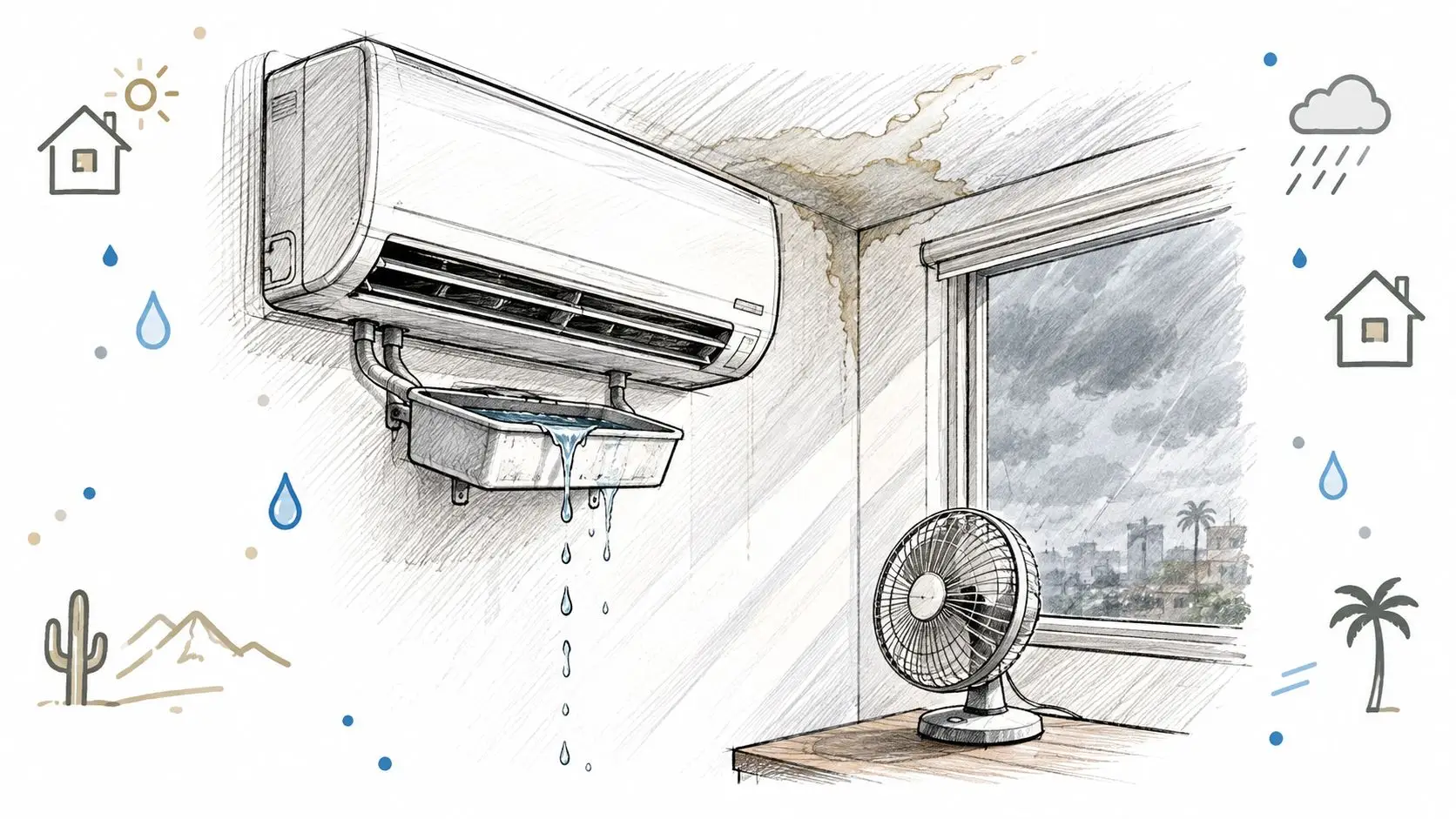
A Chandler home may develop roof-related moisture after a monsoon storm. The mold visible on a ceiling isn't the first problem to solve. The roof opening, wet insulation, attic airflow, and ceiling assembly need evaluation before anyone seals or paints the surface. A property owner arranging the building-envelope repair may need a qualified roofing contractor, such as Rooftop Solutions roof repair, while a restoration team handles interior drying and contaminated materials.
A Mesa rental with post-flood drywall creates a different management problem. The property manager must protect tenants, document the affected rooms, decide what contents can be salvaged, and preserve records for the owner and insurer. If the water was contaminated, the crew should increase controls rather than treating the area like an ordinary household spill.
A commercial reception wall with a slow plumbing leak can look minor while affecting baseboards, wall cavities, furnishings, and the building's daily operations. The work plan should show how the contractor will isolate the reception area, maintain safe access, inspect adjacent rooms, and avoid spreading dust into occupied spaces. The right answer may be partial removal, but the decision should come from moisture and material findings, not from the cheapest visible repair.
These scenarios share one lesson: the same amount of visible mold can produce different work plans. Location, source, material, occupants, and air movement matter as much as appearance.
Health and Safety Exposure Controls That Matter
Ordinary household cleaning and professional remediation aren't interchangeable activities. CDC recommends, at minimum, a NIOSH-approved N95 respirator, non-latex gloves such as vinyl, nitrile, or rubber, and goggles that provide complete eye protection without open ventilation holes. For prolonged work involving moldy belongings or moldy drywall removal, a half-face or full-face respirator may be appropriate. CDC cleanup guidance explains the basic protection requirements.
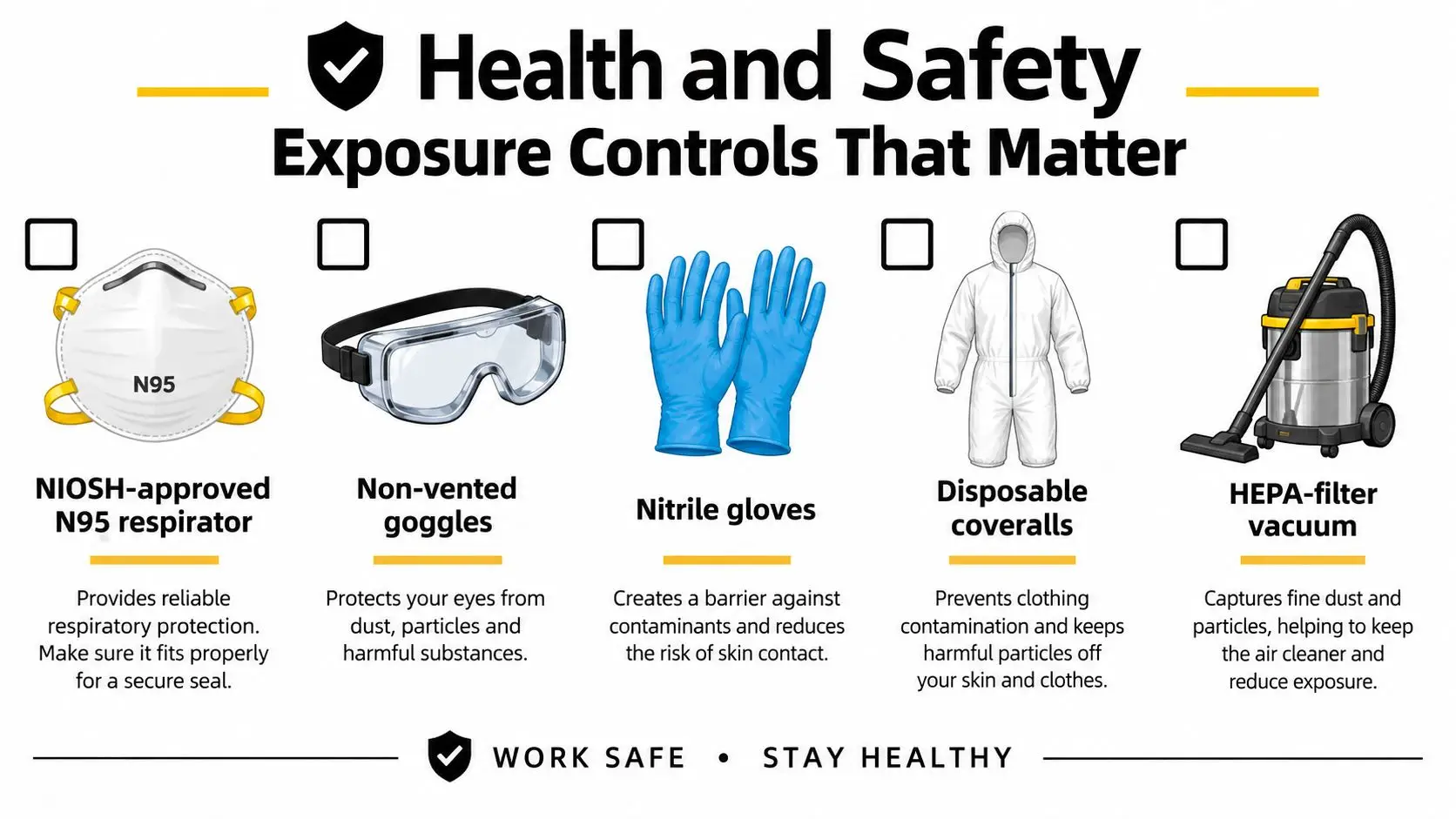
People with allergies, immune suppression, underlying lung disease, asthma, or COPD may face greater health risks and shouldn't participate in cleanup in relevant circumstances. Keep those occupants away from demolition and uncontrolled disturbance, and don't assume a mask alone makes a hazardous work area suitable for everyone.
A professional crew should be able to explain how it will protect occupants, isolate the work, bag removed material, clean equipment, and prevent contaminated dust from entering clean areas. Ask whether the plan includes sealed HVAC openings, negative pressure when appropriate, HEPA-filtered equipment, and a controlled exit path for workers and debris.
An air purifier can support general indoor air management, but it isn't a substitute for source correction, containment, or removal of contaminated material. If you're comparing equipment for ongoing air-quality support, you can shop for a mold air purifier, while treating it as a supplementary measure rather than the remediation itself. For properties where airborne concerns need professional evaluation, air quality testing may be part of the broader assessment, depending on the project protocol.
How to Choose a Certified Mold Professional
Don't choose a contractor because the proposal uses the word “remediation.” Choose one that can show a repeatable process and explain the evidence it will collect.
The ANSI-approved IICRC S520 standard is designed for residential, commercial, and institutional buildings. It specifies procedures and precautions for mold remediation involving structures, contents, and building systems, with the 2015 edition serving as the current standard before the 2024 revision. ANSI information on IICRC S520 helps explain why professional remediation is organized around milestones rather than a single visible-mold measurement.
Questions that reveal process quality
Ask these before authorizing work:
- Certification: Is the company currently IICRC-certified for the work it proposes?
- Scope: Does the written plan identify the moisture source, affected materials, containment method, cleaning approach, drying equipment, and final inspection?
- Measurements: Will the crew record moisture readings before and after drying?
- Containment: How will it protect adjacent rooms, vents, contents, and occupied areas?
- Demolition: What determines whether drywall, insulation, carpet, or furnishings are cleaned or discarded?
- Documentation: Will you receive photographs, readings, repair notes, disposal records, and final observations?
- Coordination: Who handles the plumbing, roof, HVAC, or other source correction if a separate trade is needed?
- Business safeguards: Can the company provide proof of licensing, bonding, insurance, and its emergency response capabilities?
A credible contractor won't promise that every item can be saved or that every insurance claim will be covered. It should explain the trade-offs, identify unknowns, and revise the scope when concealed conditions appear.
The strongest proposals define a finish line before work starts. “No visible mold” is too vague. “Moisture source corrected, affected assemblies dry, containment removed after cleaning, adjoining areas inspected, and records delivered” is a workable standard.
What a Finished Mold Job Looks Like
A finished mold job leaves more than a clean-looking room. It leaves a record showing what caused the moisture, what was removed, what was cleaned, how drying was verified, and what the crew inspected before closing the work area.
Before removing containment, the contractor should check its integrity, inspect adjoining spaces and air pathways, and confirm that settled dust and debris are gone. The file should include photographs, moisture readings, repair notes, disposal records, and final observations. Post-remediation verification may be appropriate for the project protocol, insurer, property transaction, or risk profile. CDC and NIOSH mold testing and remediation guidance supports source correction, drying, cleaning, and controlled evaluation rather than a promise to eliminate every spore.
Use the decision aid to set documentation requirements:
- Small isolated spot on a hard, nonporous surface: Keep the cleaning record and document that the moisture source was corrected.
- Wet drywall, insulation, carpet, or concealed growth: Require material decisions, drying readings, containment photographs, and the reason each affected item was cleaned or discarded.
- More than 100 square feet, HVAC involvement, contaminated water, or vulnerable occupants: Require containment logs, pressure readings, air-pathway inspections, and post-remediation verification records, not casual cleanup.
- Any disputed insurance or real-estate situation: Require a signed scope, dated photographs, moisture records, repair documentation, and final observations.
My recommendation is direct. Anything beyond a small, isolated hard-surface cleaning deserves a licensed, bonded, insured, and IICRC-certified local professional. Restore Heroes handles Phoenix-area assessment, source identification, containment, removal, drying, cleaning, and sanitation. Visit Restore Heroes to request an onsite evaluation.