
A week after a small kitchen or garage fire, you may walk back into the house and notice that the flames are gone, the windows are open, and the worst of the soot has been wiped away. The odor may still cling to cabinets, clothing, or drywall, while everyone in the family feels mostly fine. That combination can make the situation confusing: if the fire was contained, how serious can the smoke exposure be?
The answer depends less on what you can see than on what people breathed, for how long, and under which conditions. Fire smoke damage to lungs can occur even when visible soot is limited, and symptoms can continue after the smell fades. This guide explains how smoke injures the respiratory system, which symptoms need attention, how exposure can affect the lungs over time, and why property assessment, source removal, ventilation, and filtration matter alongside medical care.
Why Smoke Hurts Your Lungs More Than It Looks
A contained fire can still fill a room with a concentrated mixture of particles and gases. Someone who spends only a short time outside the affected area may inhale far less than a person who sorts belongings, sweeps ash, or exercises while cleaning indoors. Physical effort matters because faster breathing draws more contaminated air into the lungs.
Smoke damage is therefore exposure-dependent, not determined solely by visible soot or odor. Concentration, duration, particle size, the materials that burned, ventilation, and physical exertion all influence inhaled dose. The EPA's wildfire smoke and health factsheet also notes that even a single smoke event lasting up to a month may have later consequences, including reduced lung function and increased respiratory-infection risk.
Practical rule: A clean-looking surface and a tolerable smell don't prove that the air or building materials are free of fine particles.
Consider two rooms after the same small fire. One room was open to fresh air, occupied briefly, and cleaned without much movement. The other had closed doors, poor ventilation, synthetic furnishings, and several hours of sweeping and lifting. The second setting may create a substantially greater inhaled dose, even if both rooms look similar afterward.
That's why a sensible response asks more than “How much soot is there?” It asks what burned, where smoke traveled, how long people remained inside, whether anyone was exerting themselves, and whether children, older adults, pregnant people, or residents with asthma or COPD were present. The next question is what those particles do once they pass the body's first defenses.
How Fire Smoke Actually Injures Your Airways
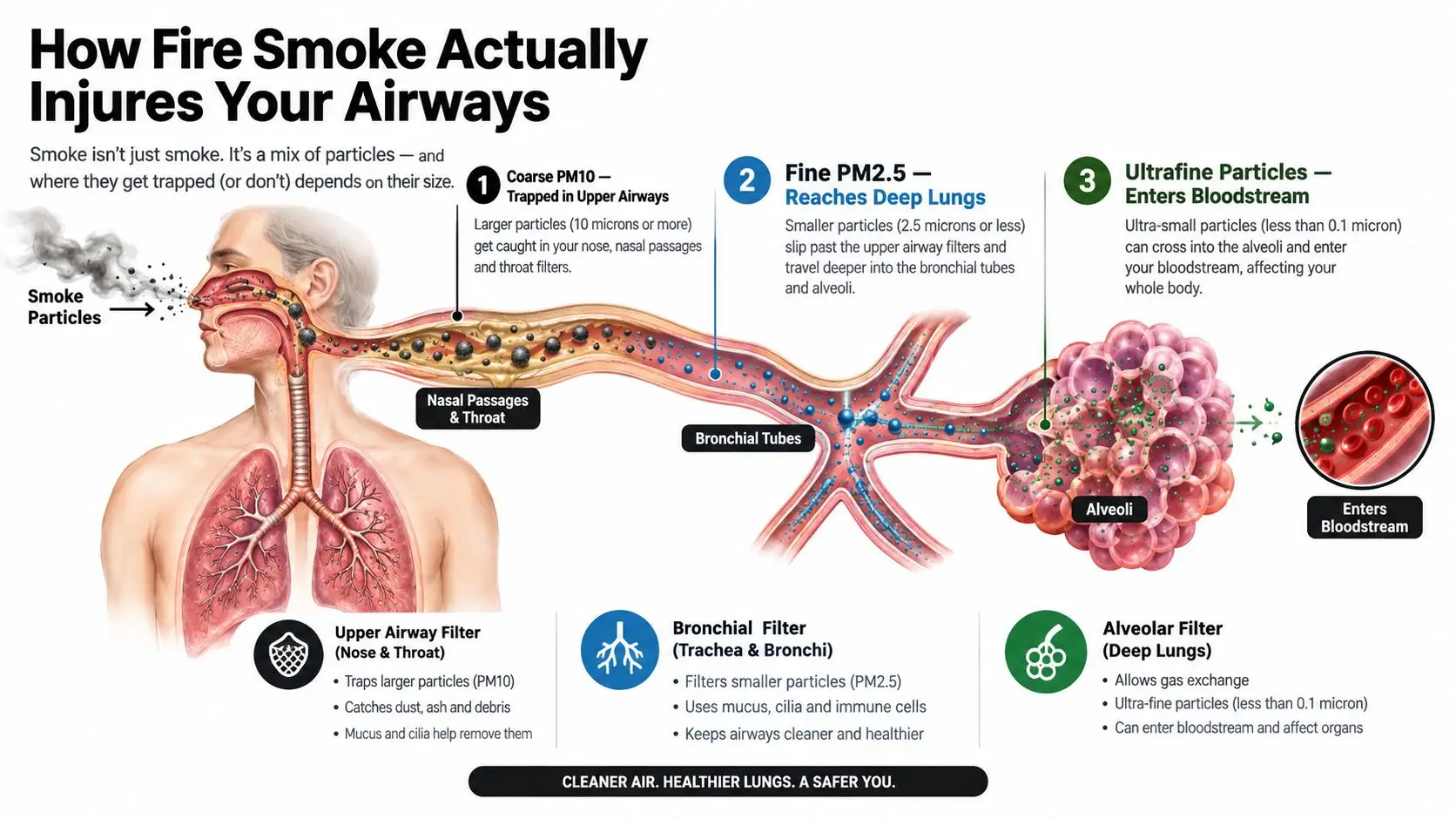
Think of the respiratory system as a branching hallway. The nose and throat act like the first filter stations, and larger particles often stop there. Farther inside, the passageways divide into smaller airways called bronchioles and end in tiny air sacs called alveoli, where oxygen moves into the blood.
PM2.5, meaning fine particulate matter with an aerodynamic diameter of 2.5 micrometers or less, is small enough to move past the upper-airway filters and reach these deeper spaces. In the alveoli, it can irritate the airway lining and promote inflammation. That irritation may cause coughing, phlegm, wheezing, chest tightness, or shortness of breath, while also contributing to temporary reductions in lung function and worsening asthma or COPD. The CDC's health advisory on wildfire smoke explains why fine particles are a central concern and recommends cleaner indoor air and a well-fitting N95 respirator when outdoor exposure can't be avoided.
Heat and chemicals cause different injuries
Smoke inhalation isn't one single process. Direct heat mainly damages the upper airways, including the mouth, throat, and larger breathing passages. Toxic chemicals released as building materials burn can injure the airways, alveoli, or both.
Chemical irritation may cause the airway lining to produce more mucus and swell. In more serious injury, the normal epithelial lining can be lost, ulcerated, or damaged enough to bleed. Injury deeper in the lung can affect the delicate lining of the air sacs and nearby blood vessels, allowing fluid to leak into the lung tissue.
That fluid interferes with oxygen exchange. Severe injury can progress to pulmonary edema, meaning fluid accumulation in the lungs, or to acute respiratory distress syndrome, a widespread lung injury that makes it difficult for oxygen to pass into the bloodstream. The medical mechanisms are described in this NCBI overview of smoke inhalation injury.
A fire investigation and property assessment also need to account for these mechanisms. Smoke can move through wall cavities, HVAC pathways, porous contents, and enclosed spaces that aren't obvious from a quick visual inspection. Homeowners looking at the property side can review this guide to smoke damage to a house while keeping medical concerns separate and contacting a clinician for symptoms.
Symptoms of Smoke Inhalation You Should Never Ignore
Symptoms don't always arrive as a dramatic event. Some begin as irritation and fade after leaving the affected area. Others signal airway narrowing, reduced oxygen exchange, or a worsening condition that needs prompt attention.
Short-term fire-smoke effects can include eye, nose, or throat irritation, coughing, wheezing, chest tightness, headache, and fatigue. More severe exposure can aggravate asthma and COPD and contribute to bronchitis, pneumonia, reduced lung function, emergency treatment, or hospitalization, as explained in the EPA's overview of health effects from wildland fire smoke.
Use the symptom pattern, not just one sign
| Symptom tier | Common signs | What to do |
|---|---|---|
| Irritation | Burning or watery eyes, scratchy throat, mild cough, headache, fatigue | Leave the affected space, get cleaner air, rest, and monitor whether symptoms improve |
| Breathing symptoms | Persistent cough, phlegm, wheezing, chest tightness, or shortness of breath | Stop exertion, avoid the smoke-affected area, and contact a healthcare professional for advice |
| High-risk symptoms | Worsening breathlessness, severe wheezing, chest pain, confusion, or bluish lips | Seek emergency medical care immediately |
| Uncontrolled existing disease | Asthma symptoms not responding to prescribed treatment, or a COPD flare | Follow the person's medical plan and seek urgent care when symptoms aren't settling |
A mild cough after exposure doesn't automatically indicate lasting injury, but it shouldn't be dismissed if it persists, worsens, or returns when someone re-enters the property. The same applies to wheezing or chest tightness that seems manageable at first. People sometimes mistake reduced activity for recovery because they feel better while resting, then become breathless when walking, carrying items, or cleaning.
For readers trying to understand signs associated with inadequate oxygen delivery, the Atlanta Hyperbaric Center resource on hypoxia symptoms and diagnosis offers additional medical background. It shouldn't replace emergency assessment when severe symptoms are present.
If you're documenting what happened, record when exposure occurred, which symptoms appeared, whether they improved away from the building, and whether anyone used prescribed respiratory medication. A practical what to do after a house fire checklist can help organize property and safety tasks, but it isn't a substitute for medical evaluation.
First Aid and When to Escalate to Medical Care
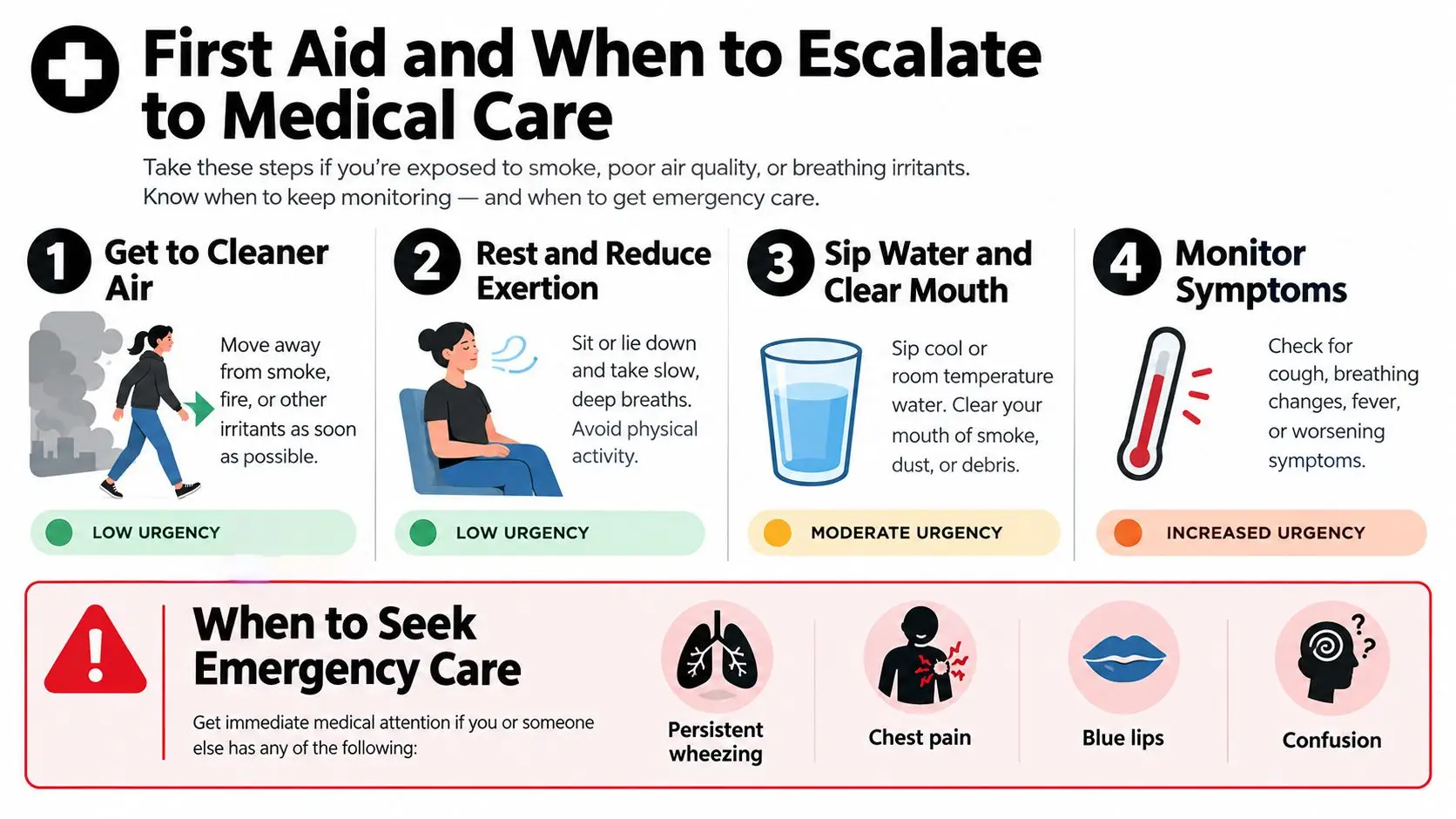
The first useful action is simple: move away from the smoke and toward cleaner air. If outdoor air is smoky, choose the cleanest available indoor location rather than opening every window automatically. When outdoor exposure can't be avoided, a NIOSH-approved N95 respirator can reduce inhalation of fine particles when it fits properly.
Physical exertion increases minute ventilation, which means the amount of air breathed each minute rises. Cleaning, lifting, climbing stairs, or vigorous exercise can therefore increase the dose reaching the lungs. Sit down, reduce activity, and monitor symptoms instead of trying to push through them.
A calm response still needs clear limits
Use this sequence while arranging appropriate help:
- Get to cleaner air. Leave the smoke-affected room or building and avoid re-entry until conditions have been assessed.
- Rest and reduce exertion. Don't sweep, vacuum, lift, or exercise while breathing feels irritated or difficult.
- Monitor symptoms. Pay attention to worsening cough, wheezing, chest tightness, or breathlessness, especially when walking.
- Use prescribed treatment as directed. Don't change an asthma or COPD treatment plan without professional guidance.
Seek emergency care for severe breathing difficulty, chest pain, confusion, or bluish lips. Asthma that isn't responding to prescribed treatment also warrants urgent attention. These signs can indicate more than routine irritation.
Children, older adults, pregnant individuals, and people with asthma, COPD, or cardiovascular disease deserve a lower threshold for medical evaluation. The CDC guidance on wildfire smoke exposure identifies these groups as more vulnerable to serious effects and advises reducing exertion, moving to cleaner indoor air, monitoring symptoms, and using a NIOSH-approved N95 respirator when outdoor exposure is unavoidable.
Medical advice is especially important when symptoms persist after leaving the building or appear again during cleanup. Feeling better in fresh air is encouraging, but it doesn't establish that the lungs have fully recovered or that the property is safe to occupy.
For a visual summary of first aid and escalation signs, watch the following overview:
Long-Term Lung Risks After Smoke Exposure
The most difficult question often comes later: how long should symptoms be watched after the smoke and odor are gone? Short-lived irritation may resolve, but research also shows that persistent effects are plausible, particularly after repeated or intense exposure. These findings describe population-level associations, not a prediction for every homeowner.
In a U.S. population-based analysis, people in the highest quartile of long-term exposure to wildfire-derived PM2.5 had 74% higher odds of developing obstructive lung-function impairment than people in the lowest quartile. The reported odds ratio was 1.74, with a 95% confidence interval of 1.09 to 2.74, as summarized in the American Journal of Respiratory and Critical Care Medicine report. The same body of evidence also identified a higher likelihood of preserved ratio impaired spirometry, an early abnormal breathing pattern associated with respiratory disease.
Recovery can vary by person and exposure
An analysis of Indonesia's 1997 wildfire episode found that lung capacity remained reduced 10 years after exposure, with the strongest effects among men and older adults, while children showed near-complete recovery. That contrast matters because age, health status, exposure intensity, and the ability to recover all influence the meaning of a population finding.
A Yale-led analysis covering all 3,108 contiguous-U.S. counties from 2007 through 2020 estimated that long-term wildfire-smoke PM2.5 contributed to approximately 11,415 non-accidental deaths annually, including about 4,512 cardiovascular deaths, according to the same medical source. These estimates describe a broad population burden, not the expected outcome for one person after one contained building fire.
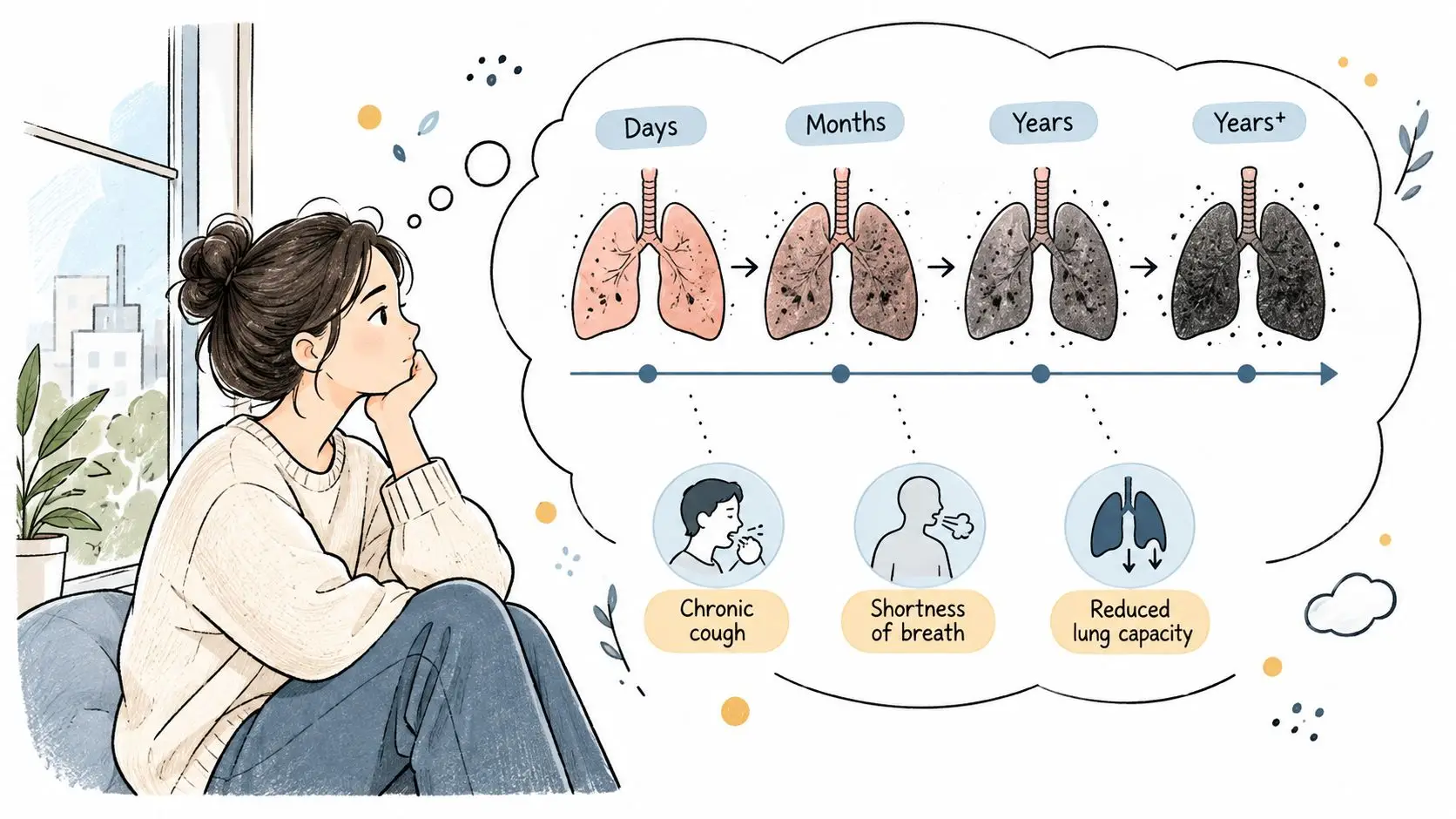
The practical lesson is measured rather than alarming. Persistent lung effects aren't inevitable, but they're possible and measurable. Symptoms that continue, recur, or worsen after the property appears clean deserve clinical advice, and people with underlying lung disease shouldn't wait for severe distress before asking what to do.
Property owners can also arrange indoor air quality testing when lingering particles, residues, ventilation problems, or repeated symptoms raise questions about the indoor environment. Testing can inform decisions, but it doesn't replace medical evaluation.
Not All Smoke Carries the Same Risk
“Fire smoke” describes several different exposure scenarios. Wildfire smoke usually contains fine particles from burning vegetation and other materials encountered along its path. Structure-fire smoke can include combustion products from furnishings, plastics, coatings, insulation, wiring, and other building contents. A contained indoor fire may involve a smaller area but create a high concentration in an enclosed room.
The fuel changes the mixture. Ventilation changes how concentrated it becomes. Duration and physical effort change how much a person inhales. A brief exposure in a well-ventilated space isn't equivalent to spending hours inside a smoke-filled structure while carrying boxes or scrubbing surfaces.
Compare the exposure, not just the fire label
| Smoke source | What influences the exposure | Why the label isn't enough |
|---|---|---|
| Wildfire smoke | Fine particles, changing outdoor concentrations, wind, and time spent outside | Smoke can enter homes and affect people far from the flames |
| Structure-fire smoke | Burning building materials, furnishings, toxic gases, particles, and indoor ventilation | A contained fire can still produce concentrated contamination indoors |
| Biomass or wood smoke | Coarse and fine particles, fuel moisture, combustion conditions, and duration | The same material can create different exposure levels under different conditions |
Short-term wildfire-smoke exposure has been associated with asthma exacerbations, worsening COPD, respiratory infections, reduced lung function, increased respiratory medication use, emergency-department visits, and hospital admissions. One pooled analysis found that each 1 microgram per cubic meter increase in wildfire-specific PM2.5 was associated with a 0.15% increase in same-day all-cause mortality, with a 95% confidence interval of 0.01% to 0.28%. A separate meta-analysis reported a relative risk of 1.06 for asthma-related hospital admissions. These findings are reported in this review of wildfire-smoke health effects.
Those figures don't mean every exposed person will develop chronic lung disease. They show why exposure assessment should consider the material that burned, the concentration, the time inside, ventilation, exertion, and personal vulnerability. A child with asthma and an otherwise healthy adult may not face the same practical risk in the same room.
Protecting Your Lungs Through Proper Smoke Remediation
The medical and property questions are connected. Fine particles and combustion residues can remain after flames are extinguished, especially when ventilation, cleaning, or filtration is inadequate. Removing odor helps with one part of the problem, but odor removal isn't proof that fine particles are gone, and visible soot isn't a complete measure of inhalation risk.
Health-conscious cleanup starts with limiting exposure. Don't perform vigorous indoor activity in an affected space, and keep vulnerable occupants away until the area has been assessed. A professional evaluation can consider particulate contamination, porous materials, HVAC pathways, ventilation conditions, and residues that ordinary wiping may leave behind.
Source removal matters because particles and residues can continue to move from contaminated contents and surfaces into indoor air. Effective ventilation and appropriately managed filtration also matter, but the right approach depends on the building and the contamination. A restoration team may use containment and HEPA filtration to reduce airborne soot spread and cross-contamination while cleaning and decontaminating affected surfaces and contents.
Lingering symptoms can have many possible causes, so homeowners shouldn't self-diagnose based on an odor or a single visit to the property. People researching broader environmental health concerns may also find background on chronic inflammatory response syndrome, while medical decisions should remain with a qualified healthcare professional.
Restore Heroes is a licensed, bonded, insured, and IICRC-certified restoration company serving the Phoenix metro area. Its fire and smoke services include assessment, professional cleaning, decontamination, odor removal, and smoke remediation. Property owners can review the company's smoke remediation services and compare the proposed scope with their insurer, physician's advice, and any indoor air quality findings.
Keep these points in mind:
- Protect people first: Move occupants away from smoke and avoid strenuous cleanup.
- Watch the timeline: Symptoms can persist or reappear after odor disappears.
- Escalate serious signs: Seek urgent or emergency care for severe breathing difficulty, chest pain, confusion, bluish lips, or uncontrolled asthma symptoms.
- Assess the property properly: Look beyond visible soot and odor to particles, residues, contents, and ventilation.
- Document conditions: Record exposure, symptoms, affected rooms, cleaning activity, and professional findings.
Restore Heroes offers fire and smoke damage assessment, cleaning, decontamination, odor removal, and remediation for Phoenix-area homes and commercial properties. If lingering smoke, soot, or uncertainty about indoor air is affecting your next steps, visit Restore Heroes to discuss the property and request an evaluation.