
A Phoenix monsoon can turn a quiet lower level into a sanitation and insurance problem before you've finished checking the weather alert. You may hear a toilet bubble, see dirty water rise through a floor drain, or find a sump basin overflowing after the pump stops. The visible damage looks like ordinary water damage, but the cause and entry path determine which policy may respond.
That distinction matters when flooring, drywall, electrical components, appliances, and stored belongings are affected. Water back up coverage can help with certain resulting losses, but an endorsement can still have limits, deductibles, sublimits, and exclusions that leave important costs uninsured. The practical question isn't only whether you have the endorsement. It's what remains uninsured after the first dollar limit is reached.
When Water Comes Up Instead of Going Down
The first sign is often small. A toilet makes a hollow bubbling sound during a storm, then murky water appears around the base. In another Phoenix home, a floor drain begins to rise as rain overwhelms a drainage system. In a lower-level room with a sump basin, the pump stops cycling and water spreads across the floor before anyone realizes the equipment has failed.
The homeowner's first thoughts are usually practical: stop the water, move furniture, protect electrical equipment, and call for help. The insurance question comes later, often after contaminated materials have already been removed. That's when many people learn that a standard homeowners policy commonly excludes water that backs up through a sewer or drain, as well as overflow from a failed sump pump.
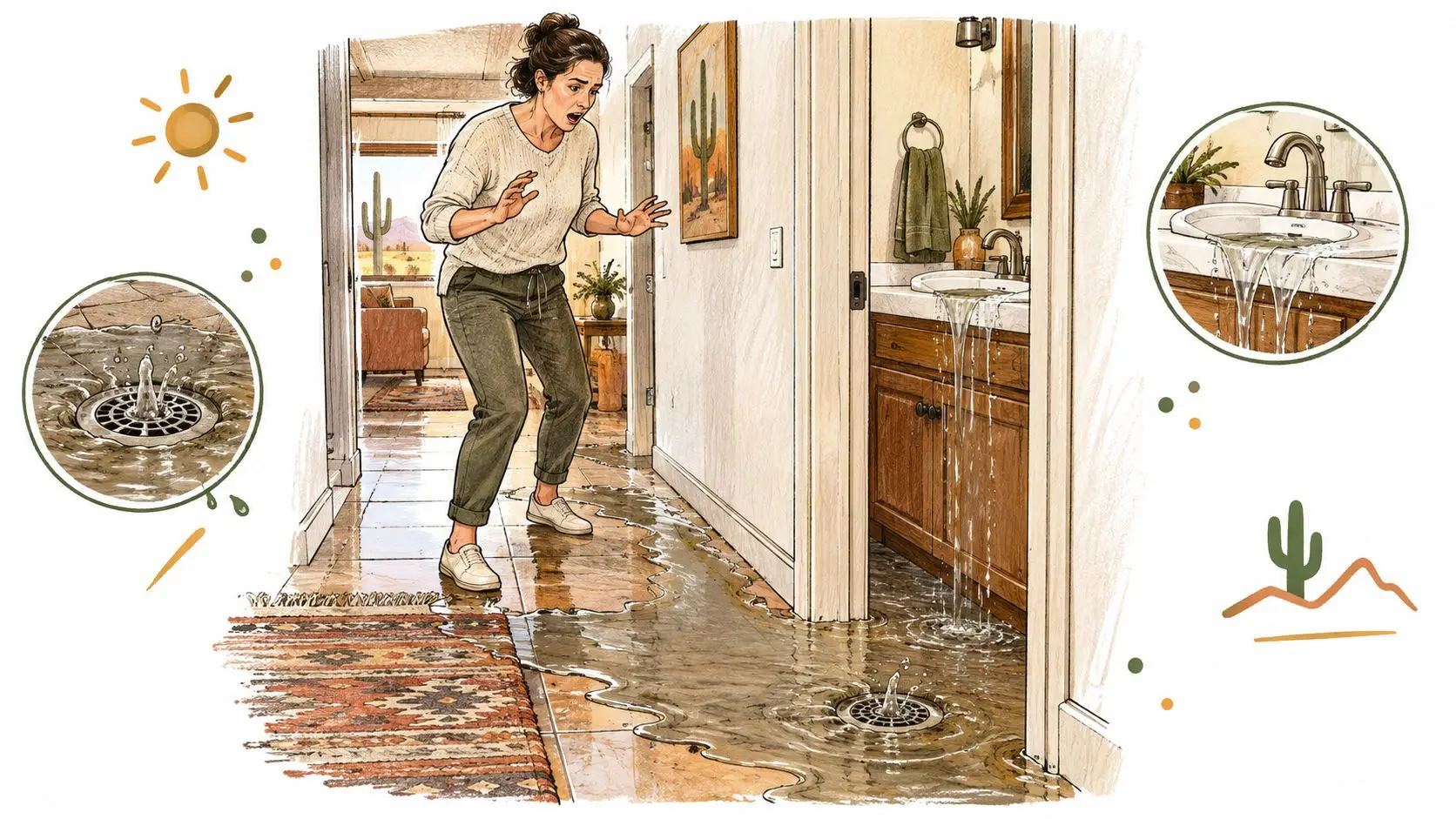
A backup isn't just a puddle to pump away. Contaminated water can affect porous flooring, drywall, insulation, cabinets, wiring, appliances, and personal property. The longer it remains, the more materials may need removal, cleaning, drying, and replacement. If a toilet has overflowed, use a careful cleanup process and avoid treating contaminated materials like a simple spill. This toilet overflow cleanup guide explains why prompt isolation and professional sanitation matter.
The questions to answer before the next storm
You need clear answers to three practical questions:
- What does the endorsement cover? Check whether it addresses sewer backup, drain backup, sump-pump overflow, or only some of these causes.
- How much protection is available? Confirm the per-occurrence limit, deductible, contents treatment, and any separate sublimits.
- How does a claim unfold? Document the source, limit further damage, notify the insurer, and preserve invoices and photographs.
The same principle applies beyond Phoenix. If you're researching drain maintenance for another property, drain cleaning services Las Vegas can help explain how blockages and sewer-line problems are addressed. Prevention won't replace insurance, but knowing the plumbing condition can help you ask better coverage questions.
What Water Back Up Coverage Actually Means
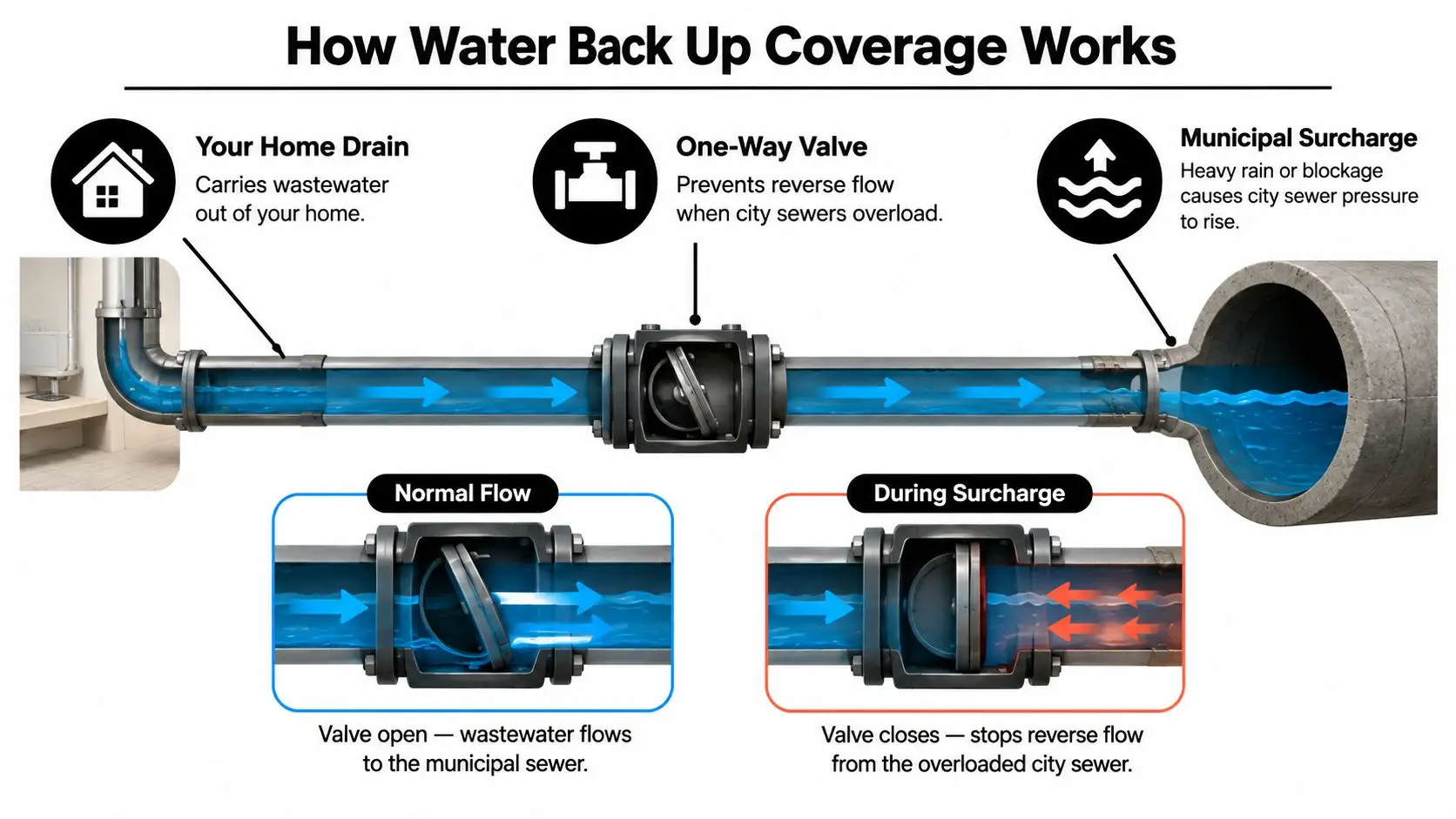
Start with a simple mental picture. Your home's drain system is meant to work like a one-way valve, carrying wastewater away from the property. If a municipal sewer system becomes overloaded, a private lateral is blocked, or a sump pump fails, water can reverse direction and enter the home.
Water back up coverage is generally a separate homeowners endorsement for losses caused by water backing up through sewers or drains, or overflowing from a failed sump pump. It addresses the resulting damage from that specific pathway. It doesn't automatically cover every kind of water intrusion that happens at the same time.
Use the cause and path test
Ask where the water started and how it entered:
- Interior plumbing leak: A supply line, appliance hose, or pipe leaks inside the home. This is a different event from reverse flow through a drain.
- Sewer or drain backup: Wastewater pushes backward through a toilet, floor drain, sink, tub, or other drain opening.
- Sump-pump overflow: The pump fails, loses power, or can't remove incoming water, depending on the policy wording.
- Surface flooding: Water accumulates on normally dry land and enters from outside. That's generally a flood-insurance question, not automatically a water-backup question.
- Ground seepage or runoff: Water enters through foundation walls, windows, doors, or other openings. The policy may classify this differently from a drain backup.
The water may look similar in every case, but insurance doesn't classify damage by appearance alone. Your policy wording, documented cause, and entry path matter. For help reviewing unfamiliar declarations pages and exclusions, use this guide on how to read a homeowners insurance policy.
Practical rule: Photograph the opening where water entered before removal work changes the scene, if it's safe to do so.
What the Endorsement Typically Includes and Excludes
A water-backup endorsement usually focuses on resulting damage, not every repair connected with the event. Depending on the wording, that may include contaminated flooring, drywall, electrical components, appliances, and personal property damaged by the backup itself. It may also address necessary extraction, cleaning, drying, and restoration, subject to the stated limit.
The claim category is financially significant. Water damage and freezing represented 22.6% of all homeowners insurance claims in 2023, making it the second-largest category after wind and hail, and the average claim severity across 2018–2022 was $13,954, according to the data summarized by Real Cost Report's water-backup coverage overview. That figure covers more than sewer backups alone, but it shows why a modest limit can disappear quickly.
Read the cause, not just the label
Policies may treat sewer or drain backup and sump-pump overflow separately. One may be included while the other requires an added option, or each may have a different sublimit or deductible. Broader flooding, surface runoff, ground seepage, and damage caused by deferred maintenance may be excluded even when the property has some water-backup protection.
| Scenario | Typically Covered | Typically Excluded |
|---|---|---|
| Water reverses through a covered drain | Resulting damage to covered building materials and contents, subject to the limit | Repairing a private sewer line simply because it is deteriorated |
| A covered sump-pump overflow damages finished space | Resulting damage, if sump-pump overflow is included in the endorsement | Replacing the failed pump or correcting wear and tear on the equipment |
| Contaminated water damages flooring or drywall | Removal, cleaning, drying, and replacement may be considered | Costs beyond the policy limit or excluded material categories |
| Surface water enters from outside | Only if a separate policy responds under its own terms | Assuming a sewer-backup endorsement covers broader flooding |
| Ground seepage enters through a foundation wall | Depends on specific policy language and cause | Treating seepage as the same event as drain backflow |
Your declarations page may show the endorsement, but the exclusions and definitions usually appear elsewhere in the policy. Read both before assuming that “water damage” means every type of water damage.
How This Coverage Differs From Standard Homeowners and Flood Insurance
A dry Phoenix basement can still face very different insurance outcomes after a plumbing failure. The cause of loss and the path the water took do. Standard homeowners insurance, a water-backup endorsement, and flood insurance respond to separate risks, so the policy that pays depends on how the water entered.
A standard policy commonly handles certain sudden, accidental losses within its covered perils. See our guide on whether insurance covers water damage. Sewer and drain backup are commonly excluded unless an endorsement is added. Water back up coverage generally supplies that added protection. Federal flood insurance generally responds to qualifying flooding, meaning excess water on normally dry land, subject to its definitions and limitations.
Typical water-backup limits range from $5,000 to $25,000 per occurrence, while annual premiums commonly fall between $50 and $250, depending on the selected limit, property characteristics, location, and insurer, as summarized in FEMA's flood mitigation guidance. These are common coverage bands, not a quote or guarantee for a Phoenix property. A lower limit may pay the first cleanup invoices while leaving flooring, drywall, cabinets, or contents uninsured once the limit is reached.
A practical comparison
| Policy or endorsement | Main question it answers | Common misunderstanding |
|---|---|---|
| Standard homeowners policy | Is this a covered sudden loss under the base policy? | Assuming every water loss receives the same treatment |
| Water-backup endorsement | Did water reverse through a covered sewer, drain, or sump-pump pathway? | Assuming it repairs the failed plumbing or pump |
| Flood insurance | Did qualifying floodwater accumulate on normally dry land? | Assuming it covers every clogged private drain |
Some flood policies may respond to certain sewer conditions caused by qualifying flooding, while excluding backup from a clogged private plumbing system. Flood insurance therefore does not automatically fill a water-backup gap. Homeowners comparing broader insurance costs can find insurance rate details as part of their research, but coverage decisions should come from their own policy documents and agent.
Sizing Limits, Deductibles, and Sublimits
A pump removes water. It doesn't restore a room. When you select a limit, estimate the full loss stack, including emergency extraction, contaminated-material removal, antimicrobial treatment, structural drying, demolition, reconstruction, debris disposal, contents replacement, and possible code-related work.
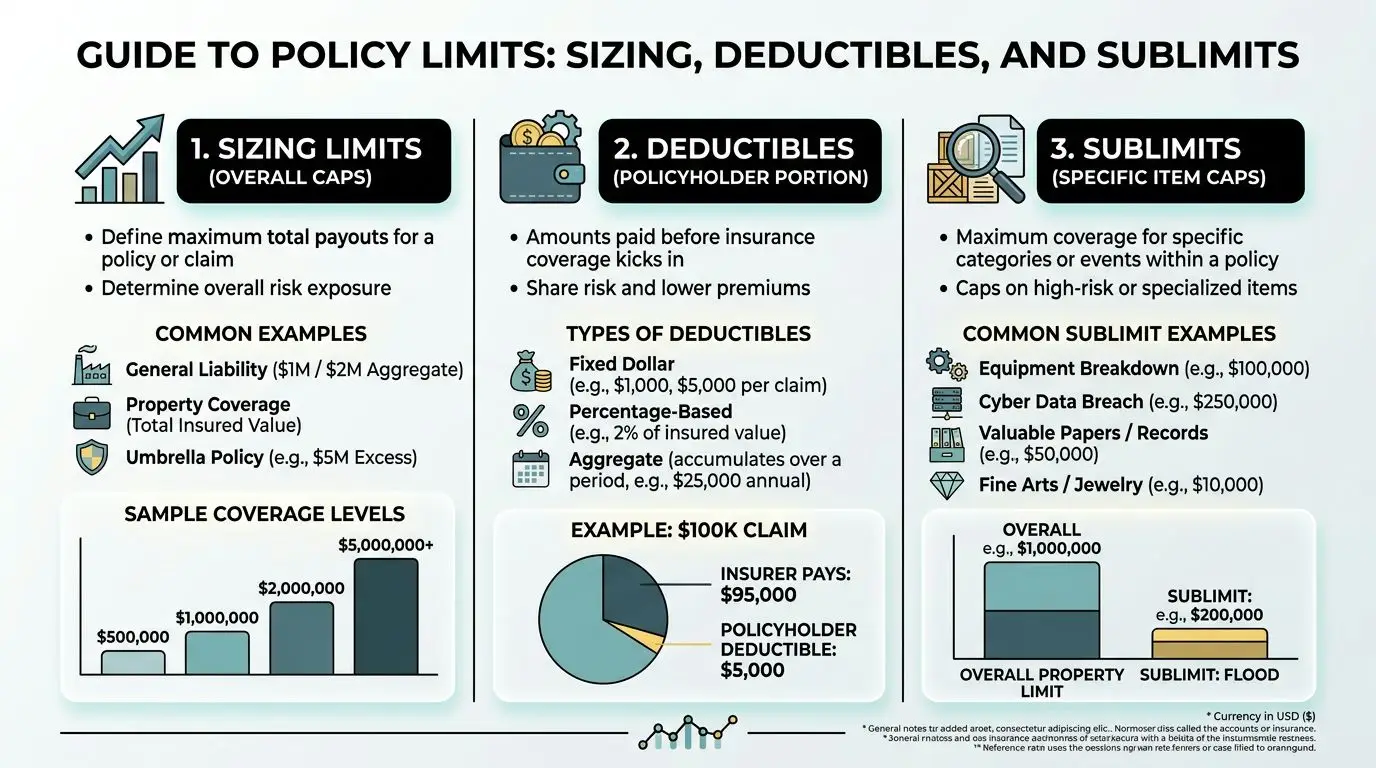
A $5,000 limit can be consumed quickly in a finished room. Extraction and disposal may use part of the allowance, while damaged flooring, drywall, cabinets, electrical components, and stored property compete for what remains. If the endorsement has a separate deductible, the usable amount drops further.
Build the estimate from the property outward
Walk through the vulnerable areas and list what could be affected:
- Finished surfaces: Flooring, baseboards, drywall, insulation, cabinetry, and paint.
- Fixed components: Electrical systems, appliances, built-ins, and mechanical equipment located in the affected area.
- Contents: Furniture, electronics, stored goods, tools, clothing, and business property.
- Cleanup requirements: Extraction, disposal, antimicrobial treatment, drying, and odor control.
- Living or operating costs: Temporary relocation or business-income provisions, if the policy includes them.
A $10,000 to $25,000 limit may provide more meaningful room for a finished lower level or a commercial space than the lowest available option, but the right choice depends on the property and policy terms. Don't choose a limit based only on the cost of pumping water from the floor.
Read sublimits separately
A policy may show one overall water-backup limit but apply smaller limits to contents, mold-related costs, temporary living expenses, or particular equipment. Ask whether the deductible is shared with the base policy or applies separately. Then compare the endorsement with the replacement value of the most vulnerable finishes and belongings.
The right limit is the one measured against your actual restoration exposure, not the smallest premium on the quote.
How a Water Back Up Claim Actually Works
A claim usually begins with a phone call to the insurer or agent. Explain what happened without guessing at the final cause: identify the time, the affected areas, the opening where water appeared, weather conditions, plumbing observations, and any sump-pump activity. Ask what emergency mitigation the insurer expects and how the deductible will apply.
Take photographs and video before removing damaged materials when safety allows. Capture the drain, toilet, sump basin, waterline, affected flooring, drywall, contents, and any visible equipment. Keep a written timeline, invoices, moisture readings, equipment logs, disposal records, and photographs of materials before removal.
Mitigation and adjustment
Mitigation should begin promptly to limit further damage, but emergency work doesn't mean you should discard evidence. A restoration company can extract contaminated water, remove unsafe porous materials, apply antimicrobial treatment, set drying equipment, and record moisture conditions while the adjuster reviews the loss.
Restore Heroes can coordinate sewage-backup extraction, drying, sanitation, and reconstruction while communicating with the insurer. That's one possible restoration resource, not a promise that the insurer will approve every item or cost.
The adjuster may inspect the property, ask for a cause narrative, compare the observed damage with the endorsement, and negotiate the repair scope. Keep communication in writing where possible, and ask which items are accepted, pending, or excluded.
For additional preparation, review these water damage insurance claim tips. A well-organized file won't change the policy language, but it can make the cause, timing, and resulting damage easier to evaluate.
The Coverage Gap Most Homeowners Miss
The biggest surprise often isn't discovering that an endorsement exists. It's discovering what the endorsement doesn't pay for after the limit is used.
The failed sump pump itself may need replacement. A deteriorated sewer lateral may need excavation or repair. A landlord may face tenant disruption or lost operating income. A homeowner may need additional living expenses while reconstruction continues, or may encounter code-required upgrades that exceed the covered scope. Each item belongs in the coverage conversation before a loss.
NAIC homeowner guidance indicates that many policies may cover sewer backup from a blocked lateral connection but generally exclude backups caused by flooding, so documenting the cause is decisive. The NAIC flood insurance guidance also reinforces why homeowners shouldn't classify every event by the presence of dirty water alone.
Resulting damage versus the failed system
Insurance may address damage caused by a covered backup while excluding wear-and-tear repairs to pipes, plumbing, or sump-pump equipment. That division can leave a homeowner paying to correct the source even when the endorsement contributes toward damaged flooring or contents.
Ask four questions:
- What happens after the limit is exhausted? Identify structure, contents, cleanup, and living-expense costs that could remain unpaid.
- Which equipment is excluded? Confirm whether the pump, sewer lateral, plumbing, or diagnostic work falls outside the endorsement.
- Are contents sublimited? A room full of stored property can reach a contents cap quickly.
- Does the policy address commercial interruption or temporary relocation? Don't assume these benefits follow automatically from water-backup coverage.
The buying question should be specific: Which loss components on this property remain uninsured once the first dollar limit is reached? Your answer should guide the limit, deductible, and any separate service-line or equipment coverage you consider.
Verifying and Adding Coverage Before the Next Storm
Pull out the declarations page and locate every water-related endorsement. Don't stop at the endorsement name. Write down the per-occurrence limit, deductible, contents treatment, covered causes, exclusions, and any separate sublimits for sump-pump overflow, mold, temporary living expenses, or business income.
Use this call script
Ask your insurer or agent:
- Covered causes: Does the endorsement cover sewer backup, drain backup, sump-pump overflow, or all three?
- Limit options: What higher limits are available for this property?
- Deductible: Is the water-backup deductible separate from the homeowners deductible?
- Contents: Are personal belongings covered, and do they have a sublimit?
- Additional expenses: Are temporary living expenses or business-income losses included?
- Mold: Does the policy address mold resulting from a covered backup?
- Failed equipment: Does the policy exclude repairing the pump, plumbing, or sewer lateral that caused the event?
NAIC guidance distinguishes plumbing or roof leaks from groundwater, runoff, and snowmelt flooding. State insurance guidance also explains that sewer backup and sump-pump overflow generally require a specific homeowners endorsement and aren't automatically covered by either standard homeowners or flood insurance, as described in NAIC's homeowners insurance guidance.
For Phoenix homeowners, ask about adding or increasing the endorsement before the next monsoon period, subject to the insurer's eligibility rules and effective-date requirements. Test the sump pump, consider whether a backwater valve is appropriate for the property, keep the main shutoff accessible, and avoid storing irreplaceable belongings directly on the floor. If you're estimating potential out-of-pocket exposure, this guide to sewage backup cleanup costs can help you think in terms of cleanup, demolition, drying, reconstruction, and contents rather than pumping alone.
Restore Heroes provides sewage-backup cleanup, emergency extraction, drying, sanitation, and restoration coordination for Phoenix-area homes and commercial properties. When a backup occurs, visit Restore Heroes to request an assessment and discuss the documentation and restoration steps that may support your insurance claim.