
You notice a faint musty smell in one room, but the walls look painted and the floor still feels dry. That's how a lot of moisture problems in houses start, behind drywall, under flooring, or around a cold edge of the building where no one's looking. The room can seem fine until the smell, a stain, or a soft spot finally gives the game away.
Why a Dry-Looking House Can Still Have a Moisture Problem
A homeowner often starts with the wrong question. “Why does this room smell off if nothing is visibly wet?” is a better one than “Is the house humid?”
Moisture isn't just about whether air feels sticky. Surface temperature, dew point, and exposure duration decide whether water stays in the air or turns into a problem on a wall, pipe, or ceiling. That's why a closed-up, finished room can still harbor trapped dampness inside cavities even when the paint looks normal.
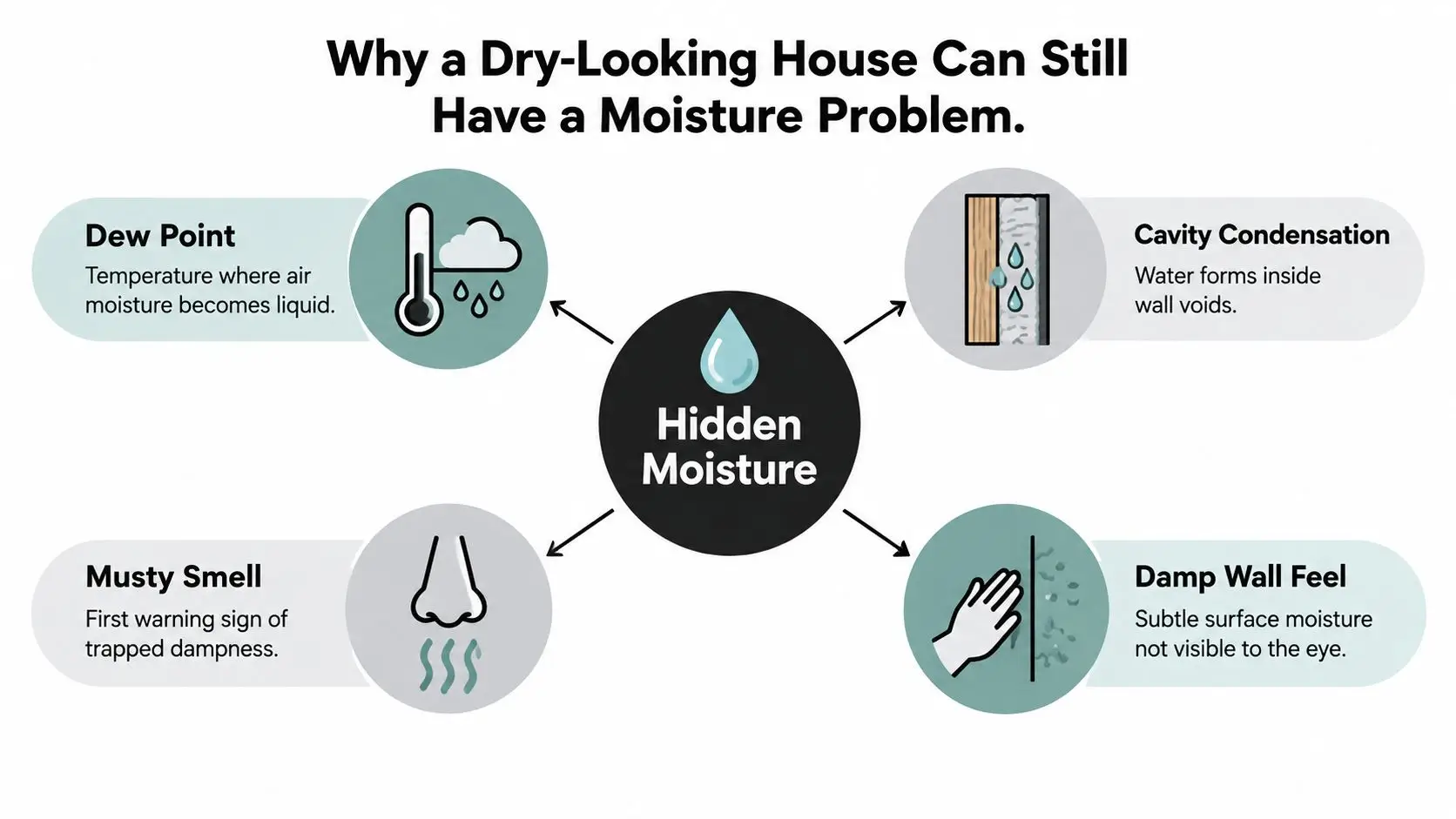
A simple way to think about it is this. Warm indoor air can carry moisture, but when that air meets a colder surface, water can condense there. If that surface sits at or below the indoor dew point, condensation risk goes up, especially in hidden places like wall voids, window edges, ducts, and slab perimeters.
Practical rule: if a room looks dry but smells stale or feels “off,” treat that as a clue, not reassurance.
Phoenix homeowners run into this all the time after monsoon moisture, HVAC issues, or plumbing leaks. Even in a desert climate, water can get trapped where a surface dries slowly, and a quick visual check won't always catch it. A PTAC unit can also collect moisture inside its components, so a maintenance resource like 2026 PTAC maintenance steps is useful when the source might involve packaged cooling equipment rather than a leak you can see.
For a practical reading method, a moisture meter reading guide helps homeowners understand what a suspicious surface reading looks like before they start repainting or patching.
The Most Common Sources of Moisture in a Home
Most household moisture comes from four source families, and each one behaves differently. If you lump them together, you usually miss the actual cause and waste time on the wrong fix.
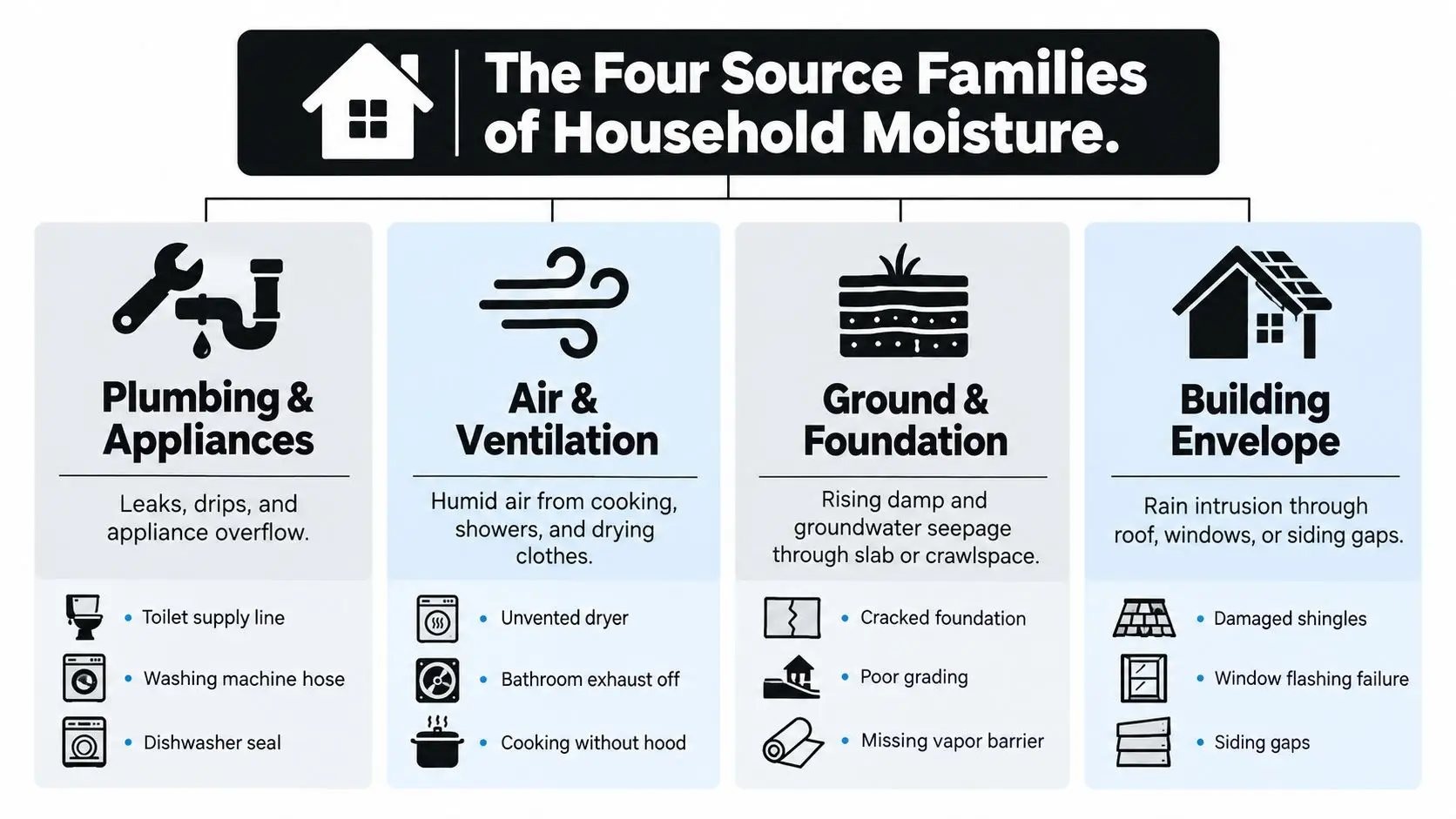
Plumbing and appliance leaks
A supply-line leak, a loose toilet connection, or a dishwasher seal problem often starts small and keeps feeding the same area. In Phoenix homes, slab leaks can be especially confusing because the visible damage may show up far from the pipe itself. Water follows framing, penetrations, and low points, so a wet patch on the wall doesn't always mean the wall is the source.
Roof and envelope intrusion
Rainwater doesn't need a dramatic storm to get in. A few weak shingles, bad flashing, or a window gap can let water enter the building envelope and stay hidden until staining appears. During the North American monsoon, roof penetrations and siding gaps deserve extra attention because brief, intense moisture exposure can overwhelm a weak detail.
Air-conditioning and evaporative cooler condensate
Cooling systems create water as a byproduct. If a drain line clogs, a pan overflows, or condensate isn't routed correctly, moisture can sit in the unit or the surrounding assembly for a long time. That's why a long cooling season can create slow, chronic dampness even when no one notices active dripping.
Everyday condensation
Bathrooms, laundry spaces, unvented drying, and cold surfaces can all create local condensation. A surface that keeps fogging, sweating, or feeling cooler than the rest of the room is often telling you that the problem is temperature mismatch, not just “too much humidity.” For attic-related moisture details, prevent attic condensation damage is a relevant reference when the source sits above the living space instead of inside it.
For organized next steps, a plumbing inspection checklist helps narrow whether the issue looks like a line leak, an appliance failure, or hidden water tracking through the structure.
Warning Signs Homeowners Notice First
The first signs are usually small enough to dismiss. A room may smell earthy in the morning, then seem normal later in the day. That doesn't mean the moisture went away, it often means the air changed and the clue got harder to notice.
Smell and surface changes
Musty odor is one of the earliest clues because trapped moisture changes how materials age. Peeling paint, bubbling paint, or a soft baseboard often points to hidden dampness behind the finish layer. If the stain keeps coming back after cleaning, the source is still active.
Windows, floors, and cold spots
Foggy windows are easy to blame on weather, but persistent condensation tells you the surface is cold enough to hit dew point. Warped flooring, cupping, or a slight bounce underfoot can mean moisture has reached the subfloor. A localized cold patch on a wall often suggests wet insulation or a cavity that isn't drying the way the rest of the room is.
A clean-looking wall can still be wet behind the drywall.
Dark spotting on ceilings deserves special respect because it can come from roof intrusion, HVAC condensate, or a plumbing line above the room. If the source is overhead, the visible mark is often the last thing to appear, not the first. A focused guide to ceiling damage signs at signs of water damage on a ceiling can help you separate a stain from a pattern.
What matters most is pattern recognition. A musty smell plus fogging windows suggests condensation. A baseboard stain plus a bathroom above it points you toward plumbing or drain issues. A warp in one corridor near an exterior wall raises suspicion about envelope intrusion or a hidden leak path.
A Step-by-Step Diagnostic You Can Run This Weekend
Start with the easiest tool you have, your eyes. Walk the home and slow down at windows, under sinks, around toilets, near HVAC closets, at the attic hatch, and along any wall that feels colder than the rest. Look for discoloration, soft spots, swollen trim, or places where paint seems to have lost its grip.
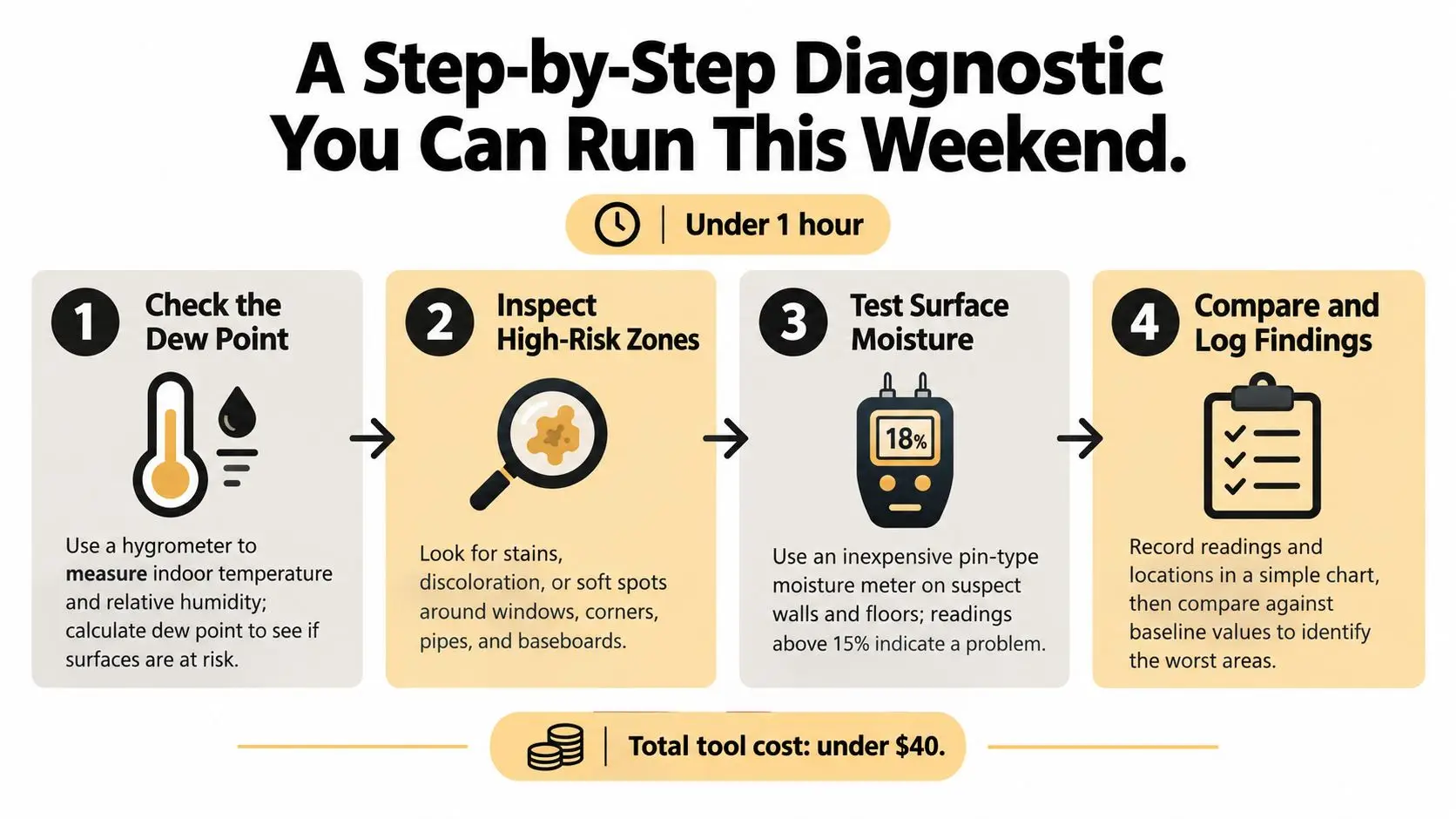
Step one, read the air
Use a hygrometer to measure indoor temperature and relative humidity, then note the reading more than once if you can. The number matters because indoor humidity changes over the day, especially when showers, cooking, or cooling equipment are running. If you're in a mechanically cooled space, ASHRAE's 60°F indoor dew-point benchmark is a useful reference because it limits how much water vapor is available to condense on cold surfaces.
Step two, compare surfaces
Take an infrared thermometer or contact probe and check suspect surfaces against the indoor dew point. Any surface at or below that dew point is at condensation risk, which is why metal ducts, uninsulated refrigerant lines, window edges, slab perimeters, and thermal bridges deserve close attention. This is the part many homeowners skip, then wonder why the wall still feels wrong after cleaning.
Step three, test the material
A pin-type moisture meter gives you a direct reading on suspect drywall or trim. ASHRAE identifies gypsum-board moisture above 15% wood-moisture-equivalent as an early warning sign that needs investigation, not cosmetic cover-up. If a reading is high in one spot and normal a few feet away, you're probably looking at a localized source.
Step four, trace the source
Check plumbing penetrations, A/C condensate lines, drip pans, and roof flashing where water can enter or collect. If a PTAC unit, closet air handler, or laundry area is nearby, use thermal imaging inspection guidance to understand how hidden moisture sometimes spreads beyond the obvious stain.
For an at-home check, keep a simple log of where you measured, what the surface felt like, and whether the reading changed after a few hours. That record matters more than a single average-room number.
Health Effects and Structural Risks Worth Taking Seriously
Moisture isn't only a cosmetic issue. The World Health Organization links indoor dampness and microbial growth with more respiratory symptoms, allergies, and asthma, and its summary reports that occupants of damp or moldy buildings had up to a 75% greater risk of respiratory symptoms and asthma WHO review. That doesn't mean every person gets sick in the same way, but it does mean persistent dampness deserves real attention.
The CDC also notes that damp or moldy spaces may cause stuffy noses, sore throats, coughing, wheezing, burning eyes, or skin rashes, while some people notice nothing at all CDC mold health effects. People with asthma, mold allergies, weakened immune systems, or chronic lung disease can have more serious reactions, so homes with children, older adults, or medically vulnerable occupants should move faster when moisture shows up.
What moisture does to the building
Wood and drywall don't like repeated wetting. Drywall can swell, subflooring can soften, fasteners can corrode, and insulation can lose effectiveness if it stays damp. Those problems are slow at first, then expensive later.
The risk is persistence. Water that sits behind a wall or under flooring can keep feeding deterioration long after the visible surface looks normal. That's why the 24 to 48 hour drying window matters so much; it's the period where quick action can keep a moisture issue from becoming a larger repair problem.
A musty room is not just an odor problem. It's a sign that building materials may be sitting in the wrong conditions for too long.
Short-Term Mitigation Before You Call Anyone
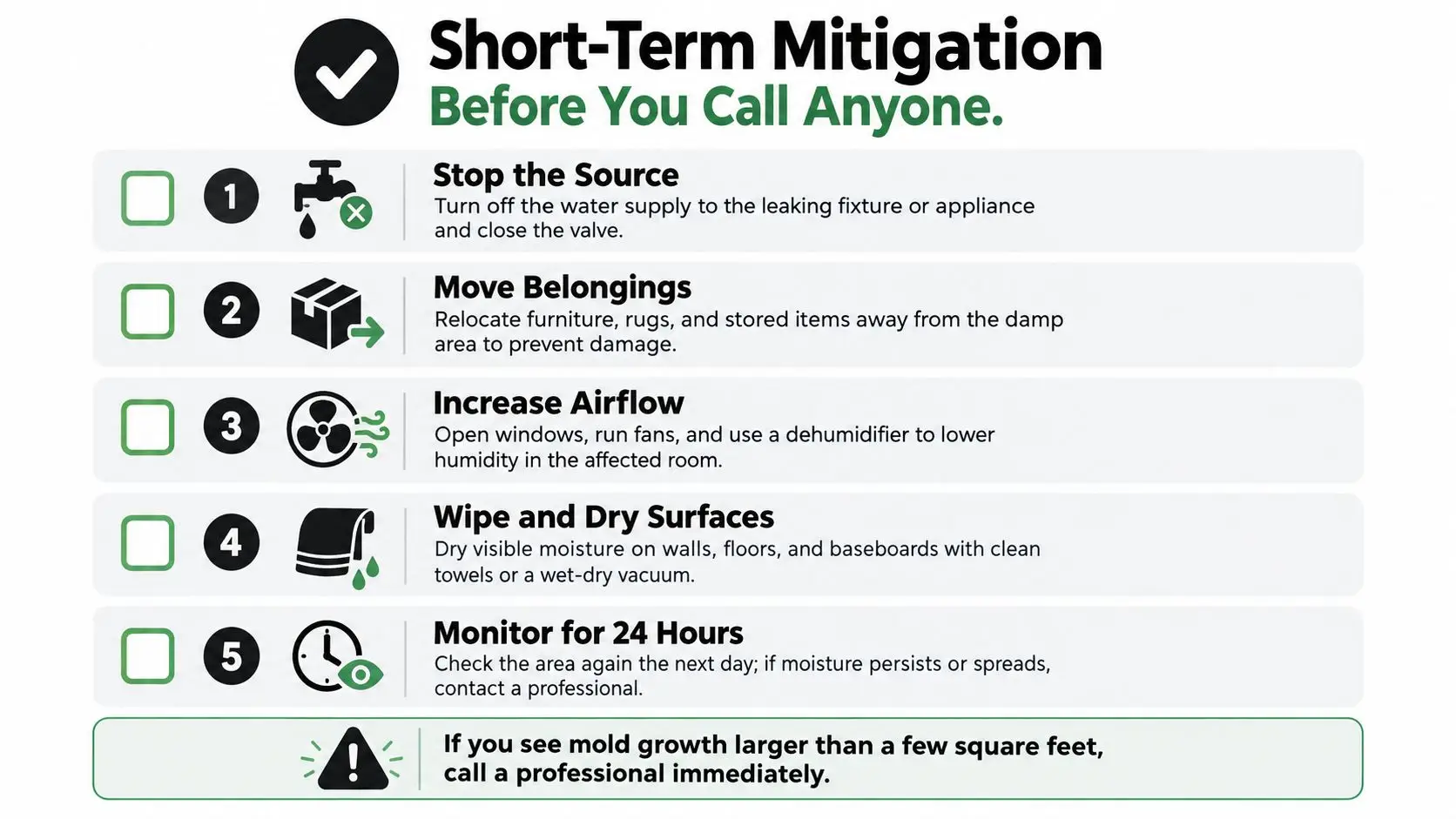
First, stop the source if it's safe to do so. Shut off the fixture valve, appliance supply, or nearby water shutoff before you do anything else. If you can move furniture, rugs, or stored items away from the damp area without spreading water, do it right away.
Dry with control, not guesswork
Use dehumidification and measured air movement to help the room dry. The EPA recommends keeping indoor relative humidity below 60%, ideally between 30% and 50%, and drying wet materials within 24 to 48 hours when possible EPA mold and moisture guidance. Fans can help when they're moving dry air across exposed surfaces, but they can also spread moisture or contaminants if the wet material is still trapped in a cavity.
Opening windows can be useful in dry conditions, but Phoenix monsoon weather changes that equation. When outdoor air is humid, opening windows can slow drying instead of helping it, especially if the source is inside a wall or under a floor. For a Phoenix-specific example, the question isn't “Is the climate dry?” It's “Is this source drying fast enough in this room, on this surface, right now?”
Don't seal over dampness with fresh paint and hope it disappears. If the material stays wet, the problem stays active.
Wipe visible water from baseboards, floors, and trim with clean towels or a wet-dry vacuum if the area is safe to access. Then check the room again the next day. If the moisture spreads, the smell grows stronger, or the readings stay high, the issue is probably deeper than a surface cleanup.
When a Moisture Problem in House Calls for a Professional
Call for professional help when the wet area is bigger than a few square feet, when water has sat for more than 48 hours, or when hidden saturation is likely behind a wall or under flooring. HVAC involvement, repeated recurrence, or suspected sewage contamination raises the stakes further because the source can keep re-wetting the same materials. If you're dealing with a family member who has asthma, mold allergies, chronic lung disease, or immune suppression, it's wise to move sooner.
An IICRC-certified restoration crew can isolate the source, dry the structure, decontaminate affected materials, and document the damage for insurance or landlord records. A contractor page such as water damage restoration contractor guidance is useful when you want to compare what a professional response should include before you make the call.
The best time to escalate is before the problem gets hidden by new paint, new caulk, or another week of waiting. If your measurements, smell, or visual clues point to concealed moisture, professional drying is usually the faster and safer path than trying to guess your way through it.
If you're dealing with a moisture problem in house right now, Restore Heroes can help with moisture detection, water damage mitigation, structural drying, and mold-related cleanup in the Phoenix area. Visit Restore Heroes to review their services and get help from a local restoration team that works on hidden leaks, wet materials, and damp-building problems.