
Rain is tapping the windows when a Phoenix monsoon suddenly turns into a downpour. You hear water bubbling up through a bathroom drain, then see it spread across the floor toward a hallway rug. The immediate questions are practical: Where is the water coming from? Is it safe to stay inside? And which part of your insurance, if any, applies?
Many homeowners assume one policy covers every kind of water damage. But a burst pipe, a sewer backup, and stormwater entering from outside can fall into different coverage categories. The source and pathway of the water matter as much as the damage it leaves behind.
If water is actively entering your home, focus first on safety and stopping further damage if you can do so safely. A homeowner facing a plumbing emergency may also want to contact a local provider for 24/7 emergency plumbing repair, while separately notifying the insurer and documenting what happened.
Why Phoenix Homeowners Are Asking About Water Backup Coverage
A monsoon storm can change the conditions around a home quickly. Stormwater may overwhelm drainage routes, run toward a doorway, or put pressure on sewer and sump systems. In a home with a ground-floor bathroom or utility room, water may appear through a toilet, floor drain, or sump area, even if the rain never comes directly through a window.
The cleanup can be unsettling, but the insurance questions often add another layer of stress. A homeowner may see water on the floor and assume the standard homeowners policy will pay for everything. The insurer may instead need to determine whether the water came from a sudden plumbing leak, a backed-up drain, or surface flooding from outside. Those causes can lead to different policy sections, exclusions, and limits.
Phoenix properties vary, too. One home may have a slab and no basement, while another has a lower-level room or utility space where a backup could damage flooring, stored belongings, and wall materials. Hardscape and landscaping can also affect where rainwater flows around a particular house. A storm in the neighborhood doesn't tell you, by itself, which coverage applies to your loss.
Start with the pathway: Ask where the water entered and what caused it to move. “Water damage” describes the result, not necessarily the insurance category.
That distinction is the reason water backup insurance coverage deserves a close look before a storm. It's usually separate from both standard homeowners water-damage protection and flood insurance, and the wording of the policy matters. Once you know the water's route, you can ask more useful questions than, “Does my policy cover water?”
What Water Backup Insurance Coverage Actually Means
Think of a drain as a one-way exit. Water should travel away from the home through the plumbing system. If the line backs up, the direction reverses, and water or sewage can push into a room through a drain, toilet, or connected pipe. A sump system has a different job, but a failure or overflow can also leave water where it doesn't belong.
A water backup endorsement is an addition to a homeowners policy that may cover direct physical damage from water or sewage backing up through a sewer or drain, or overflowing from a sump pump or sump-pump well. It's generally optional, not a standard feature of every homeowners policy. A plain-language overview of the term is available in Maya's water backup glossary.
The key is to separate a backup from an ordinary plumbing leak. If a pipe inside a wall suddenly bursts, the loss may be considered accidental water damage under the main homeowners policy, subject to its terms. If water comes back through the drain instead, the insurer may look for a specific backup endorsement. Same wet floor, different route.
What the endorsement is meant to address
The endorsement is designed for a particular pathway, not every wet surface or water-related emergency. It may apply when water or sewage enters through a covered drain or sewer, or when a sump system overflows. The actual form determines which causes qualify and what property or expenses are included.
What it doesn't automatically mean
Having the endorsement doesn't mean every water loss is covered, nor does it mean the home's full dwelling limit applies. Floodwater, groundwater seepage, maintenance problems, or damage tied to an existing condition may be treated differently or excluded. The policy's limit, deductible, exclusions, and definitions all matter.
A useful mental model is a label on the route the water took. The label doesn't decide the claim on its own, but it helps identify which policy language to read and which questions to ask.
Backup Coverage Versus Flood and Standard Policy Protection
The clearest way to sort water coverage is to compare the likely cause, not just the room where damage appeared. A kitchen floor can be damaged by an internal pipe leak, a drain backup, or water entering from outside. Those situations don't necessarily draw on the same protection.
| Coverage Type | Typical Trigger | Common Exclusion | How Payment Works |
|---|---|---|---|
| Standard homeowners policy | Sudden, accidental water escaping from plumbing or an appliance | Flooding, and often sewer or sump backup without an endorsement | Subject to the policy's coverage terms, deductible, and applicable limits |
| Water backup endorsement | Water or sewage entering through a sewer, drain, or sump system | Flood or surface water, and other exclusions in the endorsement | Subject to a selected backup limit and its deductible |
| Flood insurance | Flooding from outside, such as rising surface water | An isolated sewer backup that isn't caused by a broader flood | Subject to the flood policy's definitions, limits, exclusions, and deductible |
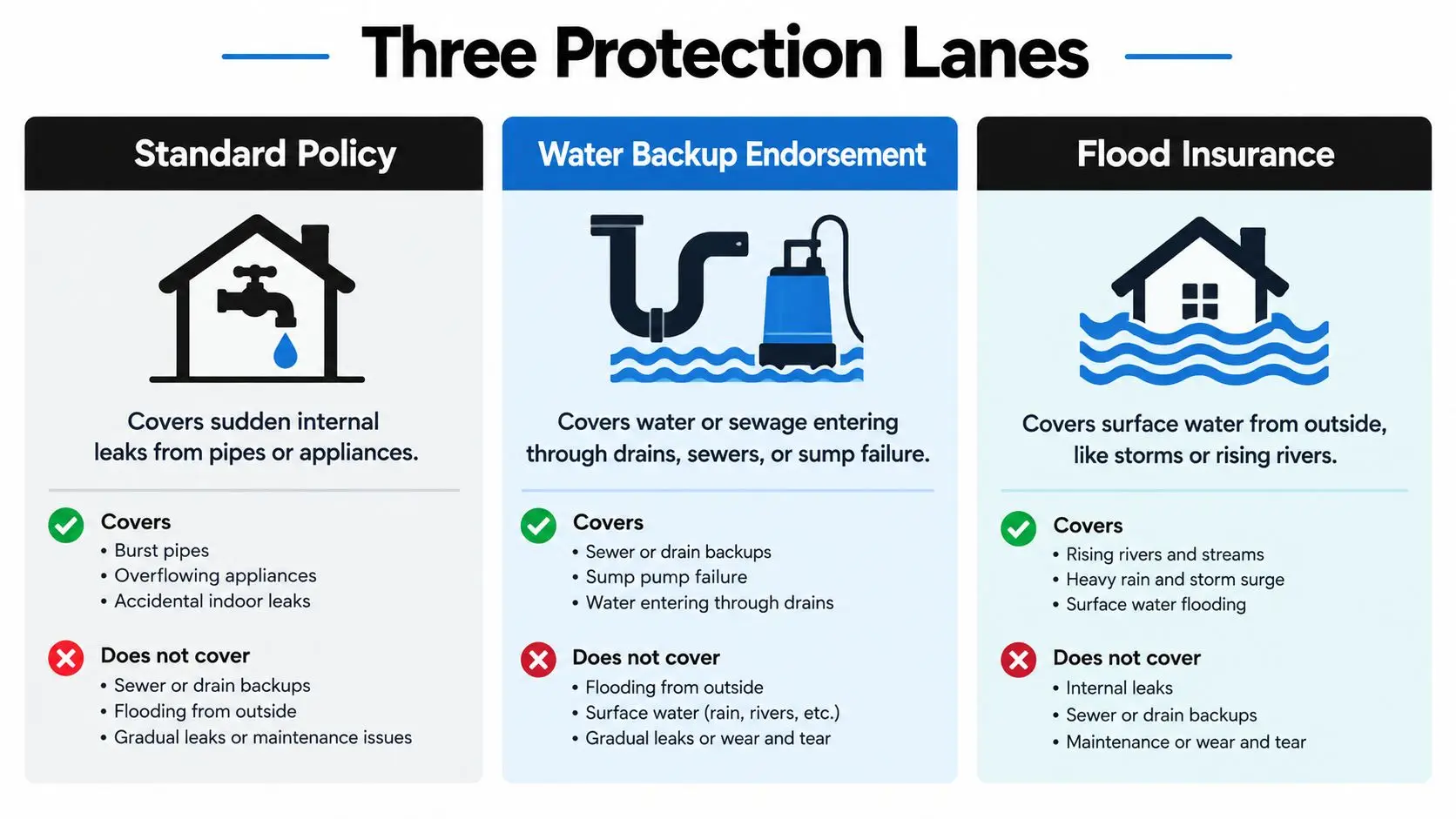
The tricky boundary is a backup during a flood. FEMA explains that most standard homeowners policies don't cover flooding, and that National Flood Insurance Program coverage for sewer backup generally applies only when broader flooding caused the backup. An isolated sewer backup isn't covered under the NFIP. So a backed-up drain on a dry afternoon and one that occurs as part of a wider flood event may be treated differently. FEMA's flood-insurance guidance explains this distinction.
Why two policies can still leave a gap
A homeowner with standard insurance and flood insurance may still need to ask whether a drain or sump backup is covered. A backup endorsement, in turn, may not cover surface water coming into the home. Owning two policies doesn't automatically mean every pathway is insured.
Review the declarations page, but don't stop there. Ask the insurer to explain which policy responds to a specific scenario, what exclusions may apply, and how the adjuster will evaluate a loss involving more than one water source. For additional context on disputed water-damage decisions, see this guide to how homeowners can fight a denied water damage claim. You can also compare the distinctions with this overview of homeowners insurance and water damage.
Common Triggers, Exclusions, Limits, and Deductibles
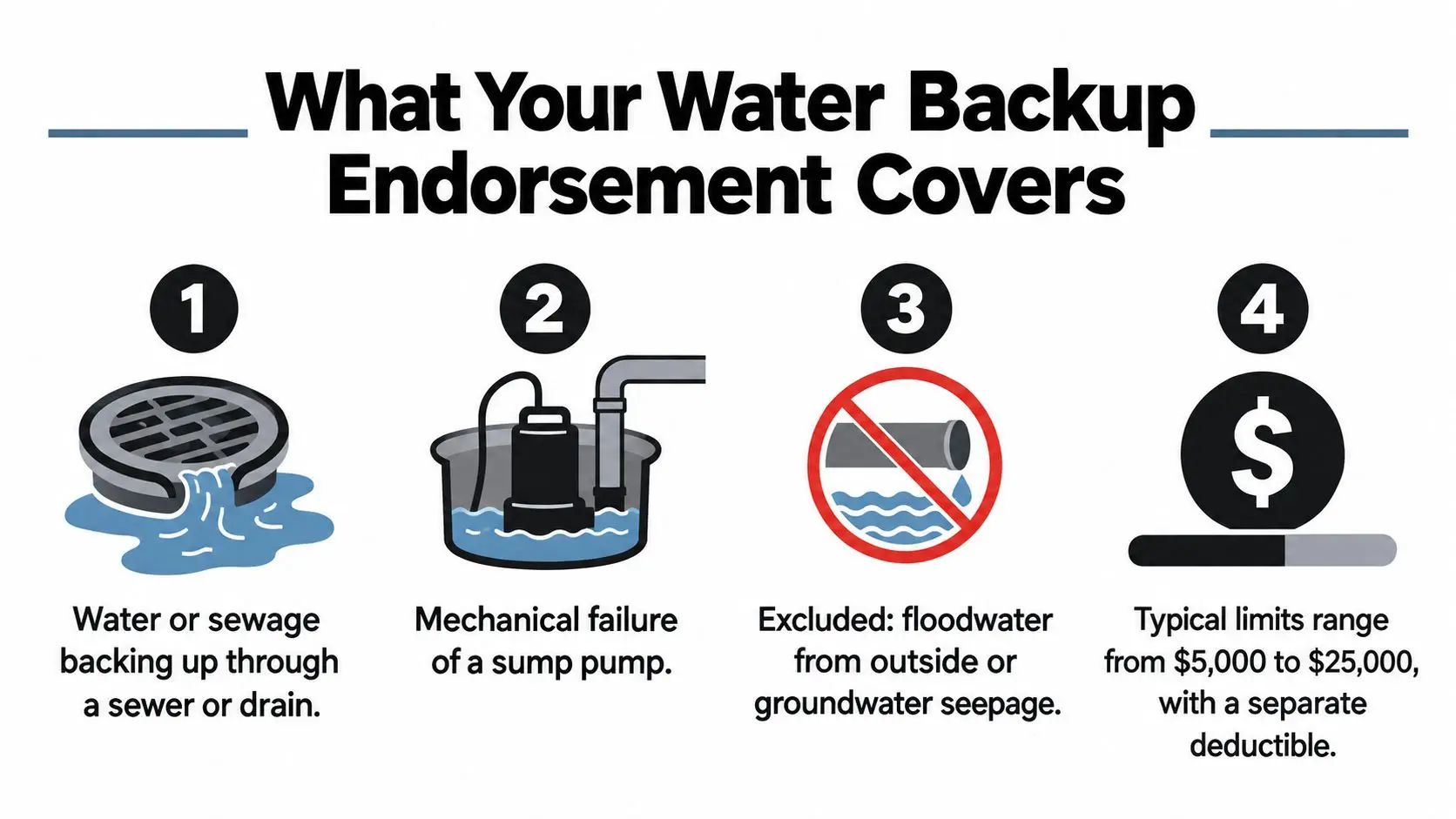
A backup endorsement usually focuses on water or sewage coming through a sewer or drain, or overflowing from a sump system. Some forms include mechanical sump-pump failure, but the exact cause must meet the policy's wording. Don't assume that a pump problem, standing water, or a wet foundation automatically qualifies.
Common exclusions can include flood or surface water, groundwater seepage, and damage related to neglect or an existing condition. The wording varies by insurer and policy. A homeowner should check whether the form addresses contents, additional living expenses, mold remediation linked to a covered backup, and the sump pump itself. Coverage for damage from a failed pump doesn't necessarily mean the pump's replacement is covered.
The sublimit and deductible are separate decisions
A backup endorsement may have its own limit rather than sharing the dwelling limit. A National Association of Insurance Commissioners shopping tool gives an example of $10,000 in sewer-or-water-backup coverage with a $500 deductible. That example shows why it's important to review both figures: the deductible affects the payment, while costs above the endorsement limit may remain the homeowner's responsibility. See the NAIC homeowners-insurance shopping tool.
A declarations page can tell you that an endorsement exists, but the endorsement form explains what it covers. To understand the rest of the policy's organization, use this guide to reading a homeowners insurance policy.
Before a loss, ask the insurer these questions in writing:
- Covered pathway: Does the endorsement include backups through drains, sewers, and sump systems, including mechanical pump failure?
- Property and expenses: Are contents, additional living expenses, and mold remediation included when tied to a covered backup?
- Limit and deductible: What is the per-occurrence limit, and does the endorsement use a separate deductible?
- Conditions: Are there waiting periods or exclusions for maintenance issues, floodwater, or pre-existing damage?
Common mistakes include assuming the dwelling limit applies, confusing flood coverage with backup coverage, and waiting to check the form until water is already inside. A careful review beforehand makes it easier to document the actual cause and ask the right questions if a claim arises.
How Realistic Claim Costs Compare With Typical Limits
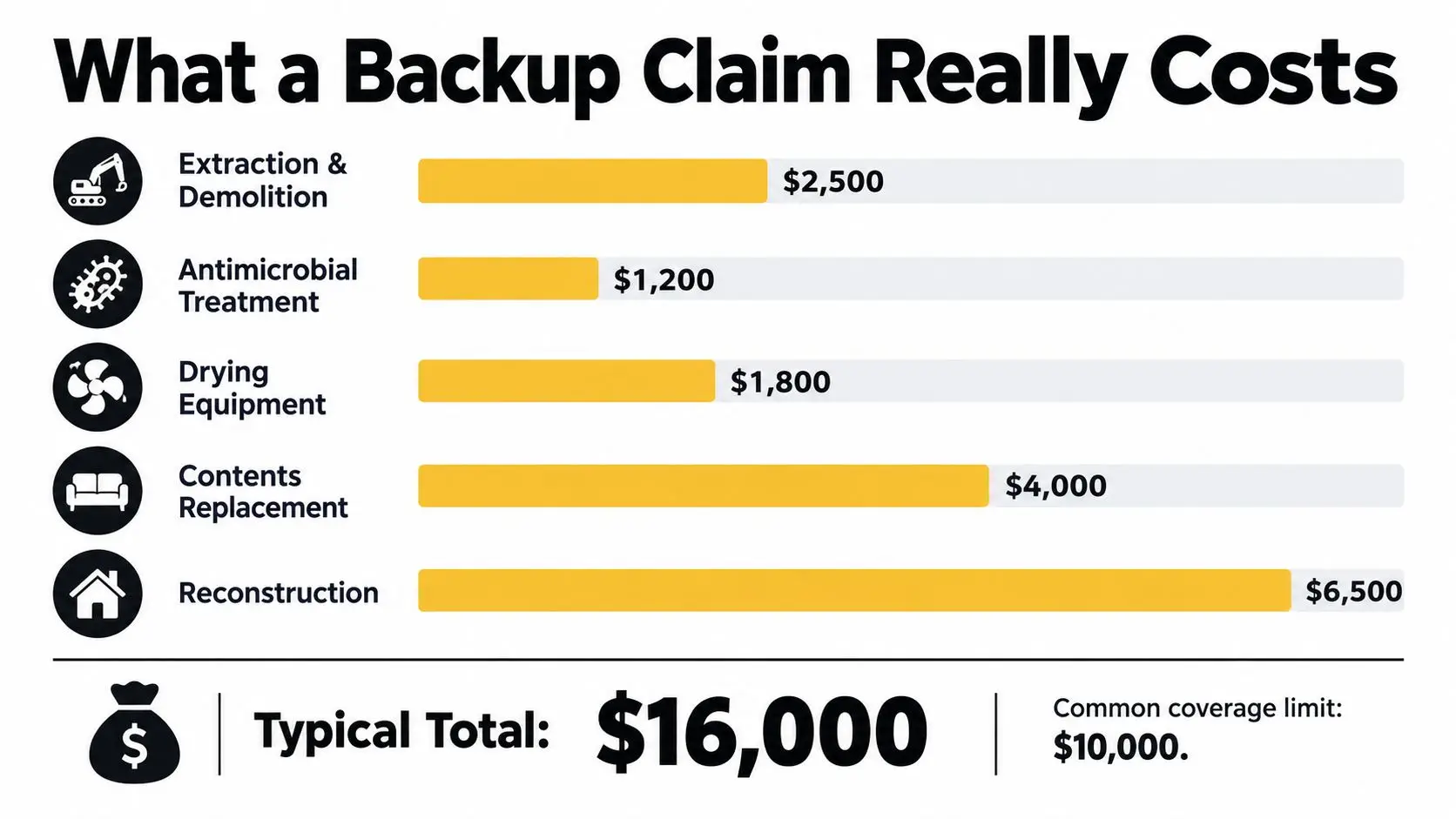
A cleanup bill isn't just a charge for removing visible water. A backup may require extraction, removal of damaged materials, drying, treatment, contents handling, and reconstruction. The work depends on the affected rooms, materials, water conditions, and the scope of damage.
One industry-market analysis reports average water-backup claims rising from roughly $12,000 in 2015 to more than $32,000 in 2025, and says severe incidents can exceed $100,000. Those figures come from an industry-market report rather than a regulator, so they're useful as context, not as a prediction for any individual home. Review the water-backup insurance market analysis with that limitation in mind.
How a limit can be used up
Consider a hypothetical loss with a $10,000 endorsement limit. If extraction, demolition, drying, and treatment use a substantial share of that limit, there may be less left for damaged contents or rebuilding. A limit isn't an estimate of the final cost, and an infographic's sample line items aren't a contractor quote or a guaranteed claim payment.
Phoenix homes don't all have the same layout or repair needs. A slab-on-grade property may require different work from a multi-story townhome, while a finished lower-level space, where present, can involve flooring, wall materials, and contents. The practical question is whether the selected limit makes sense for the spaces and belongings you want to protect.
Compare the limit with the rooms at risk. Consider finished-area materials, contents, temporary relocation needs, and reconstruction, not only the endorsement's premium.
Ask a licensed insurance professional how your policy treats each category, and consult a qualified restoration contractor for a property-specific estimate after damage. For general context on cleanup expenses, see this guide to sewage backup cleanup costs. No published average can determine the cost or coverage outcome for your home.
Filing a Water Backup Claim Without Losing Ground
When water enters, protect people first. Avoid standing water near electrical equipment, and don't enter an area if you suspect a safety hazard. If it's safe, stop the source or shut off the relevant supply, then record what you see before cleanup changes the scene.
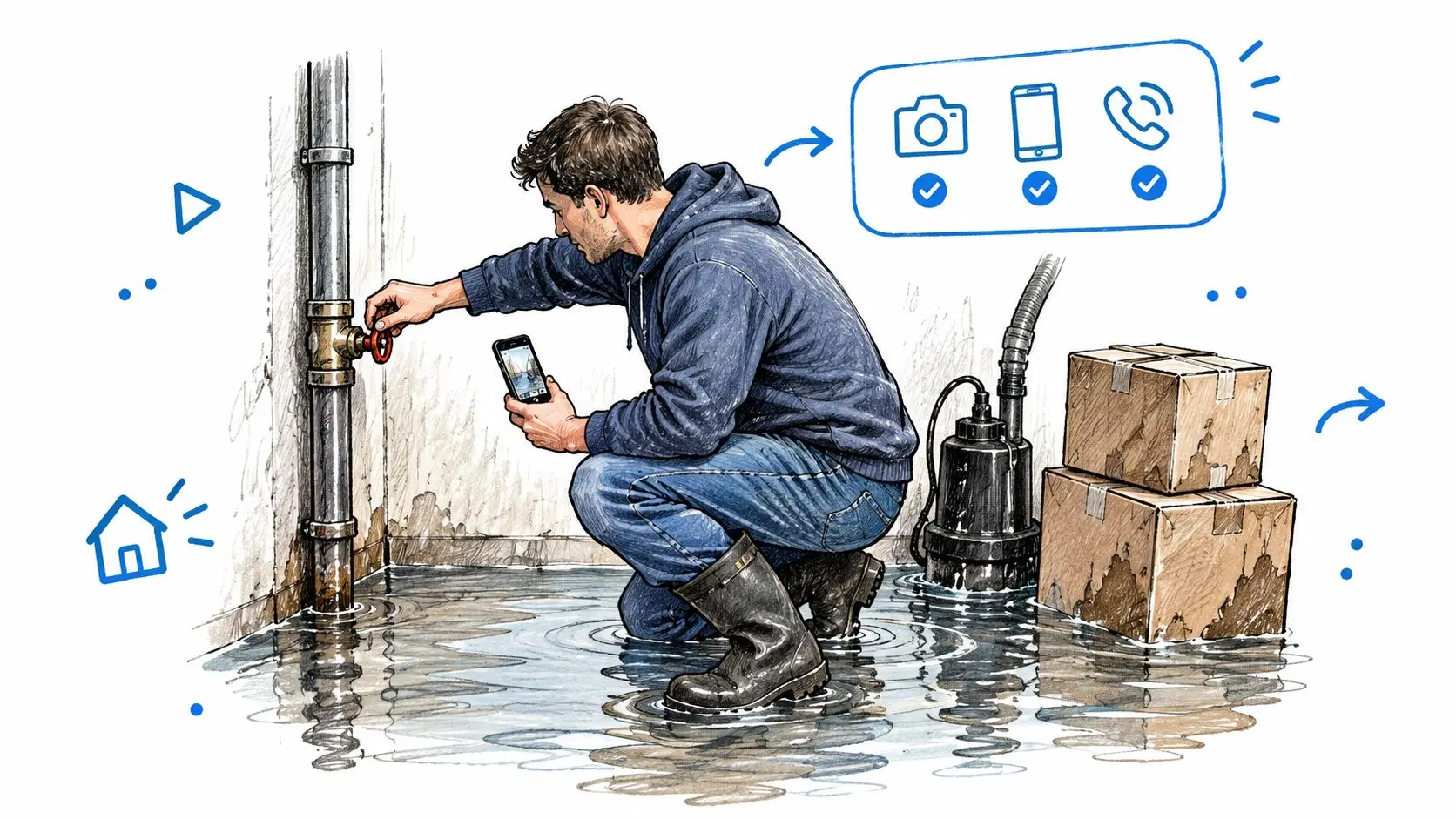
Take photos and video of the water's entry point, affected rooms, damaged materials, and contents. Then contact the insurer to report the loss and ask what documentation it needs. Don't delay reasonable mitigation while waiting for a claims decision, but keep records of what was done and when. Delayed action can allow damage to worsen and may complicate the claim.
A certified restoration contractor can assess moisture, remove water, and begin appropriate drying while the insurer's adjuster is arranging an inspection. Ask the contractor to document moisture readings, equipment use, affected materials, and the work performed. Keep receipts, an inventory of damaged belongings, and written messages with the adjuster. A contractor may help organize documentation, but no contractor can guarantee coverage or a claim outcome.
For homeowners comparing assistance options, the Insurance Information Institute says a water-backup endorsement commonly adds about $40 to $50 in annual premium, though actual pricing depends on the insurer, property, deductible, and selected limit. See its water-backup coverage overview. That figure isn't a quote for a specific home.
Here's a short video about documenting and addressing a water-damage situation:
Questions to ask on the first call
- Cause and policy: What information do you need to determine whether this is a plumbing loss, backup, or flood?
- Limits and deductible: Which limit and deductible may apply to this reported loss?
- Mitigation: What emergency work can begin now, and what records should I keep?
- Inspection: When should I expect an adjuster, and should I preserve damaged materials for review?
A restoration team that's experienced with insurance documentation can help organize photos, moisture records, and work logs. Restore Heroes provides water-damage restoration and claim-documentation support in the Phoenix area; homeowners can also review this practical guide to insurance claim documentation.
Phoenix-Specific Considerations and Final Checklist
Phoenix homes face local drainage conditions that can shape a water loss. During monsoon weather, stormwater may collect or be redirected toward a property. Older neighborhoods may have aging sewer laterals, while slab-on-grade construction can make a leak or backup harder to trace from the surface. Landscaping and hardscape also affect where runoff travels around the home.
Maintenance doesn't replace insurance, but it can help you spot problems before a storm. Keep drainage paths clear, check that water isn't being directed toward the structure, and test sump or backflow equipment where installed. The NAIC notes that standard homeowners policies often cover sudden plumbing leaks but generally exclude groundwater, rain runoff, and snowmelt, while drain, sewer, and sump backups may require a separate endorsement. Its homeowners insurance guidance is a useful starting point for understanding those distinctions.
| Category | Action Item | Why It Matters |
|---|---|---|
| Policy wording | Confirm whether a water-backup endorsement is present and read its form | An endorsement's terms determine which pathways and expenses may qualify |
| Limits | Check the backup limit and deductible separately from the dwelling limit | The main policy limit may not apply to a backup loss |
| Flood protection | Ask how surface water and flood-related sewer backup are handled | Flood and backup protection address different causes |
| Property | Identify vulnerable rooms, contents, and drainage routes | Layout and water pathways affect what may be damaged |
| Maintenance | Keep drainage clear and inspect installed sump or backflow equipment | Routine attention may reveal a problem before a storm |
| Claim readiness | Save policy documents and know how to report a loss | Clear records help you explain the event and ask focused questions |
Use a property-specific assessment to connect your drainage setup, endorsement terms, and flood exposure. This Phoenix flood-risk assessment resource can help frame the questions to raise with your insurer. For binding answers about coverage, limits, and claim handling, consult your insurer or a licensed insurance professional. A qualified restoration contractor can advise on mitigation and repair needs, but coverage decisions depend on the policy and the facts of the loss.
Restore Heroes provides water-damage restoration and documentation support for Phoenix-area property owners dealing with backups and other water losses. Visit Restore Heroes to learn about its restoration services and discuss what help may be appropriate for your property.