
A University of Arizona investigation collected 1,330 mold samples from 160 homes across seven geographic areas of Arizona, according to the government publication of that University of Arizona investigation. That's not what many would expect in a desert state. It shows the core rule behind mold in Arizona. Mold doesn't follow the weather outside your door. It follows water that stays inside your home.
Why Dry Arizona Air Does Not Stop Mold
Many people think low rainfall means no mold. That idea sounds logical, but it's wrong. Outdoor air can be dry while one small indoor spot stays wet for days.
Think of a damp sponge left on a kitchen counter. The room air may feel dry, but the sponge holds water inside itself. Drywall, insulation, carpet pad, and wood can do the same thing after a leak.
Where the Indoor Water Comes From
You don't need a flood to create a damp spot. Small, steady sources are enough, especially when you don't see them right away.
- Plumbing leaks: A slow drip under a sink can wet the cabinet floor and the wall behind it.
- Cooling systems: Evaporative coolers add moisture, and AC condensate lines can clog and overflow.
- Bathrooms: Showers and tubs release warm, wet air into a small room.
- Roof leaks: Water can enter at flashing or a cracked tile and travel before a stain appears.
- Condensation: Moisture forms on cold pipes and ducts when warm air touches them.
- Still air: Closets, corners, and crawlspaces dry slowly because air barely moves there.
Practical rule: Don't ask, "Is Arizona dry enough to stop mold?" Ask instead, "Is any material in this home staying damp?"
That's the question that matters. Mold in Arizona is mainly a moisture problem, not a climate problem. If you see growth, smell a musty odor, or find a damp spot that keeps coming back, investigate it. A desert address doesn't make a wet wall safe. Find where the water came from, and you'll usually find where the mold risk started.
Where Mold Starts in Arizona Homes and How to Stop It
Start by matching the water source to the place mold shows up. That tells you what to inspect and what to fix first.
| Moisture source | Where mold shows up | Prevention step |
|---|---|---|
| Plumbing leak | Under sinks, behind walls, around tubs | Check supply lines and fix drips at once |
| Evaporative cooler or AC condensate | Ceilings, vents, around units | Clear drain lines and inspect drain pans regularly |
| Monsoon roof or wall intrusion | Ceilings, attic, top-floor walls | Repair roof flashing and seal cracks before storm season |
| Bathroom and kitchen humidity | Ceilings, grout, window frames | Run exhaust fans during and after use |
| Poor ventilation in closets and crawlspaces | Corners, stored items, baseboards | Improve airflow and keep items off the floor |
| Flooding or appliance leak | Carpet, drywall, subfloor | Remove water and dry materials within 24-48 hours |
Risks That Are Common in Desert Homes
Evaporative coolers work by adding moisture to air. That's useful for cooling, but a leaking pan, soaked pad, or poor drainage can keep nearby materials damp. Check the unit, lines, and ceiling below it during the season you use it most.
Monsoon storms create a different problem. Rain may be brief, but wind can push water through roof flashing, wall cracks, and window seals in one short burst. A home can stay dry for months, then take on water in a single storm.
Bathrooms and kitchens are easier to overlook because the moisture is routine. A shower without an exhaust fan fills the room with steam. That steam settles on grout, paint, and window frames, day after day.
Keep Humidity in a Safer Range
The EPA recommends keeping indoor relative humidity below 60%, with an ideal target between 30% and 50% when possible, in its EPA guidance on mold and moisture. A small hygrometer helps you check rooms that feel damp.
To get there, work in order. First, repair the source. Next, remove standing water. Then use fans or a dehumidifier to dry materials, and open windows only when outdoor air is dry. For more prevention steps, see this guide on how to prevent mold growth in your home.
A dry surface doesn't prove the wall or floor is dry inside, so check the material itself before you stop drying.
When Mold Risk Peaks in Arizona Homes
Mold risk isn't tied to one season. It rises whenever a weather pattern or habit keeps materials damp. Four pressure points cover most Arizona homes.
Four Times to Pay Closer Attention
1. Monsoon season. Short, intense storms can drive water past roof flashing, stucco cracks, and window seals. After each storm, check ceilings, attic spaces you can safely reach, and walls under windows.
2. Evaporative cooler season. Coolers run hardest in hot months and add humidity indoors. Inspect pads, drain pans, and water lines as the season goes on, and watch for new ceiling stains. A small overflow early in summer can feed growth for weeks if nobody looks.
3. Cooler months with windows closed. Showers, cooking, and laundry still release moisture, but closed windows give it fewer ways out. Run exhaust fans, wipe condensation from windows, and check closets on exterior walls.
4. Any season after a leak or flood. A burst supply line in a dry month is still a mold risk. What matters is how long drywall, flooring, and insulation stay wet, not what the calendar says.
A Simple Check Schedule
- Before monsoon season: Inspect roof flashing, exterior sealant, and window frames.
- After each major storm: Look for fresh stains, bubbling paint, and damp flooring.
- At the start of cooler months: Test bathroom fans and check closets and exterior corners.
- At the end of cooler months: Look again for condensation damage around windows and pipes.
Common indoor fungi such as Cladosporium, Penicillium, and Aspergillus can appear in Arizona homes. Don't try to name them by color, since different molds can look alike and one mold can change color as it grows.
Seasonal timing tells you when to check. The moisture source still tells you what to fix.
How to Check Your Home for Hidden Mold
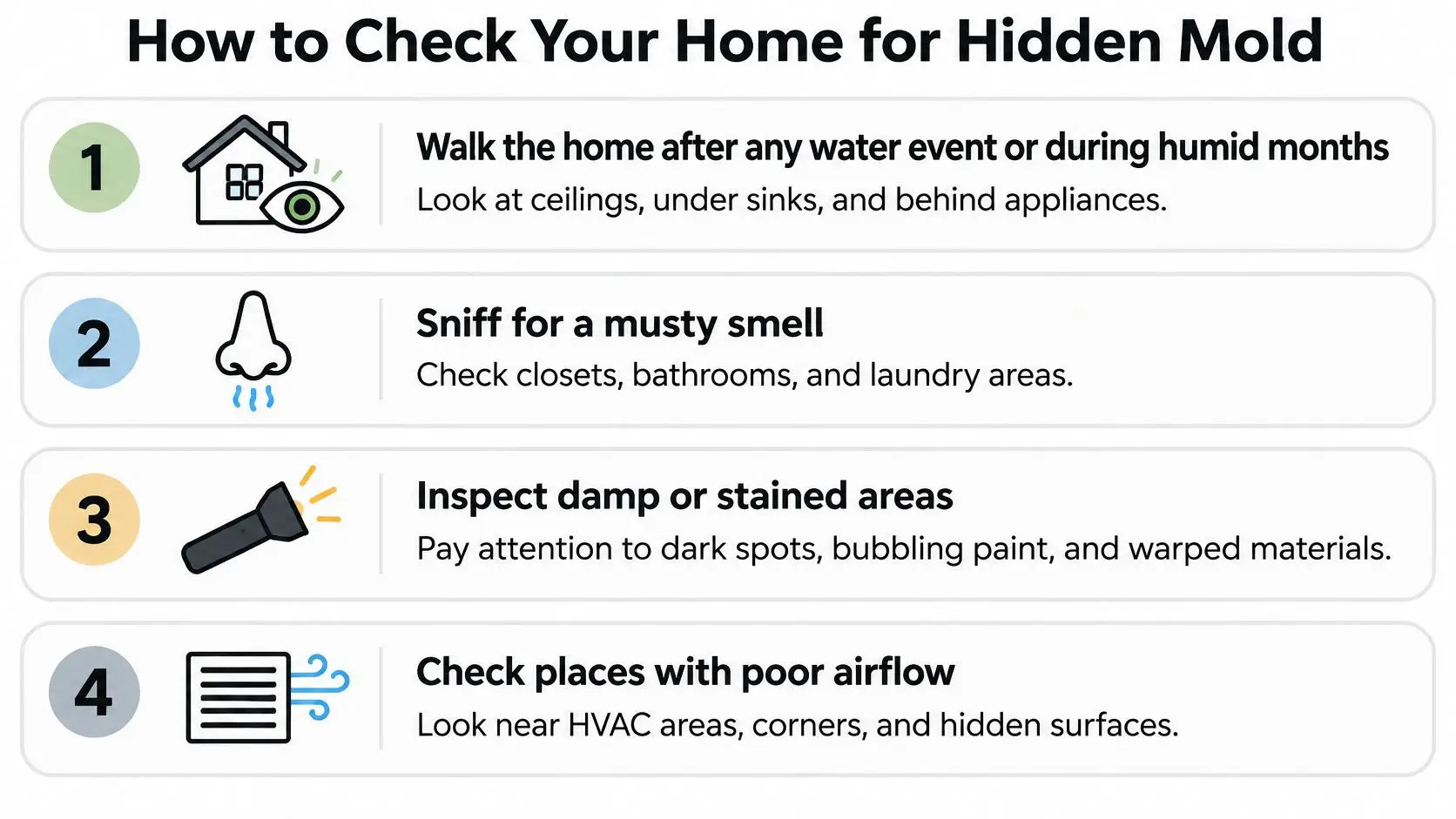
A home check works best when you follow the water. Look where water enters, where it drains, and where air doesn't move. Use this visual checklist as you work through the steps.
Six Steps for a Careful Home Check
- Walk the home after any water event or during humid months. Look at ceilings, under sinks, behind toilets, and behind appliances you can move safely.
- Sniff for a musty smell. Check closets, bathrooms, laundry areas, and near vents, since odor can point to growth you can't see yet.
- Use a moisture meter. Press it against drywall, baseboards, and flooring near plumbing or past stains. A surface can look dry while the material underneath still holds water.
- Check cooling equipment. Look at AC drain lines, drain pans, and evaporative cooler pads for standing water, slime, or overflow marks.
- Inspect details. Check window frames, grout, caulk lines, and corners for dark spotting, peeling paint, soft spots, or warped trim.
- Record what you find. Photograph each area and note the location, size, and date, so you can tell whether it's spreading or drying.
If you want a room-by-room format, use this mold inspection checklist for homeowners and keep your notes with the photos.
What Your Check Can't Tell You
Color can't identify a mold type. A dark spot may be mold, dirt, or mildew on a surface, and testing would be needed to name a specific fungus. A single air test also can't prove a home is safe, because results can miss hidden growth inside a wall.
Watch for this trap: A clean-looking room can still hide wet drywall or insulation behind the surface.
Hidden moisture is the most common reason a small leak becomes a larger problem. If the source is fixed, the area is small, and materials are dry, you may be able to handle the next step yourself. If the area is damp, spreading, or behind a wall, get a closer inspection before you clean or paint over it.
Health Effects and Who Is Most at Risk
People react to mold in different ways. One person may notice nothing, while another person in the same home feels irritated every day. That difference is normal, and it's why you shouldn't judge risk by one person's reaction alone.
The CDC states that health effects vary among individuals and doesn't recommend routine mold testing as a determinant of whether a building is safe, a point reflected in the Arizona Department of Health Services mold fact sheet. Visible or smelled mold, water damage, and persistent dampness are more actionable warning signs. In plain terms, find the dampness first.
Symptoms People May Notice
- Nasal irritation: Stuffy or irritated nose and sinuses.
- Coughing or wheezing: Airway irritation that may feel worse indoors.
- Eye irritation: Itchy, watery, or sore eyes.
- Skin symptoms: Rash or irritation after contact or exposure.
- Allergic reactions: Sneezing and other allergy-like symptoms.
- Asthma flare-ups: Worse asthma symptoms or more frequent attacks.
Who Needs Extra Caution
Concern is greater for people who are immunocompromised or who have respiratory disease. Use extra care also around infants and young children, older adults, and anyone whose doctor has told them to avoid mold exposure. Keep those occupants away from the affected area while you investigate and clean.
One pattern is worth noting. If symptoms ease when someone leaves the home and return when they come back, write down the dates and rooms involved. That record doesn't diagnose the cause, but it gives a doctor and an inspector useful information.
Questions about dark growth after a leak are common, so this overview of whether black mold from water damage is dangerous can help you separate visible facts from labels. See a doctor for persistent or severe symptoms. For the home itself, correct the moisture source, clean and dry affected areas, and remove contaminated porous materials when necessary.
What to Do in the First 48 Hours After Water Damage
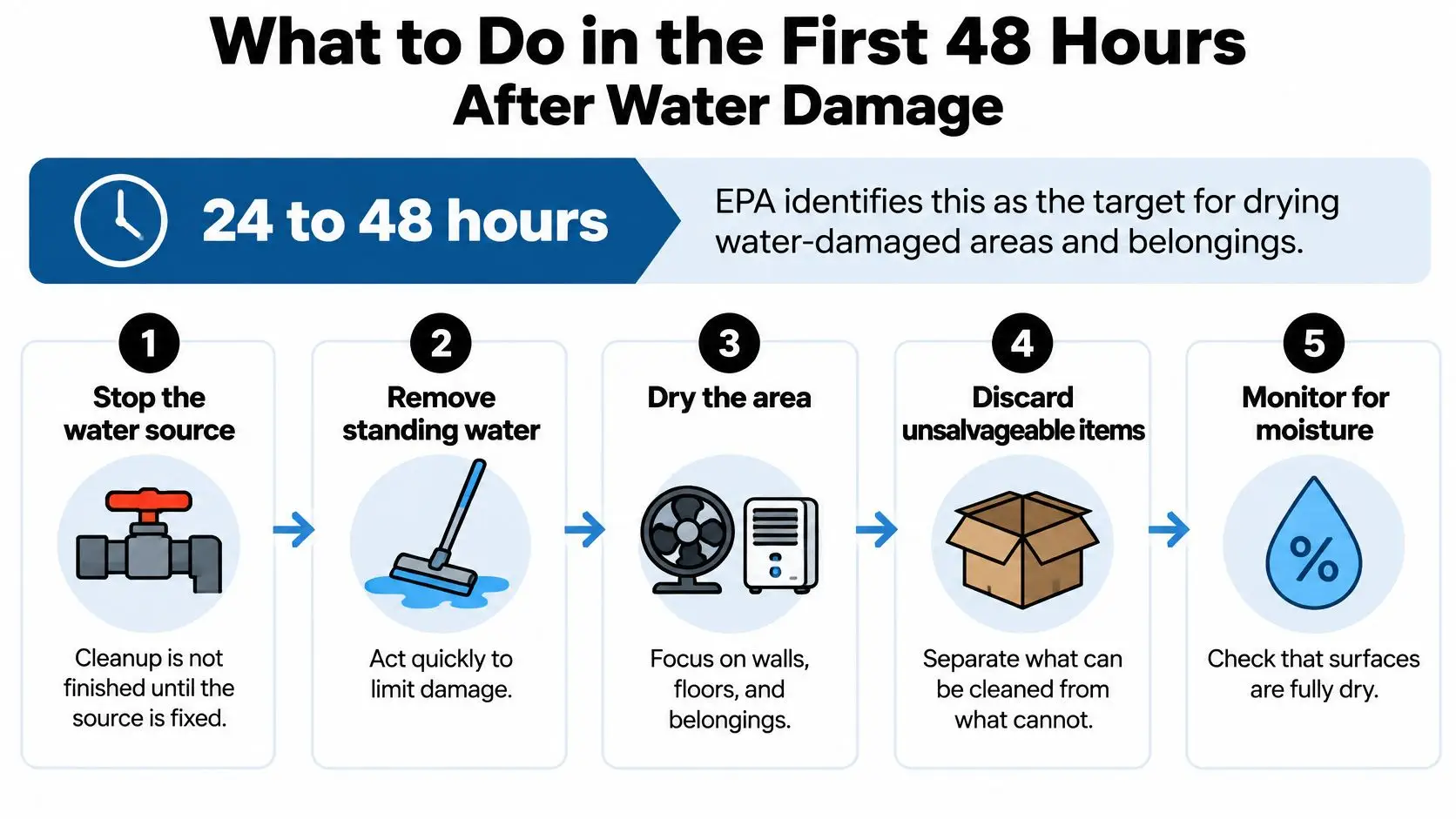
Speed matters after water damage. The U.S. Environmental Protection Agency recommends drying water-damaged areas and belongings within 24-48 hours to help prevent mold growth, in its EPA brief guide to mold, moisture, and your home. Treat that window as a prevention target, not a promise.
Work in This Order
- Stop the water source. Shut off the supply valve, turn off the leaking appliance, or close the main water valve if you can't find the leak.
- Remove standing water. Use a wet vacuum, mop, or towels, and move dry belongings out of the wet area.
- Lift wet porous materials. Pull back wet carpet and pad where you can do so safely, and remove soaked ceiling tiles or wet insulation that can't dry quickly.
- Dry with moving air and dehumidification. Run fans and a dehumidifier, and open windows only when outside air is drier than inside air.
- Check moisture daily. Use a moisture meter on drywall, baseboards, and flooring until readings show the materials are dry, not just the room air.
- Clean hard surfaces. Scrub nonporous surfaces with detergent and water, then dry them completely.
- Document the work. Photograph damage and drying progress, and keep receipts and notes for an insurer or landlord.
For flood-specific steps after the first response, see these tips on how to prevent mold after a flood.
Surface-only drying often fails. The face of drywall may feel dry while the back side, insulation, or subfloor stays wet. Mold can keep growing in that hidden space after the room looks normal again.
Cleanup isn't finished until the underlying water or moisture problem has been corrected.
If water came from sewage, or if flooding affected a large area, stop and call a professional. Contaminated water needs a different cleanup process and protective equipment.
Mold Responsibilities for Arizona Renters and Landlords
Arizona does not have a mold-specific statute that sets an exposure limit, mandatory testing requirement, remediation standard, or separate mold-remediator license, as explained in this summary of Arizona mold law. Most rental disputes are addressed through broader habitability and property-maintenance rules. This means the facts about water, repairs, and notice are very important.
What the Main Statutes Require
Under Arizona Revised Statutes §33-1324, landlords must keep rental housing fit and habitable, make necessary repairs, and maintain supplied plumbing, ventilation, heating, and cooling systems in good working order. For renters and property managers who want a broader landlord-focused view, VerticalRent's guide to rental mold explains liability and prevention in that rental setting.
Under §33-1361, if a landlord's failure materially affects health and safety, a tenant may provide written notice and terminate the rental agreement after five days if the condition isn't corrected. Don't treat that as a DIY legal plan. The notice, facts, and timing matter, so get legal advice before ending a lease.
Evidence Steps for Renters
- Photograph and date conditions: Include wide photos and close photos with a ruler or coin for scale.
- Report the moisture source in writing: Describe the leak, stain, odor, and first date you noticed it.
- Keep maintenance records: Save work orders, texts, emails, and names of people who entered.
- Don't disturb extensive growth: Avoid tearing into walls or spreading contaminated material.
- Request a documented plan: Ask for an inspection date, drying steps, and repair timeline in writing.
- Allow reasonable access: Timely notice and access help the repair move forward.
Separate housekeeping from building failure. Mold on bathroom grout after long showers without a fan may involve ventilation habits. Growth from a roof leak, plumbing defect, or HVAC condensate problem points to a building repair.
Landlords should document the source, repair timeline, affected materials, and corrective work. That paperwork often matters more than one air test, because Arizona regulates the conditions that produce mold rather than setting an acceptable mold number.
Deciding Between DIY Cleanup and a Professional
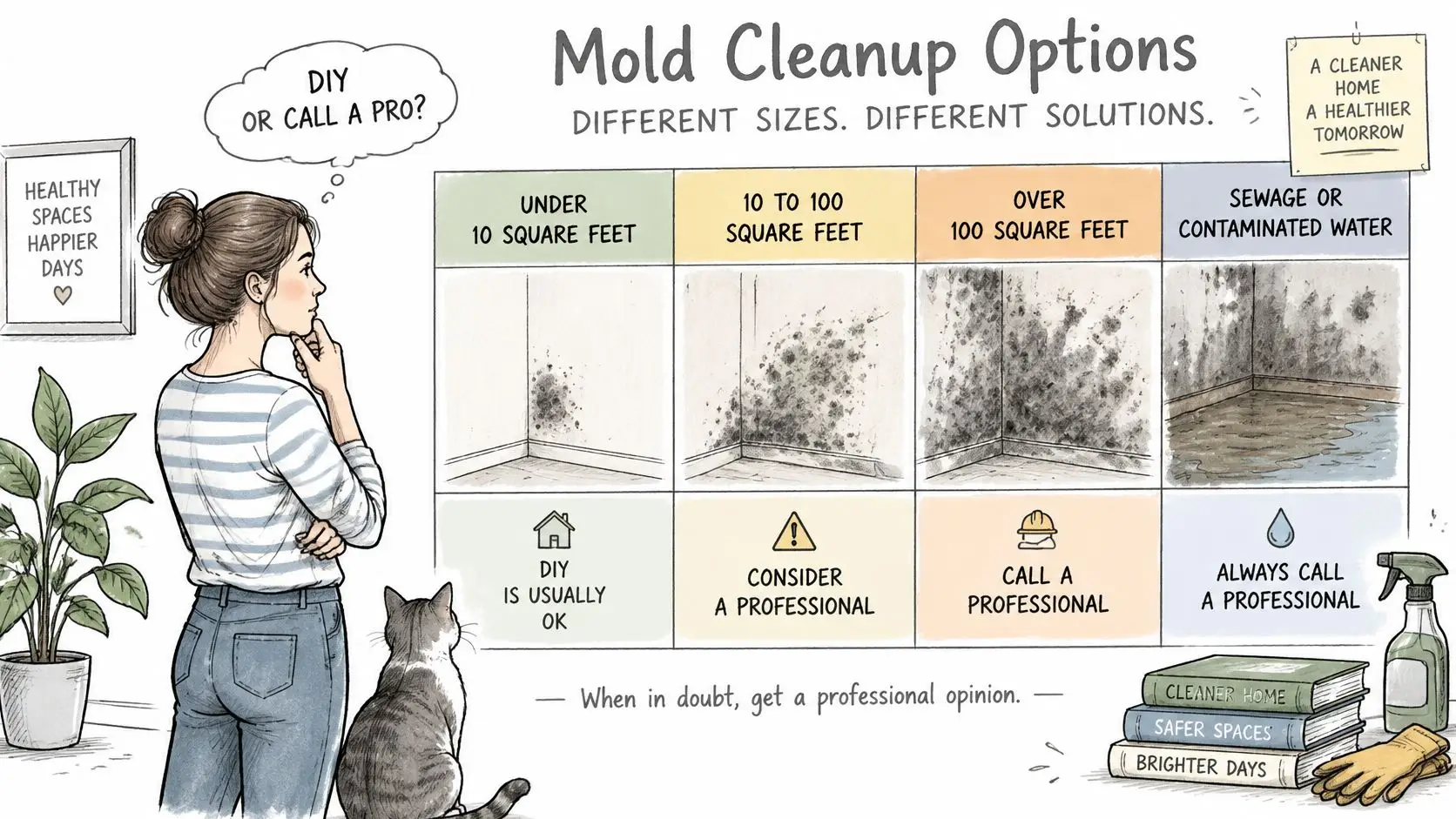
Size helps you choose a cleanup method. It doesn't prove an area is safe, and it doesn't replace checking for hidden moisture. The categories below give you a starting point.
| Visible growth area | Recommended approach | Who handles it |
|---|---|---|
| Under 10 sq ft, about a 3-by-3 ft patch | Occupant cleanup with N-95 respirator, gloves and goggles | Occupant following EPA precautions |
| 10 to 100 sq ft | Limited containment and professional judgment | Professional assessment advised |
| Over 100 sq ft | Full containment | Professional remediation |
| Sewage or contaminated water, any size | Cleanup by professionals experienced with contaminated water | Professional, regardless of size |
These size ranges come from the EPA framework for selecting cleanup methods, protective equipment, and containment, described in the EPA guide to mold cleanup in your home. For a small patch, use the drying and scrubbing order already described, and replace moldy porous items such as ceiling tiles, carpet, and upholstered furniture when contamination has soaked into them.
The video below shows how cleanup categories help you judge the scope before you start disturbing material.
Call for professional help when growth is over 10 square feet, moisture is inside walls or floors, the source involves HVAC or plumbing, sewage is present, growth returns after cleaning, or occupants have symptoms. Those signs suggest the visible patch may be only part of the problem.
Our IICRC-certified professionals assess the extent of the damage, develop a customized restoration plan, and make sure all moisture is properly removed. You can request a free inspection through our contact form or by calling 480-690-5277 for Mesa or 928-222-0034 for Payson. Start by learning what qualified mold remediation specialists check during an assessment.
Today, photograph the area, measure it, stop the water source, and request an assessment if any warning sign applies.
If you're dealing with mold in Arizona and the moisture source, size, or hidden damage is unclear, Restore Heroes can inspect the area and explain the next steps for drying, removal, and restoration. Visit Restore Heroes to request a free inspection through the contact form or find the Mesa and Payson phone numbers.