
Most policies cover mold from water damage only when the water was sudden and accidental, like a burst pipe. Mold from slow leaks, seepage, or flood water is usually excluded unless you have separate flood or endorsement coverage.
You're probably dealing with a wet ceiling, a musty cabinet, or a wall that looked fine last week and now smells wrong. In that moment, the question isn't academic, it's whether your insurer is going to help or deny the claim because the leak sat too long.
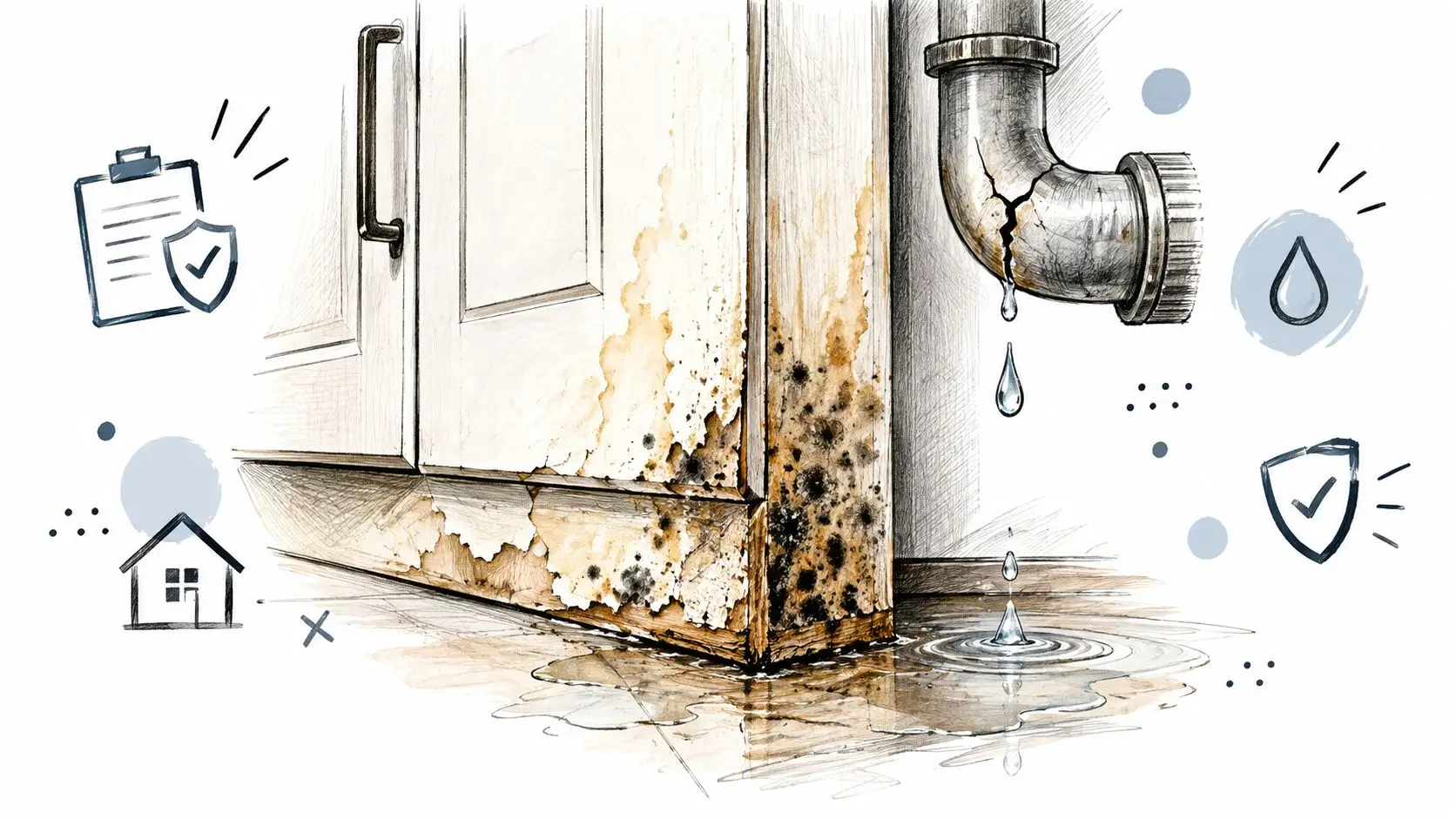
Why Your Mold Claim Might Be Approved Or Denied
A Phoenix homeowner opens a cabinet under the sink and gets hit with that sour, damp smell. The pipe didn't explode overnight, but the drywall is stained, the particleboard is swollen, and mold is already spreading.
If that water event was sudden and accidental, the claim has a real path forward. If the leak crept along for weeks or months, the insurer will usually point to maintenance or gradual damage and shut the door.
Practical rule: the insurer is usually judging the water event, not the mold itself.
Texas insurance regulators say most policies cover sudden water damage like a burst pipe or broken washer hose, and if mold grows on the damaged item it would be covered; they also say mold from a flood is not covered under a standard home policy because flood insurance has to be purchased separately. That rule lines up with the broader pattern in major U.S. homeowners and renters policies, where mold tied to a sudden and accidental water event is usually covered, but mold from gradual leaks, seepage, or flooding is usually excluded. Texas insurance regulator guidance
A lot of homeowners lose time by waiting to see whether the area dries on its own. That delay is exactly how a covered water loss starts looking like an uncovered maintenance problem. If you're already thinking about a claim, read these water damage insurance claim tips before you do anything else.
What adjusters want to know first
They want the date the damage started, the source of the water, and whether the event was fast or slow. They also want to know whether the mold was the result of a covered peril, not just whether the visible contamination looks bad.
That's why a burst supply line, a failed appliance hose, or water from fire suppression usually gets treated differently from a long drip behind a wall. The timeline matters because the policy language usually follows the cause, not the mess left behind.
Understanding How Policies Define Covered Water Events
Insurance companies draw a hard line between sudden accidental discharge and progressive deterioration. A burst pipe, a malfunctioning appliance, or fire-extinguishing water can fit the first category. A hidden drip, repeated seepage, or years of neglect usually fits the second.
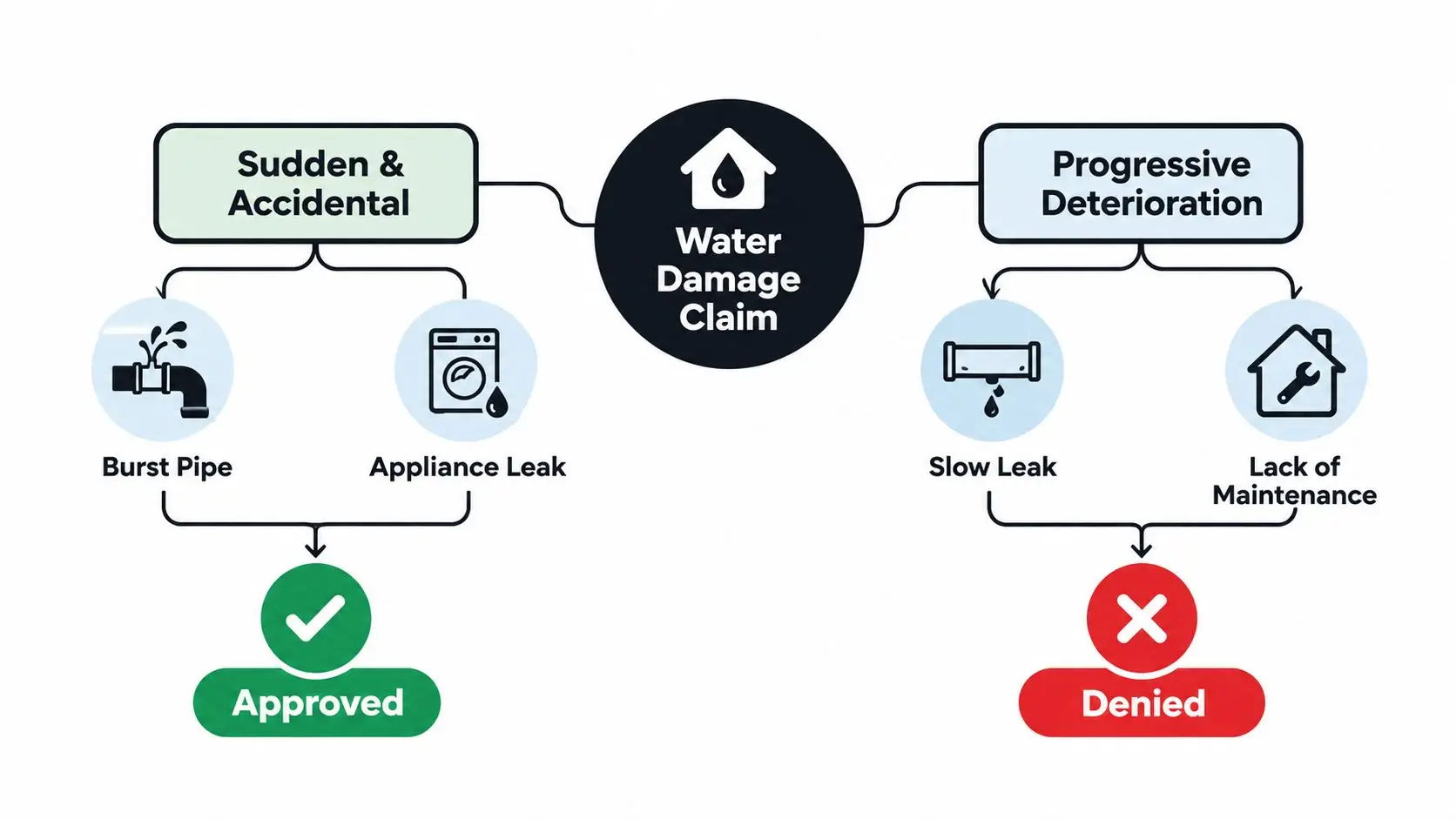
Coverage stays highly policy-specific, and some insurers cap mold payments even when the mold is covered. Guidance from insurers and state regulators shows that water-backup, hidden-water-damage, or mold endorsements can be added in some markets, but standard policies often exclude flood-related mold and many forms of seepage. Coverage and endorsement guidance
A covered water loss can open the door to mold remediation, but it doesn't erase the need to prove how the damage started.
The original cause matters more than the visible mold
A homeowner sees mold on the bottom of cabinets and thinks the mold itself is the problem. The insurer sees a question of origin. Was there a covered pipe break, or did a slow leak sit there long enough to become a maintenance issue?
That's why Phoenix claims often rise or fall on the first inspection. If the source was sudden and accidental, the mold may be part of the covered loss. If the source was a long-term leak or seepage, the mold usually gets denied even when the damage is ugly.
Read the policy language like it's evidence
If your declaration page or endorsements mention water-backup, hidden-water coverage, or mold coverage, that matters. If they don't, then the standard exclusions become even more important. For a plain-English walk-through of policy wording, use this guide to reading a homeowners policy.
When Mold Coverage Applies Versus When It Does Not
Here's the cleanest way to sort it out. If the water event was sudden, accidental, and tied to a covered peril, mold is more likely to be covered. If the moisture built up slowly, or came from floodwater, the claim is much weaker.
| Mold Coverage Scenarios | Typical Mold Coverage Outcome | Why It Usually Succeeds Or Fails | What Homeowners Should Do Next |
|---|---|---|---|
| Burst pipe behind a wall | More likely covered | The source is sudden and accidental, and the mold follows a covered water event | Photograph the damage, report it fast, and keep the failed part |
| Washing-machine hose rupture | More likely covered | Appliance failure is often treated as a covered water loss when it happens unexpectedly | Save the hose, note the date, and document all wet materials |
| Storm-related roof intrusion | More likely covered if the policy covers the storm damage | The key is whether the storm created the opening and the water entered quickly | Record weather-related damage and get repair estimates |
| Long-term leak under a sink | Usually denied | Gradual loss and maintenance issues are commonly excluded | Don't assume coverage, document the timeline anyway |
| Repeated seepage through a foundation crack | Usually denied | Seepage is typically treated as a slow, preventable condition | Show when it started, but prepare for an exclusion review |
| Flood-driven mold | Usually denied under a standard home policy | Standard home policies don't cover flood damage | Check separate flood coverage before filing |
A denied claim often has the same sad backstory, the owner noticed a small problem, hoped it would stay small, and then the mold spread. That waiting period is where coverage usually disappears.
If you want a fast read on the restoration side of the claim process, look at water damage restoration insurance guidance. It helps you understand what adjusters and contractors usually expect to see when the loss is sudden.
Steps To Document Water Damage Before Mold Appears
The first few hours matter. If you wait until mold is visible everywhere, you've already made the insurer's job easier and your job harder.
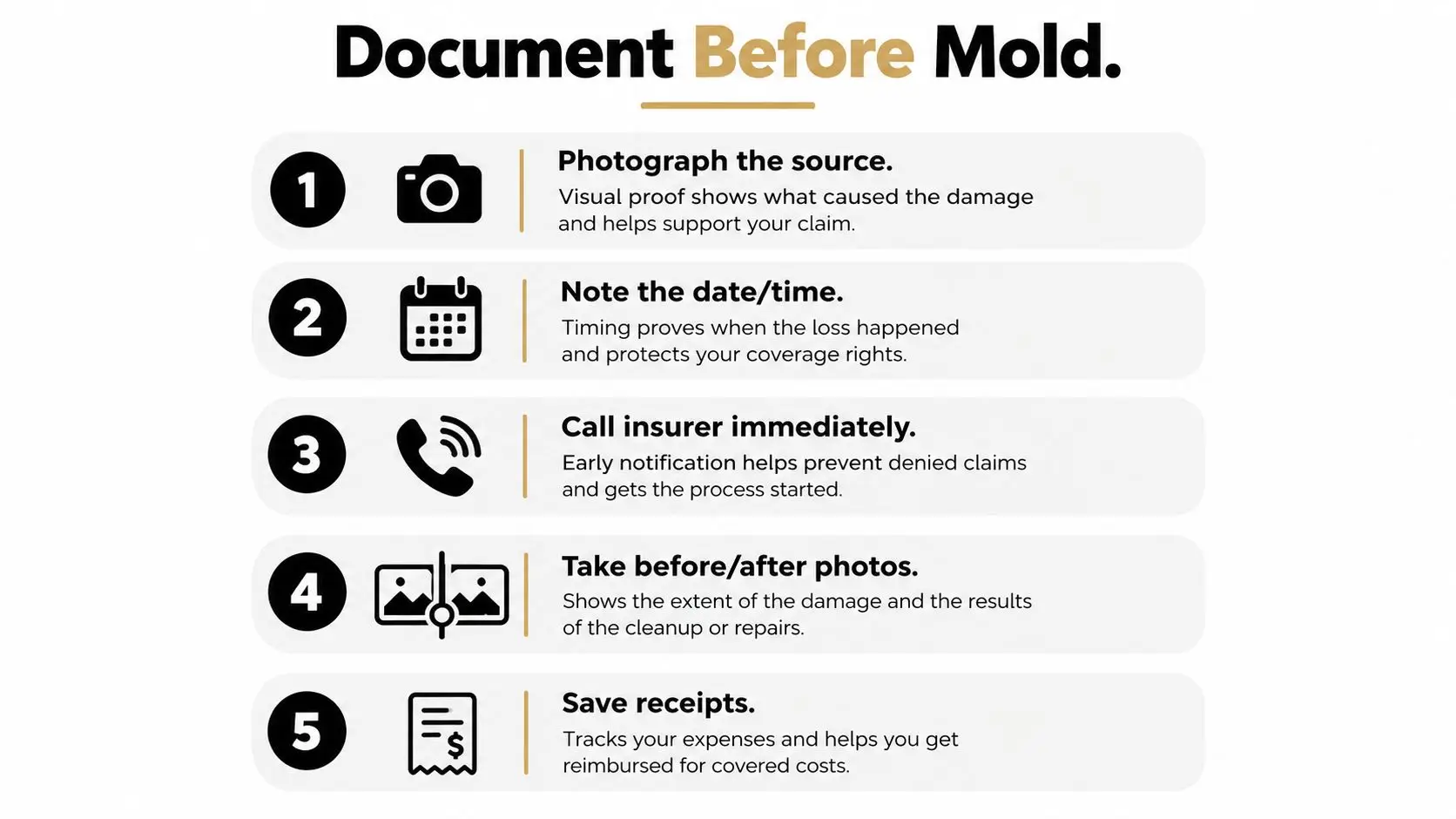
Do the paperwork before you do the cleanup
- Photograph the source. Capture the pipe, appliance, roof opening, or stain before anything gets moved.
- Write down the date and time. That timestamp can matter more than the mold count later.
- Call the insurer right away. Reporting promptly helps protect you from a gradual-loss argument.
- Take before and after photos. Show the room, the damaged materials, and the drying process.
- Save every receipt. Fans, drying equipment, emergency repairs, and extraction costs all create a paper trail.
The logic is simple. If the insurer can see a fast, documented event, the claim looks like covered water damage. If the file is thin, the loss starts looking like a maintenance problem that happened slowly over time.
You should also keep texts, emails, and voicemail notes from the first day. If a contractor visits, ask for written findings and keep the estimate with the date on it. For a more detailed paperwork workflow, use insurance claim documentation tips.
Washington's insurance regulator says homeowner insurance usually does not cover damage from mold, fungi, rust, or rot, but insurers often treat mold and rot as the policyholder's responsibility unless they arise from water damage that the policy already covers. It also notes that some insurers offer limited mold coverage. Washington regulator mold guidance
That's the part homeowners miss. The mold itself rarely saves the claim. The proof of the water event does.
A short video can help you think through the claim sequence before the damage spreads.
How Sub-Limits And Endorsements Change Your Payout
Even when the claim is approved, the payout may be smaller than you expect. Mold coverage is often capped by a sub-limit, not the full dwelling limit. One reporting example found a Progressive homeowners policy with a $5,000 fungi limit, while industry sources say mold sub-limits commonly range from $1,000 to $10,000 per occurrence and may be increased by endorsement in some policies. Mold sub-limit reporting
That means a covered loss can still leave you paying out of pocket if the cleanup runs past the cap. Two homes can have the same mold problem and very different results, because one policy has a tight fungi limit and the other has an added endorsement.
Why endorsements change the outcome
Some policies add water-backup, hidden-water-damage, or mold coverage by endorsement. Others don't. That difference can be the line between a manageable repair and a denied or underpaid claim.
If you own rental property, this matters even more. A landlord may need a separate policy structure and a different look at tenant-caused or plumbing-related water loss, so landlord insurance coverage options can be a useful comparison point when you're sorting out what kind of protection you need.
Bottom line: a covered mold claim can still be underpaid if the sub-limit is too low.
For property owners in Phoenix, a restoration contractor who documents the loss properly can make the adjuster's review cleaner. That's where an IICRC-certified team helps, because the file usually stands up better when the drying plan, affected materials, and moisture readings are recorded from day one. If the backup source is a sewer line, sewer-specific coverage is worth checking too, and this sewer backup insurance resource is a practical place to start.
Phoenix-Specific Tips To Strengthen Your Claim

Phoenix creates its own headaches. Heat dries some materials fast, but it also masks hidden moisture. Monsoon storms push water into roofs, stucco, window frames, and wall cavities, then the problem shows up later as mold in places you can't see.
That's why I tell homeowners to act like the claim clock starts the moment they notice the leak. Don't wait for the room to smell worse, and don't assume a surface that feels dry is dry behind the wall. A moisture meter, thermal scan, and written drying plan can tell a very different story from a towel and a fan.
Use the right vocabulary with the adjuster
Adjusters respond better when you describe the event clearly. Say whether the water was sudden, what failed, where it entered, and when you first noticed it. If you know the source, name it. If you don't, say that the source is being investigated, not that you “just had some mold.”
Keep your conversation focused on facts. Mention the broken hose, the burst line, the roof intrusion, or the appliance failure. Leave the emotion out of the first report, because the policy decision usually turns on the sequence of events.
Ask restoration contractors direct questions
A solid contractor should be able to tell you where the moisture is, what materials are affected, and whether drying can save part of the structure. Ask whether they'll document moisture readings, what gets removed, and how they'll separate old damage from the new loss.
I'd also ask whether they'll coordinate with the insurer and provide written notes you can save. That paperwork often matters more than a polished sales pitch. In Phoenix, Restore Heroes is one option for water mitigation and mold removal when you need a team that works through documentation, drying, and remediation in one job.
Don't let a small leak become a denied claim
The most common denial I see starts with someone saying, “It was just a little drip.” By the time they call, the flooring is lifted, the baseboards are swollen, and the mold has spread behind the cabinet. That delay gives the carrier room to argue gradual loss, and once that argument appears, the claim gets much harder to save.
If you catch water damage early, you still have strong options. If you document fast, preserve evidence, and report the loss before it turns into a long-term moisture problem, you give yourself the best shot at coverage under the policy you already pay for.
If you're dealing with water intrusion or mold in Phoenix, Restore Heroes can inspect the damage, document the loss, and handle drying or remediation with an insurance-focused process. Visit Restore Heroes to get help fast and make the claim conversation clearer before the damage gets worse.