
You find black spotting behind a bathroom vanity, or notice a musty smell each time the air conditioner starts. Chandler's dry climate makes the discovery feel unlikely, but indoor mold doesn't need a damp outdoor environment. It needs a local moisture source, a porous material, and enough time for that material to stay wet.
Effective mold removal in Chandler, AZ is therefore more than wiping a stain or spraying a chemical. The work must identify where water is entering, contain the affected area, remove or clean materials appropriately, dry the structure, and verify that moisture is no longer supporting growth. The U.S. Environmental Protection Agency emphasizes that mold control is moisture control, and that water-damaged materials should be dried within 24 to 48 hours to reduce the risk of mold growth (EPA guidance on mold and moisture).
Why Mold Happens in Chandler Despite the Dry Climate
A Chandler homeowner may first notice a dark line behind a baseboard, bubbling paint near a window, or a musty odor around the HVAC closet. The visible symptom often appears away from the actual source. Water may have traveled beneath flooring, into a wall cavity, or along the underside of a cabinet before the surface finally showed discoloration.
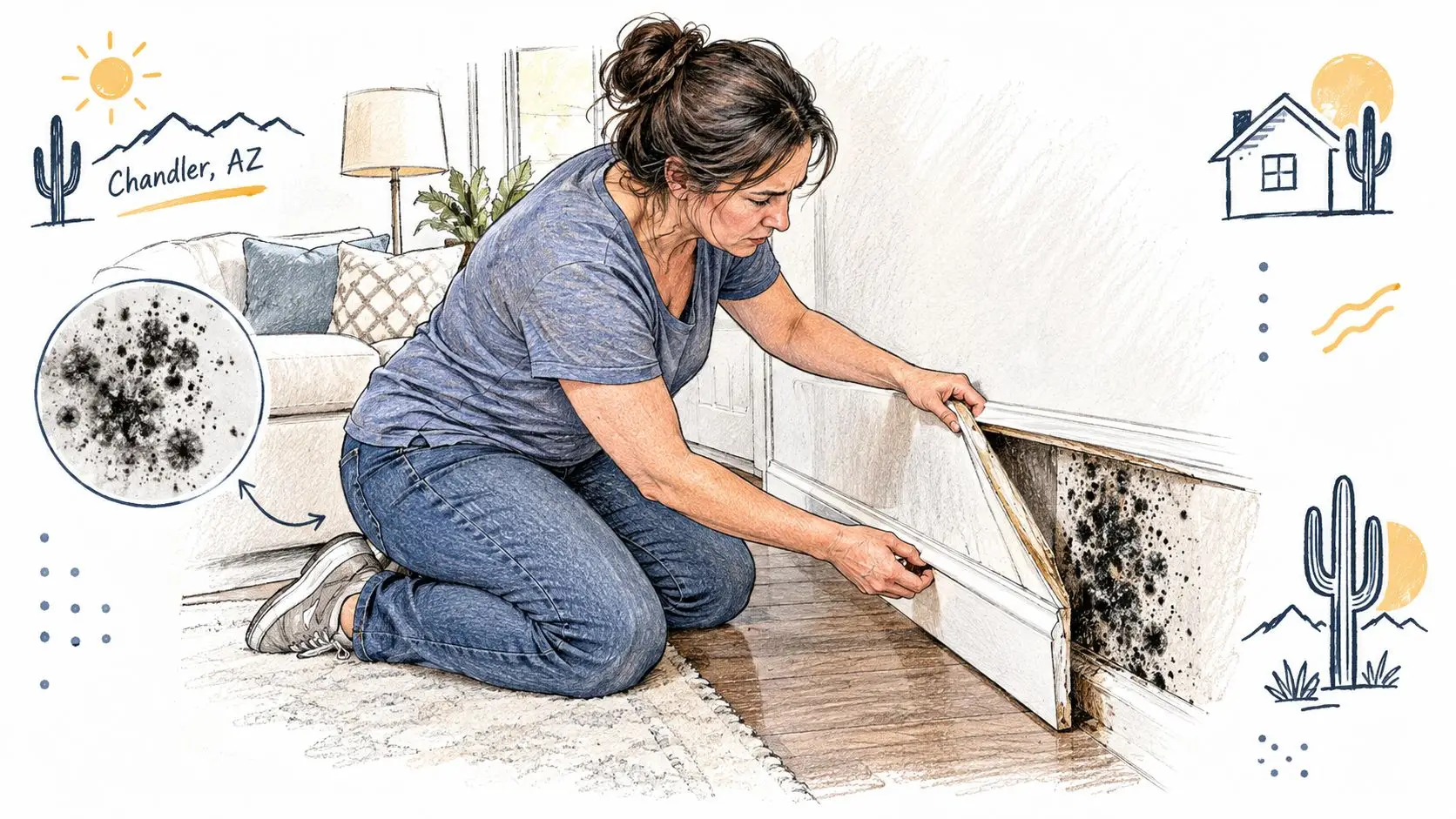
Local moisture creates local mold
Low outdoor humidity doesn't protect a section of drywall that stays wet. A small, recurring leak can keep wood, insulation, carpet backing, or drywall damp long enough for mold to establish itself. The Arizona Department of Health Services mold facts advises correcting the moisture source before cleanup, because removing surface growth without fixing the cause allows the problem to return.
Common Chandler moisture sources include:
- Irrigation seepage: Water from landscaping can reach exterior walls, foundations, or lower interior finishes after repeated irrigation.
- Appliance leaks: Refrigerators, washing machines, dishwashers, and water heaters can release enough water to affect flooring and adjoining cabinets.
- HVAC condensate problems: A blocked drain, damaged pan, or poorly managed condensate line can wet the area around an air-conditioning system.
- Brief water intrusions: A roof leak, plumbing failure, or overflowing fixture can affect porous materials even if the room appears dry later.
A musty odor or visible mold already warrants assessment. Surface cleaning can improve appearance, but it won't tell you whether moisture remains inside a wall or beneath a floor. If roof damage may be involved, arranging roof repair in Phoenix can be part of correcting the source before interior remediation proceeds.
Practical rule: Don't judge the risk by Chandler's outdoor weather. Judge it by how long the affected material stayed wet and whether the source is still active.
Homeowners researching what causes black mold in homes should focus less on the color and more on the conditions supporting growth. Different materials require different responses, and hidden moisture can continue feeding a colony after the visible patch has been removed.
The Inspection and Containment Process
A proper inspection starts with the building, not the stain. The technician should determine where water came from, how far it traveled, which materials are affected, and whether air movement could spread contamination to other rooms.
Finding the source before disturbing materials
Moisture meters help identify increased moisture in materials that look dry on the surface. Thermal imaging can point to temperature patterns associated with hidden dampness, but it doesn't replace physical verification. Walls, subfloors, ceiling spaces, cabinets, and HVAC areas deserve attention when the visible damage doesn't explain the odor or staining.
The inspection should document:
- The moisture source, such as a plumbing leak, condensate failure, roof intrusion, or irrigation seepage.
- The affected materials, including drywall, insulation, carpet, padding, wood, ceiling tiles, and contents.
- Potential air pathways, particularly return-air systems and HVAC components.
- The work boundary, including areas that may need limited demolition to confirm hidden conditions.
The EPA's remediation guidance uses the affected area to help determine containment. Limited containment generally applies to contamination from 10 to 100 square feet, while full containment is recommended above 100 square feet or when spread through the building is likely (EPA containment guidance). These thresholds help guide the setup, but the technician must also consider location, material type, occupant exposure, and the possibility of hidden spread.
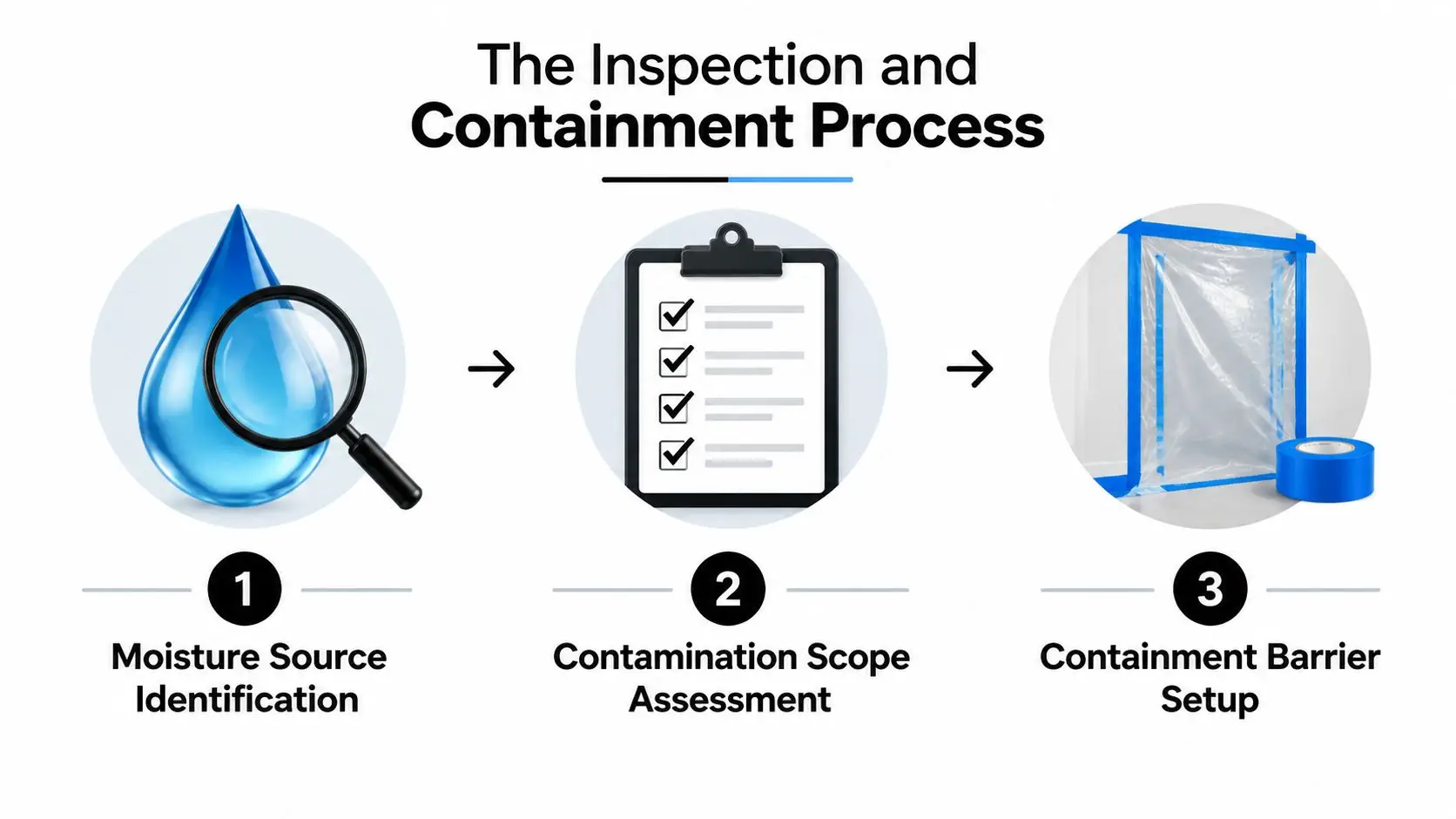
Why containment matters
Plastic barriers, sealed openings, controlled entry, and appropriate air filtration reduce the chance that disturbed material will move into clean areas. If an HVAC system is contaminated, it should be shut off until it has been remediated, because the system can distribute spores throughout the structure, according to the same EPA remediation chapter. That decision should be made carefully, since shutting down cooling in Chandler can affect comfort and humidity, but operating a contaminated system can spread the problem.
A useful preparation reference is this mold inspection checklist. It can help you organize leak history, odor locations, rooms with staining, and questions about containment before the contractor arrives.
The cleanup cannot be considered complete while the water problem remains active. The EPA states that remediation should begin by correcting the moisture source and that the work isn't finished until that problem is fixed (EPA mold and moisture guide).
Removal, Drying, and Restoration Timelines
Removal decisions depend on the material. A nonporous surface may be cleaned when it can be fully accessed and dried. Porous materials are harder because growth can penetrate fibers, backing, paper layers, and uneven internal surfaces.
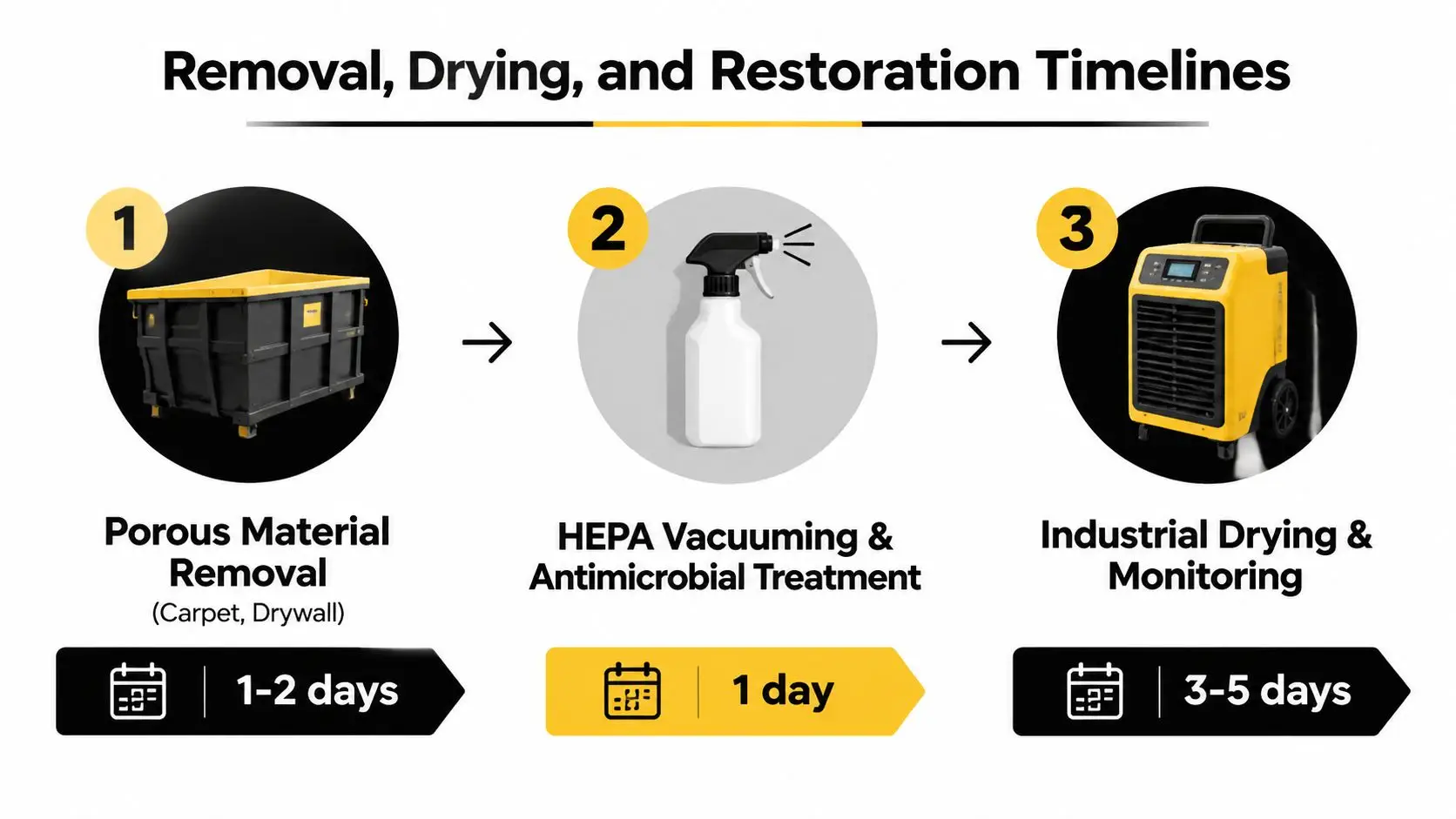
What gets removed
Ceiling tiles, carpet, carpet padding, and sections of drywall may need disposal when they're moldy or cannot be dried and cleaned reliably. The EPA notes that once porous materials such as carpet or ceiling tiles become moldy, discarding them may be necessary (EPA mold course). Trying to save every affected material can preserve odor and hidden contamination, while removing more than necessary increases disruption and restoration work. The right decision comes from the material condition and the confirmed scope, not from a blanket promise of minimal demolition.
Technicians may use controlled removal, sealed debris handling, HEPA-filtered vacuuming, appropriate cleaning agents, and air filtration. Antimicrobial products can support cleaning, but they aren't a substitute for source correction or structural drying.
The first two days matter
The critical response window after a leak or spill is 24 to 48 hours, according to the EPA (EPA commercial and school remediation guidance). If materials remain wet beyond 48 hours, mold growth may already have occurred. Carpet and backing require particular attention. EPA guidance describes removing water with a wet vacuum, lifting carpet and pad from the floor, and using fans to support drying.
For a homeowner, the immediate priorities are straightforward:
- Stop the source: Shut off water or arrange emergency plumbing, roofing, or HVAC service.
- Remove standing water safely: Use a wet vacuum only when electrical conditions are safe.
- Expose wet materials: Move contents away from affected areas and lift carpet when appropriate.
- Document the condition: Photograph damage and keep records for the contractor and insurer.
Industrial air movers and dehumidifiers accelerate evaporation and moisture removal, but equipment alone doesn't solve a concealed leak. Technicians should monitor affected materials rather than removing equipment based only on elapsed time.
Post-remediation verification should include moisture readings, visual review, confirmation that containment has been removed appropriately, and written documentation of the completed scope. A project completion timeline can help you ask what must be verified before finishes are rebuilt or the space is returned to normal use.
Verifying Contractor Credentials and Licensing
Marketing language is not proof of qualification. Before hiring a contractor for mold work in Chandler, ask for documentation that matches the actual scope, especially when the project involves water extraction, demolition, structural drying, cleaning, or repairs.
Check the company, not only the salesperson
Arizona restoration work can involve different verification steps depending on what the contractor will perform. Independent guidance on the regulatory context for Phoenix restoration services recommends checking Arizona Registrar of Contractors status and relevant IICRC credentials rather than relying on general claims.
Request and verify:
- Active ROC status: Confirm that the company's Arizona Registrar of Contractors information is current and that the license scope fits the work proposed.
- Scope-specific authorization: Ask which entity will perform water damage work, demolition, repairs, and mold-related services if different teams are involved.
- IICRC credentials: Verify that the technicians or firm have relevant Institute of Inspection Cleaning and Restoration Certification training for the services being offered.
- Insurance and bonding: Ask for current proof of liability insurance and bonding, and confirm who is responsible for subcontracted work.
- Written scope: Require a description of containment, removal, cleaning, drying, repairs, and verification before work begins.
A company may be experienced in water extraction but not equipped for mold assessment or post-remediation documentation. Another may offer cleaning but leave the roof, plumbing, or HVAC source unresolved. Those distinctions matter more than a polished website.
Ask how completion will be proven
You should know what records you'll receive at the end. Useful documentation can include moisture readings, photographs of concealed areas opened during work, equipment monitoring records, disposal details, and post-remediation verification findings. If independent clearance testing is proposed, ask who performs it and whether that party is separate from the remediation contractor.
No contractor should promise that mold can never return if a new leak occurs. A reasonable agreement should explain how the existing moisture source will be corrected, what conditions are outside the contractor's control, and what verification steps define completion. You can also review what an IICRC-certified restoration company should be prepared to document before selecting a provider.
Insurance Coverage and Pricing Considerations
Mold remediation pricing depends on the actual work, not the mere presence of mold. A contained surface-cleaning project is different from a job involving concealed wall damage, wet insulation, contaminated HVAC components, flooring removal, structural drying, and reconstruction.
The main pricing variables are:
- Contamination scope: A larger or more dispersed area generally requires more containment, labor, filtration, and disposal.
- Material type: Carpet, drywall, insulation, cabinetry, and finished flooring each create different removal and replacement decisions.
- Accessibility: Damage behind built-ins, inside walls, beneath floors, or near mechanical systems can require careful access.
- Source correction: Plumbing, roofing, HVAC, or drainage repairs may be separate from the remediation scope.
- Reconstruction: Replacing removed drywall, flooring, trim, paint, or cabinetry adds work beyond cleaning and drying.
Insurance is policy-specific. Some policies may address sudden water damage while excluding mold associated with long-term seepage, repeated leaks, neglect, or maintenance conditions. Coverage can also depend on the original cause, endorsements, exclusions, deductibles, and whether the homeowner took reasonable steps to limit further damage. Never assume that a contractor's opinion is a coverage decision.
Notify the insurer promptly when appropriate, preserve photos and damaged-material records, and ask the adjuster what documentation is required. A written estimate should separate emergency mitigation, mold-related work, source repair, and reconstruction so everyone can see what is included.
An onsite inspection is more useful than a phone estimate because the contractor can inspect moisture conditions and access limitations. For questions about policy language and mold claims, this guide to whether homeowners insurance covers mold can help you prepare a conversation with your insurer. No contractor can guarantee coverage or a final price before the cause and scope are established.
Preventing Mold Recurrence in Desert Homes
The prevention plan begins with the same principle that governs remediation: control moisture continuously. Chandler's dry outdoor air can help materials dry, but it won't correct a condensate leak, irrigation seepage, plumbing failure, or water intrusion hidden behind a finish.
The EPA recommends keeping indoor relative humidity between 30% and 50%, and, if possible, below 60% (EPA humidity guidance). Use a reliable humidity monitor in rooms that collect moisture, including bathrooms, laundry areas, mechanical closets, and spaces beside exterior walls or irrigation zones.
Habits that protect the structure
- Maintain the HVAC system: Keep condensate drains, pans, and surrounding insulation under observation, especially when the air conditioner runs heavily.
- Respond quickly to leaks: Remove standing water, begin safe extraction, and dry affected materials within the EPA's 24 to 48 hour window (EPA homeowner cleanup guide).
- Vent moisture outdoors: Use bathroom exhaust fans and address ventilation problems rather than allowing warm, damp air to settle on walls and ceilings.
- Inspect irrigation zones: Look for recurring dampness, staining, peeling paint, or odors on walls near landscaping and exterior hose connections.
- Monitor repaired areas: Recheck moisture and odor after cleanup, particularly where drywall, flooring, or cabinets were opened.
Crawl spaces and other low-access areas deserve attention because moisture can remain unseen. If that applies to your property, guidance on how to stop crawl space moisture now can help you identify conditions that may affect the living space above.
Remediation is not complete when the stain disappears. It's complete when the source has been corrected, affected materials are dry, and indoor humidity remains controlled so growth doesn't re-establish.
Restore Heroes provides mold assessment, moisture mitigation, structural drying, cleaning, and related restoration services for residential and commercial properties in Chandler and the Phoenix metro area. Visit Restore Heroes to request an onsite inspection and discuss the documented scope, drying plan, and verification steps for your property.