
When something goes terribly wrong at your Phoenix property, it’s hard to know who to call. For anything involving hazardous materials—like a trauma scene, chemical spill, or an unattended death—you need professional hazmat cleanup services. Trying to clean up these situations on your own isn’t just incredibly dangerous; it can also land you in serious legal and financial trouble.
What Hazmat Cleanup Services Actually Involve
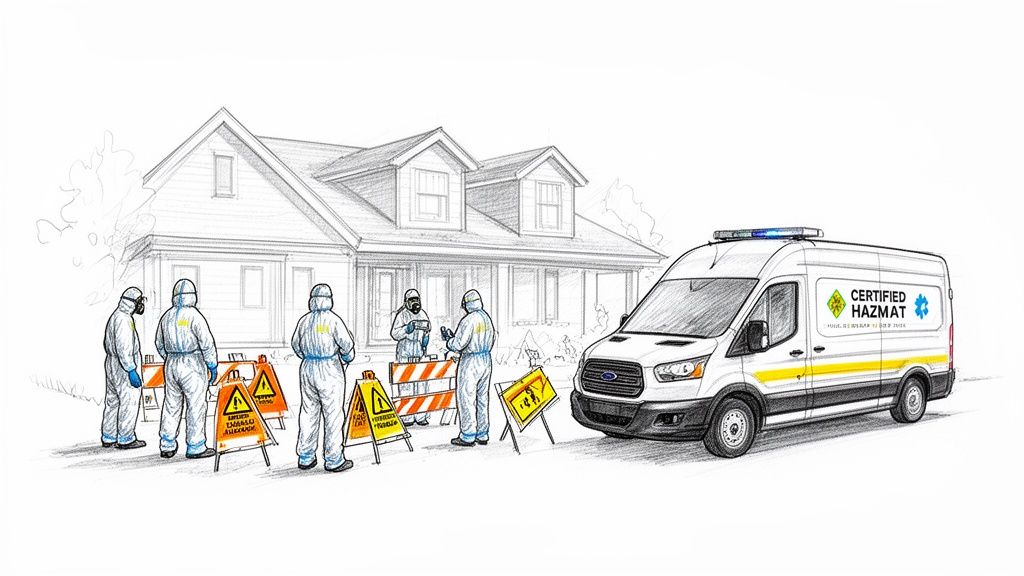
Let's use an analogy. You might feel comfortable changing a lightbulb, but you'd call a licensed electrician for faulty wiring or a sparking outlet, right? The risk of fire or electrocution is just too high to mess with. Hazmat cleanup works on the exact same principle.
These professional services are for incidents that go way beyond a simple household spill. We’re talking about complex and dangerous situations involving biohazards, toxic chemicals, or other substances that pose a very real threat to your health and safety.
Beyond the Visible Mess
What you can see is often the least of your worries. The real danger is what’s left behind. After an accident or trauma, invisible pathogens like bacteria and viruses can survive on surfaces for days, creating a serious risk of infection. In the same way, chemical residues can seep into drywall, flooring, and even your HVAC system, leading to long-term health problems.
Professional cleanup isn’t just about making a space look clean. It’s about making it biologically and chemically safe for anyone who enters. Trained technicians have the specific training, equipment, and testing tools to help return a property to a safe, pre-incident condition.
More and more people are recognizing these hidden dangers. The market for biohazard and crime scene cleanup was valued somewhere between $1.15 billion and $5 billion in 2026, and it's expected to grow by up to 7% each year through 2033. This isn't just a business trend; it shows a growing understanding that proper hazmat cleanup is a non-negotiable, regulated process that DIY methods can't possibly match, as noted on sites like crimeclean-up.com.
Common Scenarios Requiring Professional Hazmat Cleanup
It can be difficult to know when a situation crosses the line from a simple cleanup to a hazardous one. This table breaks down some common scenarios where calling in the professionals is essential.
| Scenario Type | Examples | Primary Risks |
|---|---|---|
| Trauma & Crime Scenes | Homicide, suicide, unattended death, assault | Bloodborne pathogens (HIV, Hepatitis), bodily fluids, emotional trauma for occupants |
| Biohazard Contamination | Sewage backups, hoarding situations with animal/human waste | Bacteria (E. coli, Salmonella), viruses, parasites, mold, strong odors |
| Chemical Spills | Leaking industrial containers, illegal drug labs (meth), mercury spills | Toxic fumes, chemical burns, respiratory damage, long-term health effects |
| Infectious Disease | Post-exposure decontamination for viruses like C. diff or Norovirus | High risk of transmission, contamination of surfaces and air |
| Vehicle Accidents | Blood and fluid cleanup inside a vehicle after an accident | Pathogen exposure, lingering odors, damage to upholstery and electronics |
These examples are just the tip of the iceberg. If you're ever unsure about the safety of a scene, the best course of action is always to stay out and call for expert help.
Why Certified Experts Are Essential
Hiring a certified team is one of the most important things you can do to protect yourself as a Phoenix property owner. True professionals show up with the right knowledge and gear to handle the job safely from start to finish.
- Specialized Equipment: This means more than just a mop and bucket. Professionals use commercial-grade disinfectants, powerful air scrubbers to purify the air, and full personal protective equipment (PPE) to keep everyone safe.
- Regulatory Compliance: Technicians should be deeply trained in OSHA, EPA, and local health department rules for containing, removing, and disposing of hazardous waste. There’s a right way to do it, and it's not negotiable.
- Safety and Liability: When you hire a professional service, you may shield yourself from the potential legal fallout of improper cleanup or disposal. A qualified team takes on the operational risk so you don't have to worry about lingering health hazards on your property.
In short, a professional team handles the technical work and safety burdens. You can learn more about the broader scope of what a restoration company does in our detailed guide. Choosing experts can give you peace of mind that the job is done completely and correctly, protecting the health of everyone who uses the space long after they're gone.
Recognizing Different Types of Hazardous Materials
When you hear the word "hazmat," a lot of different images might come to mind. But in our line of work, we know that not all hazards are the same. Trying to clean up a dangerous substance without knowing exactly what you're dealing with is like a doctor prescribing medicine without a diagnosis—it's not just ineffective, it’s dangerous.
A one-size-fits-all approach just doesn't work for hazmat cleanup. Here in Phoenix, we typically see hazardous situations fall into three main buckets. Each one calls for its own specific gear, safety protocols, and cleanup methods. Knowing the difference is the first step toward getting your property—and your life—back to normal.
Biological Hazards
This is the category most people think of when they hear hazmat cleanup services. Biohazards are any organic materials that can make people sick. We're talking about pathogens—viruses and bacteria—that are often left behind after a traumatic or unsanitary event.
Here are the most common biohazards we handle:
- Blood and Bodily Fluids: Often found at trauma scenes, accidents, or unattended deaths. These can carry serious bloodborne pathogens like HIV and Hepatitis B and C.
- Sewage Backups: Raw sewage is a toxic soup of bacteria, viruses, and parasites like E. coli and Salmonella. Any exposure can lead to serious illness.
- Hoarding Environments: In extreme hoarding cases, we often find animal or human waste, decaying food, and other organic matter that breeds bacteria and contaminates the air and every surface.
Think about an unattended death in a home. The tragedy is obvious, but what's not so obvious is how bodily fluids can seep deep into floors, subflooring, and furniture. This creates a hidden source of pathogens that a simple surface cleaning will never reach. The same goes for a major sewage backup, which can contaminate far more of your property than you can see. If you're dealing with something like this, it's helpful to understand the related risks. You can read more in our guide on Category 3 water damage and its risks.
Chemical Hazards
Next up are chemical hazards. These are the solids, liquids, or gases that can hurt you through skin contact, inhalation, or ingestion. Some chemicals give you a warning with a strong smell or visible corrosion, but many of the most dangerous ones are completely odorless and invisible.
A leaking container in a garage might seem like a small problem. But it can release toxic fumes that get sucked into your property’s ventilation system, spreading a silent but serious threat. This is why you can't afford to wait on a professional assessment.
Chemical hazards we often see in homes and businesses include:
- Fuel and Oil Spills: Gasoline and diesel aren't just fire hazards. Their fumes are toxic, and the liquids can quickly contaminate soil and groundwater.
- Improperly Mixed Cleaning Agents: A common mistake is mixing cleaners like bleach and ammonia. This creates toxic chloramine gas, which is incredibly dangerous if you breathe it in.
- Industrial Chemicals: We often find old, forgotten containers of solvents, pesticides, or other industrial chemicals in warehouses or garages. Over time, they can leak and create a major hazard.
Imagine buying a commercial property and finding old, unlabeled drums in the back. They could hold anything from acidic waste to volatile organic compounds (VOCs). Trying to move or open one without the right training and gear could lead to chemical burns, lung damage, or even an explosion.
Physical Hazards
Finally, some hazardous materials aren't chemically reactive or biologically infectious but can still cause serious harm. These are what we call physical hazards. They often take the form of tiny dust or fibers that get released into the air, where they can be inhaled and cause severe, long-term health problems.
Two of the most infamous physical hazards are:
- Asbestos: This was a popular building material for decades, used in everything from insulation to floor tiles. When it's disturbed during a renovation, it releases microscopic fibers into the air that can lead to lung cancer and mesothelioma.
- Lead Dust: If your home was built before 1978, there's a good chance it has lead-based paint. Scraping or sanding that paint creates a fine dust of lead particles, which is extremely toxic, especially for children.
A home renovation project can quickly turn into a hazmat situation. Someone might decide to tear down an old wall, not realizing they’re sending a cloud of asbestos fibers from the insulation into the air. Those tiny fibers can hang in the air for hours and settle on every surface in the house, putting everyone at risk. It’s a perfect example of why you need professional hazmat cleanup services, even when there’s no blood or chemicals in sight.
The Professional Hazmat Cleanup Process Explained
When a professional team arrives at a property, they aren’t just there to start scrubbing. They are specialists executing a highly controlled, step-by-step process designed to do one thing: make your space safe again.
Think of it less like a cleaning job and more like a surgical operation. Every move is deliberate and carefully planned to eliminate the hazard without putting anyone at risk. To give you a clearer picture, let’s walk through what a professional hazmat cleanup generally looks like, from the first call to the final all-clear.
Step 1: Initial Site Assessment and Safety Planning
Before a single tool comes out, the first job is to understand exactly what is being dealt with. This initial assessment is all about diagnostics. Certified technicians will carefully evaluate the scene to identify the type of contaminant, how far it has spread, and what materials have been affected.
From there, they build a custom, site-specific safety plan. This is the blueprint for the entire job. It details the exact procedures they'll follow, the specific Personal Protective Equipment (PPE) the team needs to wear, and the strategies they'll use to make sure the contamination doesn't spread another inch.
Step 2: Securing and Containing The Area
Once a solid plan is in place, the next priority is to lock down the contaminated zone. This is one of the most crucial parts of any hazmat cleanup service. The goal is simple: stop the hazard in its tracks.
This involves a few key actions:
- Creating a Perimeter: Teams set up physical barriers and clear warning signs to mark off the "hot zone" and prevent anyone from entering accidentally.
- Sealing Off HVAC: To stop airborne contaminants like viruses or chemical fumes from circulating, all air ducts and vents connected to the affected area are typically sealed.
- Setting Up Negative Air Pressure: For many jobs, especially those involving biohazards, specialized machines called air scrubbers are brought in to create negative air pressure.
Think of a negative air pressure zone like a hospital's isolation room. The system constantly pulls air into the contaminated space and runs it through HEPA filters before venting it safely outside. This simple but effective technique helps ensure that any dangerous airborne particles are trapped and removed instead of escaping into clean areas of your property.
This level of care is essential for the different types of hazards encountered.
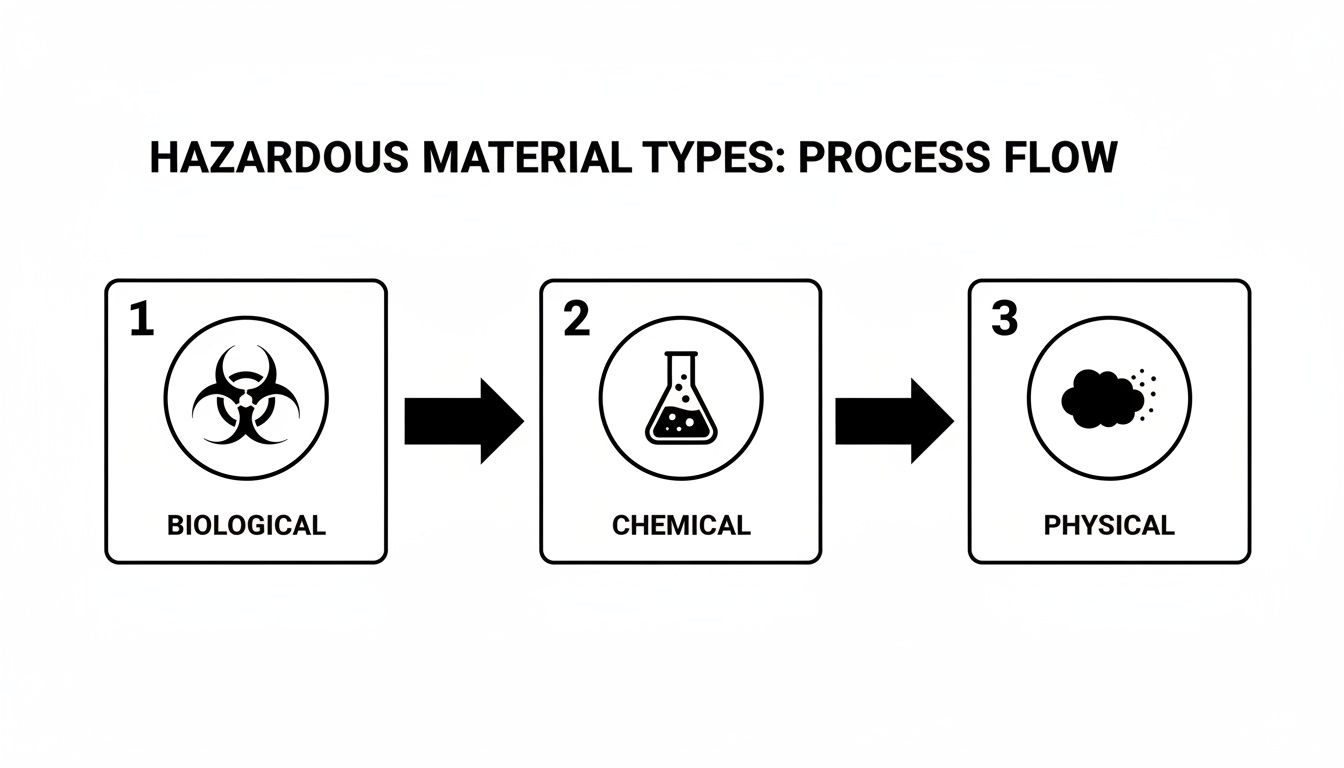
Whether it's biological, chemical, or physical in nature, each hazard has its own set of rules, and a good containment strategy is tailored to match.
Step 3: Removing All Hazardous Materials
With the area completely sealed off, the physical removal process begins. This isn't just a surface wipe-down; it’s a thorough and often destructive process. Trained technicians identify and remove every single item—porous or non-porous—that has been compromised.
This frequently means cutting out and disposing of materials that have absorbed the contaminants and can't be saved, such as drywall, carpeting, furniture, and even subflooring. Every contaminated item is carefully bagged, sealed in specially designed, regulation-compliant containers, and prepared for disposal. When dealing with complex biological scenes, a biohazard remediation company provides specialized expertise that is absolutely critical for safe and effective removal.
Step 4: Deep Cleaning and Decontamination
After all the contaminated structural materials and contents are gone, the deep cleaning can finally start. This goes far beyond standard janitorial work. Professionals use EPA-registered, hospital-grade disinfectants and other specialized cleaning agents designed to eradicate any lingering pathogens and neutralize harmful chemical residues.
The objective here is complete decontamination. Every remaining surface inside the contained area—from the ceilings and walls to floors and fixtures—is meticulously cleaned and disinfected. This methodical approach is what truly restores the space to a biologically and chemically safe environment.
Step 5: Safe Transport and Legal Disposal
Getting the hazardous waste off your property is just as important and regulated as the cleanup itself. This material can't just be thrown in a dumpster.
As a professional hazmat company, we use a fully licensed and documented disposal process. The waste is transported to a designated facility built to handle and destroy biohazardous or chemical materials safely. This process is tracked with a manifest, which creates a legal chain of custody and protects you, the property owner, from any liability down the road.
Step 6: Final Verification and Documentation
The work isn't done until it can be proven that the area is safe. A reputable company will often perform post-remediation testing to verify that the cleanup was successful. One of the tools used is an ATP (adenosine triphosphate) meter, which allows for instant testing of surfaces for any microscopic organic matter that might still be present.
Once tests confirm the space meets or exceeds cleanliness standards, the containment barriers and equipment are broken down. You should then receive a complete documentation package, including a report of the work performed, copies of the disposal manifests, and the final verification test results. This paperwork is your official proof that the property has been professionally and thoroughly restored.
Understanding Safety Standards and Arizona Regulations
When you're dealing with a hazmat situation, the last thing you want to worry about is a tangled mess of government regulations. But those rules are actually there to protect you. Think of them as the guardrails on a steep mountain pass—they exist to make sure a dangerous job is done right, keeping everyone safe from start to finish.
Handling hazardous materials isn’t a weekend DIY project. It’s why federal, state, and even local governments have put strict protocols in place. These aren't just bureaucratic hoops to jump through; they are the bedrock of any safe and truly effective hazmat cleanup service.
The Agencies That Keep Us Safe
Several key organizations set the standards for our industry. Their guidelines shape everything we do, from how we protect our technicians to how we dispose of contaminated waste. Knowing who they are helps you see the level of detail and professionalism that goes into this work.
- Occupational Safety and Health Administration (OSHA): OSHA is all about worker safety. For professionals, that means mandatory training, ongoing health monitoring, and specific rules for Personal Protective Equipment (PPE). Knowing how to use Personal Protective Equipment the right way isn't just a suggestion; it's a core requirement for keeping everyone on-site safe from exposure.
- Environmental Protection Agency (EPA): The EPA sets the rules for handling and disposing of hazardous waste. Following their guidelines helps ensure that the contaminants removed from your property don't end up creating a new problem for Arizona’s soil, water, or air.
- Arizona Department of Environmental Quality (ADEQ): This is our state-level authority. ADEQ takes the federal rules and applies them to our unique Arizona environment, providing local oversight to make sure every cleanup meets the highest safety standards right here at home.
You absolutely need to hire a company that lives and breathes these regulations. It’s the only way to protect yourself from future legal headaches and get the peace of mind that the job was done completely.
Why Certifications Are the Gold Standard
While government agencies write the rulebook, independent organizations provide the training and certification to prove a company actually knows how to follow it. In the world of restoration and hazmat cleanup, the most trusted name is the Institute of Inspection, Cleaning and Restoration Certification (IICRC).
An IICRC certification is more than just a piece of paper. It’s verifiable proof that a company has invested in extensive training and commits to the industry’s highest ethical and technical standards. It’s the simplest way for a property owner to identify a true professional.
When a company is IICRC-certified, it means its technicians have passed tough exams on the science behind remediation and safety. This kind of proven expertise is more important than ever. In fact, the market for home decontamination is expected to grow by 9.5% annually through 2030, with biohazard cleaning alone making up 42.50% of that market. This boom is happening because more people understand the health risks involved and the strict regulations that demand a professional response. You can read the full research on the home decontamination services market to see the data for yourself.
Hiring a contractor who is certified, licensed, and insured isn't just a smart move—it’s essential for your protection. It shows the team handling your emergency has the proven skill to restore your property safely and legally, so you can be confident the job is done right the first time.
Navigating Potential Costs and Insurance Coverage
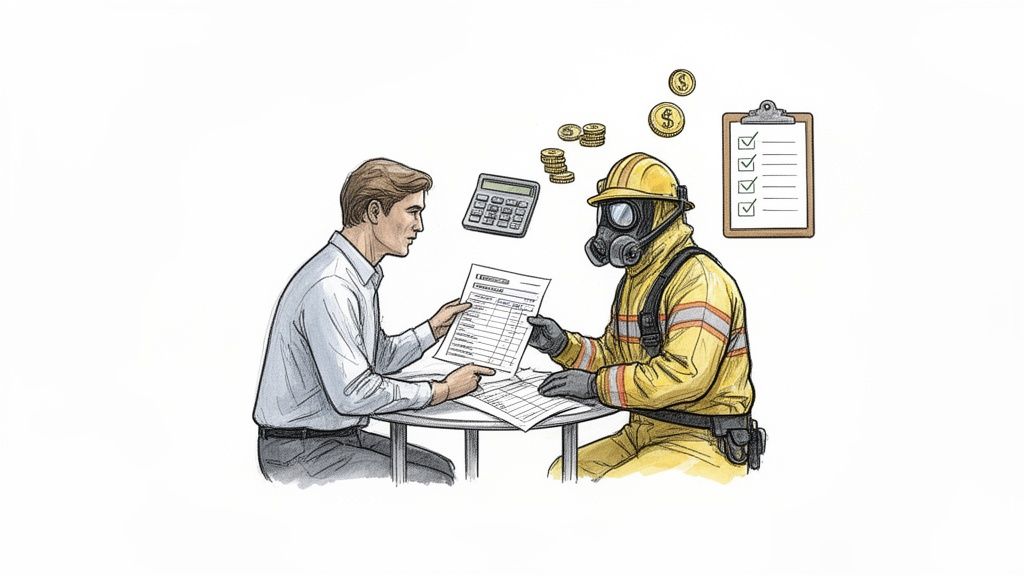
After the shock of an emergency wears off, the first question on everyone's mind is almost always the same: "What is this going to cost?" It's a completely fair question. When it comes to professional hazmat cleanup services, there’s no simple price list.
Think of it this way—the final cost is a direct reflection of the work required to make your property safe again. A small, contained chemical spill is one thing; a biohazard that has affected multiple rooms and soaked into building materials is another thing entirely.
Key Factors Influencing Project Cost
When a team arrives on-site, they are looking at several specific things to determine the scope of a project. Every reputable company should walk you through these factors before they even start.
- Type of Contamination: Are we dealing with blood, industrial chemicals, or something else? The specific hazard dictates everything from the cleaning agents we use to the safety gear our team needs.
- Size of the Affected Area: A larger footprint that needs to be sealed off, cleaned, and tested is a straightforward driver of cost.
- Extent of Contamination: This is a big one. A surface spill is much simpler to handle than a situation where fluids have seeped deep into drywall, subflooring, or even the home's structural supports.
- Required PPE: The level of Personal Protective Equipment (PPE) our technicians must wear is determined by the specific risks. More complex hazards require more advanced—and costly—gear.
- Regulated Disposal Fees: We can't just throw hazardous waste in a dumpster. It must be legally transported and disposed of at a licensed facility, which charges fees based on the type and weight of the material.
The price isn't just for a few hours of labor. It’s an all-inclusive figure covering the specialized equipment, regulatory compliance, safe disposal, and the liability protection needed to do this work right. It’s the total investment to return your property to a verifiably safe state.
How Insurance Can Help
Here's some good news: many property owners find that their homeowner's or commercial property insurance policy may offer coverage for professional remediation. This is often the case for events that cause property damage, like a fire, furnace puffback, or a trauma scene.
Because this is such a high-stakes field, it's also critical that your cleanup company is properly insured. A deep understanding of liability insurance for contractors isn't just for their protection—it’s for yours, too. It can shield you from liability related to the cleanup process.
To make the insurance process smoother, thorough documentation is your best friend. If it’s safe, take photos or videos of the area before anything is moved or cleaned. Your insurance adjuster will need this proof. A seasoned hazmat company can also work directly with your insurance carrier, providing the detailed estimates and reports they require. This can take a huge administrative burden off your shoulders during an incredibly stressful time.
For a deeper dive into what to expect, you can learn more about the cost of crime scene cleanup in our guide.
How to Choose the Right Hazmat Company in Phoenix
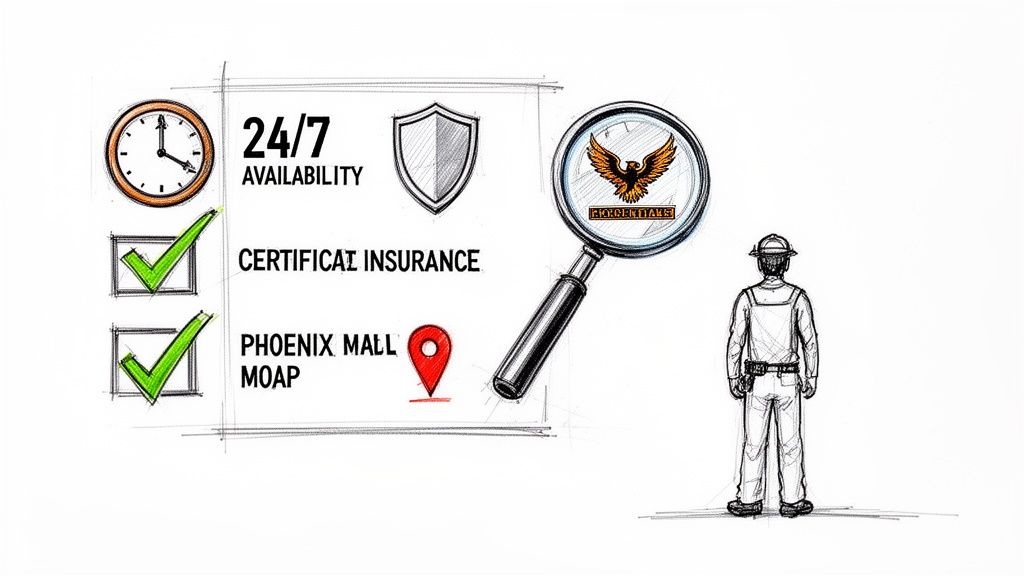
When you're dealing with a hazardous material emergency, the company you call can be the most important decision you make. Choosing the right team means your property is safely and thoroughly restored. The wrong one? That can leave you with lingering health hazards, legal headaches, and a job that's only half-done.
Think of it like hiring a specialized surgeon. You wouldn't pick one just because they were the cheapest or had a flashy ad. You’d dig into their credentials, their experience, and their track record. The same level of care is essential when you're selecting a professional for hazmat cleanup services here in the Phoenix area.
What to Look For in a Pro Hazmat Contractor
To keep your family and property safe, you need to focus on a few key things that separate the real experts from the rest. Here’s what we suggest people look for.
- Around-the-Clock Availability: Hazmat situations are emergencies, period. They don't happen on a 9-to-5 schedule. A reliable company has teams ready to respond 24/7, because containing the problem quickly is everything.
- IICRC Certification: The Institute of Inspection, Cleaning and Restoration Certification (IICRC) isn't just a fancy acronym. It's your signal that the technicians showing up at your door have been properly trained and tested on the highest safety protocols.
- Proof of Insurance: This is a big one. The contractor absolutely must have full liability and workers' compensation insurance. Ask to see their certificate of insurance to make sure it's current. This is what protects you from being held liable if something goes wrong on your property.
- Local Phoenix Expertise: A company that knows Phoenix and Arizona’s specific environmental rules (from agencies like ADEQ) will navigate the project smoothly and ensure everything is handled by the book.
A true professional will often insist on a free, on-site assessment before quoting a price. Anyone who thinks they can accurately price a hazmat job without seeing it first isn't someone you want to hire.
The need for qualified pros is growing. In 2026, there were over 5,205 remediation businesses across the U.S. This boom is partly because more people now understand the real risks of biohazards from things like unattended deaths or hoarding situations. As a result, specialized firms are popping up in cities like Phoenix to meet the demand for properly trained responders. For more on this trend, you can check out the analysis of the rising demand for specialized cleanup services on FergusNow.com.
Red Flags to Watch Out For
Just as important as knowing what to look for is knowing what to run from. Be wary of any company that does the following:
- Gives You a Quote Over the Phone: No two hazardous scenes are alike. A quote given without a physical inspection is just a guess, and it's a classic setup for surprise fees later on.
- Is Vague About Training or Insurance: If a contractor gets defensive or can't immediately show you their IICRC credentials or proof of insurance, end the conversation.
- Uses High-Pressure Tactics: A reputable team will give you a clear, detailed plan and let you make a decision without feeling rushed. Pushy sales tactics are a sure sign they don't have your best interests at heart.
To make this easier, we’ve put together a simple checklist you can use when talking to potential contractors.
Contractor Vetting Checklist
Use this table to compare companies and make sure you're hiring a qualified, trustworthy professional for the job.
| Verification Point | What to Ask For | Why It Matters |
|---|---|---|
| Certifications | "Can I see your IICRC certification?" | Confirms technicians are trained to industry standards for safety and effectiveness. |
| Insurance | "Can you provide a current Certificate of Insurance?" | Protects you from liability for accidents or damages during the cleanup. |
| Local Experience | "How many years have you worked in the Phoenix area?" | Ensures they understand local regulations (ADEQ, city codes) for proper disposal and compliance. |
| On-Site Assessment | "Do you offer a free, no-obligation on-site inspection?" | A necessity for an accurate quote and scope of work. Refusal is a major red flag. |
| Detailed Quote | "Can you provide a written, itemized estimate?" | Prevents hidden fees and ensures you know exactly what you're paying for. |
| Safety Plan | "What is your health and safety protocol for this job?" | A professional will have a clear plan for containment, PPE, and protecting the property. |
Taking a few minutes to verify these points is crucial. It’s the same kind of diligence you’d use when hiring any expert for your property, like finding a trustworthy water damage restoration contractor for your home. By asking the right questions, you can feel confident that your home or business is in truly capable hands.
Your Hazmat Cleanup Questions Answered
If you're facing a hazardous materials situation at your Phoenix property, your mind is probably racing with questions. That's completely normal. Getting clear, honest answers is the first step toward making a smart decision during a very stressful time. Here are a few of the most common questions we hear from property owners just like you.
How Long Will This Cleanup Actually Take?
This is probably the most common question we get, and the honest answer is: it really depends. Think of it this way—a small chemical spill contained on a concrete garage floor might only take a few hours to handle. But if that same chemical soaked into drywall and seeped into the subfloor, we could be looking at a multi-day project.
The biggest factors are the type of hazardous material, how large of an area is affected, and what kinds of materials it has touched. We can give you a solid timeline, but only after we’ve put eyes on the site and done a full assessment.
Is It Safe to Go Back Inside Right After You're Done?
Not immediately. A huge part of the job is making sure the area is truly safe, not just looking clean. This is why pros perform what's called post-remediation verification to prove it.
This involves scientific tests, like ATP testing, which can detect microscopic organic particles that are invisible to the naked eye. It’s how professionals confirm they’ve brought the space back to a medically-clean standard.
You should never re-enter a property until the cleanup crew gives you the official all-clear, complete with documentation. This isn't just a suggestion; it's a non-negotiable step to ensure your safety.
What Do You Do With All the Hazardous Waste?
Proper disposal is a serious, legally regulated part of the job. Contaminated materials can't just be tossed in a dumpster.
Everything from biohazards to chemical-soaked drywall is carefully sealed in specially designed, clearly marked containers. A licensed hazardous waste hauler then transports these containers to a designated facility that is equipped to safely destroy them according to strict federal and Arizona state laws. The process is documented with a manifest that tracks the "chain of custody," giving you total peace of mind and legal proof of proper disposal.
If your property has been impacted by a biohazard or chemical spill, acting quickly is key. The Restore Heroes team is IICRC-certified and on call 24/7 to help restore your property and your safety. Contact us now for a free, no-obligation on-site assessment.