
Crime scene cleaning cost usually falls between $1,000 and $5,000 for standard jobs, but that number can be misleading because the final price changes sharply based on what happened, how far contamination spread, and what materials have to be removed. In real situations, a single-room biohazard cleanup may average $3,000, while unattended death cleanup often reaches $4,000 to $8,000 or more.
If you’re reading this after a traumatic event, you probably don’t need a sales pitch. You need clear information. You may be a homeowner standing in a hallway wondering what happens next, a landlord trying to protect tenants and document damage, or a property manager trying to make fast decisions without making expensive mistakes.
Dealing with trauma or biohazard cleanup is an unfamiliar experience for many until an incident arises. Then suddenly they have to sort out health risks, insurance questions, access for investigators, and a cleanup bill that can vary far more than they expected. In Phoenix, that confusion can get worse when heat, time delays, and insurance gaps all affect the scope of work.
The good news is that the pricing isn’t random. There are patterns behind it. Once you understand what drives crime scene cleaning cost, the estimates start to make sense.
The Unspoken Task After a Traumatic Event
A family member calls. The police have left. The coroner is done. The room is still there.
That’s often the moment when people realize there’s a second crisis after the first one. The emotional shock is obvious. The cleanup responsibility is not. Many homeowners assume someone else handles it automatically. Many landlords think standard janitorial work can take care of it. Neither assumption is usually safe.
Trauma scenes involve more than what’s visible on the surface. Blood and other biological material can move into carpet backing, drywall seams, baseboards, subflooring, furniture padding, and HVAC-adjacent spaces. Even when an area looks limited, the actual work may require containment, removal of porous materials, disinfection, odor treatment, and regulated waste disposal.
Why this feels so confusing
The confusion usually comes from three places:
- The event is overwhelming: People are making financial decisions while grieving or managing a property emergency.
- The work is specialized: This isn’t housekeeping, deep cleaning, or standard restoration.
- The cost range is wide: One job may be relatively contained, while another can involve structural removal and insurance disputes.
A Phoenix property owner may also face practical pressure right away. If the property is occupied, people want to know when it will be safe to return. If it’s a rental, the owner may worry about tenant habitability, documentation, and lost time.
Practical rule: Don’t judge the cost of a trauma cleanup by what you can see from the doorway.
Another point that catches people off guard is privacy. Most families and property managers want the issue handled discreetly, respectfully, and with as little disruption as possible. That’s part of why clear communication matters so much. A good cleanup process should reduce chaos, not add to it.
The hardest part of this situation is that emotional stress and financial uncertainty arrive at the same time. That’s why it helps to look at crime scene cleaning cost as a series of understandable parts, not one mysterious invoice.
Understanding the Price Tag on Professional Biohazard Cleaning
The fastest way to understand crime scene cleaning cost is to start with broad benchmarks, then narrow them to the kind of incident involved.
According to industry cost benchmarks for crime scene cleanup, professional crime scene cleanup typically ranges from $1,000 to $5,000 for standard jobs, with single-room biohazard incidents averaging $3,000. The same source notes that unattended death cleanups often reach $4,000 to $8,000 or more, homicide scenes often cost $5,000 to $15,000, and hoarding situations with biohazards can reach $5,000 to $25,000.
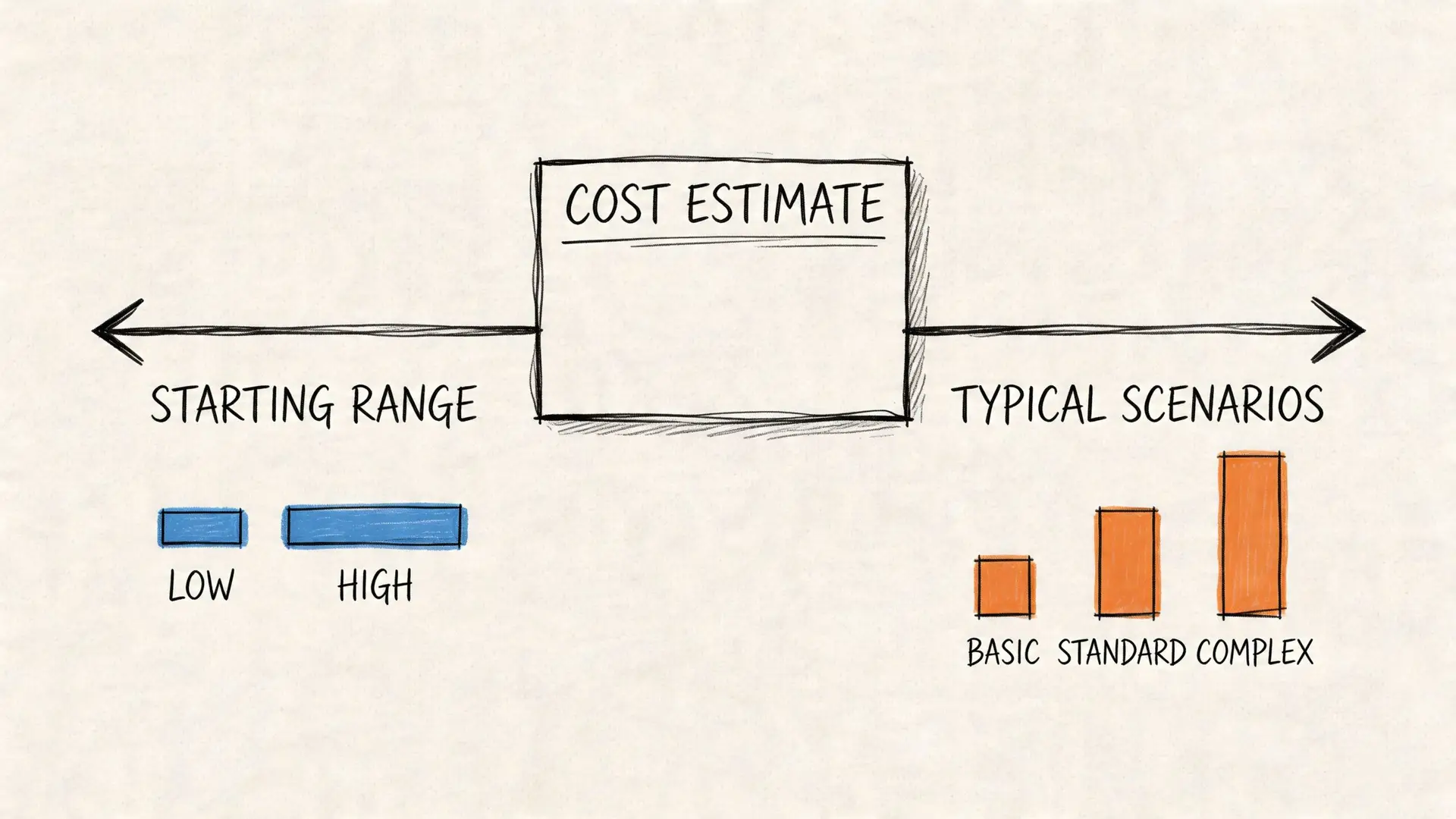
Those numbers help, but they don’t work like a menu. A homeowner can’t safely assume, “My case sounds like a $3,000 job,” because two incidents with the same label can require very different levels of containment, removal, labor, and disposal.
Common scenarios and how they differ
A simple way to think about pricing is to compare incident types.
| Scenario | Typical pricing pattern |
|---|---|
| Standard biohazard cleanup | Often falls within $1,000 to $5,000 |
| Single-room contamination | Often averages around $3,000 |
| Unattended death | Commonly $4,000 to $8,000 or more |
| Homicide or violent scene | Often $5,000 to $15,000 |
| Hoarding with biohazards | Can reach $5,000 to $25,000 |
| Vehicle biohazard cleanup | Often lower because the space is smaller |
Vehicle cleanup is often less expensive because the affected area is more contained, but materials still matter. Fabric seats, foam padding, and hard-to-access interior panels can still increase labor and disposal needs.
When a death involves decomposition, pricing often rises because technicians may need to address odor, remove damaged structural materials, and decontaminate areas beyond the immediately visible source. That’s one reason families who are also comparing other end-of-life expenses sometimes look into related guides such as private autopsy costs while planning the broader financial picture.
Hourly pricing versus project pricing
Some readers get stuck on whether cleanup is billed by the hour or by the job. The honest answer is that both models exist.
The same benchmark source notes that hourly rates for specialized services often fall between $75 and $250 for general service structures, depending on expertise, risk, and disposal requirements. But severe scenes are often better quoted as project-based jobs because hourly pricing alone doesn’t capture disposal, structural removal, equipment use, and compliance work.
Here’s the difference in plain language:
- Hourly pricing can make sense when the scope is still being defined or when the work is limited.
- Project pricing is often easier for property owners because it groups labor, materials, disposal, and equipment into one defined scope.
What matters most isn’t the billing style. It’s whether the estimate clearly explains what is included and what could trigger extra cost if additional contamination is discovered.
A phone quote can only be a rough starting point. An onsite assessment is what turns a guess into a real scope of work.
If you want to understand what professional biohazard remediation includes beyond the label itself, this overview of a biohazard remediation company is a useful reference point.
Why Phoenix owners should treat benchmarks carefully
Phoenix-area properties can vary widely. A small condo, an older single-story house, a large custom home, and a commercial suite all create different access, removal, and ventilation challenges. Heat can also intensify odor issues and make timing more important, especially if discovery is delayed.
So yes, start with the benchmark ranges. But treat them as orientation, not a promise. The actual answer to crime scene cleaning cost always comes from the condition of the site itself.
What Determines the Final Crime Scene Cleaning Cost
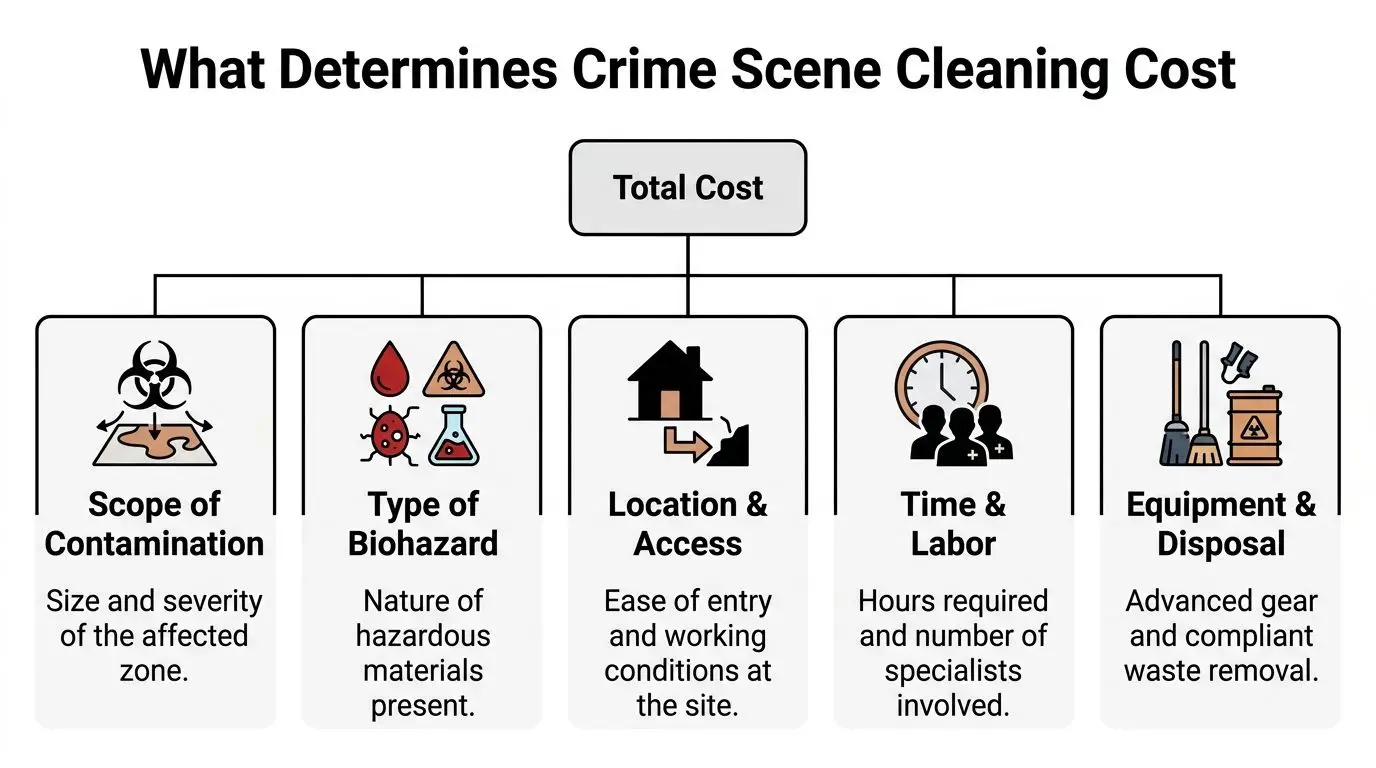
When examining a quote, the initial focus is often on a single number, prompting questions about its origin. A better way to read it is the way you’d read a mechanic’s invoice. You’re not paying for “car repair” as a single thing. You’re paying for labor, parts, diagnostics, removal, and whatever hidden damage appears after inspection.
Crime scene cleaning cost works the same way. The final price is a stack of separate realities.
Disposal is a major part of the bill
One of the least understood cost drivers is regulated waste disposal. According to a breakdown of crime scene cleanup operating costs, for a residential crime scene cleanup averaging $3,000 to $5,000, roughly $900 to $1,500 can go directly to regulated biohazardous waste disposal alone. The same source explains that this equals about 30% to 40% of the job.
That surprises people because disposal sounds like an afterthought. It isn’t. Biohazard waste has to be packaged, transported, and handled under strict rules. The company isn’t just “taking trash away.” It’s managing a regulated chain of handling.
Labor changes with severity
The same operating-cost analysis notes that the remainder of the job often covers certified labor and specialized equipment, and that labor in severe cases can reach $400 to $600 per hour. That doesn’t mean every scene is billed that way. It means severe scenes require more technicians, higher-risk work, and stricter procedures.
A contained event in an easy-to-access room may require a much smaller crew and shorter timeline than a scene that involves structural tear-out, odor remediation, or multiple impacted zones.
Here are the labor issues that usually affect price most:
- Number of affected rooms: Every additional space can require its own containment and decontamination approach.
- Depth of contamination: Surface cleaning is different from removing soaked carpet, pad, drywall, or subfloor.
- Access conditions: Stairs, narrow spaces, occupied buildings, and limited entry points slow down work.
- Scene type: Decomposition, heavy blood loss, and long-delay discovery usually require more intensive remediation.
The most expensive part of many jobs isn’t what technicians clean. It’s what they have to remove safely because it can’t be salvaged.
Materials can force structural removal
Many estimates widen based on material types. Non-porous surfaces can sometimes be cleaned and disinfected. Porous materials are different. Carpet, drywall, insulation, unfinished wood, and padding can absorb contamination below the visible layer.
Once that happens, the quote may need to include demolition, bagging, disposal, and preparation for later reconstruction. Property owners often think they are paying for cleaning when part of the bill is really controlled removal.
If you’ve dealt with other contamination events before, you may notice some overlap with sewage losses. This guide to sewage backup cleanup cost helps illustrate how material saturation and disposal rules can quickly reshape a remediation budget.
The main drivers at a glance
| Cost driver | Why it matters |
|---|---|
| Spread of contamination | Wider spread means more labor zones and more materials to inspect or remove |
| Material type | Carpet, drywall, subfloor, and upholstered items often absorb contamination |
| Elapsed time | Delays can increase odor, penetration, and required structural work |
| Waste disposal needs | Regulated packaging and disposal can take a large share of the quote |
| Equipment use | Air scrubbers, odor-control tools, PPE, and containment materials add cost |
Why two similar incidents can price very differently
A death in a bedroom discovered quickly may remain relatively contained. A death in the same room discovered much later may involve stronger odor, broader material penetration, and more removal. The incident category sounds the same. The actual remediation doesn’t.
That’s why transparent estimates matter. A good quote should help you see the logic behind the number instead of forcing you to trust a vague total.
Will Insurance Cover Biohazard and Trauma Cleanup?
Many people hear that insurance “usually covers it” and stop there. That’s risky.
Some homeowner and commercial property policies do provide coverage for biohazard remediation, but coverage is never automatic, and the details matter more than the headline. The biggest financial mistakes often happen when owners assume cleanup, structural removal, odor treatment, and repair all fall under the same protection.
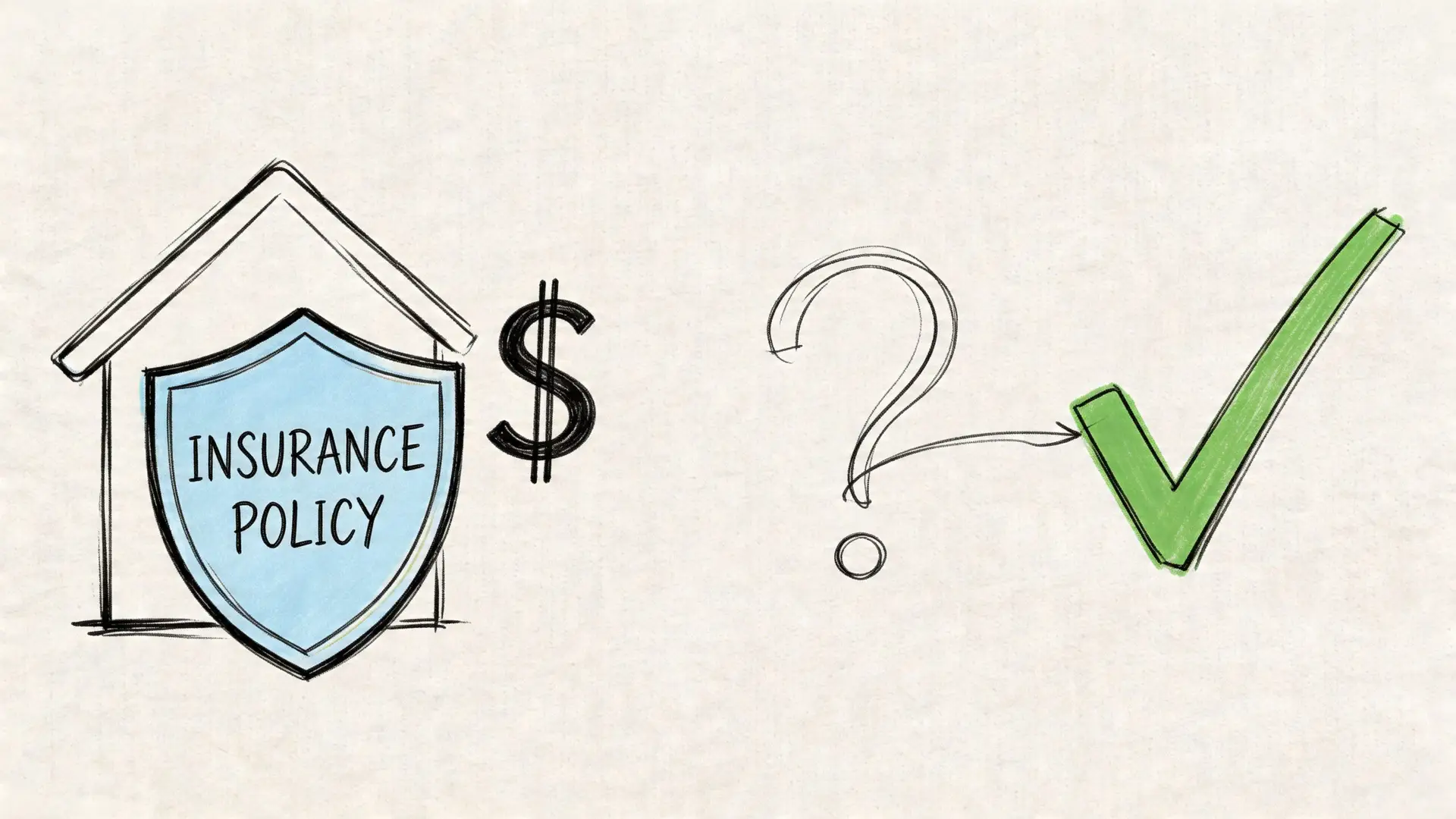
According to coverage notes on crime scene cleanup claims and denials, homeowners often face claim denials because of specific exclusions for unattended death or because policy limits don’t cover the full cost of structural repairs tied to decomposition. The same source warns that out-of-pocket exposure can rise to the full bill, potentially $6,000 to $25,000, when coverage fails.
Where property owners get tripped up
A policy can acknowledge one part of the loss and still limit another. For example, cleanup may be treated differently from reconstruction. Odor treatment may be handled differently from flooring replacement. Loss-of-use questions may be separate again.
That’s why the most important first step is verification, not assumption.
A practical review should include:
- The exact cause of loss language: The wording around death, bodily fluids, and unattended events matters.
- Policy limits: Even if the category is covered, the dollar limit may be lower than expected.
- Structural repair scope: Decomposition-related damage can extend beyond the cleanup line item.
- Documentation requirements: Carriers often want photographs, scene notes, and itemized estimates.
Important: “Insurance accepted” and “insurance covered” are not the same thing.
If you’re trying to prepare for the broader financial side of an unexpected death, a plain-language funeral insurance guide can help families understand another piece of the planning process without adding more confusion.
Why upfront verification matters so much in Phoenix
Phoenix owners often need quick decisions because heat and time don’t help these situations. But speed shouldn’t replace paperwork. Before work begins, it helps to understand what your carrier requires, what can be documented immediately, and which parts of the estimate may become points of dispute.
For many people, the claim process feels harder than the cleanup itself. The forms, adjuster calls, scope questions, and coverage language can be exhausting, especially during grief.
This video gives helpful context on the insurance side of restoration claims:
A useful starting point for homeowners who need to organize the claim process is this guide on how to file a homeowners insurance claim.
What to ask before authorizing work
Before you sign anything, ask direct questions:
- What part of the work is potentially covered?
- What exclusions might apply to this type of loss?
- Is the estimate itemized enough for carrier review?
- If hidden contamination is found, how will change orders be documented?
- What parts of the job might become out-of-pocket even if the claim is approved?
Those questions won’t eliminate every problem, but they can prevent the worst surprise of all. Thinking insurance will handle everything, then finding out too late that key parts of the bill were never confirmed.
What to Expect During the Cleanup Process
For many property owners, the cost makes more sense once they understand what technicians do on site. Professional trauma cleanup is a controlled remediation process, not a quick spray-and-wipe service.
That need for specialized work isn’t shrinking. According to market projections for professional crime scene cleanup services, the market is projected to reach $176.41 million by 2032, driven by expanding needs beyond crime scenes, including unattended deaths and home decontamination. That projection reflects a simple reality. More properties need trained technicians who know how to assess, contain, remove, disinfect, and document serious biohazard conditions.
The work usually follows a clear sequence
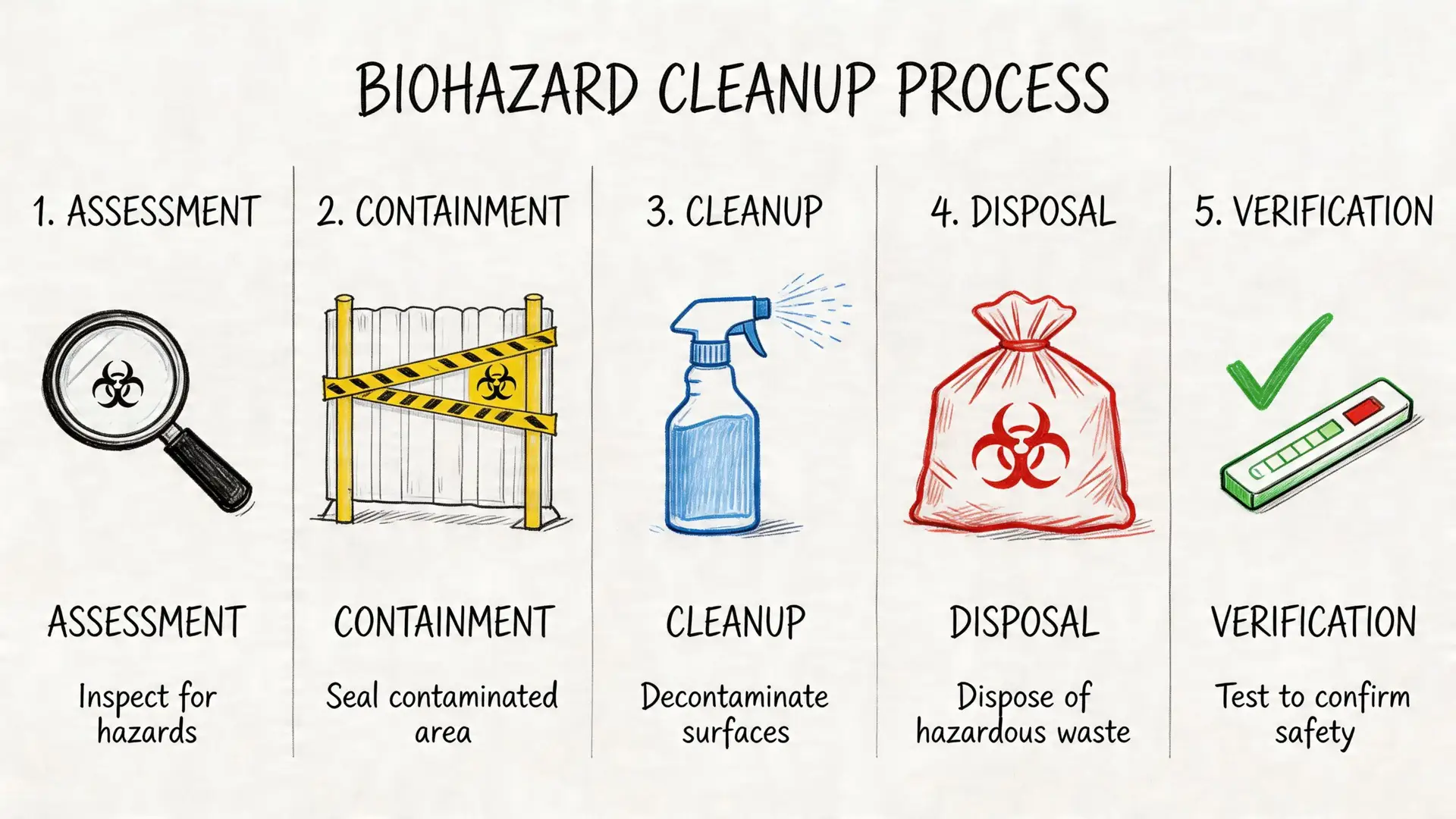
The exact scope changes, but the workflow often looks like this:
Assessment and safety planning
Technicians inspect the scene, identify affected materials, and decide what must be cleaned versus removed. They also map entry and exit routes so contamination doesn’t spread through the property.Containment of the work area
Teams isolate the zone using barriers and controlled movement protocols. The point is to keep biological material, odors, and disturbed particles from moving into clean areas.Removal of contaminated items and materials
Soft goods, porous finishes, and non-salvageable building materials may need to come out. Everything removed has to be packaged and handled as regulated waste when required.Cleaning and disinfection
After source removal, technicians clean remaining surfaces and apply appropriate disinfecting methods. This is careful work, especially around seams, edges, and hidden contact points.Deodorization and post-remediation review
If odor is present, crews may use HEPA air scrubbers, ozone generators, or other specialized tools depending on the setting. The area is then reviewed to confirm the site has been remediated according to the scope.
Why each step matters
People sometimes ask why the process can’t be shortened. The answer is that each stage protects the next one.
If containment is skipped, contamination can move beyond the original room. If source material stays in place, disinfectant won’t solve the problem. If odor treatment starts before removal and cleaning are complete, the smell often returns because the source wasn’t fully addressed.
A professional cleanup restores safety by combining removal, disinfection, and controlled handling. It isn’t just about making the scene look clean.
Who needs this process
The work isn’t limited to violent crime scenes. Property owners may need the same kind of disciplined remediation after an unattended death, severe bodily fluid contamination, self-harm incident, hoarding-related biohazards, or other events that create unsafe conditions.
If you want a broader view of how remediation companies handle these situations alongside water, fire, and mold losses, this explanation of what a restoration company does gives helpful context.
By the time families or tenants re-enter the property, most of the visible work is already done. What they don’t see is often what made the job safe.
How to Hire a Reputable Cleanup Service in Phoenix
Hiring the right company affects far more than the final invoice. It affects safety, documentation, insurance communication, privacy, and whether the job has to be redone later.
That matters even more now because costs are under pressure. According to recent reporting on cleanup pricing and equipment inflation, stricter EPA biohazard disposal regulations and supply chain inflation in 2025 to 2026 have driven up costs for PPE and equipment by 25% to 40%. That’s a strong reason to insist on a detailed, current quote instead of relying on old price expectations.
What to look for in a Phoenix provider
Use this checklist before authorizing work:
- Certification and training: Ask whether the company has recognized restoration and biohazard credentials, including IICRC-related training where applicable.
- Clear scope documentation: The estimate should describe affected areas, expected removal, disposal handling, and any limits of the quoted scope.
- Regulatory knowledge: The company should be comfortable explaining waste handling, PPE use, and how it separates salvageable from non-salvageable materials.
- Insurance coordination experience: They should know how to document a job for adjuster review without promising coverage they can’t control.
- Professional communication: In a trauma situation, calm process matters. You want direct answers, not evasive language.
Red flags worth taking seriously
A few warning signs should make you slow down:
- Large upfront payment demands: That can signal cash-flow problems or weak accountability.
- Vague phone-only pricing: General ranges are fine. A firm final number without inspection is harder to trust.
- No itemization: If you can’t tell what disposal, labor, and material removal include, you can’t judge the quote.
- No explanation of safety procedures: A qualified team should be able to explain containment, removal, and disposal in plain language.
Ask for the estimate in writing, and read it line by line before work begins.
If you’re comparing local options, this directory page for biohazard cleanup services near me can help you frame the questions to ask when screening Phoenix-area companies.
The goal isn’t to find the cheapest line item. It’s to find a company that can explain the work, document it properly, and treat the situation with care.
Your Questions About Crime Scene Cleanup Answered
Why is it unsafe to clean a trauma scene myself
Because the risk isn’t limited to what you can see. Biological contamination can enter porous materials, spread during handling, and expose you to unsafe contact without obvious warning. Household cleaners also aren’t a substitute for regulated removal, containment, and disposal.
What happens to contaminated personal belongings
It depends on the item and the level of contamination. Non-porous belongings may sometimes be cleaned if they can be safely remediated. Porous items such as mattresses, upholstered furniture, or heavily affected textiles often can’t be safely restored and may need disposal. A good crew should explain which items are salvageable and which are not.
Is the property immediately safe after the job is finished
That depends on the completed scope of work. In general, the goal of professional remediation is to return the affected area to a safe, habitable condition within the limits of the cleanup scope. If reconstruction is needed after material removal, the property may still need repairs before full normal use resumes.
Do I have to be present during the cleanup
Usually not for every hour of the job, but someone responsible for the property usually needs to approve access, scope, and decisions about belongings. Many homeowners prefer not to be there, especially in emotionally difficult cases.
Why do companies ask so many questions before quoting
Because the same incident label can hide very different conditions. The location of the event, how long the scene sat undiscovered, what materials are present, and whether investigators have released the area all affect the overall scope.
Should I ask whether the company is insured
Yes. Along with training and disposal compliance, insurance matters because this is high-risk work. If you want a plain-English overview of what that protection can involve for service businesses, this guide to cleaning company liability insurance gives helpful background.
Can a quote change after work starts
Sometimes, yes. Hidden contamination behind baseboards, under flooring, inside padding, or within wall cavities may only become clear after controlled removal begins. What matters is whether the company explains how scope changes will be documented before proceeding.
What should I keep for my records
Keep the written estimate, photos if available, communications with the insurer, authorization forms, and the final invoice. If you’re a landlord or property manager, keep occupancy notes and any tenant communication related to access and habitability as well.
If you need help after a trauma or biohazard event in the Phoenix area, Restore Heroes offers 24/7 support, free onsite inspections, and direct coordination with insurance carriers when needed. If you’re facing a stressful situation and need clear next steps, reaching out can help you understand the scope, the likely cost factors, and what to do before surprises get more expensive.